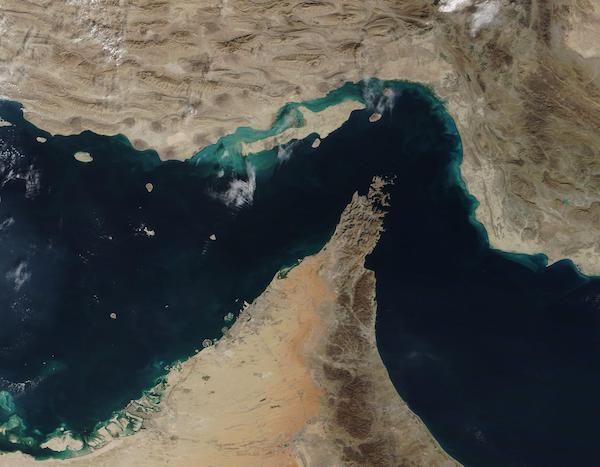
THREAD | How Iran and Oman could normalize payments for crossing Hormuz.
Tehran and Muscat are not openly proposing a toll. They are building the possible legal architecture for ships to pay without formally paying for the right of passage.
🧵👇
UNCLOS Articles 38 and 44 protect continuous transit through international straits and prohibit coastal states from obstructing or suspending it. The narrow opening is the logic of Article 26: vessels cannot be charged merely for passing, but non-discriminatory fees may be collected for specific services actually rendered.
A defensible Iran–Oman system could therefore combine paid pilotage, towing, emergency response and other vessel-specific services with a broader Article 43 cooperative mechanism funding navigation aids, traffic management, search and rescue, and pollution response. Tariffs would need to be transparent, proportionate to real costs and identical for comparable vessels, ideally with IMO involvement and independent auditing.
There are precedents, but none gives Iran a blank cheque. Under the 1936 Montreux Convention, Turkey collects limited dues for sanitary, lighthouse and lifesaving services. The Malacca–Singapore mechanism funds navigation safety through cooperation with user states and industry. Meanwhile, the old Danish Sound Dues were abolished in 1857. Suez and Panama are poor comparisons because they are artificial canals governed by separate legal regimes.
So the strategy is likely to shift the argument from whether ships should pay to what service they are supposedly paying for.
But the red line remains clear: if payment becomes compulsory simply to cross Hormuz, varies according to flag or political alignment, greatly exceeds the cost of the service, or is enforced through detention and coercion, it becomes a de facto toll and almost certainly an unlawful one.
Oman can give the project diplomatic and institutional credibility. It also constrains Iran, because Muscat cannot legally turn an international strait into a joint toll booth.
• • •
Missing some Tweet in this thread? You can try to
force a refresh

THREAD | Russian propaganda is circulating a map claiming a new US intelligence document "confirms" American bioweapons labs in Ukraine.
The document is real. What it actually says is close to the opposite of the claim. Let me walk through it.
First, the concessions, because they matter. ODNI did release a declassified slide deck on June 12, under outgoing DNI Tulsi Gabbard. US-funded labs in Ukraine are real. Black & Veatch did build them. Trump did sign a gain of function executive order. None of that is in dispute.
What's in dispute is what those facts mean. And here the propaganda gives itself away in one detail.
The real ODNI slide on the Kharkiv veterinary institute is titled "Ongoing Target for Russian Disinformation."
Thread: How China Is Actually Helping Iran in This War
1/ On April 19, US Navy forces intercepted the Iranian container ship MV Touska in the Gulf of Oman. It was returning from China, carrying dual-use equipment. That seizure is the most concrete recent example of what Chinese support to Iran actually looks like in this war, a network of civilian and commercial channels, assembled over a decade, carrying things with obvious military applications. This thread walks through how those channels function.
🧵⬇️
2/ Start with navigation. Iran got military-level access to BeiDou in 2021, confirmed by the US DoD's own China Military Power Report. Military BeiDou delivers sub-meter precision and carries a short-message service for command continuity. The key advantage from Iran's perspective is that BeiDou sits outside US sovereign control. Washington can jam Iranian receivers, electronic warfare works on any GNSS, but it cannot selectively degrade the system against Iran, deny code access, or turn it off. With GPS, Washington can do all three.
⬇️
3/ The practical consequence is that most newer Iranian precision-guided systems, missiles, loitering munitions, command nodes, are now running Chinese navigation. In March, the US-China Economic and Security Review Commission publicly stated that BeiDou was being used by Iran to direct attacks across the region. That's a US government assessment, not a private analyst's read. The improved missile accuracy since the 12-day war of June 2025 is consistent with this migration, though multiple variables make the precision-gain attribution imperfect.
TAKE: If the US really needs to clear mines from Hormuz, can they actually do it? And how? I dug into the US Navy's mine countermeasures capability as of April 2026. 🧵(1/13)
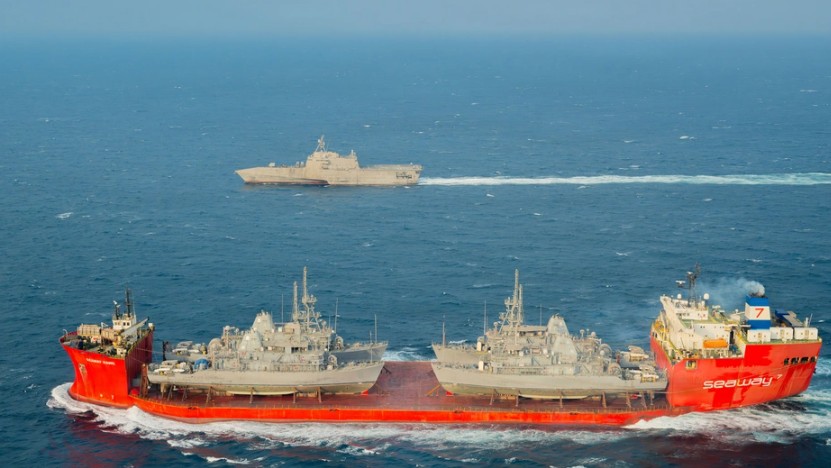
2/ Start with the most brutal fact: in Sep 2025 the US Navy decommissioned ALL 4 Avenger-class minesweepers based in Bahrain. The ships that guaranteed mine clearance in the Gulf for 30 years are gone. Loaded onto a cargo ship in Jan 2026.
3/ Only 4 Avengers left in service. In Sasebo, Japan. Other side of the planet. All slated for retirement. Zero reactivation plans. The U.S. Navy retired the old ships before the new ones were ready.
UPDATE: The key part of this UNSC fight is not Russia or China. It is France. Moscow and Beijing blocking force language on Hormuz is expected. Paris doing it too tells you there is still no real Western consensus for giving this crisis a UN-backed military path. 🧵(1/6)
2/ Bahrain’s draft was never just about shipping. It was about building legal cover for a harder response in Hormuz. Even after the text was softened to “all defensive means necessary,” France still joined Russia and China in pushing back.
3/ That matters because Paris is not defending Iran here. It is drawing a line: reopening Hormuz is one thing, signing off on language that could later be used to justify a wider war is another. That is a real strategic split, not a technical UN quarrel.
The Strait of Hormuz is closed.
Now the Houthis are threatening Bab el-Mandeb too.
Until recently one chokepoint. Now we risk two simultaneously.
🔹 What each strait controls
🔹 What rerouting costs
🔹 Who bleeds most
🔹 What you're already feeling at home
1/24 🧵👇
1/For years the Red Sea was the problem. Ships rerouting. Costs rising. Egypt's Suez Canal bleeding revenue.
That was one chokepoint Bab el-Mandeb threatened by a non-state actor, now Hormuz is closed. The world hasn't faced both at once before.
2/Strait of Hormuz:
🔹 ~20% of global oil passes through it daily
🔹 Iran controls the northern shore
🔹 IRGC islands sit directly over the shipping lanes
27 March 2026: Iran formally closed it to vessels linked to the U.S. Israel and their allies.
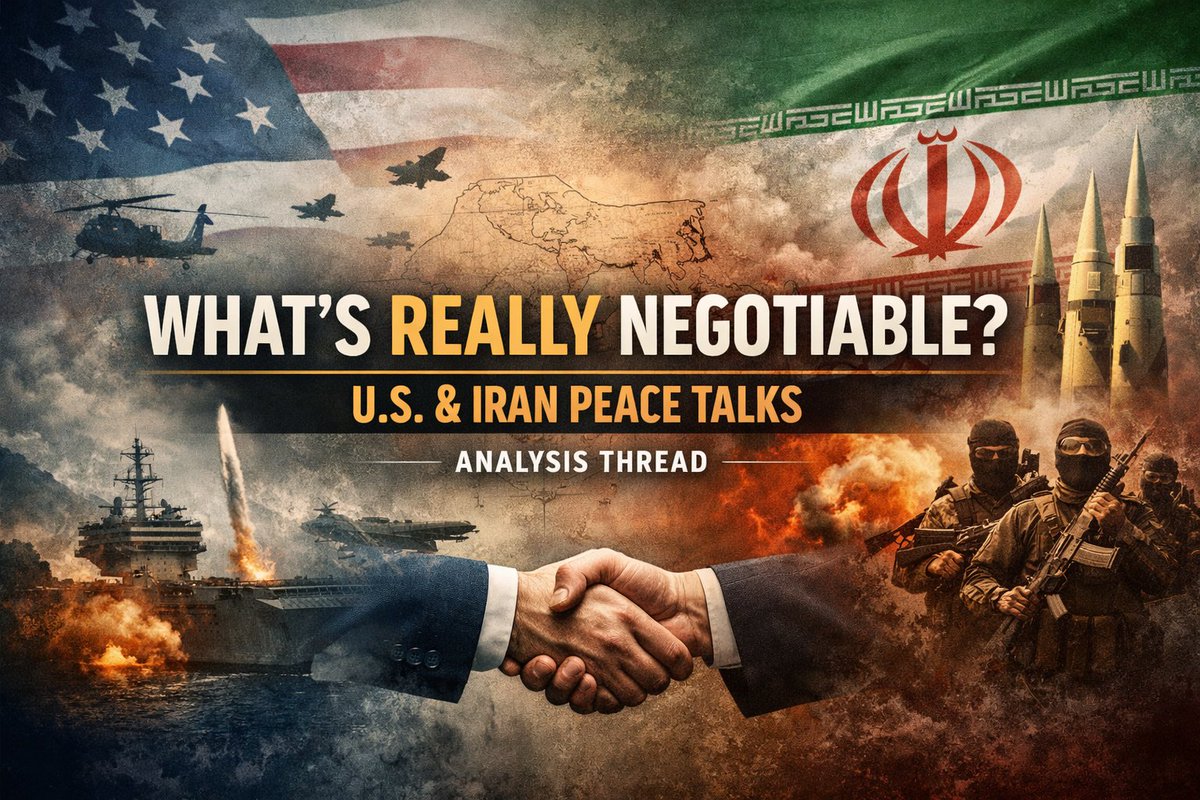
TAKE: There’s a lot of talk about “peace talks”, but the real question is simpler: what can each side actually accept? Not in theory, but in reality. That’s where deals are made and it’s also where most of them fall apart. 🧵(1/8)
2/ The U.S. position still looks tough on paper: stop Iran’s nuclear ambitions, limit missiles, cut support to proxies, and reopen Hormuz. But taken literally, that is very close to asking Iran to dismantle most of its strategic posture.
3/ Iran’s position is just as rigid in its own way: no surrender of core military capabilities, no humiliation deal, no abandonment of regional influence, and ideally an end to strikes first. That is why Tehran still publicly downplays or denies the talks.