Note on the dual nature of rudra's sons:
------------
Rudra having the dual nature - that of a disease bringer, killer of men (pūruṣaghna) and killer of cattle (goghna) vs the best of the healers and bringer of medicine in vedic literature is quite well known. AV 6.90
Associates his arrows with diseases and the mantra is meant to remove his darts that struck the limbs and heart. The shatarudrīya alludes to his ghora form - the chant during agnichayana is to pacify this terrible form.
Perceptive readers may also note that this dual form of rudra is inherited by his sons skanda and vināyaka - Both are great seizers. The former especially of children (hence the bālagraha kumāragraha etc.). Skanda's pacification thus naturaly is important in pediatric cures rites
Likewise the vināyakas are obstacle makers but when pacified are obstacle removers. All this is fine but what about the vedic sons - the maruts? In ṛgveda, they maybe impetuous, shakers of oceans, mountains and earth and great stormtroopers, but where is their dual nature like
Rudra? The answer is well known to those familiar with śrauta ritualism. caturmāsyas, featuring in the 7 haviryajñas are seasonal sacrifices. There are 4 parvans - vaiśvadeva, varuṇapraghāsa, sākamedha, śunāsīrīya. In vaiśvadeva, a sacrificial cake on 8 kapālas to agni, charu
For soma, pūśan, sarasvatī and maruts svatavats (Impetuous maruts) as well as a cake to savitṛ (on 8 or 12 kapālas). Now, the śānkhāyana brāhmaṇa 5.2 explicitly mentions this - "In that he sacrifices to the impetuous maruts, ghora/terrible indeed are maruts,
He verily makes a healing". This is the most direct rudrian attribute reference to maruts. Taittiriya brāhmaṇa on the same vaishvadeva parvan has this: In the past Prajāpati created offsprings. The maruts killed them. Note the child-killing motif.
Prajapati perceived the sacrifice to maruts on 7 kapāla, not just for accomplishing the sacrifice but for the "non-killing" of the offspring. 7 fold indeed are the marut troops (explanation in the usual brāhmaṇa manner).
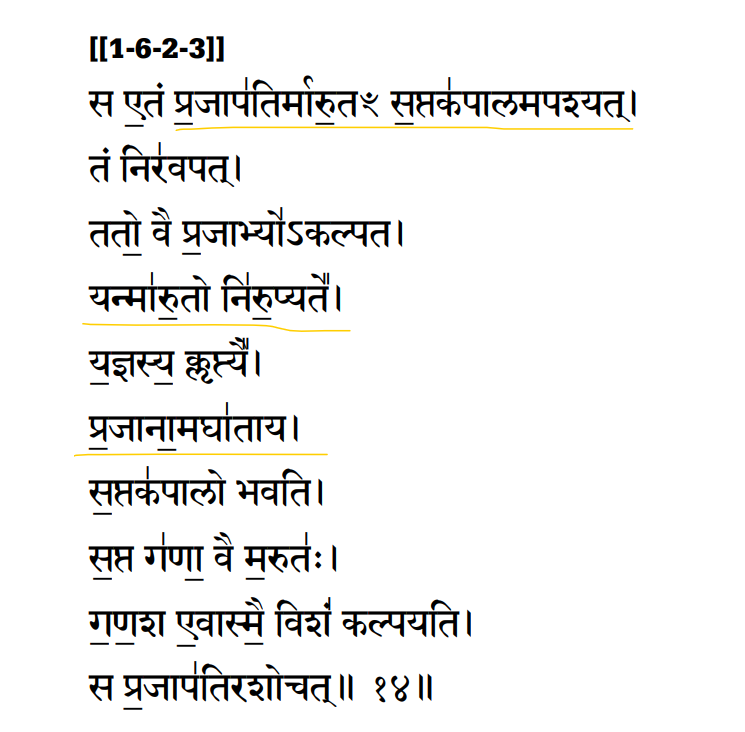
Thus maruts, just like their father rudra has the dual facet - a ghora aspect of killing of prajas and pashus but with appropriate vaiśvadeva performance, non-killing of offpring, cattle (paśūnām aghātāya) and healing is achieved by their appeasement.
• • •
Missing some Tweet in this thread? You can try to
force a refresh

Evolution of gṛhya rituals is a topic of great interest to me. The subject material is vast as it stands today with numerous geographical variations. Applying evolutionary principles based on current surviving materials to infer precursors, relationship between shrauta
And gṛhya, mutual interactions between various schools, and the position of atharvāngirasa in all these are great topics to investigate. Each one of these would take a lifetime. So, when the Fiden thesis landed on my way, I was hopeful that someone tackled a difficult subject.
Alas, it looks like the final word on the topic isn't written. Fiden's RV:AV::Indra::Rudra is dubious to say the least. Atharvaveda being the "first textual expression of the gṛhya karmas" proposal is bass ackwards. Finally the charge of "brahmanas subverting by introducing
A note on H diet discourse:
Against my initial reluctance to write anything on this topic, a discussion with Twitter moot, the incoherent response from H paksha to the attack on their diet choices by anti-H, ul̤pāvādais,
(in-skirts as opposed to pāvādais/skirts) pretending to be H, edge lords and the like pretending to care about protein deficiency and nutrition needs of Indians. The following is my own opinion and caveat emptor.
The issue is posited as protein deficiency and a suggestion that meat, eggs or fish must be consumed by H. The sectarian sampradaya autists, believers of Quixotic unscientific concepts (otherwise intelligent) and the like offer confused defenses like
A note on nakulī or vāgrasa mantra. The earliest attestation of this mantra is in aitareya āraṇyaka 3.2.5. This version runs as:
oṣṭhāpidhānā na kulī dantaiḥ parivṛtā paviḥ|
sarvasyai vāca iśānā cāru māmiha vādayet||
The deity is vāc. The entire chapter is a meditation on categories of letters, sambandhas between them and cosmic/biological phenomena. The āraṇyaka calls this as vāgrasa and is deployed when one wishes to be a great speaker in an assembly.
The commentator says "upamārthaḥ na-kāraḥ". I.e. he parses na and kulīdantaiḥ separately and calls "na" as sees it as a particle of similie.
My RV teacher taught a secret prayoga of this mantra based on Rig Vidhana of Indra. The rite is done in the month of phalguna and
A note on agniveshya gṛhyasūtra and taittiriya kāņḍas: Gṛhyasūtras of taittiriya cryptically allude to oblations for kāņḍa ṛṣis, typically in the upākarma context. The kāņḍas are prājāpatya, saumya, āgneya, and vaiśvadeva.
From the kāņḍānukramani, one can construct a chapter-wise table of the entire yajurveda from samhitā to upaniṣad and the kāņḍa mapping.
However, I've only seen the kāņḍa conspectus in agniveśya. The mapping according to is as follows:Ag.g.Su
Prājāpatya- The mantras, brāhmaņas, and anubrāhmaņas related to puroḍāśa, yajamāna, hotṛ, hautra, and pitṛmedha.
Saumya - ādhvaryava, grahadakṣiņā, samiṣṭa yajush, avabhṛta yajush, vājapeya and śukriyas.
Āgneya - agnyādheya, punarādheya, agnihotra, agni upasthāna,
Katyayana shrauta sutra has a curious prescription while describing the sArasvata sattra. A sattra is a sacrifice of soma kind where the soma pressing days are over 12 days. 100 pregnant heifers are let loose along with a bull so that they multiply to a 1000.
This sacrificial session itself is mobile, commencing from the spot where sarasvati had disappeared (vinashana spot) and moves along the bank. The sounding holes are not dug but simply marked. The yUpa/sacrificial post isn't erected on the ground but in a mortar shaped base
The havirdhana mandapa, the sadas, the agnidhra's fires are all on wheeled cart due to mobility requirements. Charu is offered to apAm napAt at the confluence of sarasvati and drishadvati. The mileu of this sacrifice indicates widely available pasture land where your cows can be
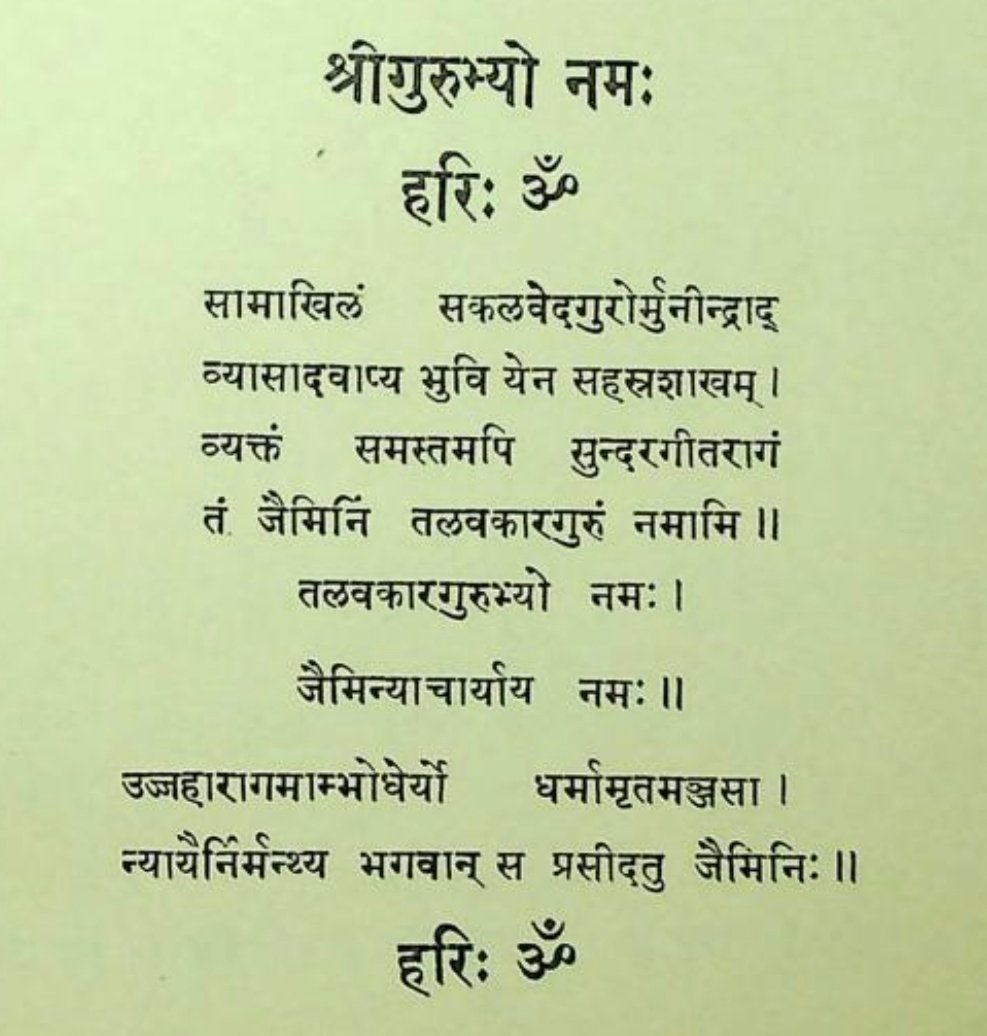
A short note on ṛṣi paramparā of jaiminīya sāmavedins. It is customary for us, as students of jaiminīya shākhā to recite the 2 shlokas to jaimini. The first shloka to jaimini indicates jaimini's guru is vyāsa and jaimini himself is talavakāra guru.
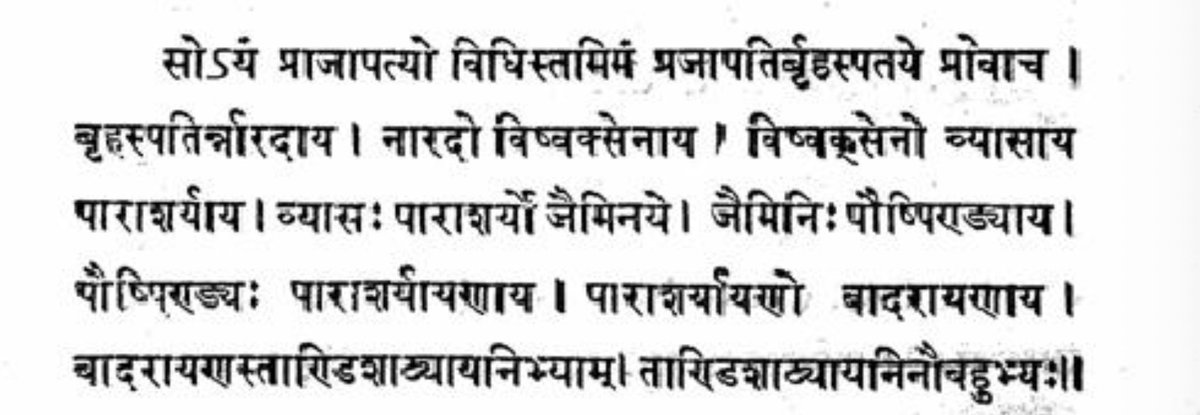
For practical purposes jaiminīya śākhā is synonymous with talavakāra śākhā. But was it really the case originally? As per charaņavyūha, tāņḍya is an independent śākhā. They have an interesting ṛṣi paramparā: prajāpati -> bṛhaspati -> nowadays-> viṣvaksena -> vyāsa pārāśarya
-> jaimini -> pauṣpiņḍya -> pārāśaryāyaņa -> bādarāyaņa -> tāņḍya and śāṭhyāyani -> various others. This list corroborates jaimini and vyāsa relationship. The segment viṣvaksena, nārada and vyāsa is interesting, as they're important figures in vaișnavism & pāñcharātra.