maximus Profile picture
Jun 25 7 tweets 3 min read Read on X
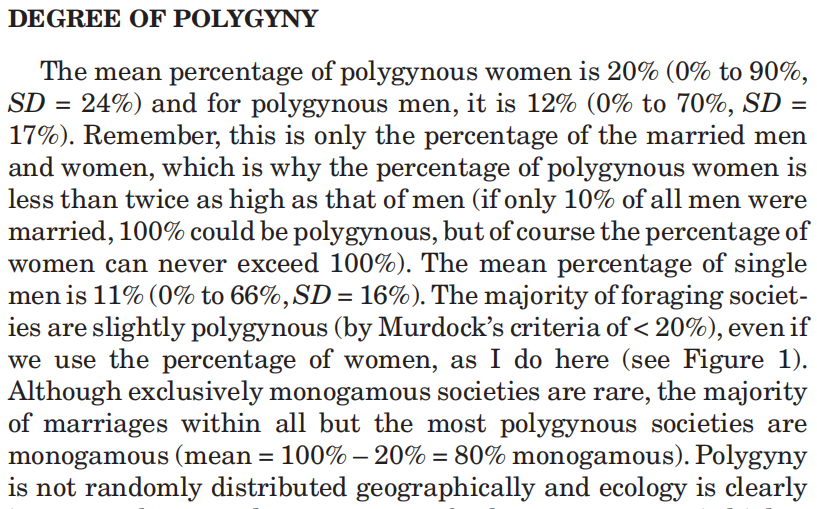
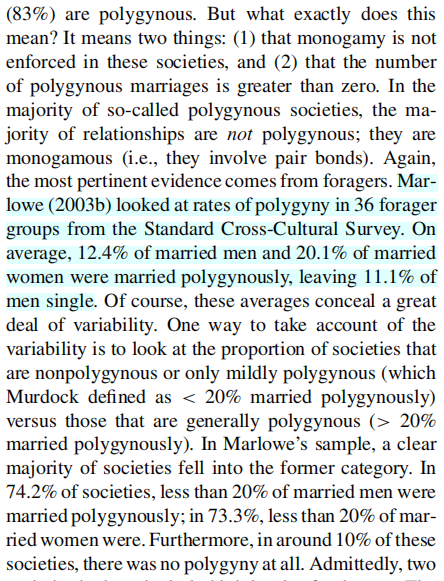
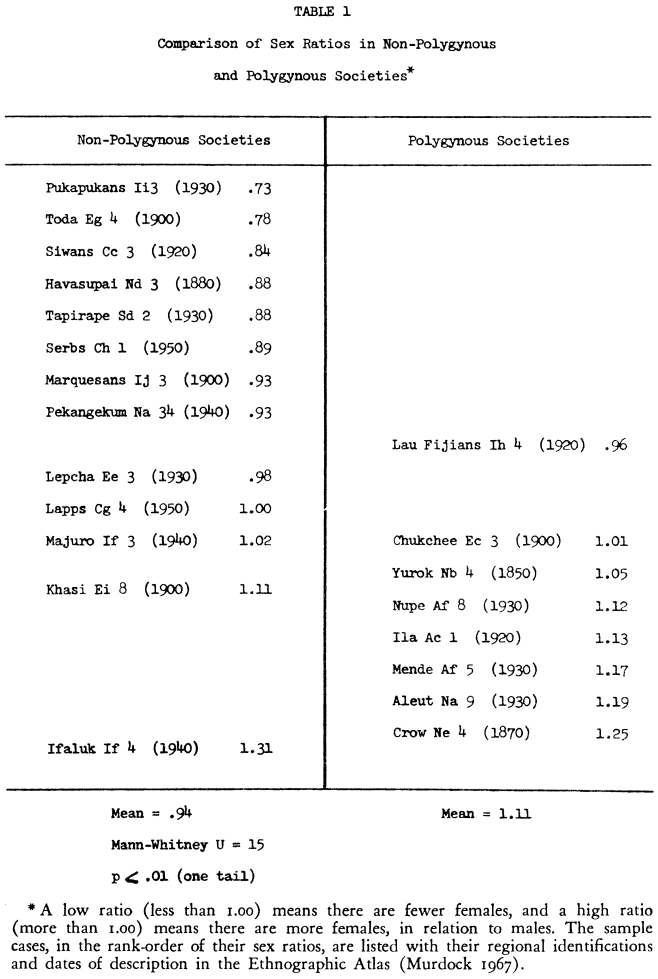
1. This is not the average degree of polygyny in 'polygynous societies'.
The paper cites Marlowe (2003). Across 36 forager societies, only two show polygyny rates this high.
While 12% of married men (not the same as 12% of men) were polygynous, 20% of married women were. Image
Image
2. The figure of 11% single men is inferred from these unions. With a female-biased sex ratio however, which is common in polygynous societies, some degree of polygyny can occur without producing a surplus of bachelors. Image
3. Somewhat counterintuitively, there are actually fewer never-married young men in more polygynous regions within countries, perhaps owing in part to stronger marriage norms.
pmc.ncbi.nlm.nih.gov/articles/PMC12…
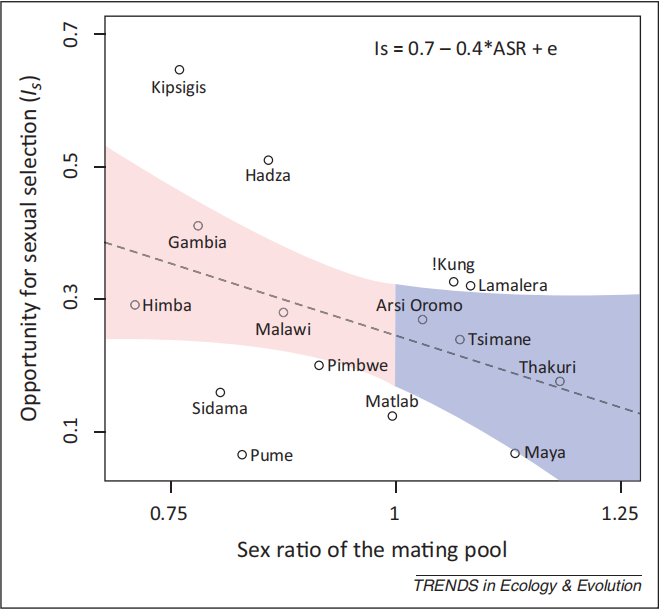
4. Male-biased sex ratios don't necessarily lead to more single men either. In fact, it's commonly found that a male surplus is associated with higher marriage rates, possibly because it grants women greater bargaining power in the dating market.
pmc.ncbi.nlm.nih.gov/articles/PMC49…
5. Similarly, men's reproductive skew may even be lower in societies with more male-biased sex ratios.
escholarship.org/uc/item/3w1953…Image
6. The research on sex ratios and violence is inconclusive. The review linked above finds an even split between studies reporting positive and negative associations between male-biased ratios and violence. Image
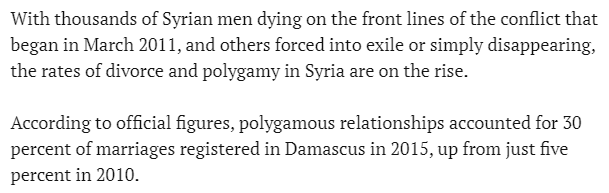
7. An association between polygyny and violence could to some extent reflect reverse causality. This ties in with the gender ratio findings discussed above. Image
• • •

Missing some Tweet in this thread? You can try to force a refresh

 

Keep Current with maximus

maximus Profile picture

Stay in touch and get notified when new unrolls are available from this author!

Read all threads

This Thread may be Removed Anytime!

PDF

Twitter may remove this content at anytime! Save it as PDF for later use!

Try unrolling a thread yourself!

how to unroll video
  1. Follow @ThreadReaderApp to mention us!

  2. From a Twitter thread mention us with a keyword "unroll"
@threadreaderapp unroll

Practice here first or read more on our help page!

More from @nuance_enjoyer

Apr 5
@caulixtla @NickWolfinger They still included it:
'That is, when we estimate our baseline specification using
indicators for whether a student had more than a certain number of sexual partners in the previous
12 months, we consistently obtain positive coefficients, even for large numbers of partners...'
@caulixtla @NickWolfinger 'These coefficients tend to be larger for male students. We interpret these findings as strong evidence of increased inequality in sexual activity following Tinder’s full-scale launch, with the rise of “super-stars” among Greek students with a large number of sex partners.'
@caulixtla @NickWolfinger What they did is make it more vague and remove the graph that made it obvious that it was a nothingburger.
Read 6 tweets
Mar 28
Again, this is misleading.
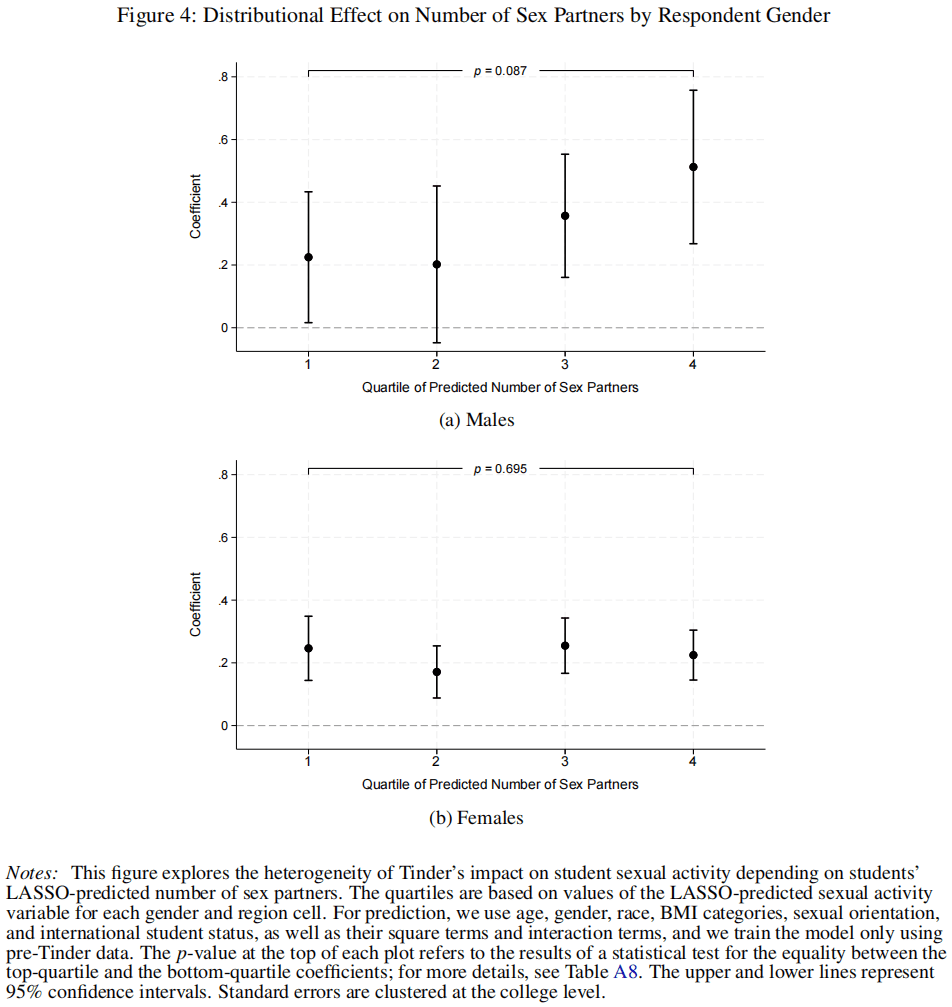
The abstract claims that ‘dating outcome inequality’ rose, ‘especially among men’, but:
1. The effect isn’t statistically significant under the conventional threshold.
2. Even the bottom quartile in predicted sex partner number gained more partners. Image
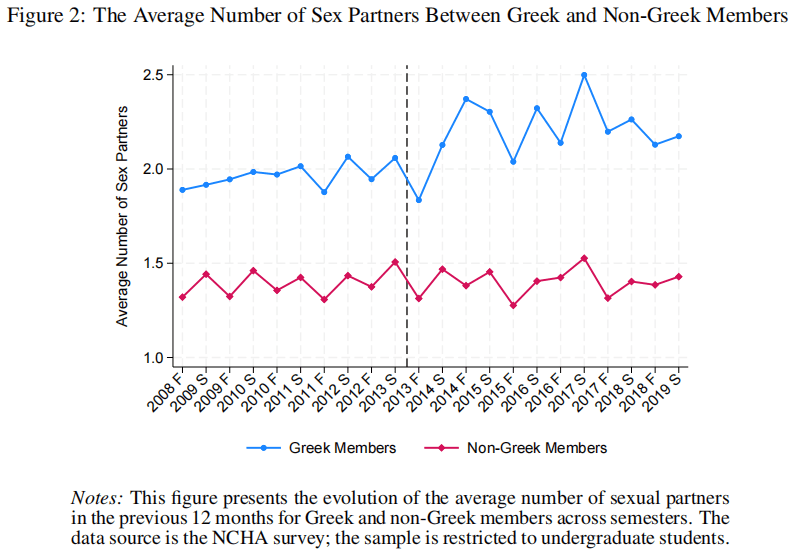
The increase in sex partners was also limited to Greek students, even well after Tinder's launch, and even there it was modest. I don't know if I'd consider an 0.2 extra partners a 'sharp' rise.
While the rise may have been 'persistent', it didn't seem to continue. Image
So, even if Tinder boosted the partner counts of the most promiscuous men, this didn't seem to come at the expense of the rest as the conventional narrative goes, nor is there strong evidence for a heterogeneous effect.
Read 6 tweets
Mar 22
Both of these claims are sensationalist slop.
The 80% stat comes from the Standard Cross-Cultural Sample, which merely denotes that these societies permitted polygyny. The vast majority of relationships in these societies were monogamous. 🧵 Image
So even without ‘enforced monogamy’, monogamy remains the norm by any reasonable definition. How could the majority practice not count as the norm? It would set an unreasonably high and asymmetrical standard to require absolutely no non-monogamy.
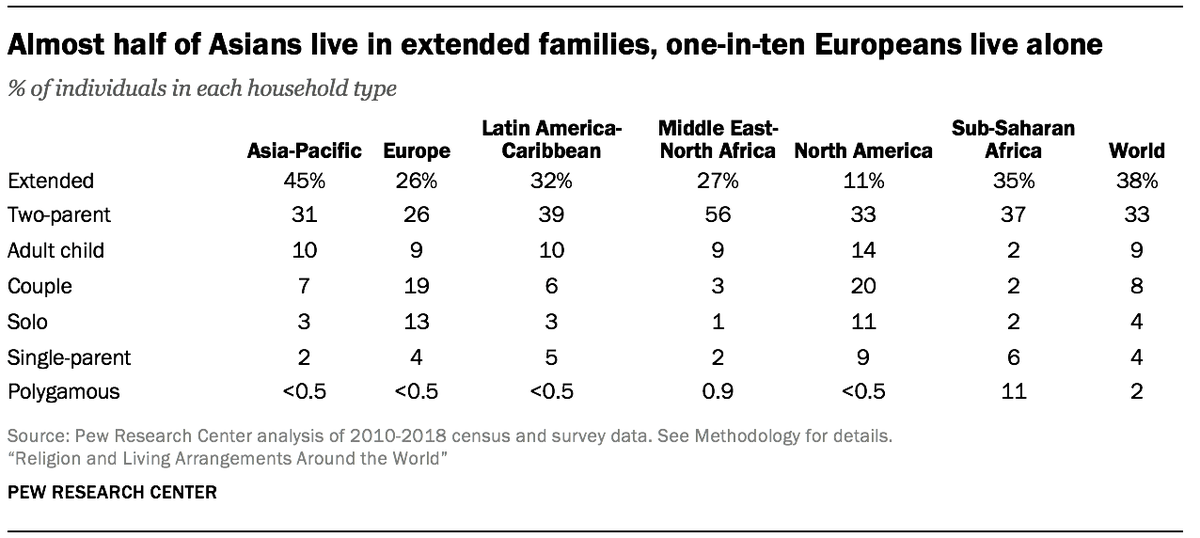
In societies that permit it today, rates tend to remain low; in MENA countries they hover around 1%.
Polygyny rates are somewhat higher in SSA, but have been on the decline. Image
Image
Read 11 tweets
Feb 20
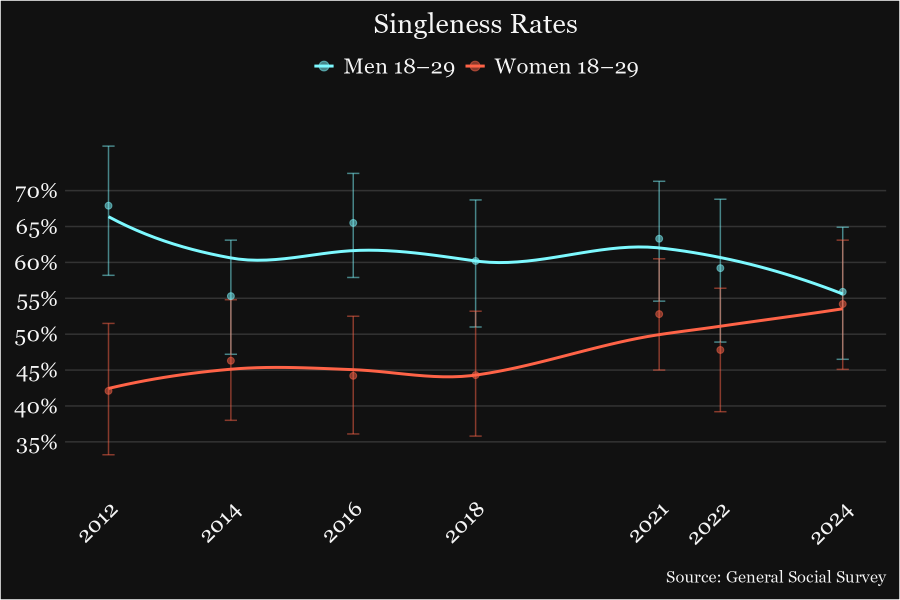
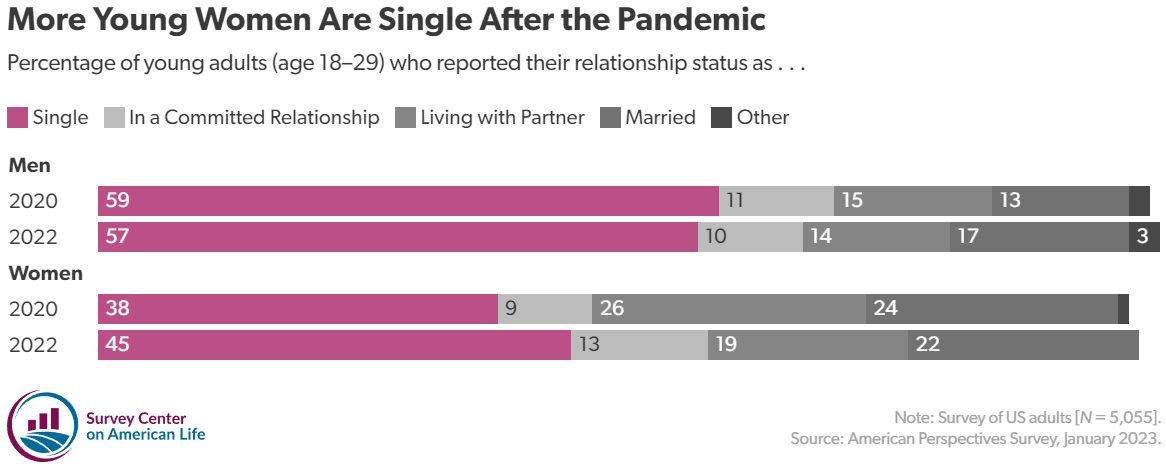
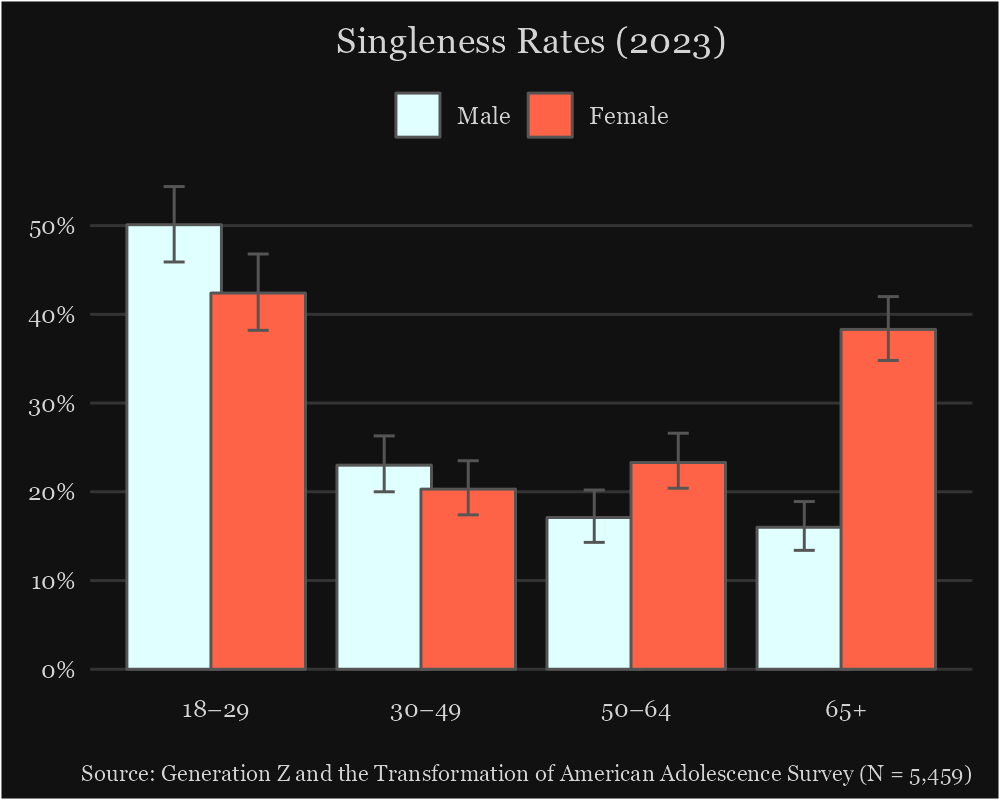
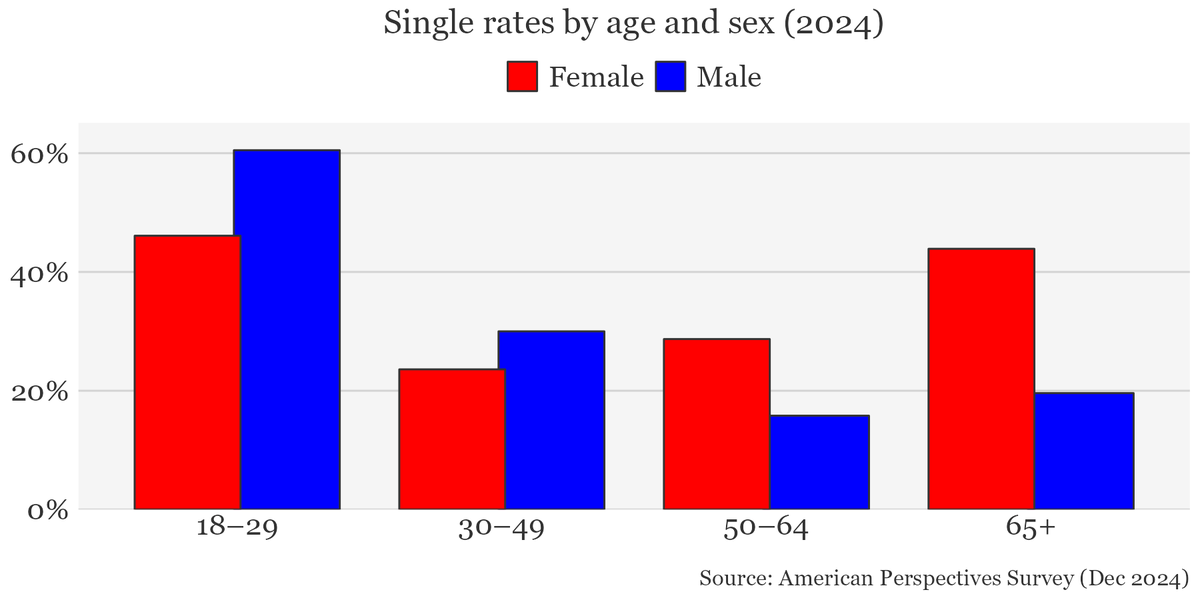
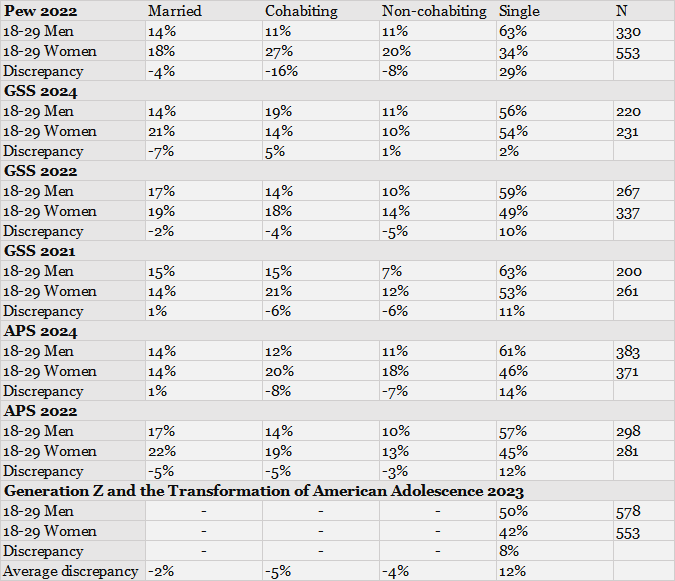
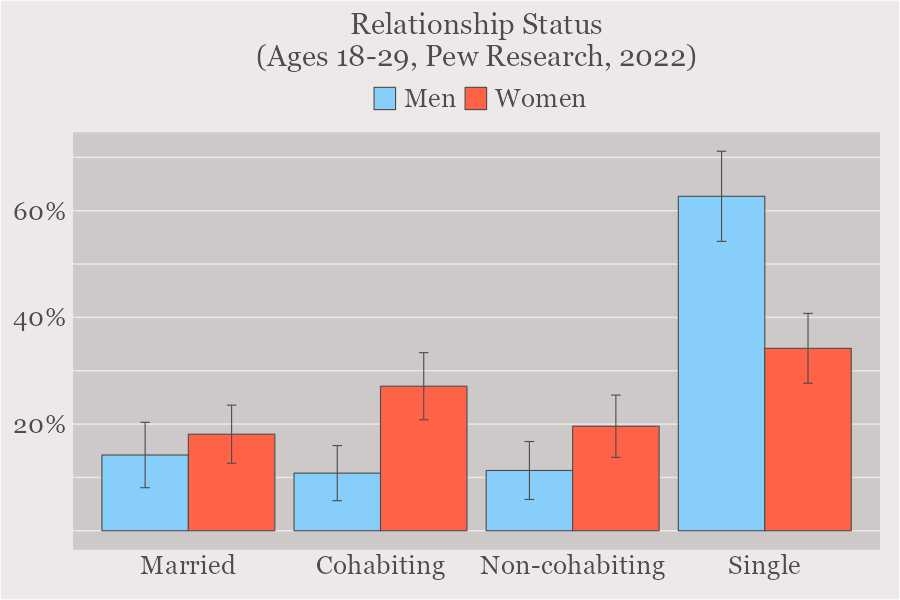
Not a single other source replicates this 29-point gap, but instead gaps of around 10-15%, which can reasonably be attributed to age gaps.
People should know by now that the stats that go viral are rarely the most accurate ones. Image
Image
Image
Image
The sample sizes of these other surveys are roughly comparable to Pew's.
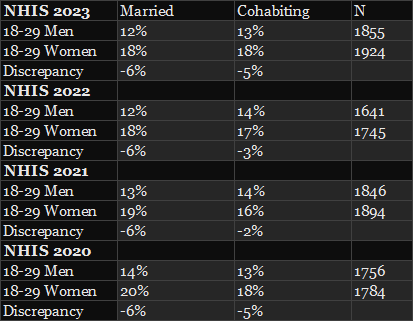
The NHIS has a far larger sample size but is limited by the fact that it doesn't capture non-cohabiting relationships. But it shows that cohabiting young women were overrepresented in the Pew survey. Image
Image
The most popular explanation for the gap is covert 'Chad harems': women *think* they're in an exclusive relationship with Chad, but *actually*...
The same Pew survey leaves little room for this explanation, as 3/4ths of the gap was driven by cohabitation and marriage. Image
Read 5 tweets
Feb 12
1/ This doesn’t mean what people think it does, and does not validate the '80/20 rule' as commonly understood.
For those open to a different perspective, here's why the simple extrapolation from dating app swipes to 'Chad harems' is unjustified 🧵
/2 First, the graph is based on self-reported selectivity (% of likes given) from 27 women polled by essentially a 'Chadfish' Tinder profile, which served as the proxy for female 'attractiveness'. Likes received by men was the proxy for male attractiveness.
/3 One limitation of this data is that only one side of the equation is presented.

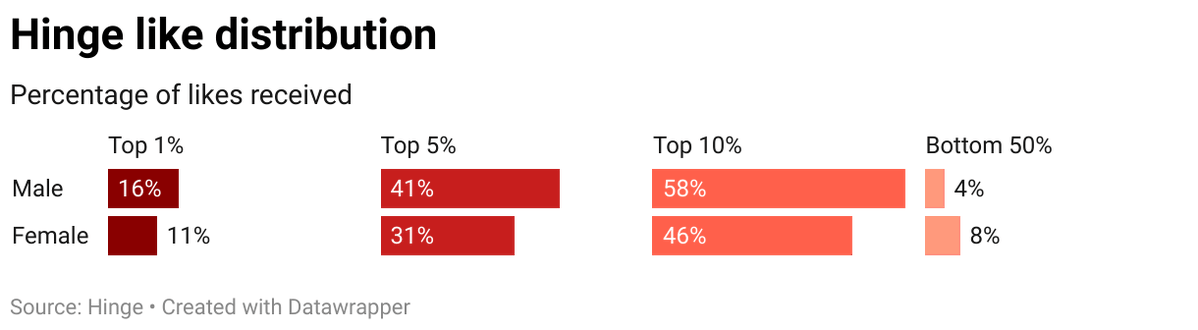
The male Hinge data is often brought up, showing a steep skew in likes received. What's typically left out is the female data showing a similar skew only slightly less steep. Image
Read 16 tweets
Jun 3, 2025
Results from some recent European sex surveys.

1. French 2023 survey.
Median age at first sex is rising.
🧵 Image
74.1% of men and 79.4% of women aged 18-29 had had sex in the past year, down from ~85% in earlier years. Image
43.5% of men and 39.4% of women aged 18-29 had met a sex partner online. Image
Read 12 tweets

Did Thread Reader help you today?

Support us! We are indie developers!


This site is made by just two indie developers on a laptop doing marketing, support and development! Read more about the story.

Become a Premium Member ($3/month or $30/year) and get exclusive features!

Become Premium

Don't want to be a Premium member but still want to support us?

Make a small donation by buying us coffee ($5) or help with server cost ($10)

Donate via Paypal

Or Donate anonymously using crypto!

Ethereum

0xfe58350B80634f60Fa6Dc149a72b4DFbc17D341E copy

Bitcoin

3ATGMxNzCUFzxpMCHL5sWSt4DVtS8UqXpi copy

Thank you for your support!

Follow Us!

:(