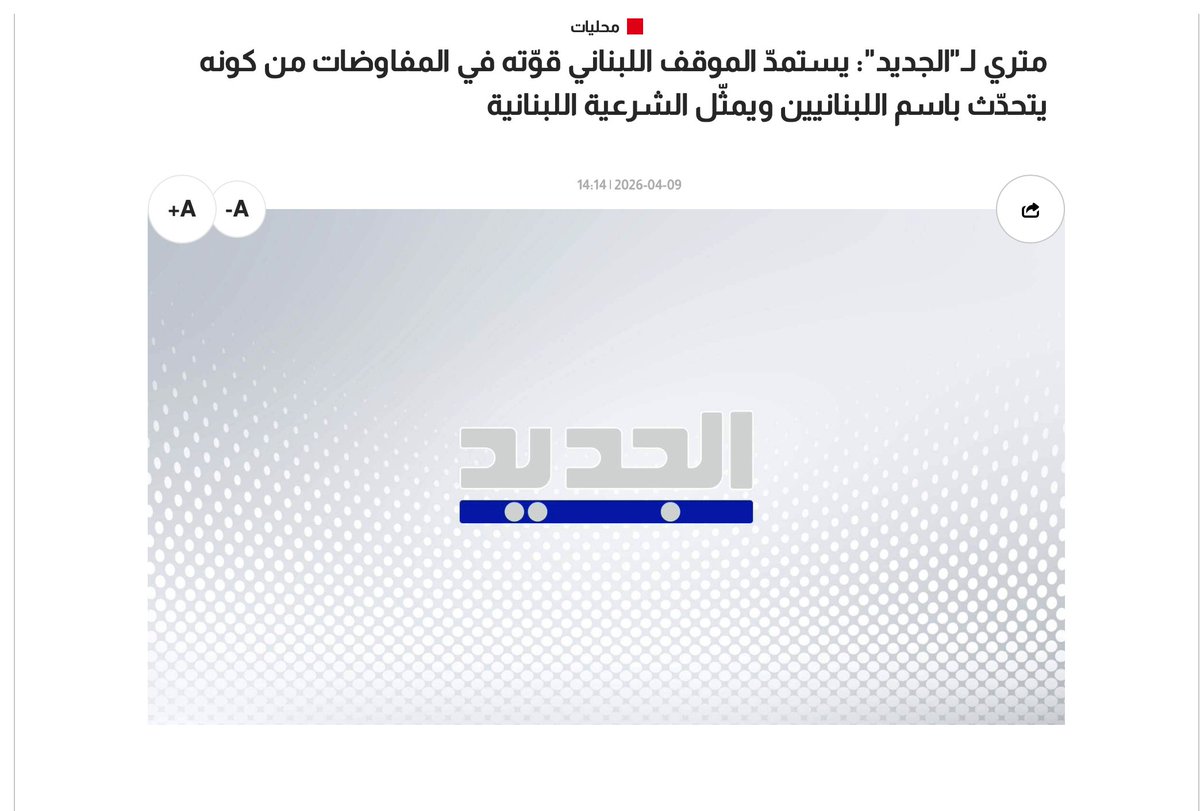
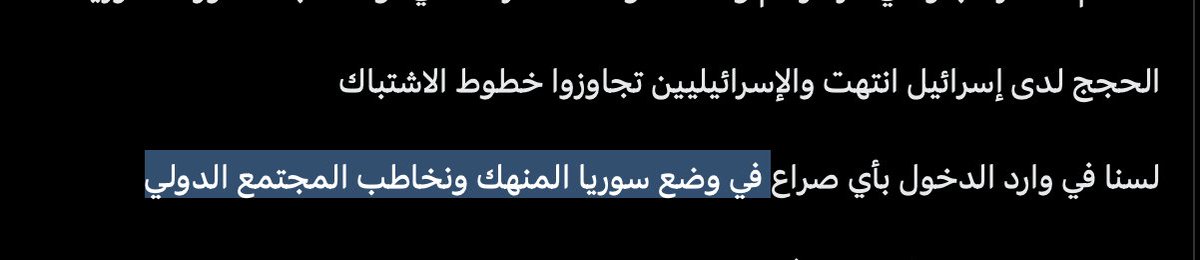
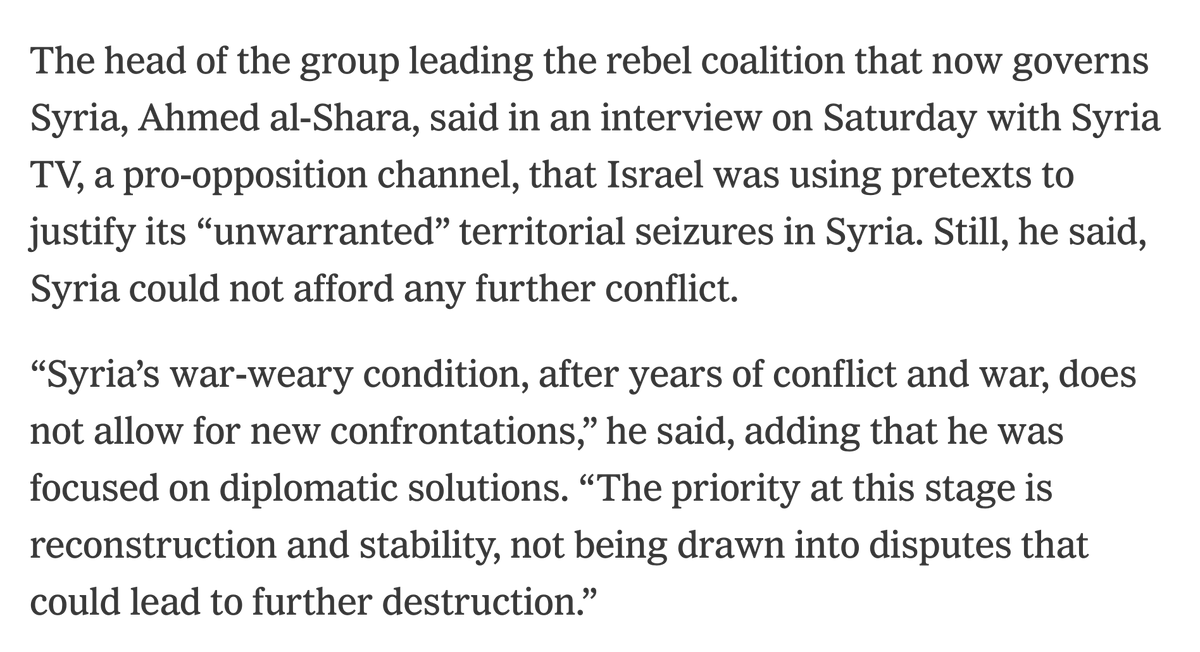
When @MouinRabbani claims Hezbollah originated in 1982 as a response to the Israeli invasion of Lebanon...
https://twitter.com/DavidADaoud/status/2038971621902287273
and when @MouinRabbani even more absurdly claims Hezbollah is not a proxy of Iran:
-Hezbollah's 1985 Open Letter: "We, the sons of the umma of Hezbollah, consider ourselves an inseparable part of the global Islamic umma...we are the sons of the umma of Hezbollah whose vanguard God granted victory in Iran...we adhere to the orders of one, wise, just leadership represented by the Wali Al Faqih." umambiblio.org/AR/book_detail…
-Hassan Nasrallah -- in the Q&A section after announcing the 2009 Political Document. Nasrallah is asked:
Q- "In 1985, you spoke of one wise leadership, the wali al-faqih, and your commitment to that leadership. Today you speak of development and transformation in the party. How do you reconcile building the state with commitment to that leadership? Has Hezbollah become a fully Lebanese party? And does building state institutions mean Hezbollah is abandoning resort to arms?"
A-Nasrallah: "Our position on the issue of Wilayat al-Faqih is an intellectual, doctrinal, and religious position, not a political position subject to review.” “موقفنا من مسألة ولاية الفقيه هو موقف فكري وعقائدي وديني وليس موقف سياسي خاضع للمراجعة.”
nahjalwelaya.com/nasrolah-moata…
-Then Deputy Secretary-General Naim Qassem, January 5, 2016 interview with Al Mayadeen's Islamiyun Wa Baad:
"the Open Letter was a “permanent and continuous document” — Arabic: “وثيقة دائمة ومستمرة” — and the 2009 Political Document made only “minor/trivial” adjustments (تعديلات طفيفة) that had no effect on Hezbollah’s core ideology. youtube.com/watch?v=NJwWBq…
-Then Deputy Secretary-General Naim Qassem, in an Al Ahed item on June 20, 2022 described the original founding “document of the nine” as reflecting Hezbollah’s Islamic vision, commitment to Wilayat al-Faqih under Khomeini, and belief in jihadist resistance against Israel, and then identified the February 16, 1985 Open Letter as the public/political declaration of Hezbollah’s ideological, jihadist, and political vision.
Re the Document of the Nine, Qassem said:
“Hezbollah was founded in 1982 after the Islamic and clerical forces and personalities active on the scene came together to form a committee composed of nine individuals called the ‘Nine-Member Committee.’ It was composed of: three from the Clerical Gathering in the Beqaa, three from the Islamic Committees, and three from the Islamic Amal Movement. The nine carried one document that had been agreed upon by the parties represented in it, setting out their Islamic vision, their commitment to the line of Wilayat al-Faqih under the leadership of Imam Khomeini, their belief in jihadist resistance action to confront ‘Israel’ and liberate the land, and their readiness to form a unified framework as an alternative to all the frameworks that had produced the Document of the Nine.”
Re: The Open Letter, Qassem said: "Hezbollah announced its public and political presence on the first annual commemoration of the martyrdom of Sheikh Ragheb Harb, on February 16, 1985, through a document setting out its intellectual, jihadist, and political vision, which was called the ‘Open Letter.’ With it began declared political action and media appearance accompanying the work of the Islamic Resistance."
alahednews.news/article.php?ci…
-Hezbollah's 1985 Open Letter: "We, the sons of the umma of Hezbollah, consider ourselves an inseparable part of the global Islamic umma...we are the sons of the umma of Hezbollah whose vanguard God granted victory in Iran...we adhere to the orders of one, wise, just leadership represented by the Wali Al Faqih." umambiblio.org/AR/book_detail…
-Hassan Nasrallah -- in the Q&A section after announcing the 2009 Political Document. Nasrallah is asked:
Q- "In 1985, you spoke of one wise leadership, the wali al-faqih, and your commitment to that leadership. Today you speak of development and transformation in the party. How do you reconcile building the state with commitment to that leadership? Has Hezbollah become a fully Lebanese party? And does building state institutions mean Hezbollah is abandoning resort to arms?"
A-Nasrallah: "Our position on the issue of Wilayat al-Faqih is an intellectual, doctrinal, and religious position, not a political position subject to review.” “موقفنا من مسألة ولاية الفقيه هو موقف فكري وعقائدي وديني وليس موقف سياسي خاضع للمراجعة.”
nahjalwelaya.com/nasrolah-moata…
-Then Deputy Secretary-General Naim Qassem, January 5, 2016 interview with Al Mayadeen's Islamiyun Wa Baad:
"the Open Letter was a “permanent and continuous document” — Arabic: “وثيقة دائمة ومستمرة” — and the 2009 Political Document made only “minor/trivial” adjustments (تعديلات طفيفة) that had no effect on Hezbollah’s core ideology. youtube.com/watch?v=NJwWBq…
-Then Deputy Secretary-General Naim Qassem, in an Al Ahed item on June 20, 2022 described the original founding “document of the nine” as reflecting Hezbollah’s Islamic vision, commitment to Wilayat al-Faqih under Khomeini, and belief in jihadist resistance against Israel, and then identified the February 16, 1985 Open Letter as the public/political declaration of Hezbollah’s ideological, jihadist, and political vision.
Re the Document of the Nine, Qassem said:
“Hezbollah was founded in 1982 after the Islamic and clerical forces and personalities active on the scene came together to form a committee composed of nine individuals called the ‘Nine-Member Committee.’ It was composed of: three from the Clerical Gathering in the Beqaa, three from the Islamic Committees, and three from the Islamic Amal Movement. The nine carried one document that had been agreed upon by the parties represented in it, setting out their Islamic vision, their commitment to the line of Wilayat al-Faqih under the leadership of Imam Khomeini, their belief in jihadist resistance action to confront ‘Israel’ and liberate the land, and their readiness to form a unified framework as an alternative to all the frameworks that had produced the Document of the Nine.”
Re: The Open Letter, Qassem said: "Hezbollah announced its public and political presence on the first annual commemoration of the martyrdom of Sheikh Ragheb Harb, on February 16, 1985, through a document setting out its intellectual, jihadist, and political vision, which was called the ‘Open Letter.’ With it began declared political action and media appearance accompanying the work of the Islamic Resistance."
alahednews.news/article.php?ci…
When @MouinRabbani talks about obligations under ceasefire agreements, and Israel and Lebanon's respective obligations under the November 27, 2024 ceasefire agreement (vs. April 16, 2026.
1. The full text of the agreements:
-November 27, 2024: peaceagreements.org/media/document…
-April 16, 2026: state.gov/releases/offic…
2. Israel/Lebanon's obligations under the November 27, 2024, ceasefire agreement:
"These understandings reflect steps to which Israel and Lebanon are committed in order to implement fully UN Security Council Resolution 1701, recognizing that UNSCR 1701 also calls for full implementation of its predecessor UNSC resolutions, including “disarmament of all armed groups in Lebanon,” so that the only forces authorized to carry arms in Lebanon will be the Lebanese Armed Forces, Internal Security Forces, Directorate of General Security, General Directorate of State Security, Lebanese Customs and Municipal Police (“Lebanon’s official military and security forces”). To that end, the U.S. and France understand the following:
...
2.From 4 a.m., November 27, 2024 forward, the Government of Lebanon will prevent Hezbollah and all other armed groups in the territory of Lebanon from carrying out any operations against Israel, and Israel will not carry out any offensive military operations against Lebanese targets, including civilian, military or other state targets, in the territory of Lebanon by land, air or sea.
3.Israel and Lebanon recognize the importance of UNSCR 1701 to achieving lasting peace and security and commit to taking steps toward its full implementation, without violation.
4.These commitments do not preclude either Israel or Lebanon from exercising their inherent right of self-defense, consistent with international law.
5.Without prejudice to the UN Interim Force in Lebanon and its responsibilities, or to commitments in UNSCR 1701 and its predecessor resolutions, Lebanon’s official military and security forces, infrastructure and weaponry will be the only armed groups, arms and related materiel deployed in the southern Litani area shown in the attached LAF Deployment Plan (“the Southern Litani Area”).
6. Consistent with UNSCR 1701 and its predecessor resolutions, in order to prevent the re-establishment and rearmament of non-state armed groups in Lebanon, any sales or supply of arms and related materiel into Lebanon will be regulated and controlled by the Government of Lebanon. Additionally, all production of arms and related materiel within Lebanon will be regulated and controlled by the Government of Lebanon.
7. In order to implement UNSCR 1701, and upon the commencement of the cessation of hostilities according to paragraph one, the Government of Lebanon will provide all necessary authorities, including freedom of movement, to Lebanon’s official military and security forces, and instruct them, consistent with UNSCR 1701 and its predecessor resolutions, to:
...
b.Starting with the Southern Litani Area, dismantle all existing unauthorized facilities involved in the production of arms and related materiel, and prevent the establishment of such facilities in the future.
c. Starting with the Southern Litani Area, dismantle all infrastructure and military positions, and confiscate all unauthorized arms inconsistent with these commitments.
3. Resolution 1701 and what it requires: longwarjournal.org/archives/2024/…
4. The scholarly consensus on how ceasefires operate under international law:
While every post-ceasefire armed action is a technical violation of such an agreement, merely enumerating those actions fails to account for whether those “violations” are justified by considerations of self-defense or one party's failure to fulfill its obligations under the agreement.
Relevantly, ceasefire instruments lack a precise legal definition – as such scholars differ on their impact on the right of belligerents to resume full hostilities. They generally agree, however, that ceasefire agreements but are temporary and can – but need not – be a preliminary step toward a peace treaty. Thus, they regulate the level of violence in a conflict rather than determine one’s existence. As such, they are governed by a distinct body of international law – jus in bello – that relates to the conduct of hostilities rather than their initiation.
Some scholars would argue that general ceasefire instruments could permit a party resume hostilities “at will” so long as it provides the other party with advance notice while others interpret the right to resume hostilities more restrictively. A third, and more consensus, view would prohibit one party from engaging in active hostilities against the other party, subject to the latter party's compliance with the specific terms and obligationsunder agreement -- in the case of the November 27, 2024 ceasefire agreement: for Israel to cease offensive military operations in Lebanon, and for Lebanon to disarm and dismantle Hezbollah and prevent its regeneration. These scholars seem to define ceasefires as “contracts to manage the relationship and conduct of parties during a ceasefire, layered on top of the existing law of armed conflict.”
They argue that, as with a contract, serious violations of a ceasefire agreement’s terms by one party entitles the other party to employ self-help measures “and even, in cases of urgency, of recommencing hostilities immediately” – but under the terms and conditions of the ceasefire itself rather than in reference to peacetime jus ad bellum. Practically, what this means, is that acts of force by Hezbollah or Hezbollah's attempts at regeneration -- which are prohibited by the deal itself and by UNSC Resolution 1701 which is incorporated by reference -- OR failures to enforce the terms of the ceasefire deal by Lebanon falling short of an armed attack could be viewed as a serious violation that entitles Israel to undertake self-help measures.
The fact of the matter is that between November 27, 2024 and March 2, 2026: Lebanon did not undertake a single meaningful action to fulfill its obligations under the November 27, 2024 agreement or Resolution 1701 -- obligations which it, as the sovereign, undertook.
Rather, at different points, Lebanon not only shirked its obligations under these documents, but falsely claimed to have fulfilled them (as with LAF's January 8, 2026 certification that it had taken operational control over the Southern Litani Area).
Under these same documents, Hezbollah had no right to rearm, maintain its arsenal, or engage in any action against Israel. Hezbollah was obligated to disarm. And yet:
- On July 8, 2025 Hezbollah Sec.Gen. Naim Qassem denied Hezbollah had evacuated the Southern Litani Area:
Ghassan Ben Jeddou: “Okay, what was mentioned about the clearance of five hundred depots of your medium and heavy weapons — their clearance by the concerned parties here?”
Naim Qassem: “They are talking about the thing they saw south of the Litani River. The country is wide, praise be to God. Anyway, I will not speak about this detail.”
alahednews.news/post/84488/المقابلة-الكاملة-للأمين-العام-لحزب-الله-مع-قناة-الميادين%C2%A0
-On September 27, 2025 Hezbollah Sec.Gen. Naim Qassem boasted about rearmament outpacing Israeli attacks:
"After the agreement until now, ten months have passed. During the ten months, we were in a race: the enemy, together with those who support it, was moving quickly in order to achieve its objective again; and the Resistance, its people, its army, and those who support it were also moving at a certain speed in order to prevent Israel from achieving its objective, and in order to repair its situation
...
Also, we have recovered from the jihadi (i.e. military) side, but I will not speak about this subject much. I will suffice by saying that we are advancing, that we are repairing, and that we are present for any defense in confronting the Israeli enemy. All these achievements that occurred — and they are continuing, accumulating, and escalating, God willing — were in a state of racing with the Israeli-American project. Yes, we beat them to it; we were able to remain in the field, and they were not able to achieve the objective through politics after they failed through direct military means and direct war.”
alahednews.news/post/87587/كلمة-الشيخ-قاسم-في-ذكرى-استشهاد-السيدين-نصر-الله-وصفي-الدين
-On February 3, 2026, Hezbollah Sec. Gen. Naim Qassem refused to confirm LAF's claim that the task of disarming Hezbollah south of the Litani River was "finished."
"Do you know what was asked of us when the Army Commander announced that he had finished the South Litani stage? We were asked to issue a statement.
Why should we issue a statement? They said: issue a statement, meaning commit in it that South Litani is finished. We have nothing to do with saying whether it is finished or not finished. There is an Army Command, and there are concerned people; they are the ones who say what they did. They want to take any word from us in order to load us with responsibilities that we do not bear. Tell them, brother, let them take this commitment themselves."
alahednews.news/post/93325/
Int'l law/scholarly sources on ceasefires:
-Marika Sosnowski, “’Not dead but sleeping’: Expanding International Law to Better Regulate the Diverse Effects of Ceasefire Agreements,” Cambridge University Press, June 11, 2020, p. 731-743 (cambridge.org/core/services/…)
-Dan Maurer, “Israel-Hamas 2023 Symposium – Law of Truce,” Lieber Institute at West Point’s Articles of War, November 21, 2023. (lieber.westpoint.edu/law-of-truce/)
-“CeaseFire,” The Practical Guide to Humanitarian Law: Medecins Sans Frontieres. (guide-humanitarian-law.org/content/articl…);
-Christine Bell, “Ceasefire,” Oxford Public International Law (opil.ouplaw.com/display/10.109…)
-“Ceasefire,” ICRC.org, (casebook.icrc.org/a_to_z/glossar…);
-Peter S. Konchak, “Ceasefire in International Armed Conflict: Implications for Jus Ad Bellum Self-Defense,” Lieber Institute at West Point’s Articles of War, lieber.westpoint.edu/ceasefire-inte…
-Yoram Dinstein, War, Aggression, and Self-Defense (Cambridge, Cambridge University Press, 2006), p. 59-62; “Hague Regulations: Article 36,” ICRC International Humanitarian Law Databases, (ihl-databases.icrc.org/en/ihl-treatie…
-“Hague Regulations: Article 37,” ICRC International Humanitarian Law Databases. (ihl-databases.icrc.org/en/ihl-treatie…);
-“Hague Regulations: Article 39,” ICRC International Humanitarian Law Databases,(ihl-databases.icrc.org/en/ihl-treatie…) ;
-Christopher Greenwood, “Cease-fire and Armistice,” The Handbook of International Humanitarian Law, Ed. Dieter Fleck, (Oxford, Oxford University Press, 2008), p.66-70;
-“Declaration on Principles of International Law concerning Friendly Relations and Cooperation among States in accordance with the Charter of the United Nations,” United Nations Digital Library, October 24, 1970 (digitallibrary.un.org/record/202170?…);
-Tom Ruys, Felipe Rodriguez Silvestre, “Military Action to recover Occupied Land: Lawful Self-defense or Prohibited Use of Force? The 202 Nagorno-Karabakh Conflict Revisited,” Stockton Center for International Law’s International Law Studies, 2021. (digital-commons.usnwc.edu/cgi/viewconten…)
-“Hague Regulations: Article 40,” ICRC International Humanitarian Law Databases (ihl-databases.icrc.org/en/ihl-treatie…)
5. The difference between the November 2024 and April 2026 agreements, and why the April 16, 2026 agreement is more restrictive of Israeli freedom of action than the November 27 agreement: longwarjournal.org/archives/2026/…
1. The full text of the agreements:
-November 27, 2024: peaceagreements.org/media/document…
-April 16, 2026: state.gov/releases/offic…
2. Israel/Lebanon's obligations under the November 27, 2024, ceasefire agreement:
"These understandings reflect steps to which Israel and Lebanon are committed in order to implement fully UN Security Council Resolution 1701, recognizing that UNSCR 1701 also calls for full implementation of its predecessor UNSC resolutions, including “disarmament of all armed groups in Lebanon,” so that the only forces authorized to carry arms in Lebanon will be the Lebanese Armed Forces, Internal Security Forces, Directorate of General Security, General Directorate of State Security, Lebanese Customs and Municipal Police (“Lebanon’s official military and security forces”). To that end, the U.S. and France understand the following:
...
2.From 4 a.m., November 27, 2024 forward, the Government of Lebanon will prevent Hezbollah and all other armed groups in the territory of Lebanon from carrying out any operations against Israel, and Israel will not carry out any offensive military operations against Lebanese targets, including civilian, military or other state targets, in the territory of Lebanon by land, air or sea.
3.Israel and Lebanon recognize the importance of UNSCR 1701 to achieving lasting peace and security and commit to taking steps toward its full implementation, without violation.
4.These commitments do not preclude either Israel or Lebanon from exercising their inherent right of self-defense, consistent with international law.
5.Without prejudice to the UN Interim Force in Lebanon and its responsibilities, or to commitments in UNSCR 1701 and its predecessor resolutions, Lebanon’s official military and security forces, infrastructure and weaponry will be the only armed groups, arms and related materiel deployed in the southern Litani area shown in the attached LAF Deployment Plan (“the Southern Litani Area”).
6. Consistent with UNSCR 1701 and its predecessor resolutions, in order to prevent the re-establishment and rearmament of non-state armed groups in Lebanon, any sales or supply of arms and related materiel into Lebanon will be regulated and controlled by the Government of Lebanon. Additionally, all production of arms and related materiel within Lebanon will be regulated and controlled by the Government of Lebanon.
7. In order to implement UNSCR 1701, and upon the commencement of the cessation of hostilities according to paragraph one, the Government of Lebanon will provide all necessary authorities, including freedom of movement, to Lebanon’s official military and security forces, and instruct them, consistent with UNSCR 1701 and its predecessor resolutions, to:
...
b.Starting with the Southern Litani Area, dismantle all existing unauthorized facilities involved in the production of arms and related materiel, and prevent the establishment of such facilities in the future.
c. Starting with the Southern Litani Area, dismantle all infrastructure and military positions, and confiscate all unauthorized arms inconsistent with these commitments.
3. Resolution 1701 and what it requires: longwarjournal.org/archives/2024/…
4. The scholarly consensus on how ceasefires operate under international law:
While every post-ceasefire armed action is a technical violation of such an agreement, merely enumerating those actions fails to account for whether those “violations” are justified by considerations of self-defense or one party's failure to fulfill its obligations under the agreement.
Relevantly, ceasefire instruments lack a precise legal definition – as such scholars differ on their impact on the right of belligerents to resume full hostilities. They generally agree, however, that ceasefire agreements but are temporary and can – but need not – be a preliminary step toward a peace treaty. Thus, they regulate the level of violence in a conflict rather than determine one’s existence. As such, they are governed by a distinct body of international law – jus in bello – that relates to the conduct of hostilities rather than their initiation.
Some scholars would argue that general ceasefire instruments could permit a party resume hostilities “at will” so long as it provides the other party with advance notice while others interpret the right to resume hostilities more restrictively. A third, and more consensus, view would prohibit one party from engaging in active hostilities against the other party, subject to the latter party's compliance with the specific terms and obligationsunder agreement -- in the case of the November 27, 2024 ceasefire agreement: for Israel to cease offensive military operations in Lebanon, and for Lebanon to disarm and dismantle Hezbollah and prevent its regeneration. These scholars seem to define ceasefires as “contracts to manage the relationship and conduct of parties during a ceasefire, layered on top of the existing law of armed conflict.”
They argue that, as with a contract, serious violations of a ceasefire agreement’s terms by one party entitles the other party to employ self-help measures “and even, in cases of urgency, of recommencing hostilities immediately” – but under the terms and conditions of the ceasefire itself rather than in reference to peacetime jus ad bellum. Practically, what this means, is that acts of force by Hezbollah or Hezbollah's attempts at regeneration -- which are prohibited by the deal itself and by UNSC Resolution 1701 which is incorporated by reference -- OR failures to enforce the terms of the ceasefire deal by Lebanon falling short of an armed attack could be viewed as a serious violation that entitles Israel to undertake self-help measures.
The fact of the matter is that between November 27, 2024 and March 2, 2026: Lebanon did not undertake a single meaningful action to fulfill its obligations under the November 27, 2024 agreement or Resolution 1701 -- obligations which it, as the sovereign, undertook.
Rather, at different points, Lebanon not only shirked its obligations under these documents, but falsely claimed to have fulfilled them (as with LAF's January 8, 2026 certification that it had taken operational control over the Southern Litani Area).
Under these same documents, Hezbollah had no right to rearm, maintain its arsenal, or engage in any action against Israel. Hezbollah was obligated to disarm. And yet:
- On July 8, 2025 Hezbollah Sec.Gen. Naim Qassem denied Hezbollah had evacuated the Southern Litani Area:
Ghassan Ben Jeddou: “Okay, what was mentioned about the clearance of five hundred depots of your medium and heavy weapons — their clearance by the concerned parties here?”
Naim Qassem: “They are talking about the thing they saw south of the Litani River. The country is wide, praise be to God. Anyway, I will not speak about this detail.”
alahednews.news/post/84488/المقابلة-الكاملة-للأمين-العام-لحزب-الله-مع-قناة-الميادين%C2%A0
-On September 27, 2025 Hezbollah Sec.Gen. Naim Qassem boasted about rearmament outpacing Israeli attacks:
"After the agreement until now, ten months have passed. During the ten months, we were in a race: the enemy, together with those who support it, was moving quickly in order to achieve its objective again; and the Resistance, its people, its army, and those who support it were also moving at a certain speed in order to prevent Israel from achieving its objective, and in order to repair its situation
...
Also, we have recovered from the jihadi (i.e. military) side, but I will not speak about this subject much. I will suffice by saying that we are advancing, that we are repairing, and that we are present for any defense in confronting the Israeli enemy. All these achievements that occurred — and they are continuing, accumulating, and escalating, God willing — were in a state of racing with the Israeli-American project. Yes, we beat them to it; we were able to remain in the field, and they were not able to achieve the objective through politics after they failed through direct military means and direct war.”
alahednews.news/post/87587/كلمة-الشيخ-قاسم-في-ذكرى-استشهاد-السيدين-نصر-الله-وصفي-الدين
-On February 3, 2026, Hezbollah Sec. Gen. Naim Qassem refused to confirm LAF's claim that the task of disarming Hezbollah south of the Litani River was "finished."
"Do you know what was asked of us when the Army Commander announced that he had finished the South Litani stage? We were asked to issue a statement.
Why should we issue a statement? They said: issue a statement, meaning commit in it that South Litani is finished. We have nothing to do with saying whether it is finished or not finished. There is an Army Command, and there are concerned people; they are the ones who say what they did. They want to take any word from us in order to load us with responsibilities that we do not bear. Tell them, brother, let them take this commitment themselves."
alahednews.news/post/93325/
Int'l law/scholarly sources on ceasefires:
-Marika Sosnowski, “’Not dead but sleeping’: Expanding International Law to Better Regulate the Diverse Effects of Ceasefire Agreements,” Cambridge University Press, June 11, 2020, p. 731-743 (cambridge.org/core/services/…)
-Dan Maurer, “Israel-Hamas 2023 Symposium – Law of Truce,” Lieber Institute at West Point’s Articles of War, November 21, 2023. (lieber.westpoint.edu/law-of-truce/)
-“CeaseFire,” The Practical Guide to Humanitarian Law: Medecins Sans Frontieres. (guide-humanitarian-law.org/content/articl…);
-Christine Bell, “Ceasefire,” Oxford Public International Law (opil.ouplaw.com/display/10.109…)
-“Ceasefire,” ICRC.org, (casebook.icrc.org/a_to_z/glossar…);
-Peter S. Konchak, “Ceasefire in International Armed Conflict: Implications for Jus Ad Bellum Self-Defense,” Lieber Institute at West Point’s Articles of War, lieber.westpoint.edu/ceasefire-inte…
-Yoram Dinstein, War, Aggression, and Self-Defense (Cambridge, Cambridge University Press, 2006), p. 59-62; “Hague Regulations: Article 36,” ICRC International Humanitarian Law Databases, (ihl-databases.icrc.org/en/ihl-treatie…
-“Hague Regulations: Article 37,” ICRC International Humanitarian Law Databases. (ihl-databases.icrc.org/en/ihl-treatie…);
-“Hague Regulations: Article 39,” ICRC International Humanitarian Law Databases,(ihl-databases.icrc.org/en/ihl-treatie…) ;
-Christopher Greenwood, “Cease-fire and Armistice,” The Handbook of International Humanitarian Law, Ed. Dieter Fleck, (Oxford, Oxford University Press, 2008), p.66-70;
-“Declaration on Principles of International Law concerning Friendly Relations and Cooperation among States in accordance with the Charter of the United Nations,” United Nations Digital Library, October 24, 1970 (digitallibrary.un.org/record/202170?…);
-Tom Ruys, Felipe Rodriguez Silvestre, “Military Action to recover Occupied Land: Lawful Self-defense or Prohibited Use of Force? The 202 Nagorno-Karabakh Conflict Revisited,” Stockton Center for International Law’s International Law Studies, 2021. (digital-commons.usnwc.edu/cgi/viewconten…)
-“Hague Regulations: Article 40,” ICRC International Humanitarian Law Databases (ihl-databases.icrc.org/en/ihl-treatie…)
5. The difference between the November 2024 and April 2026 agreements, and why the April 16, 2026 agreement is more restrictive of Israeli freedom of action than the November 27 agreement: longwarjournal.org/archives/2026/…

Mouin, lacking any ability to respond on the merits, will call this "obfuscation." He will probably throw in some ad hominem attacks and logically fallacious responses for good measure.
I'm truly sorry that he thinks facts are obfuscation and that he has to resort to such base means to cover his lack of a substantive response.
I'm truly sorry that he thinks facts are obfuscation and that he has to resort to such base means to cover his lack of a substantive response.
• • •
Missing some Tweet in this thread? You can try to
force a refresh