Ancestral 'frozen' SARS2 genomes generated from UNC Hospital patients in 2020/21 indicate potential lab acquired infections
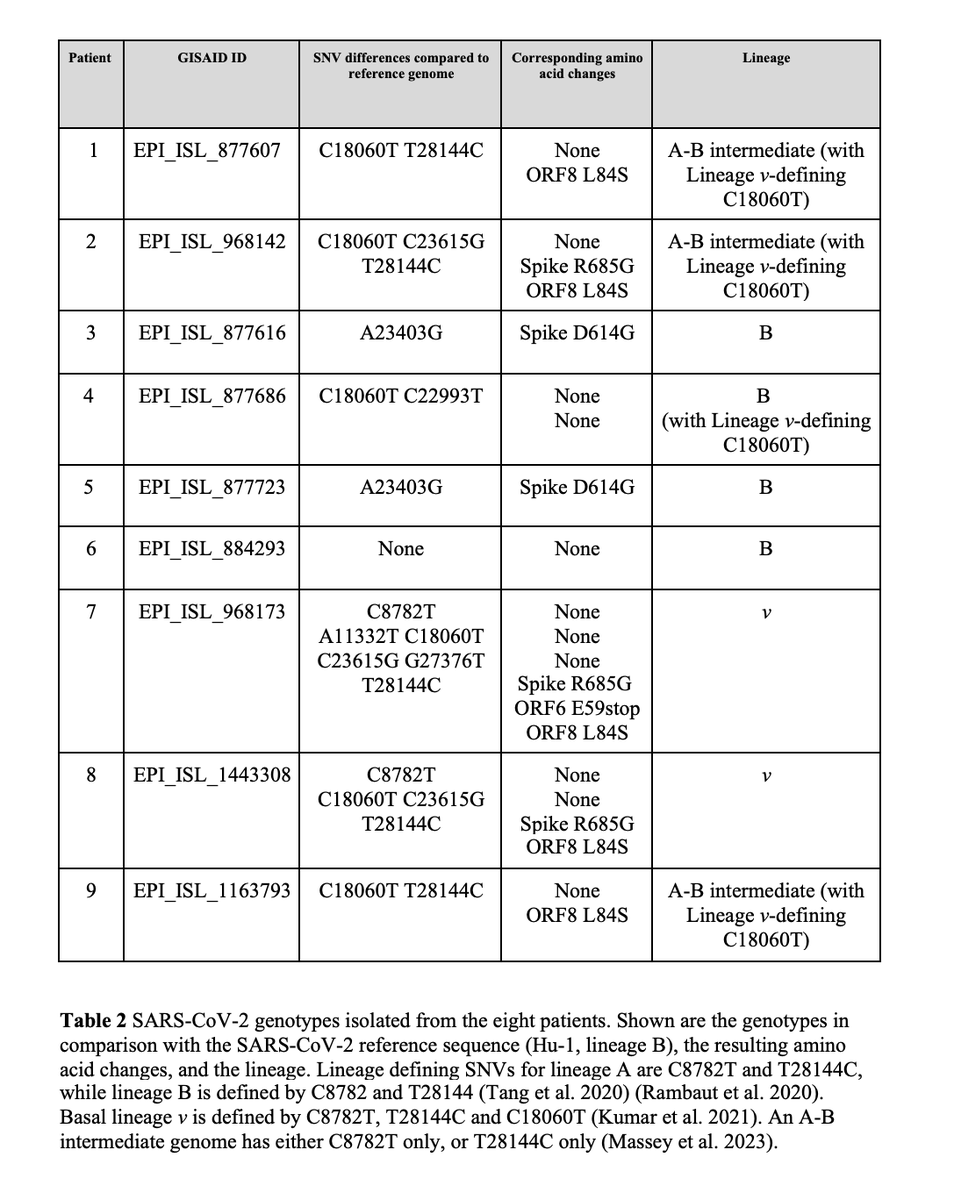
3 genomes have non-natural mutation R685G, a strong signature of engineering
The UNC response to the alert has been one of suppression 🧵
3 genomes have non-natural mutation R685G, a strong signature of engineering
The UNC response to the alert has been one of suppression 🧵

@pricklyresearch @UNC @Baric_Lab @alisonannyoung @BiosafetyNow 1/ @quay_dr and myself have released an updated preprint that explores 9 anomalous GISAID sequences generated by the Dr Dirk Dittmer's UNC Medical School's Vironomics Core from samples collected from patients from UNC Hospital May 2020 - Jan 2021
doi.org/10.5281/zenodo…
doi.org/10.5281/zenodo…
2/ UNC is the premier coronavirus research institution in the world, with links to the WIV, and a controversial involvement in Gain of Function research into bat coronaviruses
Its BSL3 facility has had a number of biosafety breaches over the years
propublica.org/article/here-a…
Its BSL3 facility has had a number of biosafety breaches over the years
propublica.org/article/here-a…
3/ The 9 sequences we identified are striking as they are ancestral (ie 'frozen'), dating to the very start of the pandemic. In the period May 2020-Jan 2021 they would be expected to have substantially more SNVs than they actually show

4/ This can be seen on haplotype networks of the suspect sequences, when compared with other North Carolina sequences sampled in the same time period


5/


6/ 4 sequences show close affinity to SARS2 reference sequence Hu-1, while 5 show close affinity to WA1, identified as the SARS2 progenitor by Kumar et al ('lineage v')
Importantly, 'live' WA1 was used at UNC during that time 2020-21 as a reference strain
Importantly, 'live' WA1 was used at UNC during that time 2020-21 as a reference strain
7/ 7 of the sequences lack the compensatory D614G mutation, which arose early in the pandemic and rapidly became dominant by May/June 2020. For the time period May 2020 - Jan 2021, its absence is striking, and another indicator of an anomalous ancestral state

8/ Most remarkable is the presence of R685G in 3 sequences. This mutation occurs in the furin cleavage site and is vanishingly rare in sequences on GISAID. R685G has only been referred to in the literature in connection with biotech applications, mostly vaccine work
9/ Baric published one of the few papers that mention R685G in 2024. A close UNC collaborator of Baric, Dr Lisa Gralinski, also published a paper in 2022 that referred to R685G


10/ It has also been reported that R685G can arise when serial passaging SARS2 spike in Vero cells, consistent with the propensity of Vero to select for mutations in the FCS. This means R685G may represent a signature of serial passaging in Vero
mdpi.com/2076-393X/10/2…
mdpi.com/2076-393X/10/2…
11/ The Baric lab routinely used Vero cells for serial passaging in 2020-21. For example see :
sciencedirect.com/science/articl…
sciencedirect.com/science/articl…
12/ We examine whether the 9 sequences could represent 'bioinformatic artefacts'. The SNV-calling method used by Dittmer's Core places an 'N' when read depth is low, which avoids calling the default reference sequence (typically Hu-1) at that position
13/ In a study on 61 early patient sequences, Dittmer reports that 33 negative controls were conducted, and showed low levels of cross-contamination. The Vironomics Core appears to have adequate contamination controls in place therefore
sciencedirect.com/science/articl…
sciencedirect.com/science/articl…
14/ In order to investigate these suspect sequences it will be necessary to examine the raw sequence datasets, and catalog all SARS2 serial passaging experiments conducted, infectious clones constructed and 'live' isolates possessed at UNC during that time period
15/ In addition, it would be important to know if the Vironomics Core handled any research - related samples. Their output of exclusively patient-derived sequences indicates otherwise
16/ The 9 patients should be traced and determined if they came into contact with UNC coronavirus research facilities or personnel
These measures will help verify if the sequences were due to lab acquired infections
These measures will help verify if the sequences were due to lab acquired infections
17/ The institutional response to our findings however was surprising. The correct response would be to investigate the sequences as described above
Instead, there was an attempt to suppress our report
Instead, there was an attempt to suppress our report
18/ Steve was phoned by GISAID, who said that (nameless) individuals at both UNC and the CDC had contacted them, pointing out that we had failed to format our GISAID data correctly. GISAID requested that we take down the preprint as a consequence, which we did
19/ Steve contacted Dittmer and Melissa Miller, who run the UNC Vironomics Core, by email to alert them to the findings, with no response
He also contacted Derek Kemp, Associate Vice Chancellor for Campus Safety and Risk Management at UNC, again with no reply
He also contacted Derek Kemp, Associate Vice Chancellor for Campus Safety and Risk Management at UNC, again with no reply


20/ These suppressive responses and non-responses can be viewed as an additional factor favoring a lab escape (institutional behavior can be considered a flag)
A non-response to an alert of potential lab acquired infections contravenes a variety of biosafety regulations
A non-response to an alert of potential lab acquired infections contravenes a variety of biosafety regulations

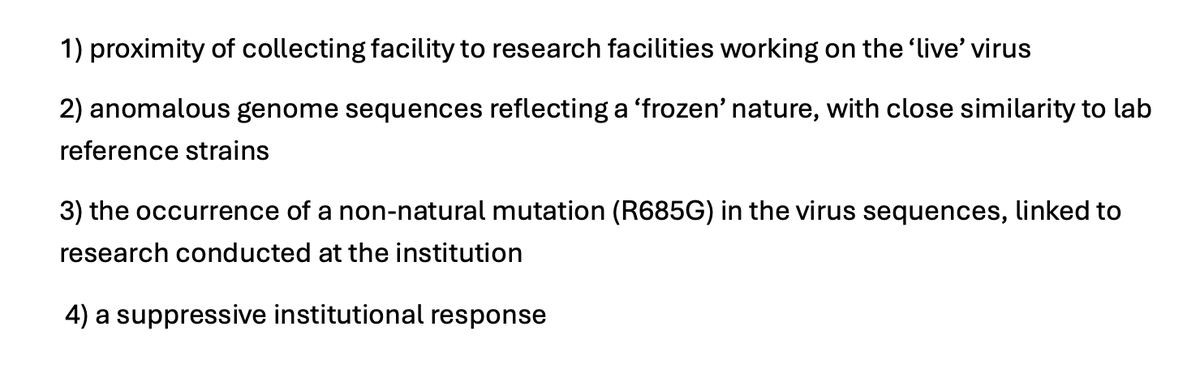
21/ To conclude, four criteria for a potential lab escape from UNC have been met and cross the threshold to trigger both internal and external investigations 👇
Failure to do so would violate fundamental principles of biosafety
Failure to do so would violate fundamental principles of biosafety
22/ h/t @gadboit @jhas5 @R_H_Ebright for alerting us to R685G
#DeSci #OSINT
@threadreaderapp unroll
#DeSci #OSINT
@threadreaderapp unroll
• • •
Missing some Tweet in this thread? You can try to
force a refresh