In the state of Wyoming, USA, lies a real hydrological oddity. It's a small stream (creek) that is thought to be one of a just a few examples in the world. It is placed so precariously and perfectly that it's hard to believe it is able to exist.
1/n
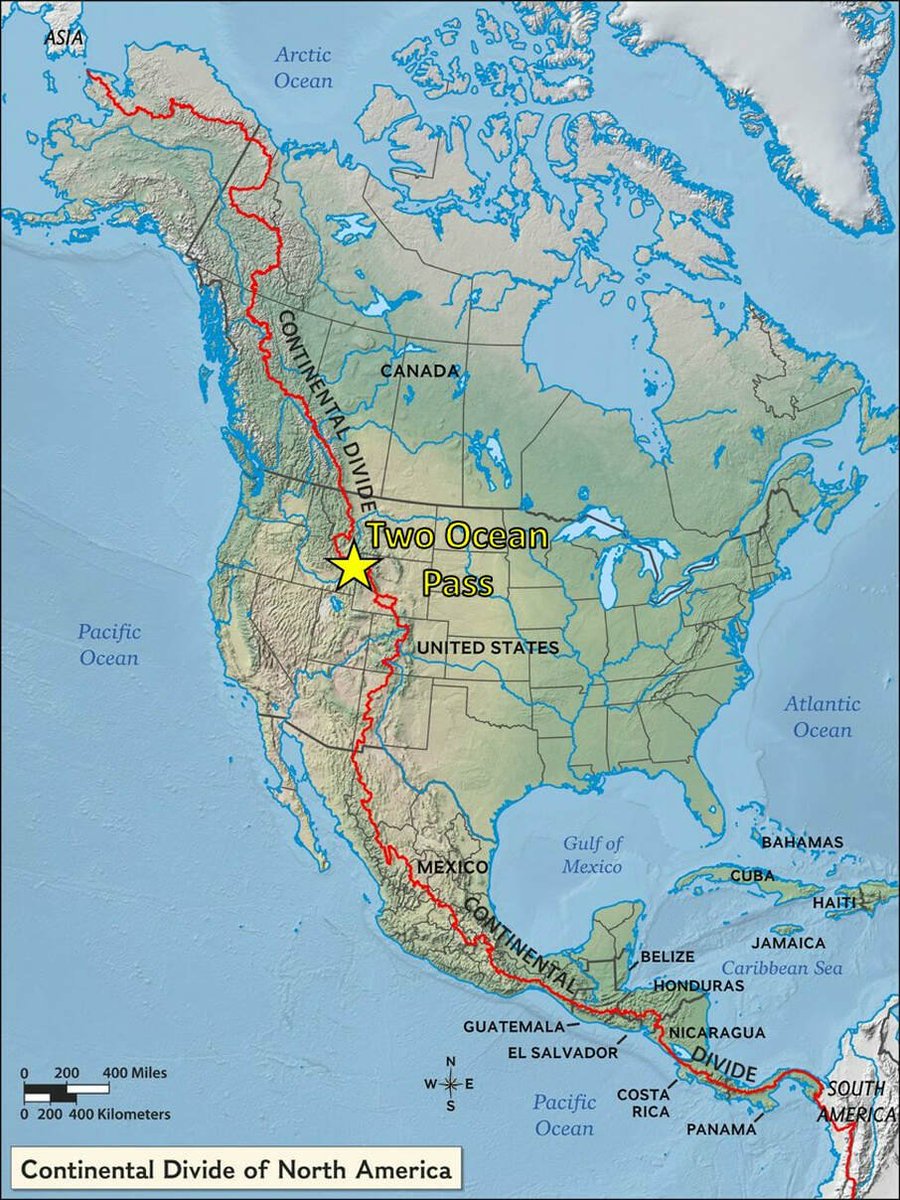
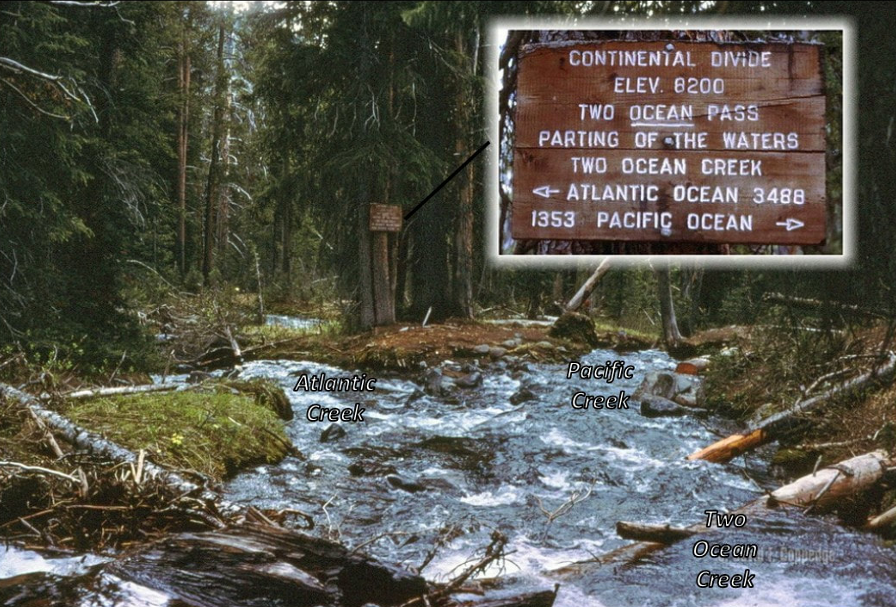
The stream in question is called North Two Ocean Creek, and for a short duration it runs right on top of the Continental divide for North America. What makes this creek so unusual is that as it spills out onto Two Ocean Pass it bifurcates.
"So what?", you might say.
2/n
On the left-hand side of this bifurcation it heads east as the 'Atlantic Creek', and west as the 'Pacific Creek'.
You can probably see now where this thread is heading.
3/n
Yes, the Atlantic Creek eventually flows 3,488 miles (5,613 km) to the Gulf of Mexico/America via the Yellowstone, Missouri and Mississippi Rivers. The Pacific Creek 1,353 miles (2,177 km) to the Pacific via the Snake and Columbia Rivers.
4/n
In the marshy area of Two Ocean Pass adjacent to Parting of the Waters (the official name of the feature), water actually covers the Continental Divide such that a fish could swim from the Pacific Ocean to the Atlantic Ocean drainages.
5/n
In fact, it is thought that this was the pass that provided the route for rare Yellowstone cutthroat trout to migrate from the Snake River (Pacific) to Yellowstone River (Atlantic) drainages. It is one of the few aquatic species that has crossed a continental divide.
6/n
Conventional wisdom states that it's not possible for a stream to flow in two different directions. It is only made possible because the North Two Ocean Creek lies directly on top of the continental divide, with a shallow ridge in the middle of it that allows water to flow in both directions.
Seismic activity in the future may change this, but for now it remains one of the few examples of a river that ends up in two different oceans. (See also Echimamish River, Isa Lake, Casiquiare Canal. However, Two Ocean Creek is the best example.)
/END
• • •
Missing some Tweet in this thread? You can try to
force a refresh

The day a Scotsman told the king to f*ck off - Another true royal story
A number of years ago, Jenny and Adam Watson’s phone rang. Adam answered it and was met by a very plummy voice asking to speak to ‘Mrs Watson’.
‘Certainly, may I ask who’s calling?’
‘Yes, it’s Charles, Prince of Wales.’
Holding the phone to his chest with some scepticism, Adam whispered to his wife, ‘I think Prince Charles is on the phone for you.’
And, sure enough, it was. HRH was vexed about some local issue and wished to discuss it with Jenny, a councilor at that time. After a brief conversation the prince invited Jenny and Adam to tea on the Balmoral estate so they could continue the discussion in a bit more detail.
Some days later Jenny and Adam duly arrived at Birkhall, on the Balmoral Estate, and met with Charles to discuss the issue that was weighing on his mind. After a period of time, when he was satisfied he’d got up to speed with the relevant information from Jenny, he changed tack to discuss something else that was on his mind.
'I've got a problem', said Charles.
1/3
‘Do you know Gordon of Abergeldie?’ continued the prince.
Those unfamiliar with the machinations of Deeside aristocracy would be forgiven for not knowing that there has apparently been bad blood between the Gordons of Abergeldie and the royal family right from the time of Queen Victoria. Why this should be I’ve no idea, but seemingly the rift did — does? — run deep. The Gordons have held Abergeldie for centuries, and it borders the Balmoral estate.
‘Yes,’ said Adam. ‘I know him well enough.’
‘I’ve simply tried everything to welcome him; to be a friendly neighbour. But he just won’t have it,’ said Charles. ‘I’ve invited him to tea, even, but nothing.’
Adam and Jenny were unable to proffer any advice to the prince on the specific subject of how he might ingratiate himself to his Abergeldie neighbour. With a shrug of the shoulders Charles then recounted an astonishing recent episode where he’d had an altercation with Gordon.
2/3
‘I was sitting just on Gordon’s side of the estate boundary, in an isolated corner, with my easel, painting the scene in the background,’ relayed the prince.
‘Just as I was halfway through, I saw a jeep tearing down the track towards me through the trees. As it drew nearer I could see it was Gordon, and he didn’t look happy,’ stated the Prince. He continued.
‘The vehicle slammed on its brakes and out came a purple-faced Gordon. “WINDSOR,” he shrieked, “take your paints and FUCK OFF MY LAND.”’
Adam and Jenny sat agog as the prince openly swore in front of them, recounting the story.
‘So, what did you do?’ replied Adam eventually, regaining his composure.
A semi-puzzled prince Charles looked back at the couple.
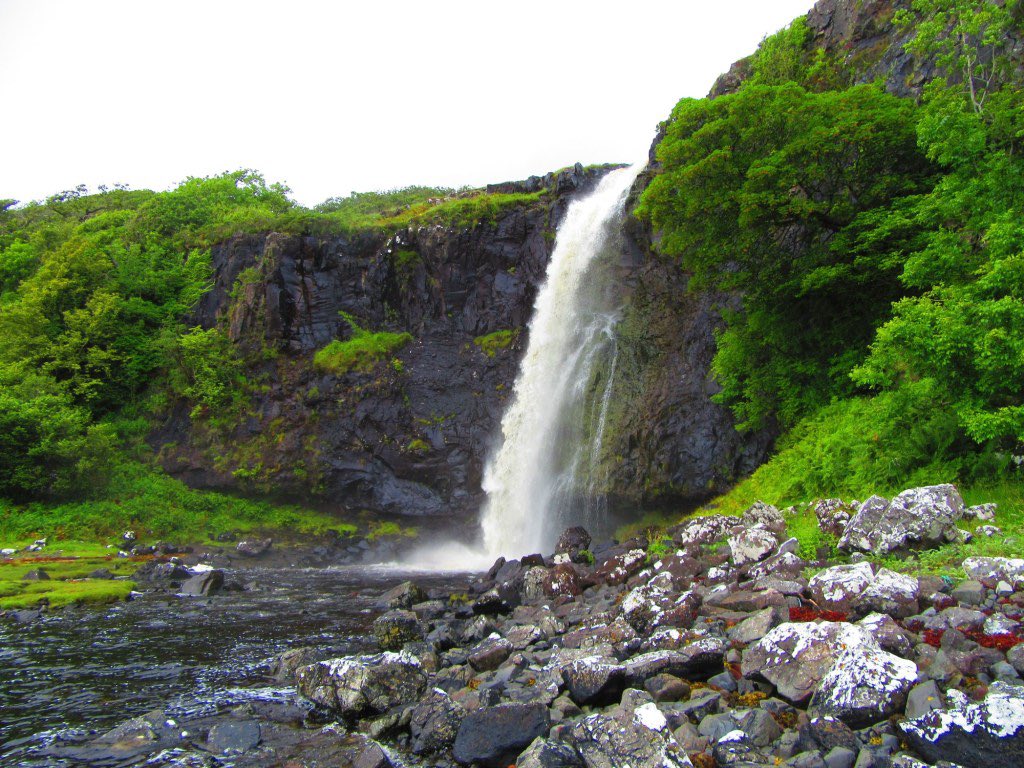
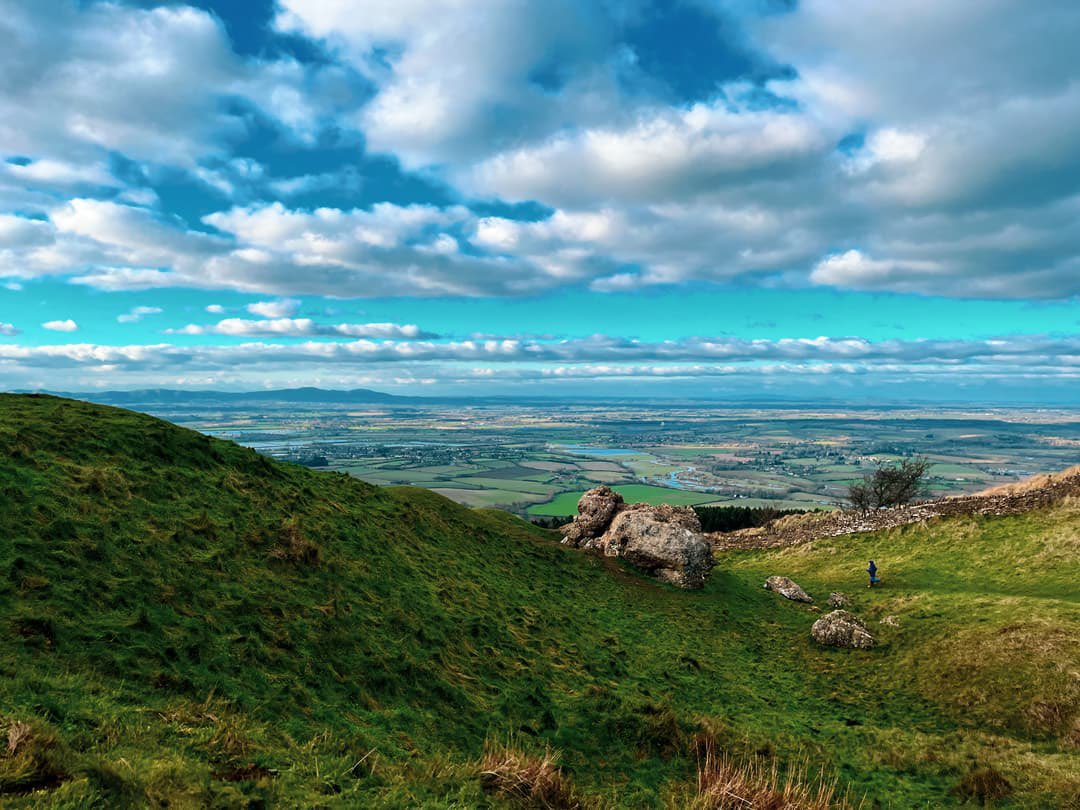
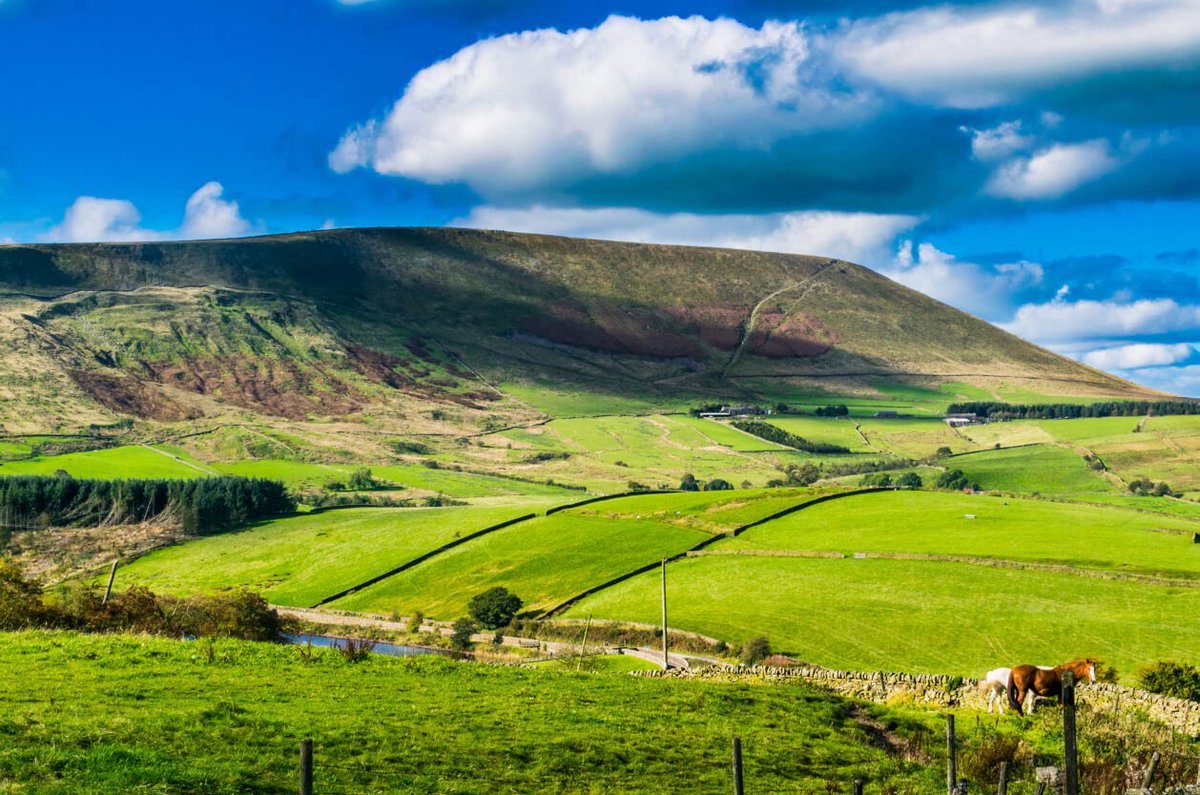
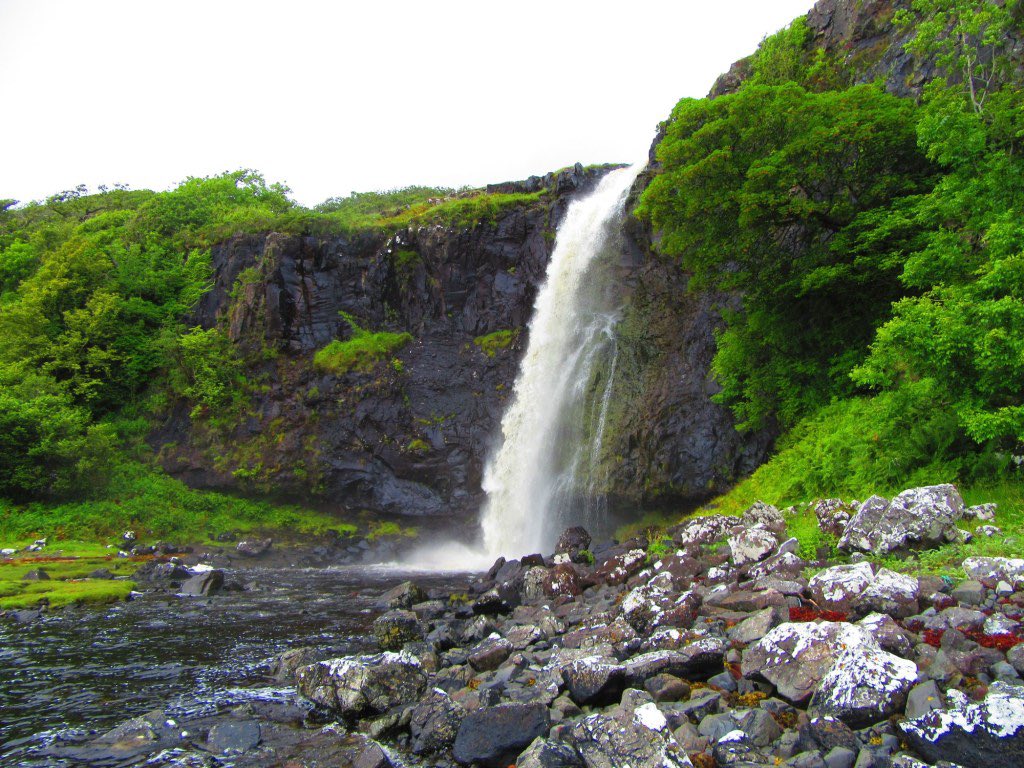
1. Eas Fors Waterfall on the Isle of Mull, Pendle Hill in Lancashire, and Bredon Hill in Worcestershire all have something very unusual in common: they are all tautological place names.
To put it another way, their names are triply redundant.
Still unsure?
1.
It is when a name means the same thing in multiple languages.
Eas Fors Waterfall
1. Eas = waterfall (Gaelic) 2. Fors = waterfall (Norse, as in ‘force’ in northern England) 3. Waterfall (English)
One of the very few names in Scotland with three names for the same feature.
2.
Pendle Hill
1. Cumbric/Brythonic pen (“hill”) 2. Old English hyll (“hill,” via Pendle from Pen-hyll) 3. Modern English “hill”
“Hill Hill Hill.”
One of the clearest and most cited examples of a triply redundant name.
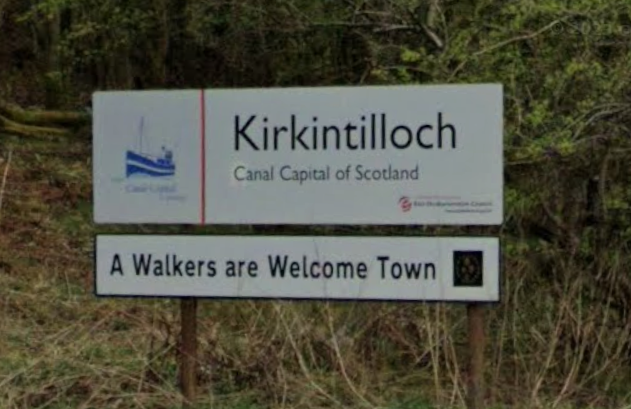
The well-known town of Kirkintilloch (Kirky to locals) lies just north of Glasgow. Its name, like Stenhousemuir's, can trace its origins back 2,000 years, well before Gaelic came to Scotland.
Spoiler alert: it has nothing whatsoever to do with a 'kirk' (church).
1.
The name is in three sections Kir-kin-tilloch. The first part, 'Kir', is from an ancient Brythonic word for 'fort': caer. The fort in question is the old Roman fort of the Antonine wall, situated in what is now Peel Park in the middle of the town.
2.
It's worth pointing out at this juncture that the town's name was first recorded as Cair Pen Taloch in the late 11th century, in Nennius’ Historia Brittonum.
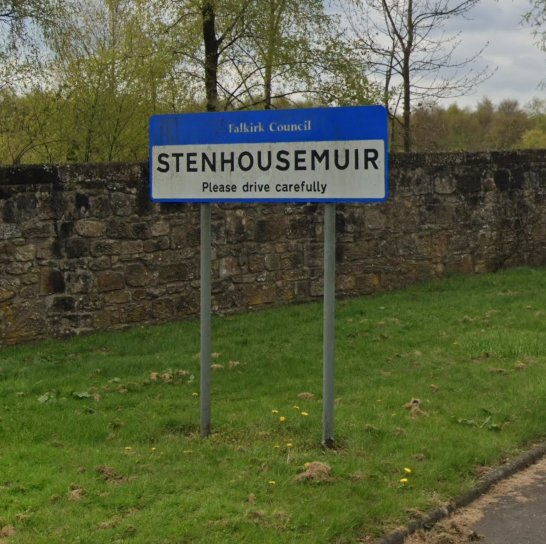
To most people, the town of Stenhousemuir is little more than a funny-sounding name they'll have heard on the Saturday classified football results. Few will give it a second thought. However, its origin makes for one of the most intriguing place-names in Scotland.
1/n
The third part of the name, muir, is straightforward enough. It simply means "moor": an area of uncultivated land, usually of questionable agricultural quality. However, it's the first two parts of the name that are so interesting, and whose geneses go back 2,000 years.
2/n
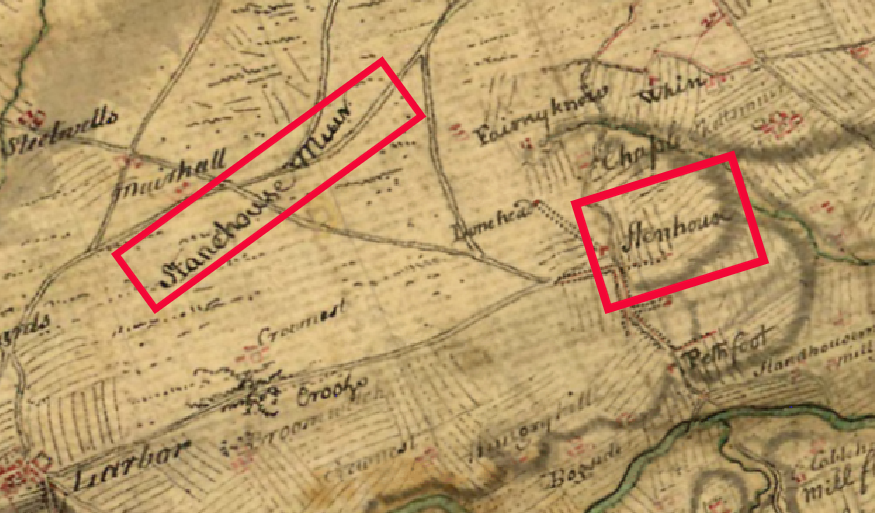
The 'Stenhouse' part of the name comes from an old manor house, called Stenhouse (i.e. "stone house"). However, this manor house itself takes its name from another building that lay just to the south, called Arthur's O'on.
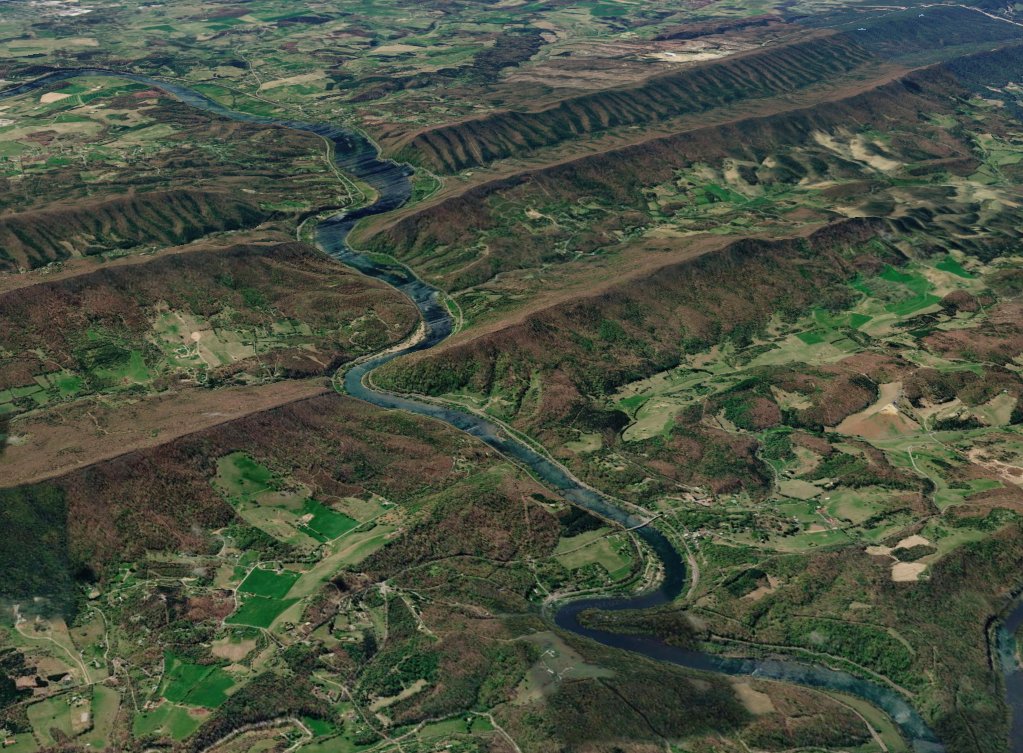
What happens when an immovable object meets an irresistible force? Well, when faced with one of the world's oldest rivers, the irresistible force loses. Such is the case in the Appalachian Mountains, where not even moving tectonic plates could subdue an ancient watercourse.
1/n
Starting off in North Carolina, the oddly-titled New River runs north into Virginia then onward until it meets the Ohio River and then to the sea via the Mississippi. In southern Virginia, though, it passes through part of the Appalachians.
I say 'pass' rather than 'cuts'.
2/n
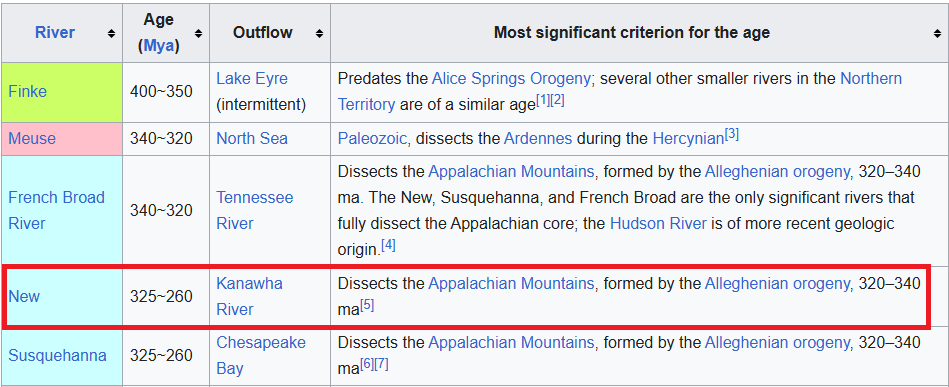
That's because the New River was there before the Appalachians. It is the fourth oldest river in the world, and flowed northwards even as tectonic plates folded the land. Some estimates put the river at over 250 million years.
In the state of Wyoming in the USA lies a real hydrological oddity. It's a small stream (creek) that is thought to be the only one of very few examples in the world. It is placed so precariously and perfectly that it's hard to believe it is able to exist.
1/n
The stream in question is called North Two Ocean Creek, and for a short duration it runs right on top of the Continental divide for North America. What makes this creek so unusual is that as it spills out onto Two Ocean Pass it bifurcates.
"So what?", you might say. 2/n
On the left-hand side of this bifurcation it heads east as the 'Atlantic Creek', and west as the 'Pacific Creek'.
You can probably see now where this thread is heading.