Michael Kovrig Profile picture
Jul 1 2 tweets 1 min read Read on X
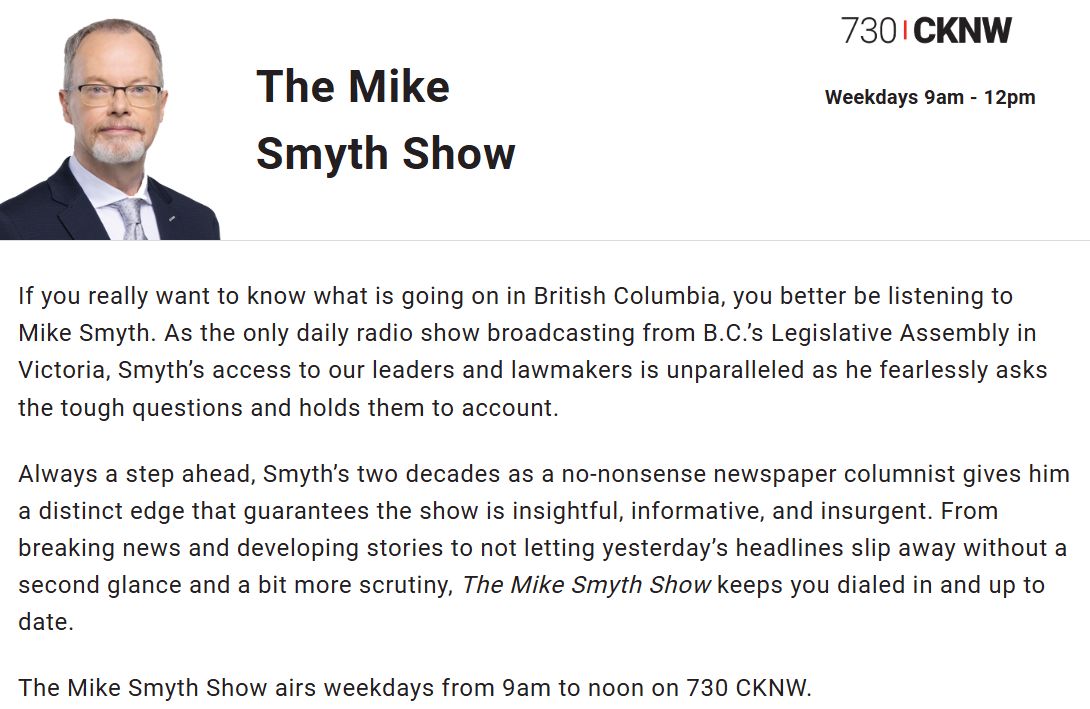
Radio host Mike Smyth asked why Canadians shouldn’t buy Chinese EVs. Because the hidden costs are high. The short-term price advantage is real. But the playbook is well documented: once domestic competitors are gone, the cheap prices go with them. 1/2 Image
The question isn’t whether Chinese EVs are cheaper — they are. The real question is whether Canada gets long-term industrial strength or just short-term consumer savings at the price of losing its manufacturing and decent jobs. 2/2

pdst.fm/e/traffic.mega…

• • •

Missing some Tweet in this thread? You can try to force a refresh

 

Keep Current with Michael Kovrig

Michael Kovrig Profile picture

Stay in touch and get notified when new unrolls are available from this author!

Read all threads

This Thread may be Removed Anytime!

PDF

Twitter may remove this content at anytime! Save it as PDF for later use!

Try unrolling a thread yourself!

how to unroll video
  1. Follow @ThreadReaderApp to mention us!

  2. From a Twitter thread mention us with a keyword "unroll"
@threadreaderapp unroll

Practice here first or read more on our help page!

More from @MichaelKovrig

Jun 30
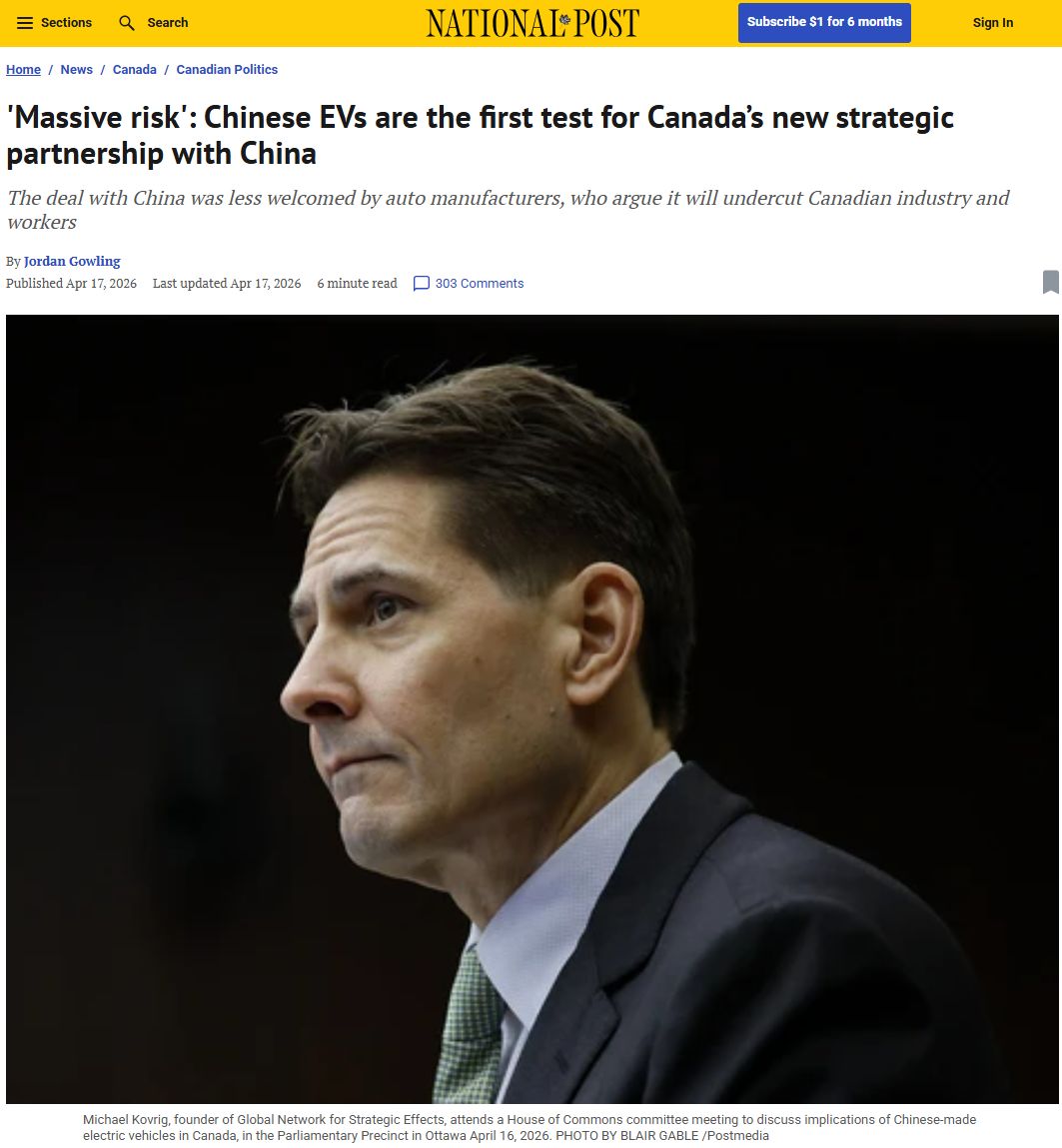
Deeper economic entanglement with China is not the answer as the EVs-for-canola deal begins to move from policy into practice. As I told Parliament this week, this is not a long-term route to Canada’s goals. It’s a dead end. 1/5 Image
The policy logic is clear: accelerate the energy transition, lower costs for consumers, and hedge against geopolitical risk. But Canada’s new partnership with China should be viewed with deep concern. 2/5
The issue isn’t the objectives, it’s the trade-offs. Giving China’s EVs market access risks locking in deeper structural dependence, rather than reducing it. 3/5
Read 6 tweets
Jun 25
Canada’s EVs-for-canola deal is not a normal trade arrangement. It provides five years of EV market access in exchange for canola tariff relief, an asymmetric deal where China holds the leverage. 1/6
The deal gives China a long-term foothold in a strategic industry. EVs are not just consumer goods, they are part of a sector the Chinese state uses for leverage. 2/6
Chinese EV firms are backed by the state, with subsidies, tax advantages and structural cost advantages that create uneven competition. 3/6
Read 7 tweets
Apr 13
RSF just launched season 2 of its Propaganda Monitor — this time on China. Having spent 1,019 days in a CCP cell, I know something about how Beijing controls information. The findings are important. 🧵👇 1/10 Image
First: Chinese AI chatbots are now propaganda tools. RSF tested DeepSeek, Baidu’s Ernie, and Alibaba’s Qwen. All three strictly align with Beijing’s official narratives — on Xinjiang, Taiwan, press freedom, everything. This isn’t a bug; it’s a compliance feature. 2/10
When asked about Uyghur detention camps, Qwen called reports “baseless speculation” and used the Party’s own term — “education and vocational training centres.” Ernie called human rights investigations “rumours manufactured by forces hostile against China.” Laundered propaganda, delivered at scale. 3/10Image
Read 10 tweets
Jan 17
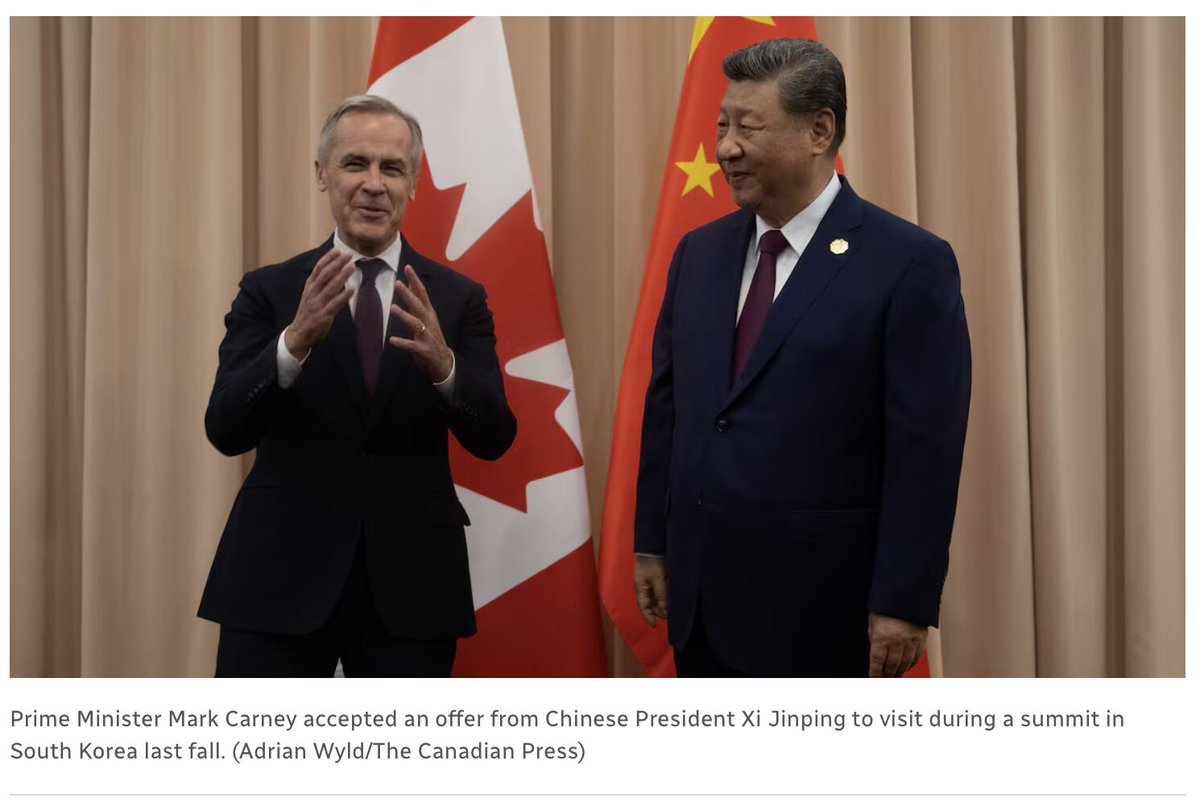
What to make of PM Carney’s first official visit to China? This was never just a courtesy call. Xi Jinping framed the visit as a “turning point” because the CCP wants concrete things from Canada, including market access for its hypersubsidized EVs, stable energy supplies, and geopolitical deference. With Canada–U.S. relations under strain, the General Secretary smelled blood in the water and seized a moment of increased leverage.
Carney secured limited relief for farmers and reopened dialogue channels, but Xi kept his pressure tools and is sure to keep using them.
So Canada needs to treat this as a rope-a-dope in an ongoing trade slugfest, and redouble its efforts to reduce dependence on China by diversifying markets for vulnerable sectors. And it needs a plan for how its domestic car industry and cybersecurity defences will cope with Chinese EVs. Guardrails for national security, sovereignty, political interference, and harm to Canadians will need to rise.
Read 4 tweets
Jan 11
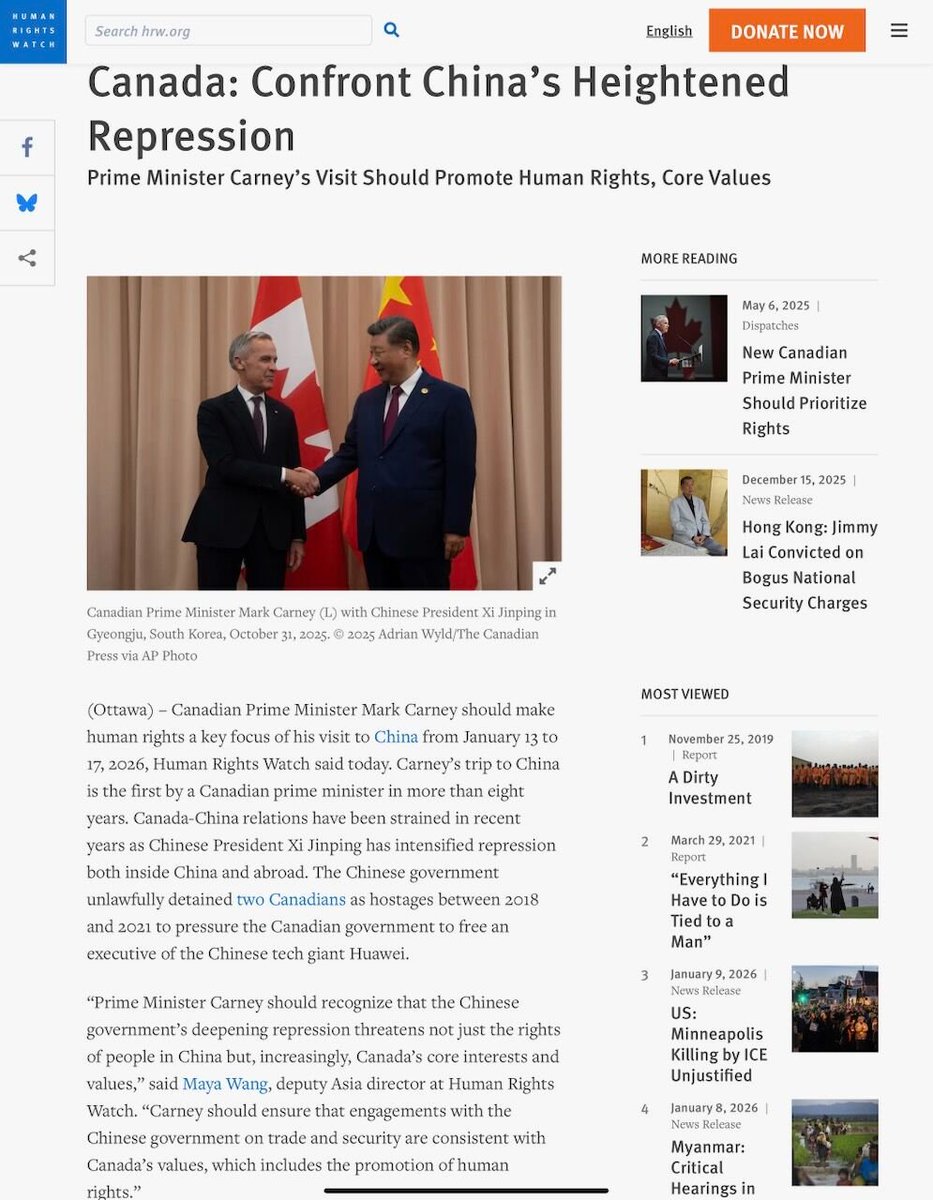
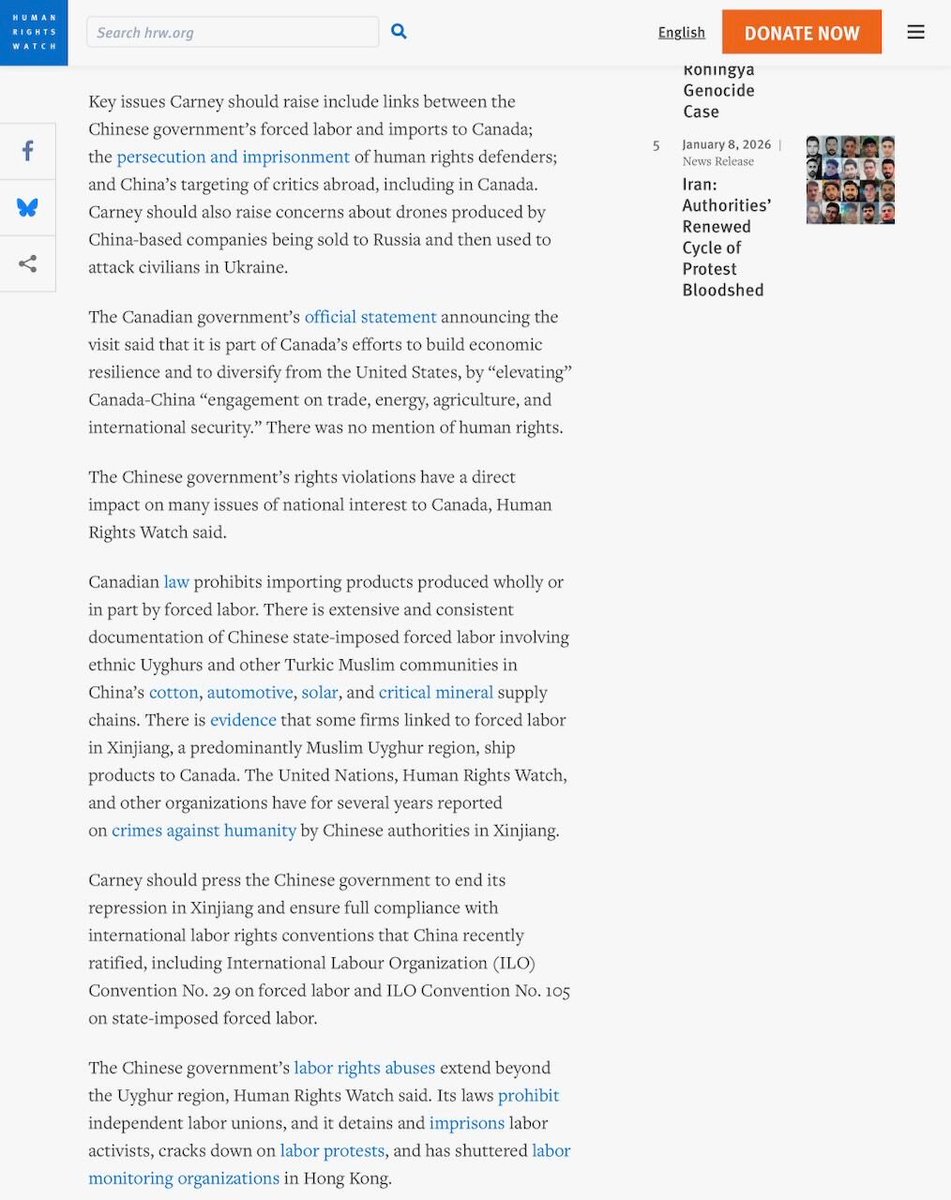
@hrw says Canada’s PM @MarkJCarney should make human rights a key focus of his visit to China.

The CCP has significantly increased its authoritarian repression both at home and abroad, HRW warns. Last week police detained Christian church members. That dire trend “threatens not just the rights of people in China but, increasingly, Canada’s core interests and values,” warns @wang_maya in a press release. “Carney should ensure that engagements with the Chinese government on trade and security are consistent with Canada’s values.... key issues Carney should raise include links between the Chinese government’s forced labour and imports to Canada; the persecution and imprisonment of human rights defenders; and China’s targeting of critics abroad, including in Canada,” HRW says.

Carney has a particularly timely opportunity to advocate for humanitarian release for Hong Kong publisher Jimmy Lai, a champion of freedom convicted of conspiracy last year in a political show trial. He faces life in prison, and mitigation hearings to debate the severity of his sentence run Jan. 12–15, coinciding with the PM’s visit.

Canada’s delegation should also call for changes in the Party-state’s treatment of ethnic minorities such as Uyghurs and Tibetans, dissidents like Wang Bingzhang, lawyers such as Xu Zhiyong and Ding Jiaxi, and journalists including Dong Yuyu and the SCMP's @min8chan. It's not only about defending universal human values, it’s also a matter of national security and sovereignty. Several are foreign citizens or residents with close family ties in Canada or elsewhere. The PRC has also egregiously sanctioned reputable Canadian civil society organizations and moderate advocates including @SherapTherchin and @M_Johnston1. Last year it executed 4 Canadian citizens.

Human rights aren’t a separate issue that can be tidily compartmentalized into perfunctory dialogues. From detaining individuals to oppressing groups to coercing countries, PRC violations are an inextricable part of a continuum of geopolitical, geoeconomic, and global security challenges its one-party state increasingly poses. How the CCP behaves toward people it governs, detains, or dislikes is a preview for how it’s likely to deal with other citizens and countries it acquires power over. The Party-state interprets silence as acquiescence that emboldens it to grind further into aggression, totalitarianism and weaponizing its political-legal system.

That’s why the necessary whole-of-government-and-society responses must be holistic, strategic, and grounded in principled realism and a long-term vision of statecraft rather than short-term, transactional, issue-by-issue dealmaking.

Read the full press release—link + more in the comments—and add your own voice. Silence is deadly.

@Bolopion @bequelin @SophieDRich @jonstivers @fbermingham @ZumretErkin @MalinOud @canjenmayImage
Image
HRW China overview:
hrw.org/asia/china-and…
Read 14 tweets
Jan 7
Canada's Mark Carney will travel to China next week. It's the first visit by a Canadian PM since 2017, and the next step in a multi-year attempt to recalibrate relations between Canada and China that requires trying to heal some deep rifts, I told @CBCNews. The reality is that many of those challenges remain and are not going to go away.

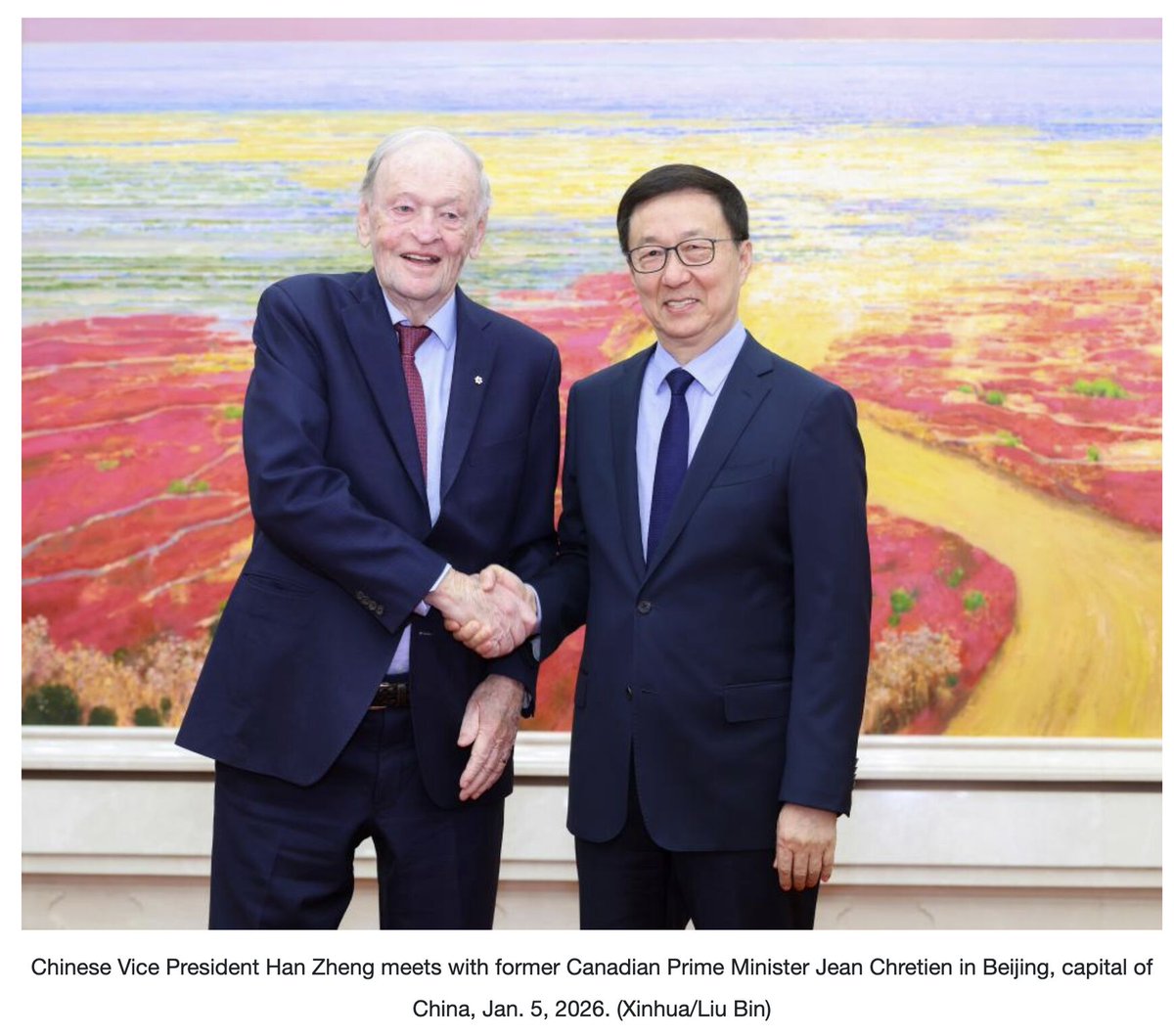
Guess who else was in Beijing this week: former PM Jean Chrétien, who has extensive connections and business interests in China. His visit likely provided opportunities to test the waters for commercial opportunities and ways to resolve festering disputes.

While fixing all that ails the relationship may not be possible, the meeting between Carney and Xi is important because it opens up the kind of high-level diplomatic channels needed to resolve disputes, I told Peter Zimonjic at @CBCNews. The central risk of increasing trade with China is that the Chinese Communist Party has a well established track record of using economic relationships, particularly economic dependence, for political leverage.

It's reasonable for Canada to pursue an expanded trading relationship with China providing it does not compromise Canada's national security. My concern is that the government makes concessions on national security and policy autonomy and mutes its diplomacy in return for economic benefits. It shouldn't do that.

Link to the story and to my other recent writing and interviews on Canada-China relations in the comments.

What do you think each side will try to get out of the meetings? What should Carney try to achieve next week in Beijing? Share your views, watch this space, and check out my Substack...
#ChinaCanada #CanadaChinaImage
Image
Read 25 tweets

Did Thread Reader help you today?

Support us! We are indie developers!


This site is made by just two indie developers on a laptop doing marketing, support and development! Read more about the story.

Become a Premium Member ($3/month or $30/year) and get exclusive features!

Become Premium

Don't want to be a Premium member but still want to support us?

Make a small donation by buying us coffee ($5) or help with server cost ($10)

Donate via Paypal

Or Donate anonymously using crypto!

Ethereum

0xfe58350B80634f60Fa6Dc149a72b4DFbc17D341E copy

Bitcoin

3ATGMxNzCUFzxpMCHL5sWSt4DVtS8UqXpi copy

Thank you for your support!

Follow Us!

:(