Senior Adviser, Asia @CrisisGroup | China/Indo-Pacific hand. Ex- diplomat. Don't start none, won't be none 己所不欲,勿施於人 https://t.co/OfZwtYsil9
Jan 17 • 4 tweets • 2 min read
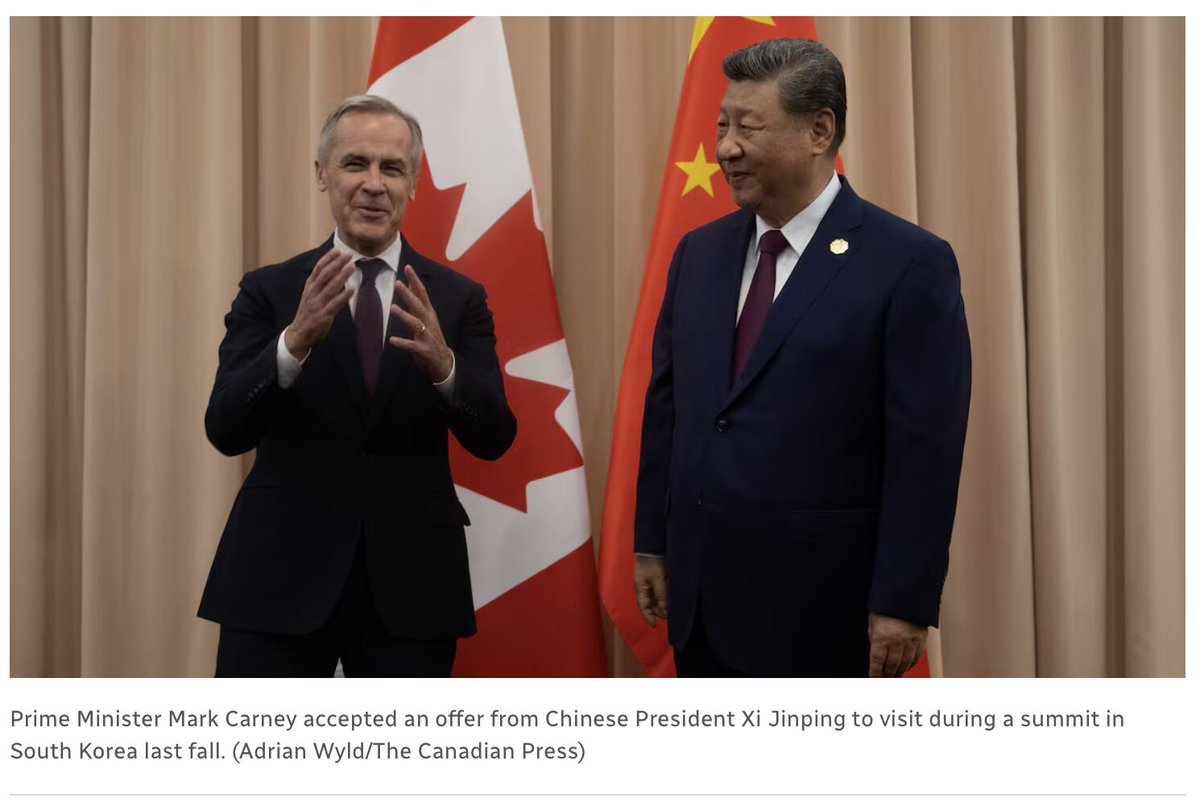
What to make of PM Carney’s first official visit to China? This was never just a courtesy call. Xi Jinping framed the visit as a “turning point” because the CCP wants concrete things from Canada, including market access for its hypersubsidized EVs, stable energy supplies, and geopolitical deference. With Canada–U.S. relations under strain, the General Secretary smelled blood in the water and seized a moment of increased leverage.
Carney secured limited relief for farmers and reopened dialogue channels, but Xi kept his pressure tools and is sure to keep using them.
Jan 11 • 14 tweets • 6 min read
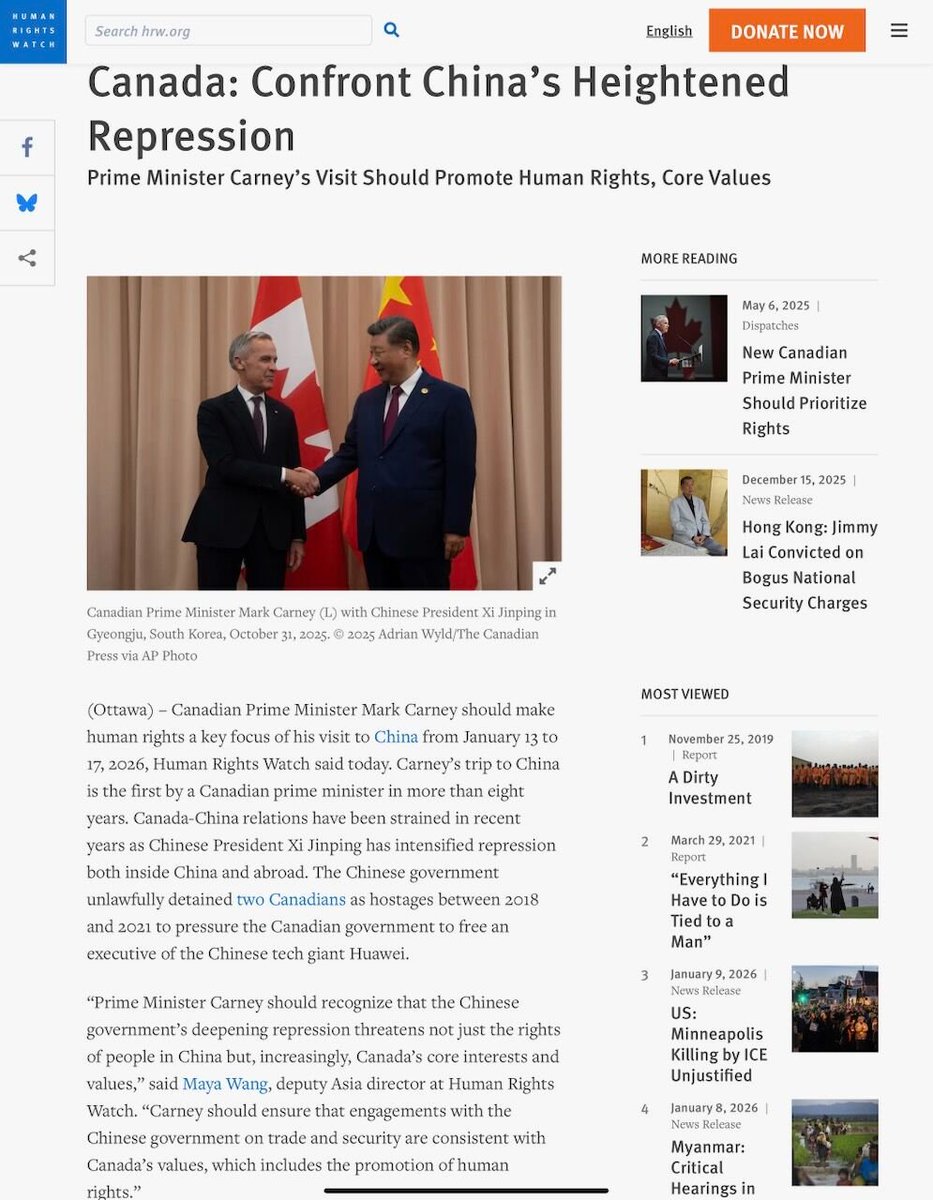
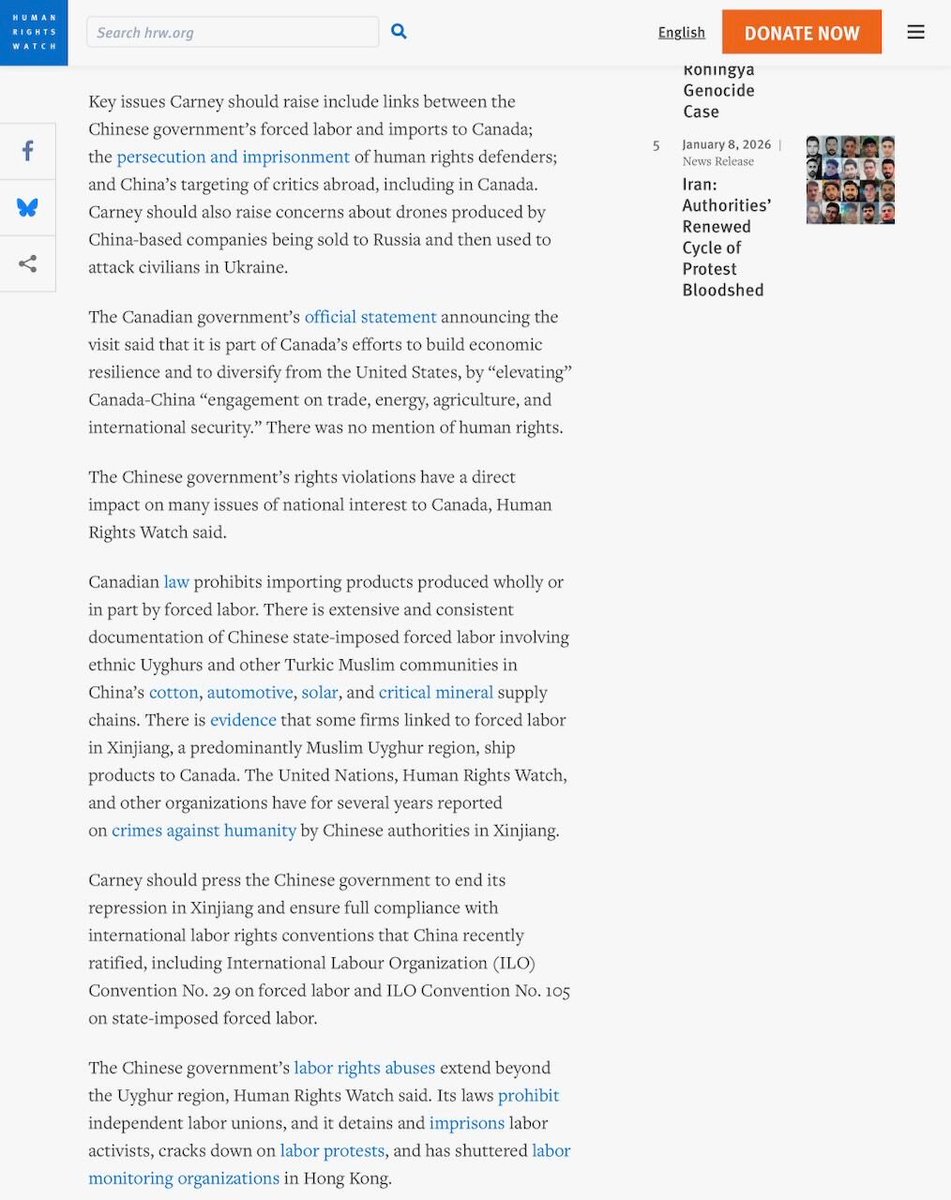
@hrw says Canada’s PM @MarkJCarney should make human rights a key focus of his visit to China.
The CCP has significantly increased its authoritarian repression both at home and abroad, HRW warns. Last week police detained Christian church members. That dire trend “threatens not just the rights of people in China but, increasingly, Canada’s core interests and values,” warns @wang_maya in a press release. “Carney should ensure that engagements with the Chinese government on trade and security are consistent with Canada’s values.... key issues Carney should raise include links between the Chinese government’s forced labour and imports to Canada; the persecution and imprisonment of human rights defenders; and China’s targeting of critics abroad, including in Canada,” HRW says.
Carney has a particularly timely opportunity to advocate for humanitarian release for Hong Kong publisher Jimmy Lai, a champion of freedom convicted of conspiracy last year in a political show trial. He faces life in prison, and mitigation hearings to debate the severity of his sentence run Jan. 12–15, coinciding with the PM’s visit.
Canada’s delegation should also call for changes in the Party-state’s treatment of ethnic minorities such as Uyghurs and Tibetans, dissidents like Wang Bingzhang, lawyers such as Xu Zhiyong and Ding Jiaxi, and journalists including Dong Yuyu and the SCMP's @min8chan. It's not only about defending universal human values, it’s also a matter of national security and sovereignty. Several are foreign citizens or residents with close family ties in Canada or elsewhere. The PRC has also egregiously sanctioned reputable Canadian civil society organizations and moderate advocates including @SherapTherchin and @M_Johnston1. Last year it executed 4 Canadian citizens.
Human rights aren’t a separate issue that can be tidily compartmentalized into perfunctory dialogues. From detaining individuals to oppressing groups to coercing countries, PRC violations are an inextricable part of a continuum of geopolitical, geoeconomic, and global security challenges its one-party state increasingly poses. How the CCP behaves toward people it governs, detains, or dislikes is a preview for how it’s likely to deal with other citizens and countries it acquires power over. The Party-state interprets silence as acquiescence that emboldens it to grind further into aggression, totalitarianism and weaponizing its political-legal system.
That’s why the necessary whole-of-government-and-society responses must be holistic, strategic, and grounded in principled realism and a long-term vision of statecraft rather than short-term, transactional, issue-by-issue dealmaking.
Read the full press release—link + more in the comments—and add your own voice. Silence is deadly.
Canada's Mark Carney will travel to China next week. It's the first visit by a Canadian PM since 2017, and the next step in a multi-year attempt to recalibrate relations between Canada and China that requires trying to heal some deep rifts, I told @CBCNews. The reality is that many of those challenges remain and are not going to go away.
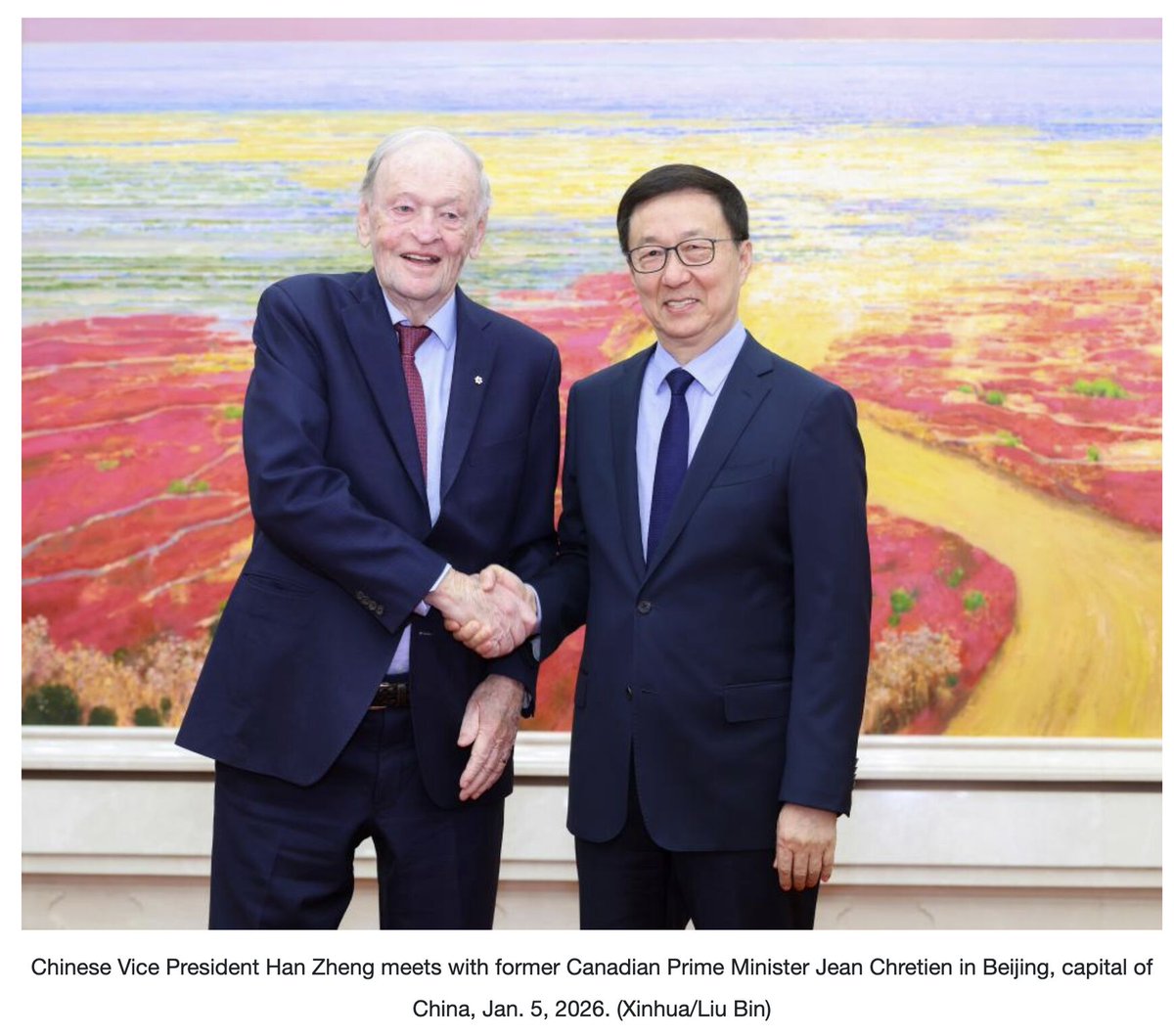
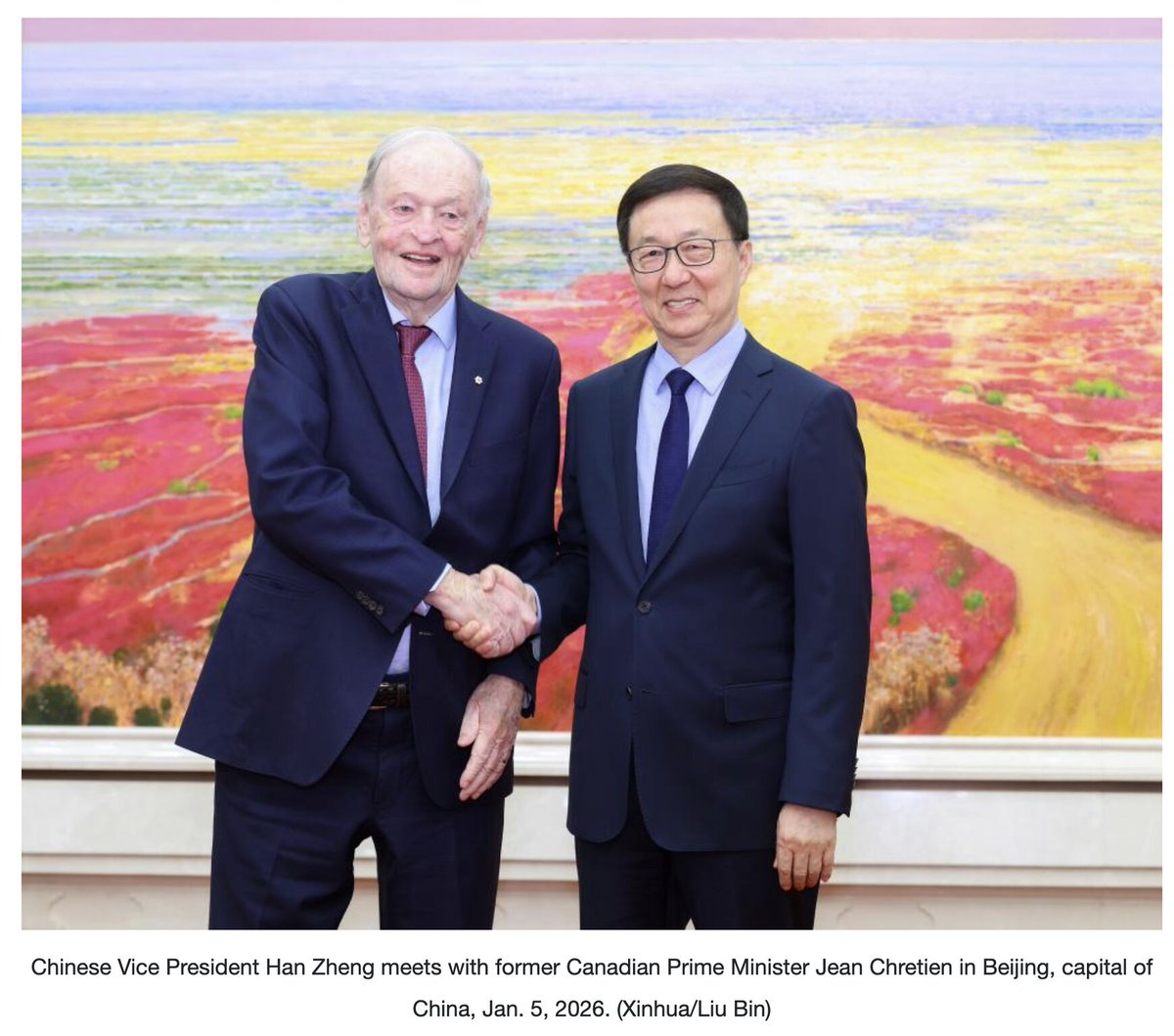
Guess who else was in Beijing this week: former PM Jean Chrétien, who has extensive connections and business interests in China. His visit likely provided opportunities to test the waters for commercial opportunities and ways to resolve festering disputes.
While fixing all that ails the relationship may not be possible, the meeting between Carney and Xi is important because it opens up the kind of high-level diplomatic channels needed to resolve disputes, I told Peter Zimonjic at @CBCNews. The central risk of increasing trade with China is that the Chinese Communist Party has a well established track record of using economic relationships, particularly economic dependence, for political leverage.
It's reasonable for Canada to pursue an expanded trading relationship with China providing it does not compromise Canada's national security. My concern is that the government makes concessions on national security and policy autonomy and mutes its diplomacy in return for economic benefits. It shouldn't do that.
Link to the story and to my other recent writing and interviews on Canada-China relations in the comments.
What do you think each side will try to get out of the meetings? What should Carney try to achieve next week in Beijing? Share your views, watch this space, and check out my Substack...
#ChinaCanada #CanadaChina eng.yidaiyilu.gov.cn/p/08OGODRG.html
Nov 3, 2025 • 12 tweets • 5 min read
China has dramatically expanded its presence and influence across the Pacific Islands with the intent to strategically align the region more closely with its own interests, I argue in a new essay for @ForeignAffairs based on two years of research for @CrisisGroup.
While China’s deepening involvement is expanding economic opportunities, its statecraft is also undermining Pacific nations’ democratic governance, accountability and national sovereignty, inducing corruption and elite capture, and roiling Pacific geopolitics.
The Pacific Islands depend on foreign aid and see strategic rivalry between major powers as a means of attracting attention and resources. China is promoting itself as an alternative to traditional partners as it seeks to establish a regional sphere of maritime dominance, prevent Western rivals from deterring or constraining it, and burnish its credentials with developing countries.
I think it’s part of a PRC island chain strategy that aims to dominate the first island chain, disrupt Western powers in the second, and eventually be able to divert and distract them in the third.
The twelve sovereign Pacific Island countries and several territories are strategically important for global fisheries, maritime security and a stable Asia-Pacific balance of power. For Western powers, increased Chinese influence, strategic infrastructure and militarisation there could complicate intervention in potential conflicts over flashpoints such as the South China Sea and Taiwan, sap resources and put stress on alliances.
To balance and constrain China’s expanding influence, Pacific Islands and their other partners should do more to implement the Pacific Islands Forum’s Boe Declaration, 2050 Strategy for the Blue Pacific Continent, and new Ocean of Peace Declaration, all of which reflect the Pacific consensus on priorities.
Together, they should work to strengthen governance, transparency and regional cohesion, step up efforts to enhance expertise on China and national security, support independent media and civil society, and counter foreign propaganda and interference.
Direct article link in the comments. Thanks to Joseph Widacki and Patricia Xavier for research assistance!