In his remarkable 1755 publication Observations Concerning the Increase of Mankind, Ben Franklin put on his demographer hat and foretold the rise of America to superpower status some 21 years before the signing of the Declaration of Independence. 🇺🇸 🇺🇸
🧵, please share!
🧵, please share!


Franklin worked out demography from first principles.
He began with the observation that marriage drives population growth, and marriage in turn is driven by the ability of young men to support a family. He saw that when people marry early, they are able to have more kids. 2/9
He began with the observation that marriage drives population growth, and marriage in turn is driven by the ability of young men to support a family. He saw that when people marry early, they are able to have more kids. 2/9

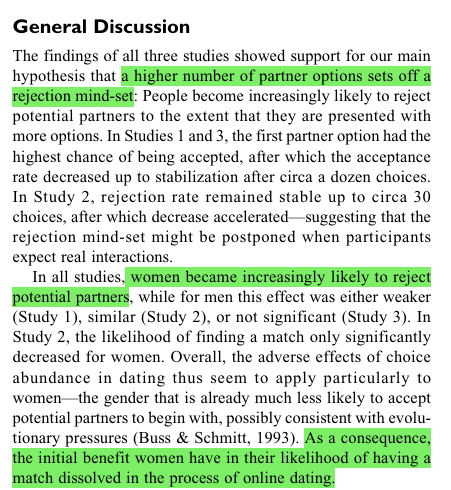
All the way back in 1755, Franklin knew of the problem of low urban birthrates.
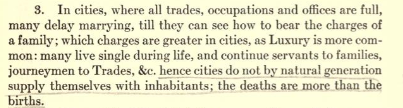
He lamented how people in cities delayed marriage and embraced single living and how cities were a population sink, with more deaths than births. 3/9
He lamented how people in cities delayed marriage and embraced single living and how cities were a population sink, with more deaths than births. 3/9
It is often said that demographics is destiny.
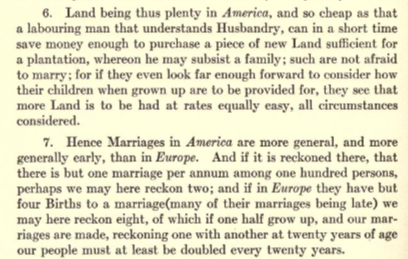
Franklin accurately foresaw how America would outrun Europe. Young men could easily buy land, get a homestead and marry earlier.
Americans were thus having twice as many children as Europeans, who married less often and later. 4/9
Franklin accurately foresaw how America would outrun Europe. Young men could easily buy land, get a homestead and marry earlier.
Americans were thus having twice as many children as Europeans, who married less often and later. 4/9
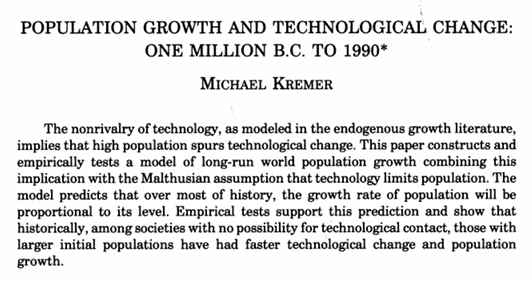
Franklin wrote that through the force of higher birthrates, America would soon have more Englishmen than England.
By the power of compounding, with a doubling every generation, America would eclipse England as the great power, on land and at sea. 5/9
By the power of compounding, with a doubling every generation, America would eclipse England as the great power, on land and at sea. 5/9

An abundance of territory meant that young Americans would not be stuck in cheap labor jobs but could get a place of their own early on.
Because the continent was so big, this dynamic could play out for generation after generation, and it did! 6/9
Because the continent was so big, this dynamic could play out for generation after generation, and it did! 6/9

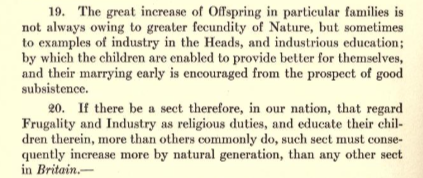
Amazingly, Franklin foretold the existence of high fertility sects like the Amish, who through a religious devotion to hard work, frugality and early marriage, would see "great increase"! 7/9
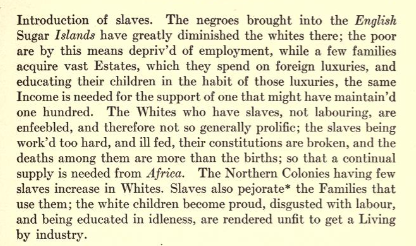
Franklin also wrote of his dislike of slavery on multiple fronts.
He said overwork and poor treatment "broke the constitutions" of slaves. But also, he explained how slaveholding was bad for the character of the people that held them.
He later became a leading abolitionist. 8/9
He said overwork and poor treatment "broke the constitutions" of slaves. But also, he explained how slaveholding was bad for the character of the people that held them.
He later became a leading abolitionist. 8/9
Seeing America's current birthrate woes, Founding Father, amateur demographer and pronatalist Ben Franklin would no doubt have some sage advice to offer on the occasion of America's 250th birthday:
(1) Marriage, and especially early marriage, are crucial for healthy fertility.
In turn, there need to be pathways to stable employment early on. If it takes too long to get established, people will marry late and have few children.
(2) Spread out on new land and embrace homeownership.
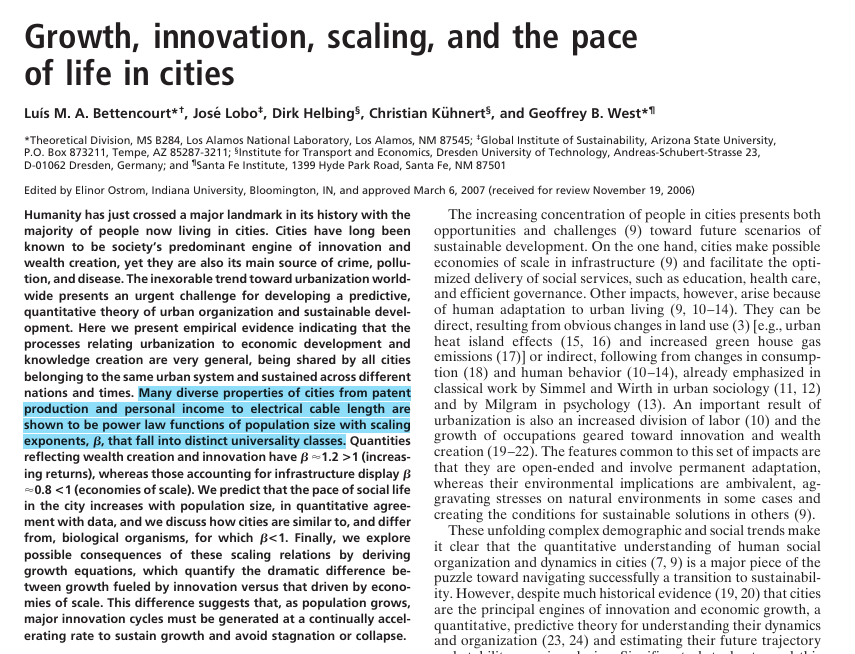
Franklin saw early on that when young people could get some land of their own, they would have large families and that crowding into cities was bad for birthrates.
(3) Embrace beliefs that teach marrying earlier and being "industrious and frugal"
Ben Franklin saw that certain beliefs lent themselves to higher fertility. Franklin would no doubt want to teach young people those values and would probably favor religious groups that hold those things. 9/9
Happy 250th! 🌎 🇺🇸
Follow @MoreBirths for solutions to our low fertility crisis! Subscribe if you can.
(1) Marriage, and especially early marriage, are crucial for healthy fertility.
In turn, there need to be pathways to stable employment early on. If it takes too long to get established, people will marry late and have few children.
(2) Spread out on new land and embrace homeownership.
Franklin saw early on that when young people could get some land of their own, they would have large families and that crowding into cities was bad for birthrates.
(3) Embrace beliefs that teach marrying earlier and being "industrious and frugal"
Ben Franklin saw that certain beliefs lent themselves to higher fertility. Franklin would no doubt want to teach young people those values and would probably favor religious groups that hold those things. 9/9
Happy 250th! 🌎 🇺🇸
Follow @MoreBirths for solutions to our low fertility crisis! Subscribe if you can.

• • •
Missing some Tweet in this thread? You can try to
force a refresh