David Turver Profile picture
Jul 5 10 tweets 3 min read Read on X
UK grid costs set to soar even higher. Grid integration costs are already forecast to triple from £8bn to £25bn by 2030/31. Now NESO is asking for another £89bn of grid spending beyond 2030. Why this matters for your bills...A thread 🧵 (1/9) Image
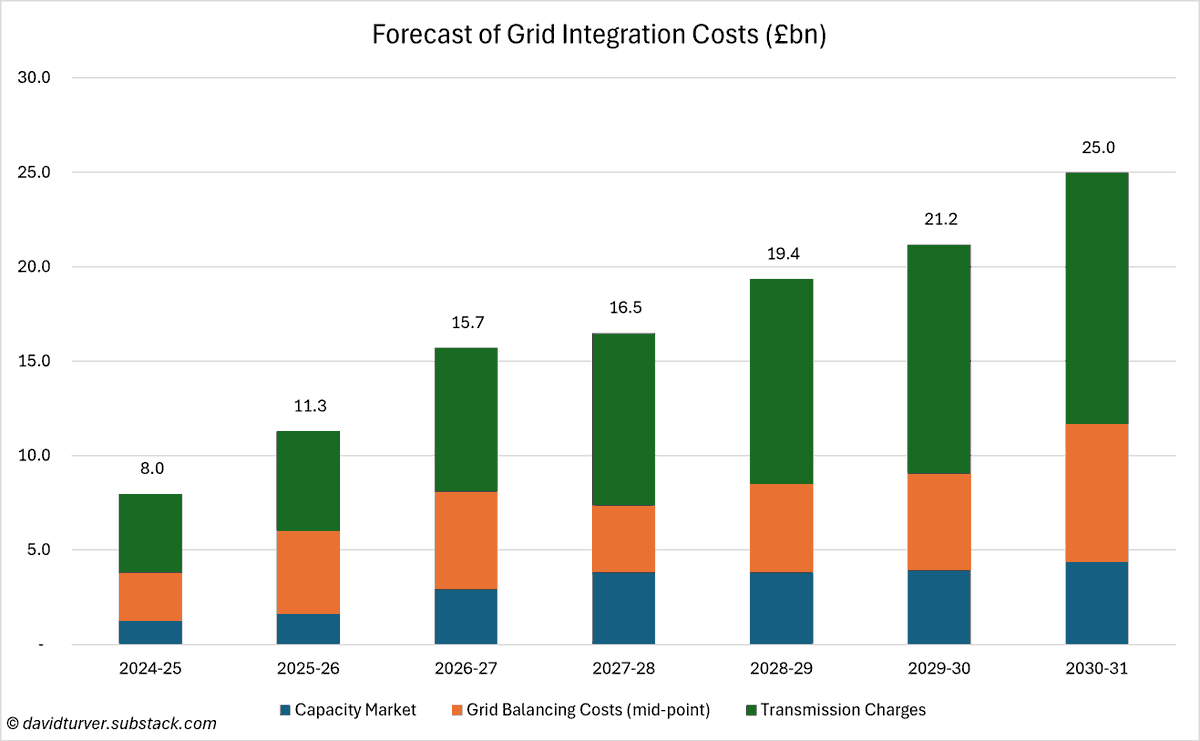
Grid integration costs consist of backup from the capacity market, grid balancing and grid expansion. All set to soar over the next few years. (2/9) Image
Capacity Market costs exploded from under £10m in 2017 to over £1.6bn by 2026. Monthly costs forecast to double to £250-370m in October 2026. (3/9) Image
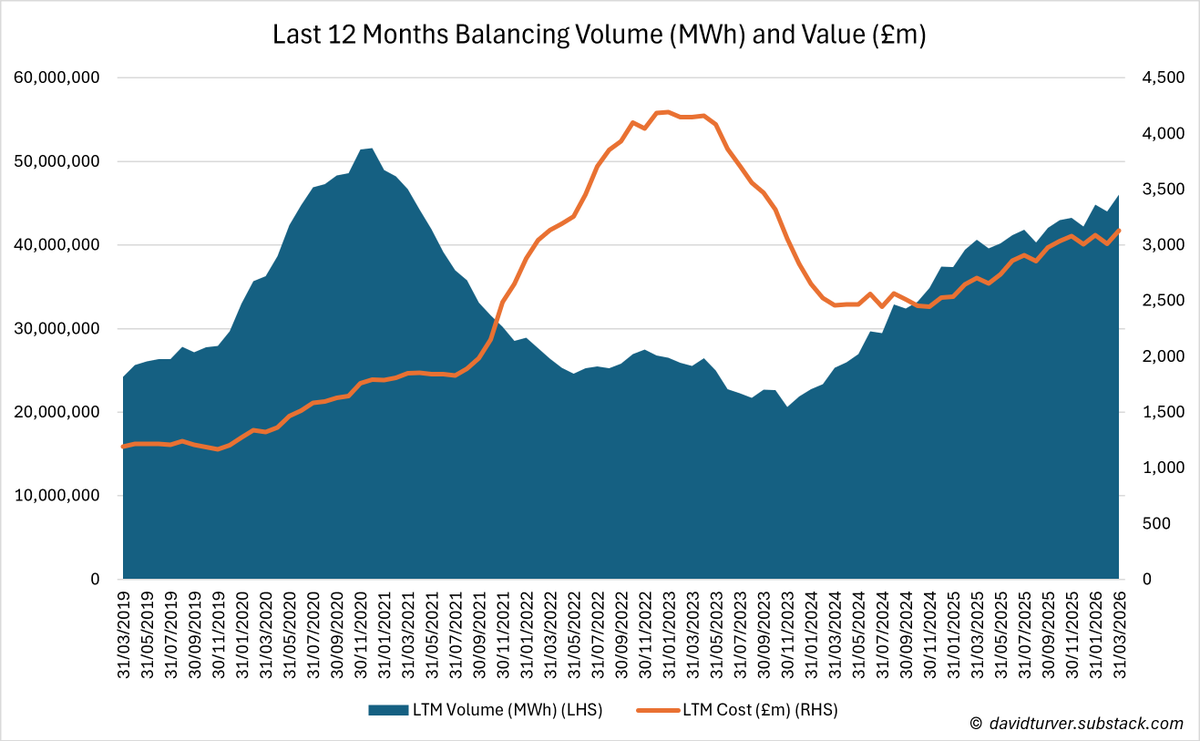
Grid balancing costs already over £3.1bn for the last financial year and on an upward trend. Set to rise to £6.4-£8.3bn by 2030. (4/9) Image
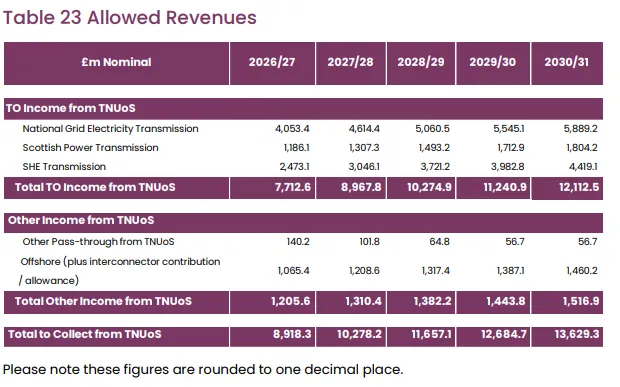
Transmission charges to triple from £4.2bn to over £13.6bn by 2031. NESO seeking extra £89bn grid spending beyond 2030. (5/9) Image
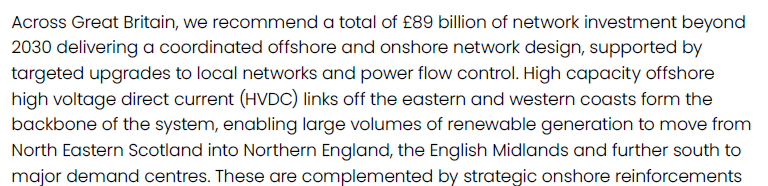
NESO’s grid map shows the main cost is integrating intermittent renewables, especially offshore wind. These costs are added to everyone’s electricity bills. (6/9) Image
UK already has the highest industrial electricity prices in the developed world. Further grid cost rises will push bills higher and hurt competitiveness. (7/9) Image
This is unsustainable. To deliver competitive electricity prices, costs must be slashed. Cutting £30bn from a grid delivering 300TWh would reduce costs by 10p/kWh. This is the scale of cuts required to improve competitiveness and save British industry (8/9)
If you enjoyed this thread, please like and share. You can sign up for free to read the full article on the link below:
(9/9) davidturver.substack.com/p/grid-costs-s…Image
Hi @threadreaderapp unroll please.

• • •

Missing some Tweet in this thread? You can try to force a refresh

 

Keep Current with David Turver

David Turver Profile picture

Stay in touch and get notified when new unrolls are available from this author!

Read all threads

This Thread may be Removed Anytime!

PDF

Twitter may remove this content at anytime! Save it as PDF for later use!

Try unrolling a thread yourself!

how to unroll video
  1. Follow @ThreadReaderApp to mention us!

  2. From a Twitter thread mention us with a keyword "unroll"
@threadreaderapp unroll

Practice here first or read more on our help page!

More from @7Kiwi

Jul 19
🚨When frequency & inertia limits and safety margin breaches are met with denial and obfuscation, you know NESO is facing a serious credibility outage. Whistleblowers have gone to the Shadow Energy Secretary with concerns about grid security. What is going on? A thread 🧵(1/13) Image
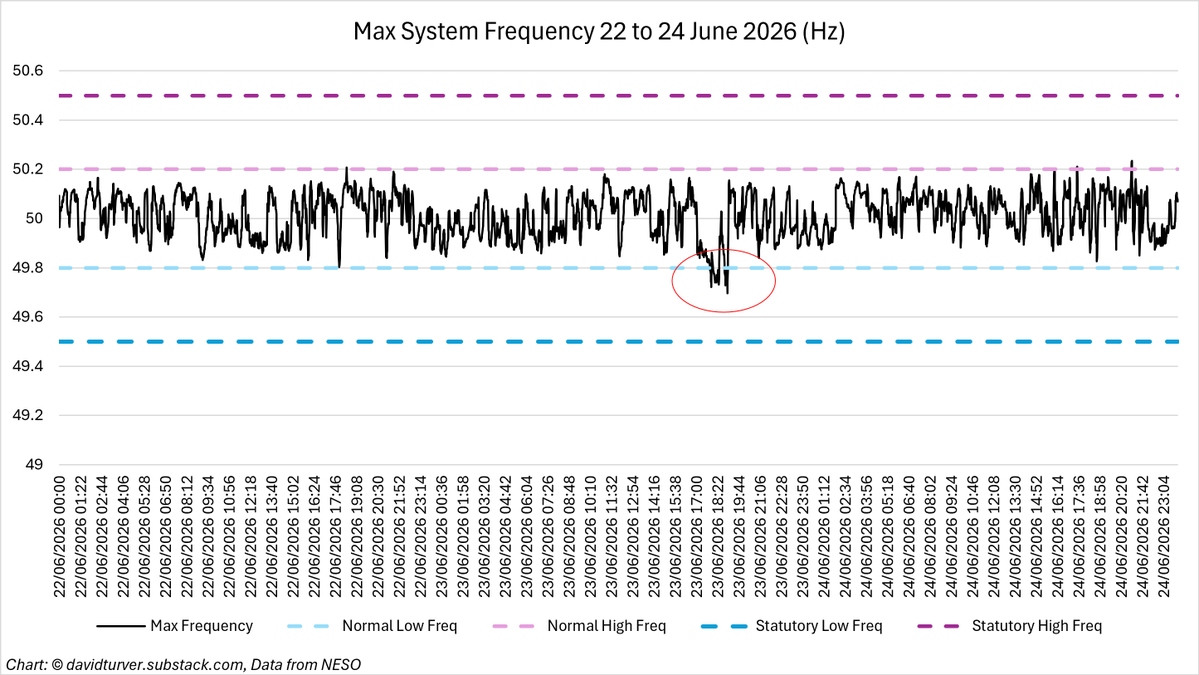
On 23 June, GB grid frequency stayed below the normal 49.8Hz operating limit for extended periods. NESO claims statutory limits weren’t breached, but Times reporting says margin limits were breached. The prolonged dip raises serious questions. (2/13) Image
No Electricity Margin Notices were issued beforehand. NESO had to cut exports to the Netherlands and France to stabilise the system. Emergency measures instead of prevention. Times report here: (3/13)
Read 14 tweets
Jul 12
🚨The UK electricity grid expansion for Clean Power 2030 & Net Zero 2050 is in chaos. We need to build twice as much transmission grid in the next 5 years as in the last decade — but costs are exploding and projects are massively delayed. A thread 🧵(1/9) Image
NESO already forecasts transmission costs more than tripling from £2.8bn per year in 2020/21 → £8.9bn in 2026/27. And to rise again to → £13.6bn by 2030/31 These figures already look like serious underestimates. (2/9) Image
Ofgem’s 2022 ASTI framework listed key projects at £23.3bn. By late 2025, Ofgem was warning that over £70bn of transmission upgrades are needed in the next five years alone. Reality is even worse. (3/9)
Read 10 tweets
Jun 28
🚨The UK Government’s plug-in solar safety report is a shocker! They’re pushing plug-in panels hard for net zero, but the safety study by unqualified person has serious flaws that put homeowners at risk. Thread 🧵(1/11) Image
In 2025 the government committed to plug-in solar and promised a proper safety study. What they actually delivered falls far short. (2/11)
gov.uk/government/pub…
The £80,309 contract went to sole bidder, Arceio Ltd — a dormant company incorporated in July 2024. Its director has no electrical engineering or safety qualifications. (3/11)
find-tender.service.gov.uk/Notice/066722-…
Read 12 tweets
Jun 21
Everything about Net Zero is fake. The temperature record, climate models, the “climate emergency”, cheap renewables, green jobs, and even the claimed emissions cuts — it’s all built on lies and distortions. A thread 🧵(1/12) Image
The global temperature record has been repeatedly “adjusted”. Past cooled, present warmed to exaggerate warming. Tony Heller has documented it for years. UK Met Office stations are mostly poor quality with huge error margins. (2/12)
Climate models run too hot. High sensitivity estimates don’t match observations. Even the IPCC has dropped the extreme RCP8.5 scenario. The scare stories are built on faulty models. (3/12) Image
Read 13 tweets
Jun 14
The Government is about to approve the 7th Carbon Budget (CB7) on the basis of an Impact Assessment that its own numbers show is worse than a cheaper alternative. Is it time to put Ed Miliband in the dock and test his arguments in a fair judicial review? A thread 🧵(1/11) Image
The IA compares three options. The “Looser Option” (84% cut) delivers a higher Net Present Value (£905bn) and better benefit-cost ratio (2.3) than the recommended 87% Option 2 (£865bn, BCR 2.1). Yet Ed Miliband chose Option 2 anyway. (2/11) Image
This looks like an irrational decision. The Minister’s own evidence favours the cheaper, looser target — but he overruled it with vague claims about “transformational change”. Classic Wednesbury unreasonableness territory? (3/11)
Read 12 tweets
Jun 7
Ed Miliband’s Clean Power 2030 plan is officially off the rails. Soaring costs, missed wind & solar
targets, and now Drax walking away from BECCS. The promises of cheaper bills? Gone. A thread 🧵(1/12) Image
NESO and DESNZ claimed CP2030 could be delivered “without increasing costs for consumers” and would “bring down bills for good”. Reality: grid integration and generation cost are exploding. (2/12)
Grid balancing, transmission and Capacity Market costs are forecast to rise £17bn — from £8bn in 2024/25 to £25bn by 2030/31. That’s ~£600 extra per household. (3/12) Image
Read 15 tweets

Did Thread Reader help you today?

Support us! We are indie developers!


This site is made by just two indie developers on a laptop doing marketing, support and development! Read more about the story.

Become a Premium Member ($3/month or $30/year) and get exclusive features!

Become Premium

Don't want to be a Premium member but still want to support us?

Make a small donation by buying us coffee ($5) or help with server cost ($10)

Donate via Paypal

Or Donate anonymously using crypto!

Ethereum

0xfe58350B80634f60Fa6Dc149a72b4DFbc17D341E copy

Bitcoin

3ATGMxNzCUFzxpMCHL5sWSt4DVtS8UqXpi copy

Thank you for your support!

Follow Us!

:(