1/ Russian horse breeders are reporting booming sales due to the ongoing fuel crisis. Despite the expenses of owning a horse, they are now cheaper to maintain than constantly refuelling an SUV. ⬇️
"About a thousand horses were saved from slaughterhouses in Russia due to the rise in gasoline prices."
3/ "Villagers are increasingly buying four-legged animals instead of off-road vehicles - it's cheaper to get around off-road, go to the forest, mow hay, and engage in farming.
4/ "Breeders told Mash that sales have skyrocketed. In the last month alone, some have sold or reserved seven or eight horses, whereas previously, one could wait two or three months for an owner.
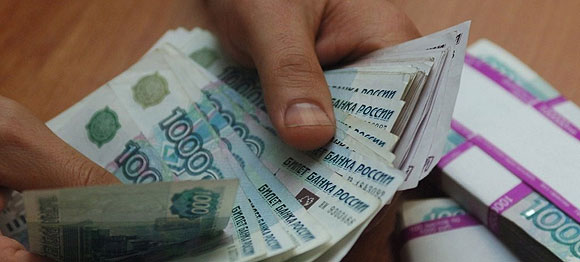
5/ "The reason is simple: keeping an animal in many villages turned out to be cheaper than constantly refueling off-road vehicles like the UAZ or "Niva". A working horse now costs 100-200,000 rubles [$1,300-$2,600] – depending on age, breed, and training.
6/ "There are also expenses: hooves are trimmed approximately every six weeks (~3,000 rubles), horseshoes are changed every two months for a thousand rubles, hay (2,000–3,000 rubles), supplements (~5,000 rubles), and veterinary care (~6,000 rubles/year).
7/ "But for many rural residents, even with these expenses, a horse has turned out to be more affordable than a car."
1/ Today's Ukrainian strikes against a Russian oil refinery in distant Omsk are being greeted with gloom by Russian warbloggers. They say that their predictions of increasingly wide-ranging Ukrainian raids were ignored, but are now coming true. ⬇️
"What happened is what was predicted last year: Ukrainian formations were able to reach Omsk, which is more than 2,500 km from the front line, with modernised FP-1 drones.
3/ "We believe that against this backdrop, discussions and debates about the involvement of Kazakhstani territory and various saboteurs will start again, but this is just a search for excuses, not a solution.
1/ Ukrainian drone manufacturer Fire Point's announcement that it has extended its FP-1 drone's range to 3,400 km (2,100 miles) is prompting alarm among Russian warbloggers. One notes that this puts many strategically vital sites in Siberia in range. ⬇️
"The head of Fire Point company, Denis Stiler, claims that the upgraded FP-1 drones can fly 3,400 km. Of course, he's just hype and lying! But if it's true, the following targets will be hit:
3/ "Tyumen Refinery (2,100 km) - already attacked in June, the fuel base of the country's main oil-producing region: gasoline and diesel are primarily used for domestic consumption in Western Siberia, including oil production itself.
1/ Frontline Russian soldiers are literally starving due to constant Ukrainian drone and artillery strikes preventing food deliveries, according to Russian accounts. In some cases, soldiers are said to be deliberately starving themselves so that they can be evacuated. ⬇️
2/ 'Northern Channel Plus' reports:
"The food situation in the 9th Motorised Rifle Regiment is quite dire. At the positions, or more accurately, in the holes, there is a severe shortage of food. Food deliveries are made every few days, and sometimes it can take a whole week."
3/ "It sounds scary, but the guys are truly starving. Sometimes, after a long period of hunger, their stomachs stop working when provisions are finally dropped or delivered to the front lines."
1/ Nikolai Patrushev, a key adviser to Vladimir Putin, says that Russia is fighting a pan-European neo-Nazi alliance, and advocates Russian naval action in the English Channel. He warns the Baltic states of "the end of ... peaceful, carefree life and sovereignty." ⬇️
2/ Patrushev is a former Secretary of Russia’s Security Council, a former head of the FSB, and a highly influential presidential adviser. He has been spoken of as a possible successor to Putin. Like Putin, he has often shown an extremely paranoid, aggressive worldview.
3/ This outlook is on display in an interview headlined "When War Is on the Doorstep" with Russia's main state newspaper, Rossiyskaya Gazeta, in which he addresses his views on the war in Ukraine and Russia's wider geopolitical situation.
1/ Russia's former chief doctor Gennady Onishchenko says that the current fuel crisis is positively beneficial for Russia: it's making the air cleaner, and city residents are becoming fitter by being deprived of their cars. Russian commentators are wondering what he's smoking. ⬇️
2/ The comments were made by Onishchenko, an academician of the Russian Academy of Sciences, in an interview on Friday with the Moscow Speaks radio station:
3/ "We even stopped walking to the neighbouring [building] entrance and started driving in cars. If we talk about Moscow, it's much more sensible to give up cars. Most people can easily and comfortably ride the metro, and leave cars for trips outside the city.
1/ A Russian general has been arrested by a military court after being accused of 'selling' nearly 90 soldiers to a mercenary leader who is accused of extortion, kidnapping, arms trafficking, torture, and murder. Lt Gen Alexander Dembitsky denies the accusations. ⬇️
2/ The case involves Alexey Marushchenko, the head of the 'Yastreb' private military company, which fought in Ukraine. Yastreb's recruiters are said to have promised those who wished to enlish for military service that they would fight with Yastreb, rather than the regular army.
3/ The prospective contract soldiers were required to pay up front for this privilege. However, Russian criminal investigators found that Yastreb pocketed the recruits' money and they were sent straight to regular military units without any opportunity to serve with Yastreb.