Abigail Ruth Salman Profile picture
Jul 10 3 tweets 6 min read Read on X
The Selection: Who Was Allowed to Live in Israel (1/2)

[Image: Cover of the book "Ha'selektzia: Selection and Discrimination in the Immigration and Absorption of Moroccan and North African Jewry, 1948–1956," by Chaim Malka]

The Selection

Before Morocco's immigrants had even arrived in Israel, someone had already decided which of them deserved to come in.

The regulations, in black and white

In November 1951, David Ben-Gurion, through the "Coordinating Body" — the agency that centralized immigration policy — set an explicit selection policy. From Eastern Europe: accept everyone, including the elderly, the sick, even people with criminal records. From Morocco: no elderly, no sick.

This wasn't a hidden policy that only comes to light through hints. It was an official decision, documented in the minutes, in the Central Zionist Archives.

What this meant in practice, for one family

Imagine a family in Morocco wanting to immigrate together. If the grandfather was blind, or the mother chronically ill, or a child had turned 40 — because anyone past 36 was already classified as "elderly" — the family faced an impossible choice: leave them behind, in an Arab country no longer safe for Jews, or give up the chance to immigrate at all.

Yehuda Berginsky, head of the Jewish Agency's absorption department, himself described a meeting with a woman who had given up three of her children to immigrate, while she herself remained behind, disqualified by the selection.

"Necessary discrimination"

Ben-Gurion himself didn't deny it. He admitted, in words recorded in the minutes: there was discrimination — and it was discrimination he considered necessary.

It wasn't "the same thing in two places"

It's worth being precise here: this wasn't a uniform policy applied equally to all immigrants. Eastern European immigrants received immediate, quality housing — sometimes at the expense of North African families who had already been waiting for years in the same transit camps for the same right. The health-and-age-based selection was directed at Morocco and North Africa specifically, while Europe simultaneously received preferential treatment in the opposite direction.

What remains of it

Entire families were permanently split apart. Those left behind — in a country that no longer wanted them, without the family members who could have cared for them — often vanished from the historical record entirely. There's no official count of how many elderly, sick, and blind people were left behind. There are only the families who remember.Image
What Happened to Those Who Did Get In — Wadi Salib, 1959 (2/2)

The selection didn't end when the plane landed. It simply continued in a different form.

An Arab neighborhood, then a Mizrahi slum

Wadi Salib was originally an Arab neighborhood in Haifa, abandoned by its residents during the 1948 war. The government initially housed Holocaust survivors and other immigrants in the empty buildings — but over the course of 1948–1959, most of the veteran residents left, and North African immigrants increasingly concentrated there instead, in the same buildings, in the same poverty.

A café brawl, and what it exposed

On July 8, 1959, police were called to a café in the Wadi over an altercation involving Akiva Yaakov Elkarif, a Moroccan-born resident. A policeman shot him. He was wounded — not killed — but the rumor that spread through the street said he had died. Within hours, the crowd was already in the streets.

A leader born in prison

David Ben-Harush, a local young man, became the leading figure of the protest. The platform he drafted while sitting in jail didn't demand revenge — it demanded basic things: freedom of the press, an end to discrimination and neglect, free high school education for every capable child. When the commission set up to investigate the events asked him to prove his claims of neglect, he didn't get tangled in theory — he simply demanded they check one thing: what a Moroccan immigrant received compared to what a European immigrant received. Who lived in an apartment, and who in a shack.

The people behind the uprising

The committee itself, "Union of North African Immigrants," was not the organized, dangerous body it was portrayed as in the press — it was in fact a small neighborhood committee, sustained by tiny donations from residents, born out of frustration with an official Moroccan leadership seen as having sold out to the ruling Mapai party in exchange for jobs.

One moment illustrates exactly what the uprising was not: at one demonstration, a group of young men raised a photograph of Morocco's king and shouted that they were his sons, not Ben-Gurion's. The committee members themselves tore up the photograph on the spot, and made clear they were demanding their rights as citizens of Israel — not a revolt against Israeli citizenship, but a demand that it be fully honored.

Behind the headlines stood specific people. Shlomo Ben-Khalifa, who carried the flag at the demonstrations, was a discharged soldier, married to a native-born Israeli, father of three, who had been forced to sell the only table in his home just to get by, and was arrested the day after his wedding. Yaakov Amzalak, a dockworker supporting a family of four children on a meager wage, bore scars on his body from a previous suicide attempt. One committee member described simply what they were asking for: not housing, not jobs — fair treatment.

The officials didn't see it the way Ben-Harush did

The official responses reveal a great deal. Finance Minister Levi Eshkol suggested the stone-throwing might simply be "customary practice" in the protesters' country of origin. Police Minister Bechor Shitrit described them as people "known to be involved in crime and prostitution." Labor Minister Mordechai Namir accused Menachem Begin of stoking the unrest. Ben-Gurion himself later claimed political actors had exploited the event for political gain. In other words, the official response wasn't "let's understand why this happened" — it was "who stirred this up" and "what's wrong with them."

A commission of inquiry, of all people, by a Sephardic rabbi, that cleared the establishment

The government established a commission of inquiry headed by Rabbi Yitzhak Nissim, the Rishon LeTzion, with members including Rabbi Y. Abuhatzeira. The commission documented the feelings of neglect the immigrants described, but ultimately cleared the police and Mapai of any real responsibility. Ben-Harush himself ran for Knesset from prison, falling short by only 1,200 votes.

What the state did afterward

In the early 1960s, following the uprising, the state deliberately dispersed Wadi Salib's residents to peripheral housing projects. This wasn't merely "improving housing conditions" — it was, as researchers describe it, a move that effectively erased the Mizrahi presence from the center of Haifa.

What remains sealed to this day

[Image: "60 Years Since the Wadi Salib Events — What Does the Shin Bet Have to Hide?" — Photo: Dana279, Wikimedia Commons, CC BY-SA 3.0]

In 2019, Dr. Shai Hazkani petitioned Israel's Supreme Court, demanding the Shin Bet security service release archival material on its surveillance of Mizrahi protest leaders and its suppression of the Wadi Salib uprising itself. The Shin Bet refused, citing state security — even as the service's own internal "heritage department" had already acknowledged, in general terms, its involvement — without allowing researchers to examine the actual documents.

The line continues

Wadi Salib didn't solve anything — but it was the first spark. The line from it runs straight: Wadi Salib 1959 → the Black Panthers 1971 → the "upheaval" of 1977. In 2019, exactly sixty years after the shooting of Elkarif, police shot and killed Solomon Teka, an Ethiopian-Israeli protester, and many commentators noted the precise similarity between the two events, sixty years apart. The same pattern. Different voices.Image
@threadreaderapp unroll

• • •

Missing some Tweet in this thread? You can try to force a refresh

 

Keep Current with Abigail Ruth Salman

Abigail Ruth Salman Profile picture

Stay in touch and get notified when new unrolls are available from this author!

Read all threads

This Thread may be Removed Anytime!

PDF

Twitter may remove this content at anytime! Save it as PDF for later use!

Try unrolling a thread yourself!

how to unroll video
  1. Follow @ThreadReaderApp to mention us!

  2. From a Twitter thread mention us with a keyword "unroll"
@threadreaderapp unroll

Practice here first or read more on our help page!

More from @BuissnessN72372

Jul 9
The Expulsion: When Communities Thousands of Years Old Vanished Within a Decade (1/8)

Opening

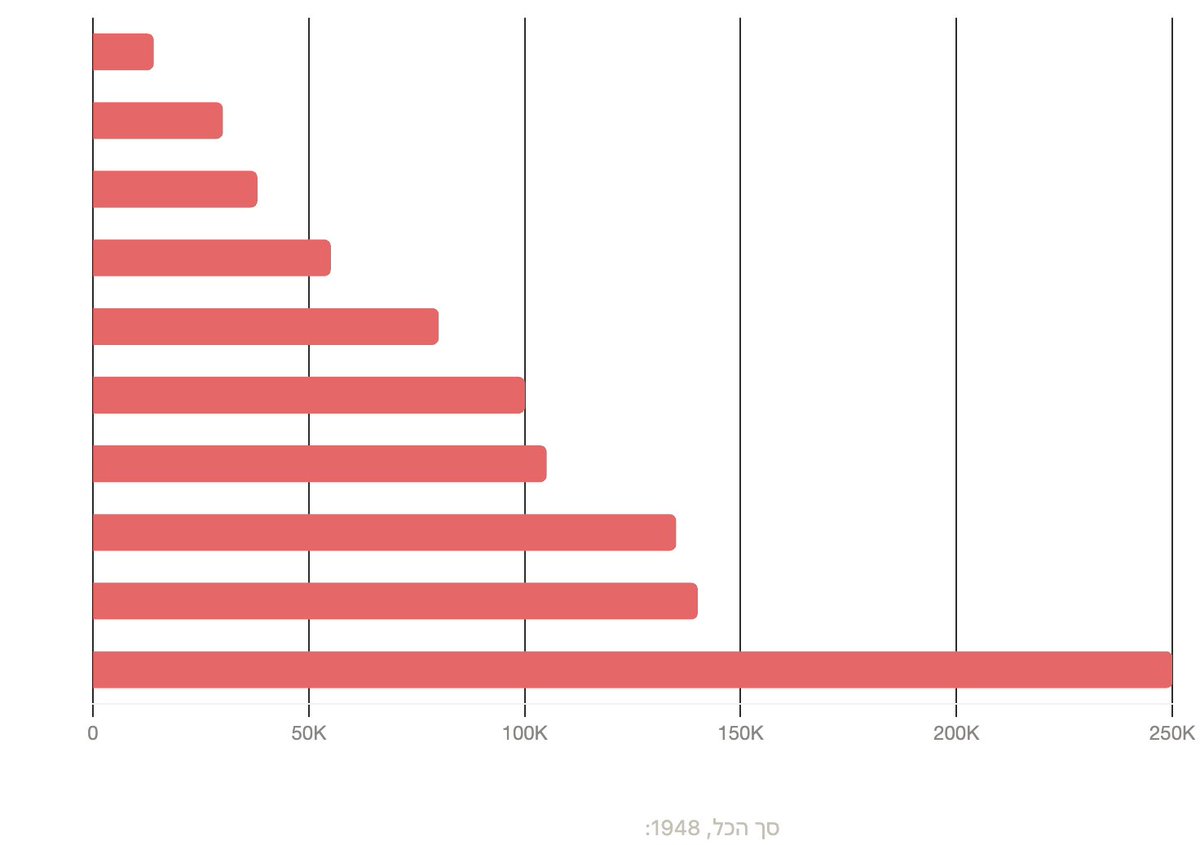
Between 1948 and 1975, roughly 947,000 Jews left the Arab and Islamic world — Morocco alone, the country with the largest community, lost a quarter of a million Jews. This was not a marginal phenomenon. It was the uprooting of entire communities, some older than Islam itself, within less than a single generation.

And yet, almost no one knows the story.

52,000 testimonies, fewer than a hundred of them

Professor Henry Green, founder of the international "Sephardi Voices" archive, recounts that when he arrived in Jerusalem in 1971 and first heard about the "Black Panthers," he — an Ashkenazi Jew from Canada — knew nothing about Sephardic Jews. That gap stayed with him throughout his career. In the great Holocaust testimony archive at the University of Southern California, out of 52,000 recorded testimonies, fewer than a hundred come from Jews of Arab lands. On the Farhud itself — the pogrom that struck Baghdad's Jews in 1941 — there is not a single testimony in the archive.

Why the silence?

Green offers two reasons. The first: Sephardic Jews became a "minority within a minority" inside the Ashkenazi communities of the new diaspora, and it took a full generation before their voice began to be heard. The second, sharper reason: officially defining Jews from Arab lands as refugees creates an uncomfortable comparison — because it then becomes necessary to also address the question of the 1948 Palestinian refugees. Green himself is careful on this point — he isn't suggesting the two people's suffering be weighed against each other to cancel one out. "We're not looking for equivalence," he says, "we're looking for recognition." Only in 2015 — nearly seventy years after the events themselves — did Israel declare an official "Refugee Day," November 30th.

That's the introduction. What actually happened, country by country, is made up of three threads that are hard to separate: specific violence that pushed people to leave, a legal-governmental mechanism that made staying impossible, and a question, still disputed today, about Israeli involvement in accelerating the process.Image
Iraq — The Three Threads (2/8)

Thread 1: The violence — the Farhud, 1941

On June 1–2, 1941, in a power vacuum created by the fall of Rashid Ali al-Gaylani's pro-Nazi government, mass violence erupted in the streets of Baghdad. 170–180 Jews were killed, homes and shops were looted. A larger number of Muslims were also killed — some of them rioters, some of them defending their Jewish neighbors. Baghdad's Shiite leader, Abu al-Hasan al-Musawi, refused to issue a fatwa against the Jews and ordered Shiites not to take part in the massacre. British forces stationed near the city refused to intervene — British documents on the events were sealed until 1992 and 2017, respectively.

Thread 2: The legal mechanism — 1950–1951

Nine years after the Farhud, the Iraqi government itself opened the door to emigration — but on terms that made return impossible. On March 2, 1950, Prime Minister Salih Jabr passed a law allowing Jews to emigrate, on condition they renounce their Iraqi citizenship. In March 1951, after most Jews had already renounced their citizenship, Nuri al-Said's government froze all their remaining property in Iraq.

Thread 3: The bombing affair — a dispute still unresolved

Between April 1950 and March 1951, several bombs exploded in places where Jews gathered — a café, a synagogue, an American cultural center, Jewish commercial firms. Four were killed in the attack on the Masuda Shemtov Synagogue. Two suspects — Yosef Basri and Shalom Salih — were executed.

Who was behind the bombings remains disputed to this day. Historian Avi Shlaim (Oxford) claimed in 2023, relying mainly on a single testimony, that the Zionist underground itself carried out some of the attacks to accelerate the exodus. His claim has met real factual criticism (date errors, reliance on a problematic source). Historian Esther Meir-Glitzenstein, in the most comprehensive academic research on the subject, states cautiously that the guilt of those executed "was not proven beyond doubt" — declining to reach a definitive conclusion either way.

What is clear, without dispute: the combined result of the three threads was an almost total departure. A community of roughly 135,000 in 1948 — about a third of Baghdad's population — shrank within two years to a few thousand.
Yemen and Aden — The Three Threads (3/8)

Thread 1: The violence — the Aden riots, December 1947

Just two days after the UN approved the partition plan on November 29, 1947, violent riots broke out in Aden — then a British protectorate — against its ancient Jewish community. Between December 2 and 4, 82 Jews were murdered, and 76 more were wounded (some sources count as many as 87 dead). Four synagogues and 220 Jewish homes were burned or looted, two Jewish schools were emptied and set on fire. The British authorities' response was, according to contemporary accounts, slow and hesitant — some of the army units sent to quell the unrest were staffed by Arab soldiers, some of whom joined the looting themselves. Jewish refugees from Yemen itself, who had reached Aden hoping to immigrate to Israel, were turned away by the British because they weren't Aden citizens — they were left unprotected in the streets, until the Joint Distribution Committee funded a camp for them 30 kilometers outside the city.

Thread 2: The mechanism — Yemen's refusal, then cooperation

Before 1948, Yemen's authorities (Imam Yahya) opposed Jewish immigration to Israel. After the state was established and Egypt and Israel signed an armistice, the Imam — following diplomatic pressure, including meetings between representatives of the World Jewish Congress and the Imam's representatives — agreed to an emigration plan. Between December 1948 and September 1950, roughly 49,000 Jews were flown out of Yemen and Aden on about 380 flights, in an operation known as "On Eagles' Wings" or "Operation Magic Carpet."

Thread 3: What happened along the way and in the camps — a dispute that continues today

Not every part of the story ended with the flight itself. Some immigrants waited at the "Geula" camp near Aden for more than three years, under harsh conditions that led to a high rate of infant mortality. In the years that followed, a bitterly disputed affair arose — the "Yemenite Children Affair" — surrounding the disappearance of hundreds of infants and toddlers among the immigrants, whose parents claimed were given up for adoption without their knowledge. Three separate state commissions of inquiry, the last in 2001, found no proof of an organized, systematic abduction operation — but criticism of how the commissions worked, and of records that weren't preserved, continues to this day, and belongs not to the debate over "the expulsion" itself but to a separate and more delicate chapter.
Read 9 tweets
Jul 8
They Opposed It, and History Forgot (1/4)

Opening

There's a familiar narrative: Jews in Arab lands waited for Zionism, welcomed it joyfully, and fled to Israel at the first opportunity. That narrative is convenient. It's also, for the most part, not true.

Jewish leaders in Iraq, in Egypt, and elsewhere — rabbis, lawyers, philanthropists — opposed Zionism actively, publicly, and at times with remarkable courage. They didn't do this out of betrayal of the Jewish people. They did it out of a deep conviction that their home already existed — and that it was in Baghdad, in Cairo, not in Palestine.

First Figure: Menachem Saleh Daniel

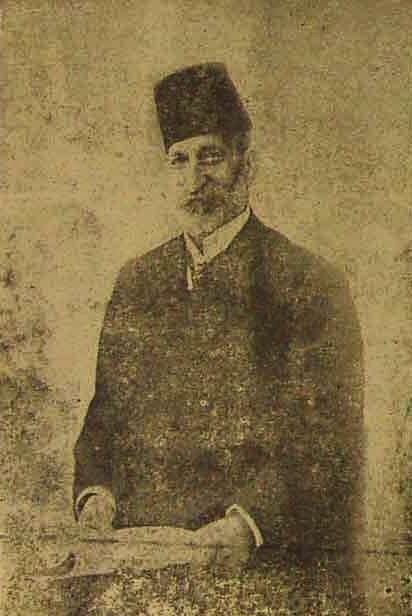
[Image: Menachem Saleh Daniel]

On September 8, 1922, Menachem Saleh Daniel — Iraq's first Jewish senator, the wealthiest man among Iraqi Jews, the man who hosted King Faisal I in his own home when the king's palace was destroyed by flooding — sat down and wrote a letter to the secretary of the Zionist Organization in London.

He didn't write in anger. He wrote with great respect, almost apologetically: he began by expressing his admiration for their noble ideal. Then came the "but." In Iraq, he explained, Zionism was not an entirely ideal matter — it represented a problem, with aspects requiring careful consideration, circumstances that no European Jewish community faced. In all Arab lands, he warned, the Zionist movement was seen as a serious threat to Arab national life.

This wasn't a theoretical position. Daniel knew exactly what he was talking about: Jews had lived in Iraq for some 3,500 years. They would not emigrate, he argued, unless forced to — and if forced, it would be the fault of government policy, not genuine desire.

His son, Ezra Daniel, inherited his seat in the Senate — and was the only one among Iraq's Jewish community leaders who spoke out openly, in his Senate speeches, against the government's discriminatory policies. His speeches weren't published in the press. They were echoed by word of mouth, precisely because they came from someone who wasn't a Zionist.

According to the Iraqi historian Nabil al-Rubaie, the graves of Menachem and Ezra Daniel in the city of Kifl were removed.Image
Second Figure: Yosef al-Kabir (2/4)

Yosef al-Kabir was no ordinary lawyer. He was deputy chairman of the Iraqi Bar Association — an unprecedented achievement for a member of the Jewish minority at the time — and a member of the team of jurists who drafted independent Iraq's constitution in the 1920s. His brother, Ibrahim al-Kabir, served as deputy director-general of the Iraqi Ministry of Finance.

On November 5, 1938, al-Kabir published a letter in the Iraq Times, Baghdad's leading English-language newspaper. He didn't write as an enemy of Zionism out of hatred — he wrote as a lawyer examining the problem closely. The Balfour Declaration, he argued, had attempted to solve a European problem — and would remain one, in both its origin and the scope of its impact. He warned that the Declaration was a dangerous formula for political acrobatics, built on a partnership that could not actually be realized.

This wasn't the writing of an isolated man. A fully independent, secular Iraqi-Arab source, published decades later by a researcher with no Jewish affiliation, quoted this very letter precisely — evidence that this position was etched into Iraqi historical memory itself, not only in Jewish sources.

Two years later, in 1941, when the Farhud pogrom struck Baghdad, al-Kabir did not stand aside. He served on the official commission of inquiry, and insisted that the violence had not been a spontaneous mob outburst — it had been an organized plan, led by pro-Nazi figures within the government, headed by Minister of Information Yunis al-Sabawi.

Al-Kabir believed the Jews' future lay in equal citizenship in Iraq — "sons of the faith of Moses," not a separate people. Only in his later years, as discriminatory legislation tightened its grip, did he come to understand that this vision had failed. He emigrated to London, where he continued working for the rights of Iraqi Jews who had been forced to leave everything behind.
Third Figure: Chaim Nahum Effendi — A Leader Between Two Pressures (3/4)

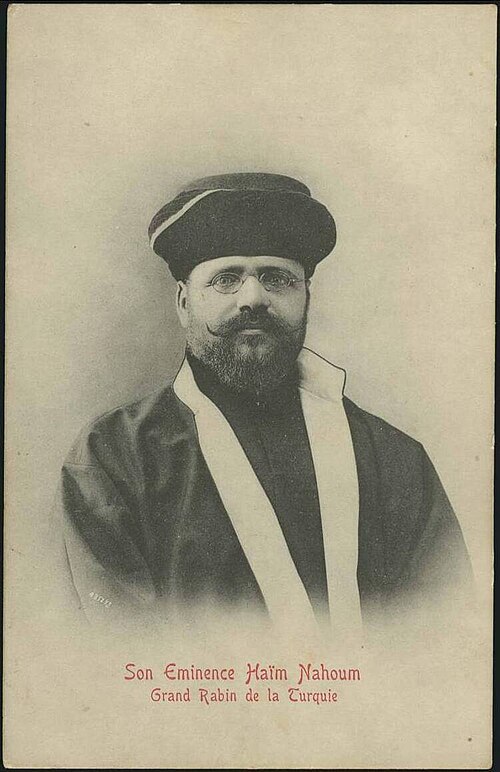
[Image: Chaim Nahum Effendi]

Not all opposition looked the same. Chaim Nahum Effendi represents an entirely different kind of standing firm — cautious, sophisticated, not always heroic, but real.

Born in Turkey, a descendant of Spanish exiles, Nahum served as Chacham Bashi (chief rabbi) of the entire Ottoman Empire, and then, from 1925, as chief rabbi of Egyptian Jewry. He was an extraordinarily prolific scholar: he wrote a book on Babylonian Jewry, a book on Karaite Judaism, and even translated into French every Ottoman decree sent to Egypt over nearly 400 years. He was a familiar presence at the courts of two Egyptian kings and served in the Egyptian Senate.

When the War of Independence broke out in 1948, Nahum found himself caught between two impossible pressures. The Egyptian government demanded he publicly denounce Zionism — and he complied, but with notable caution: the "condemnation" he issued was described at the time as weak. At the same time, when that same government demanded he add a prayer for Egypt's victory in the war to synagogue services, he refused.

This was a delicate, deliberate balance: giving the government the minimum it demanded, without mobilizing religion itself for a war that wasn't his own.

Nahum was not a man of revolution. He was a man trying to keep an entire community alive one more day, one more year — hundreds of Jews arrested and interrogated for "Zionist activity," businesses seized, bank accounts frozen. At age 78, he lost his eyesight. He died in 1960, after 35 years in office.

Not everyone who resisted did so loudly. Some did it through calculated silence that couldn't easily be read — one refusal, one compliance, a hundred small choices that determined where the line was drawn.Image
Read 5 tweets
Jul 8
Jews of Yemen: Before There Was a "Middle East" (1/3)

Chapter One: Before There Was a "Middle East"

[Image: "Job and His Friends," painting by Ilya Repin (1869), the Russian Museum, St. Petersburg]

There was a community that told its own story as having been there even before the destruction of the First Temple. There's no way to fully verify that, but there's archaeological evidence that comes remarkably close.

Even Before Himyar

The Bible itself already knows the name "Teiman": Eliphaz the Temanite, one of Job's three friends, is considered the earliest biblical link between the name and the community. There is also a possible, though uncertain, hint in the writing of the first-century historian Josephus: he writes that he sent word to "the most remote Arabians" about the destruction of Jerusalem, and the common scholarly guess is that he meant the Jews of Yemen.

Two Physicians and a King Who Converted

Even before Dhu Nuwas, another tradition tells of a Himyarite king named Abu-Kariba As'ad, who laid siege to the city of Yathrib (today's Medina) to avenge his son's death. During the siege, the king fell gravely ill, and two Jews with medical knowledge from the city — Ka'b and As'ad — healed him and persuaded him to end the siege. The king did not stop at ending the war: he converted to Judaism himself, along with a significant part of his army, and brought the two Jews back with him to teach his people. This was not a complete conversion of the entire kingdom — polytheists continued to live alongside them — but it is evidence of a gradual process that preceded the reign of Dhu Nuwas himself.

A Jewish King in Arabia

In the early sixth century CE, in the kingdom of Himyar in southern Arabia, a king who fully embraced Judaism rose to power — Yosef Dhu Nuwas. This isn't legend: a stone ring found in Zafar, the kingdom's capital, bears the name "Yitzhak bar Chanina" along with an engraving of the Ark of the Covenant. Excavations at the Zafar site itself have also uncovered a seal bearing an image of a Torah-ark niche and Hebrew inscriptions — direct archaeological evidence that a real Jewish community lived in the kingdom's own capital, alongside Christian and polytheist residents. Jewish graves from Himyar dating to the third century have been found at Beit She'arim in the Land of Israel — meaning that even then, Jews from Yemen were being buried in the holy ground, a sign of an active connection between the communities, centuries before anyone spoke of organized immigration.

Founding Traditions

The Jews of Yemen themselves told several versions of how they first settled there: merchants sent by King Solomon to seek gold and silver for the Temple; a large group that accompanied the prophet Jeremiah before the destruction of the First Temple; a ban placed on them by Ezra the Scribe for refusing to return to Jerusalem. These aren't documented facts in the precise historical sense — but they reveal something important: the community saw itself as especially ancient, rooted, not as a late addition to Jewish history.

It Wasn't Always Easy

In 525 CE, the kingdom of Himyar fell to an Abyssinian-Christian invasion. Dhu Nuwas, so the story goes, took his own life rather than witness its fall. The Jews of Himyar continued to exist afterward, but under persecution and torment, until the Abyssinians were eventually driven out with Persian help. That, too, is part of the story.

The community survived. In the seventh century, when Islam reached Yemen, a new chapter opened — but the Jews remained, and rebuilt, again and again, for more than a thousand additional years.Image
Chapter Two: A Letter From Far Away (2/3)

[Image: Yemenite Jews studying Torah in Sana'a]

In 1172, when a local messianic movement arose in Yemen amid intensifying persecution, Rabbi Yaakov ben Netanel al-Fayyumi, head of Yemenite Jewry, sent a question to one place - Fustat, in Egypt.

Maimonides Writes to Yemen

Maimonides — the same physician to Saladin we already met in the Egypt chapter — responded with an explicit letter of encouragement and strength: the "Iggeret Teiman" (Epistle to Yemen). This was not a general reply. Maimonides addressed the false-messiah phenomenon that had arisen in Yemen out of despair and suffering directly, and expanded on the true nature of prophecy and the correct way to face persecution without falling into false hope. This was a complete halachic-philosophical response from the greatest Torah authority in the Jewish world at the time, addressed directly to a small, distant community facing an existential crisis. This connection — between Maimonides and Yemen — would continue to echo for centuries to come.

Sana'a: A Thousand Years of Continuity

The community of Sana'a was the greatest center of Torah learning in Yemen for more than a thousand years, until the mass immigration of 1949. It was home to the central rabbinical court of all of Yemen, and to the "Great Yeshiva" — every day, after the morning prayer, all the city's Torah scholars would gather in one of the important synagogues and study together for two to three hours. This wasn't a formal, bureaucratic institution. It was a daily rhythm of life that lasted for generations.

Safed's Kabbalah Reaches Yemen

In the sixteenth century, the influence of the sages of Safed reached Yemen, carried by travelers and by books printed there that began arriving southward. The Kabbalah of the Ari penetrated every area of life in Yemen: religious law, customs, poetry, and homiletics. This is another connection, alongside the one we already found in Morocco, showing that Safed wasn't only a "center of influence" but a crossroads that absorbed and returned influences from every corner of the diaspora.

An Internal Dispute — the "Dor Deah"

Toward the end of the nineteenth century, Rabbi Yihye Qafih rose in Sana'a and founded the "Dor Deah" ("Generation of Knowledge") movement — a rationalist current that sought to return to Maimonides' pure approach and shake off the accumulated influence of Kabbalah. This was not a quiet, uniform community. It was a living community, with real internal debates over the future of its own tradition.Image
Chapter Three: The Communal Flourishing (3/3)

[Image: Rabbi Shalom Sharabi (the Rashash)] [Image: A Jewish goldsmith at work, Hadhramaut]
Yemenite craftsmanship wasn't a hobby. It was an entire economy, largely in Jewish hands.

The Craftsmen of All Yemen

Nearly all the jewelry in the country — both silver and gold — was made by Jewish silversmiths. The ornate rosewater towers found in every Yemenite home, Jewish and non-Jewish alike, came out of Jewish workshops. This was expertise passed down through generations, recognized by Jews and Muslims alike as true craftsmanship.

The 1901 Discovery

In 1901, Hermann Burchardt, a wealthy German Jew who loved documenting remote peoples, photographed the community of Sana'a — probably the first time in history it was documented this way. Burchardt had studied Arabic and Turkish and set out from Damascus on a long journey that led him to Sana'a, where he lived with the community for nearly a full year. When he published the photographs in a Jewish newspaper in Germany, European Jewry was stunned: they saw a community that looked as if it had stepped straight out of the Bible — a way of life that had survived almost untouched by the European influences that had already transformed Jewish life in the West.

A Hard Trial — the "Nafar" Siege

In 1904–1905, when Yemenite rebels under Imam Yahya laid siege to Sana'a against Ottoman rule, the city was struck by severe famine. About two-thirds of the Jewish community died of starvation. The community, nonetheless, rebuilt itself afterward — as it had done again and again throughout its history.

What Remains

The community of Sana'a, more than a thousand years old, continued without interruption until the mass immigration of 1949. Until then, the Jews of Yemen preserved a distinct tradition of their own — not fully absorbed into the Sephardic tradition like other Eastern communities, and not into the Ashkenazi one either — a third, independent community, with a voice of its own.Image
Image
Read 4 tweets
Jul 7
The Sephardic Community of Jerusalem (1/3)

Chapter One: The Sephardic Community of Jerusalem and Jaffa — Before There Was a "Middle East"

[Image: Yosef Eliyahu Chelouche] [Image: Leaders of the Jaffa community, including a family portrait]

There's a city that turned itself inside out without anyone quite noticing when it happened.

A Sephardic City, Almost Entirely

At the start of the nineteenth century, Jerusalem was overwhelmingly Sephardic. According to a census by the Prussian consul Dr. Schultz, in 1845 the city held roughly 7,120 Jews — about 6,000 of them Sephardic, against only about 1,100 Ashkenazi. The Ashkenazi Jews were such a tiny minority that, to complete a prayer quorum for Ashkenazi-rite services in one of the prayer rooms within the Rabban Yochanan ben Zakai synagogue complex, they sometimes had to bring in a paid Sephardic Jew — or even a boy under bar mitzvah age, holding a Torah scroll — just to reach the minyan.

There's an even more striking piece of evidence: Ashkenazi Jews who immigrated to Jerusalem in that period would often join the Sephardic community and present themselves publicly as Sephardic — in the words of the historical record, "so that the Arabs would not recognize them as Ashkenazi." This was, to a significant degree, a matter of personal safety.

Son of Algeria and Baghdad, Born in Jaffa

In 1870, a boy named Yosef Eliyahu Chelouche was born in old Jaffa. His father, Aharon Chelouche, came from Oran in Algeria. His mother, Sarah, was born in Baghdad, from the "Baruch Matzliach" family. Two worlds — North Africa and Babylon — met in Ottoman Jaffa, long before anyone spoke of "communities" as separate categories.

The family home in old Jaffa wasn't only a residence. An entire room was set aside as a house of prayer. There, among others, wandering scholars and resident rabbis were hosted over the years — and in the list young Yosef Eliyahu remembered into old age, one name stands out: Rabbi Marcado Meir, father of the chief rabbi of the Land of Israel, Rishon LeTzion Rabbi Yaakov Meir. That same Rabbi Yaakov Meir would later found "Safah Berurah" — the first organization for the revival of the Hebrew language, before Eliezer Ben-Yehuda ever joined it.

A House That Was a Community Hub

In that house, the names of other scholars were also preserved: Rabbi Eliyahu Mani, the great Kabbalist (father of Judge Malkiel Mani), Rabbi Shlomo Bahbout (father of the rabbi of Beirut), Rabbi Meir Hamburger. This was not an isolated community — it was a waystation, a crossroads through which rabbis passed between Jerusalem, Baghdad, Beirut, and North Africa, all part of a single network.

A Friend From Baghdad, a Friend From Egypt

When Yosef Eliyahu grew older and was sent to study at the "Tiferet Yisrael" school in Beirut, two friends in particular stayed etched in his memory: Reuven Yechezkel Sassoon of Baghdad — who would later serve as Iraq's own finance minister — and Baruch Cohen, of a Karaite family from Egypt. Three children, from three different communities of Eastern Jewry, sitting in the same classroom in Ottoman Beirut.

A Slow Reversal

Throughout the entire nineteenth century, growing waves of Ashkenazi immigration — starting with the "Aliyah of the Vilna Gaon's Disciples" in 1808 — gradually changed the picture. Unlike the small number of Ashkenazim who had come before them, these immigrants did not assimilate into the Sephardic community — they built their own separate, independent communal infrastructure, until it gradually grew to outnumber the Sephardic community itself. By the early twentieth century, Ashkenazim already formed the majority in Jerusalem, and the Sephardic community, which had once been almost the entire city, had become a shrinking minority. This was not a result of 1948, nor even of political Zionism. The split into separate identities — a community building its own structure rather than merging — began decades before anyone had written the word "Zionism." What Zionism did, later, was take a demographic pattern that already existed — and give it, for the first time, a formal governmental structure.Image
Image
Chapter Two: The Torah That Led Out of Jerusalem (2/3)

[Image: the ornate door of the "Beit El" Kabbalist yeshiva in the Old City]

In Iraq, the chain of Torah scholarship passed through the Sofer family (Rabbi Yaakov Chaim Sofer, author of Kaf HaChaim, and his son Moshe, who carried on his work). In Fez, through Ibn Tzur and Ibn Danan. In Jerusalem, it passed through a single title: the Chacham Bashi.

A Position the Ottoman Empire Itself Recognized

From the mid-nineteenth century, the institution of "Chacham Bashi" — chief rabbi — was united with the title of "Rishon LeTzion" in Jerusalem. This was not a symbolic honor. The Ottoman government recognized the holder of this title as the authorized representative of the entire Jewish community — not only the Sephardim — before the authorities. This granted the Sephardic community a distinctive standing relative to other communities, long before anyone had any notion of a Jewish state.

From Rabbi Yaakov Shaul Elyashar to His Grandson

Rabbi Yaakov Shaul Elyashar served as Chacham Bashi and Rishon LeTzion at the end of the nineteenth century. Under him, a whole generation of leaders was trained — among them Rabbi Yaakov Meir, whom we've already met: a boy raised in Jerusalem, who studied with the Kabbalists of the "Beit El" yeshiva in the Old City (an ancient Kabbalistic yeshiva founded in 1737 — not to be confused with the modern religious-Zionist yeshiva bearing the same name in the settlement of Beit El), and who by age 23 was already among the founders of the Misgav Ladach hospital.

Rabbi Yaakov Meir was not content with a rabbinic role alone. He founded the "Hitachdut" organization to bring Sephardim and Ashkenazim closer together, and "Safah Berurah" for the revival of Hebrew — and years later, after serving as chief rabbi of the Salonika community for about a decade and helping rescue survivors of a great fire that devastated the city, he returned to Jerusalem and became the first Rishon LeTzion of the Chief Rabbinate — the most senior rabbinic position in a state that did not yet exist.

A Third Generation: The Grandson Who Carried On the Struggle

Eliyahu Elyashar — grandson of Rabbi Yaakov Shaul Elyashar — inherited not only the name but the role. He served as president of the Sephardic community committee of Jerusalem, and just as his grandfather had headed the community under Ottoman rule, he headed it under the British Mandate — trying, under far harder conditions, to preserve what his grandfather had built.

An Ancient Institution, by Tradition — Going Back to the Ramban

According to tradition, the Sephardic community committee of Jerusalem was established with the arrival of the Ramban (Nachmanides) in the city in 1267, which, if the tradition is accurate, makes it the only Jewish institution in the Land of Israel to have operated continuously from then until today. Under its auspices, generations of Torah, education, and charitable institutions operated: a Talmud Torah, the "Tiferet Yerushalayim" yeshiva, the "Beit El" Kabbalist yeshiva, the Misgav Ladach hospital, an orphanage, a soup kitchen, an old-age home, and a burial society.

An Unbroken Chain

Three generations, from the late nineteenth century to the mid-twentieth: Chacham Bashi → students who became chief rabbis → grandsons who carried on the public struggle. This was not leadership appointed from outside. It was a dynasty that grew from within the community itself, generation after generation — exactly as we saw in Baghdad, in Cairo, and in Fez.Image
Chapter Three: When the Leadership Hit a Wall (3/3)

[Image: Eliyahu Elyashar]

The previous two chapters told the story of a dynasty that grew on its own, from within the community. This chapter tells what happened when that dynasty encountered a new governing apparatus — one it hadn't built, and one that had no interest in making room for it.

Enormous Assets, and Evidence of a Struggle

The Sephardic community committee held endowments and assets of considerable scale — including a massive bequest from Sima Baliliyos, a philanthropist of Baghdadi-Sephardic origin from the community of Calcutta, who in 1926 left 80,000 Palestine pounds for the benefit of Jerusalem's main synagogue. Around this bequest, a prolonged legal battle unfolded between the Sephardic and Ashkenazi communities over whom the donation belonged to — a dispute in which, explicitly and in court, the question underlying this entire chapter was asked: who is the "default" identity of a Jew in the Land of Israel?

An Organization Born Without Money

After the British conquest in 1917, members of the Sephardic community in Jaffa and Jerusalem established public organizations of their own — the "Sephardic Youth Organization," later the "Organization of Eastern Pioneers." Unlike its Ashkenazi counterparts, it received no financial support from the Zionist institutions. It survived for about a decade and closed its doors in 1929 for lack of resources.

The Choice: Join, or Stay Outside

In Mandate-era Jerusalem, the Sephardic community council had to contend with a party-list electoral system, while every party was Ashkenazi and funded from abroad. The result: a Sephardic community that made up a significant share of Jerusalem's Jews received minimal representation in the central institutions.

Eliyahu Elyashar Takes the Wheel

In 1947, Eliyahu Elyashar was elected to head the Sephardic community committee, amid a dire financial situation — debts of thousands of pounds. He worked to restore its finances, renewed ties with Jews of Arab lands around the world, and convened another world conference of Sephardic Jews.

A Press of Their Own

Despite the hardships, members of the community managed to publish periodicals of their own — Al-Sharq in 1942, followed by Hed HaMizrach, edited by Eliyahu Elyashar himself, from 1943. These publications, alongside Bama'araha, edited by David Sitton, dealt with the culture of Arab-lands Jewry and the community's problems — an independent attempt, from within the community itself, to tell its own story in its own words.

What Remains, and What Was Lost

During the War of Independence, between November 1947 and May 1948, the Jewish Quarter of the Old City endured a six-month siege, and eventually fell to irregular Arab forces and the Jordanian Legion. During the fighting and its aftermath, most of the Quarter's buildings were destroyed — among them the offices of the Sephardic community committee, along with the historical material kept inside them: centuries of documents, ledgers, and correspondence.

A significant portion of the committee's own property, including assets and endowments such as the Baliliyos fund, remained on the other side of the armistice line, in territory then controlled by Jordan, beyond the reach of the community that administered it.

Not every claim from this period can be fully verified. But the basic pattern is clear and recurring: an organization without funding, minimal political representation relative to the size of the population, and a community forced again and again to build for itself, through its own effort, what other communities received as a matter of course.

This was not total erasure. This was a community that kept speaking, writing, and leading itself — even when the surrounding apparatus made it no easier, and even when the archive that documented its history burned under fire.Image
Read 4 tweets
Jul 6
Jews of Morocco: Before There Was a "Middle East"
(1/3)

Chapter One: Before There Was a "Middle East"

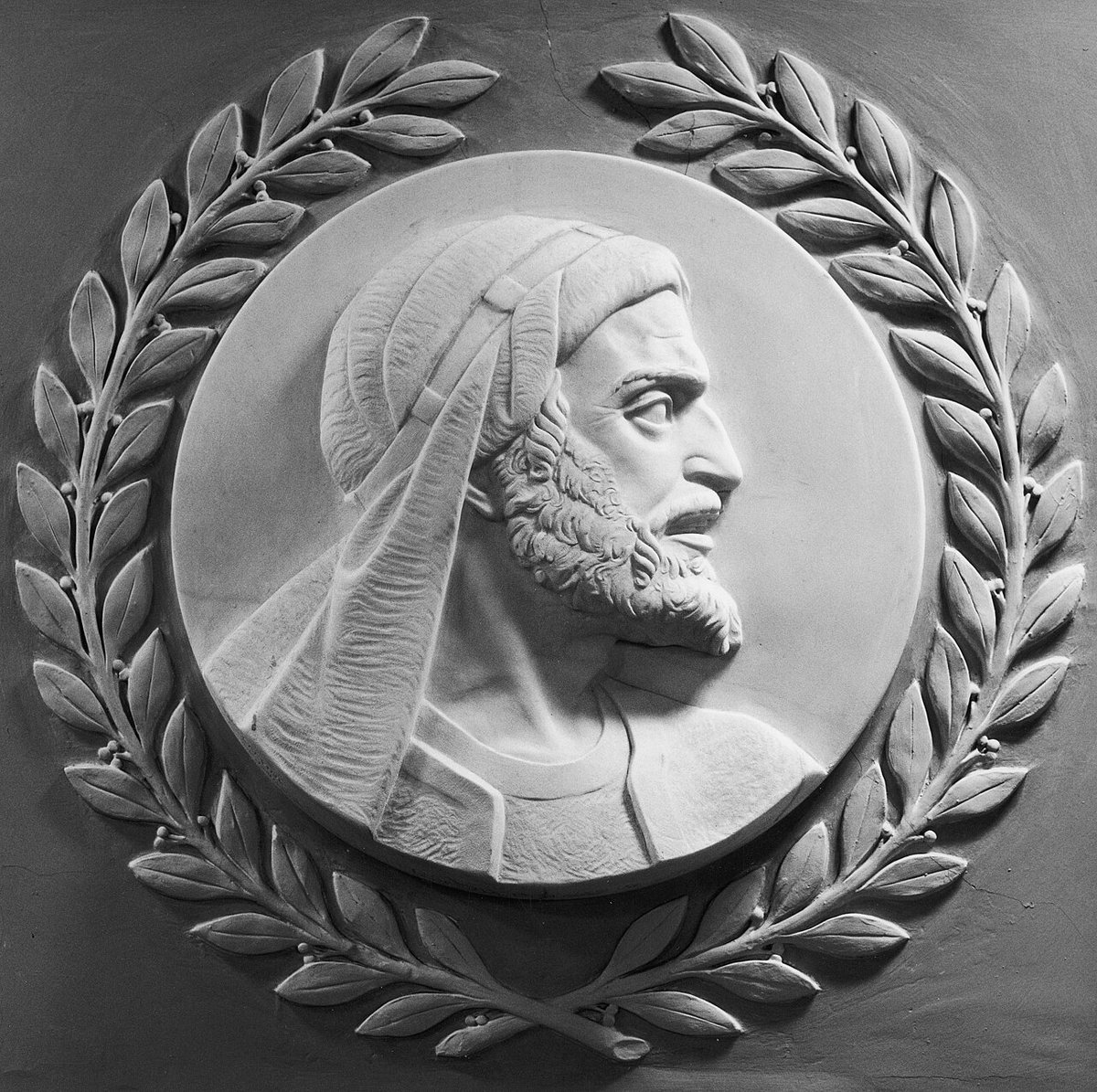
[Image: Bas-relief of Maimonides, one of 23 "Lawgivers" adorning the chamber of the U.S. House of Representatives, the Capitol, Washington, D.C.]

There was a Jewish community in Morocco that didn't arrive with the expulsion from Spain. It was already there — a thousand years earlier.

Evidence From the Third Century

A Hebrew tombstone found at Volubilis, near Moulay Idriss, has been dated to the third century CE. More such tombstones have been found at Salé and Tangier. The Jewish presence in North Africa has been described as one of the only stable constants in the region's turbulent history: the Jews arrived with the first conquerors — the Phoenicians — and remained after everyone else had already left.

When Fez Was Founded, the Jews Were Already There

When the city of Fez was founded in 798, Jews were already present — some of them, according to the sources, brought there by the city's own founder, Idris II. In the tenth century, Fez became an independent center of Torah learning, no longer dependent on the Geonim of Babylon. From that point on, the heads of the "Land of Israel Yeshiva" — the supreme Torah institution in Jerusalem itself — began arriving from North Africa, some of them natives of Fez and Sijilmasa. The familiar direction is influence flowing from the center outward to the periphery. Here, it happened the other way, too.

A Golden Age, in Muslim Testimony

In the mid-eleventh century, the Almoravid dynasty took control of Morocco, opening a period of relative security that lasted roughly a century. Jews were appointed to viziership, served as court physicians, and worked as poets and thinkers. The Andalusian Muslim historian al-Bakri wrote of this period: "The Jews were more numerous in Fez than in any other city in the Maghreb. From there, they set out on trading journeys to every country in the world."

Maimonides was here, too

During that very period, Rabbi Maimon the Judge and his son — Maimonides — were active in Fez, writing letters of encouragement to the local community. This was not a marginal way station in his life. This was a community he knew from the inside, before he ever reached Fustat in Egypt.

There is a small, remarkable piece of evidence that this figure continues to echo far from the Middle East. In the U.S. House of Representatives in Washington, twenty-three marble reliefs of historical "lawgivers" hang on the chamber walls — alongside Hammurabi, King Solomon, and Thomas Jefferson stands Maimonides. When the sculptor who created the relief in 1949 designed his likeness, she originally wanted to place a yarmulke on his head — so that he would look like a more "recognizable American Jew." A turban, which would have been far more historically accurate for a twelfth-century Middle Eastern-North African Jew, seemed to her less "Jewish." Even in Washington in 1949, someone tried to reshape an Eastern figure to fit a more familiar expectation.

It Wasn't Always Easy

In 1465, during a revolt that toppled the ruling dynasty, nearly the entire Jewish community of Fez was massacred — from thousands of souls, according to the accounts, only eleven survived. That, too, is part of the story.

But the community rose again. A wave of Spanish and Portuguese exiles that arrived only a few decades later brought renewed economic and spiritual flourishing — and a community that had buried nearly all its children rebuilt itself once more, this time with an added layer of wisdom, wealth, and experience.Image
(2/3)
Chapter Two: The Torah That Came Out of Fez

[Image: The Ibn Danan Synagogue, Fez — interior of the hall, with its turquoise-blue columns and traditional chandeliers]

"From Fez, Torah shall go out to all the lands" — so it was said. And it wasn't an exaggeration.

A Synagogue That Outlasted Three Dynasties

Look at this place. Blue columns, antique metal chandeliers, dark wooden benches that served generations of worshippers. The Ibn Danan Synagogue in Fez, built in the seventeenth century, is named for a family that is itself a story of continuity: the Ibn Danan family originally fled to Granada, Spain, then returned to Morocco after the 1492 expulsion — and from 1812 until the synagogue's closure in the 1960s, every rabbi who served there came from that same family. Nearly a hundred and fifty years of a single rabbinic dynasty, in a single place.

Two Worlds Meet

The Spanish exiles who arrived at the end of the fifteenth century found in Fez a Jewish community far older than themselves — the "Toshavim" (natives). The two worlds spoke a different prayer rite, held different dietary customs, and at times argued bitterly (a dispute that lasted decades was called the "Polmus HaNefiha"). But gradually, they merged.

Dynasties That Held for Generations

Just as we saw in Egypt with the Maimonides family, so too in Morocco: entire families of scholars inherited the rabbinate generation after generation — Toledano, Berdugo, Ibn Danan, Ibn Tzur. Rabbi Yaakov Ibn Tzur (the Yaavetz, 1673–1753) headed the rabbinical court of Fez, and in 1698 compiled the "Takanot of Fez" — roughly a quarter of a thousand legal ordinances, formulated by generations of rabbis over the two centuries following the Spanish expulsion. These ordinances gradually became the binding legal code for most of Moroccan Jewry.

A Sophisticated Legal System

The rabbinical court system was remarkably well organized: ordinances documented from 1603, 1611, and 1737 — including explicit protections for the elderly, orphans, and widows. When a small community lacked sufficiently senior judges, it would formally accept the authority of a neighboring city's court.

The Connection to Safed No One Talks About

Rabbi Chaim ibn Attar, author of the celebrated commentary "Or HaChaim," was born in Salé, Morocco. Other scholars from the Dra'a region were engaged in deep Kabbalistic study even before Safed became the world center of Kabbalah — and some of them went on to join the disciples of the Ari himself.Image
(3/3)

Chapter Three: The Communal Flourishing

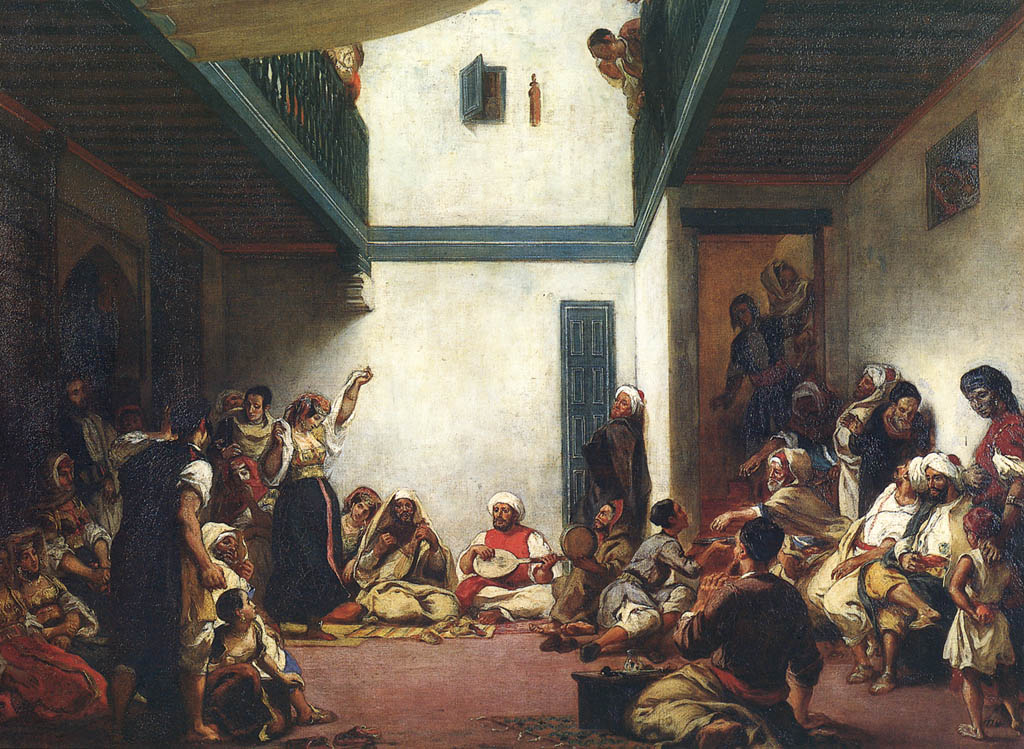
[Image: "Jewish Wedding in Morocco," Alfred Dehodencq, 1839 — displayed at the Louvre Museum, Paris]

Look at this painting. A dancer at the center of the room, her hands raised mid-motion. Oud and drum players accompany her. All around — a full crowd, men and women, children peeking from the balcony. This isn't an exotic scene the painter imagined — it's an actual Jewish wedding in Morocco, in the year 1839, documented in exacting detail by someone who witnessed it firsthand. The painting is significant enough that it hangs today in the Louvre itself.

It wasn't all Torah and law. There was also a vibrant, generous, remarkably well-organized community — documented in precise numbers.

A Census From 1879

Rabbi Avner Yisrael HaTzarfati of Fez conducted a detailed census in 1879 of the Jewish population of five Moroccan cities, including family names. The result: 5,844 Jews in Fez, 4,608 in Meknes, 2,168 in Sefrou. These aren't rough estimates — they are precise household counts, preserved and published.

Women Who Built Institutions From Nothing

Rivka Toledano in Meknes founded a Torah school, a feeding program for poor children, and an aid organization for couples in need — all on her own initiative. In Fez, Simcha bat HaMelech cooked with her own hands for Torah-school children for twenty years as a full volunteer, and Zahara Sabhon earned the title "Mother of the Children" for her devotion.

A Society for Visiting the Sick

Rabbi Shalom Sudri turned his private shop into a storehouse of medicine for the community's sick. Nissim Chayon served as president of the "Bikur Cholim" society in Meknes for forty-five years — an organized communal infrastructure, built and sustained by private individuals.

It Wasn't Always Easy, Here Too

In 1903, violent riots broke out in Meknes amid a succession crisis in the ruling government. Rabbi Chaim Mashash, so the story goes, went out in prayer that stopped the rioters before they could cause even greater damage. The community, as always, carried on afterward.Image
Read 4 tweets
Jul 5
Jews of Babylon (1/3)

Jews of Egypt: Before There Was a "Middle East"

Chapter One: Before There Was a "Middle East"

[Image: A papyrus letter from the Elephantine archive, circa 407 BCE — an appeal from the Jewish community on the island to Bagohi, governor of Judah]

There was a Jewish community that predated even the destruction of the First Temple. Not in Babylon. In Egypt.

A Fortress on the Nile

On a small island called Yeb, near modern-day Aswan, a unit of Jewish mercenary soldiers was stationed as early as the sixth century BCE — guardians of the Persian Empire's southern border. They were there before Nebuchadnezzar destroyed Jerusalem. They even built their own temple, alongside the temple of the local god Khnum.

Look at this document. This isn't a legend, and it isn't a later reconstruction — it's an actual letter, written by members of the community in 407 BCE. Their temple had been destroyed in local unrest, and they wrote a formal letter to Bagohi, the governor of Judah in Jerusalem, asking for help rebuilding it. Consider that: centuries before the First Temple in Jerusalem itself was destroyed, there was already a distant Jewish community that knew exactly whom to turn to for help — and received an answer.

When the Torah Spoke Greek

Centuries later, in Alexandria — founded by Alexander the Great — a vast Jewish community flourished under the protection of the Ptolemaic kings, who granted it full self-governance: its own ethnarch, its own court. The Roman historian Strabo described the ethnarch as running the community's affairs like the head of a small state. The community grew so large that it forgot Hebrew. So that the next generation could still read the Torah, a Greek translation was created in the third century BCE — the Septuagint — completed by 132 BCE and celebrated annually on the island of Pharos. The philosopher Philo of Alexandria, who lived in this community, sought to bridge Greek wisdom and Torah.

This was not a marginal outpost. This was one of the largest and most learned Jewish communities in the entire ancient world.

It Wasn't Always Easy

In 38 CE, violent riots broke out in Alexandria — Jews were murdered, community leaders were publicly flogged, and the entire community was crammed into a single quarter. Philo himself documented what he witnessed. That, too, is part of the story.

But the community survived, recovered, and carried on. By the time the Arabs conquered Egypt in 641, Alexandria's Jewish community numbered some 40,000, according to the testimony of the conquering commander himself, Amr ibn al-As, to Caliph Umar. The Eliyahu Hanavi Synagogue in Alexandria, which at its peak seated a thousand worshippers and even ran its own choir, stood in continuous use into the twentieth century — one physical thread connecting the ancient world to our own.Image
Jews of Babylon (2/3)

Chapter Two: The Torah That Came Out of Egypt

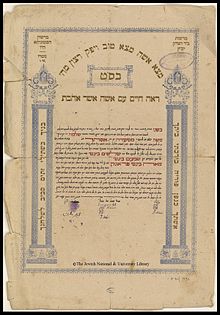
[Image: The Egyptian ketubah]

Look at this document. A ketubah — a traditional Jewish marriage contract — decorated with columns and ornamentation, opening with the words "with good fortune." This isn't merely a legal document. It's testimony to Jewish life continuing, generation after generation, in Egypt.

The Rav Saadia, Who Started in Fayyum

One of the greatest sages in Jewish history, Rav Saadia Gaon, was born not in Babylon but in Fayyum, Egypt. Only later did he move to Babylon and serve there as Gaon, but the root was Egyptian.

A Dynasty That Began With Maimonides Himself

In 1166, Maimonides arrived in Egypt and settled in Fustat. There, he wrote the Mishneh Torah and the Guide for the Perplexed — two of the most foundational works in Jewish history. He served as Ra'is al-Yahud — head of the entire Jewish community in Egypt.

And here comes the astonishing detail: the position didn't disappear with his death. It passed down through his family, generation after generation, for more than three hundred years — until the fifteenth century. His son, Abraham Maimonides, went a step further: he developed a distinctive Egyptian-Jewish pietist movement, influenced by the Sufi tradition around him — devotional prayer, fasting, seclusion. This was not a community that received Torah from on high and shut its door to its surroundings. This was a living community that created something new out of the encounter.

A Holiday That Survived

In the sixteenth century, under the ruler Ahmed Pasha, the community of Cairo faced an existential threat — averted at the last moment, in an episode centered on a Jew named Abraham de Castro. To this day, every year on the 28th of Adar, the Jews of Cairo — and later their descendants everywhere — celebrate their own "Cairo Purim": a local day of thanksgiving, unique to this community alone, observed continuously for centuries.

A Small Room in an Attic

In that same Ben Ezra Synagogue where Maimonides prayed, there was a modest attic room where the community would deposit worn pages — not only sacred texts, but letters, contracts, and marriage documents. When it was discovered at the end of the nineteenth century, it held roughly a quarter of a million manuscript fragments, from the ninth century to the nineteenth. The "Cairo Geniza" became one of the greatest documentary treasures in all of Jewish history. A century later, a member of a wealthy Egyptian Jewish family, Jacques Mosseri, personally assembled the world's second-largest private collection of Geniza fragments — and stipulated in his will that they would eventually pass to the National Library in Jerusalem.Image
Jews of Babylon (3/3)

Chapter Three: The Modern Flourishing

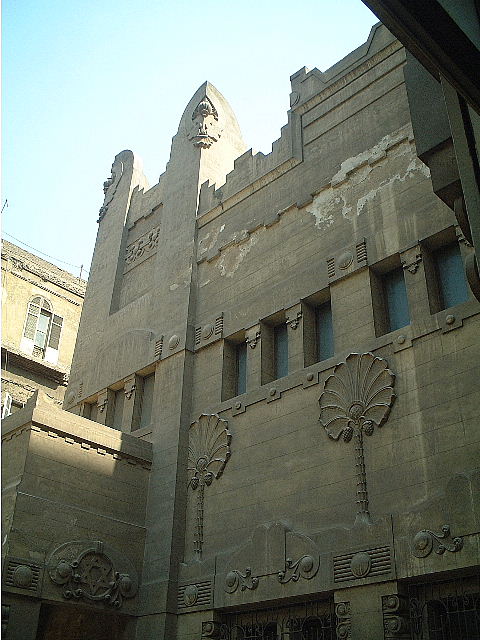
[Image: The Shaar Hashamayim Synagogue, Cairo] [Image: The formal social gathering]
Look at this building — bold geometric lines, stylized palm-frond ornamentation. This is the Shaar Hashamayim ("Gate of Heaven") Synagogue in Cairo — an architectural declaration of a community secure in itself and its place.

The Finance Minister Was Jewish — Here Too

Joseph Aslan Cattaui Pasha served as Egypt's Minister of Finance and Minister of Communications in the 1920s, sat in the Senate, and served as president of Cairo's Jewish community.

Not Just Money — Also Pen and Word

Yaqub Sanu, an Egyptian-Jewish journalist and playwright, was among the prominent voices of Egyptian nationalism itself. He edited Abu-Naddara, one of the first publications written in colloquial Egyptian Arabic, and championed the end of British rule over Egypt. A Jew who simply saw himself as Egyptian.

Families That Built Empires

Alongside Cattaui and Sanu stood families like Mosseri and Menasce — a banking and mercantile elite whose networks spanned continents. The Menasce family, starting in the mid-nineteenth century, built a trading network linking Cairo to Central Europe, and was eventually granted a title of nobility by the Austro-Hungarian Emperor himself.

This photograph — men in tuxedos, women in evening gowns, a formal evening at a grand hotel or club — is a record of the highest social life an Egyptian Jewish community conducted in public, as an inseparable part of the cosmopolitan society of Cairo and Alexandria.

What Remains

As in Baghdad, so in Cairo: the physical buildings and historical record remain contested to this day. In 2022, Egyptian antiquities authorities cleared out Geniza sacks newly discovered in an ancient Jewish cemetery, without the approval of the local Jewish community. Zahi Hawass, secretary of Egypt's Supreme Council of Antiquities, once said: "If you don't preserve the Jewish synagogues, you lose part of your own history."

The memory, for those who bothered to keep it, endures.Image
Image
Read 4 tweets

Did Thread Reader help you today?

Support us! We are indie developers!


This site is made by just two indie developers on a laptop doing marketing, support and development! Read more about the story.

Become a Premium Member ($3/month or $30/year) and get exclusive features!

Become Premium

Don't want to be a Premium member but still want to support us?

Make a small donation by buying us coffee ($5) or help with server cost ($10)

Donate via Paypal

Or Donate anonymously using crypto!

Ethereum

0xfe58350B80634f60Fa6Dc149a72b4DFbc17D341E copy

Bitcoin

3ATGMxNzCUFzxpMCHL5sWSt4DVtS8UqXpi copy

Thank you for your support!

Follow Us!

:(