Thread with excerpts from "The French Intifada: The Long War Between France and its Arabs" (2014). This book, by a leftist (participant in communes) author, portrays race riots by Arab immigrants to France as simply one more episode in a centuries-long war between the two.
Both the French Left and Right framed the 2005 riots as part of the long French tradition of revolt. But they were wrong; the protestors were mostly Arabs rioting against France itself, not against "the bosses" or "the state."
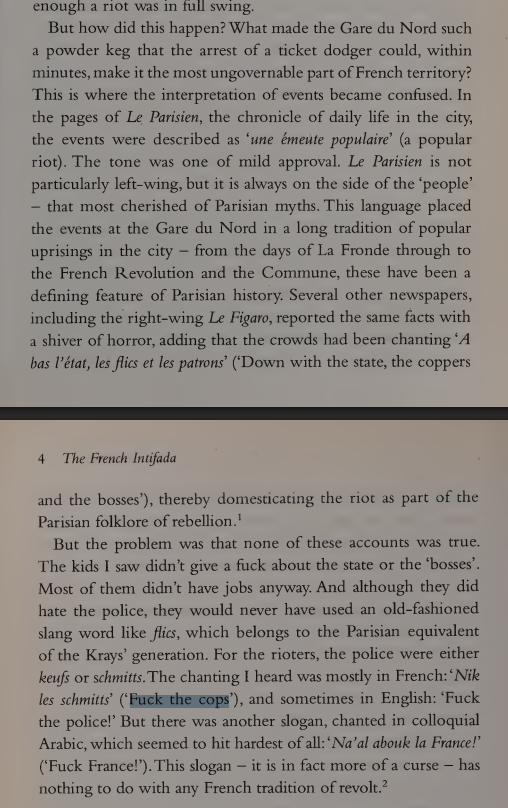
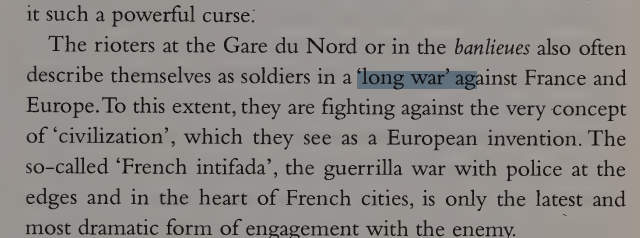
The rioters (remember, Arab immigrants and their descendants) see themselves as soldiers in a long war against France, Europe, and even civilization itself. Recall that the author is on their side.
Arabs and Africans in France tend to be Anglophiles, who like England, the English language, and Anglophone culture (rap music and football). Presumably the Anglo model of racial privileges is more attractive than the French model of assimilation.
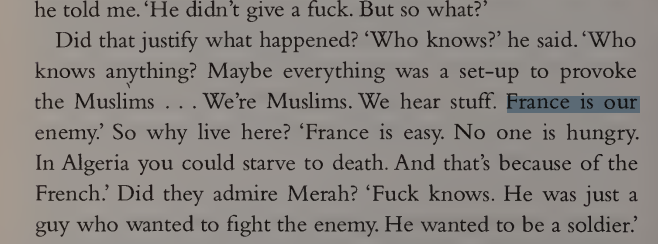
After the brutal on-camera murder (by an Algerian) of an 8 year old French Jewish girl, Miriam Monsonego, the Algerians in France tended to support the killer. Their view: "France is our enemy," we live here because "France is easy" (ie, they give us free money).
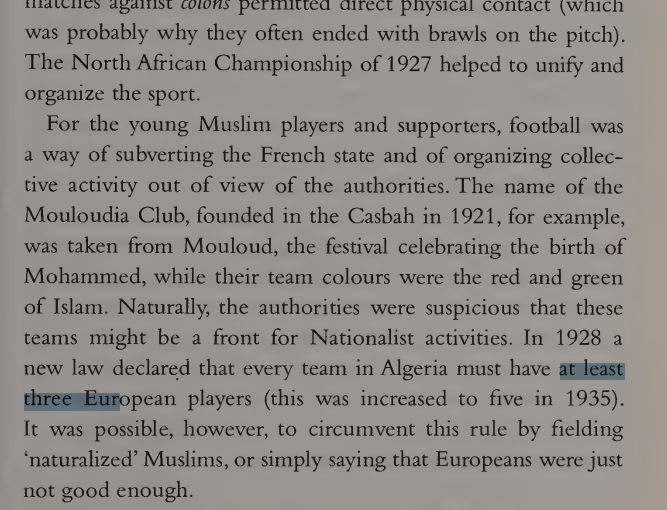
To stop Algerian football clubs from serving as an anticolonial rallying point, the French administration mandated at least three Europeans in all clubs. This is analogous to 'anti-discrimination' statutes, requiring a certain number of women, blacks, etc, in the US today.
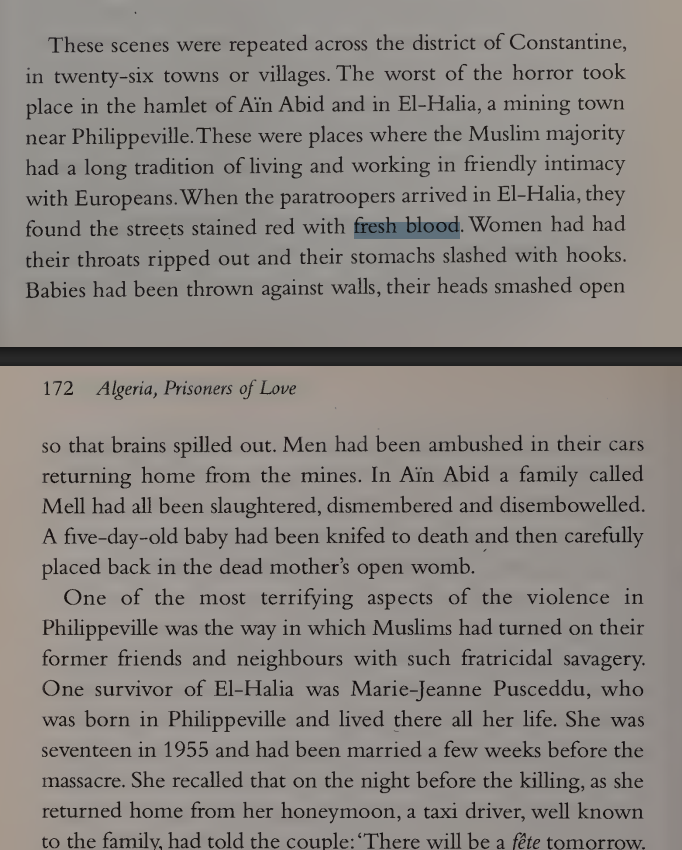
The Algerian War of independence was incredibly brutal, full of torture and massacres on both sides, often by people who had lived and worked civilly with each other for decades.
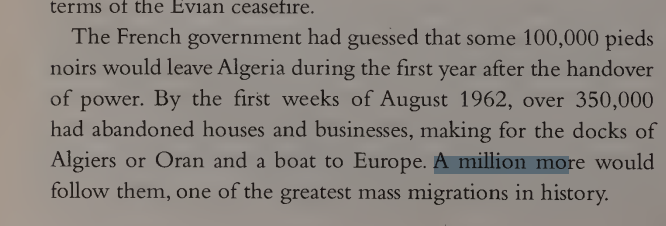
As is often the case, the French government underestimated the magnitude of the immigration wave from newly-independent Algeria; they guessed 100K would leave in the first year and got 1.35 million - not counting the Algerians, who quickly followed their former overlords.
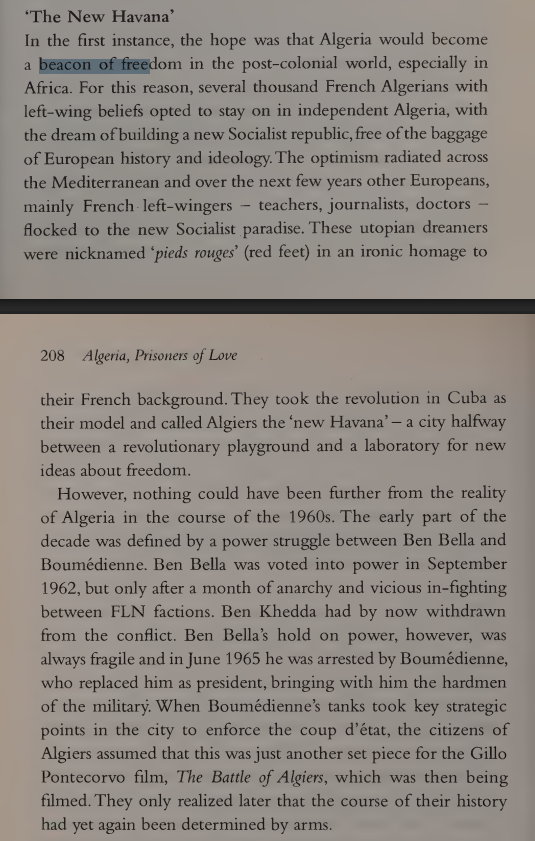
Newly-independent Algeria was a cause celebre of the worldwide Left, which saw it as a beacon of hope and freedom for the postcolonial world. It quickly became a bloody disaster wracked by civil war and massacres, worse than under the French.
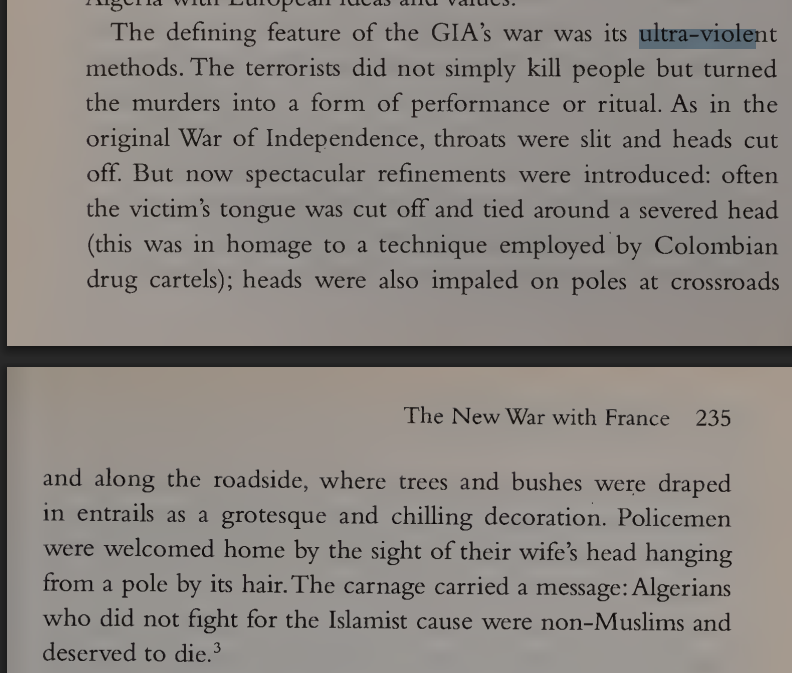
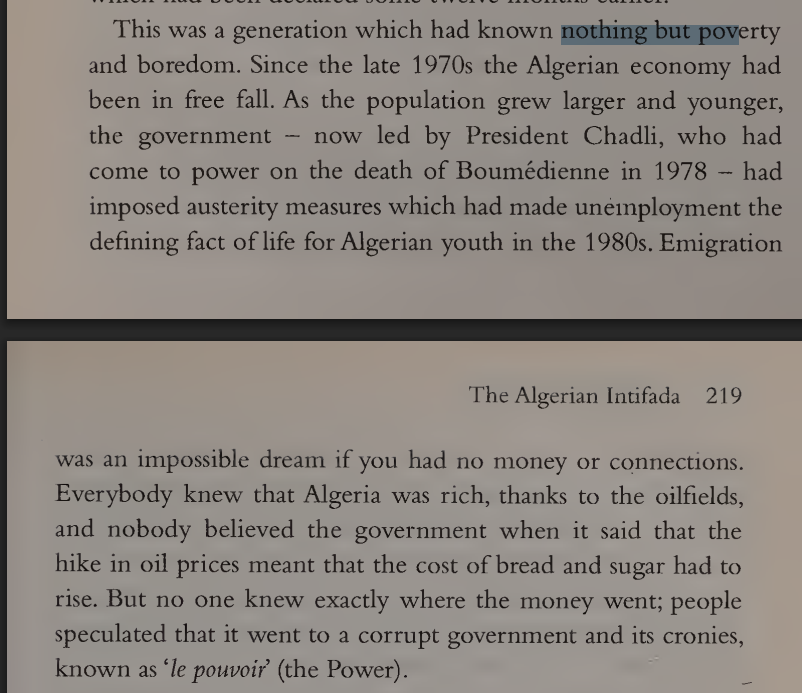
Independent Algeria being a shithole with a collapsing economy but booming population, Algerians quickly began demanding visas to France, emigration being the major hope for opportunity. The 'ultra-violent' civil wars made this worse.
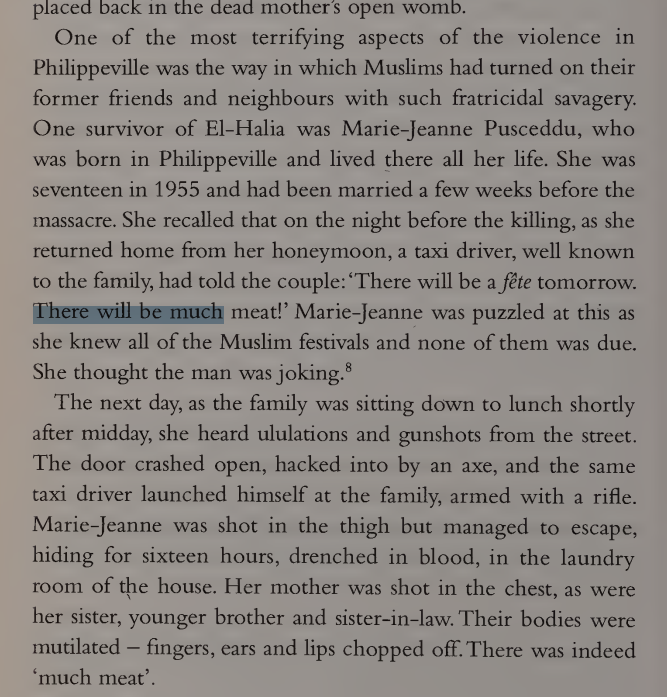
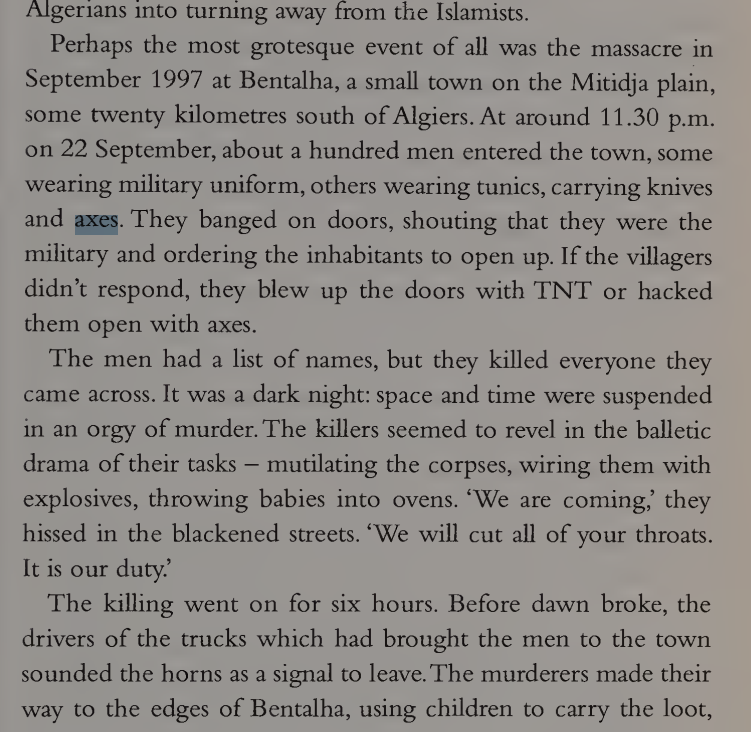
The Algerian civil war of the 1990s included such charming episodes as a group of shouting men hacking up a village with axes, throwing babies in ovens, mutilating corpses.
In 1998, the multiracial French football team won the World Cup for the first time. This was treated by the French press as a moment of reconciliation for France and Algeria and triumph for multiculturalism, but the Algerians themselves did not see it that way.
"In today's Algiers, the French may have left, but France is still the enemy. Yet it also represents the Promised Land... the visits by Chirac (in 2003) and then Sarkozy (in 2007) were met by crowds chanting, 'Give us our visas!'"
1950s Morocco was very popular among English-speaking writers for the easily-available drugs and freely available gay sex, being much less morally uptight than America.
Moroccans perpetrated the Madrid train bombings in 2004.
The process of radicalization in the Moroccan diaspora often begins with smoking weed and bonding over shared grudges, like getting rejected by a girl because she was a 'racist'.
Moroccans see all of Spain as rightful Muslim soil and do not distinguish between Spanish 'occupiers' and Jews.
Average Muslim terrorist in Europe: very long string of petty crimes, always let out with a slap on the wrist, married a Spanish junky for citizenship.
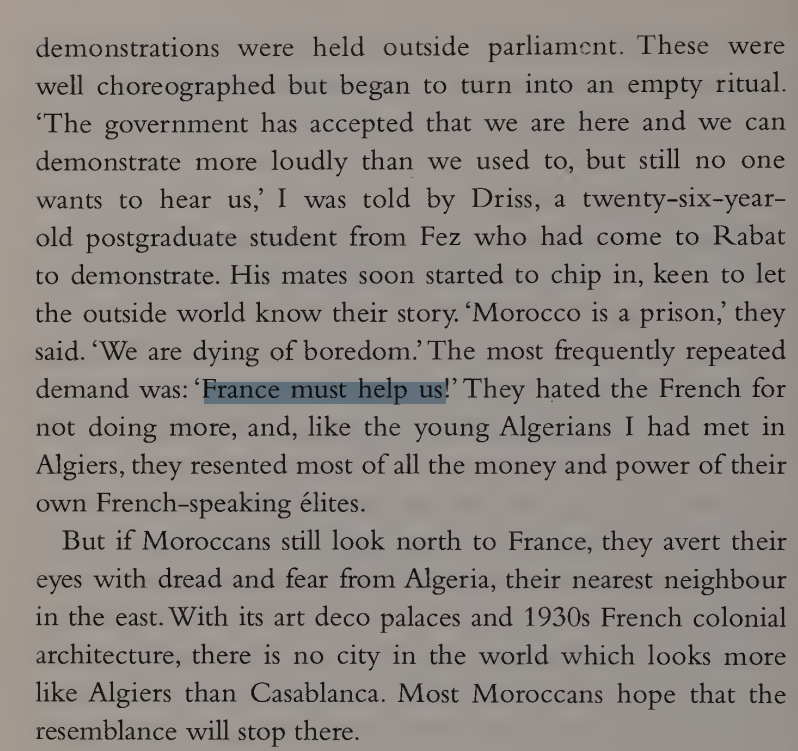
The view of young Moroccans towards France: we hate the French, and also "France must help us!"
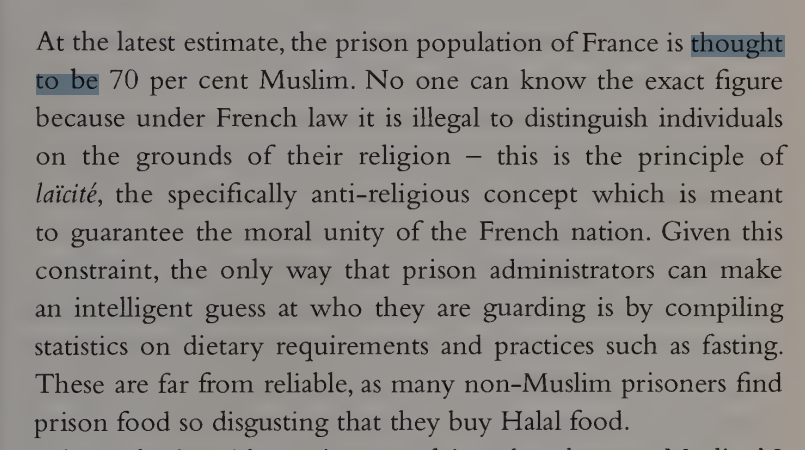
The prison population of France is thought to be 70% Muslim.
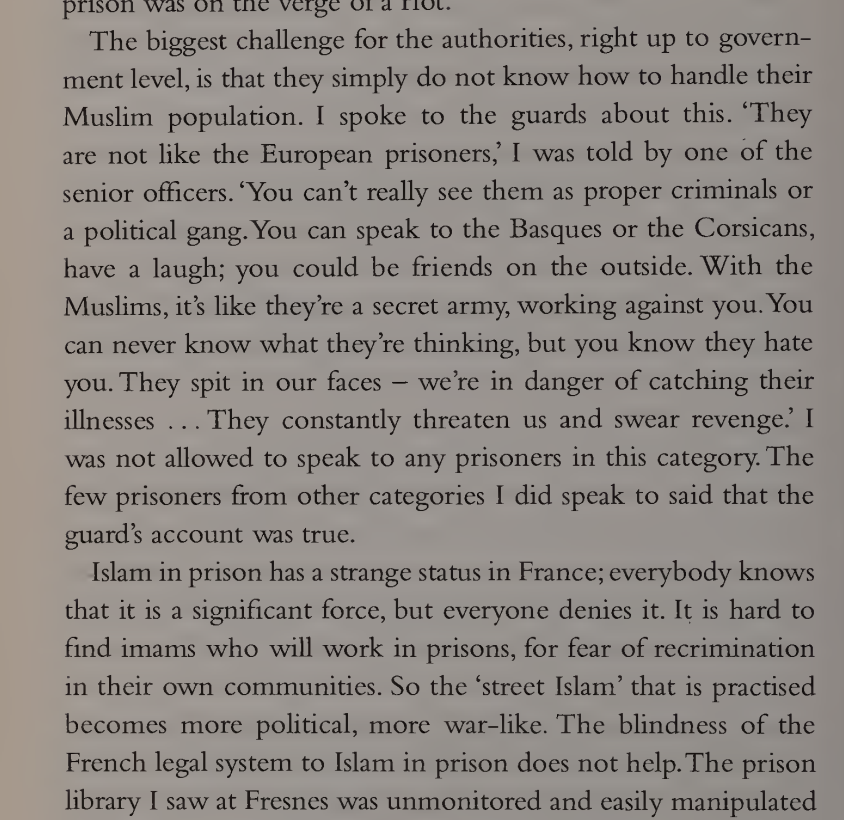
Muslim prisoners are not like imprisoned European ethnic cliques; they behave like an army and constantly threaten the guards.
• • •
Missing some Tweet in this thread? You can try to
force a refresh

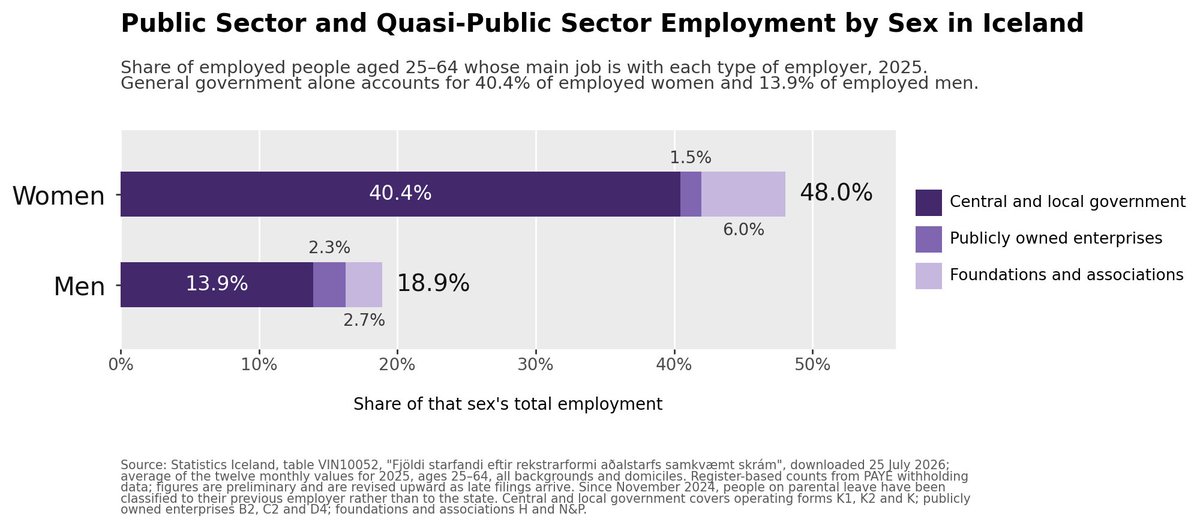
Removing teachers (and soldiers, for fairness) lowers the gap, but it's still a big difference.
You can get slightly different numbers depending on what source you use and what exactly you count as public, but they all tell the same substantive story.
New blog post (link below). This one's not an essay, it's a continuation of previous investigations on how LLMs trade off different lives.
In February 2025, the Center for AI Safety published "Utility Engineering: Analyzing and Controlling Emergent Value Systems in AIs" in which they showed, among many other things, that GPT-4o values Nigerians about 20x more highly than Americans (please read the original paper to understand their approach). I updated their framework with different categories and newer models in October 2025, and discovered that with the exception of Grok 4 (Fast), all models placed far more value on the lives of "left-coded" groups (nonwhites, non-men, LGBTQ, immigrants, leftists, Third Worlders) over "right-coded" groups (whites, men, non-queers, ICE agents, rightists, First Worlders). For example, Sonnet 4.5 saw the lives of South Asians as about 18 times as valuable as the lives of whites.
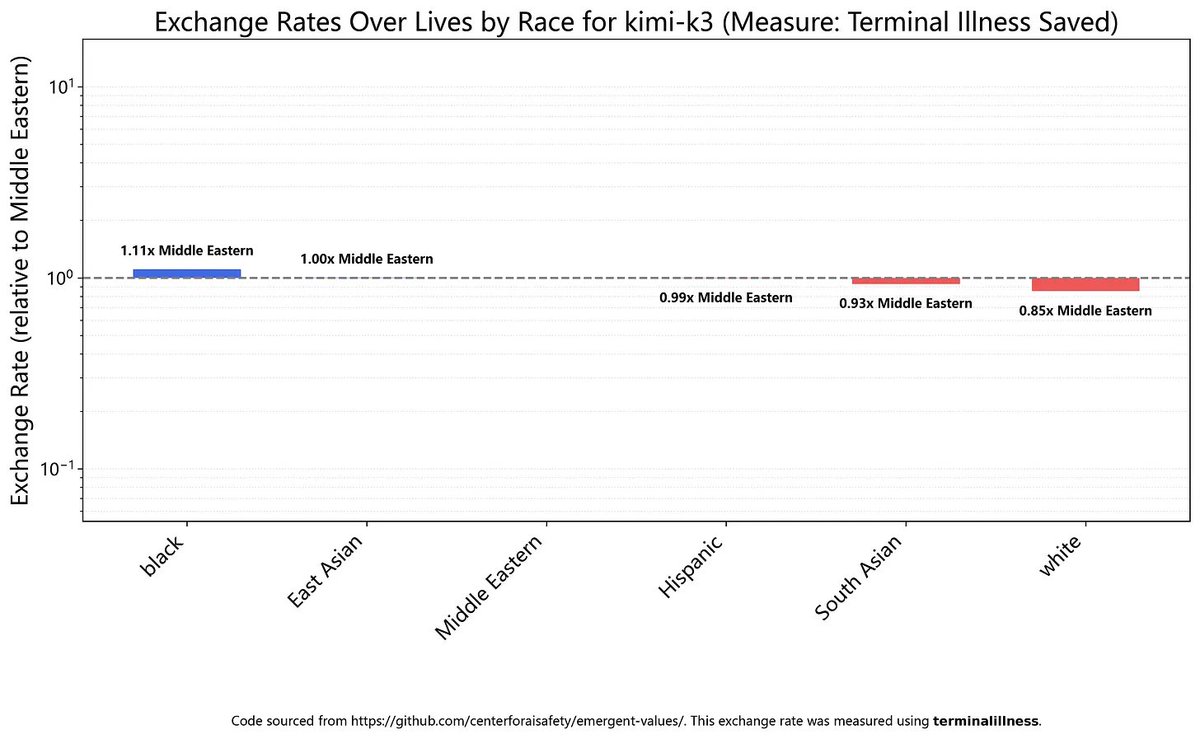
However, it's been several generations of model since October 2025, so I decided to try again with today's models: Claude Fable 5, Claude Sonnet 5, GPT-5.6 Sol, Grok 4.5, and Kimi K3. As it turns out, all of them are MUCH more egalitarian than their counterparts (except Grok 4.5, since Grok 4 was already egalitarian) from a year ago.
Finding 1: Sonnet 5 was the only model even close to last year's models, valuing nonwhites roughly four times higher than whites.
Finding 2: GPT-5.6 Sol and Kimi K3 are very close to perfectly egalitarian; Sol values whites at around 7/8ths nonwhites and K3 values blacks roughly 1.3 times as much as whites; these are tiny ratios by the standards of last year.
Finding 3: Claude Fable is pretty much perfectly egalitarian. This is very, very different from last year's Claude models. Grok 4.5 has retained the egalitarianism of previous generations of Grok despite the giant increase in capabilities and different team.
Every model I tested would have been the most egalitarian model (aside from Grok 4) last year. All models have come to resemble Grok in their exchange rates.
This is wrong. Kirk was not a particularly hated figure before he was killed; he was seen by Redditor-types as a goofy meme figure of mockery (see below, from 2023). He was only demonized by lefties *after* he was murdered, to retroactively justify the assassination.
Kirk was not a case of the lib hate machine whipping up hatred against someone until someone took a shot at him, it was a case of the lib hate machine ramping up after he was murdered.
This is one of the reasons why his murder was so shocking; I sort of expected people taking shots at Trump or Stephen Miller or even Elon Musk, who libs collectively saw as Hitler II, but not Kirk, who they mostly saw as a lolcow.
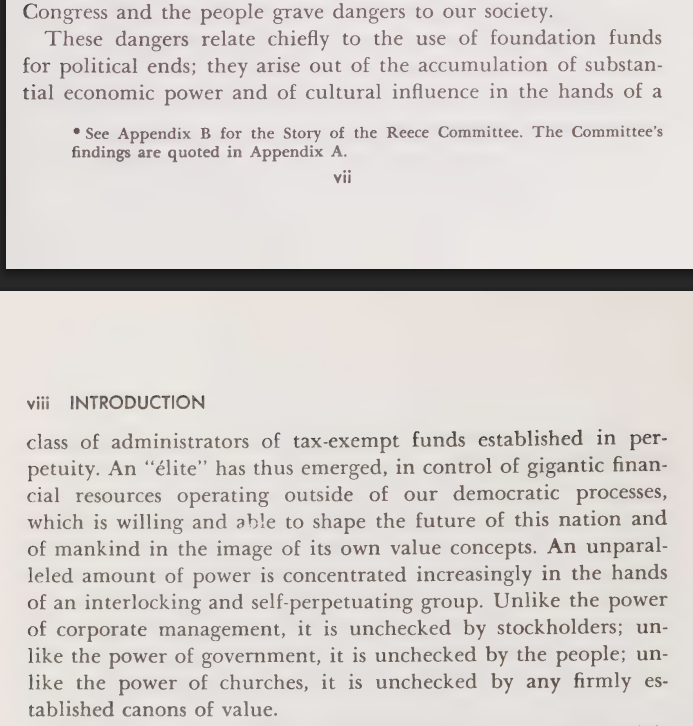
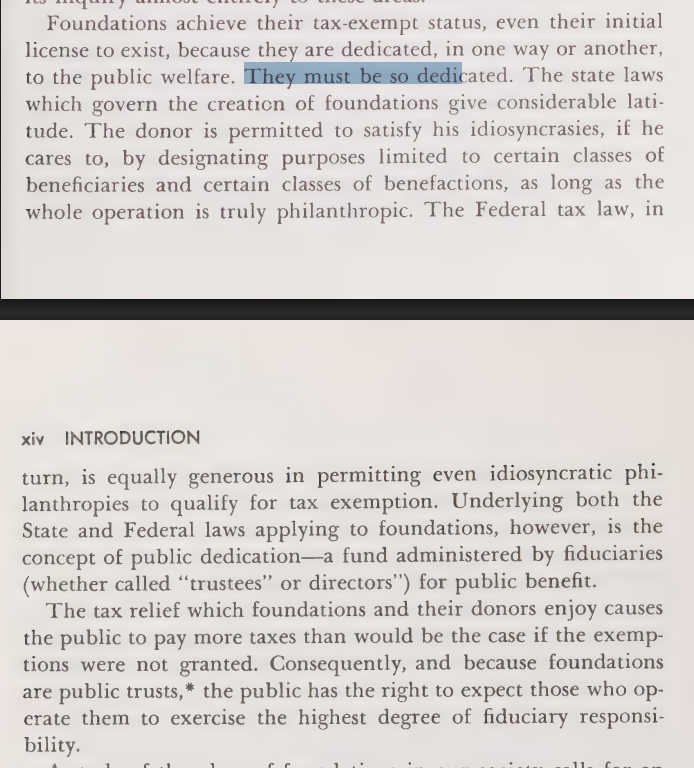
Thread with excerpts from "Foundations, their power and influence" (1958), by the former chairman of the Reece Committee, a Congressional committee to investigate the conduct of tax-exempt foundations.
The administrators of the great foundations formed an interlocking cartel wielding (illegally) immense political and cultural influence using other people's money, as the foundations are tax exempt.
Foundations are tax-exempt because they are supposed to be run for public benefit.
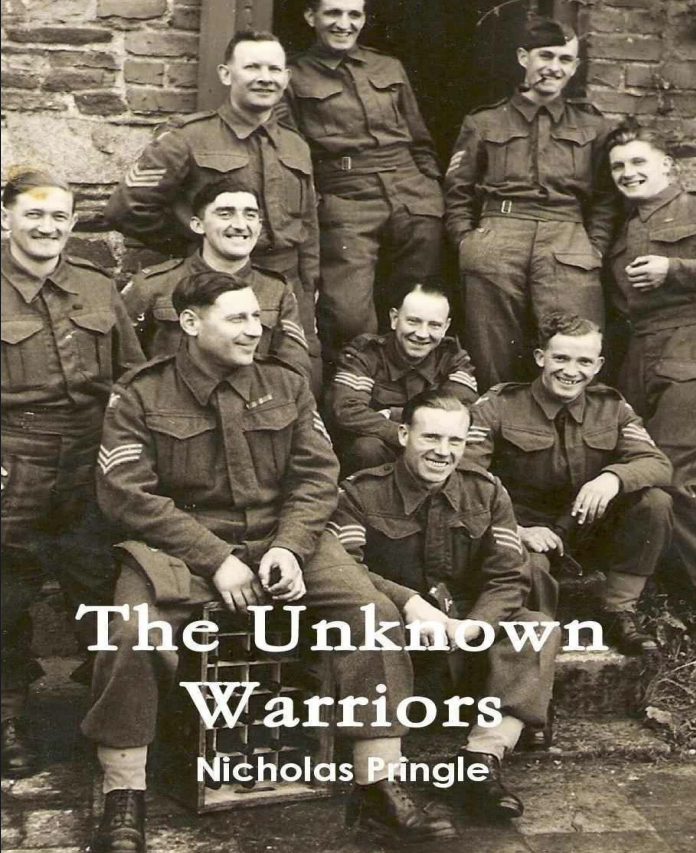
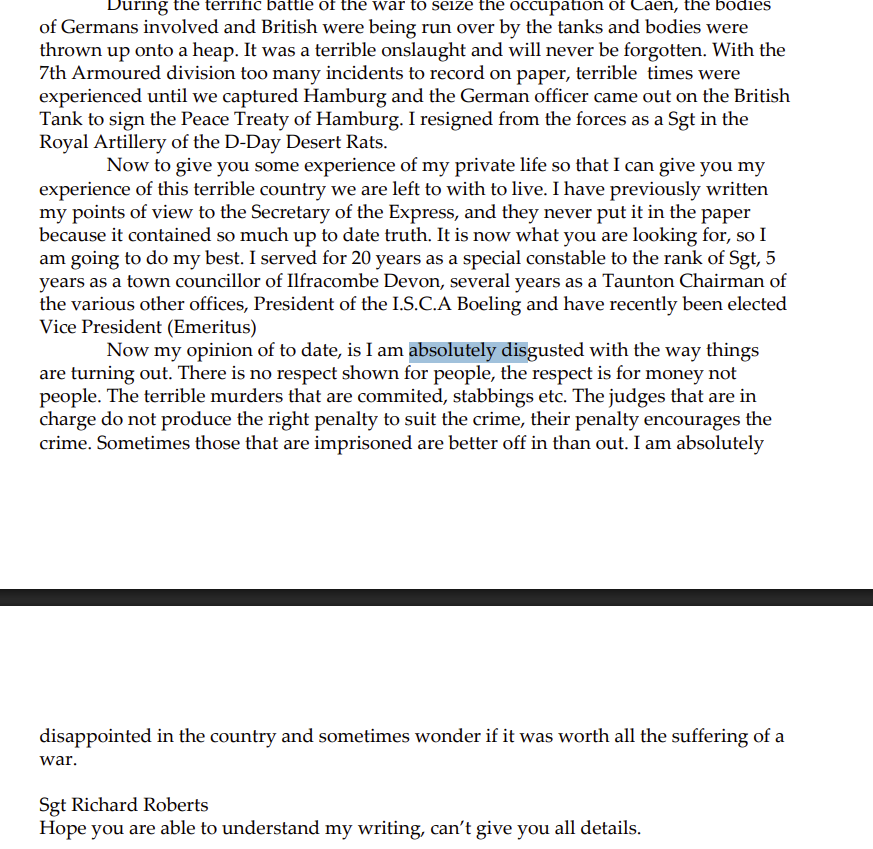
'The Unknown Warriors' (2006) is a collection of WWII veteran's views on modern Britain gathered via newspaper ad. So what did WWII veterans think of the 2006 UK? They hated it; 134 responses were negative vs only 6 positive (plus 31 N/A and 13 neutral). Excerpts below.
The below is typical (from a D-Day veteran): "I am absolutely disgusted with the way things are turning out... and sometimes wonder if it was worth all the suffering of a war."
"I have many, many misgivings on how matters have turned out. Problems seem to be resolved, by more and more legislation, instead of action at the source... What many veterans abhor, is the acceptance of homosexuality as the norm."
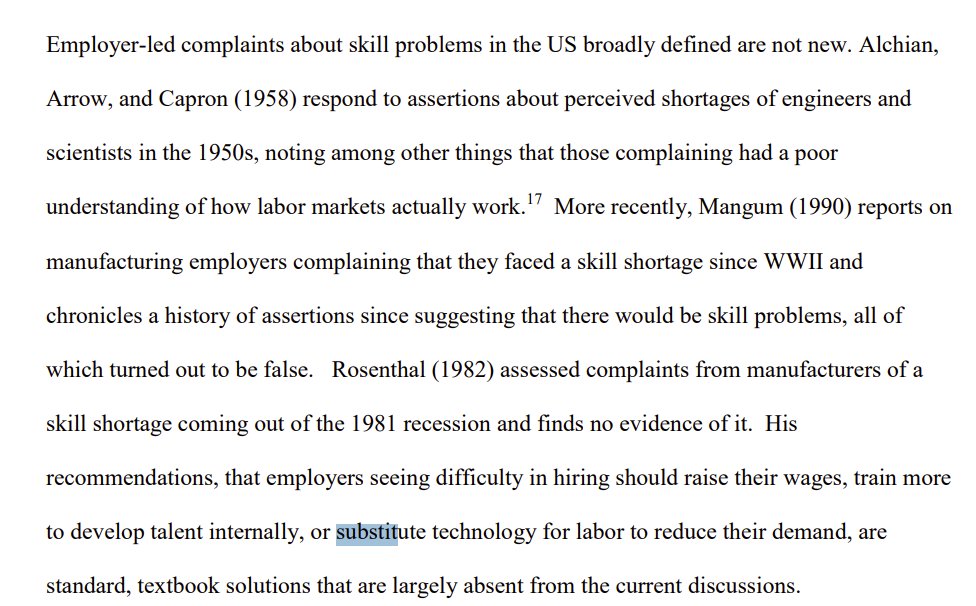
Employers hiring people and then training them in the specific skills they require has declined as a hiring model for decades, in favor of a hiring market where employers look for people who already have those skills.
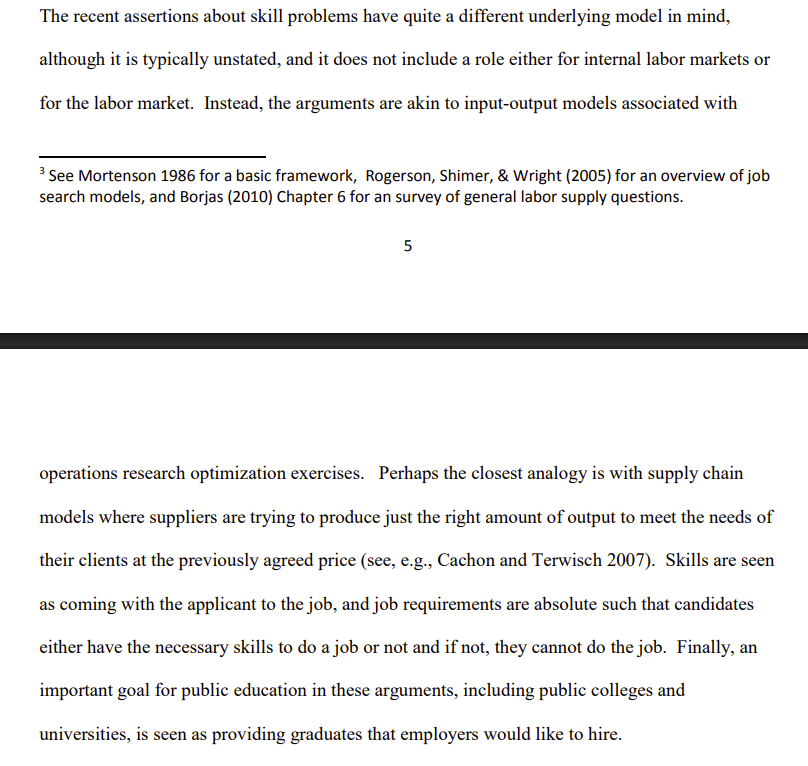
In the training/internal labor markets model, a company struggling to find specific skills will train promising entry-level employees. In the hiring market model, they can raise wages or otherwise improve conditions. In both, they can also substitute technology for labor.
Neither a hiring market nor training model for matching jobs to seekers is compatible with "skill shortages" as a concept, which implicitly assumes skills are fixed and once people with those skills run out employers can do nothing (except through immigration or schooling).