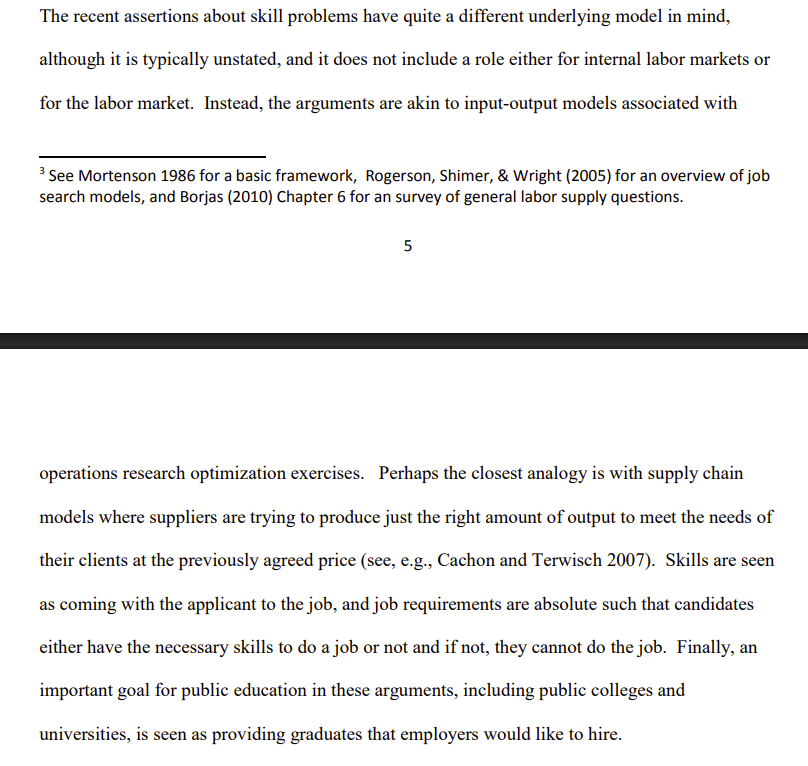
Thread with excerpts from "Foundations, their power and influence" (1958), by the former chairman of the Reece Committee, a Congressional committee to investigate the conduct of tax-exempt foundations. 

The administrators of the great foundations formed an interlocking cartel wielding (illegally) immense political and cultural influence using other people's money, as the foundations are tax exempt.
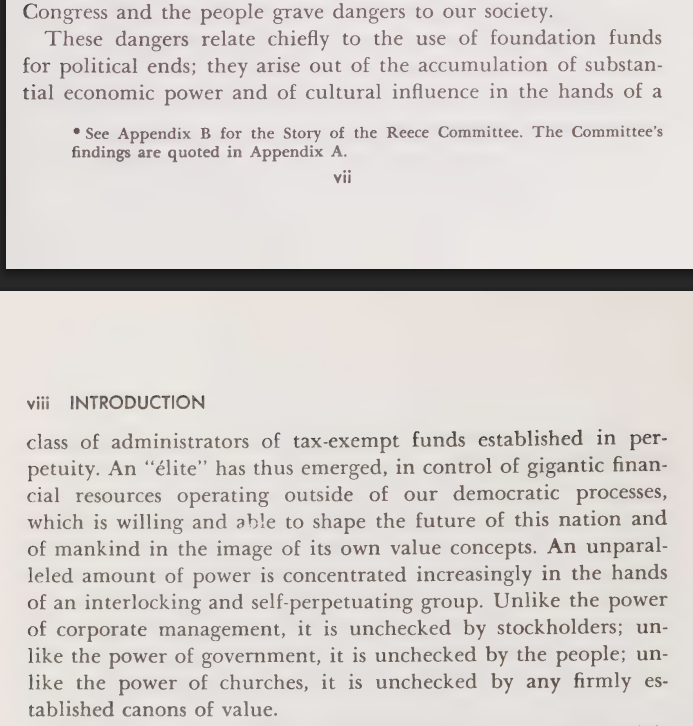
Foundations are tax-exempt because they are supposed to be run for public benefit.
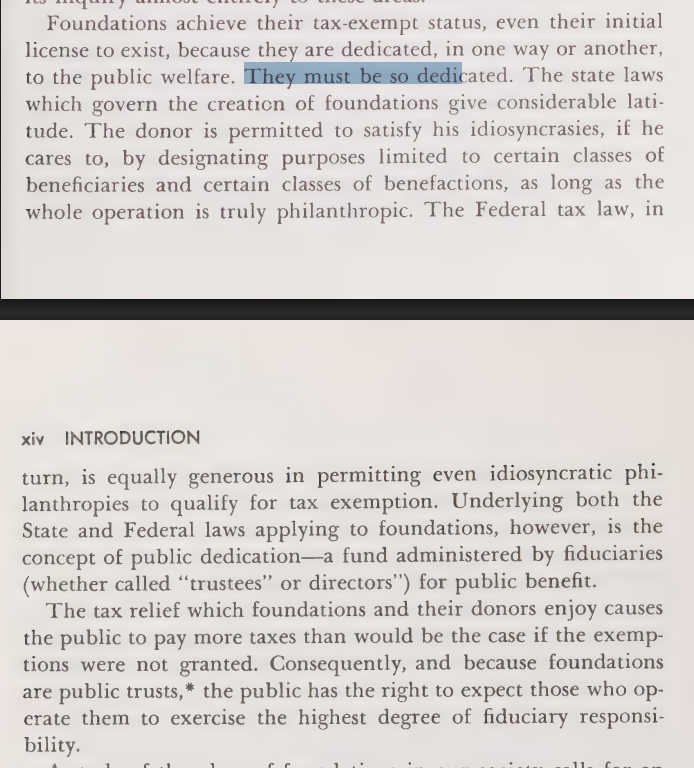
The problem of tax-exempt ostensibly-charitable organizations accumulating huge (untaxed) assets and exercising enormous power is not a new one; the same occurred with many different religious organizations and orders in Christian Europe and the Muslim world.


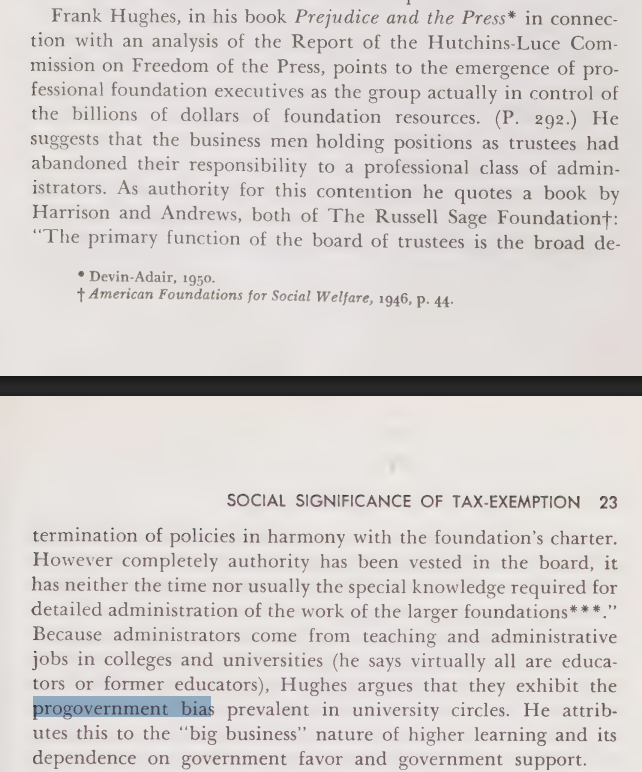
So, by the 1950s, how were the great foundations using their immense and privileged cultural and political influence? Invariably to benefit "socialist and related political movements and action."
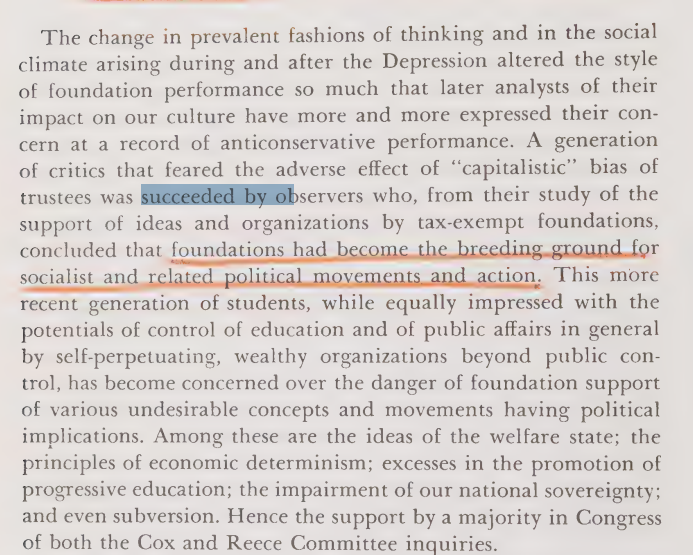
The businessmen trustees who ostensibly run these foundations in practice delegate their authority to a class of progessional managers/executives, usually former educators.
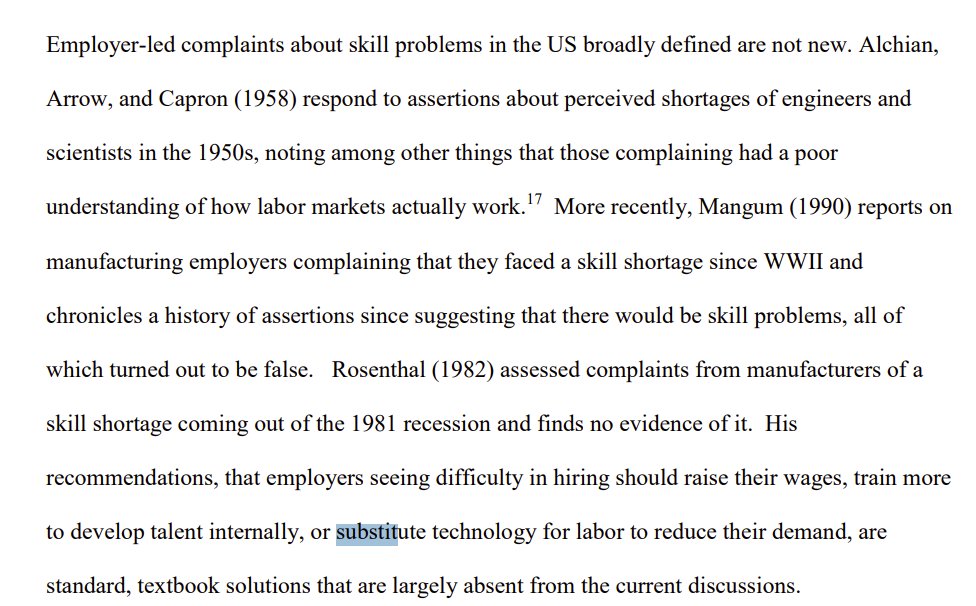
On the decay of the scientific ecosystem of WWII, when it became extremely dependent on very specific grants doled out by committees, dumbing down ideas to the lowest common intelligent denominator.

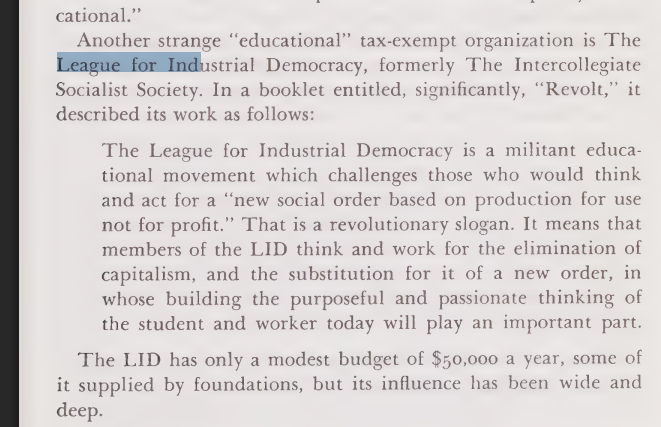
An example of an "educational" tax-exempt organization: the League for Industrial Democracy, which worked for 'the elimination of capitalism' based on 'production for use not for profit.'
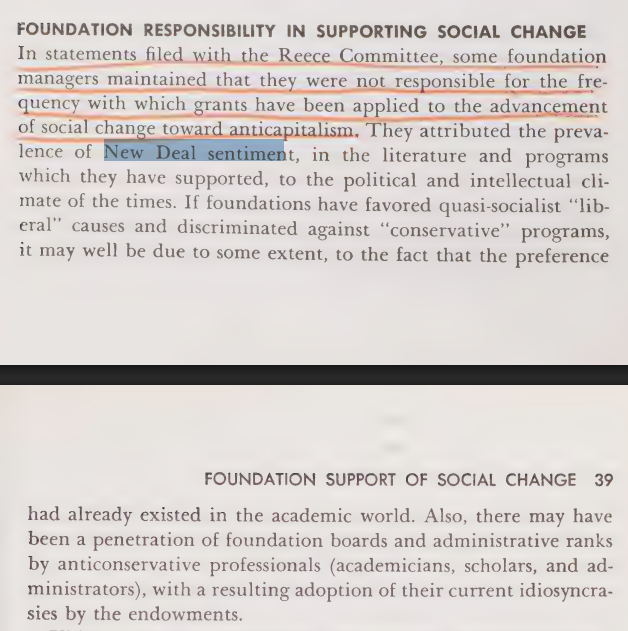
Several foundations argued they were not responsible for the frequency which they gave grants towards anticapitalist causes, arguing that this simply reflected the prejudices of the academic world.
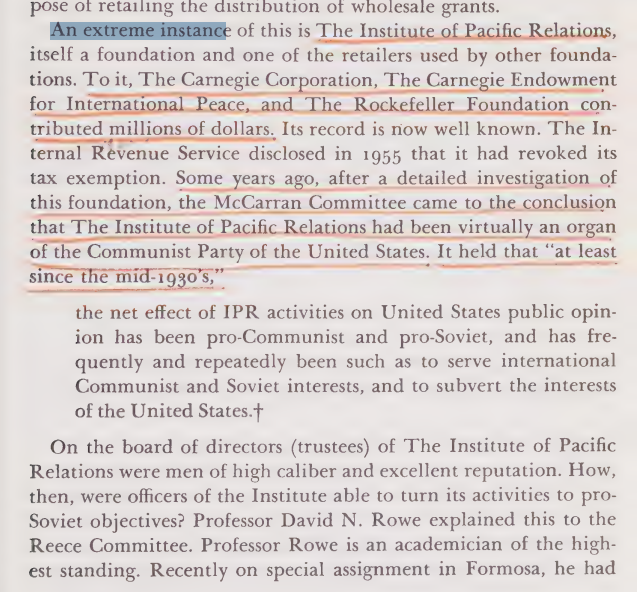
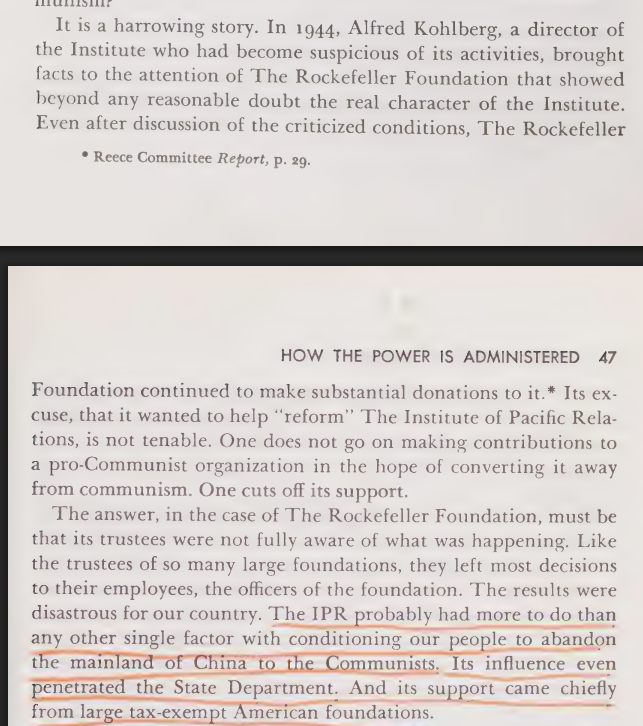
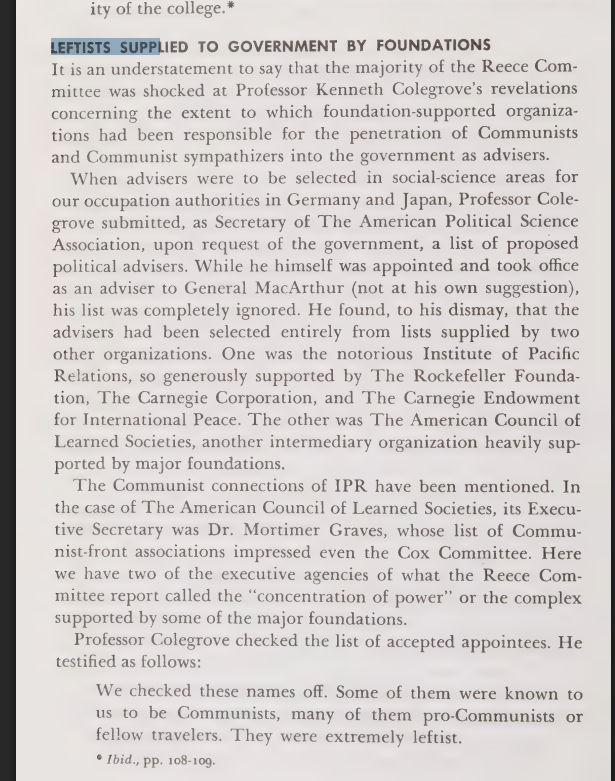
US China policy from the 1930s onwards was very heavily influenced by "The Institute for Pacific Relations", which turned out to be a Communist front that drove the US towards pro-Communist positions. The Institute was heavily financed by foundation grants.
On "philanthropoids", the professional foundation administrators whose job is to give away other people's money and effectively control the vast foundation money piles and direct it towards favored fields and positions of scholarship.

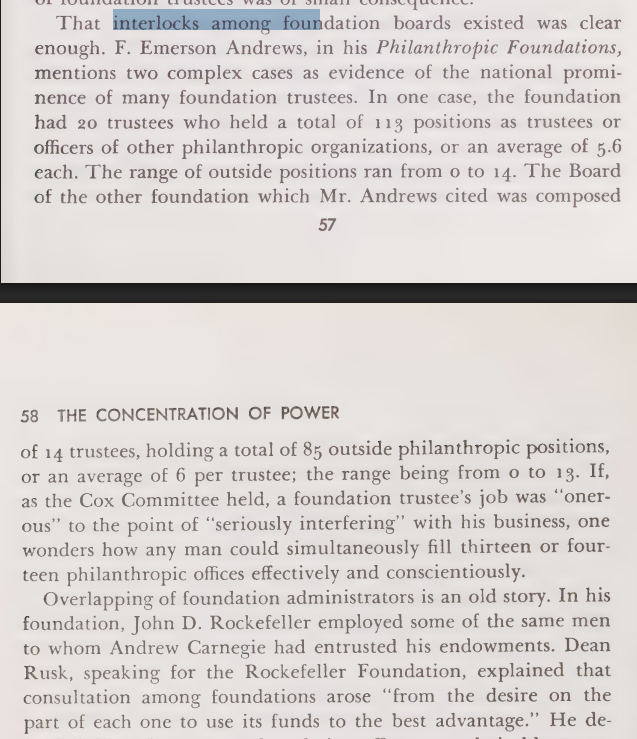
The leadership of the various big foundations interlocked, meaning many seemingly-independent organizations de facto formed one gigantic cartel.
On institutional capture of academic fields: control over an academic journals allows for the imposition of concepts and philosophies on a generation of scholars, schoolteachers, and textbook writers.

The one-sided giving of grants by foundations accomplishes the same thing; de facto there exists a cartel of interlocking foundation-funded organizations that effectively control the social sciences through journals and grants. This cartel is 'liberal'.

Structurally, this type of cartel is alien to the United States and to (actual) liberalism generally, which depended on competing groups checking each other, and more closely resembles systems of academic control in totalitarian countries.

Conclusion of the chapter: the "liberal" (scare quotes intended) movement has institutionally captured most social science research and education through their control over the foundation cartel and through it public-trust funds.

In 1951, a professor of sociology, A. H. Hobbs, analyzed more than 100 leading sociology textbooks and discovered that ~all of them were slanted towards collectivism (meaning socialism/the New Deal/welfarism).


This professor's career was then assassinated for the crime of being a sociologist and not a collectivist (meaning New Deal/socialist).

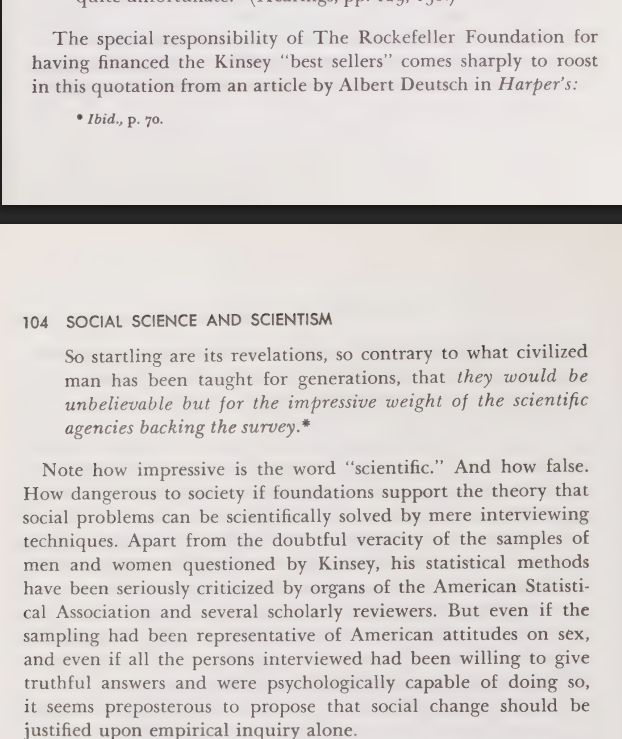
Some of the views, portrayed as discoveries, of Professor Kinsey, foundation-funded and very influential.
1) Child molestation is fine and often good
2) Girls should have as much and as diverse premarital sex as possible
3) Homosexuality is a preference like any other
1) Child molestation is fine and often good
2) Girls should have as much and as diverse premarital sex as possible
3) Homosexuality is a preference like any other

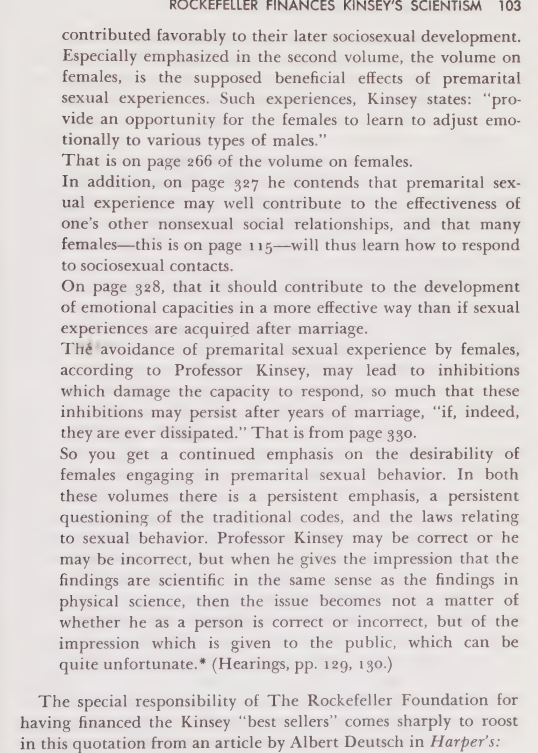
Kinsey's findings proved extremely influential, because they were portrayed as scientific discoveries like that of nuclear fission, which they were not.
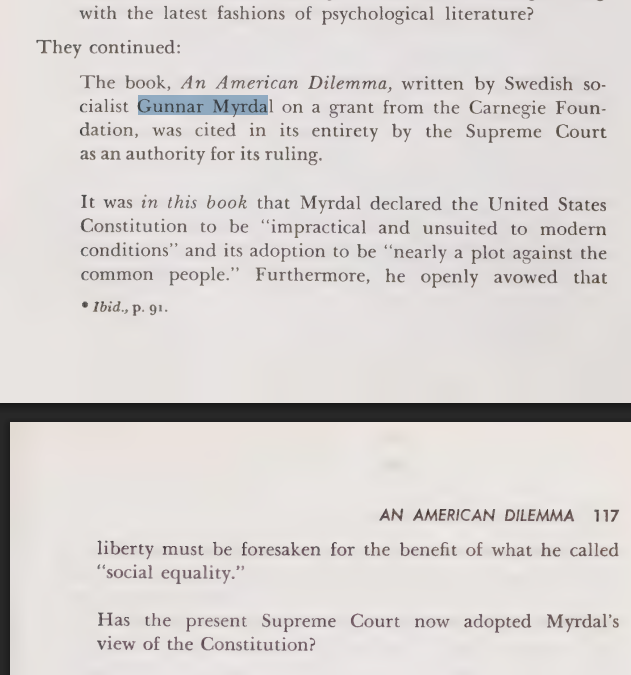
In Brown v Board, the Warren Court cited the book 'An American Dilemma' by Carnegie-funded Swedish socialist Gunnar Myrdal, as an authority. The book itself described the US Constitution as 'nearly a plot against the common people.'
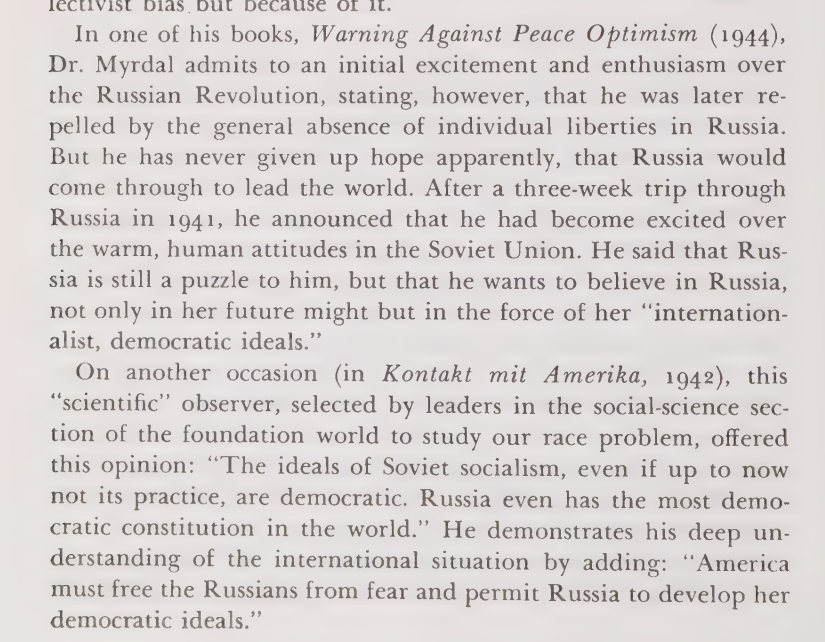
Myrdal, of course, was also a fan of the Soviet Union, though he thought it didn't properly live up to its ideals.
Foundations also supported explicit conspiracies to turn national education into a progressive propaganda operation.
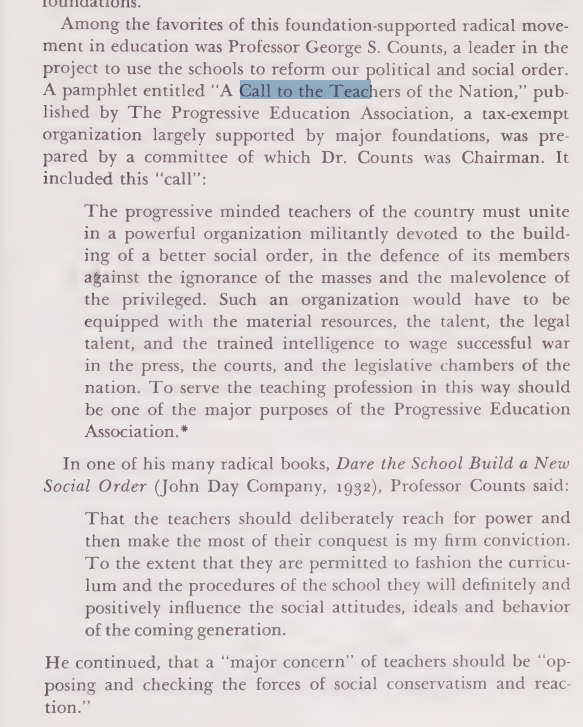
Another example of foundation-funded professors of education sympathetic to Marx and desiring the sort of control over the press common in Russia.

The foundation-funded socialist clique in education also dominated textbook writing; radical/socialist/collectivist writers were flooded with foundation grants while conservative or classic writers had a very hard time getting money.

On The New Deal and its successors as the Third American Revolution, rebuilding the US on utilitarian principles rather than liberal (individual freedom) ones.
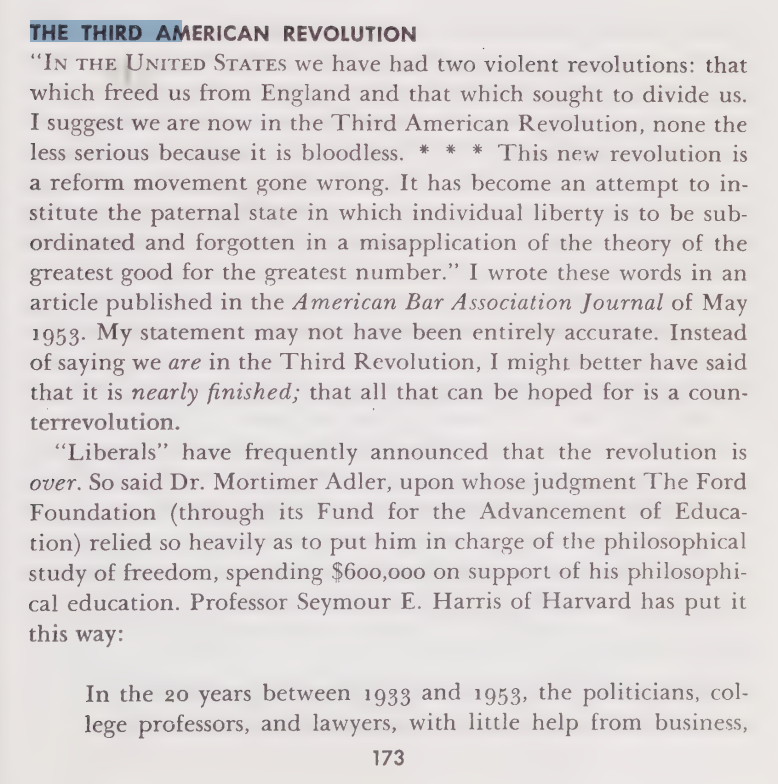
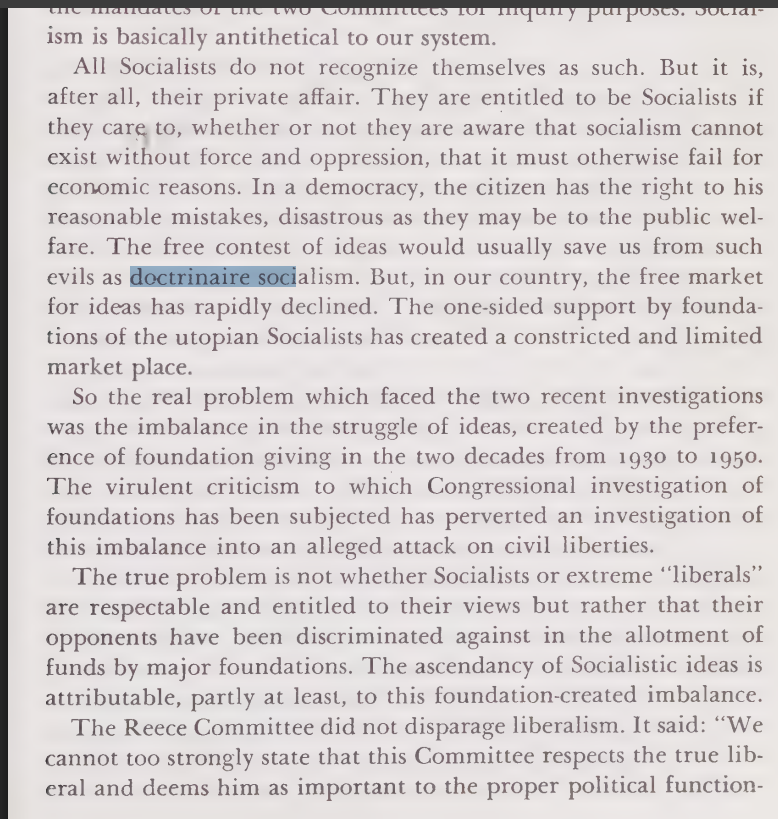
The enormous tax-privileged cartel on the side of socialism (the foundations from 1930 to 1950) has prevented the free market of ideas from operating.
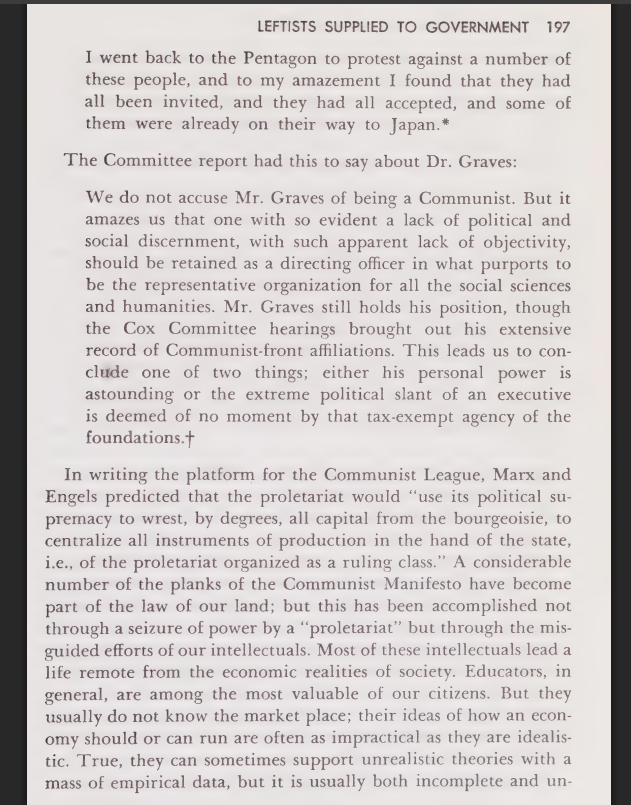
Many Communists became part of the government or government advisors on the advice of the foundations.
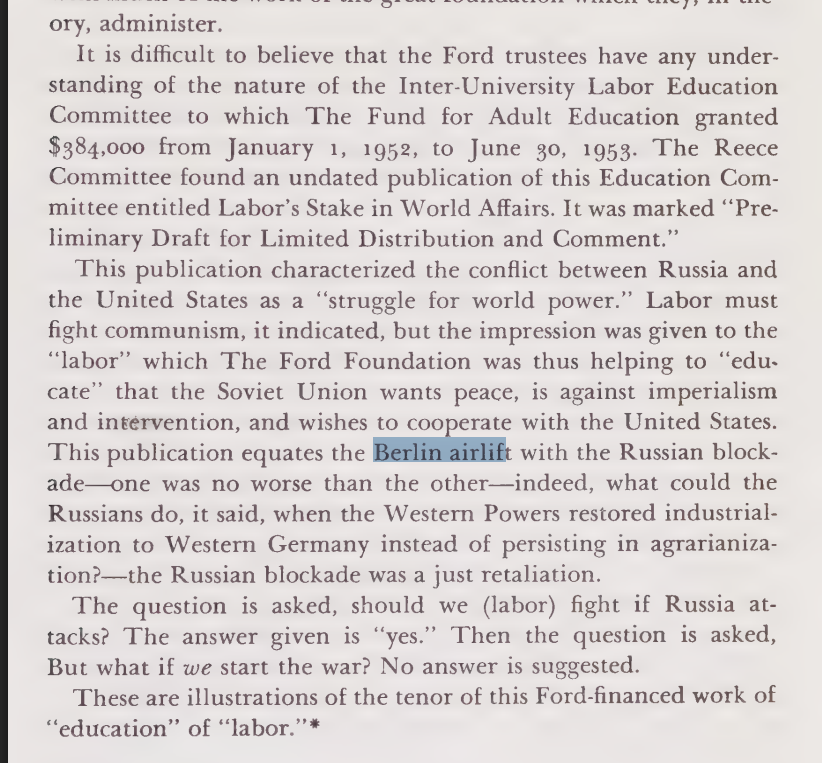
The Ford Foundation funding "The Fund for Adult Education", a Communist propaganda organ that argued that the blockade of Berlin was just retaliation for the Western failure to deindustrialize Germany.
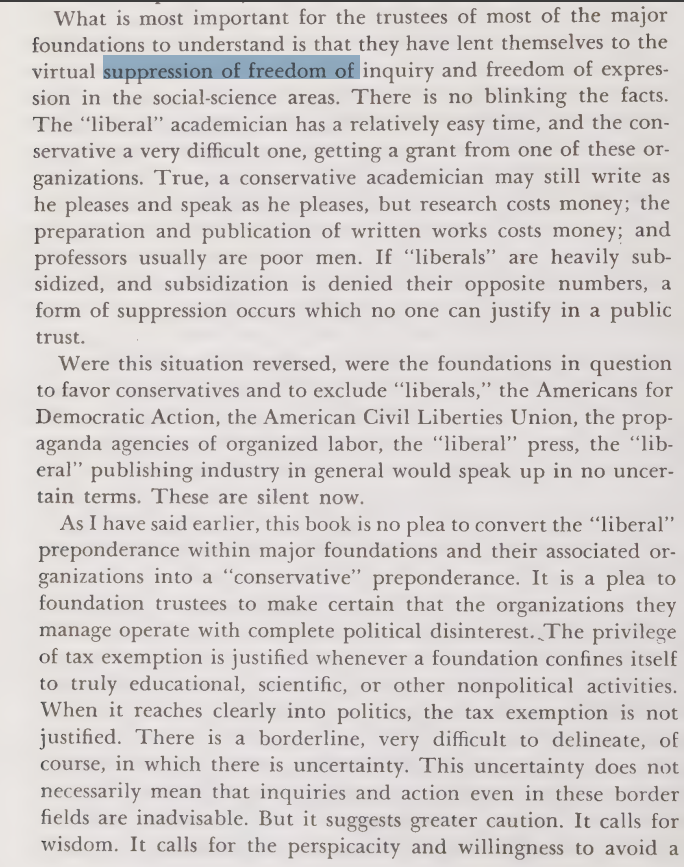
The foundations have effectively suppressed freedom of inquiry and expression in the social sciences via extremely one-sided grants-giving and journal gatekeeping (again, all while being tax-exempt public trusts).
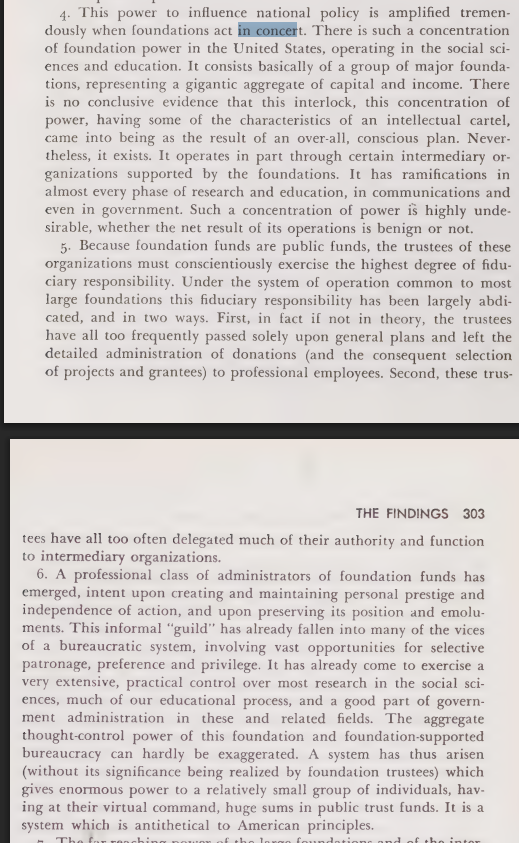
Theses on the foundations: they form an interlocking cartel, are supposed to be apolitical and in public trust but are used as political slush funds by a small caste of managers.
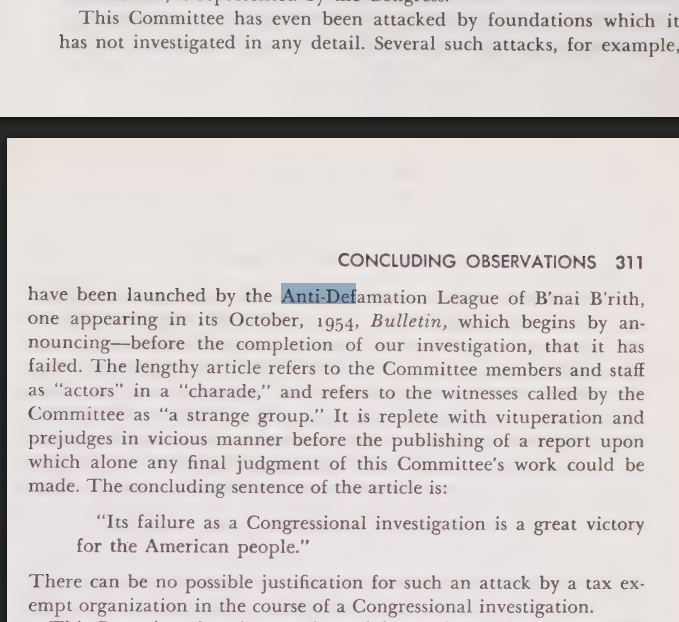
Incidentally, the ADL is also a tax-exempt foundation and viciously attacked the Reece Committee.
• • •
Missing some Tweet in this thread? You can try to
force a refresh