After some comments on biomarkers, I thought to add further thoughts.
I do not believe there is a single one and novel biomarker for #LongCOVID.
This is a multi-system disease, affecting different organ systems. Sometimes the organs that have already been vulnerable before acute infection(s), will be most affected.
By looking at various pathology lab biomarkers (e.g the list shared in a previous post), we can identify possible treatment targets.
Another point is that microclot complexes are definitely not unique to LongCOVID. The processes driving their presence, is circulating inflammatory molecules, immune dysfunction and vascular damage. Therefore we have been looking at their content, and searching for various modifications on proteins associated with them.
Something to keep in mind:
Each disease will have specific types of inflammatory molecules in circulation. We now know that even every patient will have a unique inflammatory molecule load.
We need to determine which inflammatory molecules, which post-translation modifications, and thus which pathways we should look at, to eventually decide on treatment.
Why is it so difficult?
There is not 1 single symptom or organ that is affected. Some patients will develop a diabetes profile, some will have an immune driven disease. The list goes on. Some will have viral persistence.
Because of this heterogeneous picture, we need personalised treatment, multiple biomarker panels and a clear understanding what each dysregulated lab result means.
• • •
Missing some Tweet in this thread? You can try to
force a refresh

1/8) We are excited that our paper has been published with lead author @maxinewaters250 and @dbkell
In this study, we investigate Post-Vaccination/Post-Infection Syndrome (PV/PIS) and its underlying biology.
🔗 frontiersin.org/journals/cellu…
2/8) A key challenge:
Patients present with persistent symptoms after vaccination or infection, often overlapping with Long COVID.
Distinguishing these clinically is difficult; and biology is still poorly understood.
3/8) We approached this differently.
Instead of looking only at soluble plasma proteins, we analysed proteins trapped inside the insoluble fraction.
This is where important pathology is often hidden.
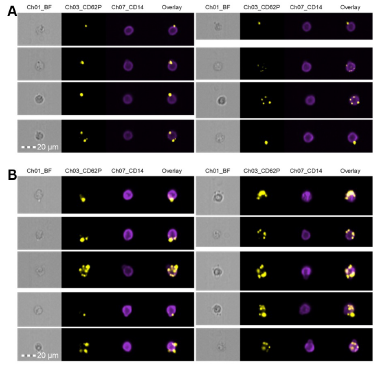
1/7) We are excited to share our preprint, where we present a method to measure thrombo-inflammation that lead to systemic thrombotic endothelialitis in Long COVID, other post-viral and inflammatory diseases in general: with @dbkell and lead author Anél Thompsonbiorxiv.org/content/10.648…
2/7) Why do we say Long COVID is characterized by thrombotic endothelialitis
In Long COVID, the blood does not behave normally
It becomes more “sticky” and inflammatory.
This affects how blood flows through small vessels and may contribute to many symptoms
3/7) We looked at a key interaction in the blood:
Platelets (cells that help clot)
+
Monocytes (immune cells)
When they stick together, they form platelet–monocyte aggregates (PMAs)
🧵 1/10 We are excited to share our preprint examining pre-pandemic POTS and Long COVID, using deep analysis of the insoluble microclot fraction of blood. Our study shows that the key pathology lies not in protein levels, but in post-translational modifications (PTMs) hidden within fibrinaloid microclot complexes (FMCs). With @Renata_MBooyens, Satish Raj, @dbkell and others. Funded by @POTSActivist biorxiv.org/content/10.648…
🧵 2/10 Why pre-pandemic POTS matters:
A unique strength of this study is the inclusion of POTS samples collected before the COVID-19 pandemic in the Raj lab. This allowed us to define the baseline molecular signature in controls and classical POTS (entirely independent of SARS-CoV-2); and to distinguish which molecular features in LC-POTS are similar to POTS biology versus acquired through Long COVID.
🧵 3/10 What we measured:
We quantified fibrinaloid microclot complexes (FMCs) using fluorescence imaging flow cytometry, then performed deep proteomics on the insoluble FMC fraction using LC-MS/MS.
This allowed us to move beyond how much protein is present → to how proteins are post-translationally modified.
🧵 1/5
New preprint with @drmassimonunes, @ArneauxK, @dbkell and Bertie Fielding.
We show that pseudoserum (clotting factor–depleted plasma) from Long COVID & T2DM can drive abnormal fibrin networks, even without endogenous fibrinogen.
👉 preprints.org/manuscript/202…
🧵2/5
We derived pseudoserum from patient plasma followed by exposing of it to purified fibrinogen.
This reveals a powerful role of non-clotting molecules in shaping coagulation.
1/4 Excited to share our new paper in Stroke: "Amyloid Fibrinaloid Structures in Acute Ischemic Stroke Thrombi: A Pilot Study from the Walton Centre Clot Bank" with @dbkell and a team of Neurologists from all over the globe!
🔗 ahajournals.org/doi/10.1161/ST…x.com/dbkell/status/…
2/4🧠 In nearly 1/3 of acute ischemic stroke (AIS) cases, thrombolytic therapy fails to achieve recanalization. Why?
We explored whether thrombi retrieved during mechanical thrombectomy contain anomalous amyloid fibrinaloid structures, which are highly resistant to fibrinolysis.
3/4Using thioflavin T staining, we detected these amyloid-like fibrinaloid structures in all analyzed thrombi from 8 AIS patients.
This suggests that resistance to lytics might be due to persistent amyloid-rich structures.
🧵1/7
🚨 New preprint alert with @dbkell and team!
Our latest study explores Post-Vaccination/Post-Infection Syndrome (PV/PIS). We used plasma proteomics to uncover its immune & clotting abnormalities: It can be found at: 10.21203/rs.3.rs-6521005/v1
2/7 Given the significant overlap between symptoms attributed to vaccine-related adverse effects and LongCOVID, alongside the difficulty in definitively excluding prior SARS-CoV-2, we refer to the patient group as individuals with Post-Vaccination/Post-Infection Syndrome (PV/PIS)
3/7 Using high-resolution mass spec, we identified distinct protein signatures in PV/PIS:
⬆️ Coagulation factors
⬆️ Amyloidogenic acute-phase proteins
⬇️ Immune modulators
💥 Persistent inflammation + coagulopathy