Italy's Defence Minister Crosetto asked Fedorov to be his advisor.
He called Fedorov the day after his dismissal: "When do you want to come to Rome and work with me as an adviser?"
Fedorov was "moved" and saw it as "a demonstration of esteem and friendship." — Reuters.
1/
Crosetto: Fedorov completely rewrote the rules of the game on the battlefield.
Helping Ukraine first resist Russia's invasion, then regain the initiative through new technologies. Fedorov's dismissal sparked rare wartime protests in Ukraine.
2/
Zelenskyy offered Fedorov alternative government roles.
Fedorov said he would not accept any position other than his former job.
Politico: The lesson from Ukraine is that drones do not replace armies.
Drones expose weak systems when they plug into a real force. If Europe turns drone success into an excuse to dodge ships, air defense and missiles, Russia benefits. 1/
Ukraine’s drone record is why the hype exists. Kyiv has hit Russian shadow vessels, refineries, Baltic oil terminals, military sites in Crimea and even an oil refinery in Siberia. 2/
On July 9 alone, Ukraine said it struck 14 Russian vessels in the Sea of Azov. Its drone commander said 35 ships had been hit over 96 hours, alongside 45 military targets in Crimea and southern Ukraine. 3/
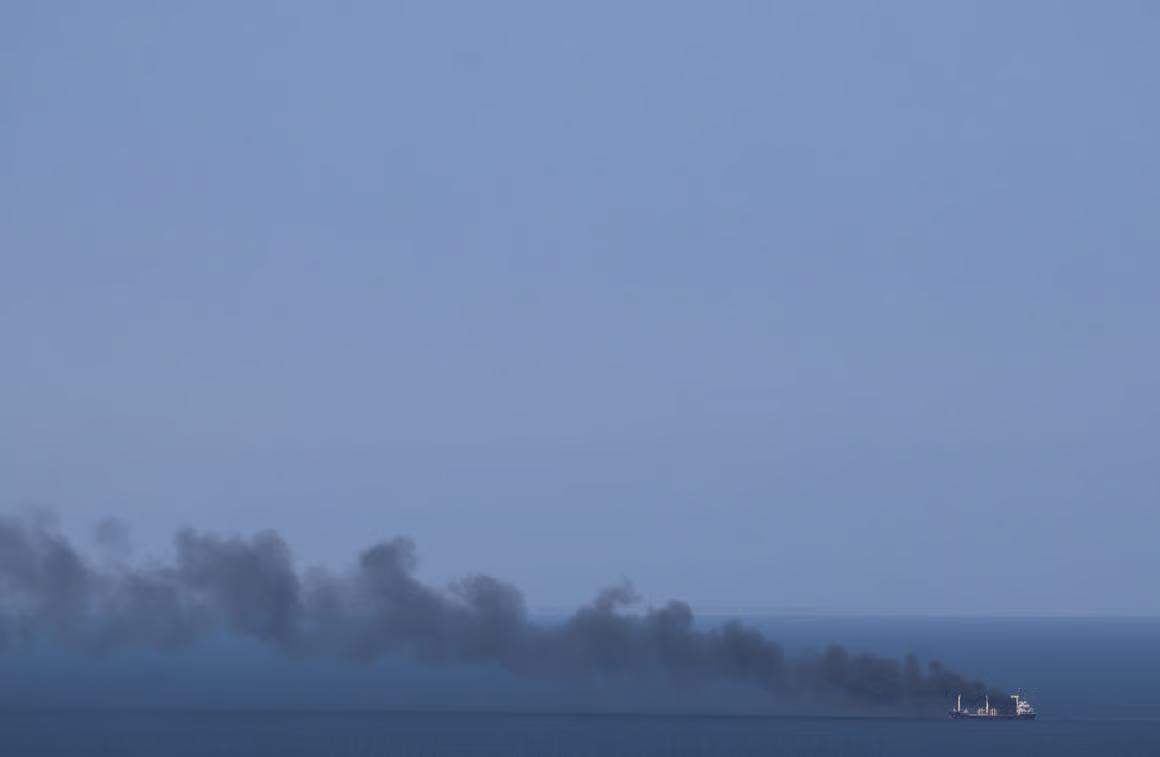
Russia is choking Ukraine’s Black Sea export corridor, the sea route that keeps Ukrainian grain moving to world markets.
On Wednesday, for the first time since the corridor opened in 2023, zero ships entered Ukraine’s 3 Odesa ports, Politico. 1/
Sybiha [Ukraine’s FM]: “Russia is holding global food security hostage.”
At peak harvest, he called the shutdown deliberate economic and humanitarian terror that could mean higher prices and hunger for families in Africa, Asia, the Middle East and Latin America. 2/
The shipping giant Maersk stopped operations at Chornomorsk Fishing Port and redirected cargo to Romania’s Constanta.
Ukraine: It can still provide security, but shipowners halted traffic because Russia is now hitting civilian cargo ships before they reach port. 3/
Ukraine will make Patriot interceptor missiles with Raytheon, the US producer of the Patriot system.
Patriots are crucial for stopping Russian ballistic and aerial attacks on Ukrainian cities, United24. 1/
Zelenskyy: “Ukraine will jointly produce one of the most important air defense assets — interceptors for Patriots — together with Raytheon.”
The talks followed earlier discussions with Trump in Ankara and focused on non-offensive military hardware. 2/
Ukraine needs more interceptors as Russian strikes intensify.
Lockheed Martin also unveiled ACE, a cheaper Patriot interceptor. US budget documents put PAC-3 MSE at over $4mn per round; ACE could cost less than half of that. 3X
Browder: Ukraine has created a drone kill zone along the front.
Anyone who enters it can be targeted. One operator can control 100 drones searching for heat and killing anyone inside the zone. 1/
Browder: Putin can draft more men and send them to the front, where they will be killed.
Russia has ten times the personnel and resources, but Ukrainian strikes keep degrading its economy and reducing the resources Putin can use to continue the war. 2/
Browder: Drones are destroying the old idea of a superpower.
The US can destroy almost any target, but it cannot stop small groups from launching drones at valuable economic assets. Ukraine and Iran are exploiting that asymmetry. 3/
Zelenskyy: The Soviet Union was the most dangerous enemy for the United States, not only for your democracy or way of life, but for 70 years.
Putin’s global idea is to take everything back: the Soviet Union, former Soviet republics, and Europe too.
1/
Zelenskyy: If Russia becomes the Soviet Union again, this becomes a global war. Then you get China and a restored Soviet empire with the biggest army in the world.
They would be bigger than the United States, and that would be dangerous for America.
2/
Zelenskyy: Israel’s Russian-speaking Jews are not all from Russia.
Many came from Ukraine, Belarus, Kazakhstan and Lithuania after the Soviet Union killed languages, churches, religion and traditions for 70 years. They know Russian, but they are not “Russian-speaking people.”3/