I picked up juuust a few items at last week's Retro Bits and Bytes Swap Meet here in Northern Virginia USA. Perhaps we can test a few of them, let's see how it goes! Are these new old stock floppy drives going to work? Let's find out! Time for a 🧵
So, first of all, we are need to need a test victim... erm... I mean a test harness... or a test machine. I think the Kehtron 486 DX/50 is the perfect candidate. It's been a little flaky recently though. I had to reseat the HDD/FDD controller to get it to boot!
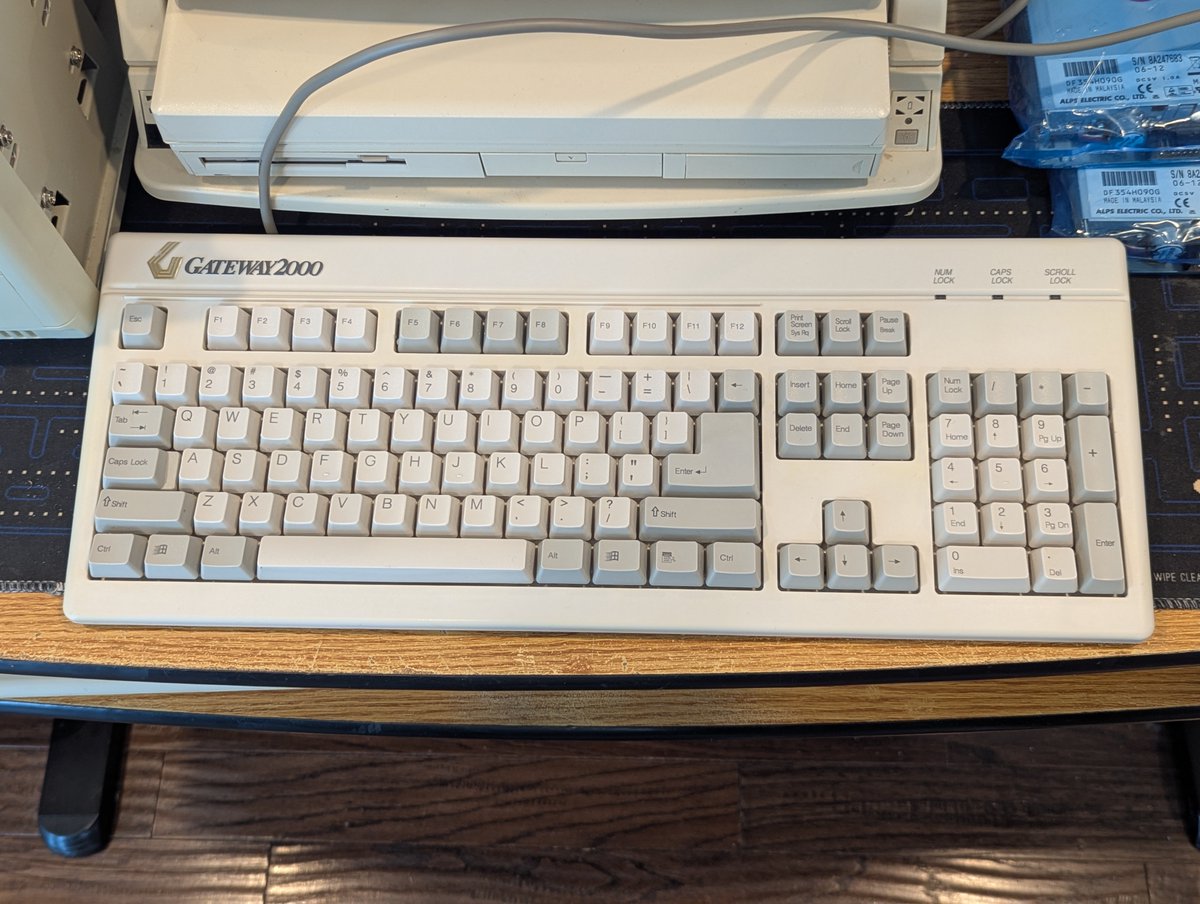
Let's begin our testing session with this beeeautiful Gateway 2000 keyboard. It works great! I took it downstairs and cleaned it up, and now not only does it work great, it also looks great!
Alright, let's move on to the new old stock Alps floppy drives. What a curious yellowing on these... oh... look, it's exactly where the sticker "wasn't". That's kindof funny! I'll attach a clip so that you can listen to it boot... if only the bearings on my HDD weren't so loud!
Fortunately, both drives checked out. And I decided to throw their face plates into the Retr0brite bin. The results weren't perfect, but I think they look better. Take what you see with a grain of salt.. first pic was taken during the daytime and the final one at night.
Next I decided to test this VESA local bus mobo. The smoke test was uneventful despite all of those tantalums. This board is a TAEIL Media Co board... Retro Web says it is the same as a Biostar MB-14**. I have yet to get it to work. I need to CPU jumper settings, might help.
Well, anyway, this was all done earlier in the day. I still need to test the Pentium mobo.. maybe it will be happier. So, shall we say "to be continued"? Thanks for reading!
@threadreaderapp unroll
• • •
Missing some Tweet in this thread? You can try to
force a refresh

Most people in the retro PC world have heard of XTIDE, and many are now aware of PicoMEM, but have you heard of the XTMax? I recently learned about it, and decided to pick one up. Let's talk about it in a 🧵 here!
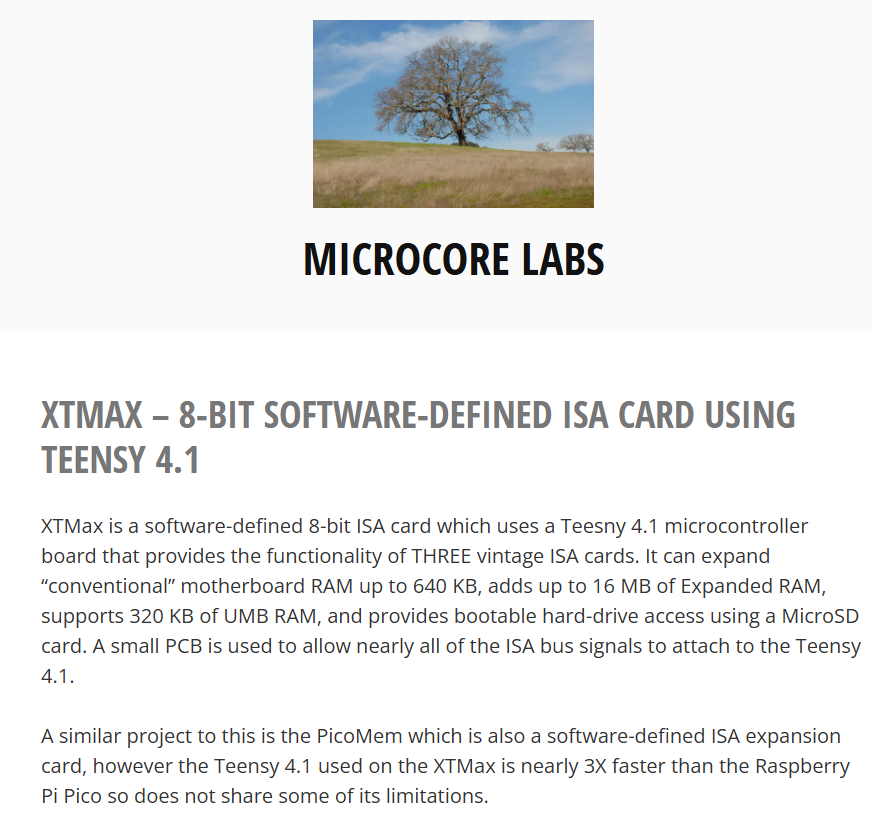
The XTMax was designed by Ted Fried (MicroCore Labs) and is an 8-bit software defined ISA card that expands RAM up to 640KB, adds 16MB of expanded memory, and provides bootable HDD-like access. It uses a Teensy 4.1. And yes, there is PicoMEM rivalry, more on that in a minute.
Here's the back of the card. And here it is installed.. it's rather "wide." I also noticed that it isn't particularly "stable" in the slot, which did cause me some boot errors.
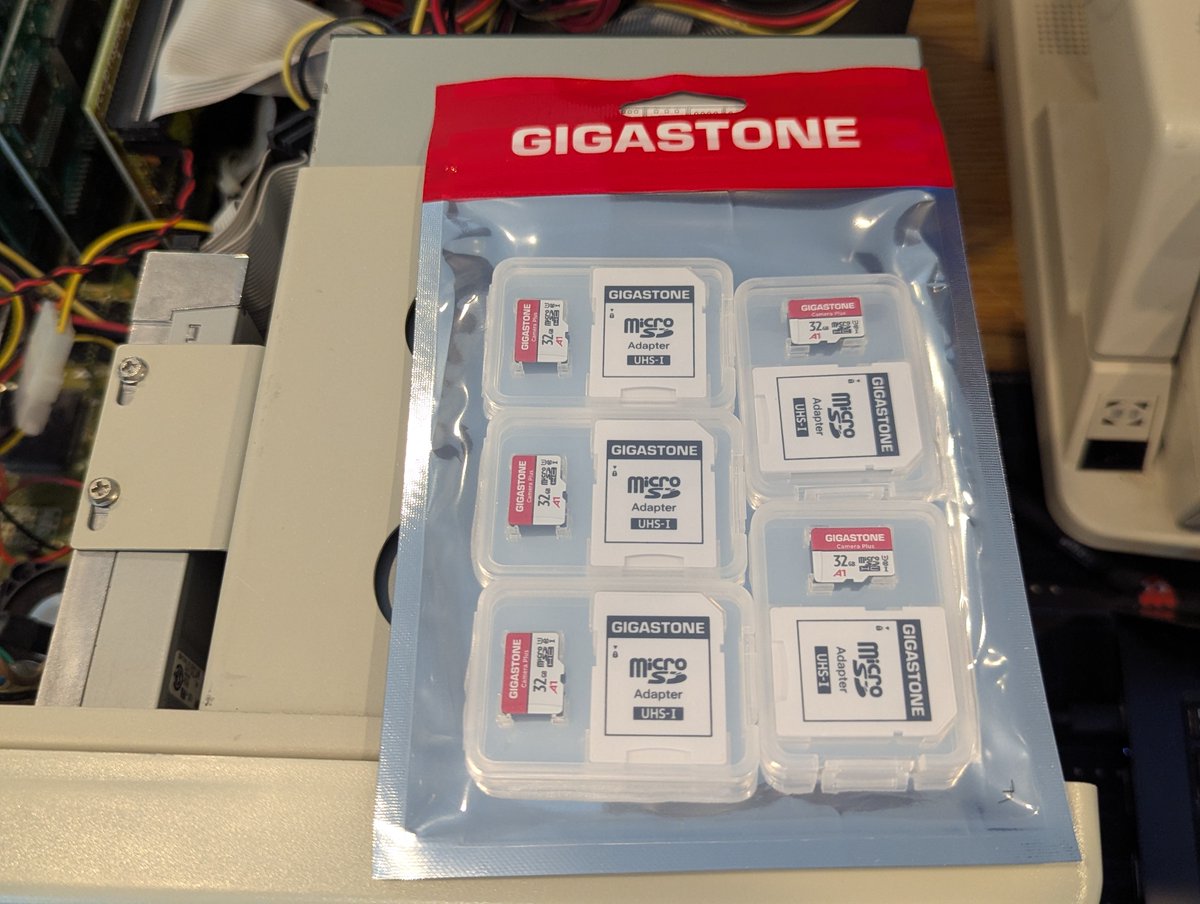
Recently I noticed my spare Micro SD cards stash was getting low. I got to thinking: I have a lot of devices that have much bigger cards than they need, so I bought a bunch of "cheaper" 32GB cards and looked at my retro devices to "reclaim" the bigger cards. Time for a 🧵
First, I looked at my SCSI emulators... both my BlueSCSI and ZuluSCSI Blaster, but quickly realized they don't take Micro SD cards. Next 😂
I pulled out my WirSA modem, and SD2LPT (or whatever it is called) and downgraded both to 32GB cards! Same with my RGBtoHDMI
Since people have been asking forever, I finally decided to give ReactOS a try! Let's...see...how...it...went. Buckle up, things are about to get a little chaotic. Time for a looong 🧵
So, first of all, I decided to go with the nightly debug version, so take that for what it is worth! Second, I promise I am not being critical, what has been done here represents a lot of great work, and the software is still considered to be alpha.
Okay! So, step 1, after downloading the debug ISO, I burned a CD. As we can see, this is version 0.4.17-dev.
Over the years, I've been a huge fan of XTIDE and the capabilities it has brought to retro PCs. Let's have a look at some of the XTIDE related hardware I have in my collection, and what I have done with the XTIDE Universal BIOS as well. Time for a 🧵
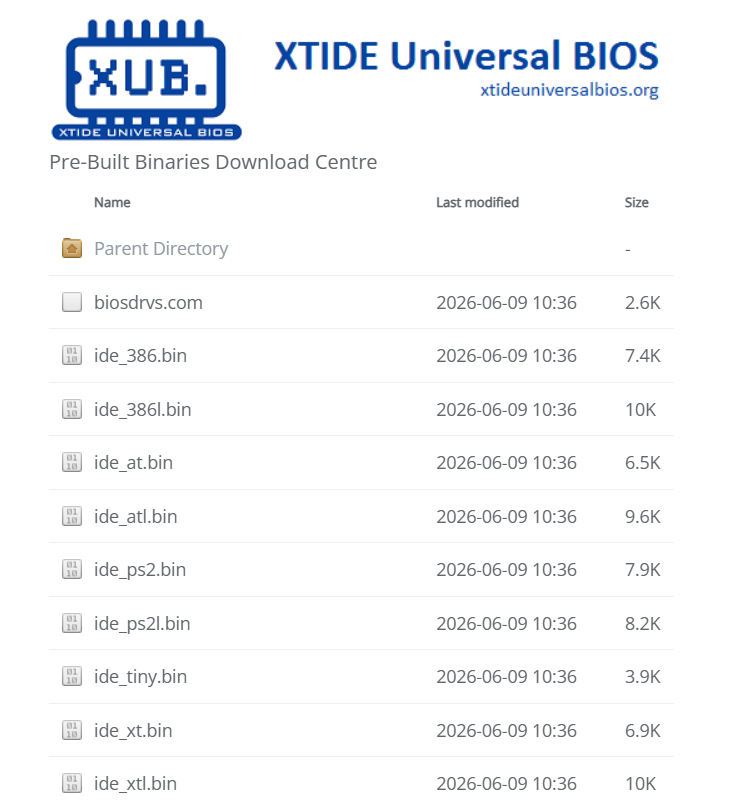
First, I imagine that many retro enthusiasts are familiar with it, but the XTIDE Universal BIOS is actively developed and offered at no cost to the retro community. If you haven't seen it before, you can read more about it here: xtideuniversalbios.org
Okay, time to explore. First, I am going to start with my Tandy 1000 HX. This system benefits from the development of a 3-in-1 and 4-in-1 card that have XTIDE, as well as other capabilities. These card brought storage, serial, parallel, and extra memory to the 1000 HX/EX.
I've been playing around with my SCSI emulators, in particular, the wireless networking on them a bit. I think we have done this before, but it's been a hot minute, so let's talk about it anyway 😂. Time for a 🧵
So, first of all, these SCSI emulators (BlueSCSI V2 and ZuluSCSI Blaster) were predominantly designed for Macintosh systems, which also tended to use DayaPort SCSI network cards like this one here.
As such, when I first got my BlueSCSI V2, there wasn't any DOS support for its DaynaPort emulation. I wrote a very basic and crude DOS Packet driver, and Mike Brutman greatly improved it! If you ever need it, you can find it here: github.com/mbbrutman/dayn…
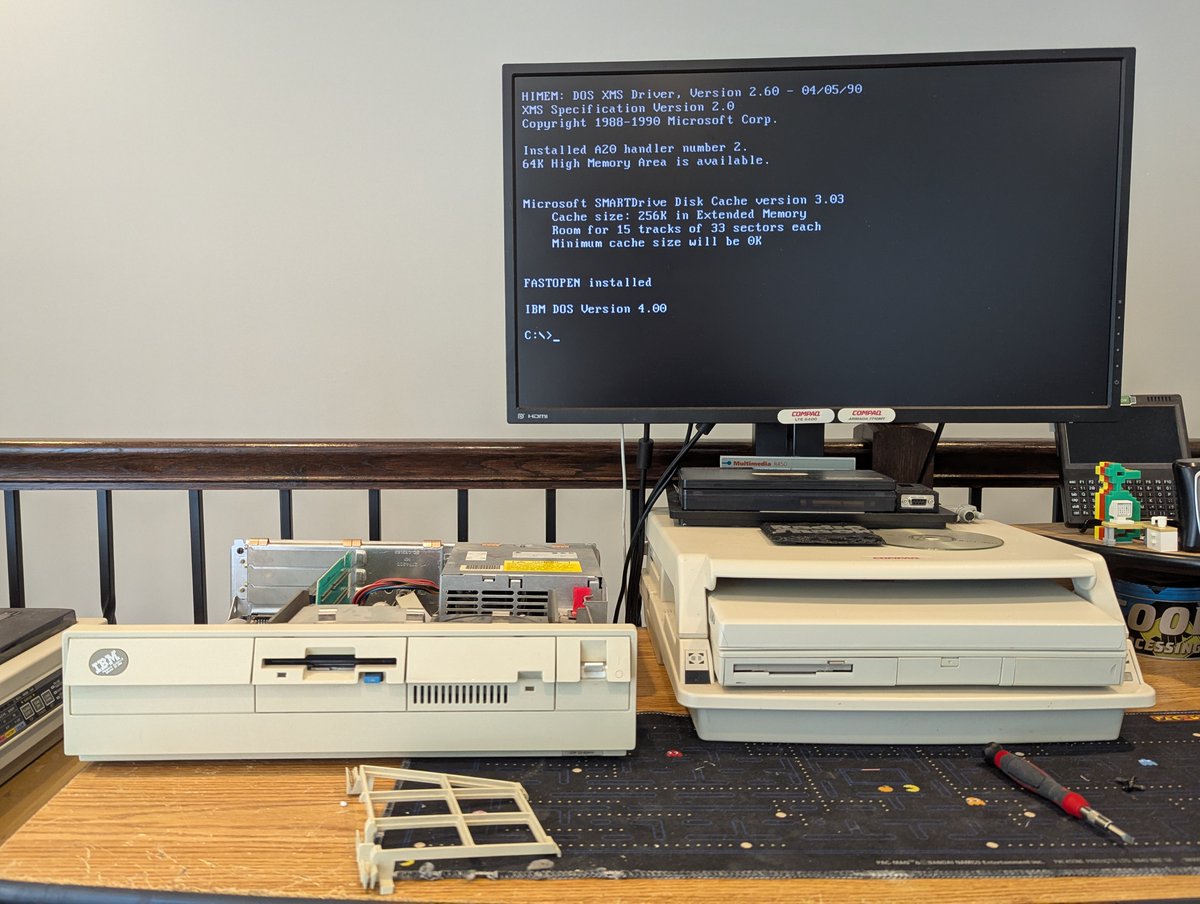
No need to adjust your television set, I promise you are not seeing double! But the error message on the screen is a "clue" as to why I now have two IBM PS/2 Model 30 286 systems. Let's talk about what I did this time... I guess we need to do a 🧵
Well, first, let's clean up the new one. Oh boy, it is ever dirty!! Here's a before an after... I failed at getting a clear after picture. Sorry, no refunds 🤣
Let's test out the HDD. Woah!! It WORKS!! It does have a bad sector or two, but that's pretty incredible.