Hello everyone! Welcome back to my series on Kansas history! This is post 51 and today’s story is on a major aviation pioneer whose company still thrives in Kansas to this day, enjoy!
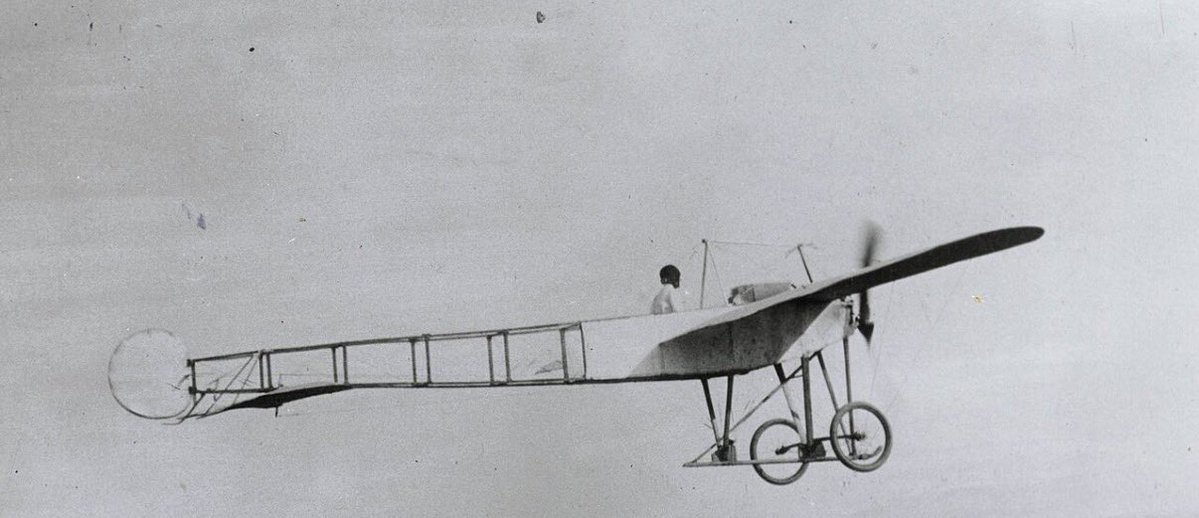
Clyde Cessna was born on December 5th, 1879 in Montgomery County, Iowa. When he was only two years old his family moved to Rago, Kansas in Kingman County west of Wichita. When he was an adult, he moved to Enid, Oklahoma and worked at a car dealership there. He moved to New York to work at the Queen Aeroplane Company after attending an air show in Kansas which gave him a new passion for flight and airplanes. In 1911 he constructed a plane called “Silverwing” which after multiple failed attempts had a successful 5 mile flight at the Great Salt Plains in Alfalfa County, Oklahoma. This was the first airplane built and flown on the Great Plains. He continued developing airplanes through the 1910s including “The Comet” with which he set a new national airspeed record of 124.6mph on July 5th, 1917 as well as a new national distance record on the same flight of 76 miles between Blackwell, OK and Wichita, KS. With the start of World War I his income ground to a halt causing him to leave the field of aviation for nearly 8 years.
In 1925, Cessna along with Walter Beech (later creating Beechcraft) and Lloyd Stearman (later creating Stearman Aircraft) formed the Travel Air Manufacturing company in Wichita which rapidly became one of the leading aircraft manufacturers in the nation. Two years later the three men split up to form their own companies leading to Clyde Cessna and fellow aircraft pioneer Victor Roos creating the Cessna Aircraft Corporation. The company was an enormous success with 1000 planes being constructed in 1929 alone, but then the Great Depression struck. By 1931 they had declared bankruptcy and closed the company entirely and it would not reopen until 1934 when Cessna sold what remained of the company to his nephews Dwane and Dwight Wallace.
In 1940 the Wallace brothers signed a contract with the US Army for 33 Cessna T-50 aircraft which would be used for training the Army Air Corps (later known as the US Air Force), and signed a similar contract with the Royal Canadian Air Force for 180 of the same aircraft. The Cessna corporation returned to commercial production of aircraft in 1946 following the end of World War II developing multiple new planes and their first helicopter in 1955. In 1956 they introduced the Cessna 172 aircraft. This plane is now the most produced aircraft in all of aviation history, with over 44,000 being constructed in the 70 years since its release. The 172 is still being manufactured today solidifying its and Cessna’s place in history and the record books.
Clyde Cessna passed away on December 20th, 1954 at the age of 74 in Wichita and was buried at Greenwood Cemetery in Kingman County. In 1978 he was inducted into the National Aviation Hall of Fame and was inducted into the International Air & Space Hall of Fame in 1983. Hope that you all enjoyed!
• • •
Missing some Tweet in this thread? You can try to
force a refresh

Good morning everyone and Happy Sunday! This is post 50 (we made it!🥳) in my series on Kansas history. Today’s story is on one of the most influential figures of the Wild West, enjoy!
William Cody was born on February 26th, 1846 in Le Claire, Iowa just east of Davenport. After the family moved to Ontario for a few years, his father Isaac Cody then brought them all to Fort Leavenworth, Kansas Territory. Isaac was staunchly against slavery, and was stabbed while giving a speech at the local trading post. He would eventually succumb to these injuries in 1857 leaving William to be the man of the house at only 11 years old. He picked up jobs as a messenger on wagon trains and later as a rider on the Pony Express, a mail service that consisted of a network of horse riders that stretched from Missouri to California. He also was a scout for Johnston’s Army which went to fight in the “Utah War” against the Mormon settlers in the Great Salt Lake region.
In 1863 following the death of his mother he enlisted as a teamster in Company H of the 7th US Cavalry. He served through the last years of the Civil War and in 1866 he became a civilian scout for Fort Ellsworth and Fort Fletcher (later named Fort Hays). In early August of 1867 Cody went with Company F of the 10th US Cavalry known as “The Buffalo Soldiers” to pursue a raiding party of Cheyenne who killed a group of railroad workers which led to the group being surrounded by over 400 Native American warriors in the Battle of the Saline River, the first confrontation between The Buffalo Soldiers and Native Americans.
Good morning and happy Sunday everyone! This is post 49 in my series on Kansas history, today’s story is on a man who held a pivotal role in both Tecumseh’s War and the War of 1812. Enjoy! (A thread🧵)
Lalawethika (which translates to “noise maker”) was a member of the Shawnee Native American tribe born in 1775 along the Mad River in Ohio. His father was killed in Virginia during a conflict between the Shawnee and Mingo tribes against the Virginia Colony, and he was one of eight children in the family which included his older brother, Tecumseh (but more on him in a moment). In 1794 during the Northwest Indian War against the United States, he fought at the Battle of Fallen Timbers in northwest Ohio to attempt to halt American expansion into the region, a battle that the Northwestern Confederacy of tribes would lose which opened a large portion of the territory for settlement. He was not recognized as a warrior despite his participation at the battle so he began apprenticing as a medicine man. After failing in that field he sank into a deep depression and isolated himself along the White River where he turned to alcoholism.
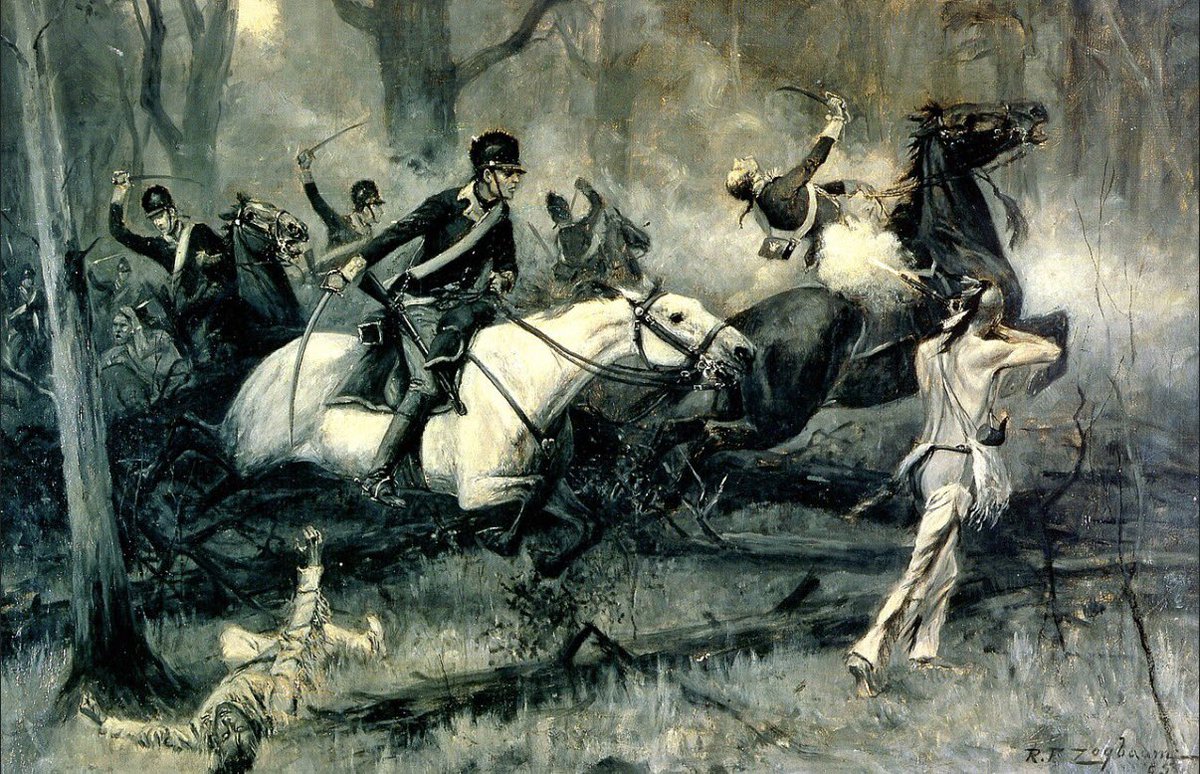
Tecumseh was born on March 9th, 1768 likely on the Scioto River near where Chillicothe, Ohio is today. When the Revolutionary War ended and the British began withdrawing from the region, the newly founded United States began taking control of the now unclaimed territories. As he became an adult, he participated in raids on ships carrying settlers down the Ohio River, but he refused to take part in the torture of any settlers that were taken prisoner, a facet of his life he would keep through adulthood and pass on to his later followers (see below picture of Tecumseh on horseback protection prisoners from his own tribe) After moving with his family to a location near Chattanooga, Tennessee for a few years, he and Lalawethika returned to fight in the Northwest Indian War (which we already covered). His family continued moving for a number of years before finally settling along the White River in Indiana in 1798.
Good morning everyone! This is post 48 in my series on Kansas history. Today’s story is on the Territorial capitals of Kansas, yes there were more than one. Enjoy! (A thread🧵)
Following the creation of the Kansas Territory in 1854, and especially following the election of the new territorial legislature in March of 1855, the need arose for a capital city and capital building for the government to meet at. In April of 1855 Territorial Governor Andrew Reeder called for the legislature to meet at the town of Pawnee near present day Junction City and Fort Riley. The construction of a two story stone building was ordered and was hastily built at the site (and the floorboards were not even nailed down by the start of the session on July 2nd). One issue with the location of Pawnee is that it is over 100 miles from Missouri, where the majority of the “bogus legislature” was from and so after only 3 days of meeting at the building they passed a bill to move the capitol to Shawnee Mission in the Kansas City area overriding Governor Reeder’s veto. They departed from the site on July 6th for Kansas City.
The first Territorial capitol is the last surviving building in the ghost town of Pawnee and is a small museum operated by the Kansas Historical Society at Fort Riley. It is absolutely worth a visit to see this part of territorial history if you are ever in this part of Kansas!
Yesterday morning I got the opportunity to see an amazing group of people setting a new record for fastest time to paddle down the Missouri River from Three Forks, Montana at the confluence of the Jefferson, Madison, and Gallatin Rivers to St. Louis, Missouri where the Missouri River enters the Mississippi. (A mini thread🧵)
The crew briefly docked at the city of Leavenworth, Kansas to restock on water and food prepared by their support team before making their way into the Kansas City area. As of the time of this writing the 4 man crew paddling the canoe has just passed Malta Bend, Missouri and have traveled a total of 2,030 miles and have been at it for 22 days, 17hrs, and 45 minutes. They are scheduled to arrive at their destination on the Illinois side of the Mississippi River early Saturday morning. If you’d like to keep track of the final leg of their journey as they cross the State of Missouri, check out this live map showing their progress (click live map once the site loads) and their social media pages on Facebook and Instagram which I will link further in the thread: rivermeter.app/?fbclid=IwdGRl…
Pics and videos from Leavenworth Landing as they quickly paddled by
Good Afternoon everyone! This is post 47 in my series on Kansas history. Today’s story is on a famous poet and social activist that grew up here in Kansas! (A thread🧵)
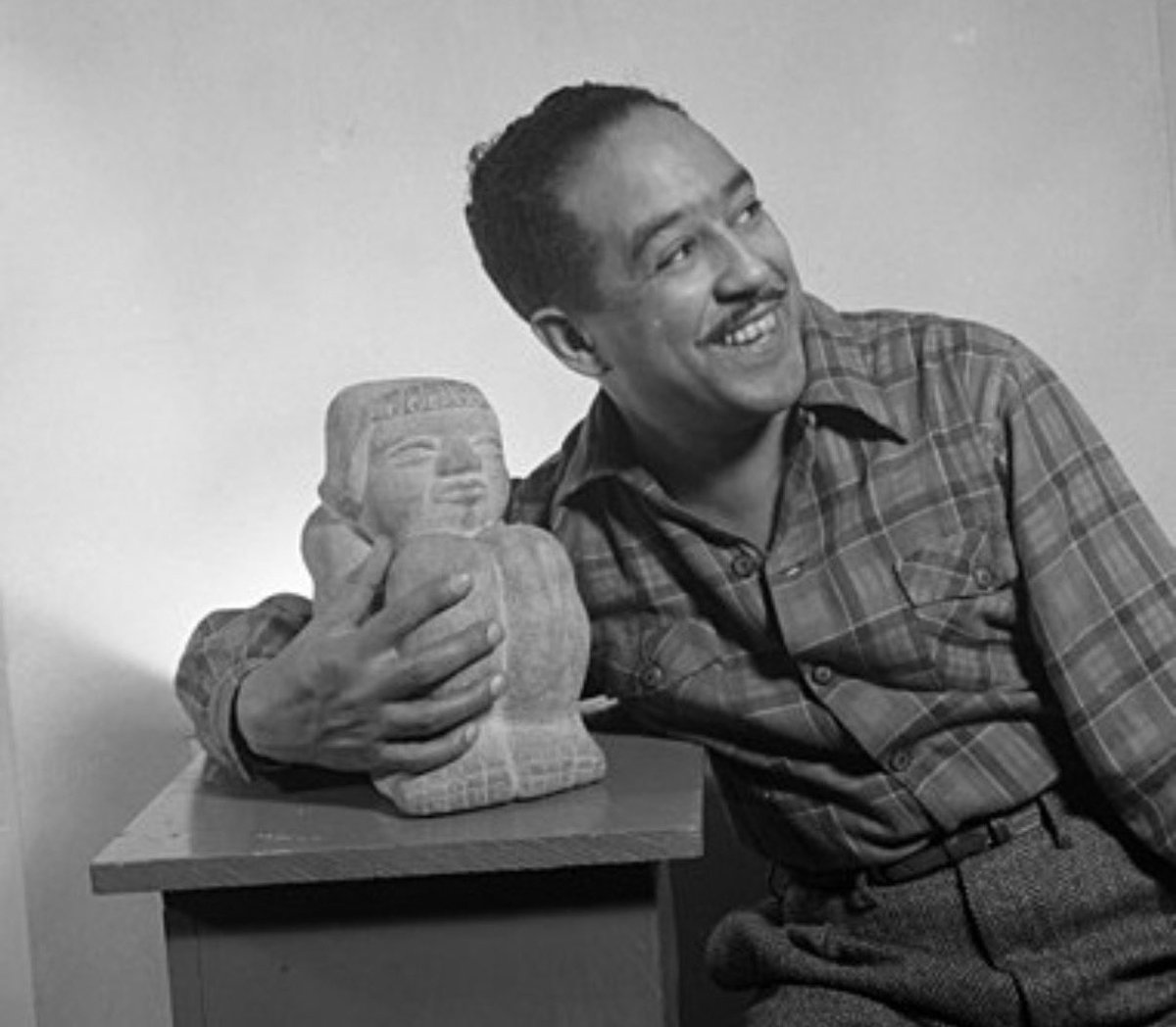
The opening photograph in this post was taken by another famous Kansan Gordon Parks! Check out Kansas history post 45 on him if you haven’t already.
James Langston Hughes was born on February 1st, 1901 in Joplin, Missouri. His father left for Cuba and then Mexico shortly after Langston’s birth to escape the racial intolerance of the United States. Langston grew up primarily with his maternal grandmother in Lawrence, Kansas while his mother went around the region in search of work. He moved to Lincoln, Illinois to live with his mother after the death of his grandmother and while living there he began to write short stories, plays, and poetry and was elected the class poet. After graduating high school in 1920 he moved to live with his father in Mexico until he was able to enroll in Columbia University in New York.
Good morning everyone! This is post 46 in my series on Kansas history. Today’s story won’t be awfully long, but it will cover a unique part of Native American history in Kansas. Enjoy!
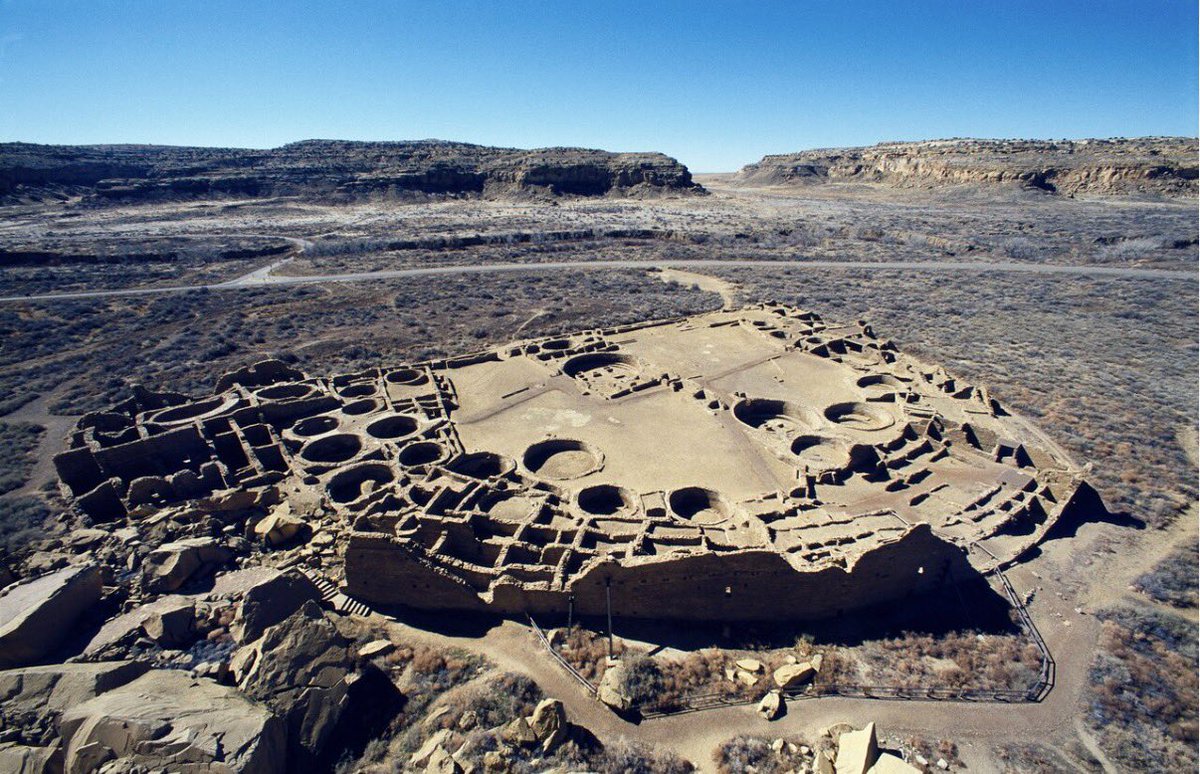
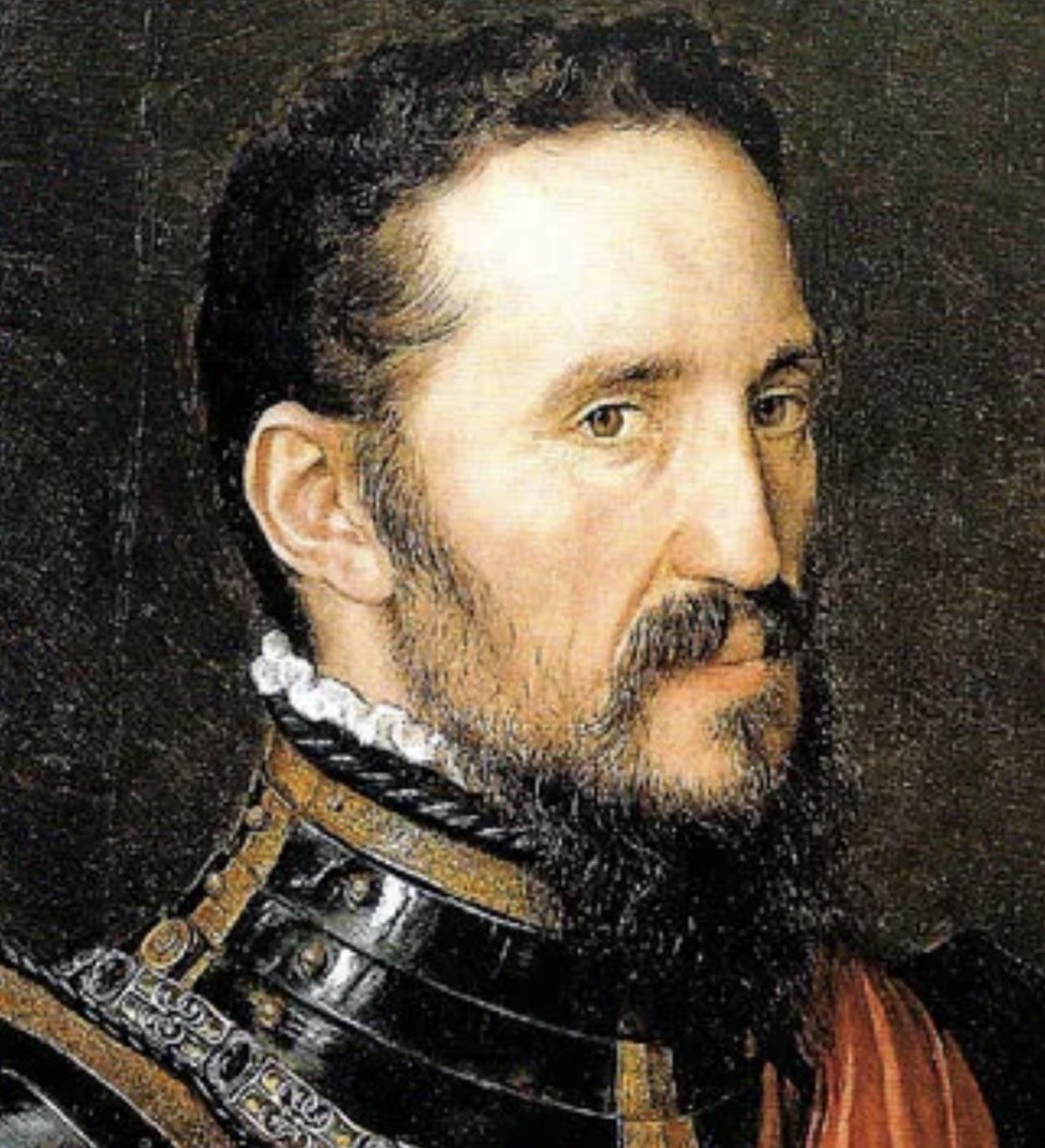
Prior to Spanish entrance into the modern day southwestern United States, the Pueblo Native Americans and other associated tribes lived for hundreds if not thousands of years in villages made of clay and dirt packed around wood beams and stone to make pueblos. These buildings could be relatively in the open like the Chaco Canyon pueblo in New Mexico or built into enormous rock shelters like Mesa Verde’s Cliff Palace in Colorado. In 1540 Francisco Vásquez de Coronado led an expedition that made contact with (and briefly fought against) the Pueblo people and other associated tribes like the Tiwas and Zuni in the region.
In the late 1500s Juan de Oñate led a group of settlers into the region to expand the Spanish Empire in the New World. Tensions began to grow surrounding the arrival of Europeans that obviously were not just stopping by for a visit or to trade. The tension finally began to snap in 1675 when 47 Pueblo medicine men were accused of sorcery and 3 were executed (with a 4th taking his own life before execution). The Puebloans along with the Zuni, Hopi, and Pecos Puebloans made an alliance, and on August 21st, 1680 an army of 2,500 Native Americans took the colonial capital of Santa Fe killing hundreds of colonists and successfully expelling the rest of the Spanish from the region for 12 years.