@benrileysmith UK government is looking for evidence of foreign involvement b/c of belief that DPRK couldn't have made progress without outside help. (2/n)
• • •
Missing some Tweet in this thread? You can try to
force a refresh

If U.S. forces leave after “weeks,” per the article, Iran will simply close the Strait again. Keeping the Strait open will require a permanent occupation of part of Iran. (2/n)
I suppose a possible response is that, after the invasion, Iran will negotiate a peace agreement on U.S. terms. But to get that kind of agreement, Trump will have to keep troops in Iran indefinitely—until Iran gives the U.S. a good deal. (3/n)
In theoretical terms, this is an attempt at compellence. Trump hopes the threat to strike oil facilities on Kharg (having attacked military facilities there to try and made said threat credible) will coerce Iran into reopening the strait. Seems unlikely to work. (1/n)
Most fundamentally, Iran's theory of victory is almost certainly to block the straight and force oil prices to rise... and it's working. Destruction of the oil facilities on Kharg be a huge blow to Iran, but keeping the Strait blocked is almost certainly more valuable. (2/n)
After all, this is a war of regime change (depending on which day of the week it is). It's literally existential for the Iranian regime. To win, it has to inflict sufficient costs on the U.S. (and Israel) that it doesn't attempt something similar in the future. (3/n)
There's a real debate to be had about U.S. interests in the ME (one that the China firsters within USG are losing).
But, even if you think the U.S. should defend Qatar, it's indefensible--as a matter of basic democratic accountability--to make the commitment via an EO. (2/n)
Defending another country is a huge deal--primarily because it could involve fighting a war, conceivably even a nuclear war, on that state's behalf.
Accordingly, in the past, guarantees like the Qatar commitment have been offered as treaties that require.... (3/n)
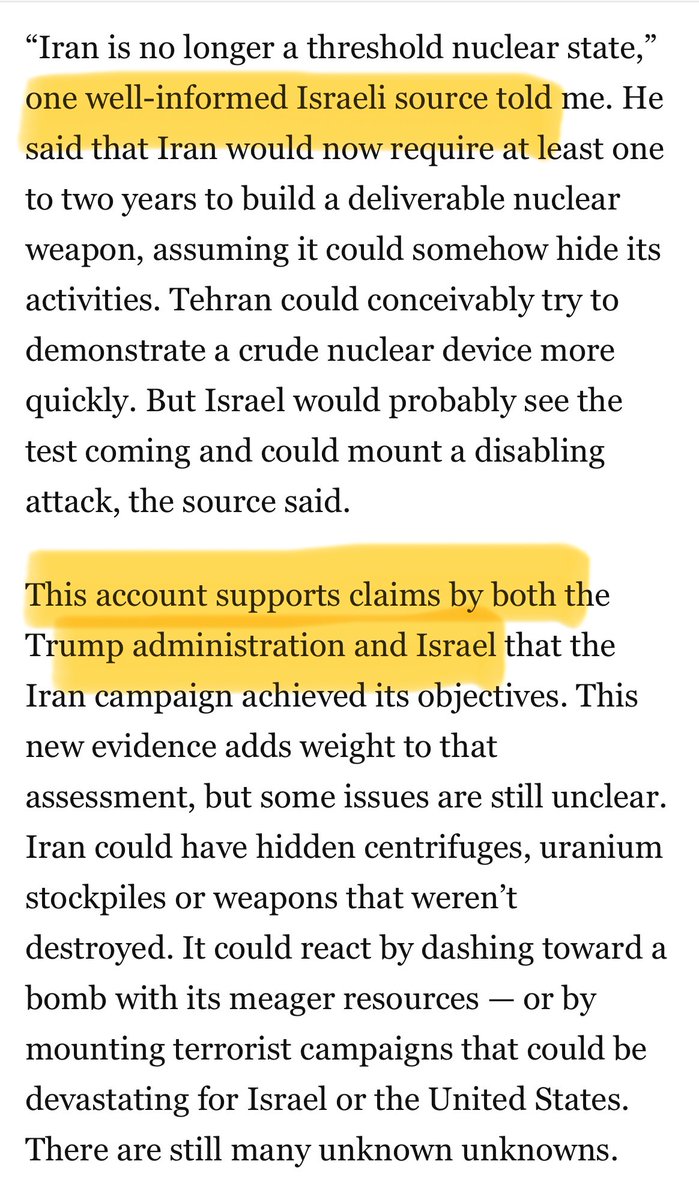
@ForeignPolicy @IgnatiusPost @washingtonpost Ignatius's oped is written as if it's a news story. The "news" in this case is that--SURPRISE!--an Israeli source backed up claims by the Israeli government! (3/n)
🧵How much damage was done to Iran's nuclear program?
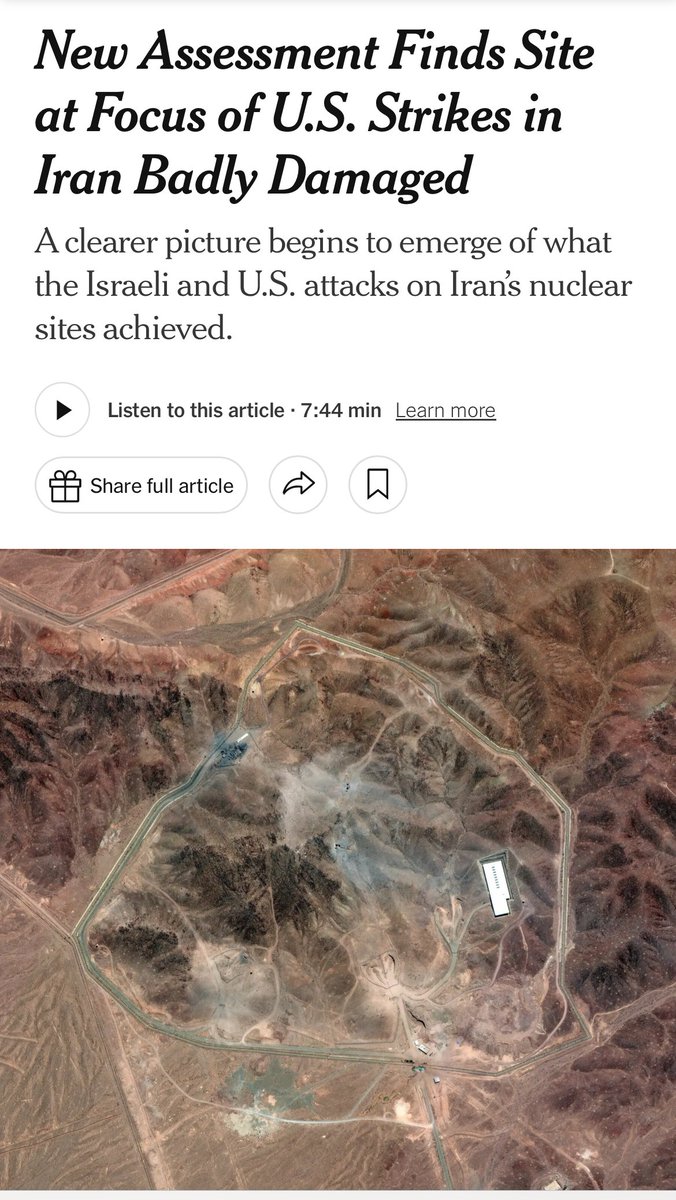
An analysis of Friday's reporting of the U.S. government assessment. I'll focus on the @nytimes, which was clearer than the earlier but confused @NBCNews story. (1/n)
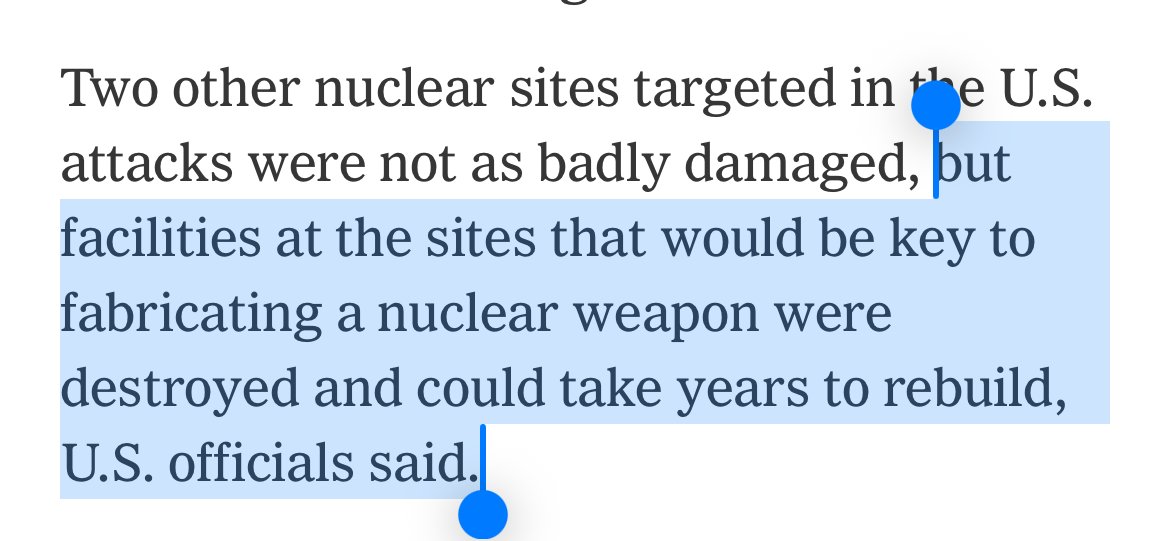
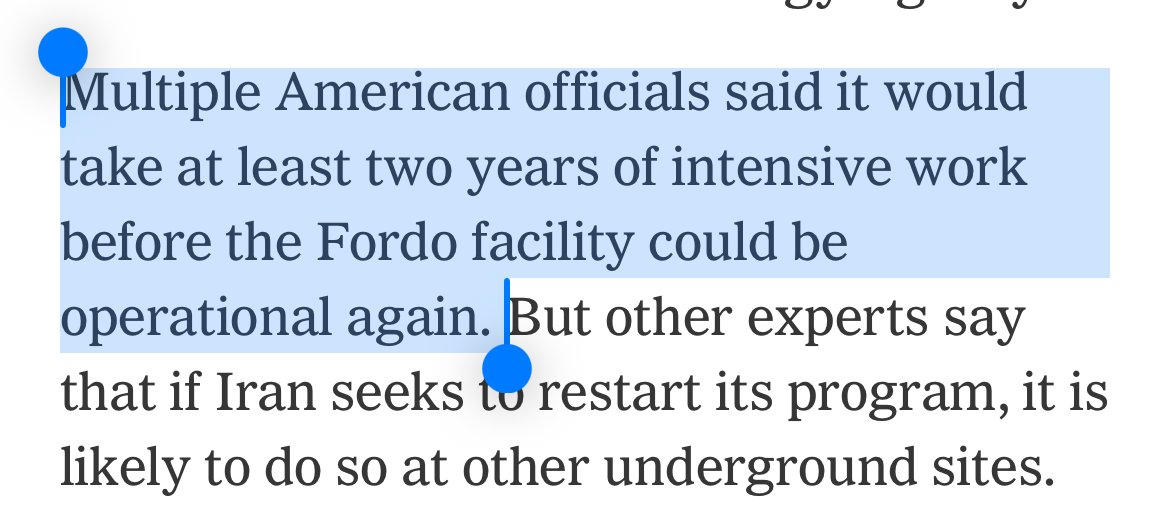
U.S. officials continue to argue that it would take Iran years to rebuild the facilities that were hit. That seems right to me.
But a key question is this: How long would it take Iran to build the bomb? (2/n)
Attempts to play down the survival of most or all of Iran's HEU are comical.
It may be true that "only" the HEU at Isfahan is accessible--but that's almost all of it! (3/n)
Here's my proposed U.S. nuclear strategy for managing escalation, arms racing, and proliferation with two nuclear peers, published through @CFR_org.
Health warning: If you like counterforce, take a DEEP breath before reading on. (1/n)
The U.S. faces a security environment that's bad and getting worse. There's an emerging bipartisan consensus that, in response, the U.S. needs more nukes. The justification stems from the current policy of "counterforce" targeting. (2/n)
The logic of counterforce targeting is merciless, however, and will catalyze an expensive, tension-generating, and futile three-ways arms race in which the United States will fail to achieve the nuclear superiority it seeks. (3/n)