Abhi Kambli Profile picture
Partner at Holtzman Vogel. Former Trump 47 senior DOJ official, Kansas Deputy Attorney General and federal prosecutor...
Jul 31 5 tweets 2 min read
Here we go again. The core of the issues here is district court judges abusing their authority by issuing “stays” to large scale government programs to “preserve the status quo” while briefing occurs. This is not how it works. I’ll explain more below. First, there is no authority for a court to “stay” a program. What the court can do (and effectively did do here) is issue an TRO. But in a TRO, the PLAINTIFFS bear the burden of making a clear showing that they are entitled to relief.
Jul 24 7 tweets 2 min read
A lot has been made about Kathleen Williams sanctions in Trump v. IRS. But what gets lost is that the President was a real victim of his taxes being leaked. And just last week the DC Circuit affirmed a sentence of FIVE YEARS in jail for the man who did it. I’ll explain below. Image The defendant in that case, Charles Littlejohn, sought a job as a consultant with the IRS so that he could steal and leak President Trump’s tax return and he followed through on that plan by leaking it to the NYTimes and helped the reporter analyze them.
Jul 13 7 tweets 2 min read
Not only is this judge’s order wildly incorrect in the merits, its logical conclusion would lead to dangerous results. I don’t expect much of this to have lasting effect but I will break down what’s wrong with the decision below. First, for the judge to decide this based on Article III case in controversy is highly suspect because she reopened the proceedings after voluntary dismissal at the request of former judge amici who are non-parties to the case
Jul 10 5 tweets 2 min read
I’ll be the first to admit when I was wrong and I expected Judge Boasberg to rule against the FTC here. But he did not. And in doing so a stand off with Judge O’Connor in NDTX was averted. I’ll break down the case below and what to expect next. First, Judge Boasberg concluded that a preliminary injunction that effectively stopped enforcement of a CID is not the same thing as stopping a lawsuit. Although this technically makes sense it begs the question of what exactly the government can or can’t do when it comes to 1A.
Jul 9 9 tweets 2 min read
A victory for DOJ in the 5th circuit in its litigation against states that provide in state tuition to illegal aliens. Per my usual policy, since this is a case I was involved in litigating I will refrain from providing commentary but will provide background and analysis below. First, 8 USC 1623a is a federal statute that basically says illegal aliens cannot receive in state tuition benefits to illegal aliens based on in state residency unless they provide that benefit to out of state citizens. But over 20 states had laws on the books allowing it.
Jul 8 10 tweets 2 min read
The series of battle of judges we’ve been seeing has taken on a whole new dimension with this one. This time between Judges Wetherell in Florida and Sooknanan in DC where I predict the Florida judge wins out. Let me break down how we got here and what could happen next. First, the Florida case involved Florida and other states that sued the Biden DHS for ignoring state officials’ inquiries seeking to verify individuals’ citizenship. But when the Trump admin came in, this case was settled basically incorporating the new provisions of the SAVE system merging citizenship data with social security data.
Jul 4 7 tweets 2 min read
A lot has been read into this new case of dueling actions between Judges O’Connor and Boasberg, this time with WPATH at the center. I’ll explain the genesis of the original action against WPATH, what happened in DDC, and then the recent order from O’Connor. First, WPATH had previously been considered the “gold standard” for expert opinion on transgender medical issues. Court after court used its findings to ban a multitude of state statutes that involved transgender individuals such as ban on procedures for minors.
Jul 4 7 tweets 2 min read
For those who have not been following, the indictment and aftermath against a sitting Attorney General have been unprecedented to say the least. I’ll break down the basis of the dispute, the severe problems with the indictment, and the legal fall out. First, what led to all this? Apparently, strongly worded letters to the Parish Council. There was a recent Louisiana statute (upheld by the state Supreme Court) that removed a clerk of the court position. The Council ignored that and the AG threatened legal action if they didn’t comply.
Jun 27 7 tweets 2 min read
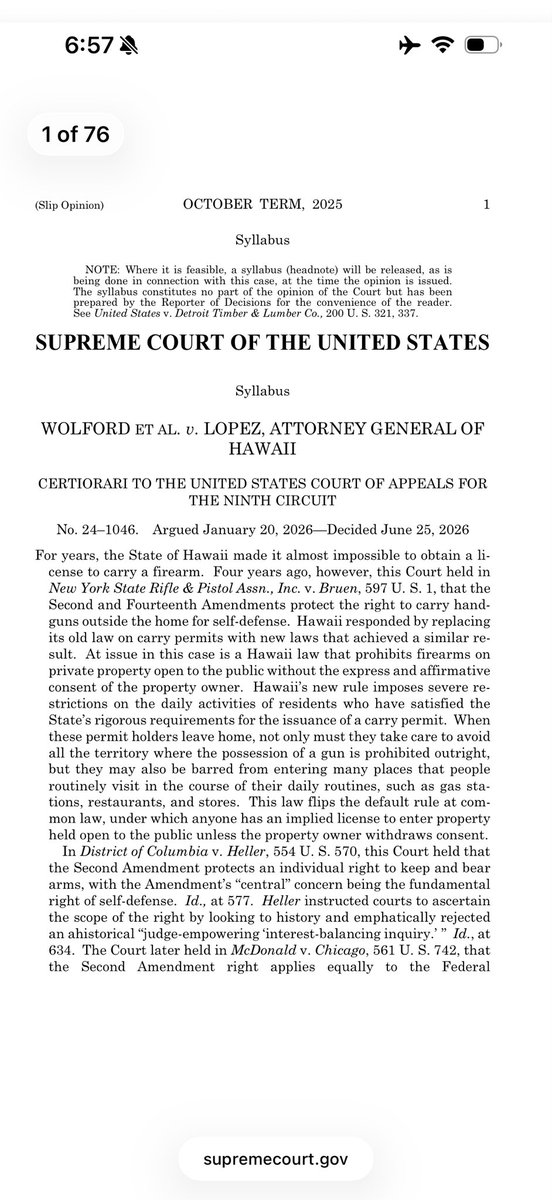
The final case I’ll cover is Wolford v Lopez. This one is wild. Hawaii tried to defend a clearly unconstitutional law with a kitchen sink approach that included invoking the “Aloha spirit” and black codes designed to disarm former slaves. Let’s discuss! Image Prior to Bruen, Hawaii effectively made it impossible people to obtain a permit to carry a gun. Recently, they tried to get around that by prohibiting firearms in private property that’s open to the public without the express consent of the owner. This makes carrying a firearm in public impossible.
Jun 27 11 tweets 3 min read
The second case I’ll cover is Mullin v. Doe, which involves the elimination of the TPS designation. The legal answer was very easy in this one. But it does raise two points worth discussing: (1) the absolute disrespect lower courts have shown to SCOTUS and (2) the administration’s patience with lower courts.Image First, the statute that grants TPS status requires periodical reexamination to determine whether the temporary status should be extended. Prior administrations have effectively rubber stamped extensions which is how people have been here decades through TPS. Not this one.
Jun 19 4 tweets 1 min read
The ripple effects of SFFA are still occurring in state courts around the country. This was an easy decision because SFFA held you can’t discriminate on the basis of race especially for amorphous reasons such as diversity. The next shoe to drop will likely be workplace DEI under Title VII. Let’s discuss. If a government is treating someone differently based on race, it must satisfy strict scrutiny under the Equal Protection Clause. This involves a compelling government interest and narrow tailoring to meet it. It used to be that diversity qualified as that compelling interest. Not after SFFA.
Jun 18 5 tweets 1 min read
A busy legal news day with a huge decision from CA9 that allows the president to exclude several agencies from unionizing. What’s especially important is the court’s holding on First Amendment retaliation that could have broader implications. I’ll explain below. One avenue that Plaintiffs have been utilizing to get courts to review otherwise unreviewable executive actions is raising a First Amendment retaliation claim. Judges have been more than happy to oblige by watering down the First Amendment’s retaliation standard.
Jun 17 7 tweets 2 min read
I can say that in my 13+ years of practice I have never seen anything like this. From the court’s opinion (and keep in mind this is about letting murderers out of jail): “Again and again the DAO has made unreliable concessions unsupported by the facts and law. And when conceding relief, the DAO has repeatedly lacked candor to the court,misrepresented facts, failed to conduct adequate investigations, and inexplicably dodged necessary evidentiary hearings.” Let’s discuss. First, the issue is a state post conviction relief statute that allows certain defendants who are wrongfully convicted to get relief. What happened here is the Philadelphia DA’s office under Larry Krasner’s abused it by repeatedly making misrepresentations to the court.
Jun 16 4 tweets 1 min read
The saga of Judge Eleanor Ross takes another intriguing turn this time providing DOJ a victory in her recusal motion. Those keeping track are likely aware of in chamber affairs that spawned the initial scrutiny. This motion was based on her attending Fani Willis election party. This is significant because it is a case where DOJ is seeking election records. Obviously a friendship with someone prosecuting President Trump in relation to the 2020 election would cast serious doubts on her objectivity. This was the right move. But it raises other questions.
Jun 13 6 tweets 2 min read
On top of judges ignoring the limits on their jurisdiction, a huge problem has been the inability of the judiciary to police itself. Here, the first time Judge Merriam got into trouble for treating her clerks harshly she was let off with little punishment. Then it happened again. This time the Second Circuit took the right steps to address the misconduct right? Wrong. It concluded, “The December 2023 order shall remain in effect and is
reinforced pursuant to the terms outlined below, concluding this complaint.” The judge’s name was left off the order.
Jun 12 6 tweets 2 min read
UFC fans (me included) can breathe a huge sigh of relief as sanity prevails in DDC, where a judge allowed the fights to continue. This case presented absurd aesthetic standing theories that left Judge Mehta no choice but to deny TRO. Let’s break down precisely how absurd it was. To get into court in the first place a Plaintiff must show they’re injured by what’s happened. Here the claim was an aesthetic injury that viewing the structures associated with the UFC event will diminish their personal enjoyment of the WH and Lincoln Memorial.
Jun 11 10 tweets 2 min read
Huge decision from the federal circuit granting a stay of the Court of International Trade’s injunction of the Section 122 tariffs pending appeal. This issue has a lengthy history and I’ll summarize how we got here, what the court did and what it means. As you may recall earlier this year, SCOTUS struck down President Trump’s tariffs under IEEPA. The decision is complicated but it ultimately boils down to the statute the administration utilized for this authority did not authorize the tariffs.
Jun 3 6 tweets 2 min read
The first case I’ll break down is Talbott v. United States (the Hegseth policy case) at the DC Circuit. Since this is a case I personally argued I will refrain from providing opinion commentary and focus on what the court said. Image First, Judges Wilkins and Rogers decided the Hegseth policy should be enjoined as it pertains to currently serving members based on animus but limit the injunction to the named plaintiffs in the case.