Becky Ancira Robertson Profile picture
𝖲𝗎𝗋𝗏𝗂𝗏𝗈𝗋🛟𝖬𝗈𝗆∙𝖳𝖾𝖺𝖼𝗁𝖾𝗋∙𝖠𝖼𝗍𝗂𝗏𝗂𝗌𝗍∙𝖠𝖽𝗏𝗈𝖼𝖺𝗍𝖾 #𝖫𝖢𝖣𝖢 #𝖬𝖺𝗋𝖼𝗁𝟣𝟧 #𝖫𝗈𝗇𝗀𝖢𝗈𝗏𝗂𝖽𝖠𝗐𝖺𝗋𝖾𝗇𝖾𝗌𝗌 ♡ 𝓑𝓮 𝓚𝓲𝓷𝓭 🫶
Apr 8 8 tweets 4 min read
A COVID infection can lower or dysregulate estrogen by directly stressing or damaging the ovary & uterine lining, disrupting brain–ovary signaling, & driving chronic inflammation that pushes the body toward a low‑estrogen, perimenopause‑like state.

Key mechanisms:
- Ovarian stress or injury
- Ovaries express ACE2 & other SARS‑CoV‑2 entry factors, so infection & the associated immune response can impair follicles that produce estradiol.
- Case reports describe young women developing amenorrhea & premature ovarian insufficiency after COVID, with low estrogen & high FSH, suggesting impaired ovarian reserve after infection.
1/9
@elisaperego78 @NotOstriching Def not discussed enough. My estrogen went to 0 during acute infection. Hypothalamus–pituitary disruption:

•Estrogen production depends on brain signaling (GnRH → LH/FSH → ovary); severe infection, high fevers, and systemic inflammation can blunt this axis, temporarily reducing estrogen output & causing missed or irregular periods.
- This same axis disruption is seen in other critical illnesses, & COVID appears to follow that pattern in some people, especially with long‑lasting symptoms.
2/9
@VirusesImmunity
Mar 15 12 tweets 6 min read
💜 Just sharing a part of my heart… to clarify for my peers & those making inquiries in DMs.

1/
Let me be clear: Advocacy has become the spine of my life, not a side project, & it honestly hurts that people I love are reading my choices as betrayal when every single decision I make is about protecting & honoring our community, my family in this.

#LongCovidAwareness 2/
This event today on March 15th is not about the rest of the world, & it is not about going viral. It’s for people with Long Covid. I asked my groups, my Facebook communities, & my 42‑person therapy group what they actually wanted, & not one person said, “I want to hear a tiny corner of MedTwitter talk about their own experiences for 24 hours.” Maybe it would be different if I didn’t host Spaces 4 days a week where we are all too familiar with each other’s experiences. What they did want was to hear from people on the front lines—what they’re seeing, what’s worked & failed, how they’ve found inner strength, & whether we are being seen & remembered. They wanted tools, validation, & maybe a sprinkle of hope, something they could bring to their doctor or therapist or family to say, “Look, this is real.” That is what I built this around.

#LongCovidAwarenessDay
Mar 7 7 tweets 5 min read
On this International Long Covid Awareness Day, 2026, we are doing something rare, something radical, & something deeply needed: we are bringing the people who know the most, & the people who are struggling the most, into the same room for 24 hours straight of truth, science, advocacy, & solidarity.
1/

@morgfair @19joho @TheReSisters2 @EmJayNabuurs @MattMcGorry @Alyssa_Milano @selma_hayek @LolaGerms @CarnivoraCC @HolleyM20 @VirusesImmunity @dryostradamus
x.com/i/spaces/1jgxg… For one full day, this Space becomes a living bridge between cutting‑edge research and the daily reality of Long Covid. Some of the most respected doctors and scientists in the world are joining us to share the latest innovations, discoveries, and emerging treatments shaping the future of Long Covid care. They are the ones pushing the science forward when the world would rather look away—standing with us, not above us. 2/

@yaneerbaryam @MsJulieSLam @elisaperego78 @michael_hoerger @AndrewEwing11 @DavidJoffe64 @DrMarjorieRobe1 @DaniBeckman @Eerrnn @winslow_la @longcovidriseup @hoolie_r @HollyMars2 @D_Bone @drseanmullen @SalamonSMDImage
Mar 4 11 tweets 4 min read
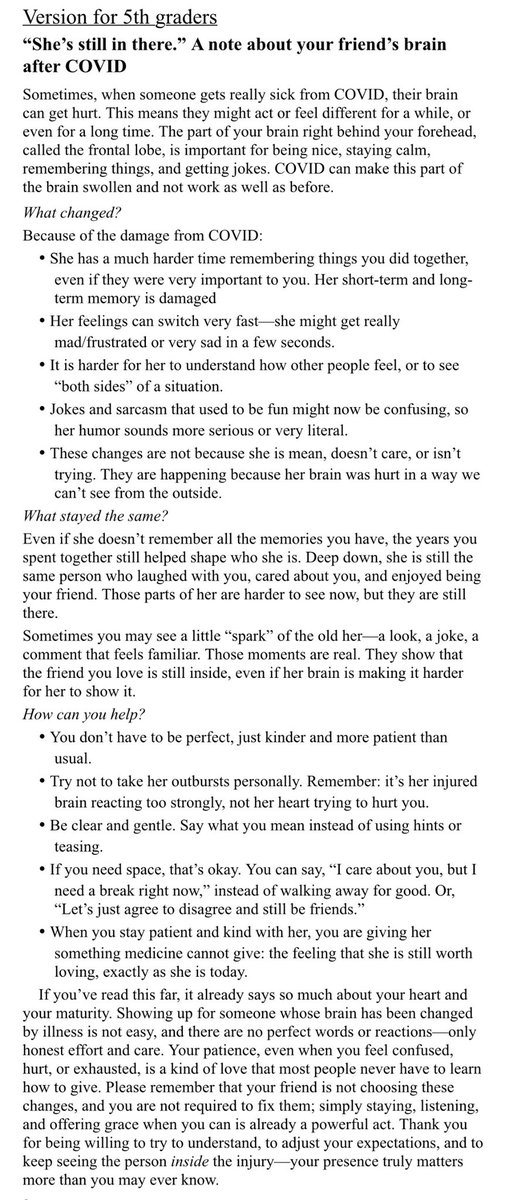
“She’s still in there.” Please don’t give up on her- a mother’s plea. 🙏

First, I want to acknowledge how confusing and painful it can be to see someone you love change after COVID and brain injury. These changes are not her fault, and they are not a choice; they are the result of real physical damage to the parts of her brain that used to make certain things feel easy or automatic, like empathy, memory, and emotional balance.

What COVID did to her brain:
COVID is not just a “lung virus.” It can inflame and injure the brain, including the frontal lobes—the areas behind the forehead that help with personality, empathy, decision‑making, impulse control, planning, and flexible thinking. 1/11 When those areas are damaged or have very low electrical activity, people can develop:
• Blunted or unpredictable emotions (quick temper, big mood swings, “all‑or‑nothing” reactions).
• Trouble with empathy and reading other people’s feelings, even if they want to care.
• Serious memory loss, especially for personal events, photos, and shared moments.
• Difficulty with attention and impulse control, which can worsen underlying ADHD.
2/11
Feb 5 12 tweets 2 min read
I had to write my dr today who refuses to understand.

I live with Long COVID, and one of the most disabling parts isn’t the fatigue — it’s losing my balance, my grip, and sometimes the ability to trust my own legs. These aren’t “mild” symptoms. They’re signs of multi‑system injury that needs real medical and policy attention.
1/
Long COVID damages skeletal muscle in ways you can feel every day. My grip weakens without warning. My legs shake from simple tasks. This isn’t deconditioning — it’s structural muscle impairment that makes basic movement unpredictable.
2/
Nov 5, 2025 8 tweets 4 min read
What is with these ASD-like symptoms post-covid?

Reports of autistic-like symptoms—such as sensory sensitivities, social withdrawal, executive dysfunction (e.g., brain fog, difficulty planning or communicating), repetitive behaviors, & emotional dysregulation—appearing or intensifying after COVID-19 infections have indeed risen, particularly in the context of long COVID (symptoms persisting beyond 12 weeks post-infection). This isn’t necessarily “causing” autism spectrum disorder (ASD), which is a neurodevelopmental condition rooted in genetics & early brain wiring, but rather leading to “acquired neurodivergence” where neurological changes mimic or exacerbate ASD traits in both neurotypical individuals & those already on the spectrum.

Emerging research suggests this trend may contribute to observed increases in ASD prevalence rates (e.g., from 1 in 36 children in 2020 to 1 in 31 by mid-2024), though diagnostic shifts, heightened awareness, & pandemic stressors also play roles.

Why This Is Happening: Key Mechanisms

Long COVID triggers persistent systemic inflammation and immune dysregulation that can disrupt brain function, echoing pathways implicated in ASD. A theoretical framework outlines how SARS-CoV-2 infection interacts with genetic vulnerabilities during critical developmental windows (e.g., prenatal or early postnatal periods), potentially amplifying neurodevelopmental traits.

Here’s a breakdown of the primary mechanisms:

1/ASD-like symptoms/behaviors 1Neuroinflammation & Microglial Overactivation:

COVID-19 leaves behind viral proteins that sustain elevated pro-inflammatory cytokines (e.g., IL-6 and TNF-α levels 2–3 times higher than baseline, persisting for months). This activates microglia (brain immune cells), impairing synaptic pruning—the process that refines neural connections in early development—and leading to altered brain circuits. In ASD, similar inflammation disrupts social processing and sensory integration; in long COVID, it manifests as heightened sensory overload or repetitive stimming-like behaviors to self-regulate.

2/ASD-like symptoms/behaviors
Oct 16, 2025 24 tweets 8 min read
What is with all the talk about Valacyclovir & Celecoxib lately?

The Valtrex (valacyclovir) and Celecoxib trial for Long COVID, often referred to in the context of the IMC-2 regimen (a combination of valacyclovir and celecoxib), is a collaborative effort involving researchers David Putrino from the Icahn School of Medicine at Mount Sinai and William Pridgen from Tuscaloosa Surgical Associates/PridCor Therapeutics. PolyBio Research Foundation provided support for manuscript preparation in the key publication detailing the study, as part of their broader funding and collaboration on Long COVID research, including antiviral trials through their Long COVID Research Consortium, which includes Putrino’s institution. 52 This aligns with PolyBio’s focus on infection-associated chronic illnesses, viral persistence, and catalyzing clinical trials for Long COVID treatments. 40 45 Study Background and Design
The research stems from the hypothesis that Long COVID symptoms may be driven by persistent SARS-CoV-2 infection and/or reactivation of herpesviruses (like EBV or HSV), which antivirals could target. 52 31 IMC-2 was originally explored by Pridgen for conditions like fibromyalgia, where celecoxib (an anti-inflammatory NSAID) is thought to enhance valacyclovir’s antiviral effects by improving tissue penetration and modulating immune responses. 52 17
Sep 19, 2025 7 tweets 3 min read
Lyme disease and Long COVID share several overlapping characteristics, particularly in their chronic or persistent forms, as both can lead to prolonged, multisystem symptoms that significantly impact quality of life. Below, I outline the key commonalities based on available medical understanding:
1. Chronic Fatigue: Both conditions often present with profound, debilitating fatigue that doesn’t improve with rest. In Lyme disease, this is a hallmark of post-treatment Lyme disease syndrome (PTLDS), while in Long COVID, it’s commonly referred to as post-exertional malaise or chronic fatigue.
2. Cognitive Dysfunction: Patients with both conditions frequently report “brain fog,” including difficulties with memory, concentration, and mental clarity. In Lyme disease, this is sometimes called Lyme encephalopathy, while in Long COVID, it’s a widely recognized neurological symptom. 3. Musculoskeletal Pain: Persistent joint and muscle pain are common in both. Lyme disease, caused by the Borrelia bacteria, often leads to migratory joint pain or arthritis, while Long COVID patients report myalgia and arthralgia, often without clear inflammation.
4. Neurological Symptoms: Both can involve neurological issues such as headaches, dizziness, and nerve pain (neuropathy). Lyme disease may cause Bell’s palsy or radiculopathy, while Long COVID can lead to similar neuropathic symptoms or autonomic dysfunction like postural orthostatic tachycardia syndrome (POTS).
Sep 19, 2025 9 tweets 4 min read
Overview of the ACIP Meeting on September 18-19, 2025
The U.S. Centers for Disease Control and Prevention’s (CDC) Advisory Committee on Immunization Practices (ACIP) held its virtual meeting on September 18-19, 2025, focusing on updates to vaccine recommendations, particularly those affecting pediatric and adult immunization schedules. The committee, recently reconstituted under Health and Human Services Secretary Robert F. Kennedy Jr., reviewed evidence on measles, mumps, rubella, and varicella (MMRV) vaccines, hepatitis B (Hep B) vaccines, and 2024-2025 COVID-19 vaccine implementation. Votes occurred primarily on Day 1 (September 18), with some deferred to Day 2. Discussions highlighted tensions between evidence-based safety data from CDC experts and skepticism from some ACIP members, leading to notable disarray, including confusion over vote wording and rationales. The outcomes primarily impact pediatric vaccine schedules, emphasizing shared clinical decision-making (individualized risk-benefit discussions) over universal recommendations. No major changes were finalized for adult schedules on Day 1, though COVID-19 discussions continued. These recommendations, if adopted by the CDC Director, influence insurance coverage (e.g., no-cost sharing under the Affordable Care Act), Vaccines for Children (VFC) program eligibility, and pharmacy administration authority. However, America’s Health Insurance Plans (AHIP) stated that all ACIP-recommended immunizations as of September 1, 2025, will remain covered without changes, potentially buffering immediate access disruptions. Some states have also signaled they may not follow revised ACIP guidance.
Aug 29, 2025 17 tweets 7 min read
App-𝙤𝙧𝙩𝙪𝙣𝙞𝙩𝙮 𝙛𝙤𝙧 𝙞𝙢𝙥𝙧𝙤𝙫𝙚𝙢𝙚𝙣𝙩?

Everyone keeps talking about developing an app for #LongCovid & I would hate for anyone to recreate the wheel. Are you looking to track symptoms, recovery, treatment, exercise, vitals, pacing, sleep (or lack of), diet and/or sleep? Maybe a few of these designers could collaborate. 🤷‍♀️

I currently track my data/stats with 𝙐𝙣𝙝𝙞𝙙𝙚, 𝙈𝙮𝘿𝙖𝙩𝙖𝙃𝙚𝙡𝙥𝙨, 𝙎𝙘𝙧𝙞𝙥𝙥𝙨, CDC Surveys (and bloodwork) & don 2 wearable devices. I love contributing to Science. 😃

I've compiled a list of the top 20 apps used by #LongCovid patients in hopes we might encourage collaboration or select all of the best features and/or formats to create THE all-encompassing interactive app/database for our community, our caregivers & doctors in realtime.

Which apps do you find helpful?
1/ •               Visible: A pacing and symptom-tracking app tailored for Long COVID and ME/CFS (chronic fatigue syndrome). It uses smartphone camera-based heart rate variability (HRV) measurements, symptom logging, and activity data to help users avoid overexertion (post-exertional malaise). Features include daily “pace scores,” trend analysis, breathing exercises, and optional integration with wearables for all-day monitoring. It emphasizes rest over fitness, with reports for sharing with doctors. Available on iOS and Android; free basic version, premium subscription for advanced features.
2/
Aug 25, 2025 8 tweets 3 min read
𝙄'𝙫𝙚 𝙘𝙤𝙡𝙡𝙚𝙘𝙩𝙚𝙙 𝙩𝙝𝙤𝙪𝙨𝙖𝙣𝙙𝙨 𝙤𝙛 𝙥𝙖𝙥𝙚𝙧𝙨/𝙨𝙩𝙪𝙙𝙞𝙚𝙨 𝙤𝙫𝙚𝙧 𝙩𝙝𝙚 𝙥𝙖𝙨𝙩 6 𝙮𝙚𝙖𝙧𝙨 𝙖𝙣𝙙 𝙩𝙝𝙚𝙮 𝘼𝙇𝙇 𝙝𝙖𝙫𝙚 𝙩𝙝𝙚 𝙨𝙖𝙢𝙚 𝙘𝙤𝙣𝙘𝙡𝙪𝙨𝙞𝙤𝙣-

𝘾𝙊𝙑𝙄𝘿 𝘾𝘼𝙐𝙎𝙀𝙎 𝘽𝙍𝘼𝙄𝙉 𝘿𝘼𝙈𝘼𝙂𝙀!!
🦠 🧠 🦠
Neurological Manifestation of SARS-CoV-2 Induced Inflammation and Possible Therapeutic Strategies Against COVID-19

link.springer.com/article/10.100… Neurological Involvement in COVID-19 and Potential Mechanisms: A Review
Review Article
Published: 13 July 2020

link.springer.com/article/10.100…
Aug 4, 2025 21 tweets 7 min read
**COVID-19 can induce lupus**
🔬🩺🧬🩸🧪🩹💉🩻🦠💊🌡
(systemic lupus erythematosus, SLE) through several immune system mechanisms, especially in genetically predisposed individuals:
**Immune System Hyperactivation:**
COVID-19 triggers a strong immune response. The virus can cause excessive activation of B-cells (antibody-producing cells) and promote overproduction of interferons, both of which are implicated in lupus pathogenesis. This abnormal activation may lead to the immune system mistakenly attacking healthy body tissues—a hallmark of lupus.
1/
**Production of Autoantibodies:**
COVID-19 has been found to stimulate the immune system in a way that leads to the formation of autoantibodies (antibodies that target the body’s own proteins. Autoantibodies such as antinuclear antibodies & lupus anticoagulant are commonly associated with lupus & have been detected in some COVID-19 patients.
2/
Jul 2, 2025 21 tweets 5 min read
For ongoing long COVID patients, the top three reasons to consider a PET scan are:
1.Detecting Hidden Inflammation and Organ Damage
PET scans, especially when combined with MRI (PET/MRI), can reveal persistent inflammation in the heart, lungs, and other organs—even when standard tests appear normal. This helps identify patients at risk for future cardiopulmonary complications such as heart failure, pulmonary hypertension, or valvular disease. Identifying Brain and Nervous System Involvement
PET scans (such as brain FDG-PET) can uncover hypometabolism or inflammation in the brain, which may explain cognitive, neurological, or autonomic symptoms in long COVID patients. This is particularly valuable for distinguishing long COVID from other neurological or psychiatric disorders.
May 3, 2025 23 tweets 12 min read
It does sound ‘over the top’ & who wants to believe we are letting our kids get repeated Cov infections potentially destroying their organs.

The tragedy of it all- we knew in 2020. Ask teachers if they see a difference in behavior, mood, memory recall, a dramatic increase in ADHD, and most importantly, look at the test scores and how they have plummeted long after a 3 month lockdown 6 yrs ago. COVID-19 has been linked to potential dementia risk in young people through mechanisms involving direct neurological damage, vascular changes, and systemic inflammation. Below are key studies and findings that explore this connection:

1. Systemic Vascular and Neurological Pathways**  
A 2021 review highlighted COVID-19’s ability to trigger systemic vascular alterations and neuroinflammation, potentially accelerating neurodegenerative processes. Cognitive decline pathways include blood-brain barrier disruption and hypoxic brain injury, which may exacerbate pre-existing dementia or initiate early-onset cases[1].
Mar 22, 2025 6 tweets 3 min read
My Dear Friends and Fellow Advocates,
With a heart full of passion and gratitude, I write to you today. For five long years, we have fought tirelessly for a cause that too often felt invisible to the world. We’ve faced indifference, we’ve battled through personal struggles—4 to 5 infections, no less—and yet, we refused to succumb to the illness that sought to break us. Yes, I am tired. Yes, I have felt frustrated, defeated even. But here we are. WE MADE IT.
1🧵 Through every obstacle, every moment of doubt, we stood firm—not just for ourselves but for humanity. For our love of people. For the belief that no one should ever endure what we have endured. And let me tell you this: after this past week, I am more inspired than ever. My conviction has been reignited, my spirit rekindled. I come back to our mission with new fervor and light, and I know—deep in my soul—that together we can achieve even more. 2🧵
Aug 11, 2024 6 tweets 3 min read
Metformin and COVID-19: A Potential link
Metformin, primarily used for treating type 2 diabetes, has shown potential benefits in managing COVID-19. Here's a breakdown of the potential mechanisms:
Potential Benefits of Metformin for COVID-19

* Reduced viral load: Studies suggest metformin can lower the amount of virus in the body, potentially reducing the severity of infection.
* Lower risk of hospitalization: Research indicates metformin might decrease the chances of needing hospitalization for COVID-19.
* Reduced risk of long COVID: Evidence suggests metformin could lower the likelihood of developing long-term symptoms after COVID-19.
* Anti-inflammatory effects: Metformin has anti-inflammatory properties, which could help combat the excessive inflammation often seen in severe COVID-19 cases.
* Improved glucose control: For patients with diabetes, maintaining good blood sugar levels is crucial in fighting infections. Metformin can help with this.

How Does It Work?
While the exact mechanisms aren't fully understood, researchers believe metformin may:
* Interfere with the virus's ability to replicate
* Modulate the immune response to prevent excessive inflammation
* Improve overall health and metabolic function, making the body better equipped to fight infection
Important Considerations
* More research is needed: While promising, current evidence is still developing.
* Not a cure: Metformin is not a replacement for vaccines or other recommended COVID-19 treatments.
* Individual variation: Response to metformin can vary among individuals. Metformin as a potential treatment for COVID-19

pubmed.ncbi.nlm.nih.gov/37194484/
Jun 9, 2024 12 tweets 7 min read
‼️‼️BE PREPARED‼️‼️

In light of @DrEricDing s advice on the upcoming pandemic, I wanted to share a few things which everyone needs to have available in the event of an emergency- tornados, power outages, fires, hurricanes, sheltering in place, and deadly viruses ripping through the country unchecked.

AI agrees:
Here's why it's important to be prepared for H5N1:

* While H5N1 currently has low transmission among humans, it has the potential to mutate & become more transmissible.

* If it were to mutate and spread easily between people, it could cause a pandemic with serious health consequences.

* Being prepared can help mitigate the impact of an outbreak, both for individuals and for healthcare systems.Image
Image
Image
Based on prior experience, I am confident we were not prepared for catastrophic events. FEMA has provided resources for you & your family. Please print out.

FOR PARENTS:
Image
Image
Nov 15, 2023 7 tweets 2 min read
Covid will be a leading cause of death in the U.S. indefinitely, whether or not the pandemic is 'over' nbcnews.com/news/amp/rcna4… ox.ac.uk/news/2023-01-3…