Anisopoikilocyte Profile picture
Bloody awful views, often thieved from more sanguine people.
Jan 20 32 tweets 12 min read
There have been some conversations around how ACPs are supposedly safer than PAs, and are better trained, and so can work at ST3 level even if PAs are <F1 level as per Leng.
I thought it’d be useful to compare the ACP courses to the PA courses
1/
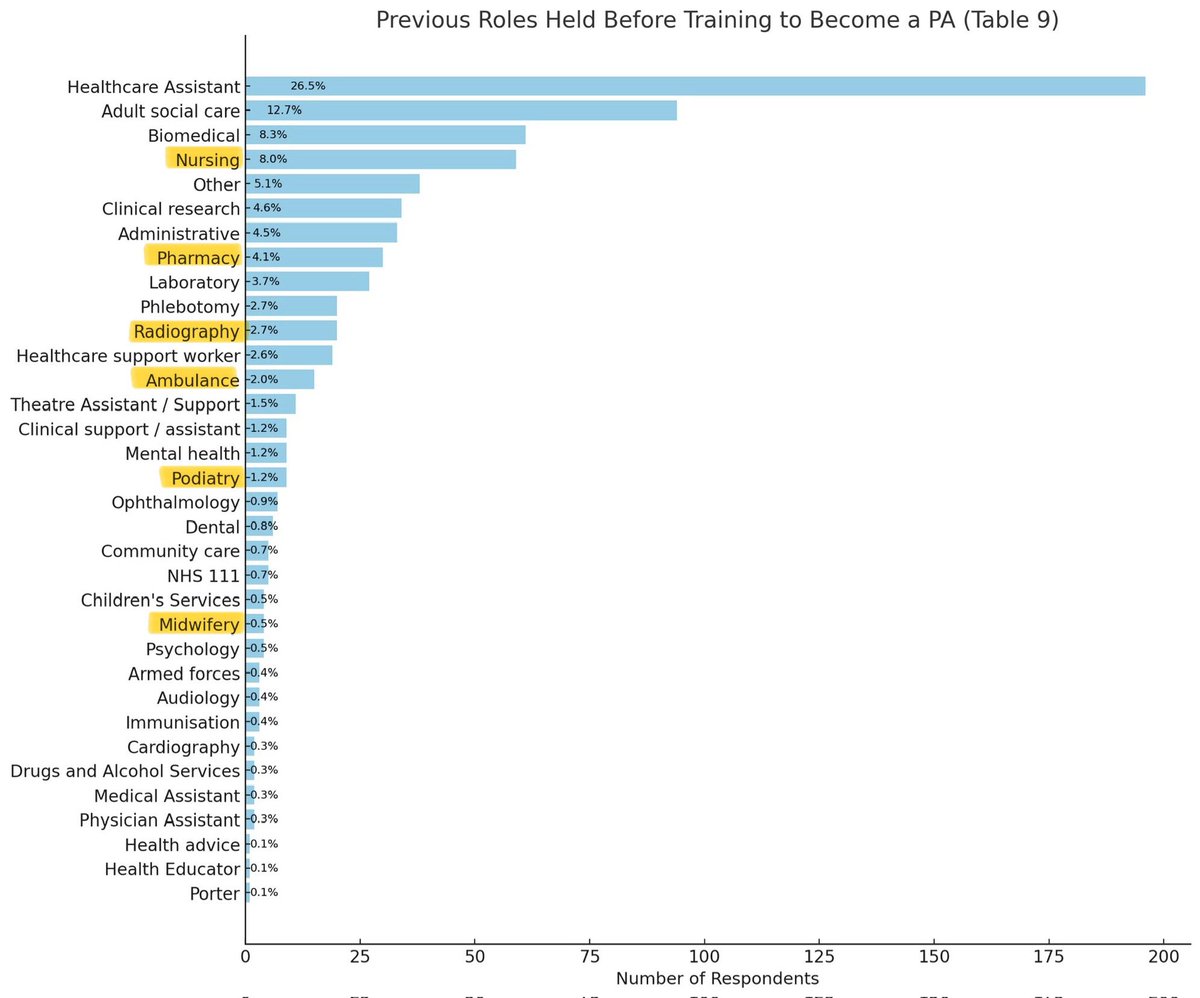
Background PA & ACP courses are open to slightly different but overlapping groups. I want to focus on the group of nurses/physios/paramedics etc who could do either. According to Leng, some chose the PA route & are now restricted, but those who did ACP identify as “ST3” level
2/ Image
Jul 21, 2025 19 tweets 7 min read
We should talk about the the inevitable q of how this mess happened.
Prof Leng stated her review wouldn’t dwell on it. This is within her gift - the review is hard enough to land despite sticking to its precise question.
But the question of how this happened cannot be ignored
1/ Image Fault here is multifactorial.
I’ve said before that role of Govt is to ensure provision of care. Role of RCs is to ensure standards of Medical practice. And the Role of GMC is to ensure safety of care.
Fundamentally, Leng found the PA role wasn’t safe to continue as it was
2/ Image
Jul 20, 2025 25 tweets 8 min read
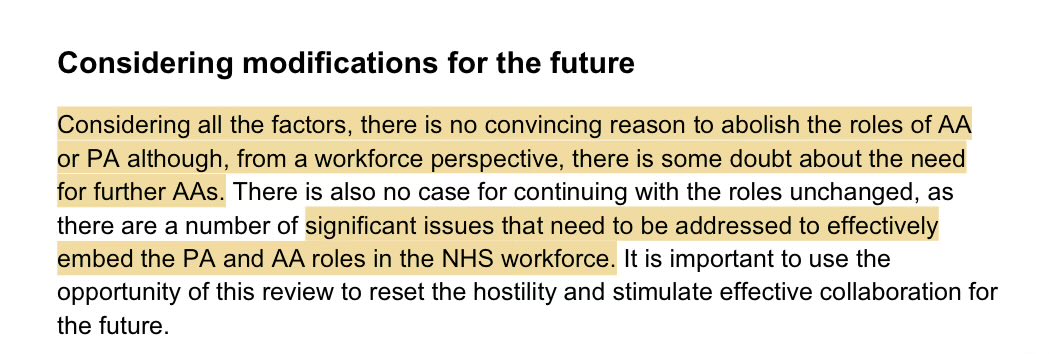
I’d like to talk a bit about the Leng Report, and thank Prof Leng and her team.
It’s quite extensive, and addresses various parts of the MAPs issue, so I wanted to discuss various parts in isolation than go through it chronologically.
But, please do also read the report.
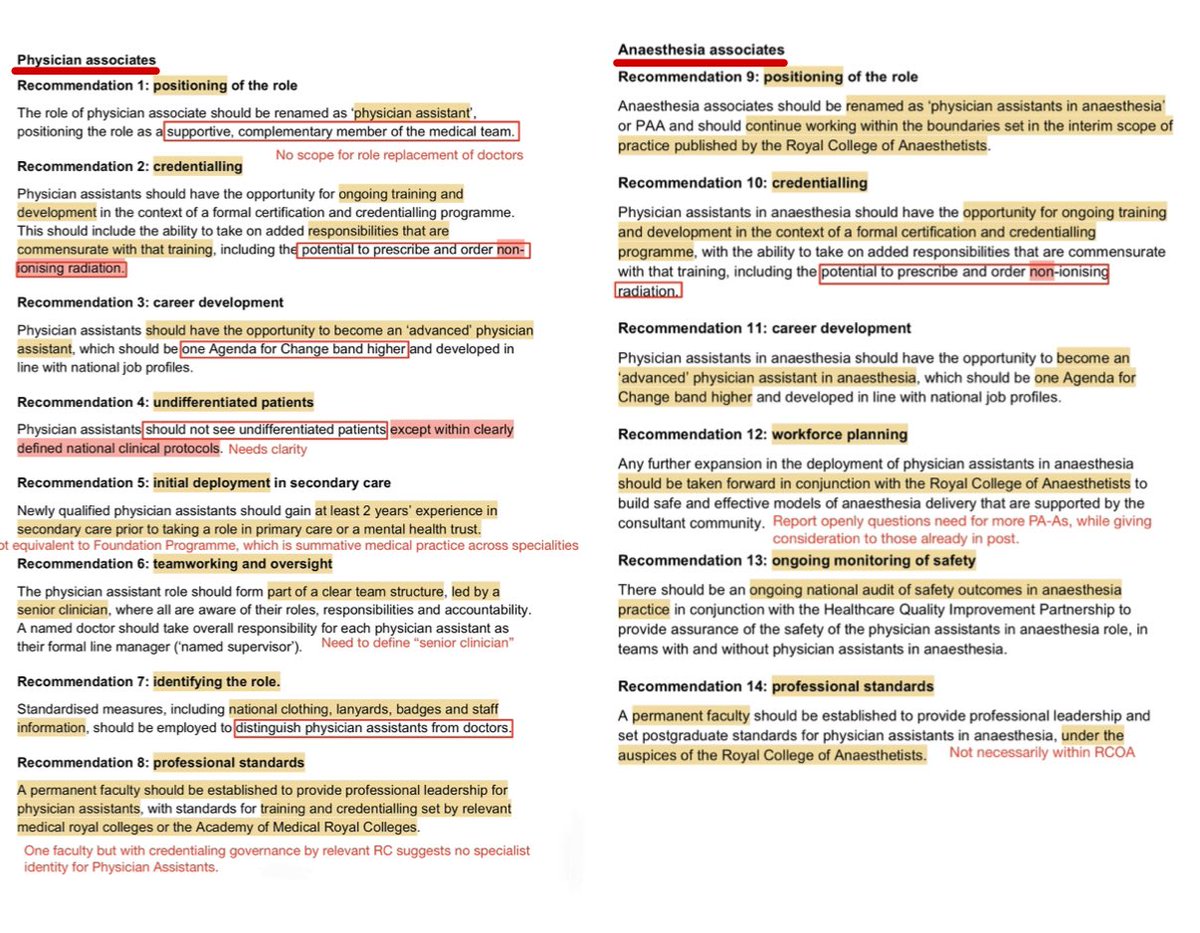
1/ Image Let’s go to the recommendations first.
Below is the summary for the PA and AA groups, and I’ll speak a bit about the PA parts in detail. The AA parts have been covered better by Anaesthetists and are similar, so I won’t dwell on those
2/ Image
Jul 6, 2025 19 tweets 5 min read
I thought it’d be helpful to do a thread on this rapid review by Prof Cooper et al on quality of care by PAs vs Doctors.
Everyone should read the paper, it’s very interesting. As a caveat, most studies are from US so not directly applicable to UK

1/bmj.com/content/390/bm… The intro compares UK vs US requirements. Fairly on point, but a couple of significant inaccuracies. PAs in UK are not strictly required to have science/health BSc, and until Dec 2026, can work without PANE or GMC reg.
Glaring difference in how PAs are deployed in US vs UK
2/ Image
Apr 4, 2025 21 tweets 5 min read
I wanted to come back to this because I feel it was a much bigger deal (to me at least) than I perhaps made it out to be.
So I thought it would be worthwhile to revisits what is lacking in the PANE OSCE.
x.com/anisocyte/stat…

1/
Right now, PAs with PANE are eligible to register with the GMC and continue to work beyond the 2yr limit. Given that GMC did away with revalidation exams, this is the only time a PA’s practical skills will be formally assessed.
So cannot underestimate the importance of PANE.
2/
Apr 1, 2025 21 tweets 7 min read
I wanted to talk about PANE.
As noted in the EGM, PANE was used to “accredit” PAs’ clinical skills and competence.
It wasn’t until much later that RCP stated PANE did no such thing, and was set & delivered by PAs
1/ Image However, for nearly a decade, PANE was considered the mark of a PA’s competence, and even now is being used in lieu of PARA to register PAs (only ineligible PAs have to sit PARA).
So it’s worth looking at what it entails.
2/
Mar 21, 2025 13 tweets 5 min read
We should discuss the PARA content map, which defines what GMC will look to assess in the PARA exams that it will use for national licensing of PAs.
It advises PA course institutions on what should be covered in courses, and what a newly qualified PA should know as a baseline. 1/ Image It’s clear the GMC developed this in line with FPA. The FPA has now been dissolved, so the draft curriculum isn’t available, but the draft PFA curriculum built on the Framework (reviewed elsewhere).
So we cannot reliably comment on curriculum here, only how PARA assesses it.
2/ Image
Mar 21, 2025 20 tweets 7 min read
I want to discuss the Competence and Curriculum Framework for PAs, especially since this is still being used to argue scope for PAs, and supposedly establishes some level of competence we should expect from NQ PAs.
I’ll discuss the 2012 version as it applies to most PA grads
1/ Image The Exec Summary is an important read and sets out important criteria that are currently not met:
1. Recertifying every 6yrs
2. Course accreditation
3. PANE las a benchmark
4. 12 month internship
Does this mean scope is not applicable to PAs who don’t meet this criteria?
2/ Image
Mar 18, 2025 26 tweets 10 min read
I wanted to talk a little about UK PA courses & the US equivalent, and whether comparison is fair or appropriate.

More pertinently, whether there’s basis for using USA research in discussions about UK PAs.

Also USA PAs are assistants, and we won’t discuss work patterns here. 1/ Begg[1] notes that first attempts at making a UK course were haphazard. Kentucky Uni help was explored, but unclear why the programme wasn’t adopted, until I ran into one of US PA statements on UoB’s early paper on PAs[2], explaining ++ approval/accreditation was required
2/ Image