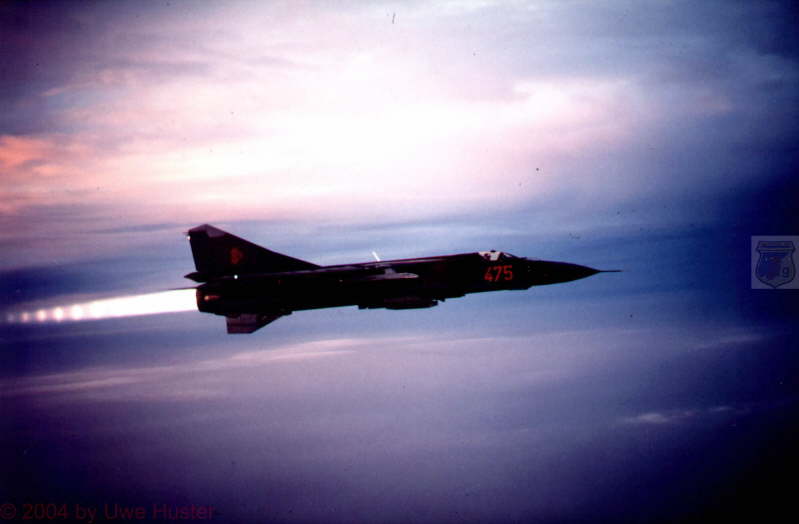
Posting about the MiG-23 and other aircraft.
Aerodynamics, Structures, Engines & Performance.

 According to the Su-15UT manual (two sear trainer) with two Tumansky R11F2S-300 engines (6200 kgf each), 6030L of usable internal fuel volume (5005 kg at 0.83 kg/L, T1 grade fuel). By my estimates, total internal fuel volume is 6140L (5096 kg at 0.83 kg/L).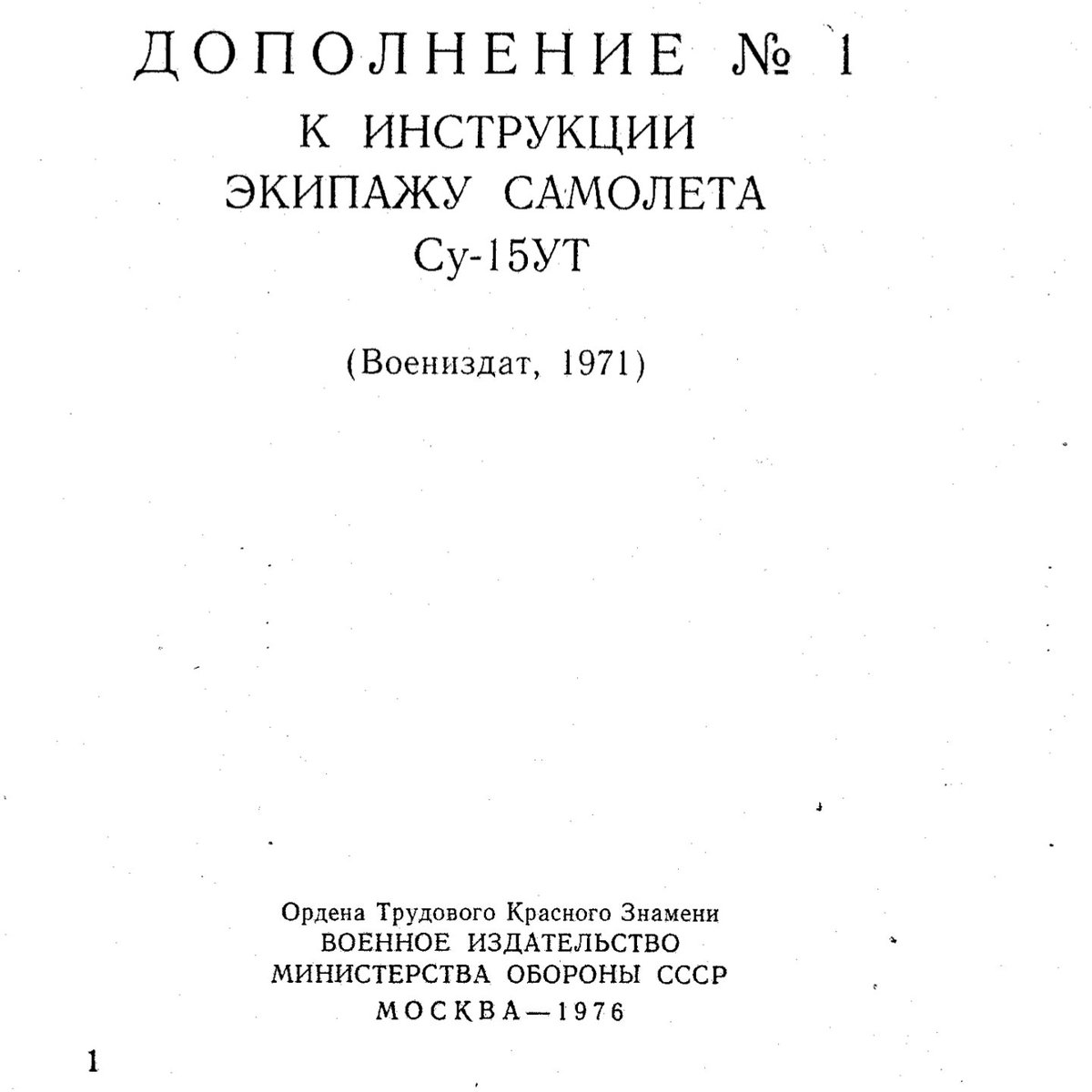

 The XB-58/YB-58 (aircraft № 1, tail number 5660) first flew on November 11, 1956, made at the Convair plant in Fort Worth, Texas. At this stage, it was without a belly-pod, tail gun, and was equipped with the J79-1 instead of the J79-5.
 MiG-21, Su-7/9/11/17, Yak-28, Tu-128, F-104, B-58, F-111, the Mirage family, Lightning, Lavochkin La-250, Mikoyan & Gurevich SM-12/12PM/12PMU, Ye-3U, I-7, I-75, Ye-150/152, MiG-23PD, Sukhoi P1, T-37, Saunders-Roe SR.177, Bristol T.188, BAC TSR-2... I think that's all of them 😮💨.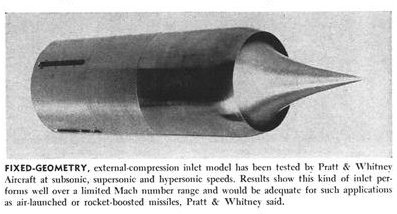
 ...with Sapfir-23ML & MiG-23ML with Sapfir-23MLA. But I'm a snobbish MiG-23 fаnбоу, and as such, prefer to stick to nomenclature found in official documents.
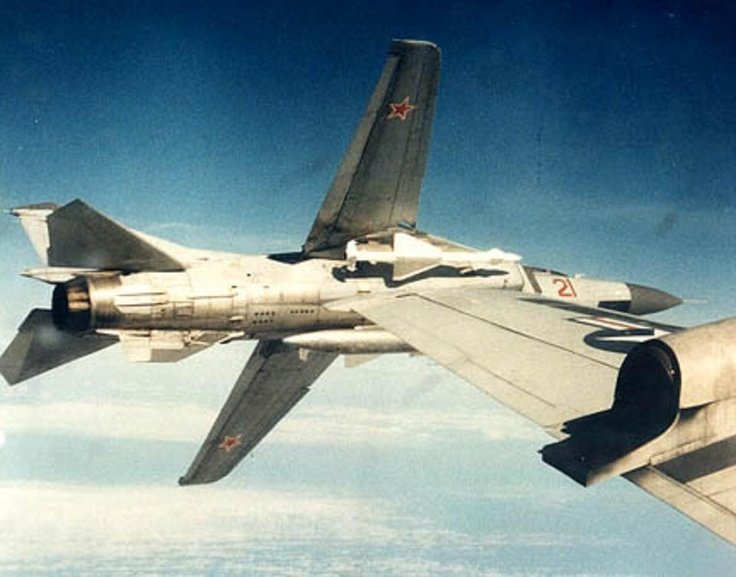 MiG-23P "belly take-off".
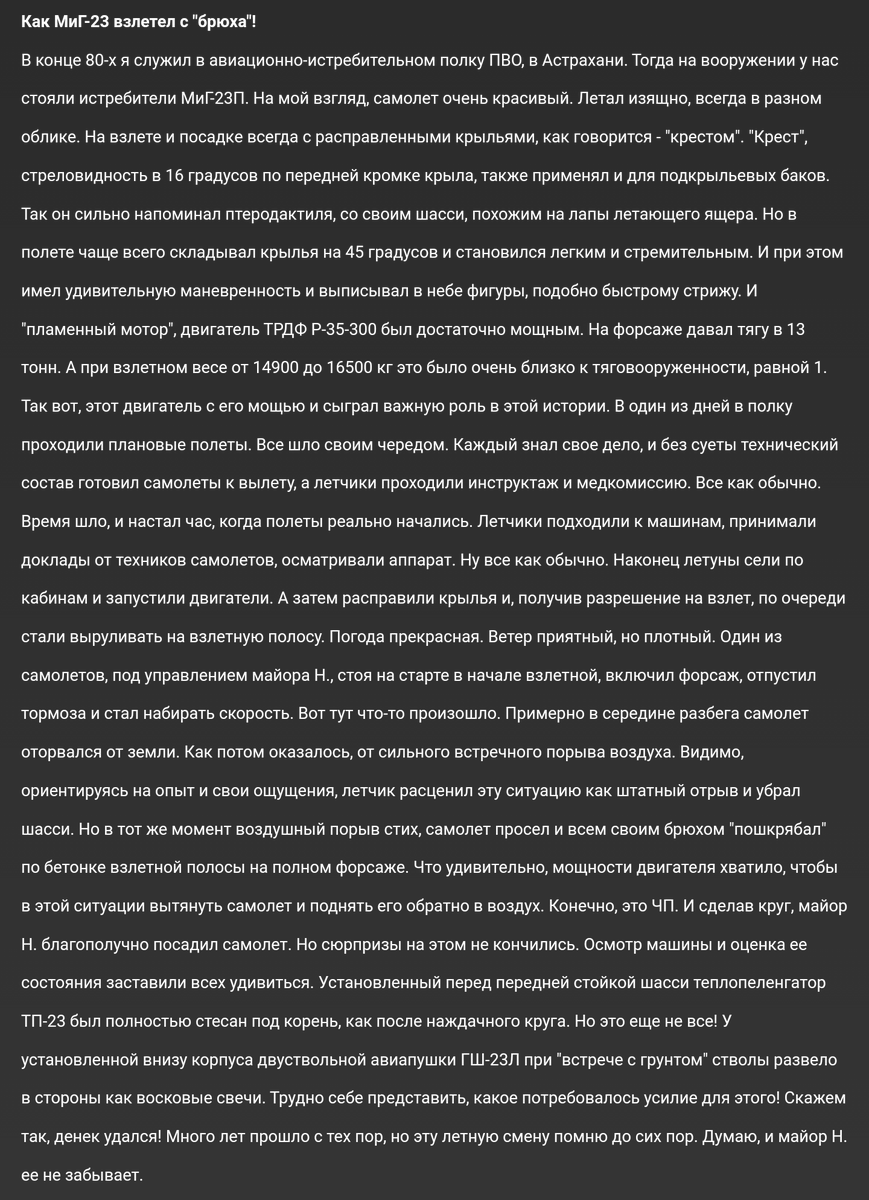
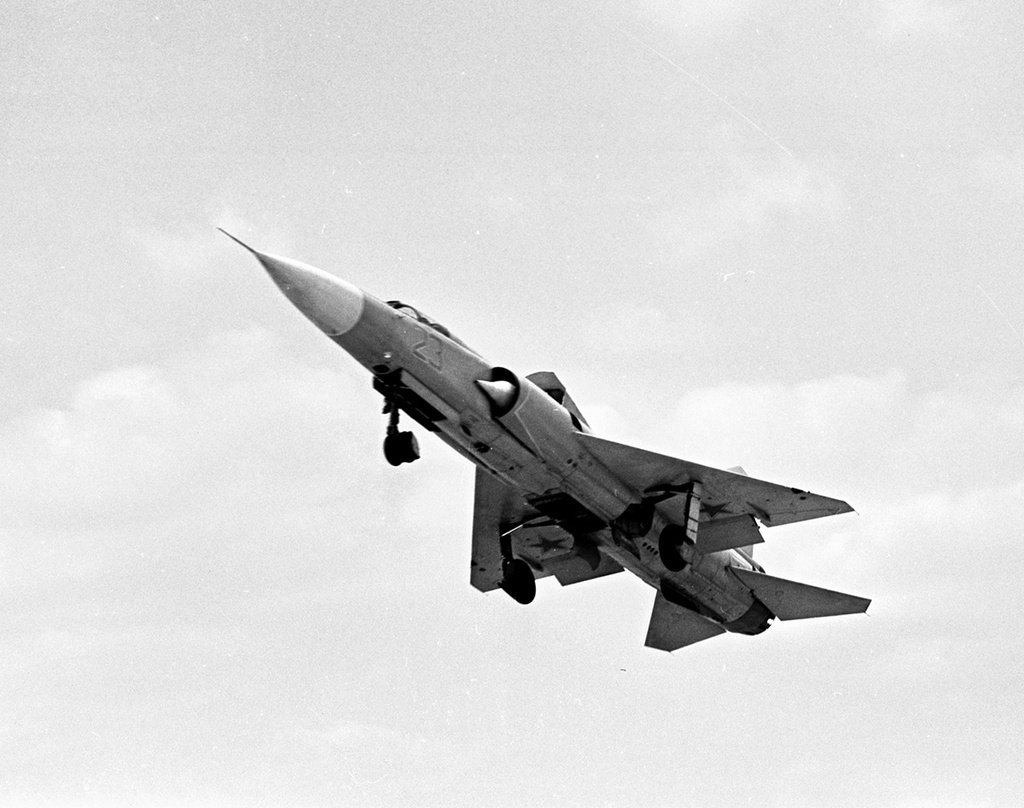 Government approval for building the MiG-23 (23-11) aircraft with variable sweep wings, is issued to OKB-155 (MiG) on 28 February, 1966.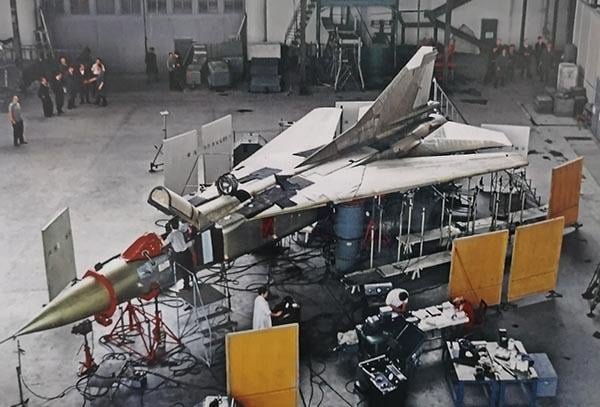
 Almost every source you can read will tell you that its maximum Mach at high altitude is 2.35... which it is, but only due to a degradation in directional stability and limitations in cockpit canopy material strength. Its true, thrust limited, maximum Mach is quite a bit higher.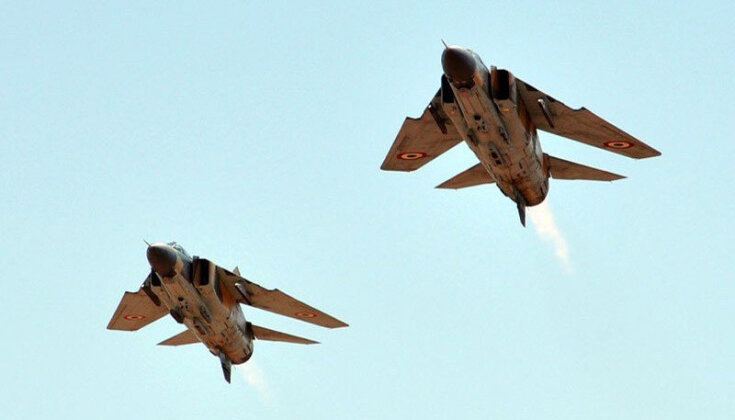
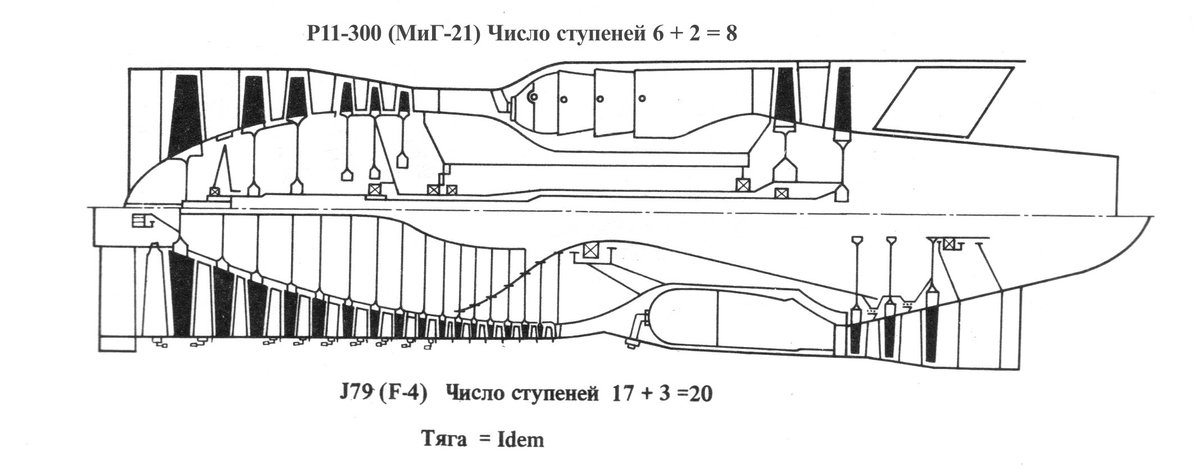 The mid 1950s is, for me, one of the most interesting periods in jet engine design. Every desig team was using its own distinct solution of increasing compressor pressure ratio (PR).
 1 - Internal fuel capacity.
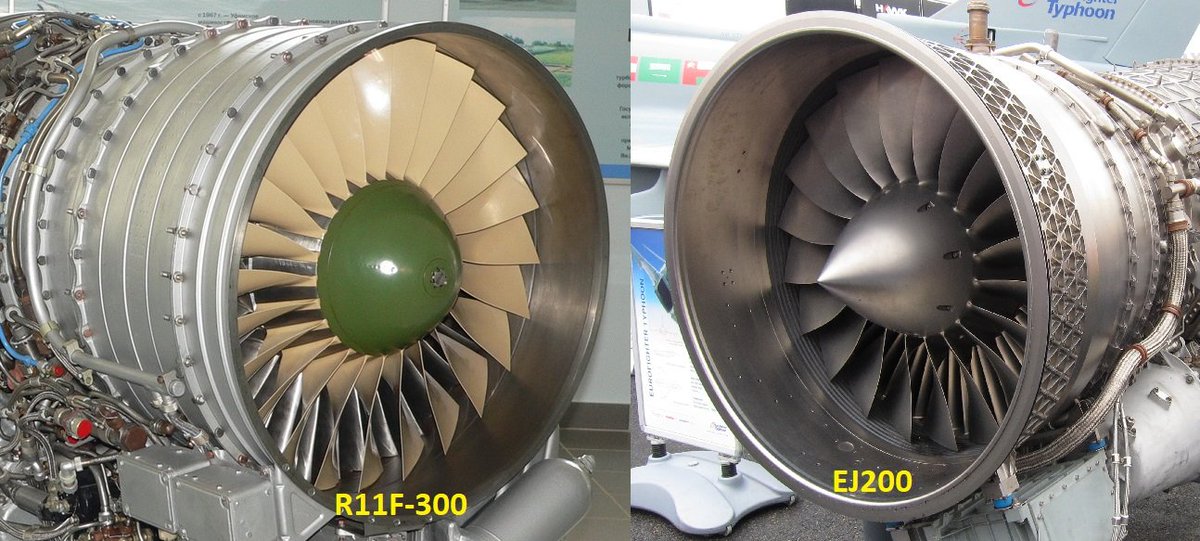 Why are these engines a useful to compare? As said, because of their similar architecture.
 MiG-23MLD high AoA aerodynamics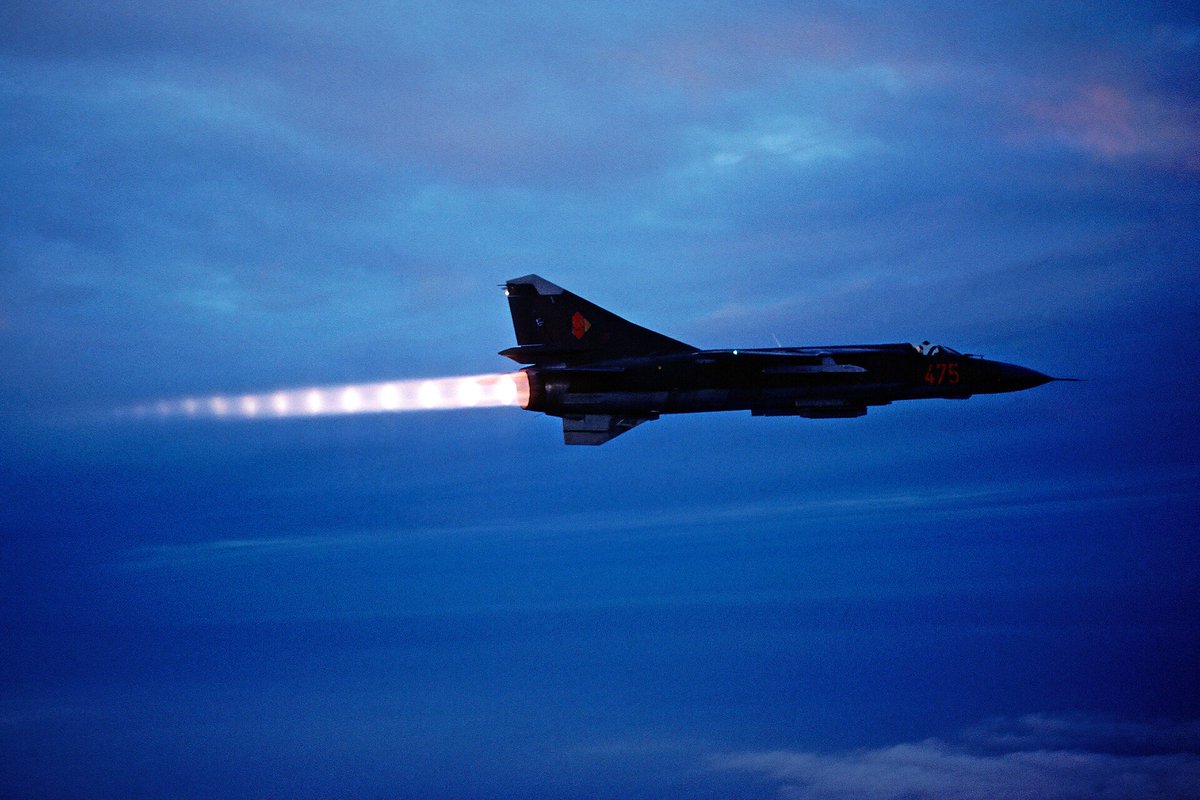
 This also increased the leading edge sweep angles by 2°40', so for example 45° became 47°40'. The exact reasons for this change are rarely detailed in most books, but test pilot A. A. Shcherbakov mentions it in "Штопор на МиГ-23 - А.А. Щербаков, Авиация и Космонавтика, 2008":
 Two that I am most interested in are the use of aluminium-lithium 2020 alloy and of titanium alloys.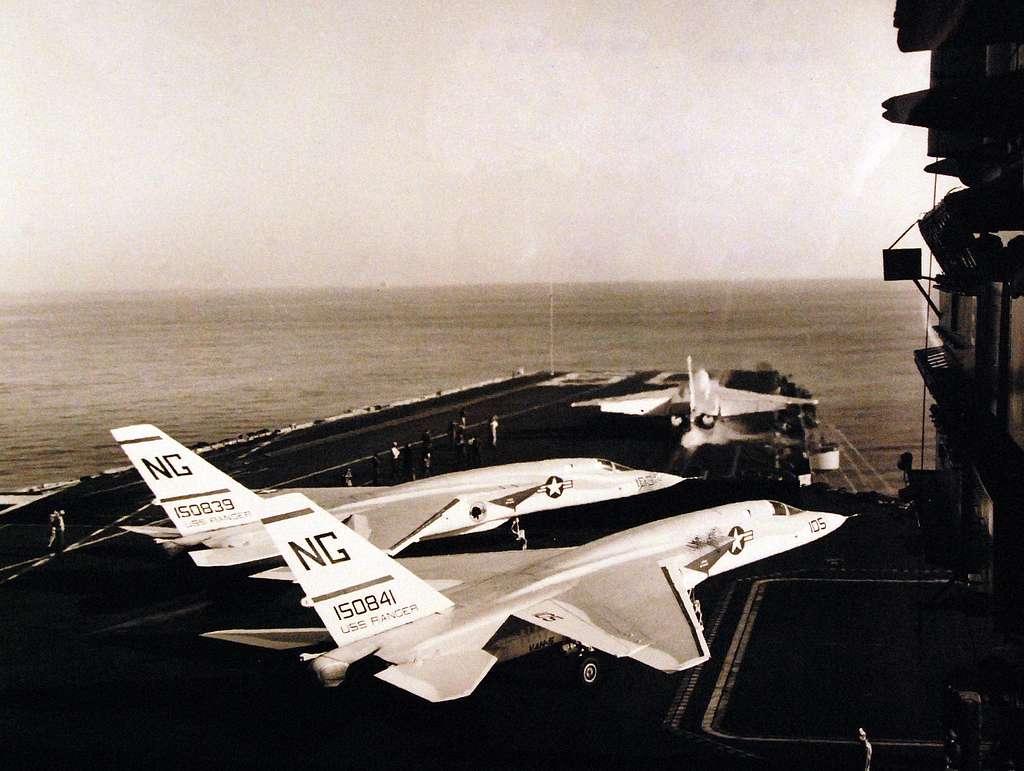
 Unfortunately, it's difficult to find much info about its flight performance and manoeuvrability. What little info I have been able to find over the years, paints an unexpected picture.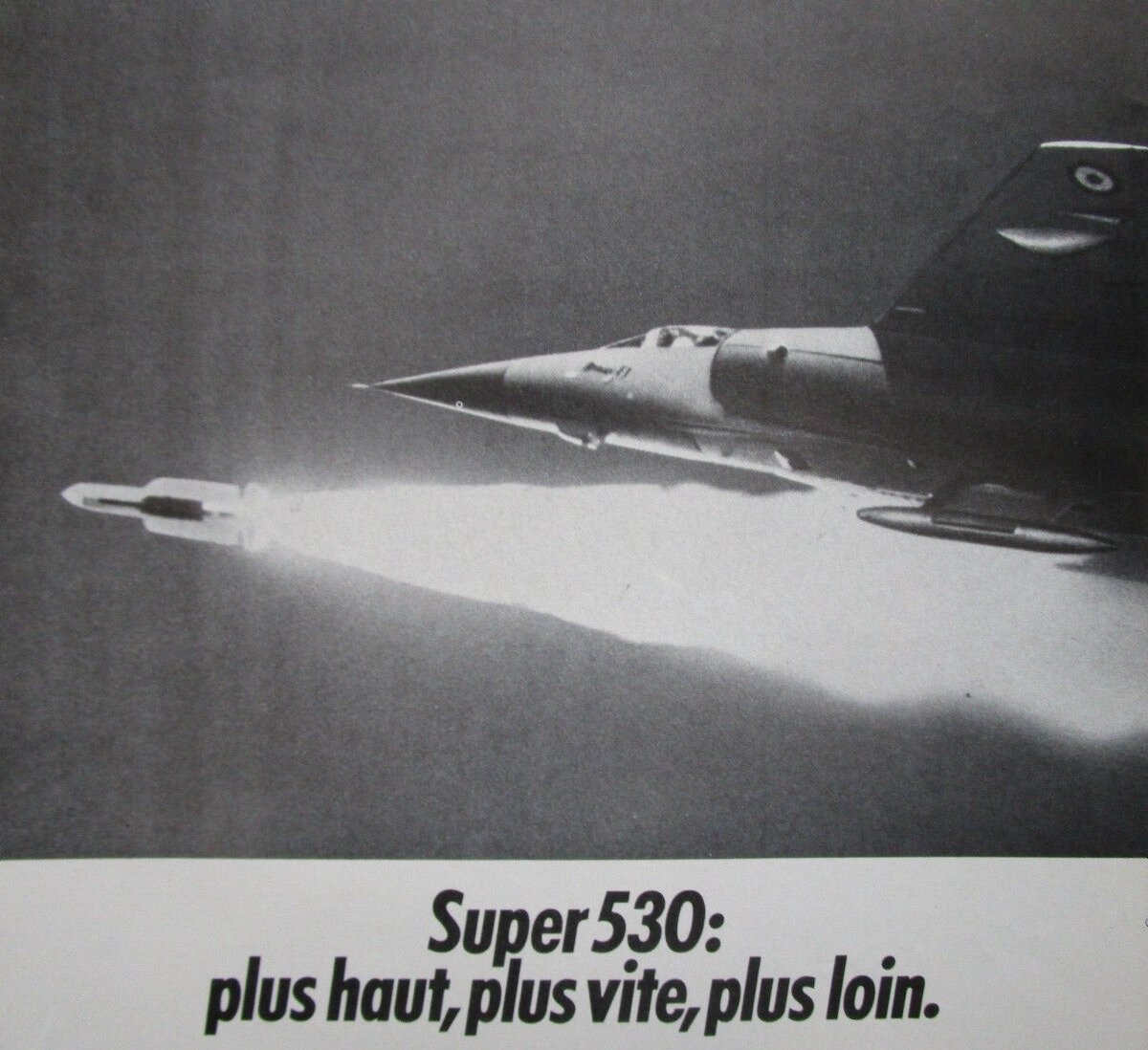

 The only online publication that I found to discuss this in enough detail is NASA-TM-84647 "Aerodynamic assessment of various supersonic fighter airplanes based on soviet design concepts - M. Leroy Spearman 1983”.
 In a previous thread I presented the aerodynamic problems limiting the manoeuvrability of early MiG-23s. Those problems were made tolerable with the introduction of an AoA limiting device called SOUA (essentially a stick-pusher) and an aileron-rudder-interconnect called SAU-23.
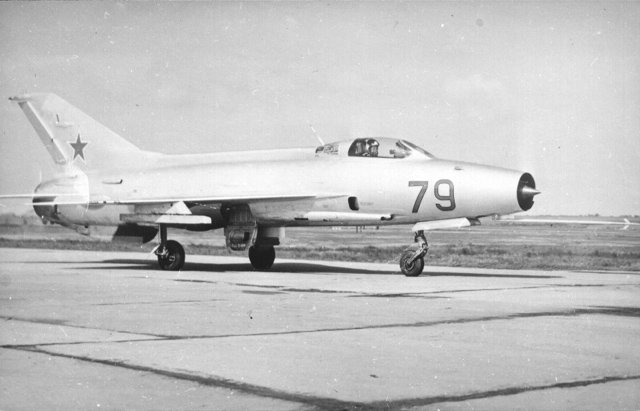
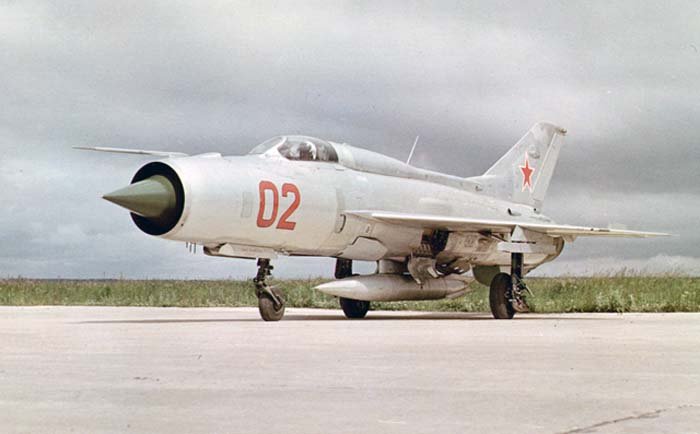 ...speeds, and that it was a compromise design in order to fit the larger diameter radar antenna.
 Even the president of the McDonnell Douglas aircraft company, George S. Graff mentions this at the minute mark 21:48!
 This was achieved through means of: