Senior Investment Advisor and Portfolio Manager at Wellington-Altus. Tweets are not investment advice.
DM with your financial planning and investment questions.
Mar 27 • 5 tweets • 6 min read
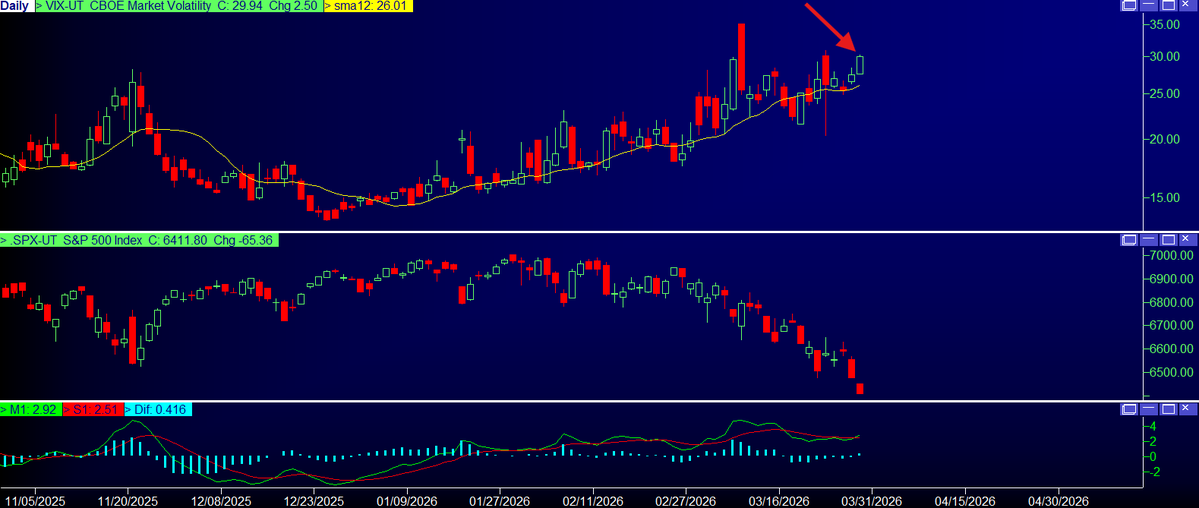
A proprietary momentum signal triggered on VIX today.
This is incredibly rare.
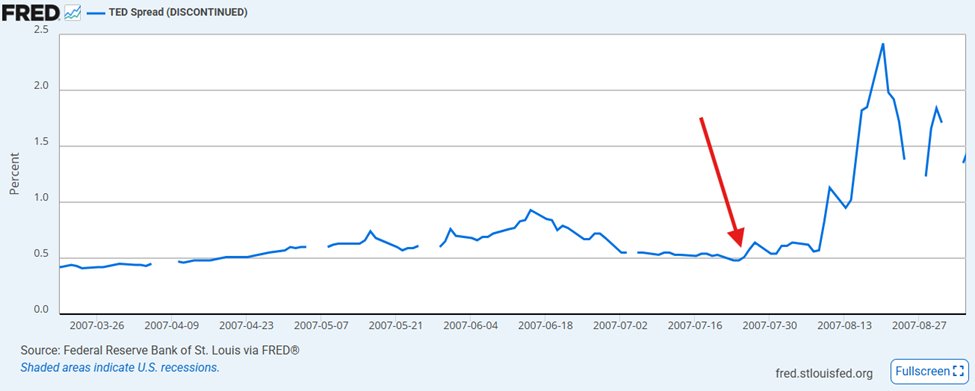
The last occurrence was on July 24, 2007, just days before the eruption of the “quant quake.”
Back then, the quant quake unfolded as a sharp and disorderly unwind of highly leveraged, market‑neutral quant strategies, triggered by a sudden and unexpected rise in funding costs. At the time, the widely watched TED spread, a measure of credit risk in the banking system, spiked abruptly. The TED spread reflected the difference between interbank lending rates (LIBOR, RIP🪦) and the risk‑free tbill rate. For quant funds that depended heavily on stable, low cost financing, this jump in funding stress proved especially destabilizing.
These funds were running with significant leverage and were heavily crowded into similar long/short factor positions. Even though they viewed themselves as hedged, operating largely market‑neutral and low‑beta portfolios at the time, their exposures were far from independent. They were all essentially leaning on the same factors, the same signals, and the same assumptions about their diversification. They did not account for their peers all essentially being in the same trades. So when funding conditions tightened, this hidden crowding risk was revealed: a modest increase in financing costs forced multiple funds to deleverage simultaneously.
What began as isolated unwinds quickly accelerated as funds sold positions to meet balance sheet constraints. Losses mounted, and internal risk systems, like value-at-risk (VaR) thresholds, began to trip. These risk control mechanisms forced additional selling at the worst possible time, creating a mechanical feedback loop. Forced unwinds drove prices lower, which triggered more risk‑model breaches, which triggered more selling, overwhelming normal market liquidity. Correlations across previously uncorrelated strategies surged, and liquidity evaporated. A localized funding shock rapidly transformed into a broad, systemic quant unwind.
Today’s environment bears an unsettling resemblance to the setup that preceded the quant quake.
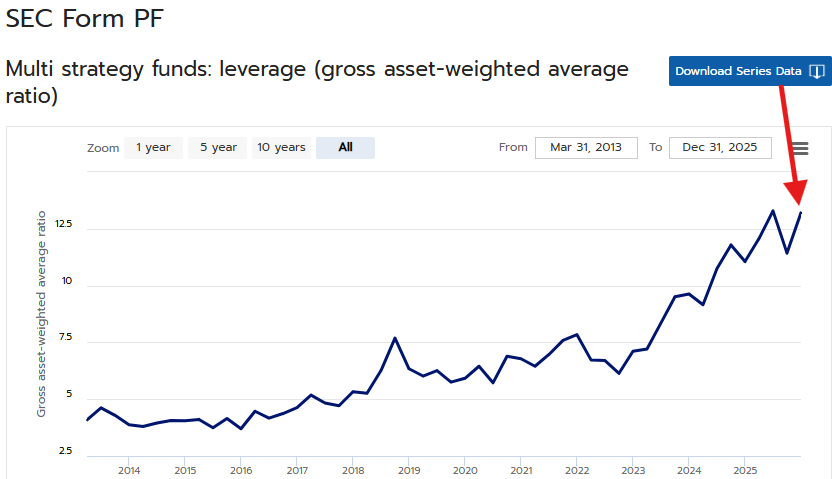
In the current cycle, multi‑strategy and equity hedge funds have again shifted toward market‑neutral, low‑beta positioning, as shown in the December 2025 Form PF data. After the September 2025 degrossing wave, funds cut directional exposure, reduced factor risk, and unwound crowded longs, pressures that fed directly into equity weakness and deteriorating liquidity we’re seeing now. Yet even as net exposure fell, gross leverage rose, indicating that managers have rebuilt financing‑heavy neutral long/short structures. Their portfolios may now appear low‑risk on the surface, but substantial embedded leverage remains underneath.
The parallel to 2007 is the illusion of safety created by market‑neutral construction. Just as quant funds once believed they were hedged while crowding into the same factor bets, today’s funds likely hold portfolios that look neutral but are structurally fragile. As dispersion hedging has been unwound in recent weeks and correlations have risen, the universe of truly “liquid” market‑neutral trades has narrowed. Near record-high gross leverage supported by repo, prime broker loans, and margin financing means even modest funding stress can trigger rapid unwinds. The Form PF data suggests that today’s leverage buildup reflects financing‑intensive exposures rather than renewed directional risk. These balance‑sheet‑heavy trades now dominate. These are positions that can quickly become correlated and unstable under pressure.
The funding backdrop today also echoes elements of the 2007 setup, though the indicators have changed. The TED spread is no longer a central gauge of stress, as LIBOR is no more, but modern equivalents, such as the spread between SOFR and OBFR, convey a similar message. Recent declines in reserve balances, driven in part by the federal government shutdown in 2025, pushed the SOFR‑OBFR spread higher, revealing tightening liquidity across both secured and unsecured overnight funding markets in 2025. With reserves still running materially below year‑ago levels and another seasonal tax drain approaching in April, the conditions are in place for a sudden and disorderly tightening in funding markets.
And this is where the analogy to 2007 becomes most concerning.
Then, as now, funds believed their portfolios were insulated by market neutrality and factor diversification. But when funding tightened abruptly, leverage became the transmission channel through which small shocks escalated into forced deleveraging. Today’s mix of high gross leverage, financing‑dependent structures, thinning liquidity, and suppressed net risk creates a similarly fragile setup. If the April tax drain further constricts reserves and widens the SOFR‑OBFR spread, hedge‑fund financing channels could strain quickly. That would likely trigger renewed deleveraging, reductions in equity and macro exposures, and potentially accelerate downside volatility.
It’s worth remembering that we already saw a preview of this dynamic in October 2025, when a mini‑quant‑quake style unwind hit several major quant funds.
Potentially amplifying this in 2026, recent Commitment of Traders report data from the CFTC is showing a steady buildup in VIX futures exposure. Asset managers and non‑commercial speculators such as institutional investors, CTAs, global macro funds, and other systematic strategies are accumulating. This matters because VIX futures trade on relatively thin liquidity, making large speculative positioning potentially self‑reinforcing. If volatility rises, trend‑following strategies may continue to increase long‑vol exposure mechanically, steepening moves in the futures curve.
The structural plumbing connecting VIX derivatives to the equity market means that large VIX futures positions can ultimately transmit risk back into S&P 500 futures: rising volatility forces dealers who are short gamma or short vega to sell S&P futures to maintain hedges, depressing the index. Lower S&P levels push implied volatility higher, which in turn lifts VIX futures and forces further hedging. This can produce a positive‑feedback environment in which volatility products begin to influence equity behavior.
Additionally, the S&P 500 is now trading below the JPM collar strike, which effectively acts as kryptonite for the index. As long as spot remains under that strike, dealer hedging flows require selling S&P futures on any attempt to move higher, turning the strike into an overhead barrier. This dynamic persists until the collar expires on March 31, keeping upward momentum capped and reinforcing downside pressure.
Taken together, today’s rare VIX momentum trigger, combined with the ongoing buildup in long‑volatility positioning, and parallels to the conditions leading to the quant quake of 2007, all point to a system increasingly vulnerable to a self‑reinforcing volatility feedback loop.
The result could be a deep and disorderly move lower in equities into mid-April.
Incidentally, the roughly 7% drawdown over 17 trading days from the 2007 VIX momentum‑trigger date into the quant‑quake lows aligns with my previously noted short‑term view of the S&P 500 trading down toward the 5800–6000 range into mid‑April from today’s VIX momentum‑trigger date.
Hedge fund total leverage and across various strategies peaked into the 2007 quant quake
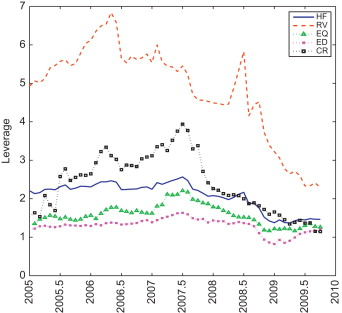
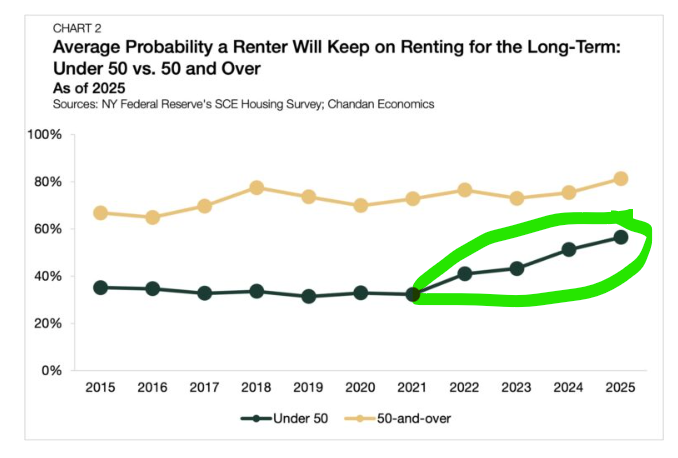
Chart source: doi.org/10.1016/j.jfin…
May 9, 2025 • 5 tweets • 6 min read
tldr: fiscal dominance is breaking the housing cycle
From Credit to Fiscal: Understanding the End of the Housing-Centric Economy
The United States is undergoing a profound structural transformation from an economy driven by private credit expansion to one increasingly shaped by fiscal dominance. This shift carries vast implications for growth, policy, and macroeconomic analysis. Nowhere is this transition more misunderstood than in the continued emphasis on housing as a leading macroeconomic indicator.
For decades, housing was the cornerstone of American economic growth. This was not incidental: in a credit-driven economy, growth required something to borrow against. Real estate emerged as the ideal collateral. It is everywhere, relatively stable in value, physically depreciates (requiring ongoing replacement), and, crucially, is socially and culturally embedded in the American economic psyche. Home ownership is the memetic pillar of the American dream. Unlike volatile equities or intangible assets, real estate offered a hard, lendable asset base, especially conducive to long-duration credit instruments like mortgages.
Lower interest rates amplified this system. Declining mortgage rates translated directly into higher housing demand and rising prices. As prices rose, homeowners extracted equity through refinancing, sustaining consumption and investment. In this model, rate cuts weren’t just financial easing, they were economic fuel. Entire business cycles were effectively governed by the ebb and flow of housing activity.
This is why, in the past, a housing slowdown meant a broader economic contraction was at hand. In a credit-centric framework, lower housing activity meant reduced borrowing and spending capacity -- a direct hit to aggregate demand.
The Shift to Fiscal Dominance
But this framework has broken down. Since 2020, the US economy has moved into a new regime: one defined by fiscal dominance. Government deficits, not private bank lending, now drive the marginal dollar of economic growth.
This shift explains one of the most puzzling macro phenomena of recent years: the absence of a recession in 2022–2023 despite a sharp slowdown in housing activity. In a credit-dominant regime, such a slowdown would be a clear harbinger of contraction. But under fiscal dominance, housing can cool while nominal GDP remains buoyant because income and demand are increasingly shaped by public spending, not by private borrowing.
The Federal Reserve’s tightening cycle provides additional evidence. Despite over 500 basis points of rate hikes since 2022, the economy continued to grow, inflation stayed elevated, and labor markets remained tight. In prior cycles, such monetary tightening would have triggered a credit contraction, rapidly slowing growth. But the scale of fiscal flows—peaking at 25% of GDP in 2020, and still elevated by historical standards—has overwhelmed traditional monetary levers. The Fed is no longer operating in an environment where it can meaningfully steer the business cycle through rate changes alone.
Indeed, in this new regime, the very logic of monetary policy is inverted. Lowering rates used to stimulate credit creation and thus growth. Today, it shrinks interest payments on government debt, effectively reducing fiscal injections into the economy. Conversely, raising rates increases Treasury outlays on interest, unintentionally expanding fiscal flows. Thus, monetary policy has become a secondary and sometimes counterproductive tool in a world where fiscal variables dominate the macro landscape.
Trump and the Old Operating System
Amid this transformation, some political actors remain deeply tethered to the old regime. Donald Trump, shaped by a lifetime in real estate, instinctively understands the credit-growth model. His economic instincts are rooted in a world where prosperity meant rising property values, easy lending, and low interest rates. It's no coincidence that Trump has called for lower rates, bank deregulation, and pro-cyclical lending policies. His proposals aim to revive the conditions that made the housing-credit engine work so effectively during the 1980s–2000s.
To his credit, deregulation and credit expansion would provide a temporary stimulus. If implemented atop an already expansive fiscal base, such measures could produce a powerful and perhaps unprecedented dual-engine growth dynamic. The combination of aggressive fiscal outlays and reinvigorated private credit could deliver one of the strongest economic expansions in US history.
Why Housing No Longer Leads
This brings us back to housing. Many investors, analysts, and policymakers continue to treat housing as the canary in the economic coal mine. But in a fiscally dominant regime, this is no longer a reliable signal. Fiscal policy now dictates the business cycle more than mortgage rates or housing starts.
In fact, one of the clearest signs of this shift is the declining rate of homeownership among younger generations. Millennials and Gen Z, burdened by high home prices and rising rates, are increasingly locked out of ownership. But this is not merely a crisis of affordability, it is a structural reflection of the shift to fiscal dominance. As fewer young people participate in the collateral-based credit economy, more rely on income transfers, public support, and rental housing. This generational decoupling from housing-as-wealth is both a symptom and a reinforcement of the new regime.
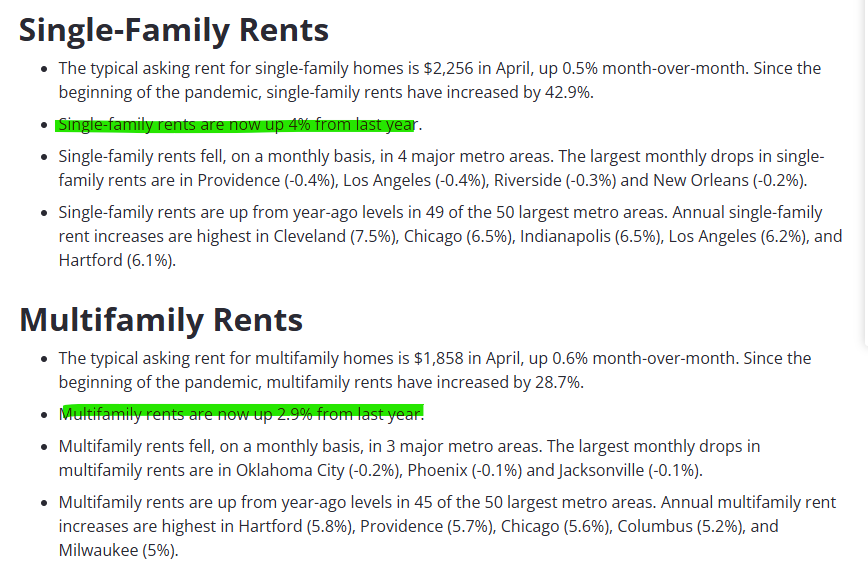
Data from the U.S. Census Bureau confirms this trend: homeownership among those under 35 peaked near 43% in 2004 and has since declined to just over 38% as of 2023. Meanwhile, the rental market has grown significantly, particularly among high-income households, a sign that the housing market is no longer the primary vehicle of middle-class wealth accumulation.
Instead, younger cohorts are increasingly turning to financial markets, with rising participation in crypto assets and equity securities, particularly through passive investment vehicles like index funds. This reflects not just a change in asset preference, but a deeper structural shift in how wealth is built in an economy no longer powered by private credit and housing, but by fiscal flows and financial asset appreciation.
Policy Confusion in a Hybrid Economy
The coexistence of old and new paradigms has created deep confusion in policymaking. The Federal Reserve still frames its actions in terms of credit-tightening or easing, despite evidence that its tools are increasingly impotent. Meanwhile, the Treasury and executive branch shift back and forth between expansive fiscal policy and austerity rhetoric, unsure whether to lead with spending or restraint.
This tension is starkest in current political discourse. Trump’s antagonism toward the Fed masks a deeper alignment: both he and Chair Jerome Powell fundamentally believe in the primacy of the credit-driven economy. Both continue to view interest rates as the central policy lever. Yet neither has fully grasped the degree to which fiscal flows and not credit conditions now drive outcomes like growth, inflation, and inequality.
The danger is that this misunderstanding could lead to policy whiplash. If future administrations attempt to roll back fiscal support too aggressively, believing it to be inflationary or unsustainable, they risk triggering a depression-like contraction.
Conclusion: A New Operating System
The US economy is no longer running on the old operating system. Fiscal dominance is not a temporary glitch, it is the new architecture of economic growth. Clinging to outdated frameworks risks both misdiagnosing current dynamics and missing future opportunities.
Watching housing, monitoring mortgage rates, or debating interest rate moves makes sense only within the logic of credit dominance. In today’s world, fiscal policy, its scale, structure, and political sustainability, is the key variable.
We are no longer living in a world where the economy runs on collateral. The foundation has shifted. Today, the true collateral underpinning growth is the US Treasury itself.
Jun 22, 2024 • 4 tweets • 2 min read
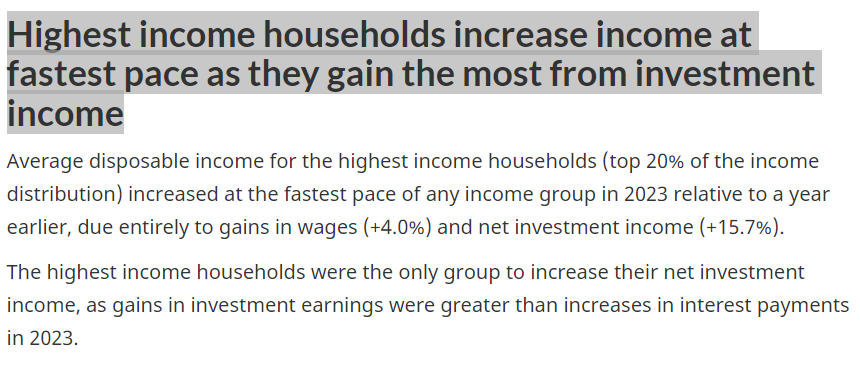
"While higher interest rates can lead to increased borrowing costs for households, they can also lead to higher yields on saving and investment accounts."