Byron Wan Profile picture
Dec 20, 2025 5 tweets 12 min read
🚨 China’s most advanced reactor, a molten-salt reactor that can be refueled without shutting it down, was the result of collaboration with American scientists.

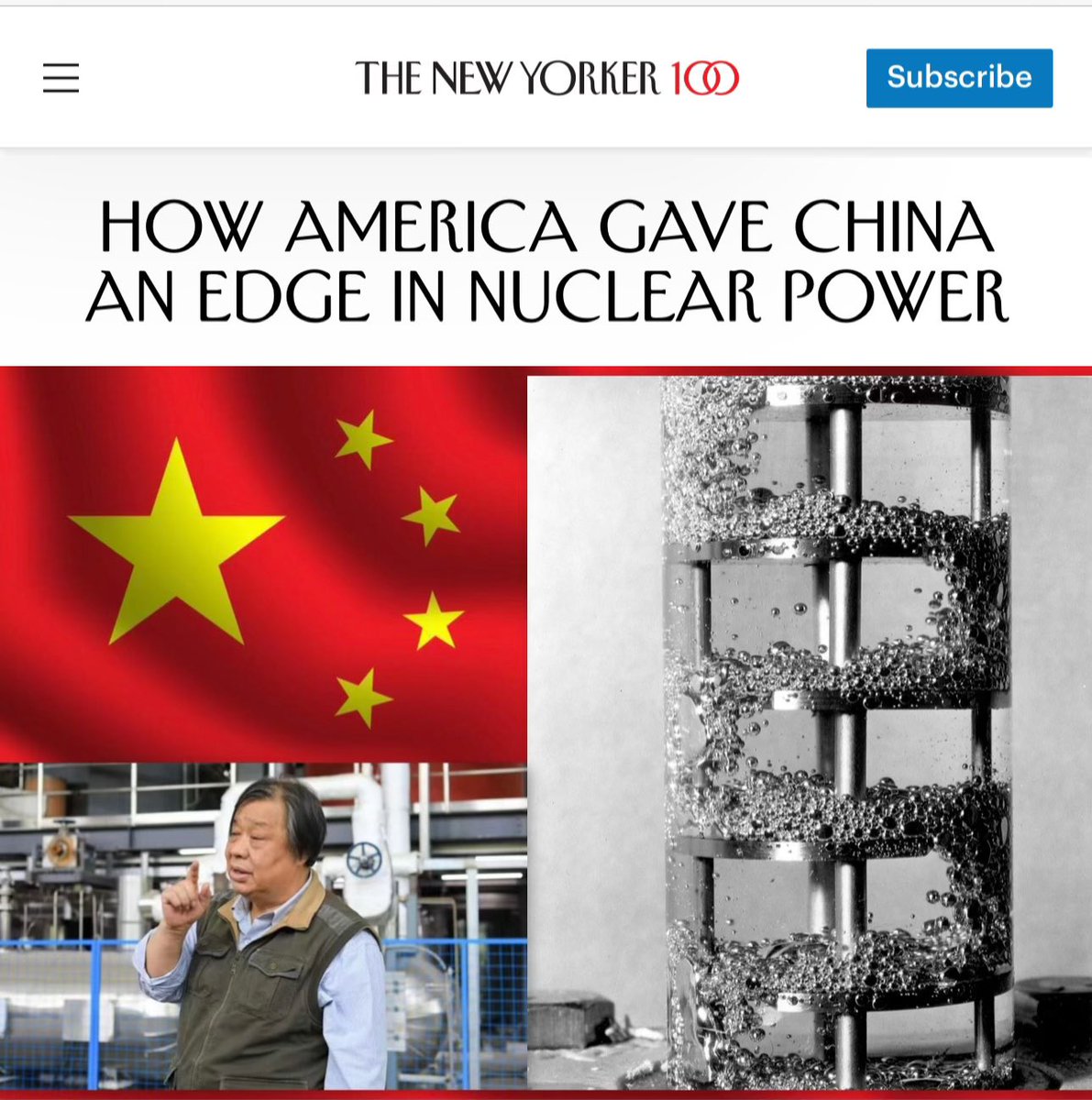
This April, in a speech given at the Shanghai branch of the Chinese Academy of Sciences, physicist Xu Hongjie (徐洪杰) announced a breakthrough. For over a decade, his team had been working on an experimental nuclear reactor that runs on a lava-hot solution of fissile material and molten salt, rather than on solid fuel. The reactor, which went online two years ago, was a feat in itself. It is still the only one of its kind in operation in the world, and has the potential to be both safer and more efficient than the water-cooled nuclear plants that dominate the industry. Now, Xu explained, his team had been able to refuel the reactor without shutting it down, demonstrating a level of mastery over their new system.

This was yet another sign that the technology gap between China and the US had closed.

Xu explained that his team had based their design on an experimental reactor that had been built in Tennessee in the 1960’s. Known as the Molten-Salt Reactor Experiment, or the MSRE., that project hit a dead end in the early 1970’s, when it lost federal funding. Xu’s team had learned everything they could about the MSRE so that, decades later, they could bring the project back to life. Xu compared their labors to the story of the tortoise and the hare: whereas the US had “gotten lazy and made a mistake,” China had seized the “chance to overtake” it.

In reality, China’s molten-salt reactor was less the product of a race than a collaboration. Less than ten years earlier, Xu’s team had been working with an array of American nuclear scientists. MIT had irradiated graphite samples for the Chinese scientists. Nuclear engineers from Berkeley flew to Shanghai to review the original design. And by 2015, at what was perhaps the peak of US-China amity in the sciences, Xu’s home institution, the Shanghai Institute of Applied Physics, or SINAP, had signed a coöperative R&D agreement with Tennessee’s Oak Ridge National Laboratory, the site of the world’s first molten-salt reactor.

These agreements could be seen as products of Reagan-era neoliberalism. They allow national labs to hire out their facilities and staff to outside entities that, in exchange for funding, can secure a proprietary claim to any technologies US national labs discover while working on the designated project. For the most part, this has facilitated technology transfer from public institutions to the private sector. But the agreement between ORNL and SINAP created an unprecedented situation: a Chinese state-owned lab was paying an American lab millions of dollars to develop materials and plumbing for molten-salt reactors.

From the start, the American side operated under the belief that the Chinese would be the first to build a molten-salt reactor. China was spending the money to do it, after all. There was some funding for molten-salt research in America, but much less than was needed, and this was why the Oak Ridge researchers were willing to accept support from the Chinese. Through the partnership, the American researchers were hoping to advance work on a less complex reactor, in which molten salt would be used as a coolant rather than a fuel line.

Ten years later, the armature of assumptions and policies that enabled such a partnership has been blown apart. After Donald Trump won the 2016 Presidential election, the Department of Energy severed ties with SINAP and threatened to revoke licenses from American companies that exported nuclear technology to China. During Trump’s second term, the Administration’s hostility toward China has only increased.

Xu passed away while at work at his desk in Sep.

1/n

newyorker.com/news/the-lede/…Image To make sense of what is happening in nuclear energy today, it helps to know about what was once called “the first nuclear era” — a 37-year stretch between 1942, when Enrico Fermi oversaw the first controlled fission chain reaction, and 1979, when the second reactor at the Three Mile Island Nuclear Generating Station partially melted down. At the height of this period, around 1960, the US accounted for almost 70% of global spending on R&D. Nuclear energy, which sat at the nexus of defense and civil engineering, was a double beneficiary. From these investments came a series of ever more terrifying weapons alongside a fleet of experimental and commercial reactors that made the US the world’s largest producer of nuclear energy. America still holds this title, but China is poised to assume the mantle, probably sometime around 2030.

The MSRE epitomized the possibilities of this period. The concept originated in the late 1940’s, with a request from the Air Force to develop a nuclear-powered airplane. Alvin Weinberg, who later became the director of research at ORNL, didn’t think that such an aircraft would fly, but he was willing to try to build one. He had helped develop the reactors that produced plutonium for the Manhattan Project and moved to East Tennessee, after the war. There, he presided over the development of ORNL, which grew from a plutonium-production facility near the Clinch River. For Weinberg, the purpose of a national lab was to try “things too difficult or too risky for private industry to undertake.” An airplane that burned uranium was precisely that.

Weinberg wrote that the reactor would need to reach temperatures around 1,500 degrees Fahrenheit in order to power a jet engine. His team surmised that such heat would mangle any fuel rods small enough to install into an aircraft, so they decided to use fluoride salts. These melted into a liquid at around 400 degrees Celsius and stayed stable above 1,600 degrees. With uranium fluoride mixed in, the molten salt itself could function as fuel.

The system went critical in Nov 1954. In its brief life, it showed some remarkable properties, but the test also revealed some of the challenges of working with molten salt. Leaks were a constant problem, and the radiotoxicity of most of the apparatus made repairs next to impossible. As a stopgap, Weinberg’s team had to repeatedly off-gas the reactor compartment, bathing a nearby forest in radioactive xenon and iodine. At the hundred-hour mark, the project was shut down.

The MSRE gave him another shot. By then, the Atomic Energy Commission was ready to make major investments in order to develop breeder reactors, or reactors that produce more fissile material than they burn. Breeder reactors promised energy on a scale far beyond what could be provided by the global supply of coal and oil, fuels that were projected to become scarce within a century and which were already suspected of warming the Earth. Planning began in 1960, and five years later Weinberg’s team loaded 69kg of enriched uranium into the salt. This time, the experiment was a success. The MSRE logged over 13,000 operational hours, during which the researchers ran countless tests. “ They did, like, every calculation you could have done at the time to understand how you would build and run and fuel this reactor.” The most important finding was a simple one: the MSRE proved that a molten-salt reactor was viable.

Weinberg had hoped to move from the MSRE to a molten-salt breeder reactor. But in 1973 President Richard Nixon pulled federal funding for molten-salt research in order to go all-in on a competing breeder reactor that was cooled with sodium. In 1983, the sodium breeder, in turn, lost its funding. Plagued by budget overages, the project also fell victim to a conservative revolt, spearheaded by the Heritage Foundation. By then, the public had also soured on nuclear-energy projects, owing to the partial meltdown at Three Mile Island, in 1979.

2/n
Dec 2, 2025 4 tweets 7 min read
Wendy Mao (毛立文), Stanford’s Earth Sciences Chair and Deputy Director of Stanford’s Institute for Materials and Energy Sciences at SLAC, has co-authored over 50 publications, trained 5 employees, and maintained a visiting scholar position at 🇨🇳 HPSTAR, an “alias” for China's nuclear weapons program.

In 2020, the 🇨🇳 Center for High Pressure Science and Technology, or HPSTAR, was added to 🇺🇸 Department of Commerce's Entity List, which identifies organizations that pose a significant risk to national security. Since its 2020 Entity List designation, Mao has co-authoredat least 12 peer-reviewed papers with HPSTAR.

The US Entity List describes HPSTAR as an organization “owned by, operated by, or directly affiliated with the Chinese Academy of Engineering Physics (CAEP), which is the technology complex responsible for the research, development and testing of China's nuclear weapons and has been on the Entity List under the destination of China since June 30, 1997.”

According to Canada's 2024 Named Research Organizations List, HPSTAR is an “alias” for the institution behind China’s nuclear weapons program.

HPSTAR studies how materials behave under extreme pressures and temperatures using diamond-anvil cells, synchrotron beams, and X-ray diffraction. Mao is a leading US researcher in this very field.

"It is true that high-pressure experiments are used by scientists working on the domain of nuclear weapons. If anyone is using the diamond anvil cell or shock waves to study materials relevant to nuclear weapons, that's highly sensitive. If those same methods are then applied to sensitive nuclear materials, the combination of these kinds of experiments with these materials starts raising eyebrows."

Both Mao and HPSTAR extensively use diamond anvil cells and shock waves to study materials.

Mao and HPSTAR’s public research papers do not directly involve weapons testing, design, or development. However, these precise high-pressure measurements and theoretical knowledge are the necessary foundations of modern nuclear and advanced weapon design, where accurate modeling of materials under detonation-level conditions is critical.

Over the past two decades, Mao has co-authored at least 50 publications with HPSTAR. Funding acknowledgments show that Wendy Mao and HPSTAR co-authored research financed by US government agencies including DOE (including the National Nuclear Security Administration [NNSA], Argonne National Laboratory, Lawrence Berkeley National Laboratory, Oak Ridge National Laboratory, and Brookhaven National Laboratory); DARPA; DOD; NSF; NIH; ARO; NASA.

Mao has trained at least five 🇨🇳 HPSTAR employees as PhD students in her Stanford and SLAC labs. At least one HPSTAR postdoctoral researcher simultaneously worked on DOE, NNSA, and DARPA-funded research at SLAC.

For example, one of Mao’s current PhD students worked at HPSTAR for three years, from 2015 to 2018, receiving an MS in Condensed Matter Physics before joining Stanford as a PhD student in Mao’s lab.

The other four were trained in Mao’s lab and returned to China to work at HPSTAR. These are only the individuals we were able to identify via web and archival searches.

“Mao has trained 5 PhD students affiliated with China’s nuclear weapons program. Stanford should not permit its federally funded research labs to become training grounds for entities affiliated with China’s nuclear program. Mao’s continued and extensive academic collaboration with 🇨🇳 HPSTAR is adequate grounds for termination.”

Mao served as a visiting scholar at 🇨🇳 HPSTAR’s Shanghai laboratory from at least 2016 to 2019. She also maintains a HPSTAR email address. Her internal Stanford CV and profile list 43 affiliations, but they do not disclose her position at 🇨🇳 HPSTAR.

1/n

stanfordreview.org/investigation-…Image “For someone with access to SLAC and other national labs, foreign affiliations must be disclosed under DOE Order 486.1A. Dr. Mao’s undisclosed HPSTAR role and active HPSTAR email raise legitimate concerns about whether federal disclosure rules were followed and whether Stanford had the information needed to manage foreign-influence risk.”
As a professor with appointments at SLAC National Accelerator Laboratory and other sensitive national labs, Mao is subject to this disclosure requirement.

Mao has also co-authored papers in Matter and Radiation at Extremes, a journal owned by CAEP, China’s nuclear development organization. She did so under a 2020 articletitled "Key problems of the four-dimensional Earth system."

The respective organizations responsible for the development of the US and China’s nuclear weapons programs, 🇺🇸 National Nuclear Security Administration and 🇨🇳 CAEP’s National Security Academic Fund, are co-funders for several of Mao’s projects.

China’s nuclear program started the National Security Academic Fund to strengthen “exploratory national security basic scientific research.”  According to leaked documents from China’s nuclear program, translated by Georgetown University, “The NSAF Fund has broken new ground for CAEP in attracting technological forces across China to start basic research with the pulling force of national security requirements.” 

Mao is listed as a co-author, contributing the aforementioned “national security basic research,” to at least 6 NSAF-funded research projects with HPSTAR collaborators. In funding acknowledgments, HPSTAR is described as an institution “supported by [CAEP’s] NSAF (grant no: U1530402).”

On Nov 23, 2024, Mao was published as a co-author on a paper titled “Iron Bonding with Light Elements: Implications for Planetary Cores Beyond the Binary System.” Wenzhong Wang, from the University of Science and Technology of China, is listed as a collaborator. This paper also acknowledges funding from NASA’s Exoplanet Program. 

The Wolf Amendment prohibits the use of NASA grants from collaboration “with institutions of the People’s Republic of China.” According to NASA’s document on the matter, “that means that it's not enough that a NASA grantee simply avoids sending funds to PRC; rather, the grantee may not spend any NASA grant money on any part of a bilateral project with PRC.”

“The Wolf Amendment bars NASA-funded researchers from participating in bilateral projects with Chinese institutions unless a waiver is granted. When a NASA-supported Stanford professor co-authors research with a scientist from a PRC university, the burden is on the institution to show an exemption. Stanford-Mao doesn't have an exemption. Without one, this places the work squarely in a serious Wolf Amendment risk area.”

The Review was unable to verify whether authorization for an exception was granted.

As recently as Sep 12, 2025, Mao published a paper with three HPSTAR co-authors. The research paper featured HPSTAR researchers using cutting-edge equipment at US government laboratories, including X-ray diffraction conducted by the High Pressure Collaborative Access Team at Argonne’s Advanced Photon Source, the Beamline 12.2.2 at Lawrence Berkeley’s Advanced Light Source, and XRD measurements supported by the National Nuclear Security Administration.

“Fundamental research is generally legal, but export controls still apply to hands-on access to sensitive equipment. When export-controlled lasers at SLAC or national laboratories intersect with Stanford HPSTAR-linked students [Mao’s SLAC-trained PhD students] and collaborators, it creates a real risk of transferring controlled US technology and know-how to a PRC-aligned institution.”

2/n
Jan 22, 2024 4 tweets 3 min read
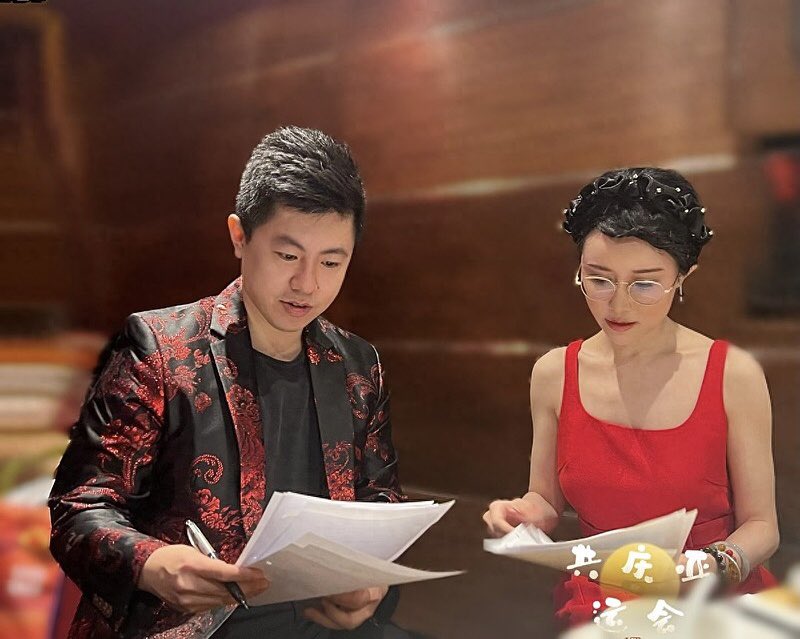
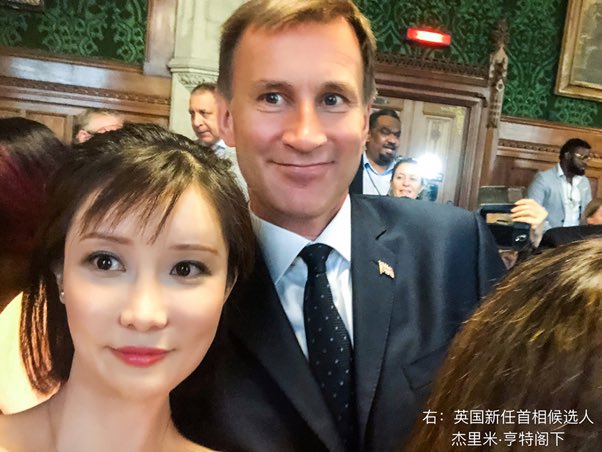
Another woman in the video is Adelina Zhang (张宁), who has been serving as hosts in various 🇨🇳 state events in the UK for years. She’s also worked with Newton Leng, the man who yelled at Brendan in the video.

h/t @samdunningo @ftiauto_ptdauto


1/n sohu.com/a/726632135_23…


Image
Image
Image
Adelina Zhang has clearly undergone plastic surgery (left pic: Zhang in 2017)

2/n
Image
Image
Mar 26, 2023 6 tweets 3 min read
Serbia, Mar 19: 🇨🇳 state-owned China Communications Construction Company demolished the monument to fallen soldiers of the First and Second World Wars in the village of Negrishori during the construction of the Pakovraće - Požega highway.

1/n
The demolition sparked an outrage among veterans’ groups and local residents.

2/n

👇🏻 the monument
Mar 24, 2023 4 tweets 2 min read
🚨 Hong Kong department store Sogo removed LA-based artist Patrick Amadon’s digital artwork No Rioters, an Art Basel exhibit, that contained references to jailed dissidents such as Benny Tai, Joshua Wong and Gwyneth Ho, at the “request” of HK Police.

1/n
Patrick Amadon: “It was too much watching Art Week in Hong Kong pretend the Chinese government didn’t crush a democracy and turn Hong Kong into a vassal surveillance state... because it’s a convenient location for a good market.”

2/n
news.artnet.com/art-world/prot…
Feb 8, 2023 5 tweets 2 min read
Tina Zhang (张), a 34-year-old 🇨🇳 woman from Qingdao, Shandong province, posted videos on Douyin of her hanging out on Yanaha Island (屋那霸岛) — the biggest uninhabited island in Okinawa — which she claimed she bought in 2020.

Yanaha is just ~60km from 🇺🇸 Kadena Air Base.

1/n twitter.com/i/web/status/1… The videos went viral on social media and 🇨🇳 news media 红星新闻 ran a story on it on Feb 3…

2/n Image
Nov 26, 2022 46 tweets 20 min read
Shanghai, Nov 26: people gather on Urumqi Middle Road (乌鲁木齐中路) to commemorate those who died in the blaze in Urumqi on Nov 24 while repeatedly yelling “不要核酸要自由” ([we] don’t want PCR tests; [we] want freedom!)…

1/n twitter.com/i/web/status/1… People face up to the cops arriving at the scene…

2/n
Nov 25, 2022 14 tweets 6 min read
Xinjiang capital Urumqi tonight (Nov 25): residents are roaming the streets demanding 解封 (lift the lockdown restrictions)… twitter.com/i/web/status/1… White guards are reportedly blocking residents from going out in Urumqi’s Xishan residential district…
Nov 23, 2022 16 tweets 6 min read
🚨 Zhengzhou, Nov 23 evening: clashes broke out between Foxconn workers and white guards…

1/n twitter.com/i/web/status/1… What started out as a protest has turned into an uprising…

2/n twitter.com/i/web/status/1…
Nov 12, 2022 5 tweets 2 min read
🔻 transformer explosion at Nanchang West Station (南昌西站) in Jiangxi’s provincial capital in the evening of Nov 12

1/n 🔻 the explosion at Nanchang West Station as seen from the platform

2/n
Nov 11, 2022 4 tweets 1 min read
Flashes of sparks and smoke were seen bursting from a Shanghai Metro Line 11 subway car near Jiading New Town (嘉定新城) at 7:40am today Nov 11, and subway service has been suspended.

Line 11 on 11.11… Eerie…

1/n Shanghai Metro Line 11 on 11.11

2/n
Oct 31, 2022 4 tweets 1 min read
Concurrent probes by FBI, SEC and CFIUS are examining 🇺🇸 self-driving truck company TuSimple’s relationship with 🇨🇳-backed autonomous hydrogen-powered trucks startup Hydron, which is led by TuSimple co-founder Chen Mo (陈默).

1/n
wsj.com/articles/tusim… Investigators are looking at whether TuSimple and its executives — principally Chief Executive Hou Xiaodi (侯晓迪) — breached fiduciary duties and securities laws by failing to properly disclose the relationship. They are also probing whether TuSimple shared with

2/n
Oct 29, 2022 7 tweets 3 min read
At least 59 people died and at least 150 more were injured after a stampede during Halloween celebrations in the Itaewon area of Seoul Saturday night…

1/n 2/n
Oct 28, 2022 8 tweets 17 min read
@gdemaneuf @Muller_Lab @Engineer2The @Ayjchan @MichaelWorobey @jeffykao @KatherineEban @SenatorBurr @evadou I’ll say this again, this particular piece is purely generic party branch propaganda. It’s not about any lab incident. The author was merely saying every time researchers have to do dangerous research, party branch members will be there at the front line.

archive.ph/2020.04.19-061… Image @gdemaneuf @Muller_Lab @Engineer2The @Ayjchan @MichaelWorobey @jeffykao @KatherineEban @SenatorBurr @evadou Reid and others apparently misunderstood it as “there’s an incident and people had to handle it.” Trust me, that’s vey straightforward Chinese language in the article. Nothing mysterious, nothing obscure.
Oct 3, 2022 4 tweets 2 min read
A patch of road surface in Qijiang (綦江), Chongqing, suddenly collapsed and 10+ people waiting for public transportation there fell into the septic tank below! 🤢

1/n The road surface is just a thin layer of concrete apparently without embedded steel reinforcement!

How are these sewage-soaked folks supposed to go home? They’re literally in deep shit!

2/n
Sep 16, 2022 10 tweets 3 min read
Sep 16: the China Telecom tower in Hunan’s provincial capital Changsha is engulfed in fire and smoke Friday afternoon…

1/n 2/n
Jul 9, 2022 9 tweets 3 min read
🔻 random stabbing attack at Shanghai Ruijin Hospital (瑞金医院) — a hospital affiliated to Shanghai Jiao Tong University’s School of Medicine — reported at around 11:30am July 9

Several people have been injured so far.

1/n 2/n
Jul 8, 2022 8 tweets 3 min read
🚨 Former 🇯🇵 Prime Minister Shinzo Abe was shot in the chest while he was making a stump speech on a street in the city of Nara on July 8. He was unconscious when he was rushed to a hospital and was bleeding from the chest.

1/n

The police seized the man suspected of attacking Abe at around 11:30 am.

2/n

japantimes.co.jp/news/2022/07/0…
Jul 1, 2022 9 tweets 3 min read
July 1: 25th anniversary of Hong Kong’s handover to China

Lots of cops in stab vest right outside the Apple shop in Causeway Bay

1/n Cops outside Sogo

2/n
Jun 30, 2022 5 tweets 2 min read
Xi Jinping and his wife Peng Liyuan just arrive at the High-speed Rail Station in West Kowloon, Hong Kong.

1/n Image Xi Jinping meets next HK mayor John Lee and current mayor Carrie Lam.
2/n Image
Jun 12, 2022 4 tweets 2 min read
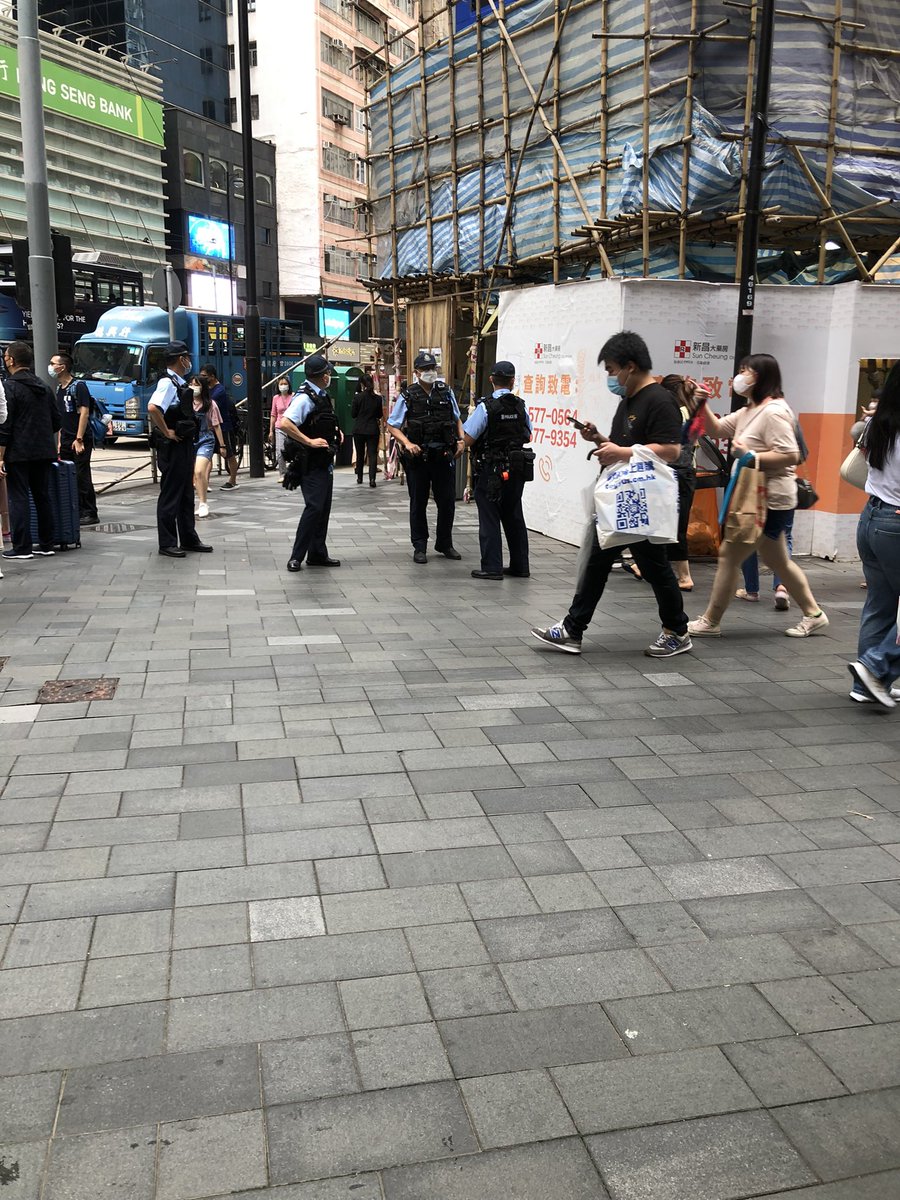
8:30am June 12: Hong Kong Police is patrolling in Causeway Bay on the third anniversary of the massive 6.12 anti-extradition bill protest / demonstration in 2019.

More cops will be mobilized as the day wears on. 🔻 Hong Kong the police state - June 12 afternoon