I've worked on all of science, from B cells to T cells.
@cyrilpedia@qoto.org
Sep 23, 2021 • 4 tweets • 2 min read
'in 284 patients w COVID19, we found type I IFN–specific autoantibodies in peripheral blood samples fm 19% of patients with critical disease and 6% of patients with severe disease. We found no type I IFN autoantibodies in individuals with moderate disease' science.org/doi/10.1126/sc…
This adds to the results of @casanova_lab & others, but here's an interesting additional detail:
"These results demonstrate high surface expression of LAIR1 in myeloid cells to be a biomarker predictive of deficient type I–specific IFN response."
Jan 30, 2021 • 4 tweets • 1 min read
Novavax
'But what we know now is that in the UK trial (roughly 15,000 people), the vaccine showed 89% efficacy. And the company says that around half of these participants were infected with the B.1.1.7 variant, so these are excellent results'
'The South African trial was smaller (around 4,000 patients), and the data have correspondingly more scatter in them. But the readout is clear: the vaccine is less effective against the B.1.351 variant, perhaps around 50%.'
Oct 31, 2020 • 6 tweets • 2 min read
'At best, one large, well-designed study found remdesivir modestly reduced the time to recover from COVID-19 in hospitalized patients with severe illness. A few smaller studies found no impact of treatment on the disease whatsoever.' sciencemag.org/news/2020/10/v…
'The EU, meanwhile, decided to settle on the remdesivir pricing exactly 1 week before the disappointing Solidarity trial results came out. It was unaware of those results, although Gilead, as the trial’s sponsor, began reviewing the WHO data on 23 Sep & knew the trial was a bust'
Oct 30, 2020 • 5 tweets • 2 min read
'propose that the differential susceptibility of mice and humans to Shigella is due to mouse-specific activation of the NAIP–NLRC4 inflammasome. We find that NAIP–NLRC4-deficient mice are highly susceptible to oral Shigella infection' @russellevance et al
'Oral streptomycin administration and other treatments facilitate Shigella colonization of the mouse intestinal lumen by ablating the natural colonization resistance provided by the microbiome'
Jul 13, 2020 • 4 tweets • 2 min read
'loss of Ggta1 function in mice enhances resistance to bacterial sepsis, irrespectively of αGal-specific immunity. Rather, the absence of αGal from IgG-associated glycans increases IgG effector function, via a mechanism associated w enhanced FcγR binding' biorxiv.org/content/10.110…
From Singh, @MiguelCheSoares et al @IGCiencia, following up on previous work by @bahti_yil on anti-α-gal Abs in malaria.
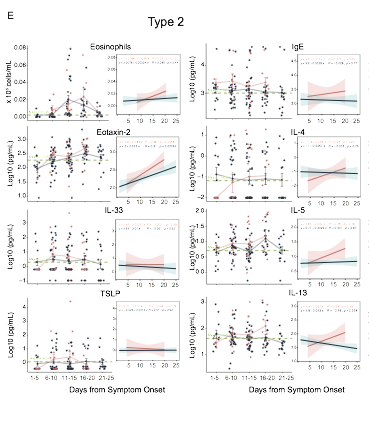
So here's an interesting preprint from @carolilucas, @VirusesImmunity et al serially analysing "immune responses in 113 COVID-19 patients with moderate (non-ICU) and severe (ICU) disease."
"Moreover, severe disease was accompanied by an increase in multiple type 2 (anti-helminths) effectors including, IL-5, IL- 13, IgE and eosinophils."
Jun 26, 2020 • 9 tweets • 3 min read
It was a lot of work, but great experience following the pandemic for these weekly briefings. Here are a few thoughts on the process and writing
nature.com/articles/d4159…
If you are writing anything, specialized or for a broad audience, few things beat having what George Lucas might term The First Reader. The person you trust for feedback.
For me, this has been my friend @marcsdionne, every Thursday morning (drafts were due at noon).
Many thanks
May 30, 2020 • 6 tweets • 2 min read
'A recent report found that ACE2 is expressed in neurons, astrocytes, and oligodendrocytes. Expression of ACE2 was also highly concentrated in the substantia nigra, ventricles, middle temporal gyrus, posterior cingulate cortex, and olfactory bulb'