Dr. Priyam Bordoloi Profile picture
MBBS | MD Internal Medicine Resident | Health literacy & education | ⚠️ Views are my own. Not a clinical consult
Jun 26 10 tweets 2 min read
Med students, listen up! Today let me explain how to analyze a Liver Function Test (LFT) step by step.
​Stop looking at isolated HIGH or LOW flags on a lab report. You need to look at the patterns. Here is how you actually read an LFT panel like a CONSULTANT 👇 (1/10) Hepatocellular Injury (AST & ALT)
Look at the ratio and the absolute numbers:

• Mild rise + ALT > AST: Think MAFLD. Extremely common incidental finding.

• Modest rise + AST:ALT > 2:1: Alcoholic hepatitis. (Alcohol depletes B6, which limits ALT synthesis). (2/10)
Jun 24 4 tweets 2 min read
80% of all autoimmune disease patients are females.
Lupus, Rheumatoid Arthritis, Hashimoto's... the disparity is massive.

​But WHY is the female immune system so prone to attacking itself? I am keeping an eye on all the replies! This deserves a highly detailed answer. Let me get back to my desk and I will drop a full thread with the clinical reality plus a few of my own unproven theories on the 'why' behind it.
Jun 19 6 tweets 2 min read
You suspect a family member is suddenly having a STROKE. Which common first aid step could actually KILL them?

​A) Laying them flat on their back
B) Giving them an Aspirin to chew
C) Elevating their legs
D) Loosening their tight clothing

​Bonus: WHY? Almost everyone of you got this right! The answer is indeed B) Giving them an Aspirin to chew.

​Do yourself a favor and scroll through the replies in this thread right now, the medical community and some incredibly smart folks here have already dropped some brilliant, life-saving explanations.

​I am currently away from home, but this topic deserves absolute, undivided attention. Recognizing the signs of a stroke, knowing exactly what to do, what not to do and mastering those critical first-aid steps until you reach the ER can literally mean the difference between life and death.

​Once I am back at my desk, I will be writing a highly detailed reply covering all of this in depth. Make sure you are FOLLOWING ME so you don't miss it.
May 29 4 tweets 2 min read
A patient’s relative just asked: "If a fever is the body's natural way of burning off a viral infection, why do we immediately give Paracetamol to lower it? Aren't we helping the virus?" The relative was actually half-right.

When a virus invades, your immune system signals the hypothalamus (the body’s thermostat) to crank up the heat. This creates a hostile environment that slows viral replication and kicks your white blood cells into overdrive.

So why do we give Paracetamol?

Because this defense mechanism comes with a massive metabolic tax.
For every 1°C rise in body temperature:
📈 Heart rate jumps 10-15 beats/min
🫁 Oxygen demand spikes
💧 Fluid loss accelerates rapidly

We don't give Paracetamol to kill the virus. We give it because that physiological stress can be absolutely exhausting and sometimes dangerous.

Paracetamol inhibits prostaglandins, gently resetting the thermostat. It acts as crowd control so your immune system can win the war without setting the host on fire. It buys you comfort so you can actually rest, hydrate, and recover.

The Golden Rule in the Medicine Wards:
We treat the patient, not the thermometer.

If you want to understand how your body actually works, follow me for more clinical pearls and daily health literacy.
May 11 7 tweets 2 min read
Med students, listen up! Today let me explain how to analyze a Complete Blood Count (CBC) report step by step. A CBC is more than just numbers; it’s a clinical narrative. Let’s break down this real patient’s report together. 👇 Image Look at the Hb: 4.9 g/dL. This is Severe Anemia. 🚨
Ranges (g/dL):
🔹Mild: 10–12 (W), 10–13 (M)
🔹Moderate: 7–10
🔹Severe: < 7

At 4.9, the body is starving for oxygen. The RBC count is also very low at 2.84. This requires urgent clinical intervention
Apr 9 7 tweets 2 min read
Three months ago, a patient died in our ER. What he did in the hours before reaching us still makes me shudder.

A 35-year-old shouldn’t die from a snake bite in 2026. He died because he followed myths instead of science.
Don’t let your "first aid" be the thing that kills you 🧵 The "Action Movie" Myth 🔪

The patient tried to cut and suck the venom out.

Don't ❌

• Cutting: Causes massive bleeding and local tissue necrosis.
• Sucking: Introduces mouth bacteria, leading to secondary infections.

You waste the "Golden Hour" playing hero.
Mar 10 5 tweets 1 min read
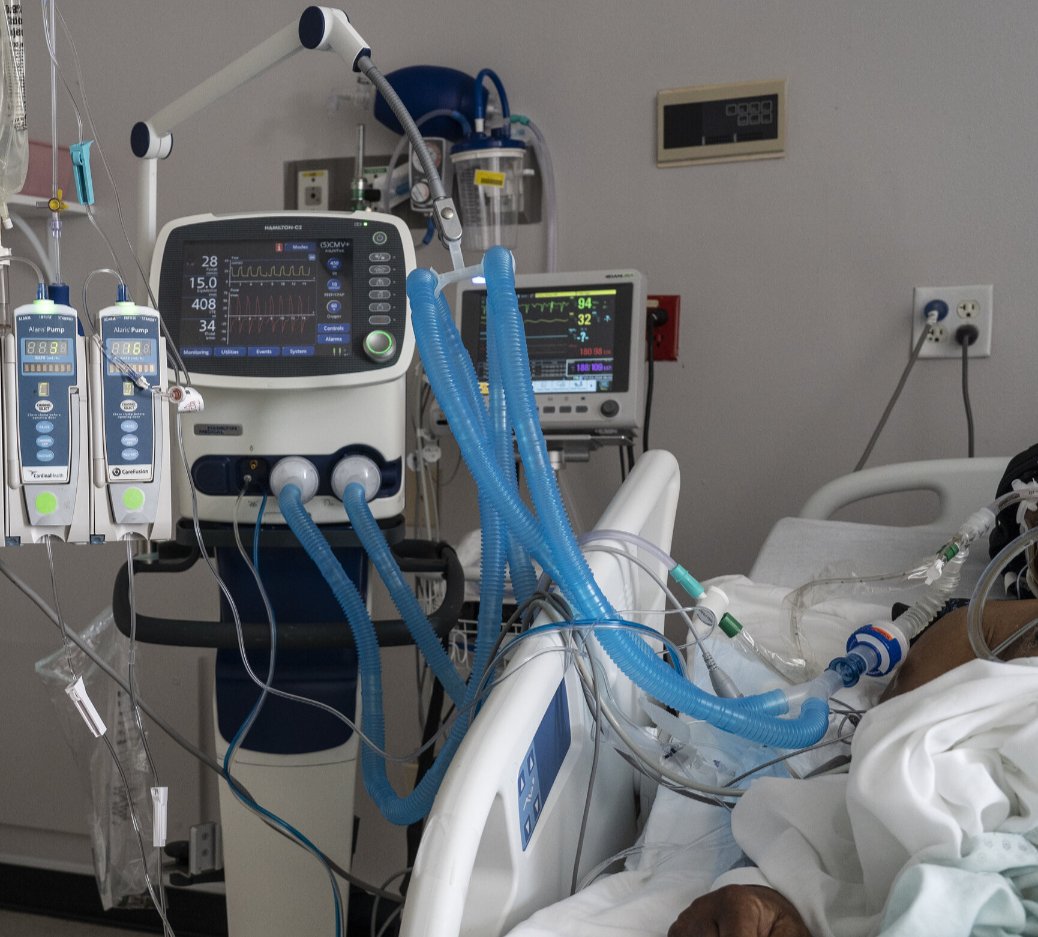
"Ventilator." For many, that word sounds like a final goodbye. Families often fear it more than the illness itself.

But here is the reality: a ventilator is not a death sentence. It is a bridge, a tool we use to buy precious time for the body to heal. Let’s talk about it. 🧵 Image How does a vent help? Think of it as an external lung.
Used when lungs are physically failing (like infection) or the GCS is low i.e. the brain is unable to protect the airway or trigger the drive to breathe.

The vent handles the mechanics while the body focus on recovery
Jan 28 4 tweets 3 min read
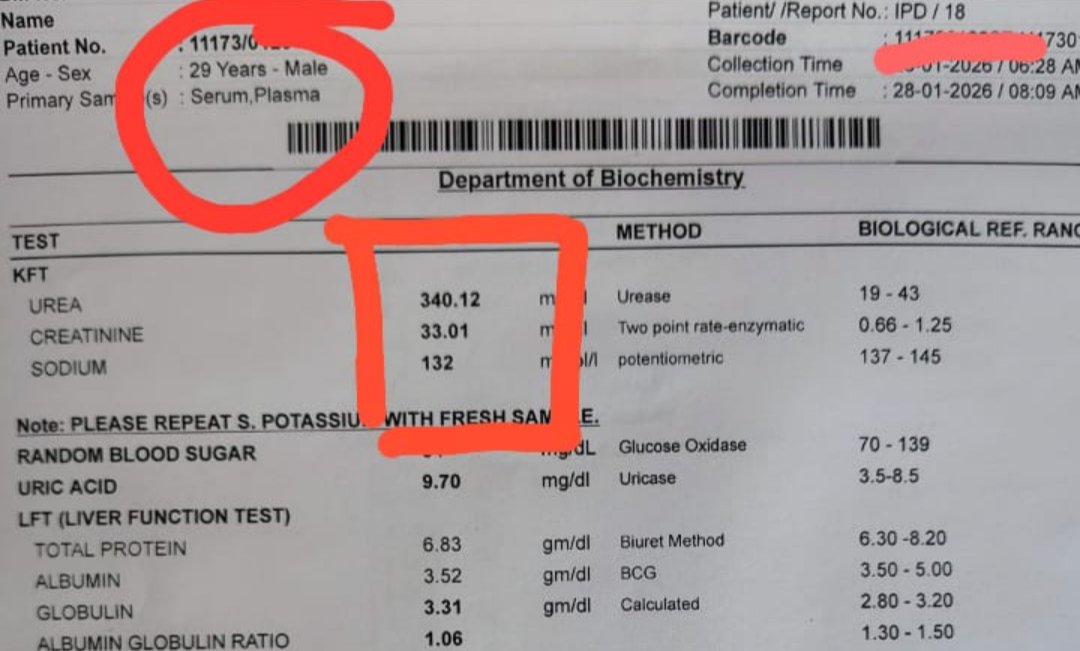
HE IS 29. HIS KIDNEYS HAVE FAILED. AND HE HAD NO IDEA.

I am holding a lab report that shouldn't belong to someone this young. At 29, you are supposed to be at your peak. Instead, this patient is facing a reality that has completely turned his world upside down

The Number: 33.01 mg/dl.
To put this in perspective, a normal Creatinine is around 1.0.
When I saw 33.01, it wasn't just a lab error. It was a siren.

His Urea is 340.12 (Normal is <40).
At these levels, the blood is no longer just "unhealthy"...it is becoming toxic to the brain, the heart, and every vital organ. This is a state of extreme uremia that most people don't survive long enough to walk into a clinic with.

The Silent Trap:
👉He didn’t have "excruciating" pain. He had:
1️⃣Vague fatigue he blamed on his job.
2️⃣Mild swelling he thought was just from sitting too long.
3️⃣A general feeling of being "off" that he ignored for months.

Because he "looked fit" and was under 30, he assumed he was invincible. By the time he reached the ER, the window for simple fixes had slammed shut.

The Reality Check:
❌ Your age is not a shield against chronic disease.
❌ "Feeling fine" is not a substitute for objective data.
❌ A routine blood test takes 10 minutes; a lifetime of dialysis takes 12 hours a week.

The Final Lesson:
Listen to your body. You don't need to live in a state of constant fear or health anxiety. You don't need to overstress about every minor ache. But you must be an active participant in your own health.
If something feels wrong, don't bury it under "busy-ness." Get your basic labs done once a year. Your career, your meetings, and your deadlines can all wait. Your health is the only thing that won't wait for a better time.

Check your labs. Then go live your life.Image For everyone asking about the specific cause: we are still in the process of a full clinical work-up to find the "why."
But here is a sobering fact: we are seeing a massive rise in CKD-u (Chronic Kidney Disease of unknown origin).

In many young patients, we don’t find the traditional culprits like Diabetes or long-term Hypertension. Instead, we are looking at a complex mix of:
• Environmental toxins & heavy metals.
• Chronic dehydration/Heat stress.
• Agricultural exposures.
• Genetic predispositions.

Sometimes, the cause isn't one single event, but a silent accumulation over years. This is why screening is non-negotiable....even if you feel 100% healthy.
Jan 23 10 tweets 2 min read
Today I told an attendant her mother has heart failure. She began sobbing: "Will she die today only?"
She didn't realize failure ≠ death.

Many confuse Heart Attack, Heart Failure, Heart Block, and Cardiac Arrest.
​Understanding the difference saves lives & prevents panic. 🧵 1️⃣ Heart Attack (Plumbing)

A pipe (artery) is blocked. Heart muscle doesn't get blood & starts to die.

Symptoms: Heavy chest pressure ("elephant on chest"), cold sweats, jaw/arm pain.

Risk: Smoking, High BP, Diabetes, Cholesterol, sedentary lifestyle.
Jan 21 9 tweets 3 min read
Last week, a 35-year-old male died in my ER because he did everything "wrong" after a snake bite. He followed "movie logic" instead of medical reality.

Here is everything you should know about snake bites and exactly what to do to stay alive. 🧵 The Tourniquet Trap 🚫

His first mistake? Tying a tight rope.
Tourniquets don't "trap" venom. They trap "flesh-eating" toxins in one spot, causing gangrene and amputation. It starves your limb of oxygen.
Never tie it. Treat the limb like a fracture instead.
Jan 19 15 tweets 3 min read
Meet Alex.
40, fit, and hits the gym daily. He thought he was "bulletproof" until his blood work came back.

His Total Cholesterol was high. He panicked and tried to "hack" it with internet advice. He almost made it worse.

This is the Ultimate Guide to your Lipid Profile. 🧵 1️⃣ The "Total Cholesterol" Trap

Alex’s first mistake? Obsessing over Total Cholesterol.
He saw a "220" and freaked out. But it is just a "bulk" number. It’s like looking at the total number of vehicles on a highway without knowing if they are ambulances or reckless speeders.
Jan 17 12 tweets 3 min read
Let me introduce you to a patient, let's call them "Abhi."

Abhi wanted to "max out" his health. So, every single night at dinner, Abhi swallowed a fistful of supplements: Iron, Calcium, Zinc, Vitamin B12, and Collagen. All in one gulp. 💊

The result? 🧵 He was still anemic, still tired, and his skin/joints weren't improving. Instead he felt exhausted and often had stomach cramps.

Here is why his routine was literally "flushing money down the toilet"👇
Jan 13 21 tweets 3 min read
A patient walked in with the most common complaint I hear every single day:

“Doctor, I think it’s gas.”
And honestly? Sometimes it is.
But “gas” can mean 10 completely different things.

This is the ultimate thread for every gas/acidity question, you will get all your answers🧵 1️⃣When people say “gas”, they usually mean one of these:

1. Bloating
2. Acidity / heartburn
3. Burping
4. Chest discomfort
5. Upper abdominal pain
6.“Something stuck in my throat” feeling
Jan 9 5 tweets 3 min read
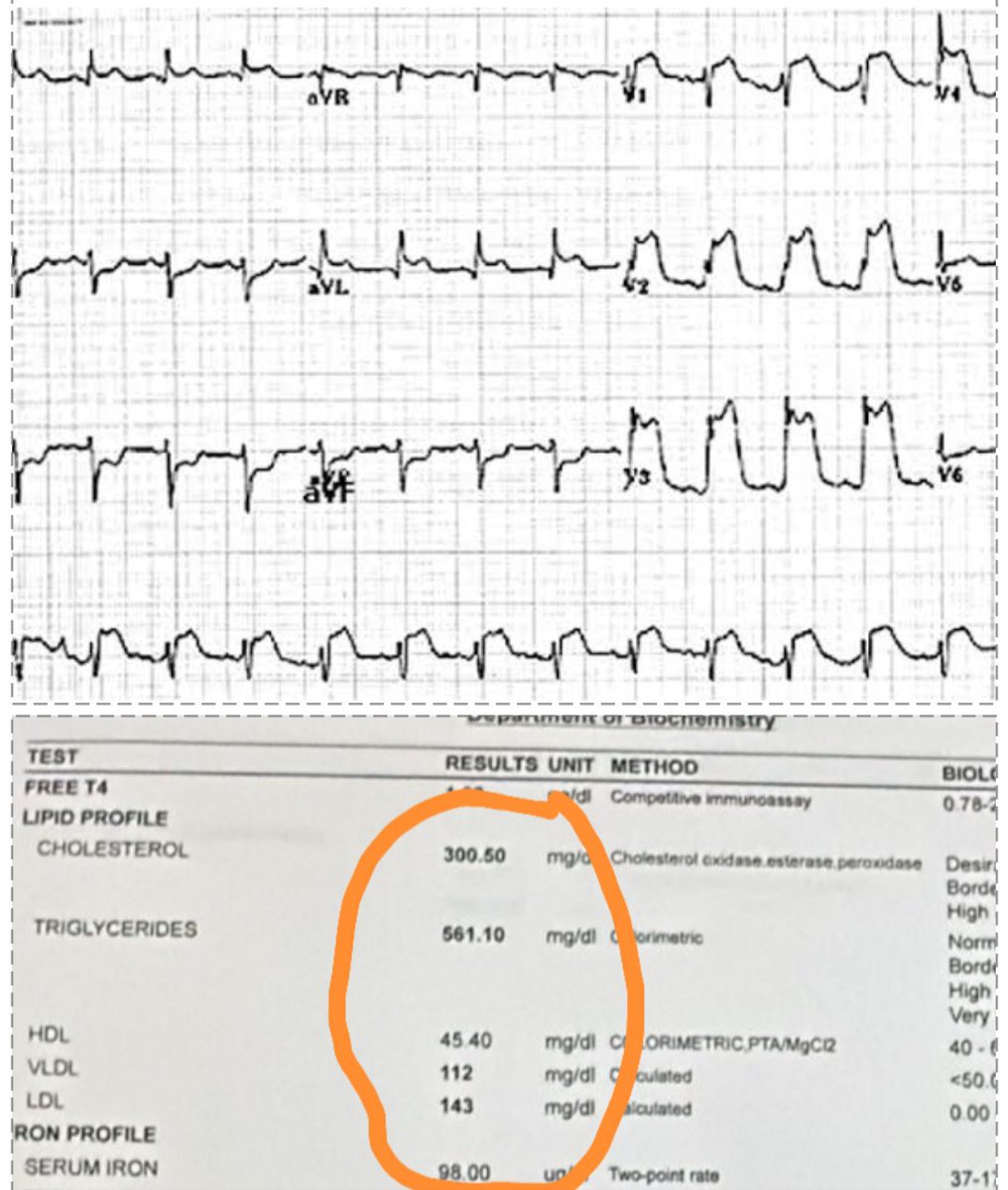
SHE WAS 35, LEAN, AND "HEALTHY." TODAY, SHE’S GONE.

I am looking at the lab results of a woman who should have had 50 more years of life. Instead, I am looking at the reason her heart gave out this morning.

She was the "success" story of our generation. 35 years old, BMI of 20 (thin by any standard), working a high-paying remote job for a US-based company.

But behind the laptop screen, her body was screaming for help:
The Routine: Working through the night, sleeping through the day. A completely shattered circadian rhythm.
The Fuel: Living alone meant no home-cooked meals. She relied on food delivery apps 3x a day. Convenience was the priority.
The Silence: She felt "fine" until the sudden, crushing chest pain 12 hours ago.

Her blood was essentially turned into a thick, fatty sludge.
Triglycerides: 561.10 (Dangerous level is > 500)
Total Cholesterol: 300.50
VLDL: 112 (Over double the limit)
LDL: 143 (very high)

If you are:
❌ Living on delivery apps
❌ Flipping your sleep cycle for work
❌ Ignoring your labs because you "look fit"
Please. This is your sign. Her life ended today because her internal health didn't match her external appearance.
Your job won't miss you. Your family will.Image One possibility is an underlying genetic dyslipidemia simply put, abnormal lipid processing that accelerates disease.

And please stop blaming COVID vaccines for everything. Yes, all vaccines have side effects, but they’re given after risk–benefit analysis. COVID infection itself carries a much higher risk of heart attack than vaccines.

I don’t walk into courts teaching lawyers their job, medical science deserves the same respect so stop with your Pseudoscience theories
Dec 2, 2025 6 tweets 1 min read
A govt officer died on duty yesterday. The news is calling it 'Heart Attack' in one line and 'Cardiac Arrest' in the next.
They are NOT the same.
If you don't know the difference, you won't know whether to drive to the hospital or start CPR.
The Plumbing vs. Electrical Thread: 🧵 The Heart Attack (Myocardial Infarction)
Think Plumbing.
A pipe (artery) gets blocked. Blood can't reach the muscle. The muscle starts to die.
Patient: Awake, clutching chest, in pain.
Heart: Still beating
Action: Hospital ASAP (Cath lab).CPR is useless here unless they collapse