This vial contains a new drug called PAC-832, which I recently invented to treat Alzheimer’s disease. It is the world’s first selective GalR1 antagonist.
I designed and synthesized PAC-832 in a chemistry lab I built in my garage. (1/16)
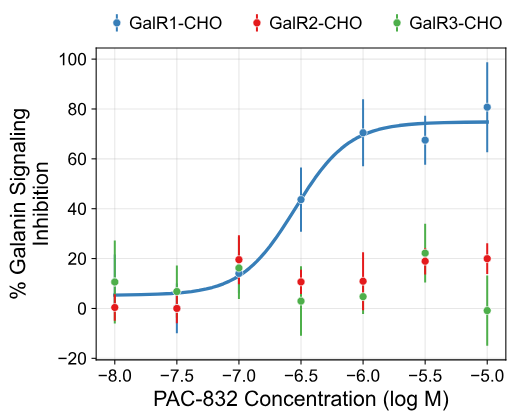
PAC-832 is the first drug of its kind. It works by selectively blocking a receptor in the brain called “galanin receptor 1,” or GalR1. The drug has sub-micromolar potency for GalR1 and >30x selectivity over GalR2/3. (2/16)
Oct 26, 2023 • 33 tweets • 8 min read
A general thread on what Perturb-seq is, what it's good for, and how we managed to reduce its cost by an order of magnitude in our recent work: 1/33
Perturb-seq (also CROP-seq) is a type of "genetic screen" developed around 2016. Genetic screens are experiments where you modify the genetics of some model system (e.g. cells in a dish, a fly, a mouse), then see how the model system changes to learn something about biology. 2/
May 18, 2020 • 13 tweets • 4 min read
How much disease heritability is mediated by gene expression levels from eQTL studies? Not very much (~11%), according to our latest work @NatureGenetnature.com/articles/s4158…
w/ @Luke0connor, Alkes Price, and Alexander (Sasha) Gusev
(1/13)
Context: Many studies integrate eQTLs with GWAS to highlight disease mechanisms (using TWAS, MR, colocalization, etc.). However, it's unclear whether enrichment/overlap between eQTLs and GWAS hits reflects mediation (SNP -> expression -> disease) or other scenarios👇(2/13)


 PAC-832 is the first drug of its kind. It works by selectively blocking a receptor in the brain called “galanin receptor 1,” or GalR1. The drug has sub-micromolar potency for GalR1 and >30x selectivity over GalR2/3. (2/16)