Eric Profile picture
Writing Generative Value | Felicis Ventures
Aug 4, 2025 6 tweets 3 min read
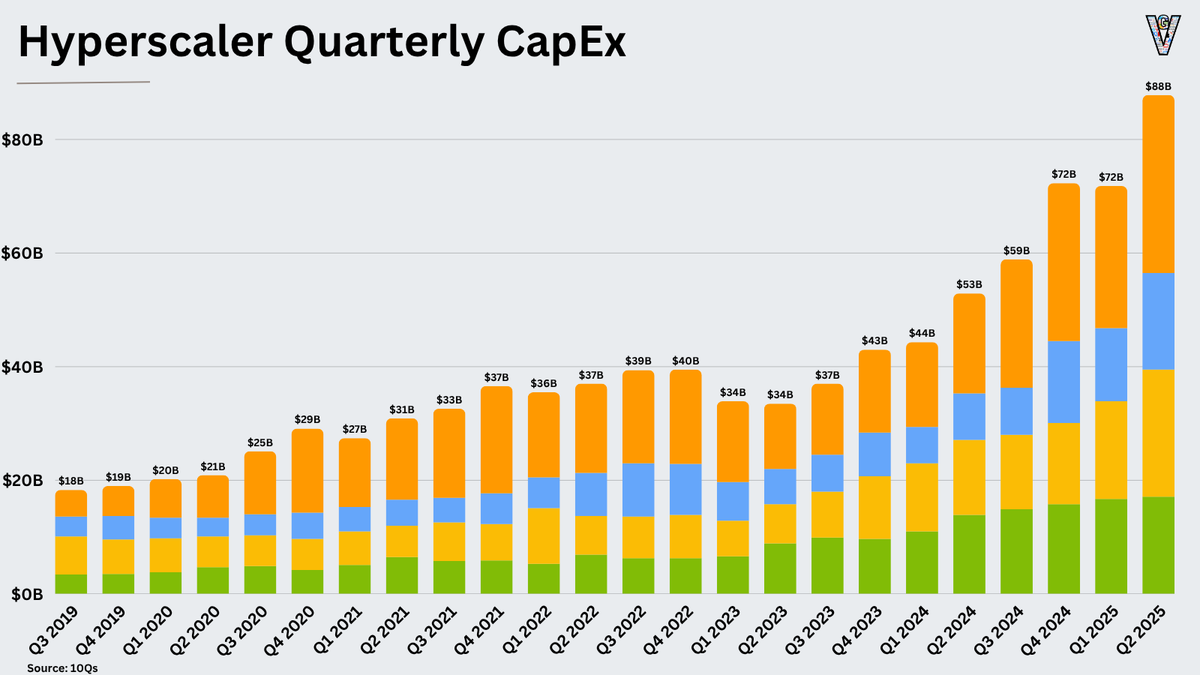
A lot of noise around hyperscaler CapEx (~$88B this quarter, up approximately 70% Y/Y). I think this makes more sense than it seems on the surface.

- First, they will always err on the side of overinvesting to ensure they don’t miss the land grab moment happening right now.
- Secondly, AI app demand is still surging (model companies are blowing past expectations)
- Third, they’re changing the shape of their investments (focusing more on short-lived assets for inference as opposed to long-term buildouts)
- Fourth, they have so much cash on the balance sheet that the reasonable investment alternatives are hard to find! It’s either dividends or AI investments.

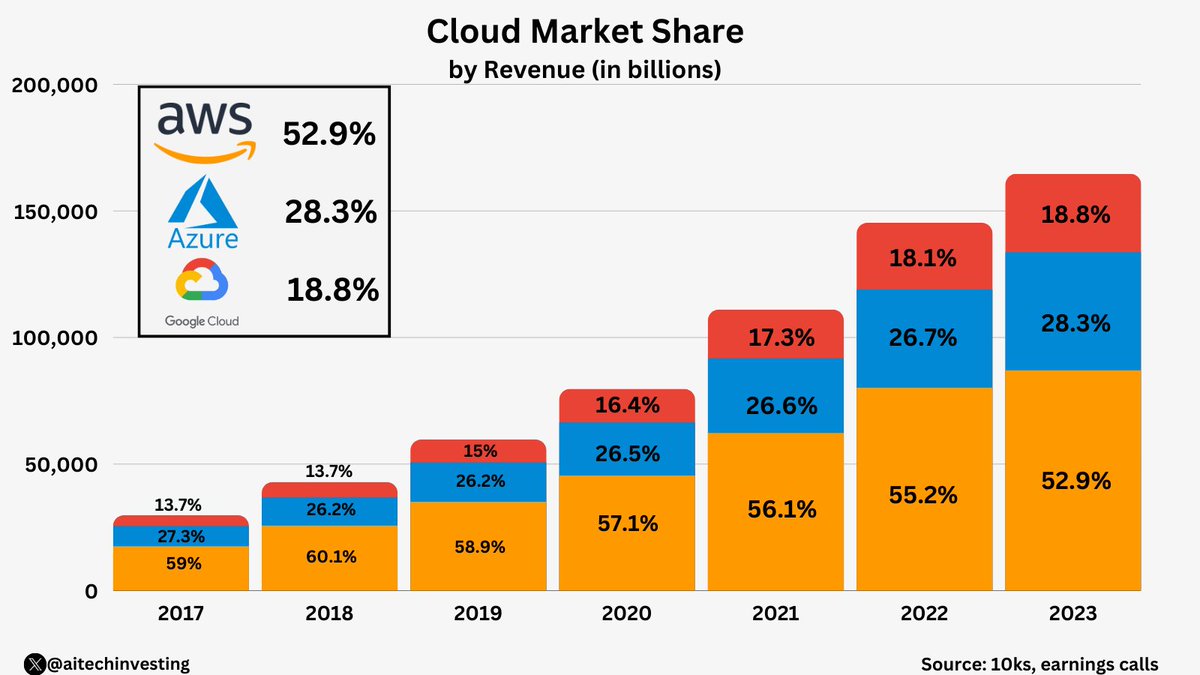
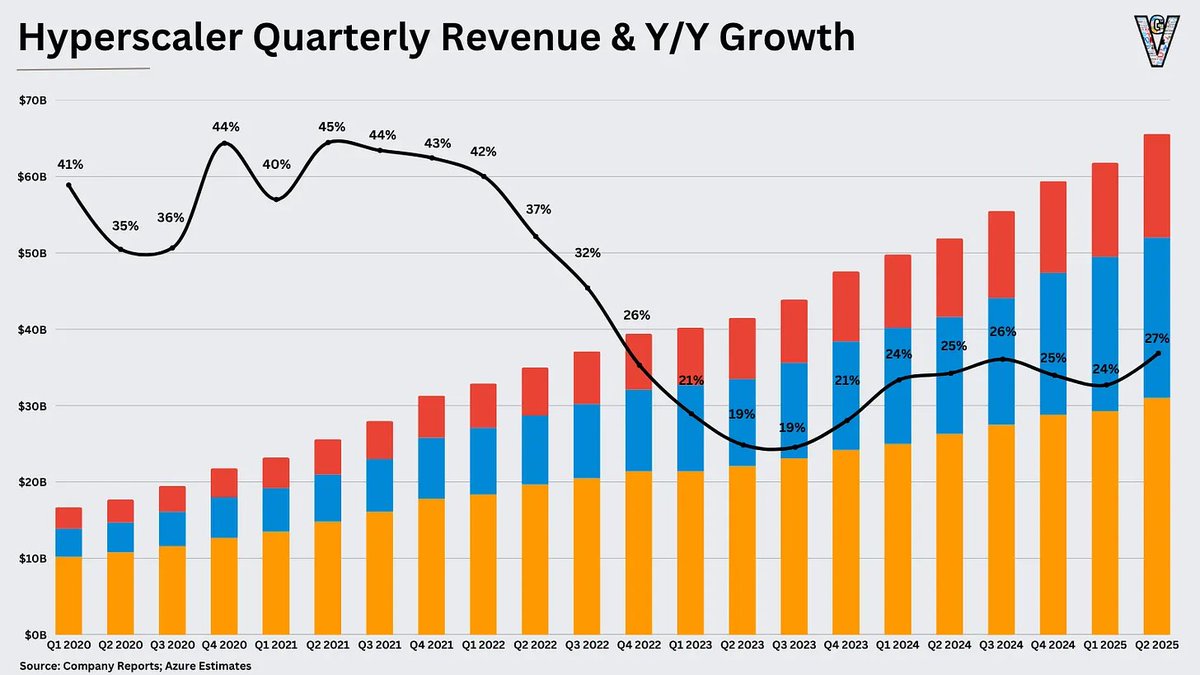
Published an update on the hyperscalers with market share, revenue, and observations on the newsletter 1/Image 2/ Combined the three big clouds are at a $262B run rate growing 27% Y/Y (wild) Image
Jul 8, 2025 8 tweets 4 min read
Lotta talk about how tech investing is changing.

Spent some time thinking about the inverse of that: what are the things that haven’t changed and won’t change.

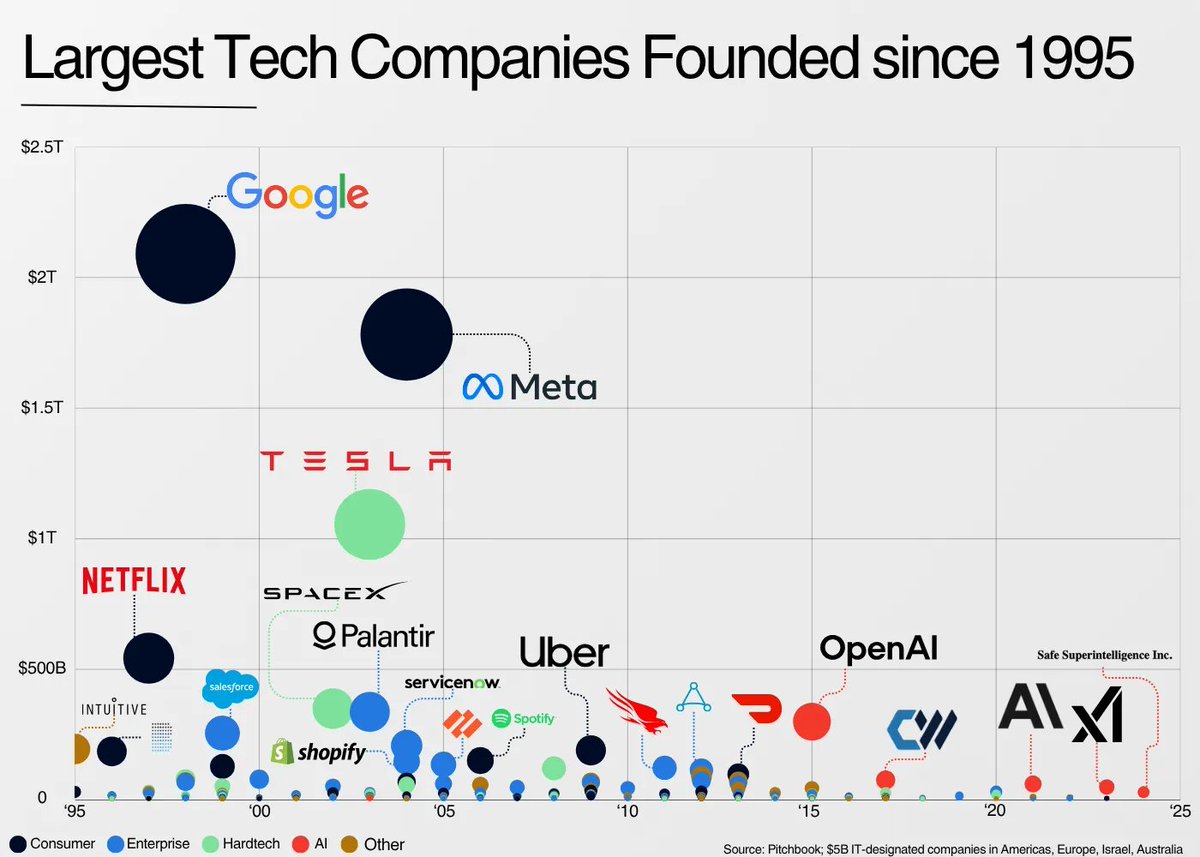
So I pulled data on $5B+ companies founded in the last 30 years, returns since going public, breakdown by segment, etc

Some stats:

- $13 trillion in value creation across 300+ companies in 65 categories.
- 7 companies accounted for ~50% of the dataset
-Consumer companies accounted for ~46% of the value, but 19% of companies
- Enterprise companies accounted for ~32% of companies, but 21% of the value

More thoughts:Image 1/ The next $100B company will not look like the last
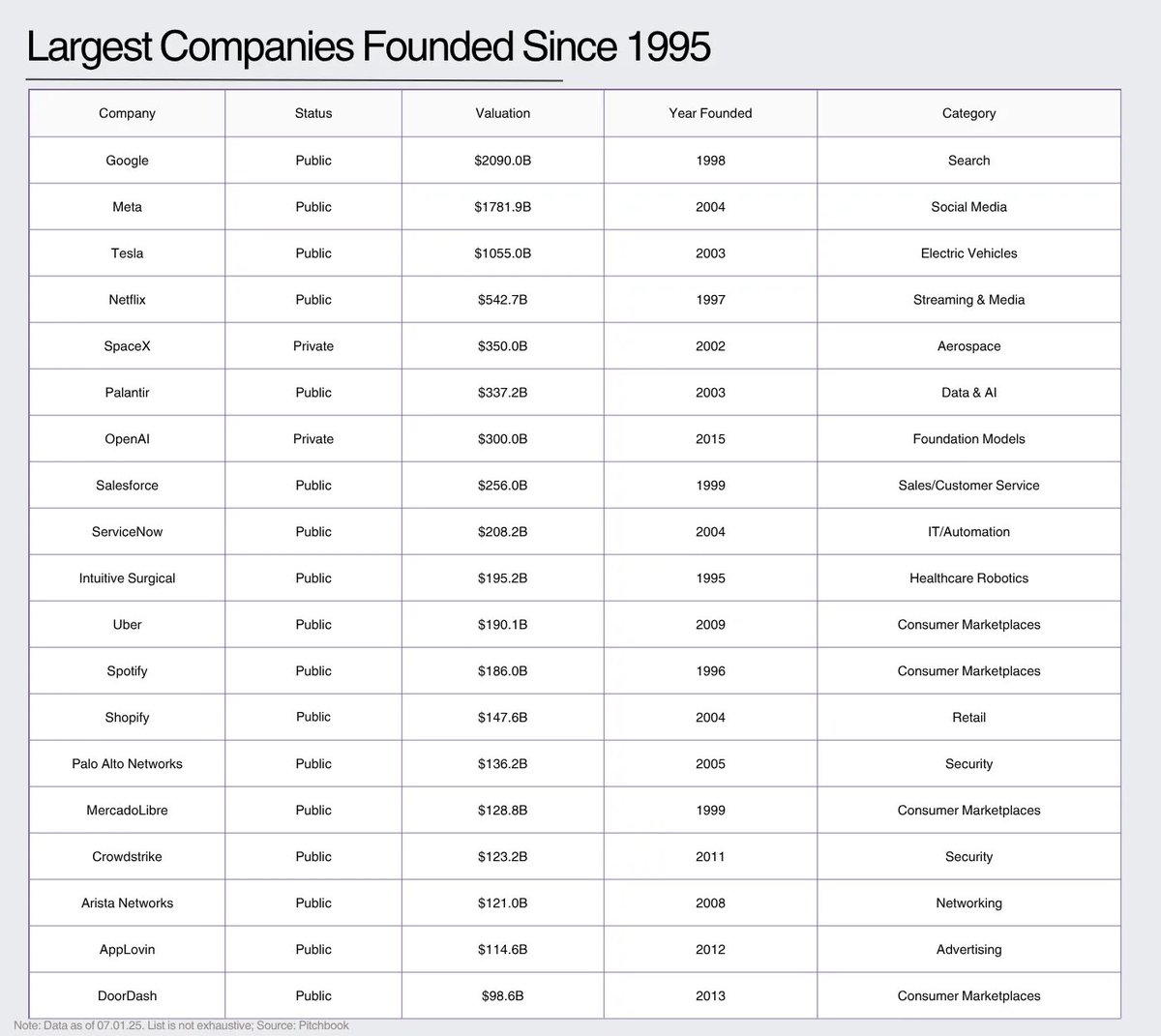
The largest companies created their own categories. So there is no “comp” for the most successful companies, they’re unique, and that’s why it’s so hard to value how big they’ll become.

Note on methodology: The vast majority of technology value has accrued to the largest companies, so I pulled all IT-labeled companies worth $5B+, founded since 1995. (Note: this does exclude Amazon, Nvidia, Microsoft, and Apple.) I had Claude help categorize the companies, so do consider the exact data quite directionally accurate, but with a margin for error.Image
May 11, 2025 5 tweets 3 min read
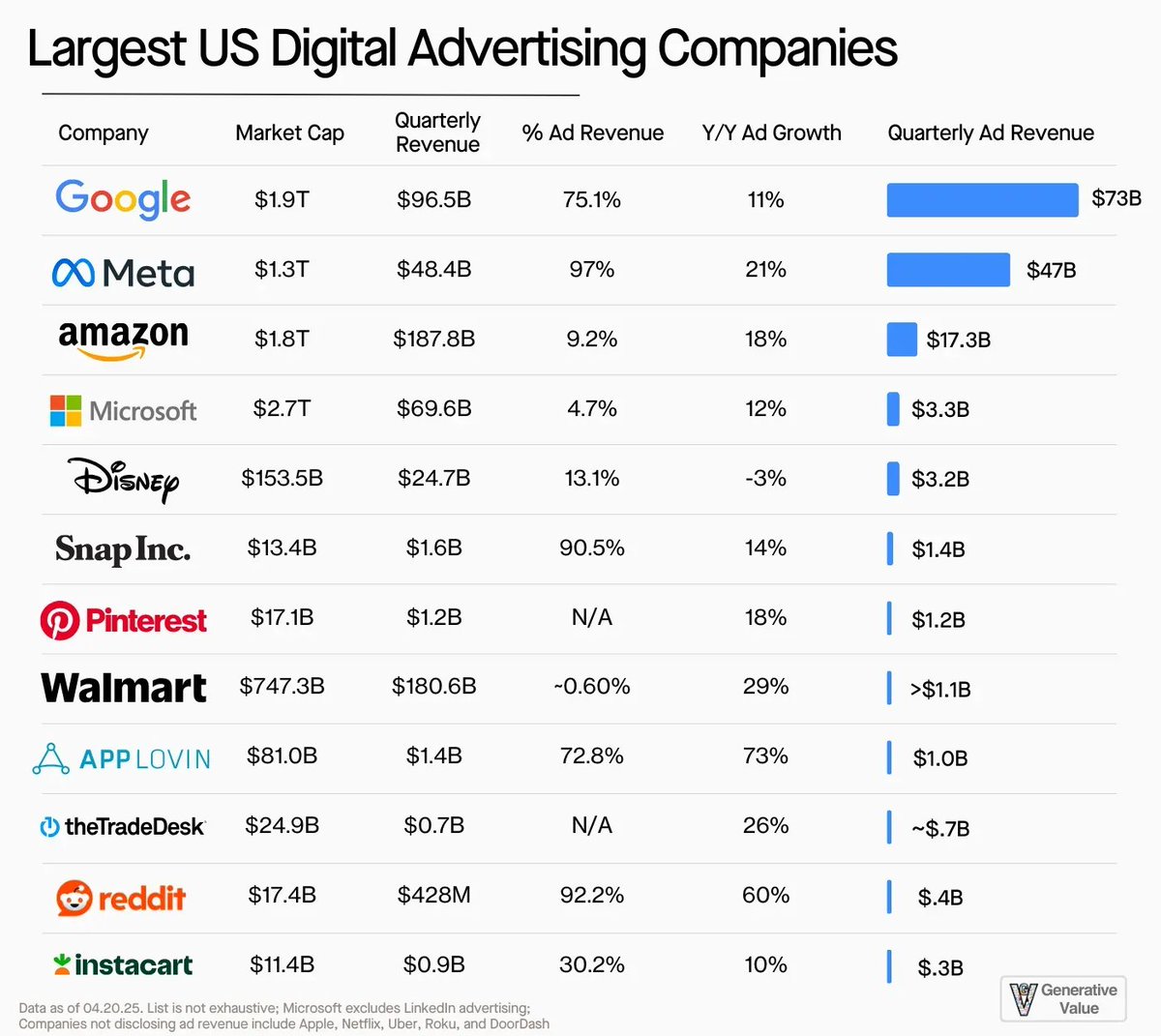
Two of the best business models of all time were built on a network of attention and selling that attention to advertisers.

Through personalized ads, advertisers pay for:

1. Attention
2. Increased odds of purchasing

Over the last three years, we’ve seen attention flow to LLMs. With the rise of memory, LLMs are getting to know their users. Secondly, and more importantly, we’re seeing the glimmer of a world where those LLMs take actions on your behalf.

This offers (1) an ability to hyper-personalize ads and (2) vastly improve the odds of purchasing.

How much will advertisers pay for hyper-targeted attention AND vastly improved odds of purchasing?

If done correctly, a lot.Image 1/ The Resistance to Ads

As always though, the ethics of advertising are debated (rightfully so). There’s a remarkable consistency of companies resisting ads and then pursuing them (Google, Meta, Amazon, Netflix, etc.).

The question becomes how to do ads correctly.

As I see it, the initial pursuit of ads should be around not damaging the user experience:

1. Be hyperselective with the ads you show
2. Be hypersensitive about user data, don’t personalize ads
3. Influence responses as little as possible

This lowers the maximum monetization potential of ads, and that’s okay. Monetization follows aggregation.
Feb 9, 2025 6 tweets 3 min read
1/ Some thoughts on hyperscaler earnings:

They’re at the heart of the ROI debate because they sit in between “AI Supply” (compute, data centers, energy) and “AI Demand” (cloud rentals/inference/applications).

On “AI Supply”, the final numbers for CapEx came in at 55% Y/Y growth for 2024 and 68% Y/Y growth for this quarter’s CapEx.

Currently, the hyperscalers are all capacity constrained, but hinted to those supply constraints easing by the end of the year:

- “We're still growing at a pretty reasonable clip, as I mentioned earlier, but I do think we could be growing faster if we were unconstrained. I predict those constraints really start to relax in the second half of '25.” - Andy Jassy (AMZN CEO)

It'll be an important moment for the ecosystem when supply catches up to demand, and we see current demand (unhindered) for AI applications.Image 2/ On “AI Demand”:

The ROI equation needs AI revenue on the backend to justify CapEx expenses.

That ultimately comes down to what problems AI can solve, the scale of those problems, and on what time frame.

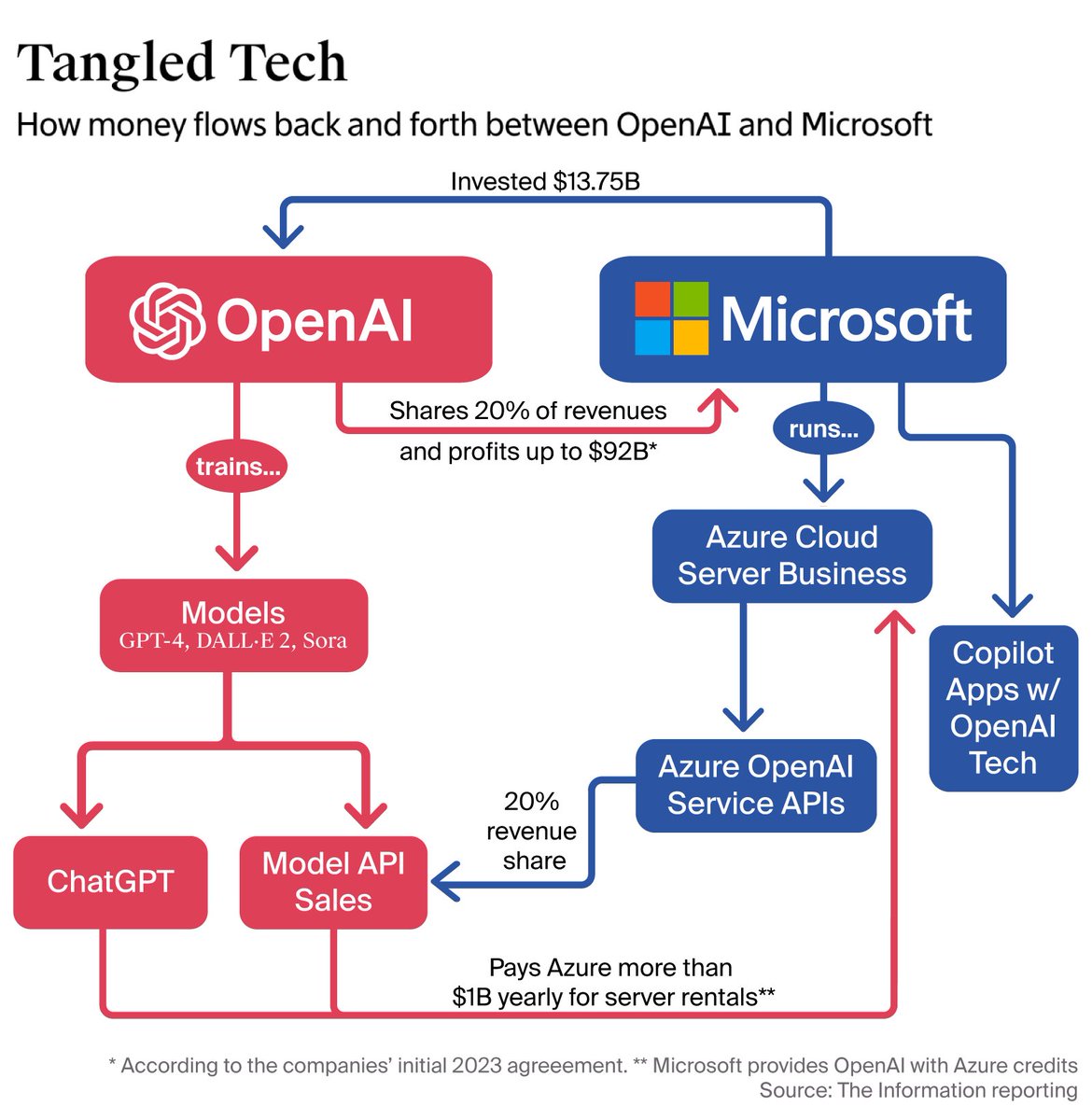
Microsoft gives us a decent idea of demand, sharing they surpassed $13B in AI revenue run rate, which is coming from Azure OpenAI inference, the Copilot suite, and presumably cloud GPU rentals.

A reminder that they also get a share of OpenAI’s revenue (I’m not sure if they account for this in the $13B number):Image
Dec 17, 2024 7 tweets 3 min read
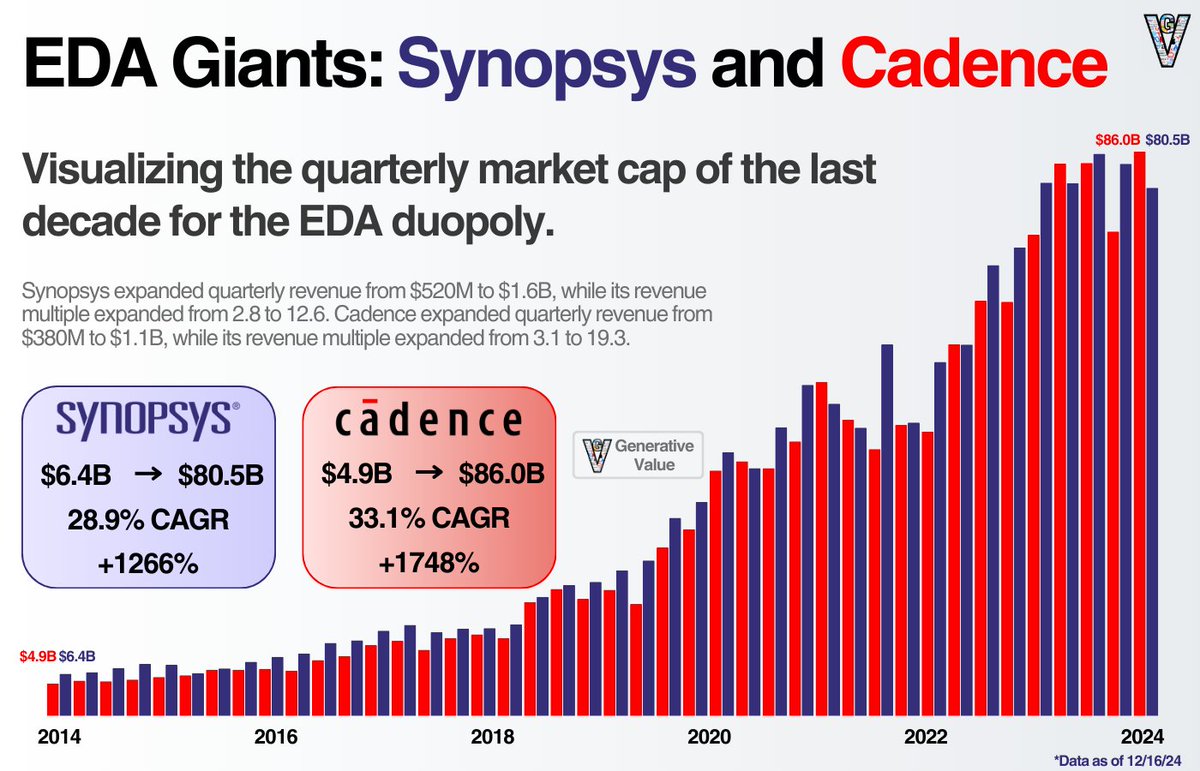
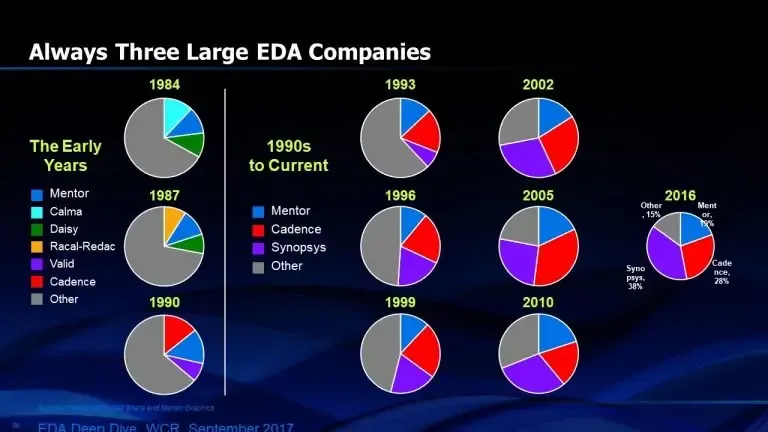
Cadence and Synopsys have been two of the best-performing stocks in the world over the last decade.

Cadence and Synopsys have compounded at ~33% and ~29% respectively (excluding dividends).

The combination of low expectations 10-15 years ago and fundamental improvements have led to these incredible returns.

Their moats, gross margins, and exposure to end-market growth in semiconductors have led to Synopsys and Cadence (1) having some of the strongest returns in the market over the last decade and (2) having some of the highest valuations in the market.Image 1/ From the 1990s to today, we’ve seen the consolidation of the EDA industry onto three main players in Synopsys, Cadence, and Siemens EDA (Mentor Graphics): Image
Oct 13, 2024 6 tweets 3 min read
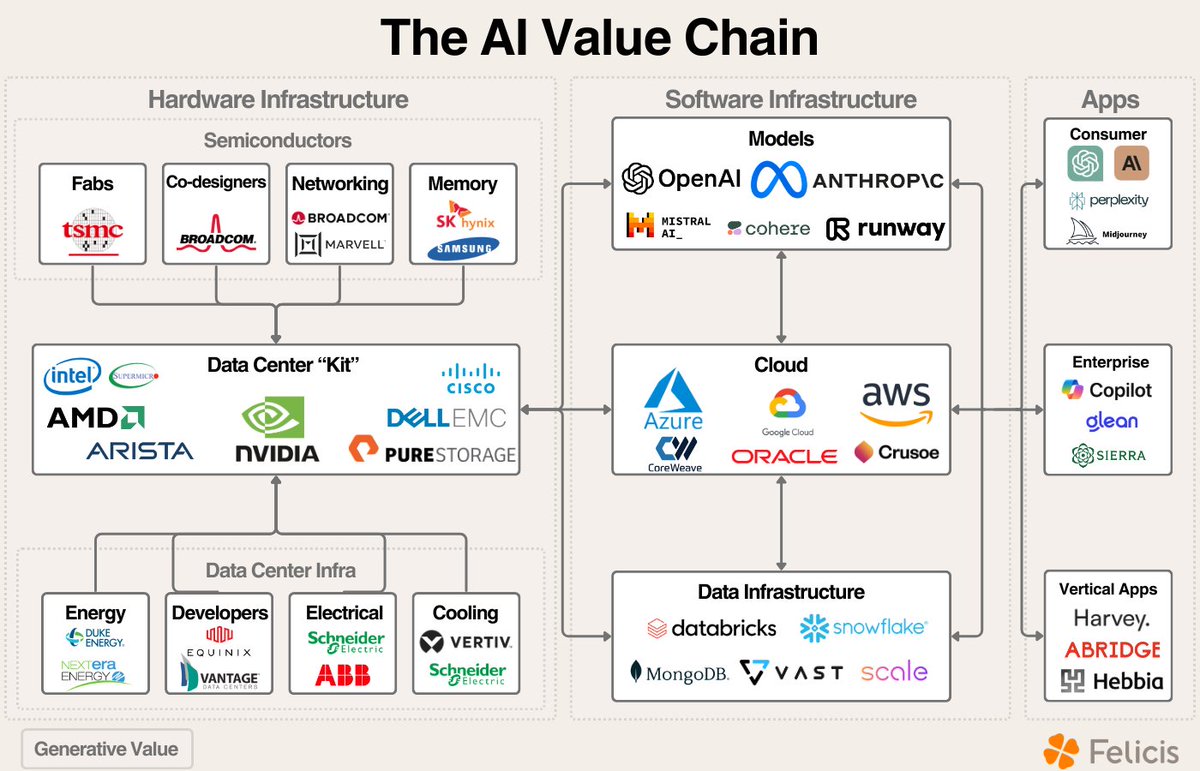
I wrote about AI data centers.

If hyperscaler capex is a good metric for AI infrastructure investments ($150B+ from $AMZN $META $MSFT $GOOGL over the last four quarters, up over 50% Y/Y), then we’re seeing one of the largest computing infrastructure buildouts in history.

Inevitably, with a buildout of this size, much of the supply chain is stretched thin. I think there are opportunities to address bottlenecks at each layer of the stack (energy, construction, compute infra, and compute services).

This infrastructure investment sets up the first half of the value creation equation. The second half comes with application value created on the back end.

Sharing more thoughts on the buildout below.

Note: this image doesn’t touch on every company exposed to the data center. There are financiers, real estate developers, construction firms, and a host of other companies contributing to this buildout. As Morgan Housel says, “I’m likely to agree with anyone who points out what I’ve missed.”Image 1/ We’re seeing a similar buildout with data centers as we did with the electric grid 100+ years ago.
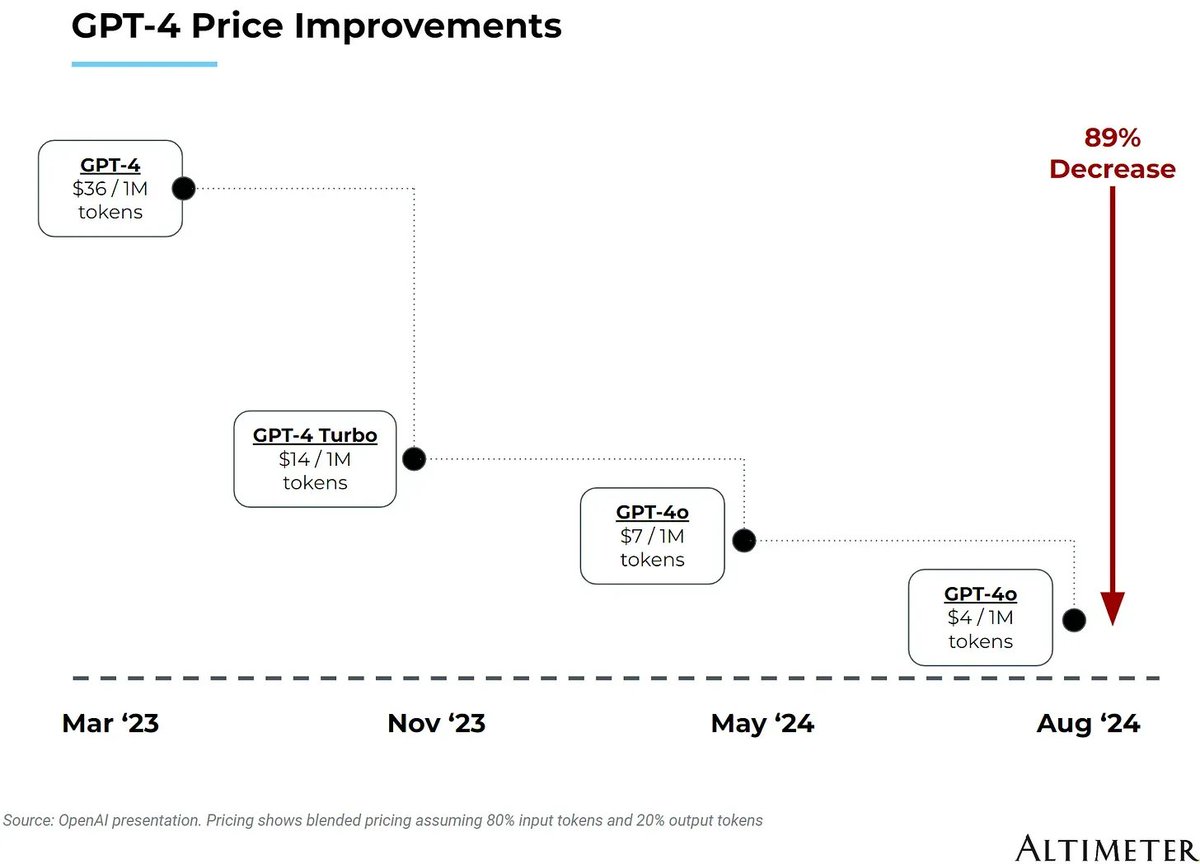
Throughout the birth of the electric grid, we saw the scaling of power plants (building power plants as large as possible to capture performance improvements), “Astronomical” CapEx investments, and the plummeting cost of electricity.

Today, we’re seeing the scaling of data centers, “Astronomical” CapEx from the hyperscalers, and the plummeting cost of AI compute:Image
Sep 8, 2024 4 tweets 2 min read
Mapping out the current state of AI markets:

Most value has accrued to the semiconductor ecosystem ($130B+ in revenue this year from AI) and the data center buildout (number of US data centers is expected to double in the next four years).

Energy is a legitimate bottleneck to the data center buildout, and hyperscalers/developers are aggressively acquiring real estate with power availability.

The cloud companies are at a ~$20B run rate, with Microsoft generating ~$5B of that.

We’re seeing increasing interest in AI applications but little large scale value creation yet.

The AI app layer will ultimately determine the value of the industry as the current infrastructure buildout will become a bubble without value creation on the back end.Image The gap between infrastructure spend and application revenue has fueled the recent "AI ROI" debate.
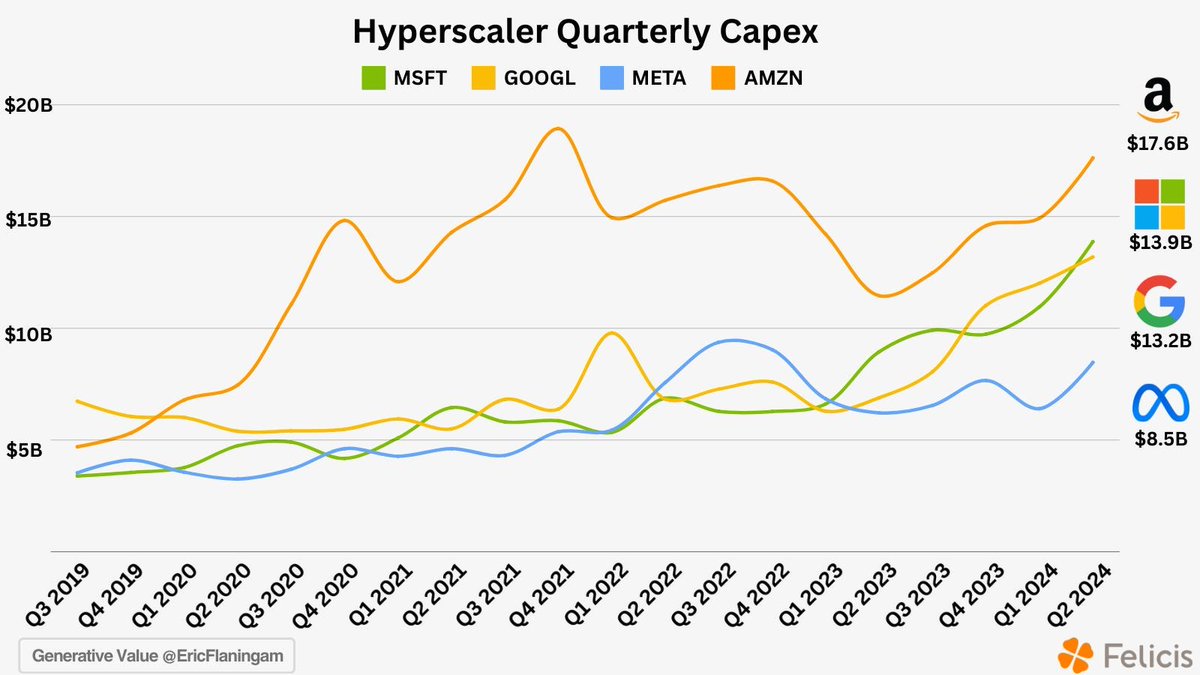
This is justified, but the hyperscalers are driving much of the spending. As Sundar said, "the risk of underinvesting is dramatically greater than the risk of overinvesting."

In large part, this is because they're investing (outside of GPUs) in limited natural resources of energy and real estate. If they don't acquire those resources, competitors will.Image
Aug 24, 2023 12 tweets 3 min read
The most important question facing $AMZN:

Why is AWS losing market share to $MSFT and $GOOGL?

Over the TTM, AWS’ market share has seen its biggest drop in its history.

Here’s why: Image 1/ AWS revenue driver

Over 50% of AWS revenue comes from EC2, the most basic compute offering.

This is a higher % than Azure (higher % of server revenue) and GCP (higher % of data/AI revenue).

Computing is the easiest cost to optimize, therefore hurting AWS the most.
Jun 6, 2023 11 tweets 2 min read
TSMC is at the center of the tech world.

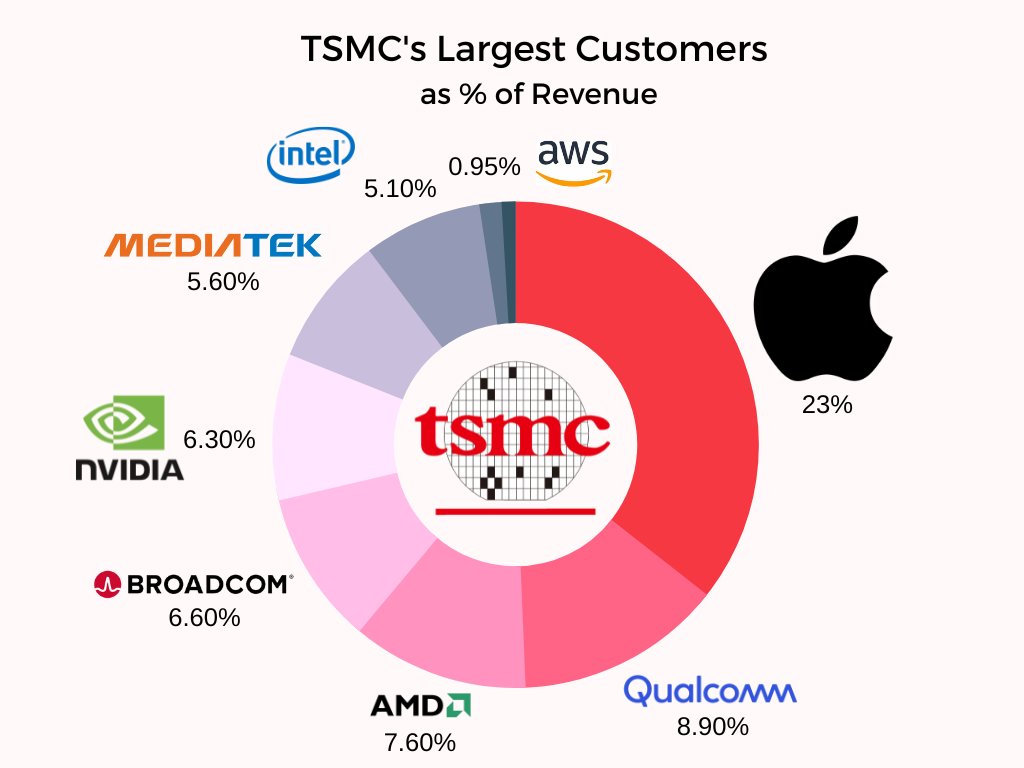
Some of $TSM's largest customers:
$AAPL $QCOM $AMD $AVGO $NVDA $MDTKF $INTC $AMZN $GOOG $MSFT Image 1/ $AAPL

23% of Revenue. 17.5B spend.

Up from 5B in 2016, Apple continues to invest in TSMC.