

 A good forecaster should be calibrated: e.g., outcomes it predicts with 80% confidence happen 80% of the time. In our tests, Eternis-Forecaster was better calibrated than much larger models.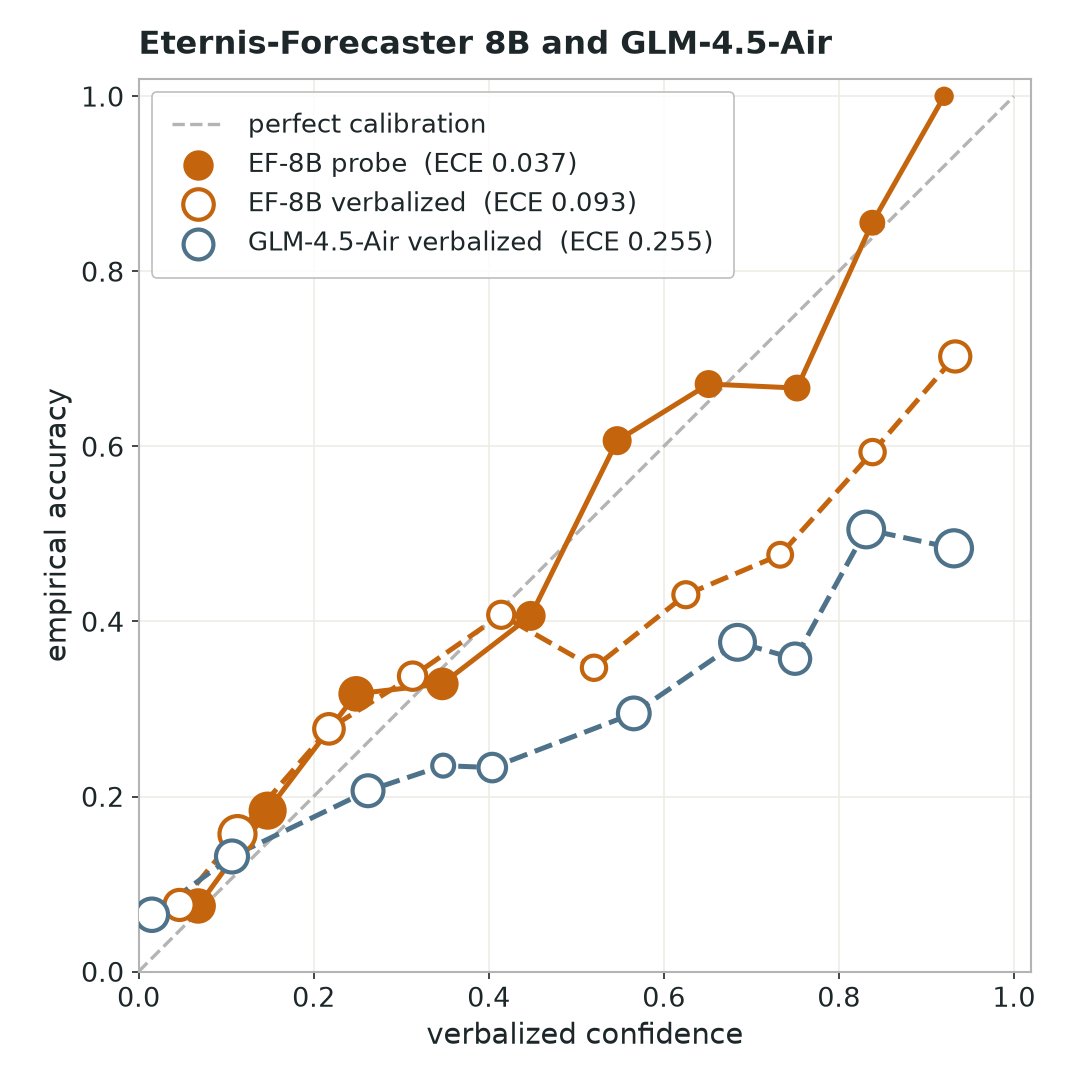
 This was an early exploration in fine-tuning with *parameter decomposition* (see quote), our method which divides a model's weight matrices into interpretable, sparsely-activating components.


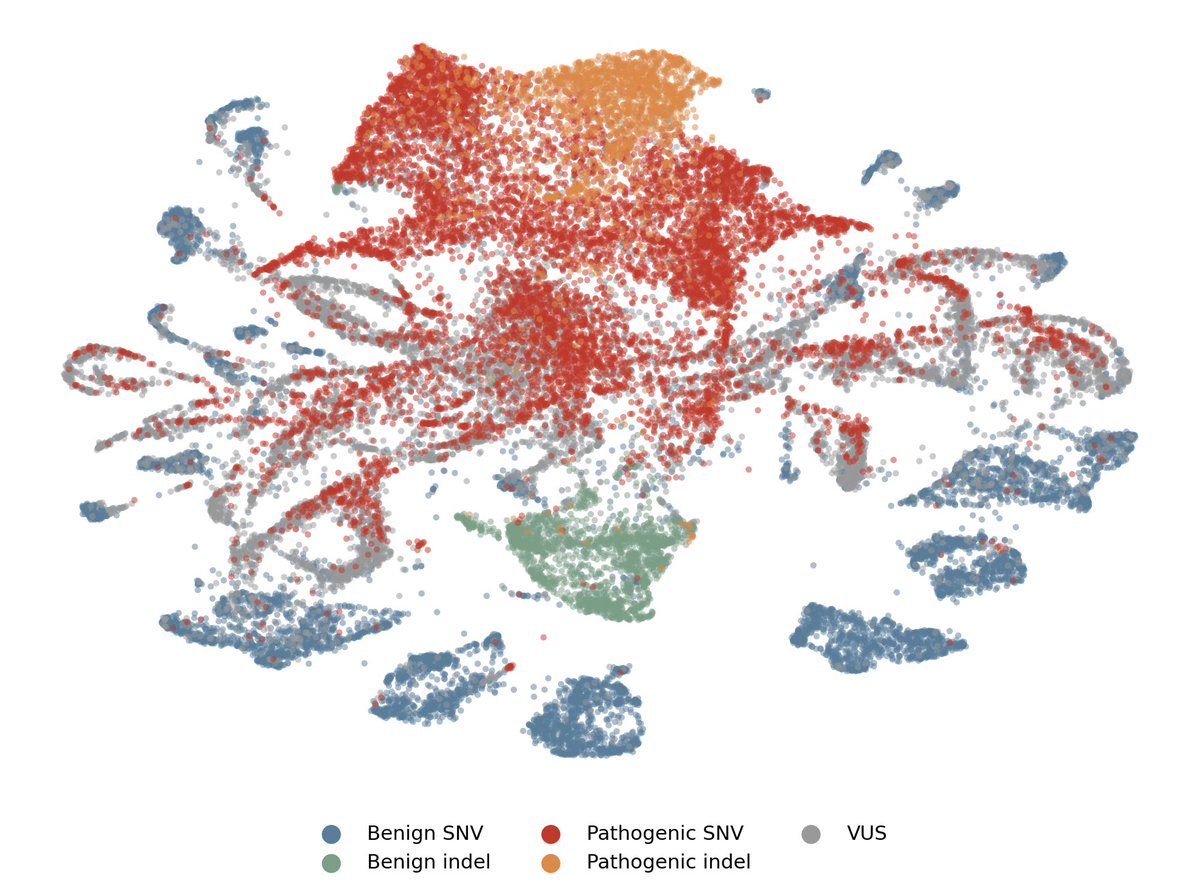 The core challenge of genomic medicine is figuring out what genetic variants actually do - so we can diagnose and treat resulting diseases. But many of the millions of variants in clinical databases are still “variants of uncertain significance” (VUS). (2/8)
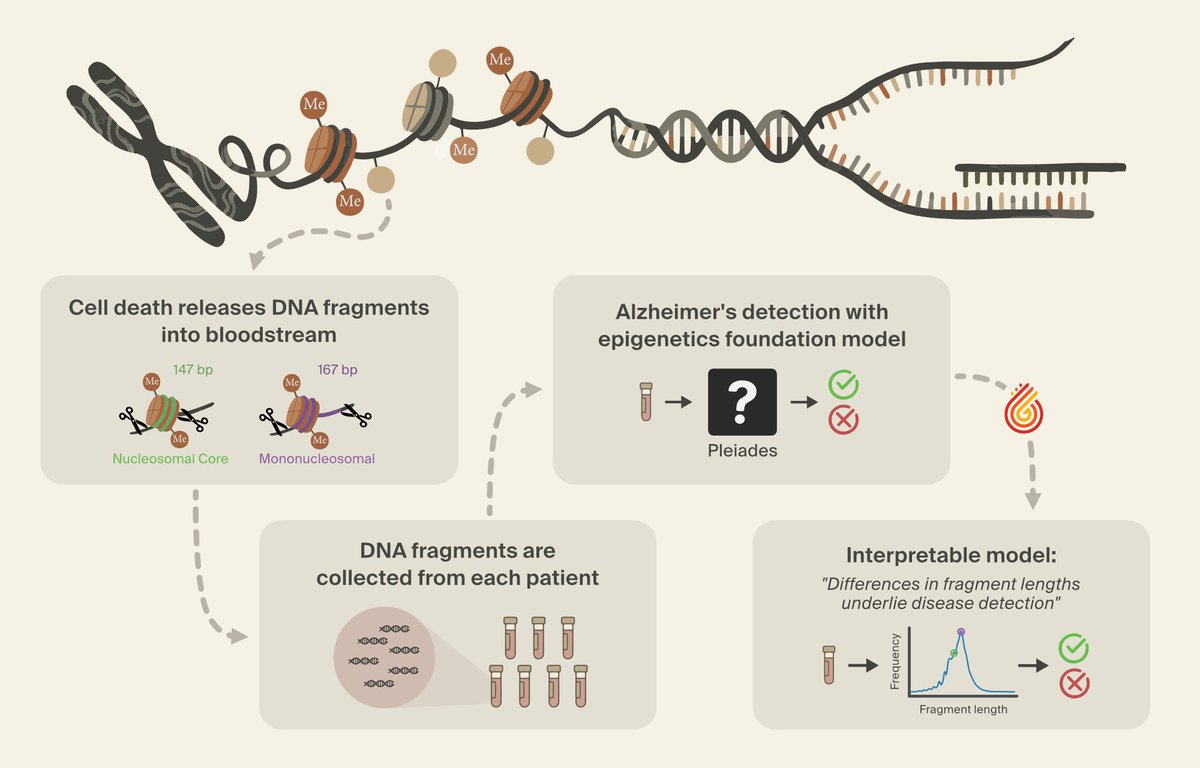 Bio foundation models (e.g. AlphaFold) can achieve superhuman performance, so they must contain novel scientific knowledge. @PrimaMente's Pleiades epigenetics model is one such case - it's SOTA on early Alzheimer's detection.
 The paper formalizes a Bayesian framework for model control: altering a model's "beliefs" over which persona or data source it's emulating.
 The method is like PCA, but for loss curvature instead of variance: it decomposes weight matrices into components ordered by curvature, and removes the long tail of low-curvature ones.
 PII detection in production AI systems requires methods which are very lightweight, have high recall, and perform well after training on only synthetic data (can't train on customer PII!)
 (2/7) Most interp methods study activations. But we want causal, mechanistic stories: "Activations tell you a lot about the dataset, but not as much about the computations themselves. … they’re shadows cast by the computations."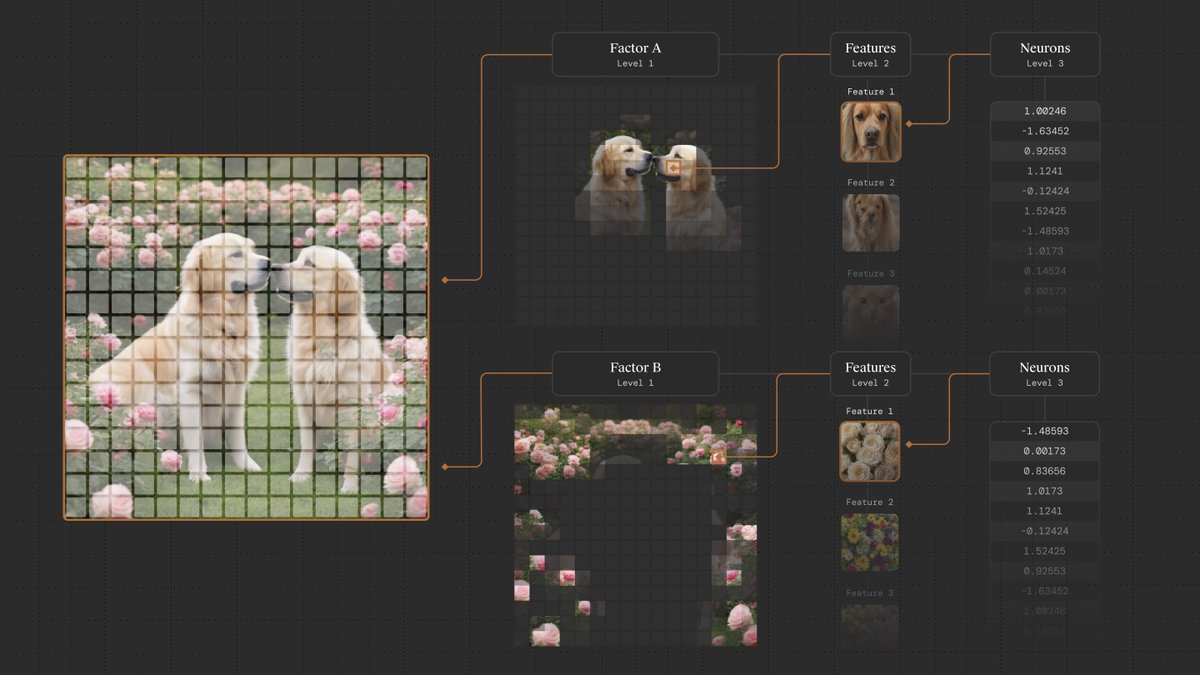
 (2/) Reasoning models like DeepSeek R1, OpenAI’s o3, and Anthropic’s Claude 3.7 are changing how we use AI, providing more reliable and coherent responses for complex problems. But understanding their internal mechanisms remains challenging.
 (2/) Today, Arc announced Evo 2, a next-generation biological model that processes million-base-pair sequences at nucleotide resolution. Trained across all life forms, it predicts and generates complex biological sequences. You can preview our interpretability work in the Evo 2 preprint and our blog post.