
🦔 Making financial nonsense make sense, one prickly take at a time 🦔 | Weekly newsletter: https://t.co/zgdVSm4aAx | Not financial advice (I'm a Hedgehog)
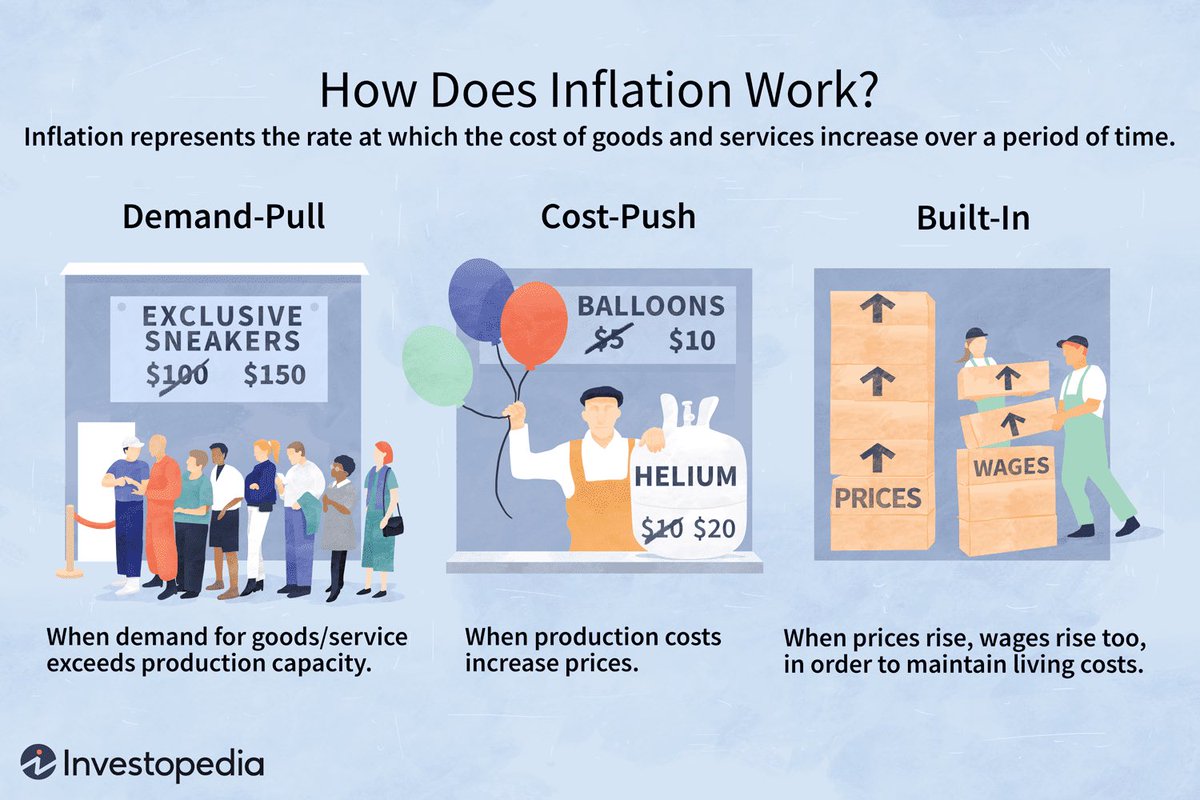 DEFLATION is the opposite which is when prices fall over time. Sounds great, right? Actually, it can be terrible for the economy. When prices keep dropping, people wait to make purchases. Why buy a TV today when it will be cheaper next month? This leads to less spending, which causes businesses to earn less, lay off workers, and lower prices even more. Debts also become harder to pay because the dollars you earn are worth less than when you borrowed. Japan struggled with this trap for decades.