Jaya Gupta Profile picture
tweets about AI and other fun stuff. currently @foundationcap; previously McKinsey, @georgiatech alum, @stackfolio (acquired), @peak6, @raymondjames
Dec 4, 2024 12 tweets 3 min read
SAP, Oracle, Salesforce are about to become this generation's Kodak.

Not from better features. Not from the cloud. But from the sudden realization that its core assumption - humans must translate their work for computers - just became obsolete. Every major enterprise company built empires worth hundreds of billions on structured data entry. That foundation isn't just crumbling. It's about to vanish entirely. Here's why... Enterprise software's core assumption was simple: humans must translate their work for computers. A $300B+ empire built on structured data entry.

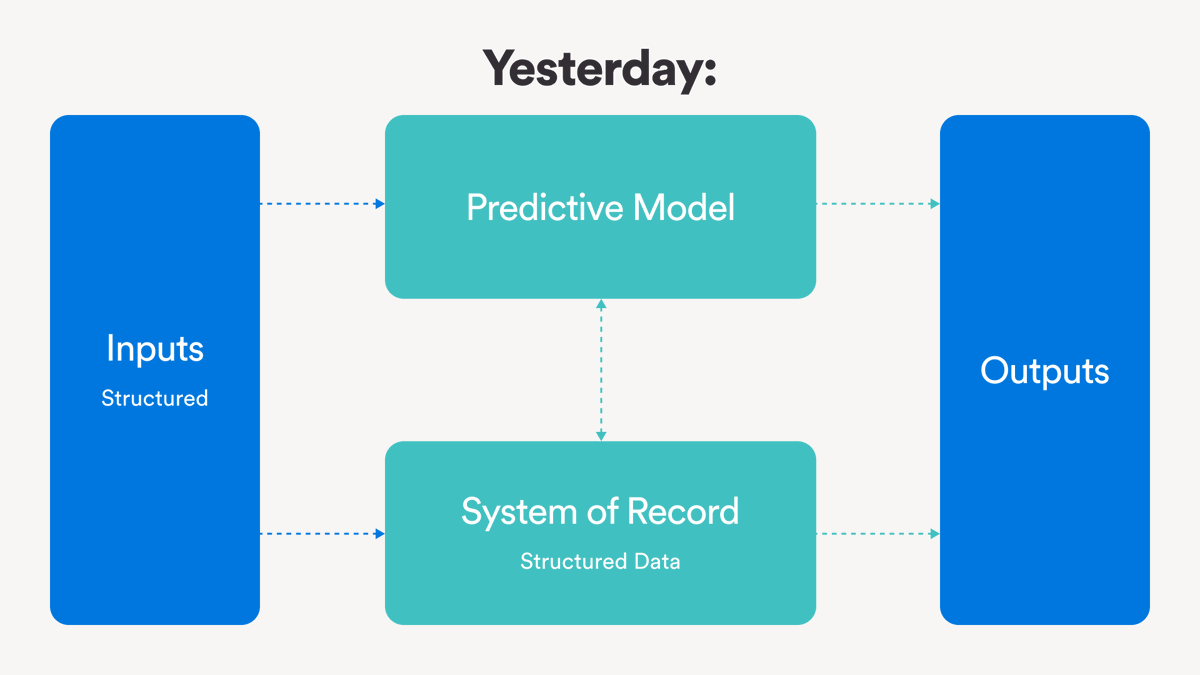
Sales calls become CRM entries. Customer conversations become support tickets. Real work becomes structured data. This artificial constraint created trillion-dollar companies.Image
Dec 3, 2024 17 tweets 4 min read
Services as Software Part 3 is here. And it's not about opportunity, it's about extinction.

Why? Services as Software isn't just a $4.6T opportunity.

It's the end of software as we know it. The $300B enterprise software industry is facing its asteroid moment.

SAP, @Oracle , @salesforce - the foundation these giants built on is crumbling. Not from competition. Not from the cloud. But from something far more fundamental.

For 40 years, we built software backward: Systems of Record (Salesforce) for forms, Systems of Engagement (@SlackHQ) for interfaces, Systems of Intelligence for analytics.

Each layer tried fixing problems of the last. But they all shared one fatal flaw: humans had to translate their work for computers to understand it.

Enter Systems of Agents.

Systems of Agents will begin by automating human workflows, initially coexisting with all existing systems.

The old boundaries between data entry, engagement, and analysis won’t just blur—they’ll become irrelevant. And Systems of Agents will be the new source of truth. Why?

Because for 40 years, enterprise software has forced humans to structure their work around databases. Every digital interaction requires translation: Sales calls become CRM entries. Customer conversations become support tickets. Real work becomes structured data.

This fundamental design choice created trillion-dollar companies.
Nov 1, 2024 12 tweets 3 min read
"Service as Software" is Silicon Valley's hottest buzzword right now.

Everyone's talking about SaaS becoming service providers, but no one's explaining HOW. The answer? After 6 months of research and 100s of startup conversations, we have the answer: Systems of Agents.

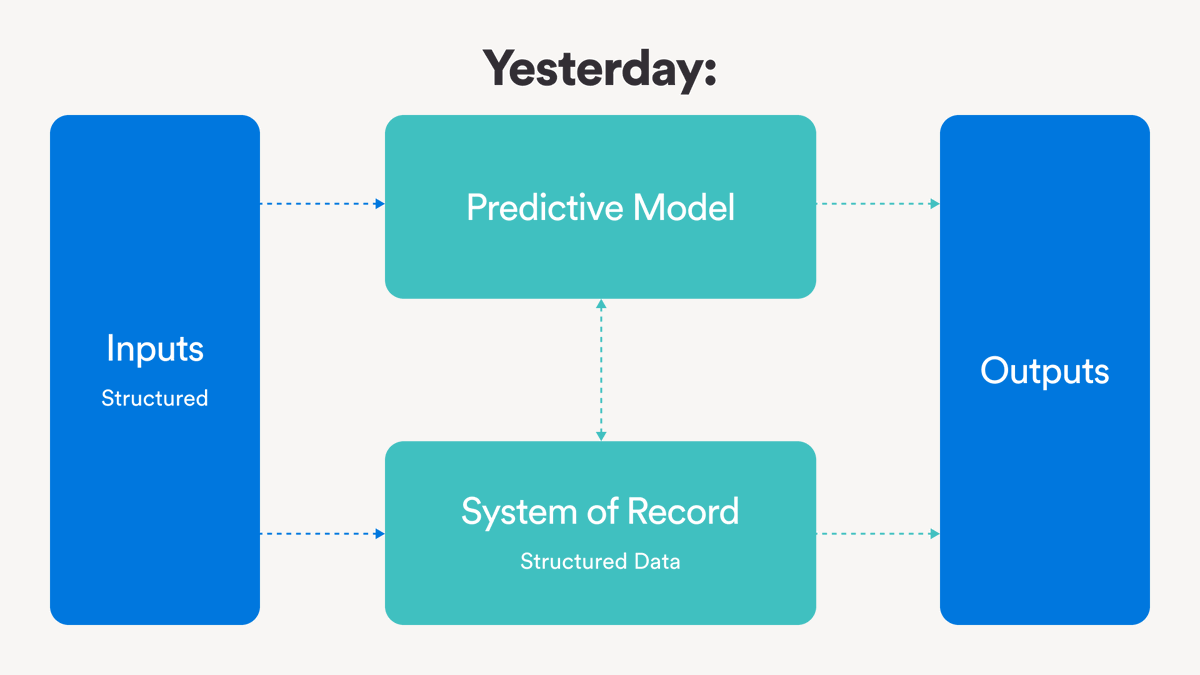
We're looking at a $4.6T opportunity.Image Enterprise software was built to organize how computers store data, not how humans actually work. The result? Employees waste time on data entry, critical context is lost, and "intelligent" systems analyze only a fraction of what matters in business. Image
Aug 13, 2024 7 tweets 2 min read
Goodbye AIOps: welcome AgentSREs—the next $100B opportunity

"AIOps" is just another buzzword that fails to capture the true potential of AI in IT ops and observability.

We're on the cusp of a fundamental shift in how organizations monitor, debug, and optimize complex software systems. The observability market is fragmented, with leaders like Datadog and Splunk rarely capturing >20% market share. Why? Because observability has been treated as a big data problem, not an intelligence problem.

The challenge isn't collecting data—it's making sense of it.
Apr 18, 2024 6 tweets 2 min read
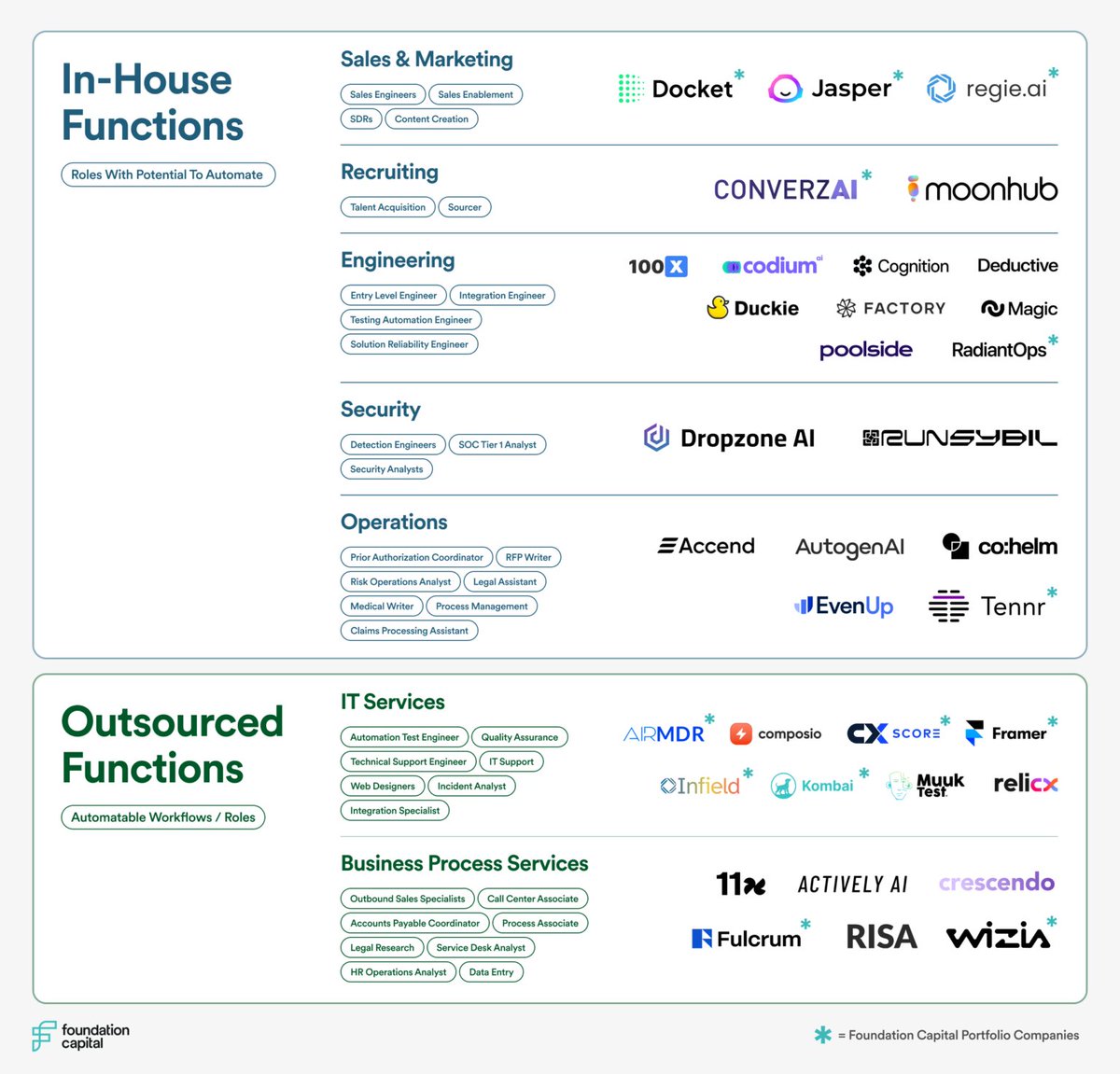
We at @FoundationCap believe there is $4.6T of work to be automated. AI companies are leading a transition from Software-as-a-Service to Service-as-Software, turning the table on the very essence of SaaS.

We look at the areas to be automated in two buckets:

1.) Salaries of jobs globally ($2.3 trillion in sales & marketing, software engineering, security, and HR)

2.) The amount spent on outsourced services and salaries—both IT services and business process services ($2.3 trillion, per Gartner)

In the software business, a company may sell access to its platform or tool, but customers are still responsible for using that tool to achieve the desired outcome.

In the services business, responsibility for achieving the desired outcome sits with the company selling the service.Image @salesforce one of the most successful software companies of all time, generates only $35 billion in revenue annually, and will grow incrementally. Global companies spend $1.1 trillion on sales and marketing salaries each year.
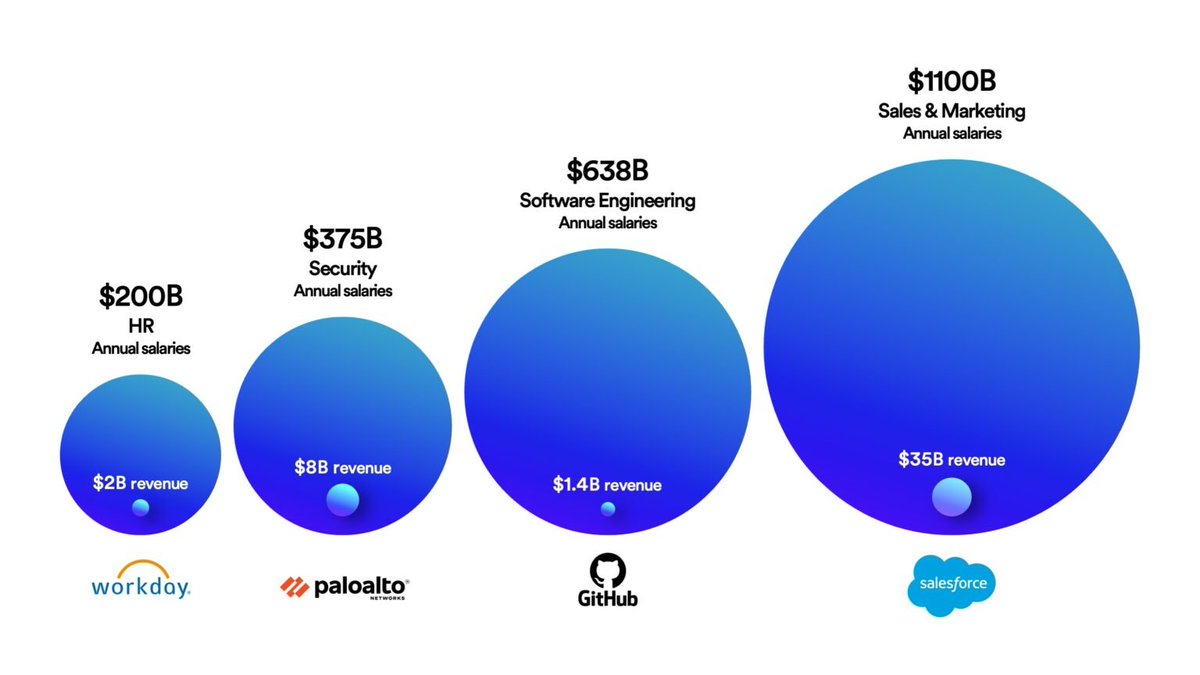
The size of the opportunity for AI disruption is many multiples larger than Salesforce could ever be. Same with @PaloAltoNtwks
- 8B in revenue and 375B in annual salaries.Image
Jun 20, 2023 15 tweets 3 min read
A Bay-Area born and based founder recently shared with me a struggle to sell an internal knowledge retrieval Slack bot in the Bay Area. It's a common problem many AI-focused startups face: targeting the right customer base. Who needs these tools? Why would the likes of Notion, Airtable, Gong, Retool or Slack with top-tier engineers and a culture steeped in AI expertise, be interested in spending hundreds or even thousands per month on an AI product? These companies have eng who've cut their teeth on hackathons.....
Jun 18, 2023 9 tweets 2 min read
1/9 🧵 why are proprietary API-based models outpacing open source adoption in the tech world? I think it could be less about the tech and more about the persona behind the professional. Let's explore…. 2/9 Leveraging frameworks like Langchain for example and OpenAI API allows SWEs to rapidly build and ship functional software (demos for now) This approach complements their fast-paced ethos, providing efficiency and immediacy.