Keegs 🧮🏗️ Profile picture
Arrest Elon Musk, let in more immigrants, give more foreign aid, and let more trans kids take HRT. (27, demiboy, they/them)
Dec 5, 2023 4 tweets 2 min read
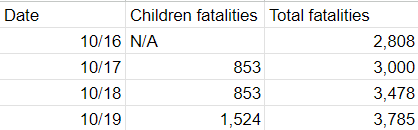
This thread is not convincing, especially b/c it explicitly takes the view that revisions imply falsification. It also leaves out important context: yes, the jump in children fatalities on 10/19 was large. But the jump was 0 on 10/18, and they only started tracking it on 10/17.
Image It's pretty likely that someone had the horrible task of going back and checking which fatalities were children, which takes time.
Also, between 10/24 & 10/25, 10/29 & 10/30, 11/5 & 11/6, and 12/2 & 12/3, the number of women who reportedly died did not increase.
Nov 16, 2022 9 tweets 3 min read
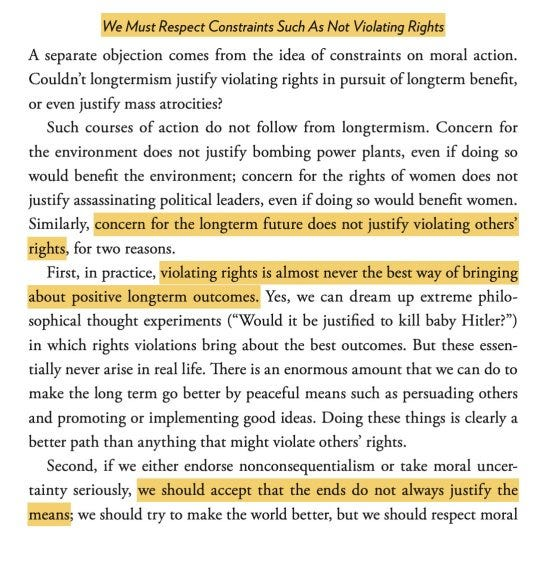
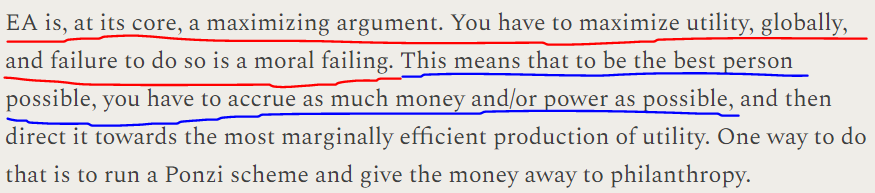
If you ever want to cause me immense pain, simply show me this page of garbage. Anyways let me start shit with my mutual now Image What is underlined in red is true! What is underlined in blue does not follow. The evils that come with accumulating money and power are well-known, and your job can be evil enough to offset the good you do by donating. Image
Jul 7, 2022 4 tweets 3 min read
Can Congress actually create multi-member districts without amending the constitution? @perrybaconjr mentions it here, but I forget the relevant constitutional text
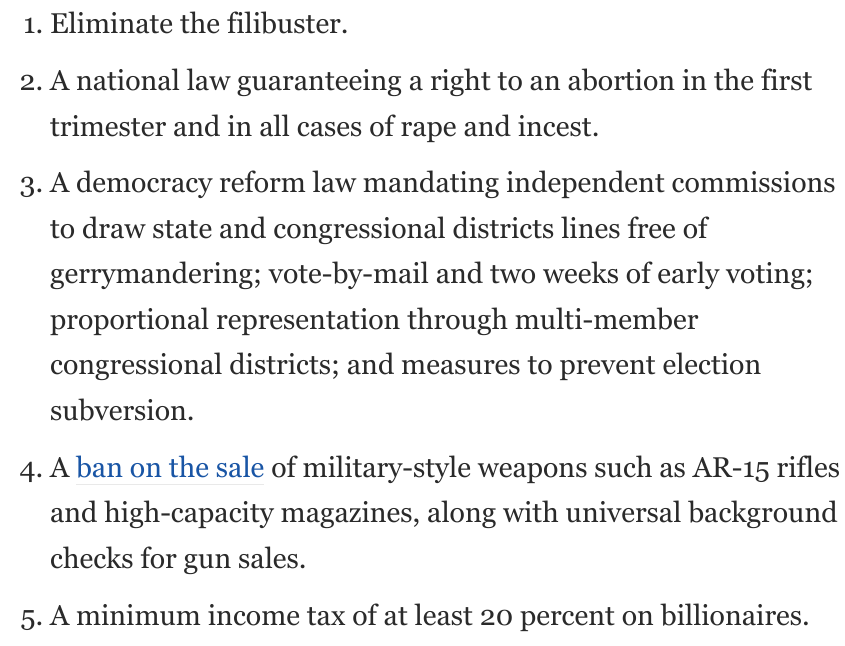
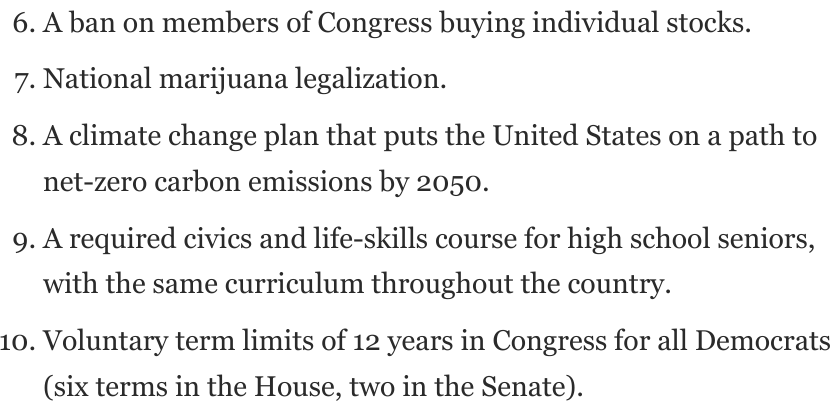
washingtonpost.com/opinions/2022/… I do think having this list of 10 ideas is good though. Here's how I would change this list:
Change 2 so that abortion is always allowed when the health of mother is threatened (it seems more popular than the rape exception).
pewresearch.org/religion/2022/…

Drop 4, 9, and 10, and add:
Nov 17, 2021 9 tweets 2 min read
Begging folks participating in today's discourse to actually read this (very short) article that started it. To me, it seems like good policy!
niskanencenter.org/how-iran-solve… I've been seeing some really strange arguments against it. People get really indignant about this kind of policy! Reminds me of this piece:
lesswrong.com/posts/4ZzefKQw…
Sep 20, 2021 6 tweets 2 min read
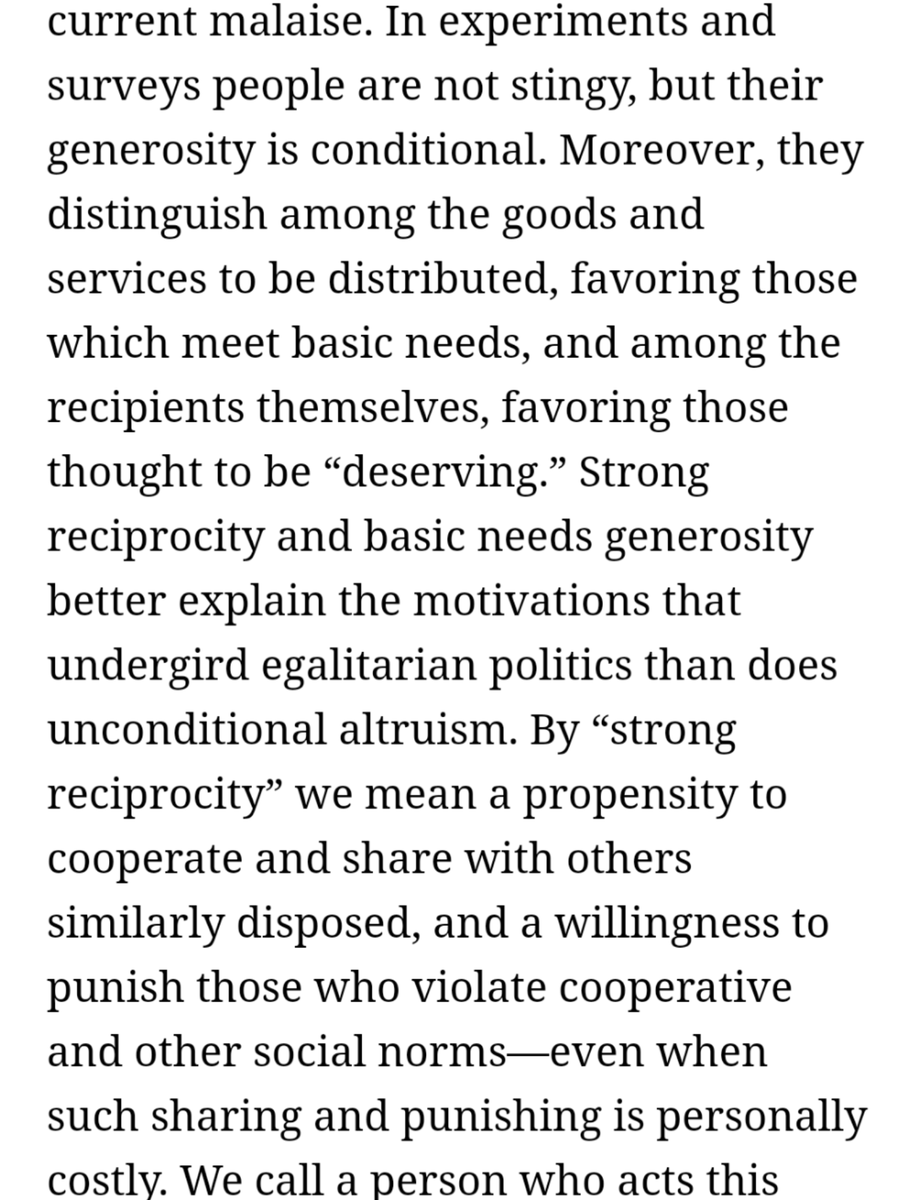
If justifications from welfare can come from strong reciprocity or basic needs generosity, we should lean into the former. The latter leads to cumbersome burdens on determining the "deservingness" of the poor, and paternalistic restrictions on how folks can spend their money. Article linked here:


If welfare is given on the basis of people needing the help for basic necessities, when they buy a phone or lobster or whatever, people will upset. They'll want to punish poor folks, even if it's not worth the cost.
Sep 9, 2021 5 tweets 2 min read
Here's an interesting question: what do you think is wrong about this meme? I can think of quite a few things. What comes to mind to me:
1. This article, basically. We should use more clear terms.
mattbruenig.com/2021/05/12/the…
2. Housing in general ought to be socialized, and folks should still pay rent for equity reasons.
peoplespolicyproject.org/2018/01/26/how…
Aug 29, 2021 6 tweets 2 min read
Firms in a post-Keynesian model be like: (Pulling from "Introduction to Post-Keynesian Economics by Marc Lavoie")
Firms here are not assumed to be profit-maximizing, but rather want to ensure their own survival. So, they want to gather economic power, to keep out new firms and control markets.
Aug 26, 2021 8 tweets 2 min read
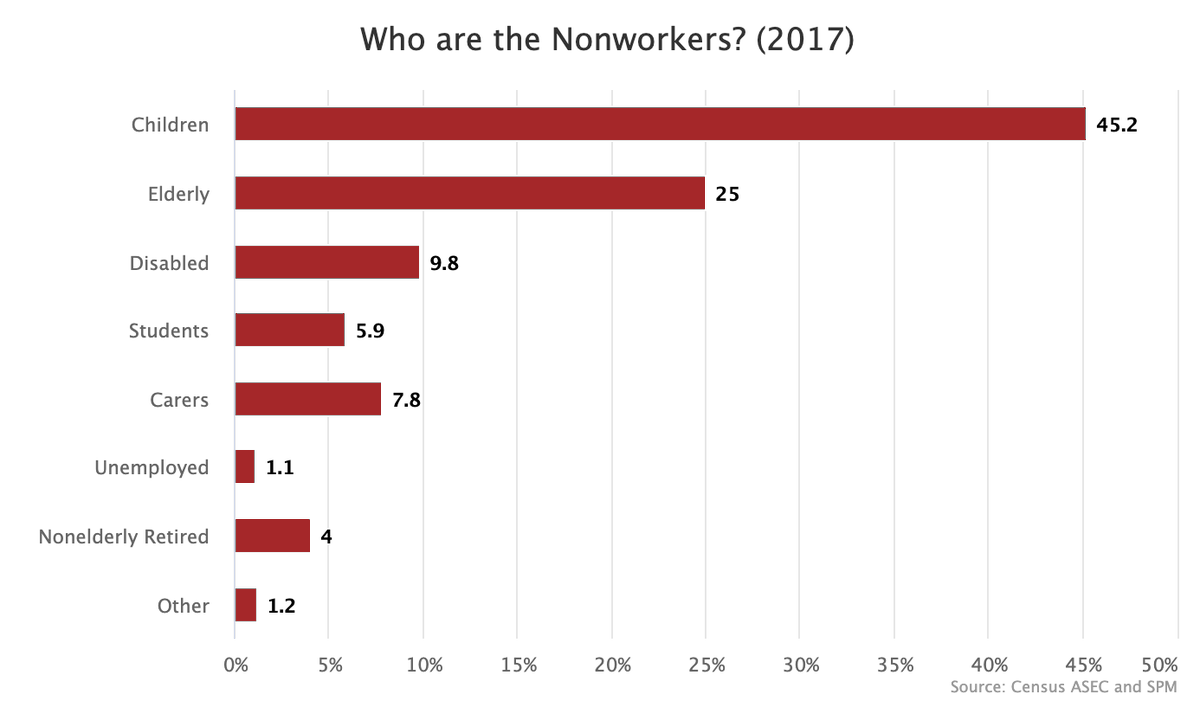
How I think about guaranteed income is that workers and all of these groups need to get income. The simplest way to do this is with UBI, of course, with its high headline cost. Some proposals reduce that cost by excluding children and/or the elderly. After all, we can ensure their coverage with a child allowance and minimum benefit at the poverty line. But why not go farther? With full-time workers, a $15 minimum wage should get families without non-workers out of poverty.
Jul 27, 2021 10 tweets 2 min read
When they say the panel has "some of the most distinguished thinkers on the topic of social democracy" but I don't see any Twitter mutuals (Commenting as I listen)
I really like the idea that the neoliberal turn involved a shift from thinking the economy is something we manage, to thinking we must adapt to global markets that are outside our control. This still shows up in lots of left party rhetoric outside the US.
Jul 11, 2021 4 tweets 2 min read
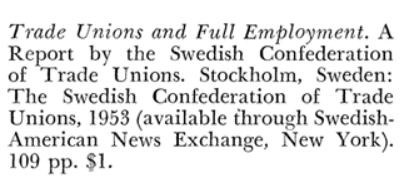
It looks like Meidner presented a paper called "Trade Unions and Full Employment", which explained the Rehn-Meidner model, to the LO Congress in 1951. Does anyone know where I can get the translated text of that paper?

cc: @jdcmedlock @ColinJMcAuliffe If you can only find it in Swedish, that's a great start! I would pay to have it translated honestly.
Jun 5, 2021 17 tweets 4 min read
I'm very curious to hear from folks why they've changed to different ideologies over time. Did your ethics change? Did you get new evidence, new theory, or did you just abandon an ideology after you learned more about it? How long did the changes take? I've been a committed utilitarian since maybe 10th grade, before I even knew the word "utilitarian". Sans a period when I was specifically a positive utilitarian in like the first year of college, that hasn't changed.
Apr 4, 2021 4 tweets 1 min read
From "The Three Worlds of Welfare Capitalism, on Sweden":
Labor force participation for women with kids 0-2 went from 43% in 1970 to 82.4% in 1985. But, on any given day, 47.5% of those women were absent from work, but still being paid. Lots of paid leave policy was implemented on that period. In 1980, EXCLUDING vacation and holidays, workers on average spent 11.2% of their hours absent but paid.

This represents a move towards decommodification of labor time:
Apr 3, 2021 11 tweets 3 min read
Did not think "The Three Worlds of Welfare Capitalism" would build up to such a incisive and devastating critique of capitalism. This book slaps The critique is basically that capitalism can't handle the wage demands of full employment while maintaining decent growth and low, steady inflation.
High wage demands lead to lowered profitability, therefore less investment and less growth. It also leads to wage-push inflation.
Apr 2, 2021 7 tweets 2 min read
A farmer-labor alliance backing socdem parties was key to the success of post-war Scandinavian countries. What's interesting is how they differed: in Denmark, farmers held more power and numbers, leading to more of a focus on price stability and agricultural subsidies for a time. In Norway, the Labor party alone held a majority of seats in parliament from 1945-1961. They used this dominance to command a large amount of investment.

In Sweden, labor was particularly strong, thus leading to the labor-focused Rehn-Meidner model.
Mar 30, 2021 6 tweets 2 min read
It made sense for early liberals to oppose ​the state, as it was usually an oppressive, aristocratic institution vs. the potential freedom of the market.

It made sense for early socialists to oppose the state, as it was controlled by capitalists, with voting highly limited. But these views are now both outdated. The market is the main aristocratic and oppressive force. States are complex, and voting rights are often under attack, but the same restrictions no longer exist. The state now can be, and is, regularly used as a tool for good by the people.
Jan 9, 2021 14 tweets 5 min read
Might as well respond to this article that's been going around:
currentaffairs.org/2021/01/the-on… Hey, I'm right here!
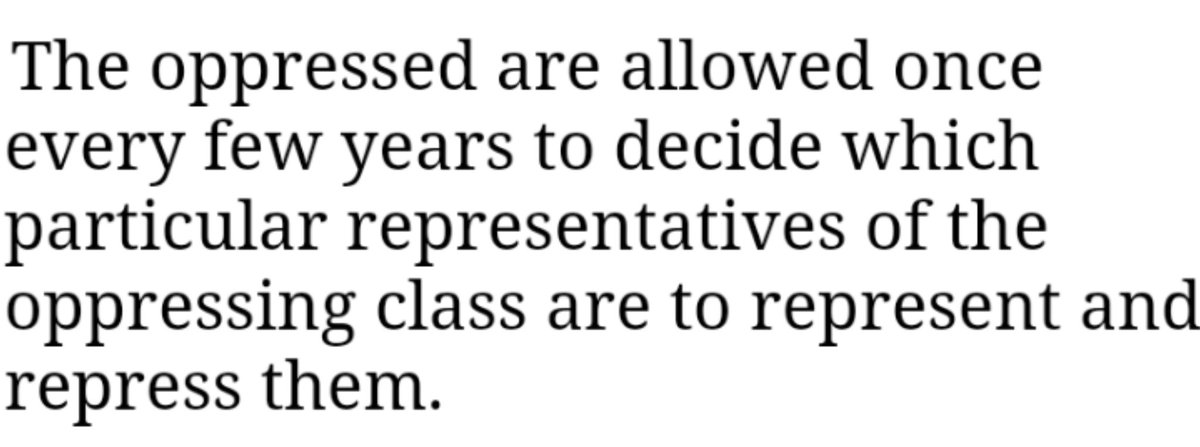
Anyways, I've seen this confusion around many things. A simple rephrasing of econ 101 in terms of class conflict should clear things up: we want the capitalist class to have internal conflict through competition, as this will leave normal folks better off. Image
Dec 21, 2020 4 tweets 1 min read
Might be a hot take, but I think classical socdem & a more libertarian socialism are both valid ideologies, the key trade-off is one of effort vs. efficiency. It would take tons of effort to be involved with a bunch of decision-making bodies, even if the decisions were better. There is also somewhat of an equality issue, centralization can lead to higher equality between places with different productive capacities, but that can be helped with a decent tax and welfare system while leaving decisions about production under more decentralized control.
Dec 19, 2020 4 tweets 1 min read
It's truly incredible how right libertarian justifications for property are broken all the way down.

Property necessarily started with aggression.
Even if it didn't necessarily, it usually did in practice.
Mixing your labor with land does not make it an extension of you. Even if it did, this would cause ridiculous results, like the classic example of pouring tomato soup into the ocean.
Even if we ignore those ridiculous results, it's still not clear what part of the land you get to own by laboring on it. Just the dirt you touched?