
Head of Analysis at VE Insight. Advising investors on political risks in CESEE (+Austria). Austro-Essexian. Opinions my own etc. Find me at the Cloudless Place.
 If nothing else, the victory of the FPÖ is symbolic. Not only did it secure first place, but it has secured its highest vote share ever in a parliamentary election. Yet this reflects its success in consolidating the hard-right vote rather than adding new constituencies. 2/
 It’s worth pointing out that, despite having been active in Austrian politics for a 1/4 century, relatively little is known about Kickl, who is very private. Recently, @profilonline journalists @bauer_gernot and @RobTreichler published a book that unearthed new material. 2/
 Brief recap: Schmid, an erstwhile self-proclaimed “praetorian” of Kurz, was in 2019 appointed as CEO of ÖBAG, the state holding company. Previously, he was the ranking civil servant at the Ministry of Finance, from where he pulled strings to support Kurz in various ways. 2/
 First, contrary to hitherto impressions, the alarm bells about Signa did not start ringing recently. They started ringing many years ago - as early as 2017 and as late as 2021 - but the "collective psyche," as we may call it, did not take notice. 2/
 Kurz resigned as chancellor in October 2021 after becoming a subject of investigation in two corruption cases. In December of the same year, he left politics altogether, moving to Silicon Valley to work as a lobbyist for US billionaire Peter Thiel, among other things. 2/
 A retrospective: in 2017, the SPÖ was shunted into opposition after the People’s Party (ÖVP) and far-right Freedom Party (FPÖ) formed a coalition headed by Sebastian Kurz. Its leader, former chancellor (2016-17) Christian Kern, resigned in frustration in 2018. 2/

 ..or not. In recent months, as the fetid hot air of Sebastian Kurz deflated from the ÖVP, the SPÖ shot from the doldrums of the 2019 election into first place, taking up to 30% of the vote, some 8 points ahead of the ÖVP and far-right Freedom Party (FPÖ), respectively. 2/
 A recap for the uninitiated and amnesiacs: in 2016, former Green party leader VdB narrowly defeated the candidate of the far-right Freedom Party (FPÖ), Norbert Hofer, in a runoff. Yet due to technical difficulties with postal votes, the runoff round had to be repeated. 2/
 A retrospective: Nehammer was appointed chancellor and ÖVP leader in December 2021, following an autumn of chaos that begun with the resignation of Sebastian Kurz as chancellor. Kurz was replaced by Foreign Minister Alexander Schallenberg but remained ÖVP leader. 2/
 There are other neutral states in Europe, but Austria is in some respects unique because its neutrality is enshrined in the constitution. At the time, this was the least bad option for Austria because it was able to escape partition or outright vassalisation by the USSR. 2/

 Over the weekend, state elections were held in Upper Austria (OÖ) and local elections in Graz. In both cases, the incumbents were Sebastian Kurz’s right-wing People’s Party (ÖVP). Despite the travails of Kurz, the ÖVP was expected to hold on; no upsets were expected. 2/
 Briefly summarised, Kurz is suspected of having made false statements to the parliamentary committee investigating the background to the Ibiza affair, specifically the “corruptibility” of the 2017-2019 coalition between the ÖVP and far-right Freedom Party (FPÖ). 2/
 Background: HC Strache, the former deputy chancellor and leader of the far-right Freedom Party (FPÖ), was secretly filmed in Ibiza ahead of the 2017 election speaking, among other things, of “Postenschacher”, i.e. political appointments, as well as illegal political donations. 2/

 Likewise, in the month thereafter, it will be four years since Kurz rode a wave of internal intrigue to become leader of the ÖVP, ending its grand coalition with the SPÖ, and changing its ideological profile perhaps forever. 2/

 Painfully, the Group of States against Corruption (GRECO) then found the Austrian authorities to have only implemented 2 of its 17 recommendations in 2017 on anticorruption, ranking behind Turkey and just ahead of Serbia. GRECO deemed its performance “globally unsatisfactory.” 2/
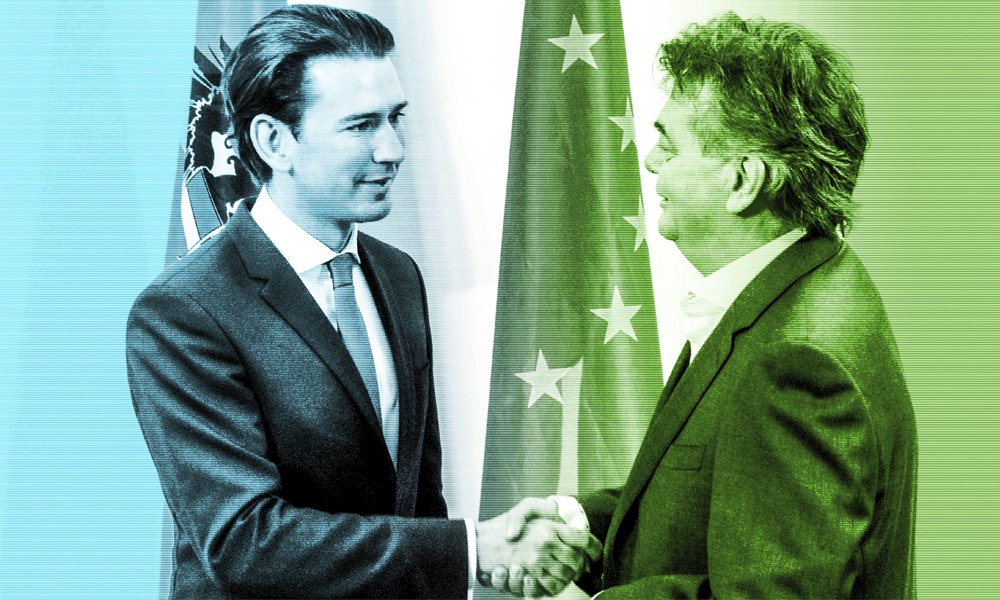 Its progress is of particular interest ahead of the German federal election later this year, which could produce a similarly colour-coded coalition. What can be learned from the Austrian variant? 2/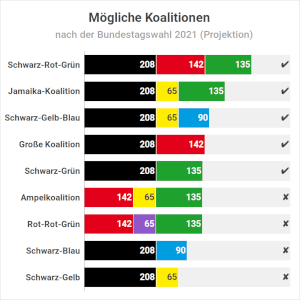
 The spotlight has fallen on the domestic intelligence agency, the Federal Agency for the Protection of the Constitution and Combating Terrorism /BVT) b/c it did not act on a tipoff by the Slovak police that the suspect had tried to buy ammunition in Bratislava in July. 2/
 The results at present are absent postal votes, of which there are some 380,000. No major surprises are expected here that could impact upon the fundamentals. 2/