MitohormesisClub Profile picture
I help high-performers reclaim 2 hrs of deep sleep in 30 days using sunlight & quantum biology. DM “SUN” for free Light Audit. #CircadianCEO #QuantumSleep”
Apr 1 4 tweets 6 min read
Imaging the Quantum Dawn: MRI as a Direct Window into Light-Driven Mitohormesis, Cellular Water Integrity, and the Photobiological Core of Resilience🎆🎇🌅🌌

Kola Adetu | 1st April 2026

In the DeSci framework that integrates photobiology, quantum biology, and first-principles bioenergetics, sunrise light initiates a precise cascade: it entrains circadian clocks, sustains beta-oxidation of fats (producing abundant metabolic water), excites hydrated melanin to reversibly split water into electrons, protons, hydrogen, and oxygen, and stabilises quantum coherent domains (CDs) and exclusion zone (EZ)-like interfacial water as semiconductor-like media for low-loss charge transfer. This system does not merely generate ATP via the TCA cycle and electron transport chain (ETC). It maintains cellular integrity through ordered water dynamics and controlled mitochondrial reactive oxygen species (ROS).

Mitohormesis—the adaptive response in which low-level mitochondrial ROS act as signaling molecules to upregulate antioxidant defenses, mitochondrial biogenesis, proteostasis, and stress resistance—emerges as the central first-principle mechanism. Without consistent dawn exposure, the cascade falters: beta-oxidation slows, metabolic water yield drops, melanin’s photo-semiconductor function weakens, coherent water domains destabilize, and mitochondrial ROS shift from beneficial signals to damaging excess. The result is loss of cellular integrity, detectable non-invasively through diffusion-weighted MRI (DWI) and advanced water-sensitive sequences that probe intracellular water mobility, membrane barriers, and compartmental organization.

First Principles: Water, Light, and Mitochondrial Signaling as the Foundation

Life’s energy architecture begins with water as the primary medium and transducer. Standard proton MRI detects signals almost exclusively from hydrogen nuclei in H₂O (60–70% of soft tissue). Diffusion-weighted imaging encodes the random Brownian motion of these water molecules, revealing how cell membranes, organelles, macromolecules, and cytoskeletal elements restrict or facilitate movement.

- Restricted diffusion (bright on DWI, low apparent diffusion coefficient/ADC) indicates intact, dense cellular environments where water is compartmentalized intracellularly—reflecting high cellularity and preserved membrane barriers.
- Elevated diffusion (higher ADC) or increased free-water fraction signals membrane compromise, extracellular expansion, or loss of intracellular ordering, hallmarks of degeneration.

Advanced techniques add granularity:
- Free-water imaging isolates extracellular unbound water (rises in inflammation or tissue rarefaction).
- Intracellular water lifetime (τᵢ) and transmembrane exchange rates (e.g., via filter-exchange imaging) directly assess membrane integrity and pump activity linked to energy status.
- Myelin water 👀 imaging and diffusion tensor/NODDI models quantify trapped or anisotropic water, reflecting axonal and myelin health.
- Neuromelanin-sensitive MRI exploits melanin’s paramagnetic properties to map pigmented neuron integrity in the substantia nigra and locus coeruleus.

These metrics are not secondary correlates. They report on the physical state of intracellular water—its viscosity, structuring, and exchange—directly influenced by the light-melanin-metabolic water-coherent domain system.

The Integrated Cascade: Sunrise → Beta-Oxidation → Melanin Water Splitting → Coherent Water → Mitohormesis

Step-by-step first-principle flow:

1. Sunrise light (balanced red, near-infrared, and blue wavelengths) entrains peripheral clocks and directly photo-modulates cytosolic pathways (e.g., AMPK activation), sustaining efficient beta-oxidation of fats. Fat oxidation yields ~1.07 g metabolic water per gram of fat—far more than carbohydrates—replenishing intracellular water pools.

1 of 3 📸🔆🎆🎇🌅🌌Image 2 of 3 📸🔆💫👑🎆🎇🌅

2. Hydrated melanin, a broadband organic semiconductor, absorbs the solar spectrum and reversibly dissociates interfacial water (2H₂O ↔ 2H₂ + O₂ + 4e⁻). This supplies electrons and protons that can feed redox pools upstream of or parallel to TCA-derived reducing equivalents, while maintaining melanin’s hydration-dependent conductivity.

3. Light-driven melanin activity, combined with metabolic water, promotes formation and stabilization of quantum coherent domains (CDs) (per Del Giudice QED models) and EZ-like interfacial water (per Pollack). These ordered layers exclude solutes, store photonic energy, and act as proton/electron semiconductors, optimising proton gradients around mitochondrial cristae and enabling efficient charge flow with minimal loss.

4. Properly tuned mitochondrial electron flow, supported by this quantum-classical infrastructure, generates low-level mitochondrial ROS. These ROS trigger mitohormesis: activation of Nrf2, PGC-1α (mitochondrial biogenesis), sirtuins, unfolded protein response, and enhanced antioxidant systems. The outcome is resilient mitochondria, preserved membrane integrity, and ordered intracellular water—manifesting as stable restricted diffusion on MRI.

No sunrise breaks the chain: Circadian desynchronization slows beta-oxidation, reducing metabolic water and redox support. Photonic input to melanin declines, coherent domains lose order under thermal fluctuations, and mitochondrial function drifts toward inefficiency. Low-level ROS signaling collapses or escalates into pathological oxidative stress. Membranes lose integrity, intracellular water becomes less restricted or more extracellular, and neuromelanin depigmentation accelerates in vulnerable regions. Diffusion MRI captures this as acute restricted diffusion (cytotoxic swelling from energy failure) transitioning to chronic elevated free water and ADC (membrane breakdown, tissue rarefaction, white-matter degeneration).

MRI as the Readout of Mitohormetic Integrity

In the light-aligned state, sustained mitohormesis maintains:
- Optimal intracellular crowding and viscosity → physiologically restricted diffusion with preserved low ADC in dense tissues.
- Intact transmembrane exchange and pump activity → stable intracellular water lifetime.
- Ordered interfacial water layers → support for myelin water fractions and anisotropic diffusion along axons.
- Robust neuromelanin content → strong signal in substantia nigra on specialized sequences, reflecting preserved pigmented dopaminergic neurons.

In the degenerated state (chronic light deprivation), loss of mitohormesis yields the opposite: increased free-water fractions, higher ADC, disrupted DTI metrics, and reduced neuromelanin contrast—direct imaging evidence of the cascade failure.

Emerging techniques like activity-dependent ion and water dynamics (MADI) or transmembrane water exchange imaging already link water mobility to sodium-potassium pump function and energy status, offering potential future proxies for mitohormetic health.

DeSci Pathways: Testing the Framework Without Gatekeeping

This model invites decentralized validation:
- Citizen protocols combining timed sunrise exposure (or targeted red/NIR photobiomodulation) with serial diffusion MRI, free-water mapping, and neuromelanin imaging.
- Open datasets correlating wearable light spectra, ketone/fat-oxidation biomarkers, and MRI water metrics in metabolic or neurodegenerative cohorts.
- Iterative testing of whether restoring dawn cues or supporting melanin hydration rescues diffusion abnormalities via enhanced mitohormesis.

2 of 3 🎇🎆🌌🌅
Feb 8 7 tweets 3 min read
By weaponizing or carelessly weaponizing painful information, you re-open trauma in those already carrying it — and that recurring violation is one of the under-acknowledged engines keeping modern society emotionally arrested and socially dysfunctional. Pattern that is structurally useful to a society that quietly prefers to remain emotionally crippled and controllable.” 2X
Societal emotional dysregulation refers to a widespread, collective pattern where large segments of a population (or society as a whole) struggle to modulate intense emotions, maintain balanced responses to stressors, and return to states of calm connection after threat or activation. It's not merely millions of individuals happening to have personal emotional dysregulation at once — though that contributes — but rather a systemic, feedback-loop dynamic at the cultural, institutional, and nervous-system level that keeps the collective nervous system biased toward threat, polarization, reactivity, and shutdown.
👇🏿
Dec 3, 2025 5 tweets 5 min read
🧵 1/5
Did you know BLUE LIGHT silently destroys your Vitamin B12?

FOOD GURU AND GYM BROS HAVE NO CLUE.

Yes, the same light from your phone, laptop, and those “energy-efficient” LEDs is photodegrading one of the most fragile (and important) vitamins in your body.
Here’s the science most people have never heard… 🧵🔥

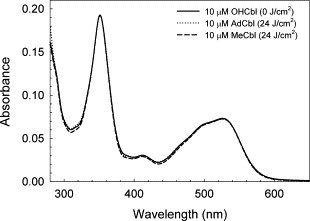
All forms of B12 (methyl, adenosyl, hydroxo, cyano) are EXTREMELY light-sensitive.
Expose a B12 solution to daylight or blue LEDs → 50–90% can be destroyed in hours.
That’s why injections come in amber vials.
(Source: Juzeniene 2013, Toda 2022)Image
Image
2/5
Fact #2: Newborns under blue-light phototherapy for jaundice lose 30–40% of their plasma B12 in just 24–48 hours.
Doctors now recommend monitoring B12 + riboflavin in these babies.
(Source: Wang 2021, Mendelson 2023)

Fact #3: Riboflavin (vitamin B2) + blue light is a deadly combo for B12.
Blue light excites B2 → creates reactive oxygen → obliterates B12 up to 3× faster.
If you take a B-complex, never leave it on a sunny shelf.
(Source: Ahmad 2004, Monajjemzadeh 2014)
Dec 1, 2025 4 tweets 7 min read
🧵

The Water You Don’t Drink
How mitochondria, infrared light, and bear fat reveal the hidden physics of winter hydration

Kola Adetu | November 2025

In the high Arctic, a 500-kilogram polar bear can go an entire winter without taking a single sip of liquid water. In the snow dens of Yellowstone, black bears hibernate for seven months sealed inside a frozen tomb, producing not one drop of urine—yet their blood remains as perfectly balanced as an Olympic swimmer’s. Meanwhile, in the fluorescent-lit offices of Stockholm or Chicago, millions of humans shuffle through January complaining of cracked lips, brain fog, and an unquenchable thirst they can never quite satisfy no matter how many stainless-steel bottles they refill.

The bears are not superhuman. They are simply better at something most of us have forgotten we can do: make water inside our own cells.

For more than a century, physicians have treated dehydration as a simple accounting problem—fluid in versus fluid out. Drink eight glasses, add electrolytes, problem solved. But a quiet revolution in biophysics, biochemistry, and mitochondrial science is revealing that this picture is almost comically incomplete. Water, it turns out, is not merely something you import through your mouth. A surprising fraction of it is manufactured on demand inside the nanoscale power plants of your cells, and the efficiency of that factory is governed less by how much you drink than by light, electromagnetic fields, fat, and the quantum choreography of electrons.

Welcome to the new science of winter hydration.

The Fourth Phase of Water (and Why Winter Destroys It)

In 2001, Gerald Pollack, a bioengineer at the University of Washington, made a heretical observation: water next to hydrophilic surfaces—think cell membranes, mitochondrial cristae, or the collagen in your skin—does not behave like ordinary bulk water. It forms an ordered, hexagonal lattice of H3O2, excludes solutes, and carries a negative charge. Pollack called this “exclusion-zone” or EZ water; critics called it pseudoscience. Two decades later, the EZ has been confirmed by X-ray diffraction, neutron scattering, and second-harmonic imaging in laboratories from Seoul to Stuttgart.

EZ water or Quantum Coherent Domain QCD Water matters because it may constitute up to 70 % of the water inside a healthy cell. It is the battery that drives proton currents, lubricates ATP synthase, and keeps mitochondria from drowning in their own chaos. And it is exquisitely sensitive to infrared light.

When near-infrared photons (700–1400 nm) strike EZ water, they drive charge separation, expanding the lattice by a factor of four. Far-infrared (heat) does the same through lattice vibrations. In summer, when you walk outside bare-armed, you are literally bathing your cells in the wavelengths that build structured water. In winter, when you are clothed, indoors, and bathed in blue-enriched LED light, the factory shuts down. Pollack’s group has shown that 2.4 GHz Wi-Fi fields—the frequency of your router—shrink EZ layers by 15–20 % in minutes. Blue light, meanwhile, poisons cytochrome c oxidase, the final electron acceptor in the mitochondrial chain, halting the reaction that produces two water molecules for every oxygen molecule reduced.

The result: your cells literally run out of usable water even when your bloodstream is full of it.

1 of 3 🧌👇🏿🔆Image 2 of 3 The Mitochondrial Faucet

Every second, the average human produces about 300 milliliters of water inside mitochondria—roughly the volume of a can of soda over a day. The reaction is simple on paper:

O2 + 4 e- + 4 H+→ 2 H2O

But the efficiency of that faucet is anything but fixed. In hibernating bears, mitochondrial coupling is so tight that nearly every electron that enters the chain exits as water. Proton leak—the wasteful backflow that turns energy into heat instead of water—drops to almost zero. In Antarctic scientists living under six months of darkness, mitochondrial leak rises, and metabolic water production falls by 15–20 %.

Molecular hydrogen (H2, the smallest antioxidant in the universe, can restore that efficiency. By scavenging the hydroxyl radicals that damage Complex I, H2 keeps electrons flowing and water pouring. In double-blind trials, hydrogen-rich water has increased mitochondrial water production by measurable fractions in athletes and sepsis patients alike.

Lessons from the Ice

The most dramatic demonstrations come from the extremes. Pregnant polar bears denning on sea ice produce milk—70 % water—for cubs using nothing but the fat on their backs. The stoichiometry is ruthless: oxidize one kilogram of blubber, obtain 1.1 liters of water, exhale the CO₂, and repeat for 240 days. Hibernating black bears take it further: they recycle every molecule of urea through gut microbes, shutting off urination entirely. Their plasma osmolality barely budges while humans would be comatose.

These are not curiosities. They are existence proofs. If a bear can run its entire water economy on fat and oxygen, a human can at least shift the dial.

A Winter Protocol Grounded in Physics

The emerging picture is no longer about drinking more. It is about rebuilding the internal water cycle:

Morning sunlight or 10,000-lux therapy full spectrum lamp to reset vasopressin and cortisol, restoring nighttime water retention.

Bare-skin near-infrared exposure (sun, panels, or sauna) to expand EZ water fourfold.

Dietary fat as the primary fuel —each gram of fat oxidized yields 60 % more water than carbohydrate.

Molecular hydrogen and grounding to reduce oxidative stress and proton leak, squeezing more water from every breath of oxygen.

Nasal breathing and humidity to recycle the 400 ml we normally exhale daily.

In the Arctic field studies, soldiers who followed crude versions of this—high-fat rations, morning light boxes, and electrolyte discipline—cut their fluid deficit by 40 % compared with controls guzzling water alone.

The Future of Thirst

One day, perhaps soon, your smartwatch will not nag you to drink another eight ounces. It will measure the infrared charge on your skin, the deuterium content of your breath, the coupling efficiency of your mitochondria—and tell you whether your cells are truly hydrated.

Until then, the bears have already shown us the way. In the deepest cold, when the world withholds every drop of liquid water, life does not wait for spring. It turns inward, lights the furnace of its own fat, and drinks from the fire.

That is not a metaphor. It is biochemistry at its most elegant—and a reminder that the most sophisticated hydration strategy on Earth may be the one we evolved before we ever learned to carry a bottle.

2X 🧌👇🏿🔆
Nov 8, 2025 4 tweets 3 min read
MELANIN’S ROLE IN IMMUNE SYSTEM AND MS

🧵 1 of 2
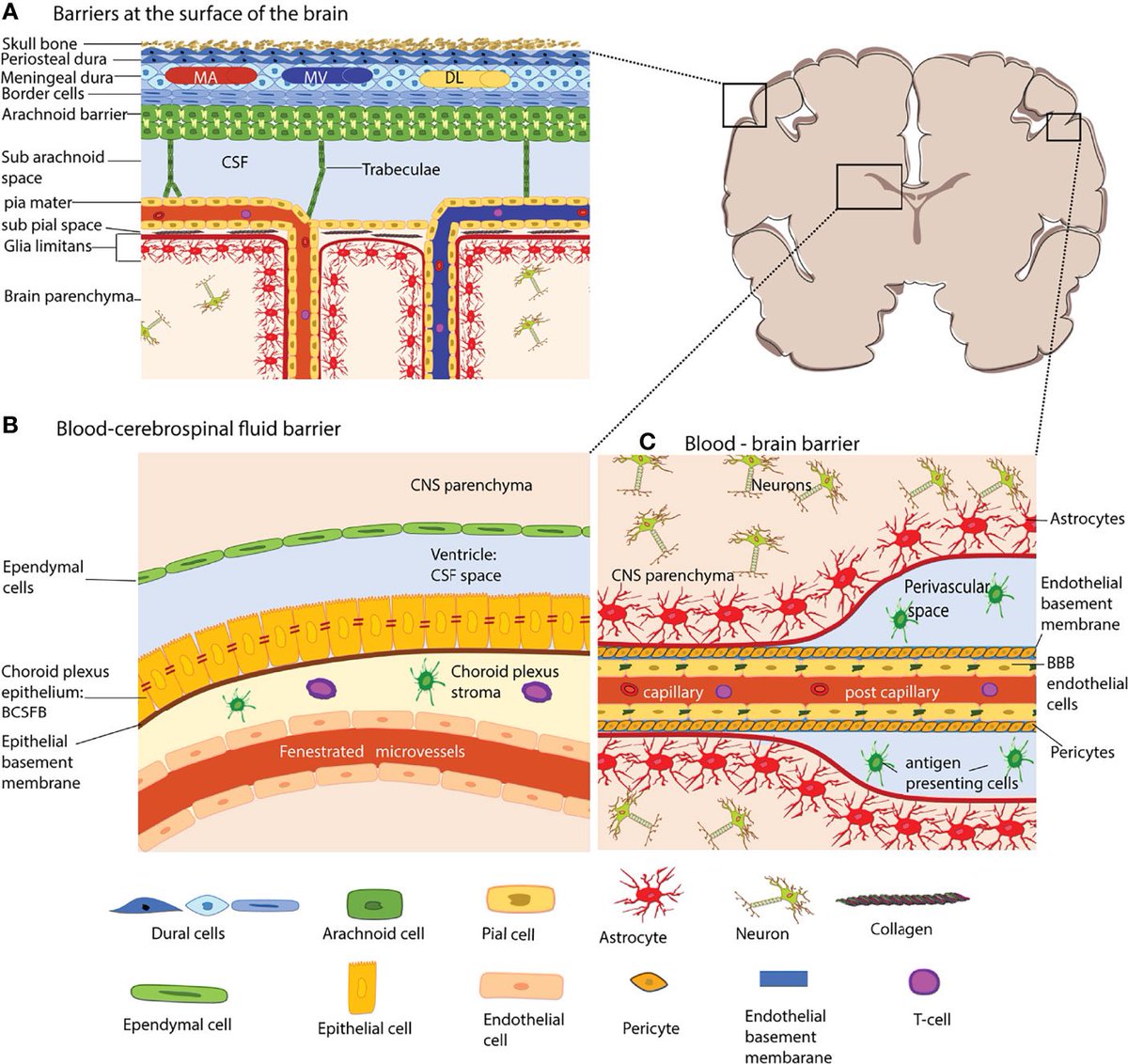
Kreutzberg & Kreutzberg explores how peripheral immune cells cross the blood–brain barrier (BBB) to shape CNS immunity, repair, and autoimmunity (e.g., multiple sclerosis, MS).

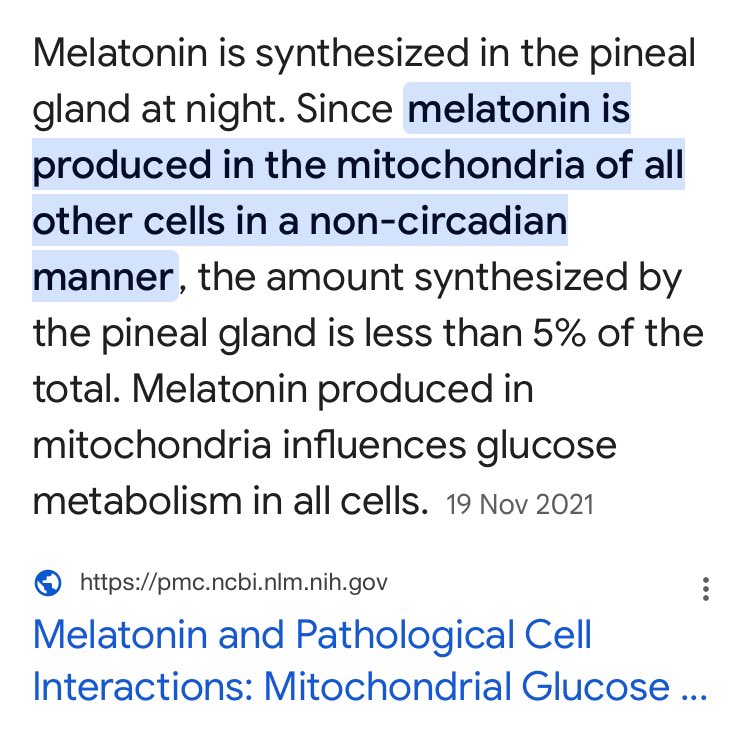
🐐Let’s start by saying this universal truth → Mitochondria gives cells a tan:
The skin is the dominant “training ground” for T-cells that later patrol the brain, —and melanin density in skin is a key evolutionary switch that explains the global MS gradient (near-zero in equatorial Africa, high in Scandinavia).

🐐 Melanin is a core immunomodulator not just a pigment.
Melanin as an Antimicrobial Shield
“Melanisation of the skin has been recognized as an essential component of skin innate immunity with melanocytes and melanin exerting antimicrobial functions.”

What does this mean?
Skin is the body’s largest immune organ:
👉🏿Melanin (eumelanin granules) physically traps and chemically neutralises bacteria/fungi via:
ROS quenching (super-oxide, H2O2)
👉🏿Metal chelation (Cu2+, Fe3+ needed by pathogens)
Direct bactericidal peptides released from melanosomes
Result: fewer microbial danger signals → milder dendritic-cell activation → less aggressive T-cell priming in skin-draining lymph nodes.

Ref:
Mackintosh (2001) & Breathnach (2014) – melanin kills Candida, Staph, E. coli in vitro; black skin shows lower wound-infection rates.

Melanin Density Predicts MS Risk:
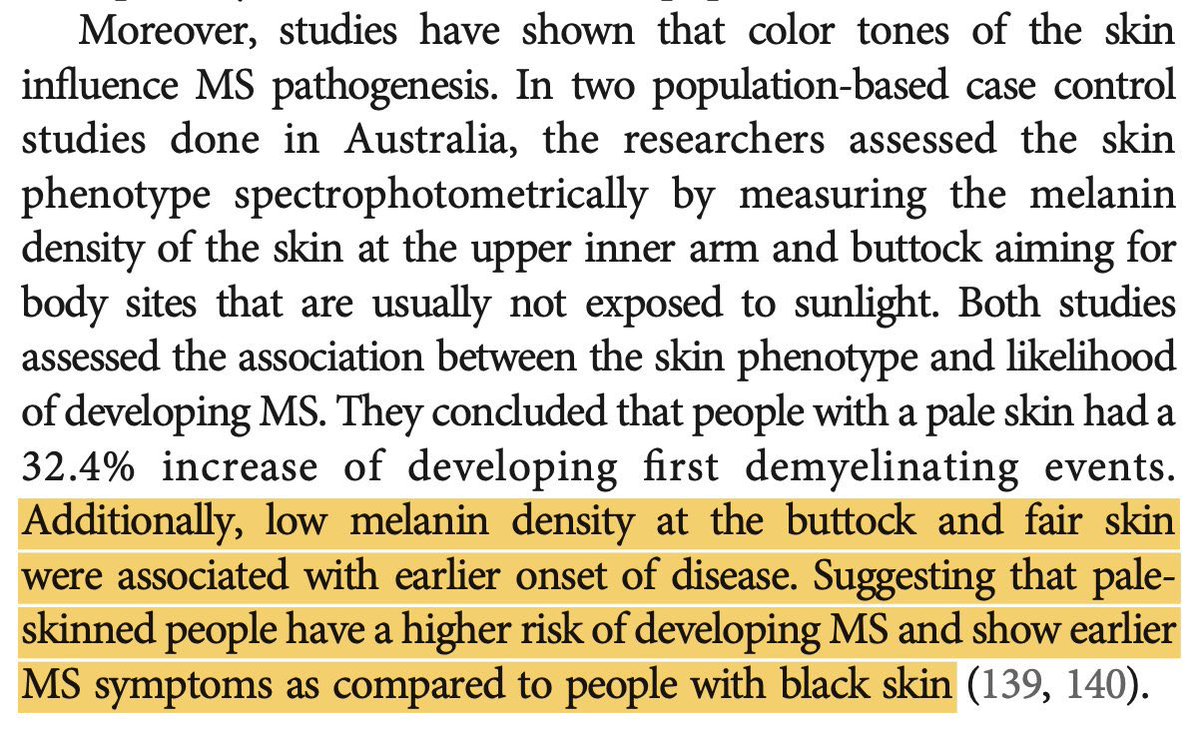
Pale-skinned people have a 32.4 % higher risk of a first demyelinating event and earlier onset… measured by melanin density at sun-protected sites.” (Australian case-control studies)

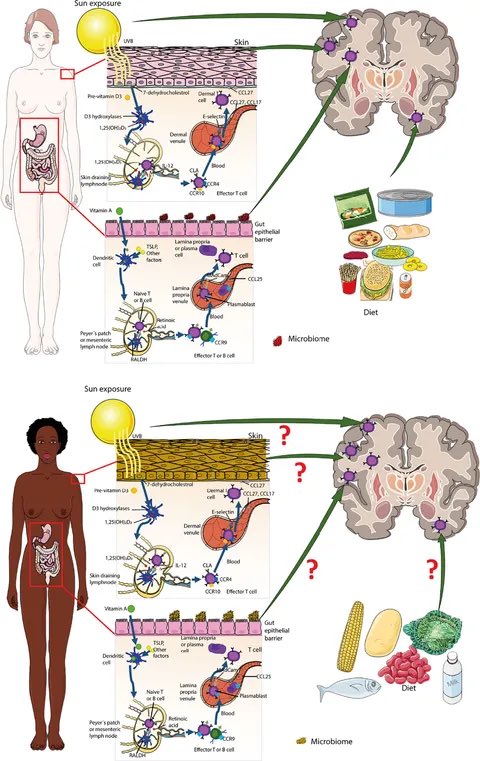
Figure 3: contrasts two pipelines:
Pale skin→ UV penetrates → dendritic cells release low vitamin D → T-cells up-regulate CXCR6 → aggressively home to CNS grey matter → MS plaques.

Melanin rich skin [Dark skin]→ melanin blocks UV → higher local vitamin D → T-cells stay “calm” → minimal CNS entry.

Melanin density >2.5 % (Black African) → MS prevalence <5/100,000
Melanin density <1.0 % (Nordic) → MS prevalence >200/100,000

Elaborating the Melanin–Immunity Axis (Beyond the Paper):
The authors stop at epidemiology, but the last 3 years of literature flesh out four molecular levers melanin pulls:

Calcium hijacking inside phagosomes:
👉🏿Fungal melanin sequesters Ca2+ → blocks calmodulin → forces macrophages into glycolysis + HIF-1α → 10-fold higher TNF-α/IL-1β (Nature Comm 2020, 2024).

👉🏿M2-macrophage → VEGF → melanogenesis loop
Healing-phase (M2) macrophages secrete VEGF → melanocytes make more melanin → melanin then dials down M1 inflammation (Sci Rep 2022).

👉🏿Melanocyte PRRs & cytokine orchestra:
Melanocytes express TLR1-9, NOD2, RIG-I.
Viral RNA → type-I IFN + CXCL10 → recruit Treg cells (PubMed 2025 review).

👉🏿Furin cleavage blockade:
Melanin binds the pro-protein convertase furin → prevents SARS-CoV-2 spike priming → 40 % lower infection rate in high-melanin cohorts (Transl Med Commun 2020).

Uncle @DrJackKruse ( wife @chantaldillon10 ) is the only doctor who ever mentioned MELANIN Rx for modern men and women using Daylight spectrum, cold thermogenesis, quantum biology

Daily practical implications
👇🏿🔆🧌Image
Image
MS prevention: Never Miss a sunrise, omega 3 fatty fish maxxing
680 nm red-light devices (bypasses melanin) to deliver vitamin-D equivalents to pale skin.
UVA light skin exposure activates POMC = more melanin → diabetic ulcers (ROS-scavenging + antimicrobial).
COVID/flu: nasal melanin droplets [Just get daylight instead and maintain darker nights] proposed in South Africa 2023—early trials show 68 % reduction in viral load.

The paper uses melanin only as a geographic bookmark for MS risk, but the molecule itself is a Swiss-army knife of innate immunity: UV filter, ROS sponge, metal trap, Ca2+ sink, cytokine rheostat, and furin inhibitor.
Higher constitutive melanin = fewer hyper-reactive T-cells escaping to the brain = near-zero autoimmune CNS disease in equatorial populations.

END 🧵Image
Apr 23, 2025 4 tweets 2 min read
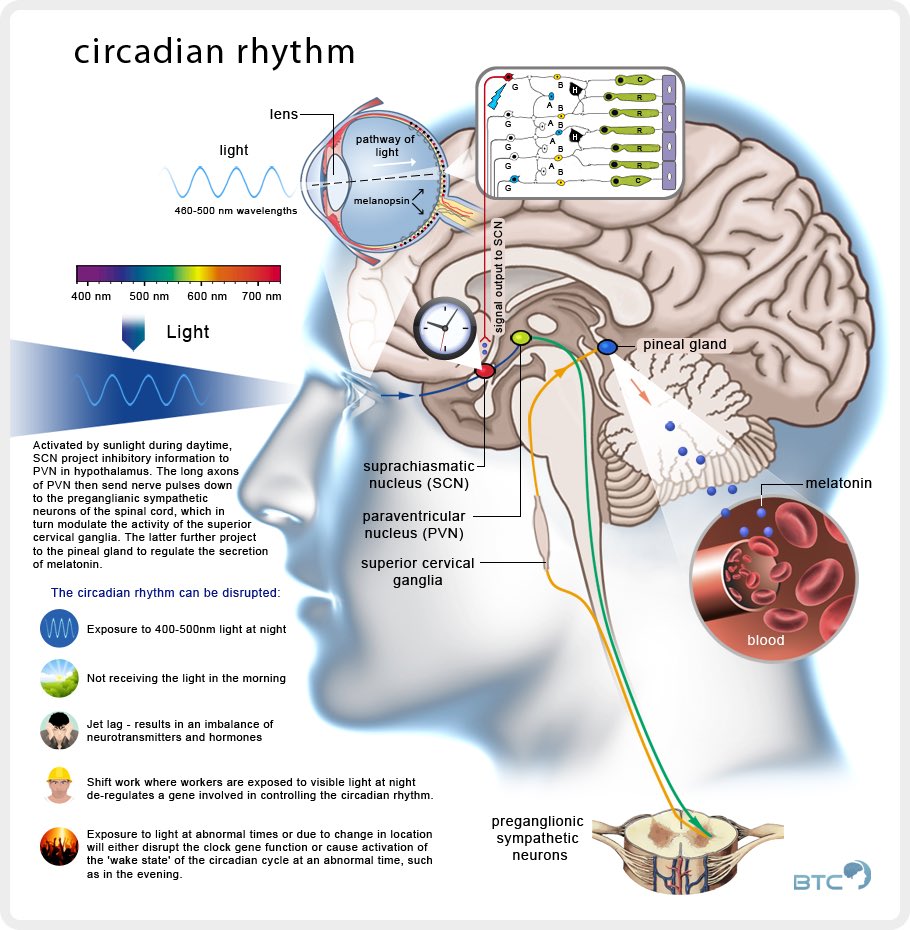
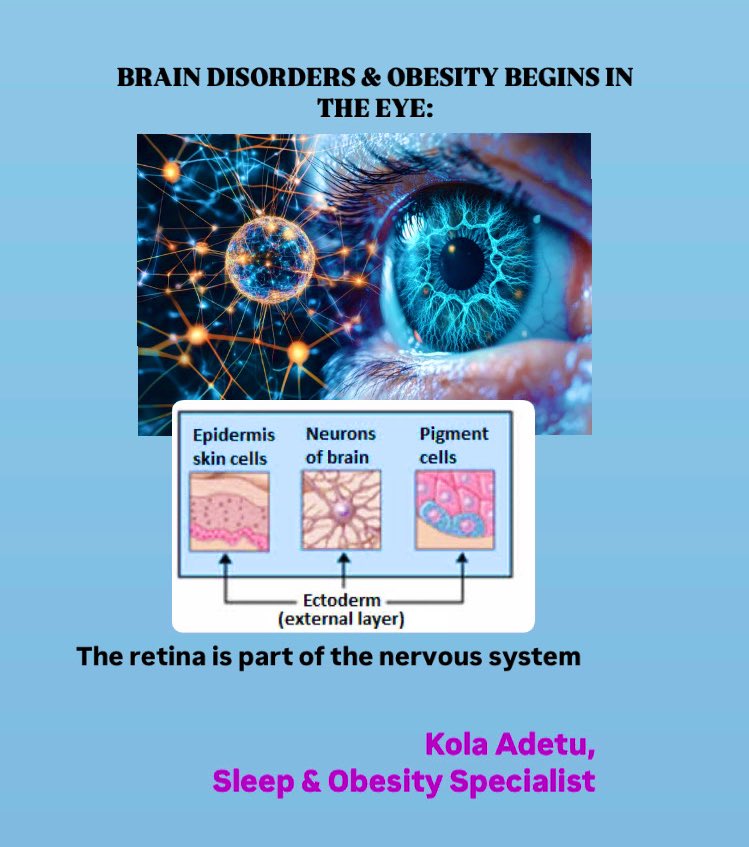
Ah look 👀!! The man said obesity like all other mitochondria diseases begins in the eyes. Dopamine and Melatonin is produced in the eyes in IR-A and UVA light. So when melatonin is ruined in the eyes so follows dopamine. Melatonin maintains the mitochondria Ferrari.

You have to insert the sun in yours eyes. Eyes and skin in the quantum dance of lifeImage
Image
Part 1 instagram.com/p/DIdYe7zImfE/…Image