Morten N. Støstad Profile picture
Post-doc at @TheChoiceLab @NHHEcon. Prev: Lecturer at @BerkeleyEcon, PhD @PSEinfo. Inequality is an externality. Once upon a time I was an astrophysicist.
Apr 25 14 tweets 3 min read
Underrated fact: In nearly all economic settings, you cannot objectively know how much value anyone produces. It is unknowable.

The simple heuristics we use (e.g. value=marginal contribution) all fall apart under scrutiny. Why? To start, an example from @rcbregman. In New York's garbage collector strike of 1968, the city essentially fell apart. Does this mean that the garbage collectors create all value in New York?

No.

If everyone else stopped working, there would also be no value produced.
Jan 7, 2025 5 tweets 2 min read
After a BSc in Astronomy I did a two-year Economics MSc at LSE in 2016-18. The MSc is designed to get non-economists up to speed.

I was not required to read any books beyond modern methods texts. 95% of instruction was math under strict and often unrealistic assumptions I did learn a lot about methods. Econometrics was and is extremely useful. But beyond that it was striking how easy it would be to finish such a prestigious degree and be clueless about the wider world
Nov 9, 2024 16 tweets 5 min read
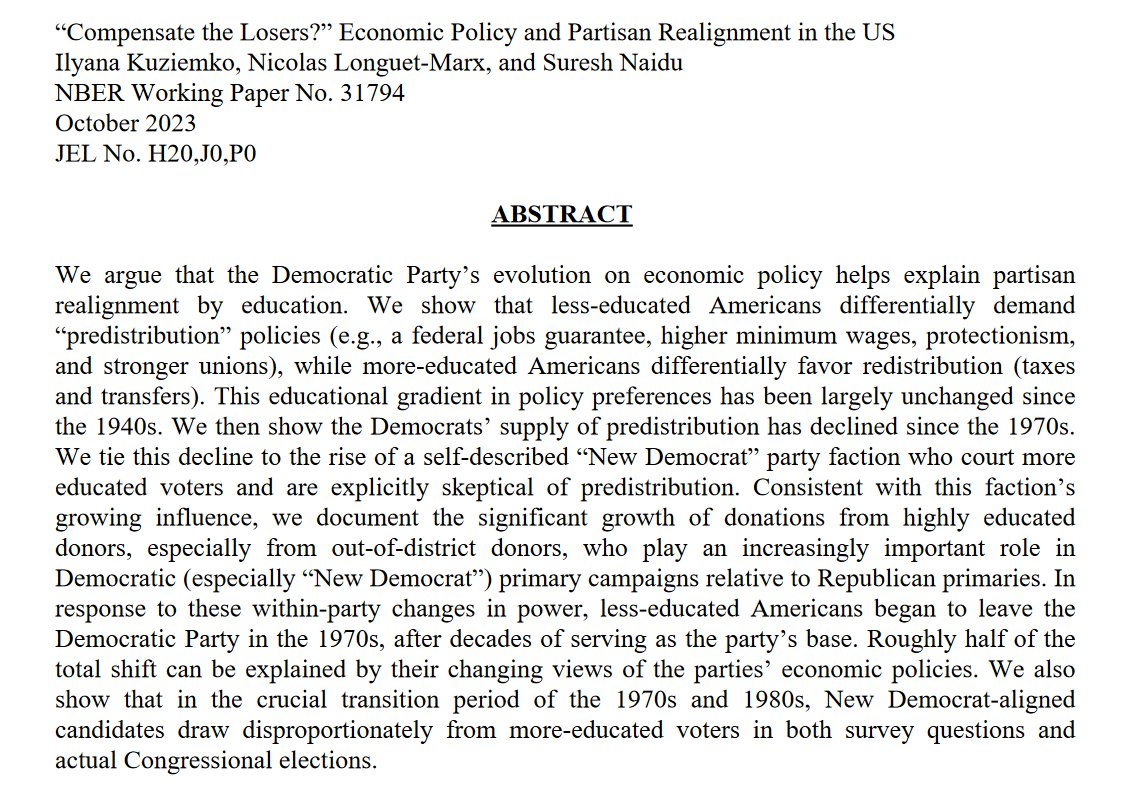
I want to briefly talk about one of my favorite papers and how it relates to the U.S. election.

Short version: It's the predistribution, stupid Image The paper shows that less educated Americans have always demanded "predistributive" policies -- higher minimum wages, a jobs guarantee, stronger unions, and protectionism.

The more educated, on the other hand, have demanded classic redistribution (taxes and transfers). Image
May 5, 2024 14 tweets 4 min read
Read some aggressive criticisms by @PhilWMagness on @gabriel_zucman's recent NYTimes article. Because I think bias is bad, let me give some nuance
Phil's critique centers on two points:
1. Zucman doesn't use incidence when allocating corporate income taxes to people, instead allocating 100% of taxes paid to the corporation's owners.
2. The EITC isn't counted as a tax.
I'll go through each in turn
Apr 25, 2024 16 tweets 5 min read
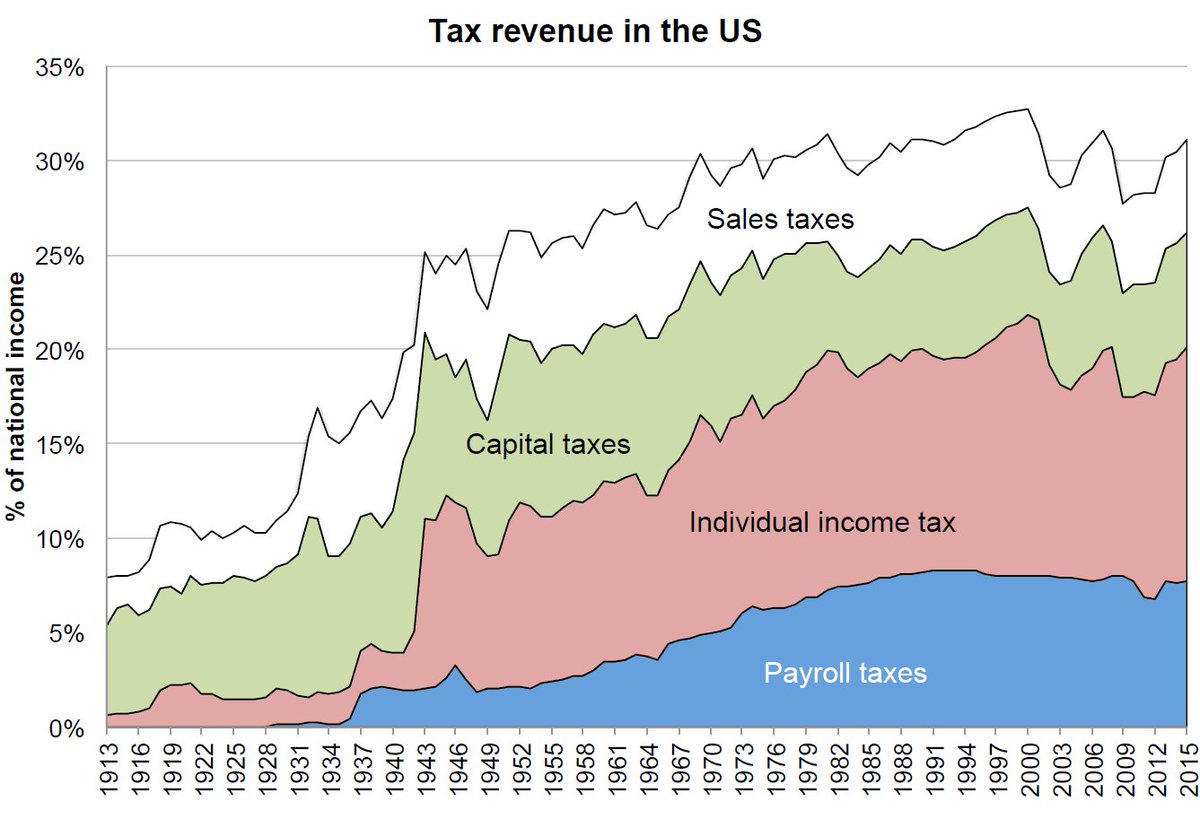
A short primer on capital taxation, the most progressive type of taxation we have: Image Capital taxation is any type of tax on capital (wealth) or the income that derives from capital (rent, dividends...).
Some notable examples are wealth taxes, corporate income taxes, estate taxes, and capital gains taxes.

This differs from taxes on labor (work) or consumption.
Apr 23, 2024 12 tweets 5 min read
In honor of my last day of teaching "Economic Inequality and Growth" at @UCBerkeley, some more graphs.

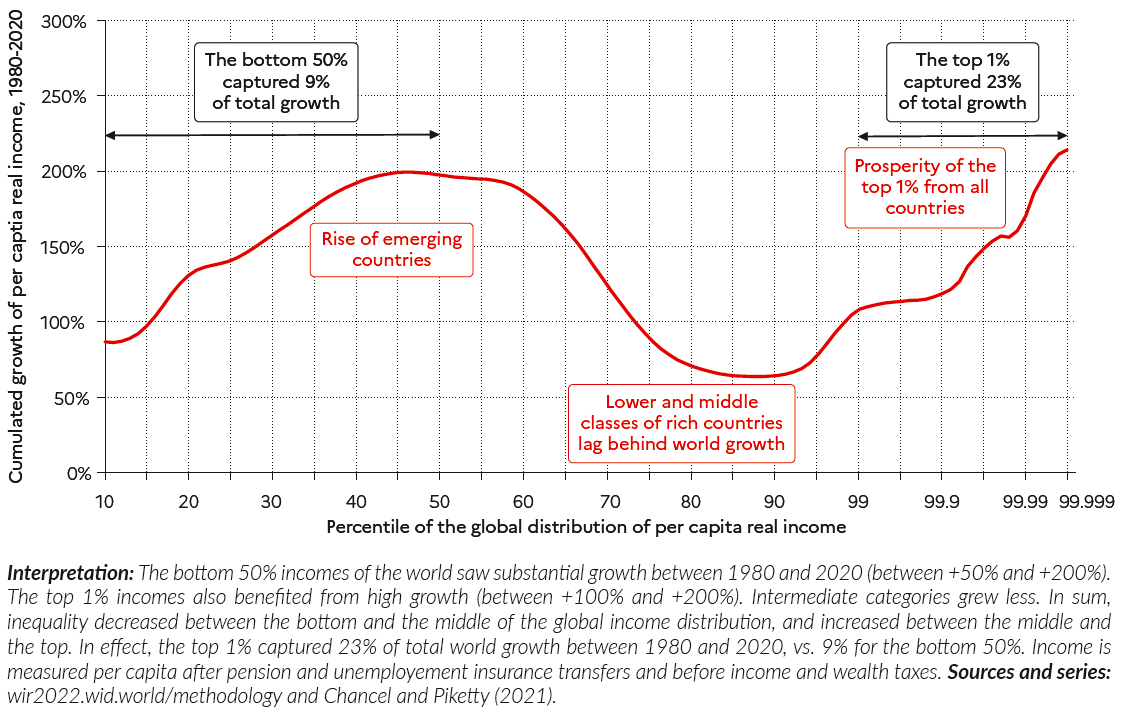
I'll start with the famous elephant curve popularized by @BrankoMilan. Between 1980-2020, most global growth was captured by either the global bottom 50% or the top 1%. Image China played a big part in the rise of the global bottom 50%.
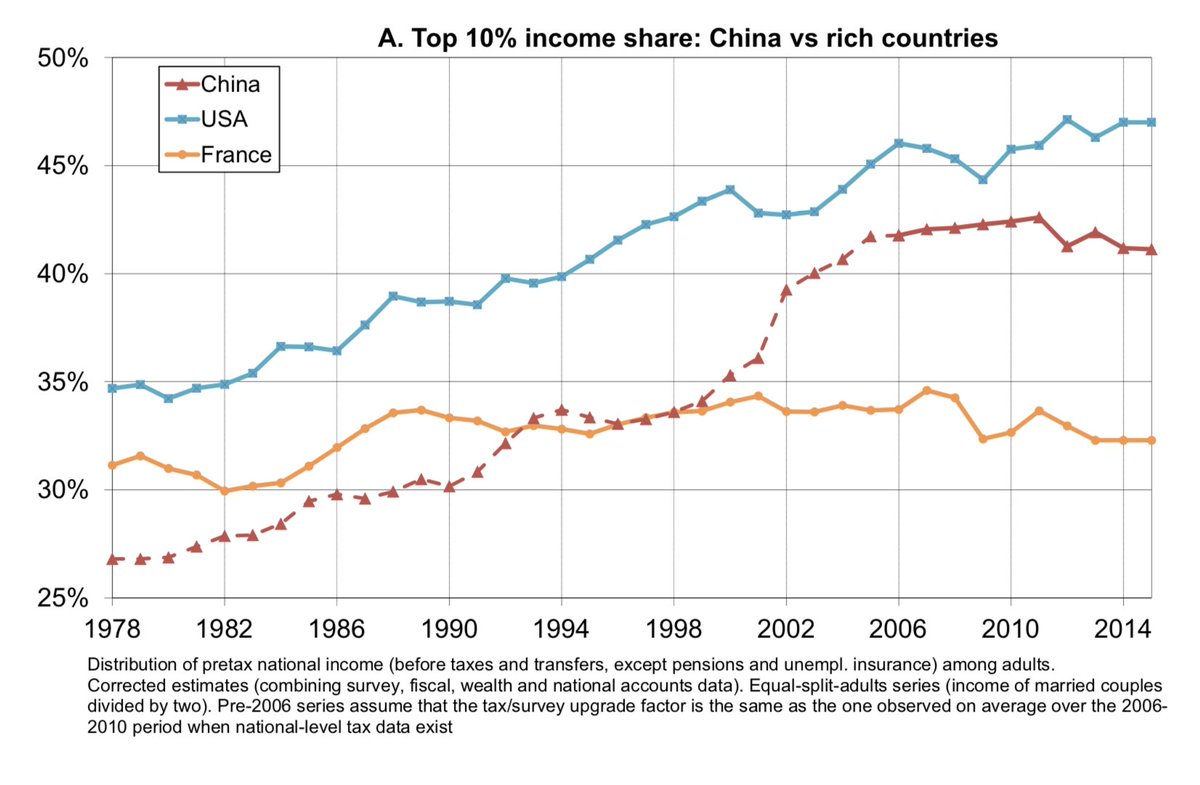
While even the poorest in China are much richer today than in 1980, income inequality in China has risen fast. Potentially faster than in the United States. Image
Apr 18, 2024 16 tweets 5 min read
This semester I've been teaching "Economic Inequality and Growth" at @UCBerkeley. This is a thread with some of my favorite graphs.

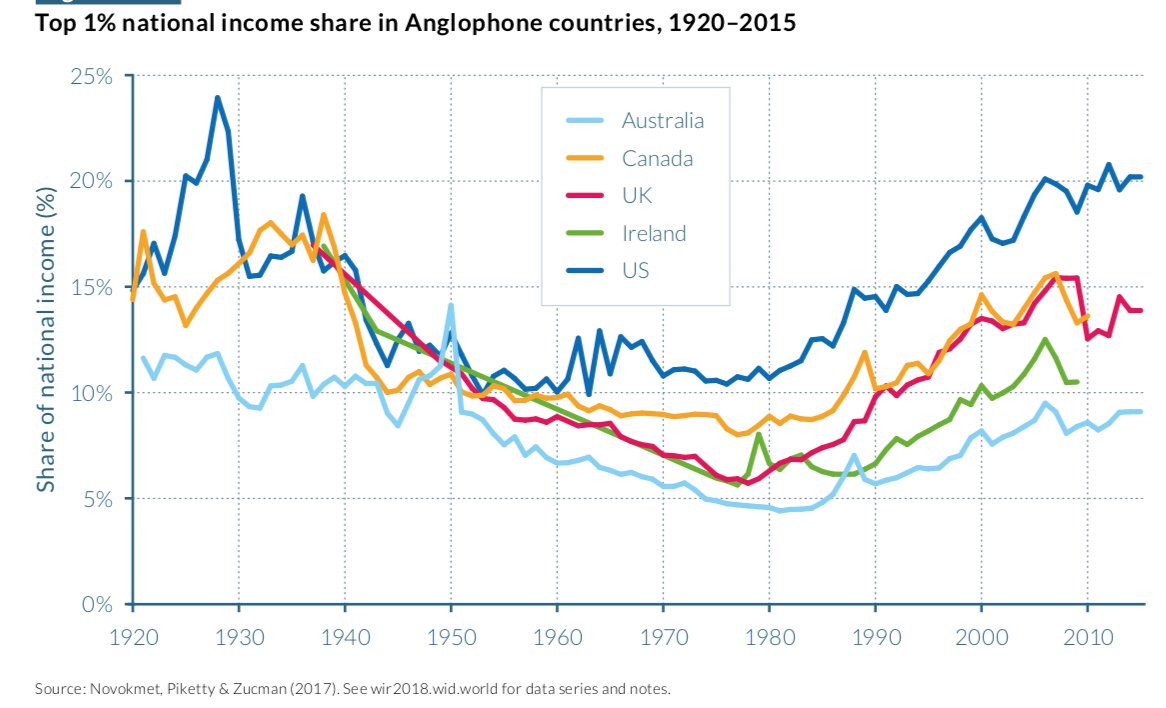
First, the headline everyone's-seen-it graph: falling then rising income inequality in Anglophone countries. Image Why? Well, taxation plays a huge role. Top marginal income tax rates have fallen drastically in many countries. Image
Jan 31, 2024 10 tweets 6 min read
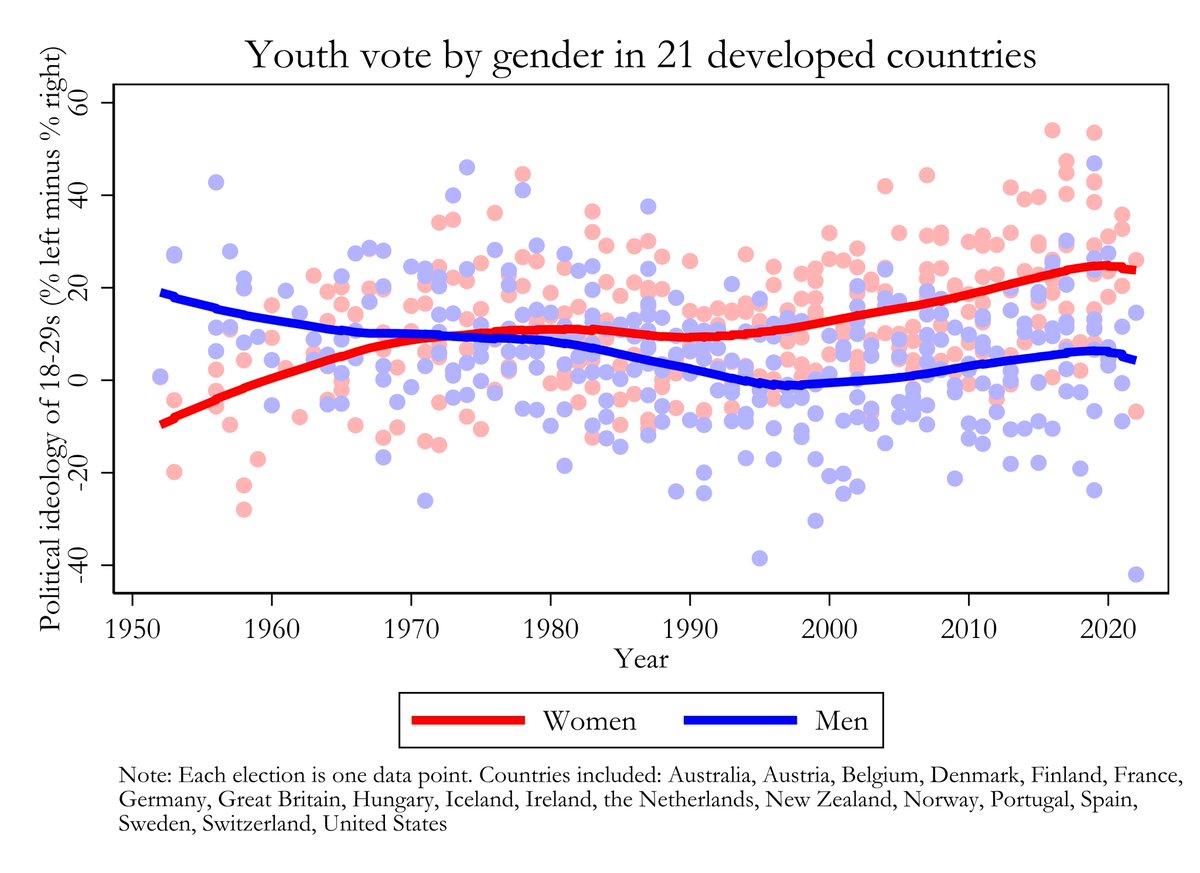
Is there an increasing gender gap in young people's ideology across the developed world?

Yes, at least in the long term. But there is significant country-level variation.

The graph: 126,072 individuals in 21 developed countries over 70 years. Below, specific countries. Image This is a long-term view of the idea presented by @jburnmurdoch here:

Data is an unreleased version of the WPID database thanks to @amorygethin. Also thanks to @WouterLeenders.

Before the country-specific data, some caveats:
May 28, 2023 12 tweets 4 min read
Ever wondered where inequality decreased the most in the last 10-15 years?

The other day a friend asked me, and I realized I didn't know. So I crunched the numbers.

Here are the 5 countries where income inequality decreased the most between 2007 and 2021: ...first, a few methodological details:

This is for the top 10% post-tax income share (health, education etc added). Data is noisy, so I'm using averages from '07-'11 and '17-'21. Only high-quality data from used (42 countries, most Americas+EU)

#1 is.. https://t.co/zCHD0son4Gwid.world
Image
Dec 31, 2022 11 tweets 8 min read
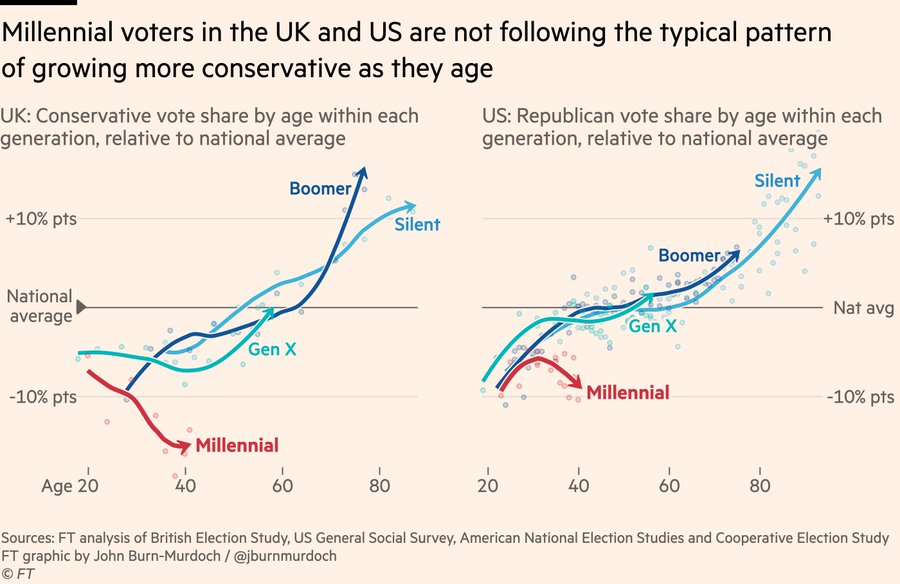
Do people become conservative with age? An update with 21 countries and 546,013 individuals.

The fascinating plot comes from @jburnmurdoch, based on the UK and US, and shows;
1. People become more right-wing with age.
2. Millennials are different.

But is this true everywhere? I saw @jburnmurdoch's post yday () and got curious about whether this was a US+UK story or a global one.
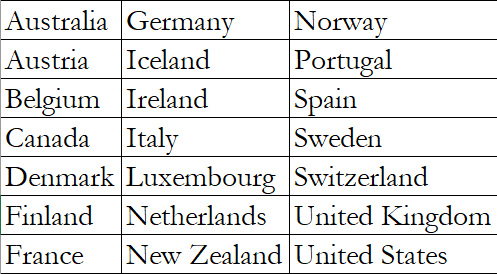
With the wpid.world database (see the list of countries attached) and some good help from @amorygethin, here's the story: