NeuroScope: Clear, visual videos on Alzheimer’s, Parkinson’s & more. Understand the brain’s mysteries. Subscribe to s...
Jul 20 • 10 tweets • 4 min read
BREAKING: A new Alzheimer's drug just did something no tau therapy has ever done in a randomized trial — cut tau in the brain by up to 65% AND slowed cognitive decline.
The trial is CELIA, run for 76 weeks.
But there's a twist that has Wall Street nervous. 🧵
Most Alzheimer's drugs (like Leqembi) target amyloid plaques.
This one — diranersen (BIIB080) — targets tau, the OTHER hallmark protein that tangles up inside brain cells and tracks more closely with memory loss.
Jul 16 • 16 tweets • 7 min read
🚨 BREAKING
A common diabetes pill — already in millions of medicine cabinets — may be the most targeted drug yet tested for the most common genetic form of ALS.
We're talking about Metformin + C9orf72 ALS.
Here's what the science actually says. 🧵👇
First — what makes C9orf72 ALS different?
It's caused by a genetic mutation (a "repeat expansion") that produces toxic proteins called DPRs — dipeptide repeat proteins.
These proteins poison motor neurons. There's no approved drug that targets them.
Until now, maybe. 🧬
Jul 13 • 12 tweets • 5 min read
Your Alzheimer's or Parkinson's diagnosis might not be wrong — just incomplete.
Autopsy studies show most patients are carrying 2 to 4 overlapping brain diseases at once.
Doctors usually test for one. Every approved drug treats one.
Here's what that's costing patients and what you must know🧵👇
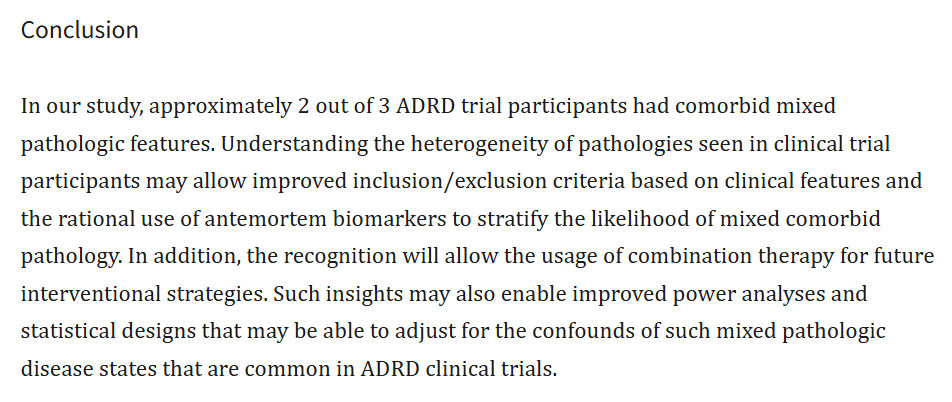
An autopsy study of Alzheimer's clinical trial participants found only ~10% actually had "pure" Alzheimer's pathology.
About 2 in 3 had additional diseases layered in — Lewy bodies, vascular damage, TDP-43. 17% had FOUR overlapping pathologies at once.
Jul 10 • 14 tweets • 5 min read
BREAKING:
A 27-million-patient study found new Parkinson's diagnoses spike after COVID-19 infection — peaking around 6 months later.
But the real story isn't what you'd expect. 🧵👇
The study: 27,614,510 patients, propensity-matched for age/sex/smoking.
COVID+ patients had significantly higher odds of a new Parkinson's diagnosis at 3, 6, 9 & 12 months post-infection (peak odds ratio ~1.25 at 6 months).
Jul 6 • 10 tweets • 4 min read
BREAKING: The shingles vaccine is linked to a 51% lower risk of dementia in the largest study yet — 329,000 people, published this year.
This is now the 6th major peer-reviewed study to find the same thing. (Paper published February 2026 in Nature Medicine)
Thread 🧵👇
The headline number:
Kaiser Permanente followed 65,800 people who got 2 doses of Shingrix vs. 263,200 who didn't.
The vaccinated group had 51% lower dementia risk (HR 0.49).
Effect held even compared to a different vaccine (Tdap) — so it's not just "healthy people get vaccines."
Jul 3 • 5 tweets • 3 min read
This one bacterium keeps disappearing in Long COVID — and it might explain the brain fog and crushing fatigue.
Severe COVID patients lose it.
People who fully recover get it back.
Long COVID patients? It stays gone.
The lower your levels, the worse your symptoms.
The same bacterium is missing in Parkinson's disease.
In Parkinson’s (especially gut-first type):
F. prausnitzii is consistently depleted.
Lower levels = worse motor symptoms, balance, and walking.
A recent study even showed restoring it in mice improved motor deficits and reduced alpha-synuclein aggregates in the brain.
BREAKING: A new study published yesterday, July 1st, 2026, in Nature Medicine adds a powerful new tool to the Alzheimer's early-detection toolkit.
And it's forcing us to rethink what Alzheimer's "risk" even means.
Here's what changed, and why your family history isn't the whole story. 🧵👇
#Alzheimers #Biomarkers
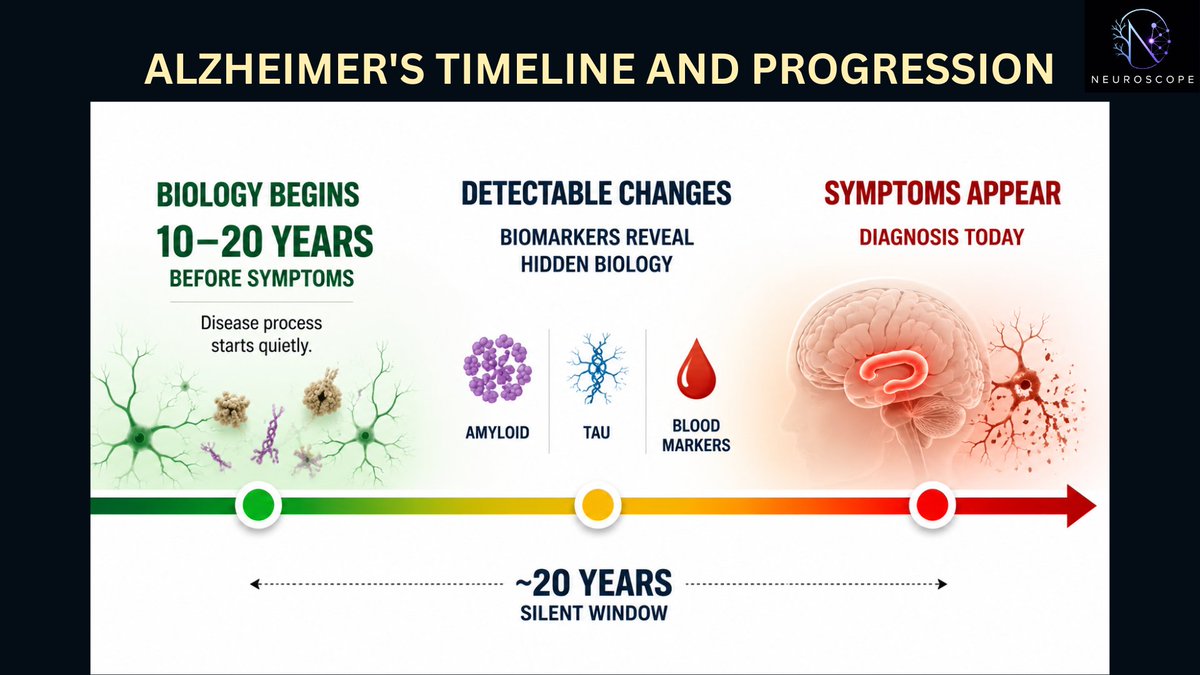
Most people think Alzheimer's starts when memory problems begin. It doesn't.
The underlying biology — amyloid plaques, tau tangles — can start building 10 to 20 YEARS before any symptom shows up.
That silent window is where biomarkers come in.
Jun 30 • 12 tweets • 6 min read
Two identical twins. Same DNA. Same childhood.
One developed MS. One didn't.
Scientists went looking for the difference — and found it in an unlikely place: the bacteria living in their small intestines, not their genes.
Thread on the 2025 study that's changing how we understand MS. 🧵
2.9 million people have MS.
No cure exists.
For decades, the real mystery wasn't what causes damage — we knew the immune system attacks myelin.
The mystery was: why did that start in the first place?
Genetics only explains 30% of MS risk.
Something else pulls the trigger. 👇
Jun 26 • 10 tweets • 5 min read
BREAKING 🧵
A gut bacterium is showing up — or rather disappearing — across all three phases of COVID-19.
Severely ill patients have less of it.
Recovered patients get it back.
Long COVID patients don't.
Its name is Faecalibacterium prausnitzii. And what it does explains a lot. 👇
F. prausnitzii is one of the most abundant bacteria in a healthy human gut.
It produces butyrate — a molecule that:
• Fuels your colon lining
• Seals your gut barrier
• Suppresses inflammatory signals
• Regulates your immune system
When it disappears, all of that fails at once.
Jun 24 • 6 tweets • 3 min read
What do people who live past 100 have in common?
Researchers studied 1,575 individuals aged 20 to 117 — including 297 centenarians.
Their guts looked younger than their age. And certain bacteria tell the story.
F. prausnitzii is part of it. Here's what the science shows. 👇
#Longevity #Aging #Microbiome
F. prausnitzii declines with normal aging — independent of disease.
In older adults, this depletion contributes to 'inflammaging' — the chronic low-grade inflammation that accelerates biological aging and raises the risk of neurodegeneration, metabolic disease, and immune dysfunction.
Butyrate loss is central.
Less F. prausnitzii means less butyrate means more gut permeability means more systemic inflammation.
Jun 23 • 8 tweets • 4 min read
Yesterday: Faecalibacterium prausnitzii depleted in Parkinson's disease.
Today: the same bacterium, a different brain disease ... Alzheimer's.
In Alzheimer's, its depletion triggers a completely different chain — one that targets the blood-brain barrier and drives neuroinflammation from the inside.
Here's the science 👇
#Alzheimers #GutBrainAxis
F. prausnitzii has been identified as depleted in Alzheimer's patients across multiple human cohort studies.
Ueda et al. 2021 (Cell Reports Medicine) identified specific F. prausnitzii strains as candidate targets for gut microbiome-based intervention in Alzheimer's-type dementia.
Depletion correlates with worse MMSE cognitive scores — the standard clinical test for dementia severity.
Jun 23 • 12 tweets • 7 min read
🚨 BREAKING
A new drug just hit Phase 3 trials with weight loss numbers that rival bariatric SURGERY.
28.7% of body weight gone.
~71 lbs average.
In 68 weeks.
No scalpel. Once-a-week injection.
It's called Retatrutide — the triple agonist changing obesity treatment.
Let’s explore the good and the bad about it.
Thread 🧵👇
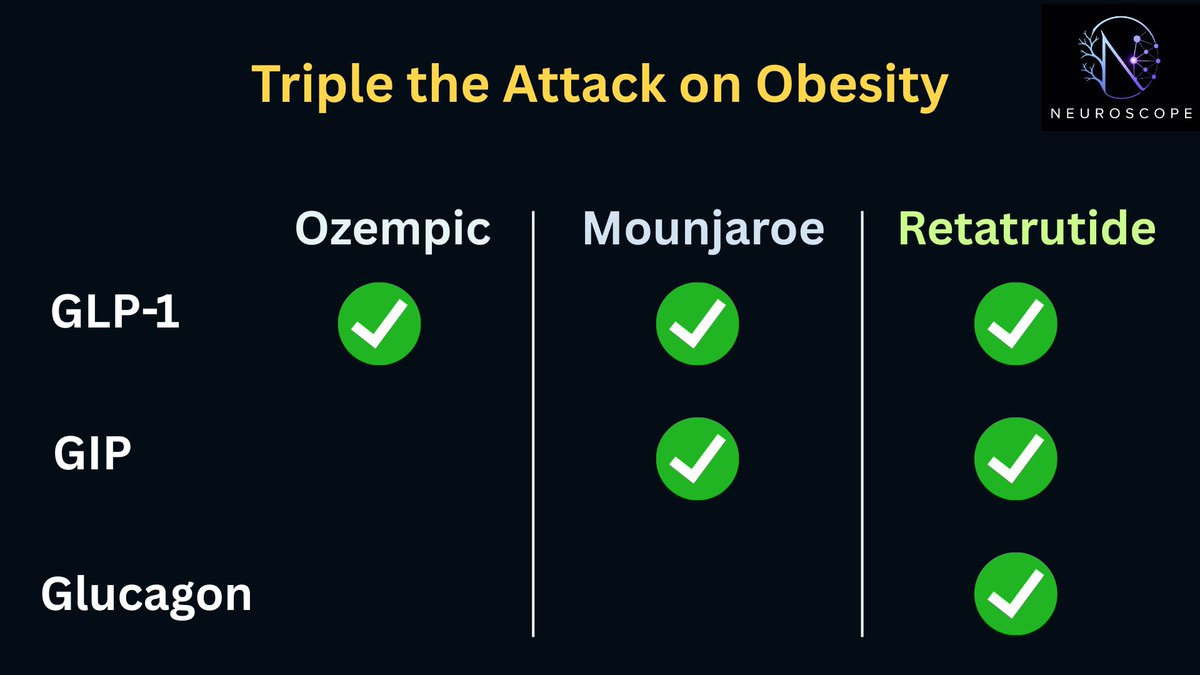
What makes Retatrutide different from Ozempic or Mounjaro?
It hits THREE hormone receptors at once:
→ GLP-1: Kills appetite, slows digestion
→ GIP: Boosts insulin, improves fat metabolism
→ Glucagon: Burns MORE energy, melts liver fat
Ozempic hits 1.
Mounjaro hits 2.
This hits all 3.
That 3rd pathway is the game changer. 👇
Jun 22 • 7 tweets • 3 min read
BREAKING 🧵
A major network meta-analysis (550 Parkinson’s patients + 456 controls) ...
Found that one gut bacterium is consistently missing in PD.
And lower levels correlate with worse balance and walking problems.
That bacterium is Faecalibacterium prausnitzii.
Here's what the science says 👇
#Parkinsons #GutBrainAxis
F. prausnitzii is one of the most abundant bacteria in a healthy gut, making up to 5% of your total microbiome.
It’s a butyrate producer (a key short-chain fatty acid).
Think of it as your gut’s natural anti-inflammatory firefighter.
It feeds colon cells, reduces inflammation, and sends signals to the brain.
Jun 18 • 19 tweets • 8 min read
Parkinson’s isn’t one disease anymore.
Meet Henry, 64 — newly diagnosed.
His neurologist used skin biopsy, gut markers, and inflammation testing to map his specific drivers.
Now they’re building a precision plan using today’s tools + tomorrow’s clinical trials: replace lost neurons, repair the gut, calm inflammation, and monitor closely.
This is what the future of Parkinson’s care is starting to look like.
Thread 🧠👇
Meet Henry, 64 — just diagnosed after months of a tremor in his right hand.
His neurologist didn’t stop at the clinical exam.
She ordered a skin biopsy for misfolded alpha-synuclein (positive) + a DaTscan.
It came back positive. Diagnosis confirmed.
This matters: up to 25% of Parkinson’s diagnoses based on symptoms alone are wrong.
Confirm the pathology first. These tests are available now.
Don’t skip this step.
Jun 16 • 10 tweets • 7 min read
BREAKING: A blood-based protein test can reveal how fast your brain's support cells are aging.
If they’re aging too fast, your Alzheimer’s risk jumps 12.59x.
60,542 people.
7,000+ proteins.
40+ cell types.
This is one of the biggest aging papers of 2026.
Here's what it means for your brain. 🧠👇
Your body doesn't age as one unit.
Your liver cells, immune cells, neurons, gut cells — they all have their own biological clocks.
And they don't tick at the same speed.
This study used 7,000 proteins in blood to build aging clocks for 40+ different cell types.
20–25% of people showed accelerated aging in at least one cell type.
1–3% were aging fast in 10 or more cell types simultaneously.
Your chronological age? It barely predicts disease.
Your cellular age? That's a different story.
Jun 12 • 11 tweets • 6 min read
BREAKING:
Researchers are shining near-infrared light through people's skulls — and it's showing real signals in Alzheimer's brain scans.
Not a gadget.
Not wellness.
Peer-reviewed trials at NYU, Harvard, and a major French multicenter study are now enrolling.
Here's what science actually says — and what it doesn't. 🧵
Photobiomodulation (PBM) = non-thermal red to near-infrared light (typically 600–1100 nm) delivered via LED or laser devices.
It's not heat.
It's not UV.
It's invisible light at specific wavelengths that penetrates tissue.
The key finding: near-infrared light is absorbed by a mitochondrial enzyme called cytochrome c oxidase — the same enzyme that is measurably reduced in Alzheimer's brain tissue.
That overlap is why neuroscientists are paying attention.
#Mitochondria #RedLightTherapy #PBM
Jun 11 • 10 tweets • 6 min read
BREAKING: 19 hours after a single high-dose psilocybin session, an 80-year-old woman with advanced Alzheimer’s who hadn’t spoken fluidly in 5 years started talking about her life for 4 straight hours.
She hadn't spoken a fluid sentence in 5 years.
This just-published case report is extraordinary — and heavily caveated.
Here's what actually happened. Hype vs the real science.🧵
#Alzheimers #Neuroscience #Psilocybin #Neuroplasticity
Here's the full picture:
• 10-year Alzheimer's history. 5 years of near-silence.
• Given 5g of high-potency "Enigma" strain psilocybin mushrooms under supervision in Brazil.
• Acute phase: suspected hyperthermia, profuse sweating, 19-hour sleep-like state.
• Then: spontaneous speech. Autobiographical memories. Four hours of conversation.
• Over the following weeks, bladder continence returned (lost for 5 years), she dressed herself, smiled, and made jokes.
• Second session one month later: recalled family by name, described surfing with her son.
Jun 10 • 11 tweets • 6 min read
🔴Promising new data:
Red light therapy is showing real results in Parkinson's disease clinical trials —
gait improves, tremors ease, and new brain imaging suggests it may actually protect dopamine neurons.
This isn't fringe science.
It's peer-reviewed.
Here's what the data shows 🧵👇
#Parkinsons #NeurologyResearch
First:
What is photobiomodulation (PBM)?
It's red + near-infrared light (600–1000nm) from LEDs or lasers aimed at your cells — no heat, no drugs.
The target? Mitochondria.
The energy factories inside your neurons.
In Parkinson's, those energy factories are failing.
PBM may restart them. 🔬
#Mitochondria #RedLightTherapy #PBM
Jun 7 • 10 tweets • 5 min read
BREAKING:
Scientists just ran the first-ever clinical trial of creatine in Alzheimer’s patients.
Brain creatine went up.
Memory and thinking improved.
But the same supplement FAILED a 5-year, 1,741-patient Parkinson’s trial in 2015.
What changed?
What does this mean for brain energy?
A thread on the most fascinating story in brain energy research right now. 🧵🧪
#Alzheimers #Parkinsons #Creatine
First: why does creatine even make sense for the brain?
Your brain is an energy hog. Your neurons are always energy-hungry.
They run on ATP.
Creatine = your brain’s emergency battery pack.
It rapidly regenerates ATP when demand spikes.
In both Parkinson’s and Alzheimer’s, this energy system breaks down.
Mitochondria fail. Neurons starve.
#BrainHealth #Mitochondria
Jun 4 • 15 tweets • 7 min read
🚨 BREAKING Scientists may have just cracked the code on Alzheimer's and Parkinson's — WITH ONE PILL.
A drug called Buntanetap was just published in a peer-reviewed journal with Phase 3 data.
Phase 3 means that we are on the verge of FDA approval.
It targets the ROOT CAUSE of both diseases simultaneously.
Here's what you need to know 🧵👇
#Alzheimers #Parkinsons
Tweet 2
Most people think Alzheimer's and Parkinson's are totally separate diseases.
They're not.
At autopsy, ~1 in 3 Alzheimer's patients have Lewy body (Parkinson's-type) protein in their brain.
And ~50% of Lewy body dementia patients have full Alzheimer's pathology too.
Same brain. Multiple diseases. Quietly overlapping. 🧠
That's called co-pathology — and it's why targeting just one protein may never be enough. 👇
#Dementia #Neurodegeneration
Jun 1 • 6 tweets • 2 min read
🚨 Scientists just identified a hidden 'molecular switch' that drives chronic brain inflammation in Alzheimer’s.
It’s a protein called STING that gets chemically stuck in the “on” position.
This could be a major new drug target. Thread 👇
From Scripps Research
published April 2026, highlighted again recently
In Alzheimer’s brains, STING undergoes a specific chemical modification (S-nitrosylation) → this keeps microglia (brain immune cells) in chronic overdrive, damaging neurons and synapses.