- Best Deep Threat
- Best After-The-Catch
- Best Red Zone Threat
- Best Ball Skills
- Best Hands
- Best Contested Catches
- Best Zone-Beater
- Best Man-Beater
- Best Route Runner
Best Deep Threat: Bryce Lance, North Dakota State
Wanted to share a part of my submission for the @ShrineBowl @SumerSports 2026 Analytics Competition
Warning: This is a very long thread
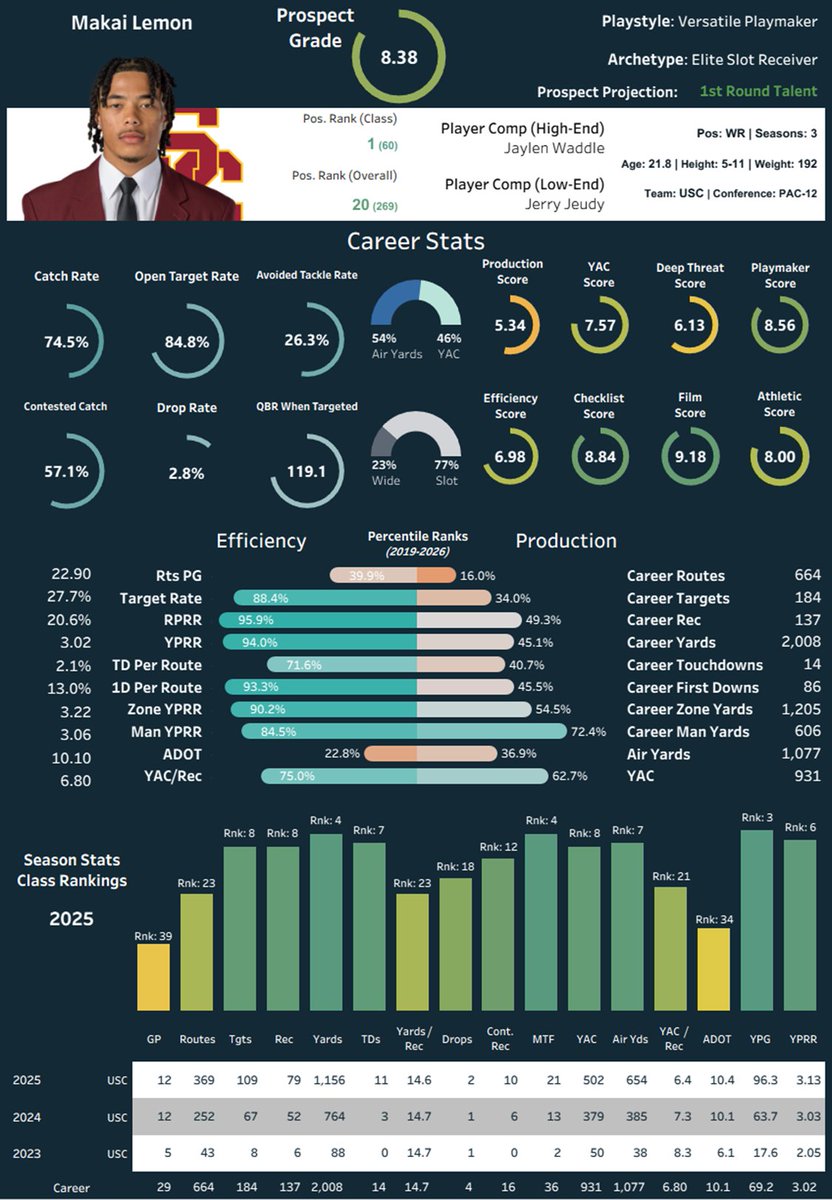
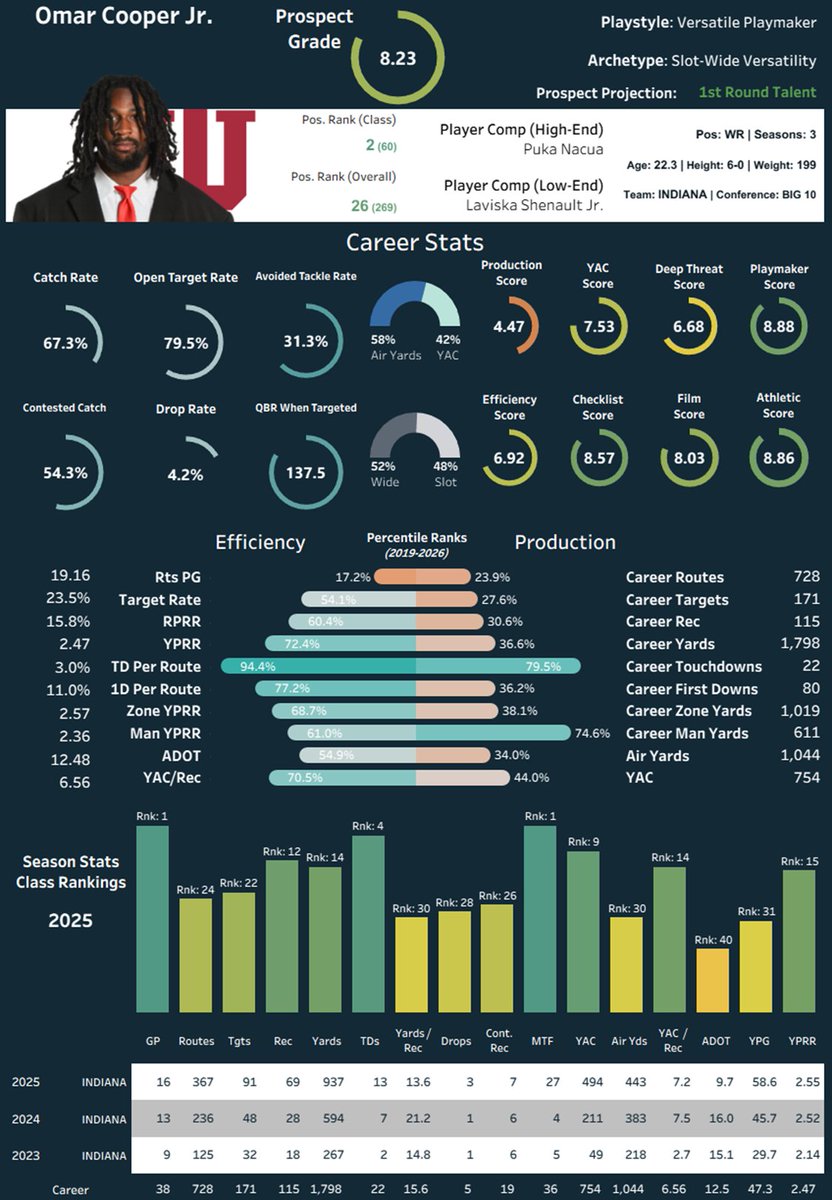
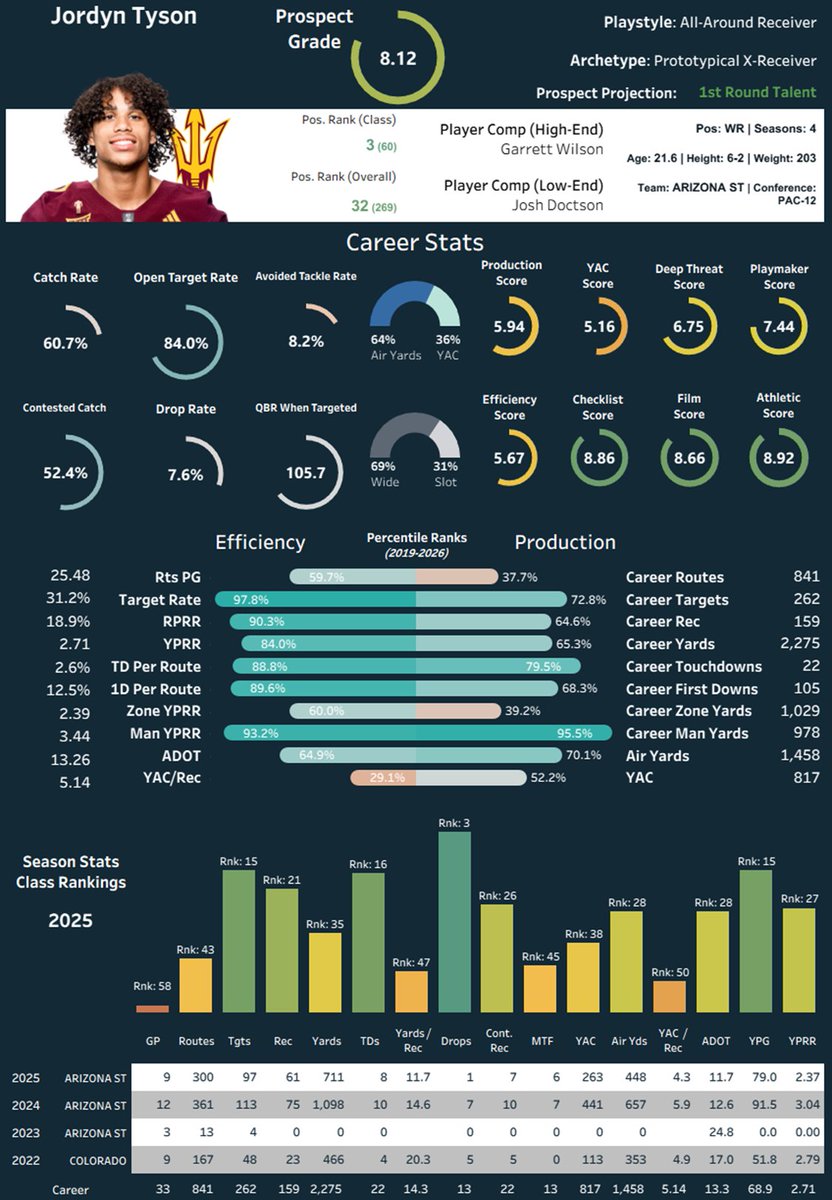
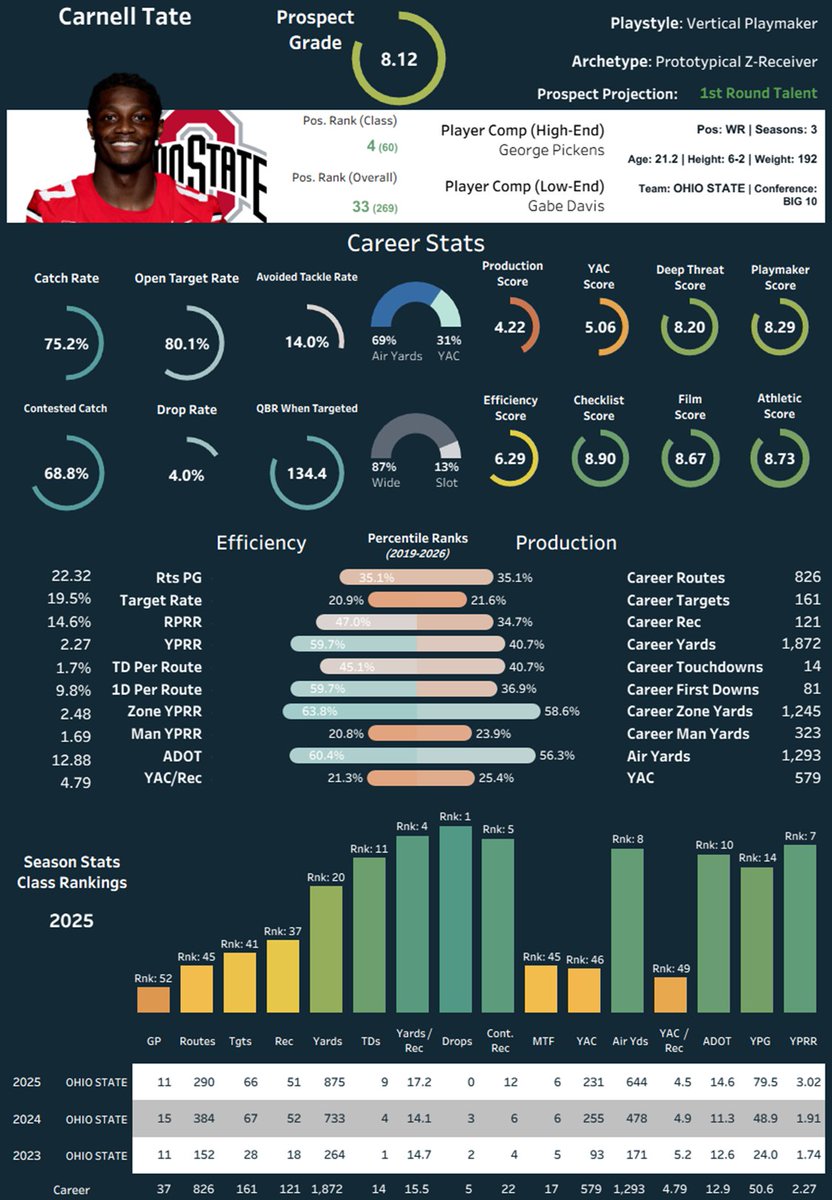
I recently conducted a deep dive into how advanced metrics, such as Yards Per Route Run (YPRR), should impact prospect evaluation for the NFL Draft. Which ones matter, which ones don't, how should they be weighted in evaluation, etc.
I want to specifically focus on one of the most commonly referenced advanced metrics: Yards Per Route Run (YPRR).
Does YPRR actually signal which receiver prospects will be good and which ones won't? Kind of.
YPRR is what I call a “predictive indicator” which means that the best receivers in the NFL tend to have high YPRR in college. That does NOT mean higher YPRR = better prospect.
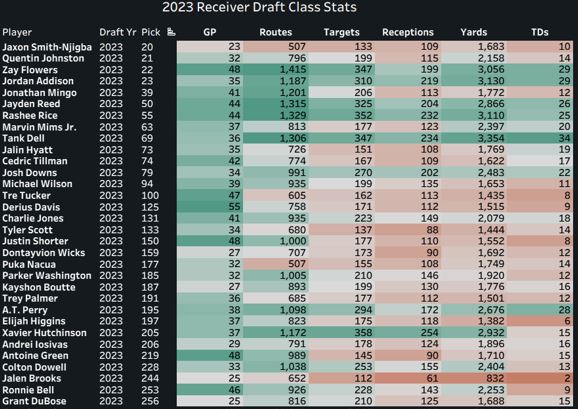
But let's take a look at the 2023 receiver draft class and compare pure volume stats with advanced efficiency metrics. Specifically, I want to focus on two of the best receivers in the NFL: Jaxon Smith-Njigba and Puka Nacua
Interestingly, they both ran an identical number of routes in college, 507. Relative to the rest of the class, their numbers are lackluster in terms of career receptions, yards, & touchdowns.
But both receivers stand out amongst the class when looking at their advanced metrics (YPRR, QBR when targeted, Target Rate, TD Rate, etc.)
Yards Per Route Run: A Signal, Not Ranking
I want to focus on one metric: Yards Per Route Run (YPRR)
As mentioned earlier, YPRR is a predictive indicator; it should not be used as a ranking tool for receiver prospects.
What we do find is that high college YPRR is extremely common among the most productive receivers in the NFL. However, it isn't sufficient on its own.
This does not mean you can predict a great receiver prospect off YPRR alone, but it does strongly imply that receiver prospects who fail to meet certain efficiency thresholds significantly lowers their probability of being productive in the NFL.
A good example of why contextual data is important is diving even deeper into YPRR metrics: assessing YPRR vs coverage type (zone vs man).
This starts to align with how NFL teams are actually playing defense and which metrics and traits matter in prospect evaluation.