Galo Nuño Profile picture
Director General, Institutional and European Relations @BancoDeEspana, Professor @CEMFInews, Fellow @cepr_org, @CESif...
Jul 7 14 tweets 4 min read
For ~40 years, we've assumed RBC models imply a tiny welfare cost of business cycles.

In a new paper w/ V. Carvalho & @matias_cova2 we show that it's an artifact of the single‑sector assumption.

Drop it, and the cost is ~100x larger.

A 🧵 (1/n, n= 12)

galonuno.com/uploads/1/3/4/… The setting: a multi‑sector economy where sectors buy inputs from each other.

The propagation and amplification of upstream shocks under complementarity is by now well understood (cf. @DBaqaee & Farhi, 2019).

Our question is what a planner can do about it in advance.

2/n
May 17, 2025 6 tweets 3 min read
The natural interest rate (r*) is the real rate that would prevail in the long run.

The standard view in macro is that r* depends exclusively on structural factors such as productivity growth or demographics.

A short 🧵 a new paper

1/n (n=6)

papers.ssrn.com/sol3/papers.cf…Image In this paper, I summarize three complementary theories, developed with different coauthors, that extend the traditional view:
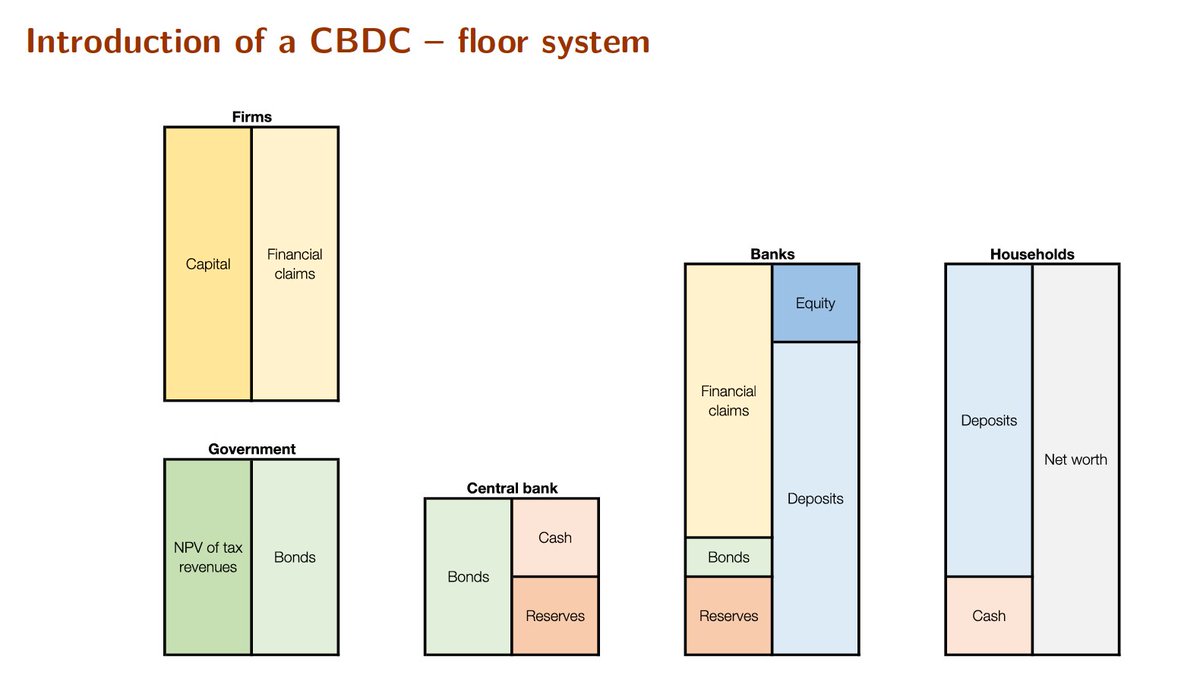
1 Fiscal policy affects r*
2 Monetary policy affects r*
3 Persistent supply shocks affect r*

2/n
Sep 7, 2023 11 tweets 4 min read
There is much talk these days about central banks launching digital currencies aka #CBDCs .

One particular concern is that it may lead to a deposit crunch and a posterior credit crunch.

Should we all be afraid? A short 🧵based on a new paper

1/n (n=10)

tinyurl.com/5n6kjnd9 CBDC means that households and firms will be allowed to deposit directly at the central bank.

A common concern regarding CBDC is that it will switch a share of deposits from commercial banks to the central bank: as funding becomes more scarce, banks will have to reduce credit
May 29, 2023 9 tweets 4 min read
Central bankers often talk about the natural rate as a structural feature of the economy, dependent on factors such as demographics, productivity...

What if monetary policy itself affects the natural rate?

A 🧵 based on a new paper

tinyurl.com/4cvbjyub

1/n (n=8) Image We build a standard heterogeneous-agent New Keynesian (HANK) model with aggregate shocks and an occasionally-binding zero lower bound (ZLB).
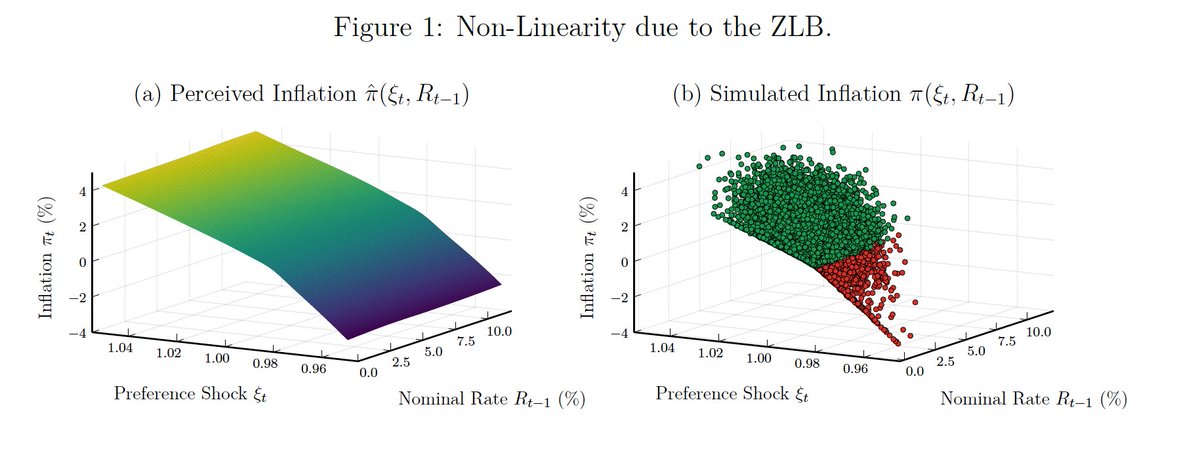
To solve globally this heterogeneous-agent model with aggregate shocks, we employ deep learning techniques.

2/n Image
May 12, 2023 7 tweets 4 min read
The 1st issue of the @JPolEcon: Macroeconomics is out! 🎉🥳

We are thrilled to have our paper "Debt-Maturity Management with Liquidity Costs" in it.

journals.uchicago.edu/doi/10.1086/72…

Why should you care about it?

Here is a short 🧵 1/n, n=7 Image This paper is about liquidity costs in public debt markets. In particular, we document how Treasuries face some costs when issuing new debt.
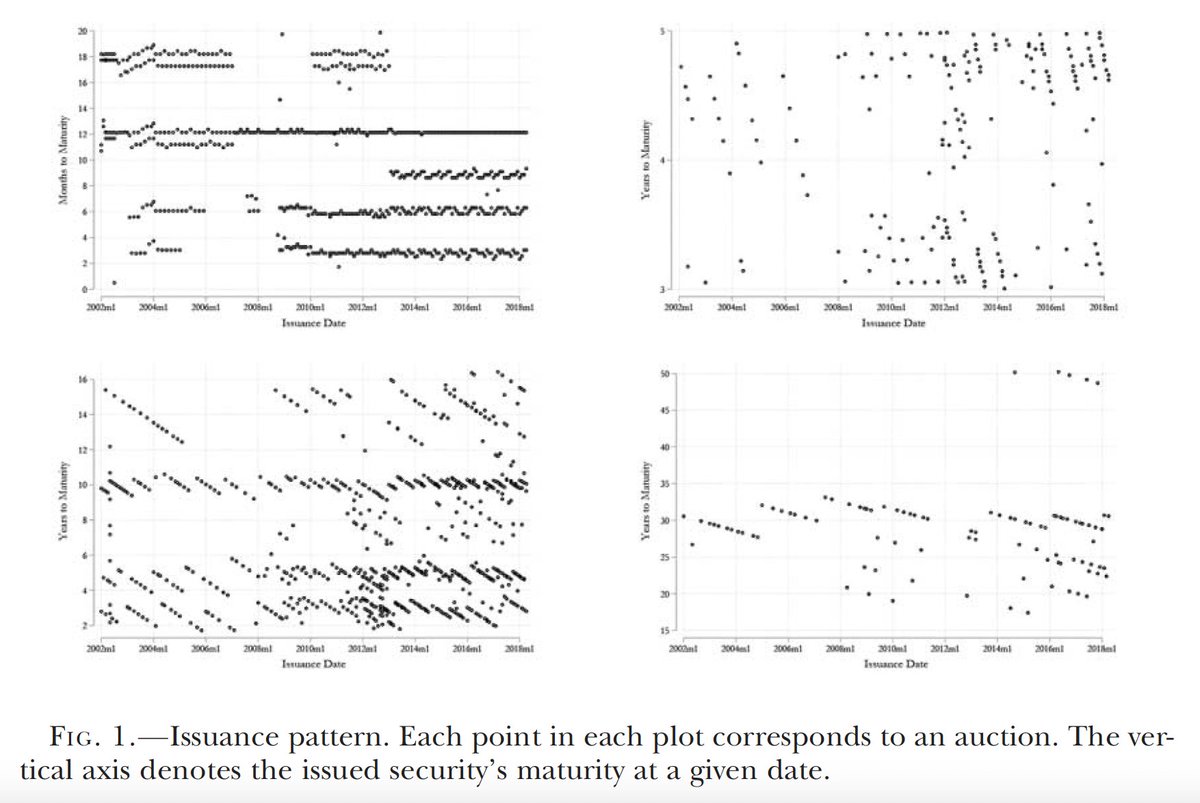
We exploit a curious feature: governments reissue bonds, for instance, they issue as a 10-year bond a 20-year bond issued 10 years ago.2/n Image
Sep 13, 2022 13 tweets 9 min read
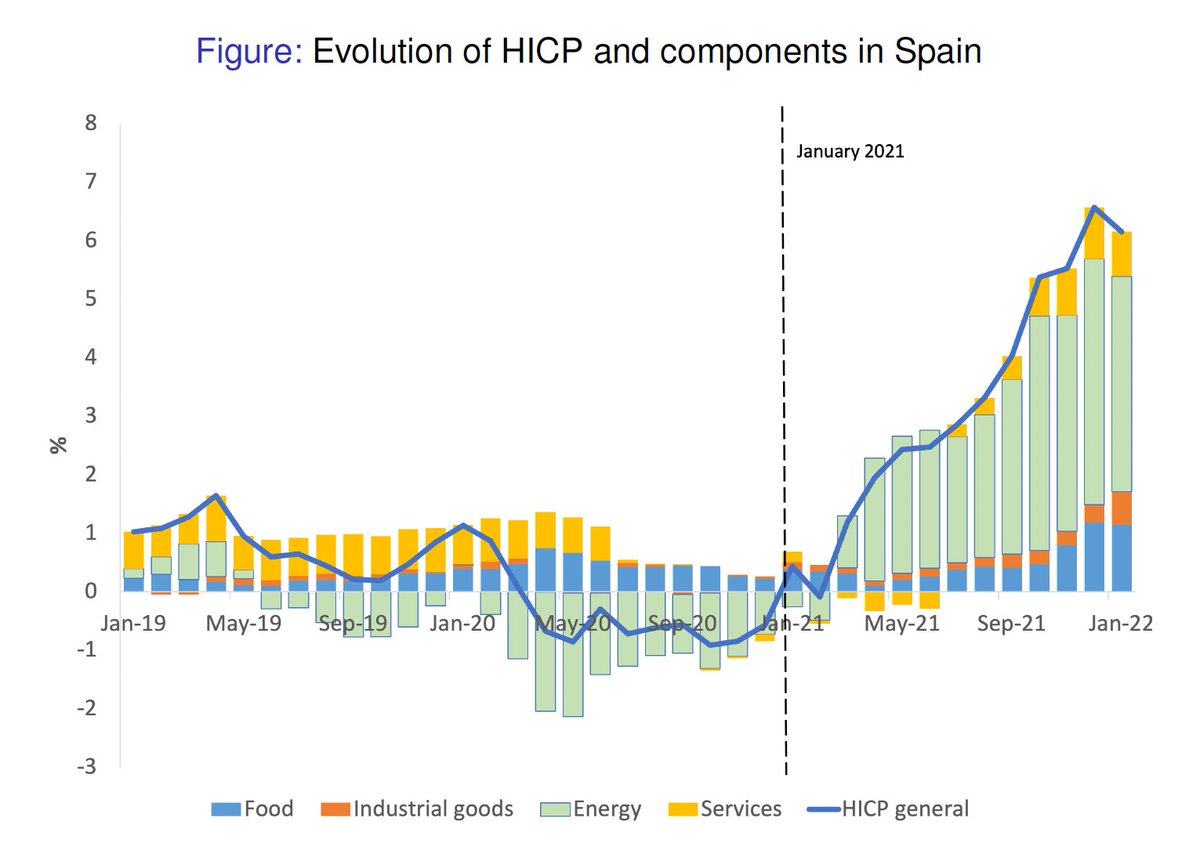
Who are the winners and losers from inflation?

This may seem a well-established issue in Economics, but surprisingly, there is still some confusion among pundits, central bankers, and academics. A short-🧵that I hope clarifies certain issues Image On the one hand, you have several central bankers stating that "recent inflation has hurt especially the poor, as they consume more energy and food".

On the other hand, academics like @paulkrugman, make the point that "Inflation redistributes from creditors to debtors "
Jul 30, 2022 14 tweets 7 min read
Heterogeneous-agent New Keynesian models (HANKs) are at the forefront of research in monetary economics.

What do we know about optimal monetary policy in these models? How does household/firm/bank heterogeneity affect MP design?

A short (personal and technical) 🧵

1/12 By "optimal monetary policy" I refer to the solution of the Ramsey optimal policy as in columbia.edu/~mw2230/OMP_Hb… (both time-0 and timeless).

How can a benevolent central bank decide the optimal path of nominal interest rates? (or the optimal response to shocks)
Apr 29, 2022 12 tweets 6 min read
How do asset purchases by central banks work?

Duration risk extraction is typically considered the key channel, but it is hard to square with the European experience during the Covid outbreak.

A short thread🧵: The 🧵 is based on a new paper with Jim Costain and Carlos Thomas
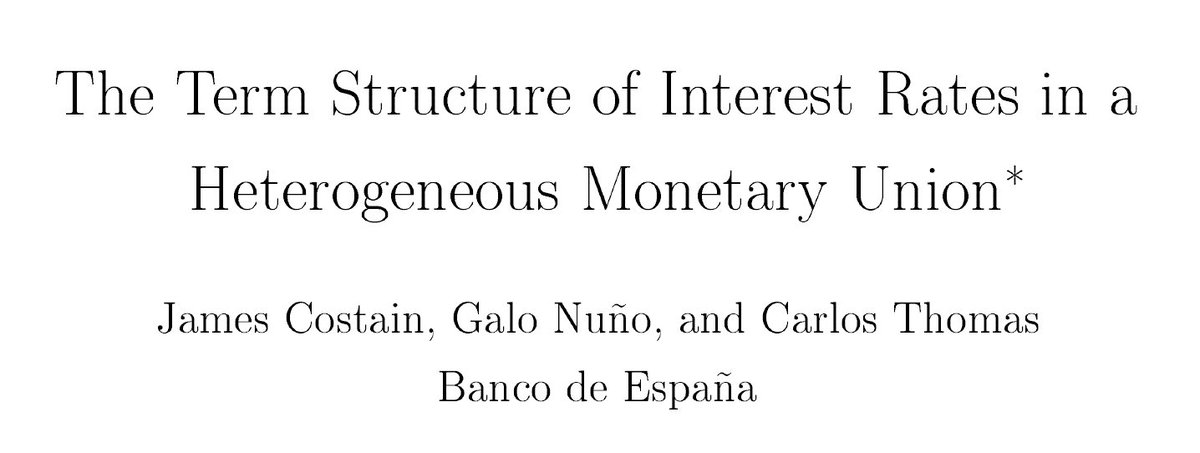

galonuno.com/uploads/1/3/4/…

1/