Emmanuel Tsekleves Profile picture
Lost PhD → Professor by 40 | Help PhDs complete on time & postdocs secure jobs | AI + career strategies | Roadmap I wish I had
Jan 19 8 tweets 4 min read
I almost quit my PhD in year 2.

The isolation was crushing.

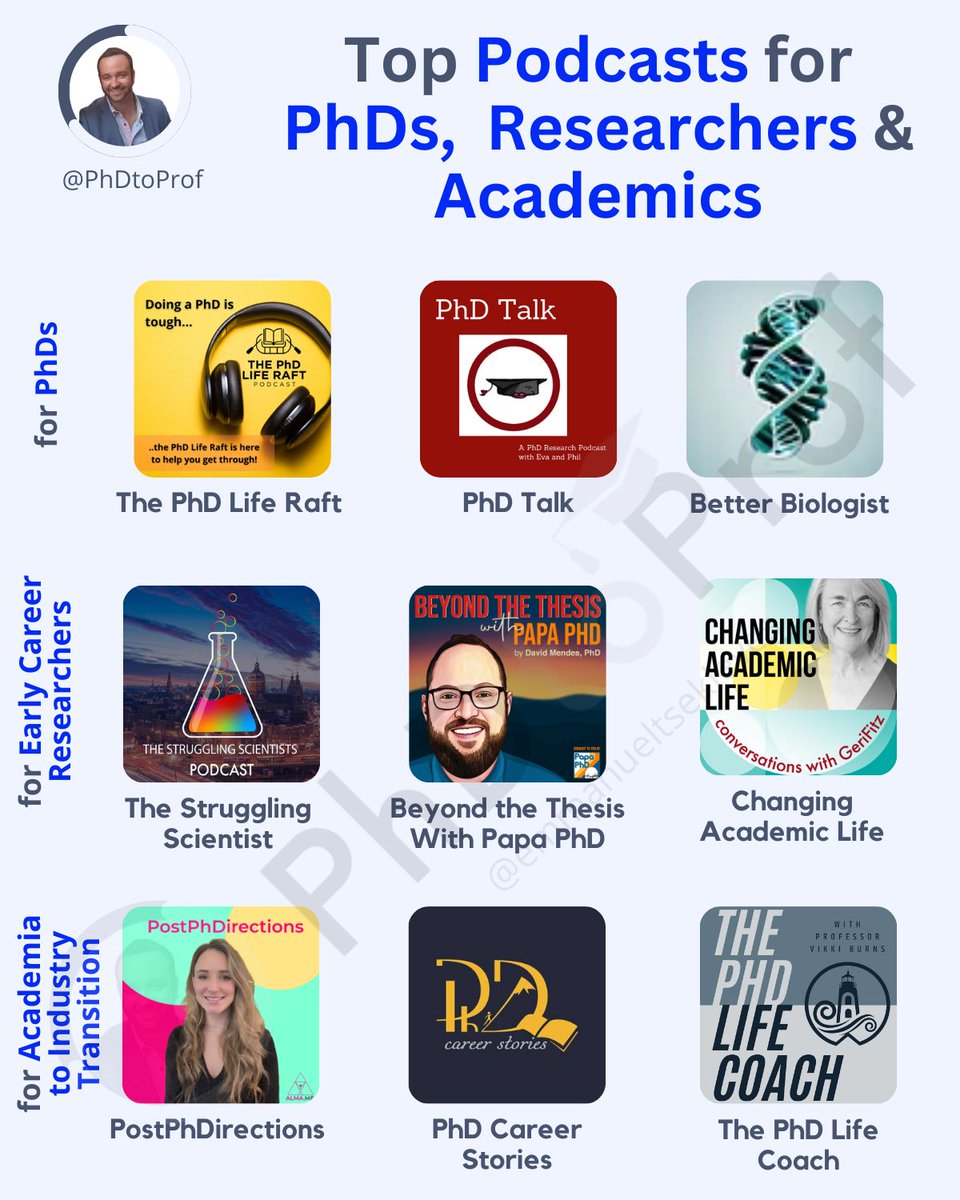
Then I discovered academic podcasts.

Suddenly, I had mentors in my earbuds. Image People who understood the imposter syndrome.

The rejection letters.

The 3am writing sessions.

I wasn't alone anymore.

That's why I now curate them for my students.

So they never feel as alone as I did.
Dec 8, 2025 7 tweets 2 min read
Academic writing isn't about sounding smart. It's about being understood.

My PhD chapter took 3 weeks. Read everything. Cited everyone. Fancy academic words.

Supervisor's summary: "I can't follow your argument."

She gave me 17 rules that transformed my writing: Image FOUNDATION RULES:
1. Start with your argument ("My thesis is X")
2. Write before you're ready (writing reveals what you don't know)
3. One idea per paragraph (need "and also"? new paragraph)
4. Use signpost sentences ("This section examines...")
Nov 25, 2025 7 tweets 2 min read
A PhD student wasted 6 weeks reading the wrong papers.

127 articles downloaded. 83 read. Literature review was a mess.

His supervisor: "Do you even know who the key scholars are in this field?"

He didn't.

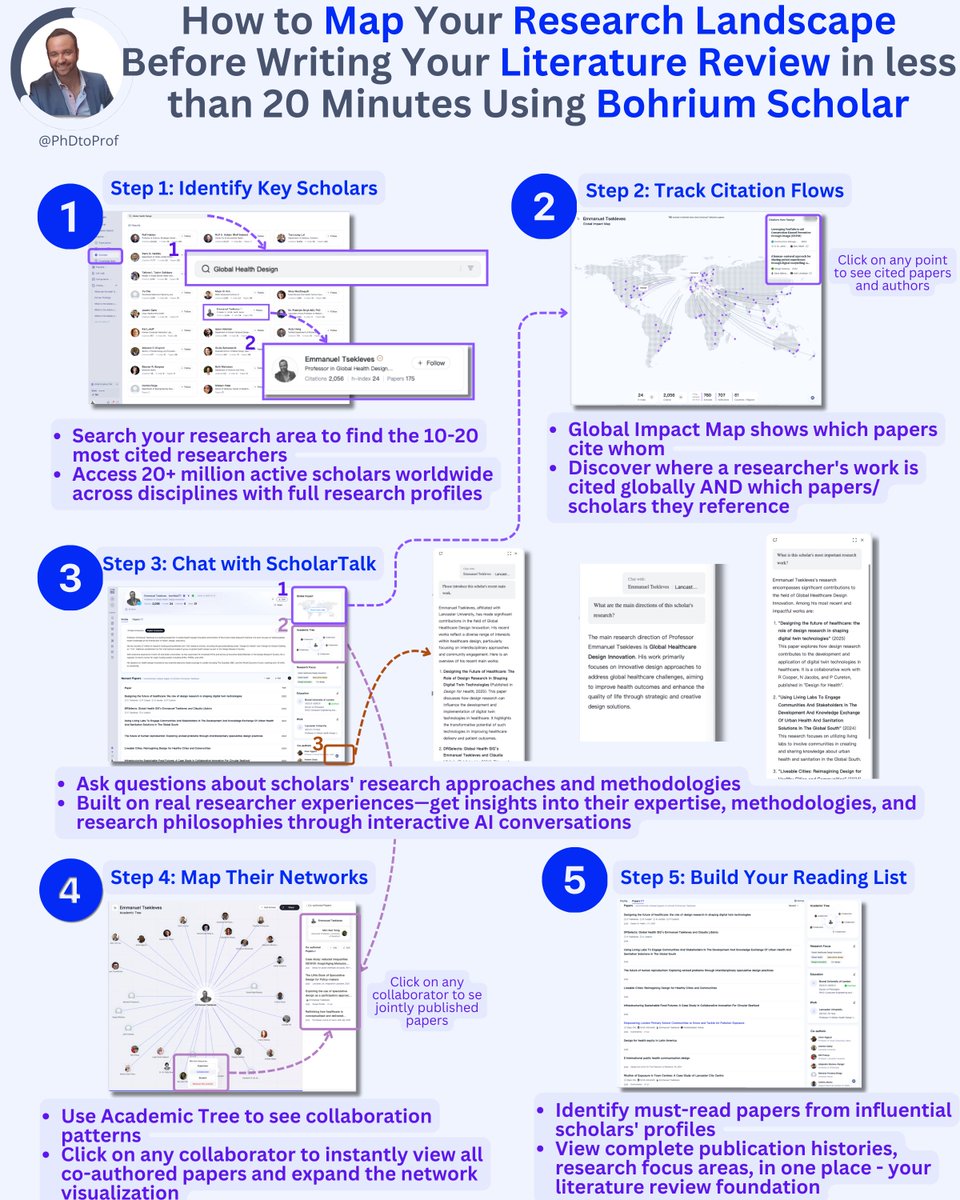
Here's how we fixed it in 30 minutes: Image James came to me drowning in papers.

Random articles. No coherent narrative. Missing major scholars.

He tried mapping citations manually for 2 days.

Drew diagrams. Created spreadsheets. Got more confused.

I showed him @Bohrium_AI4S Scholar.
Nov 5, 2025 7 tweets 2 min read
Most PhD students struggle with academic writing. Their research is solid but writing doesn't reflect expertise.

Harvard College Writing Center created a FREE 33-page comprehensive guide.

Same writing system that trains future leaders. Zero cost. Image What's covered:
Reading Assignment Prompts

Decode what assignments ask
Identify requirements

Asking Analytical Questions

Develop critical thinking
Move beyond surface analysis
Oct 28, 2025 8 tweets 2 min read
PhD students spend weeks crafting hypotheses.

Then supervisors tear them apart in 5 minutes.

"Too broad." "Not grounded in literature." "Where's the theoretical backing?"

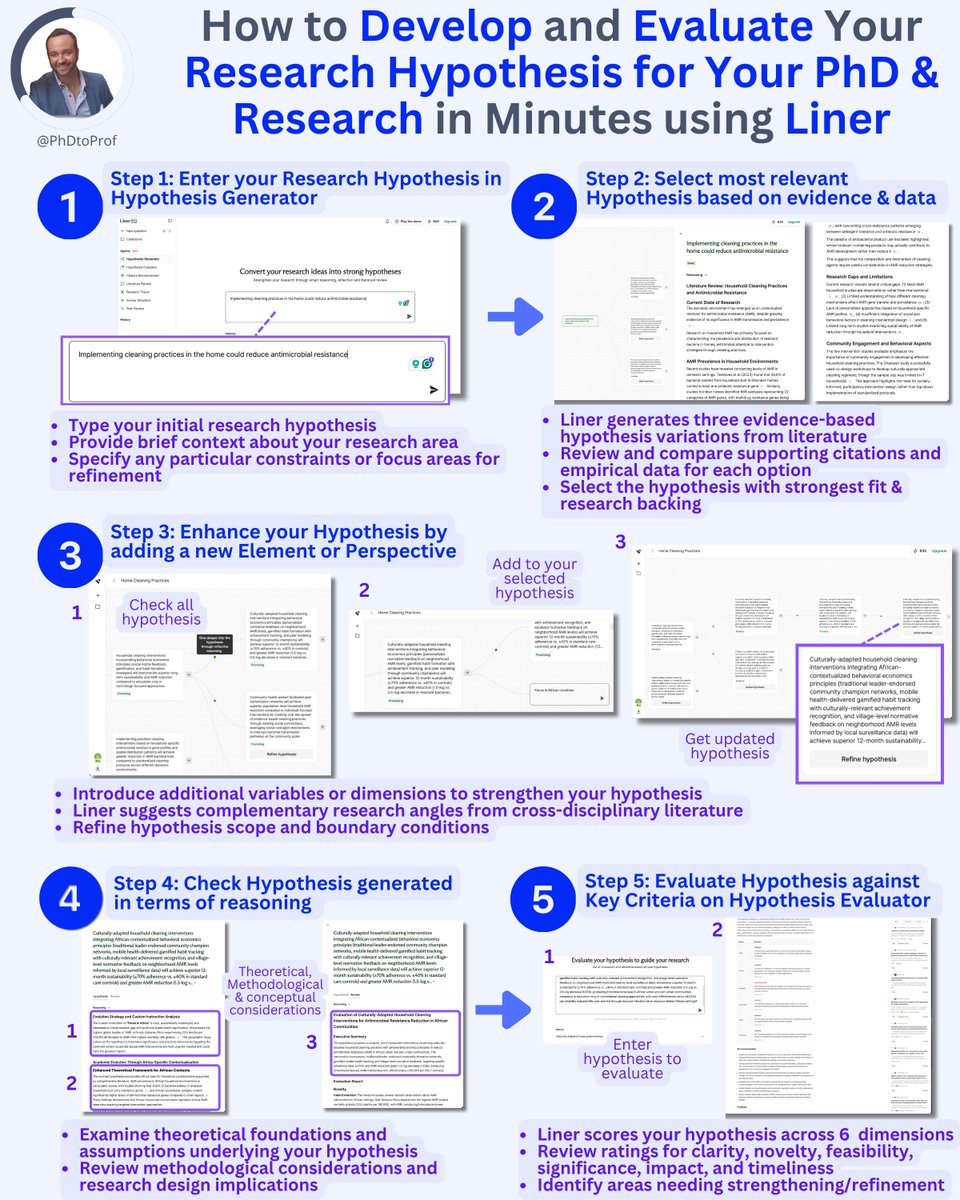
Here's how to develop research-backed hypotheses in minutes using @liner_app : Image @liner_app Step 1: Enter initial hypothesis
Type research idea into Liner Hypothesis Generator
Provide context about your area
Specify constraints/focus

Example: "Implementing cleaning practices in home could reduce antimicrobial resistance"
Oct 18, 2025 7 tweets 2 min read
40% of PhD students fail their methodology chapter.

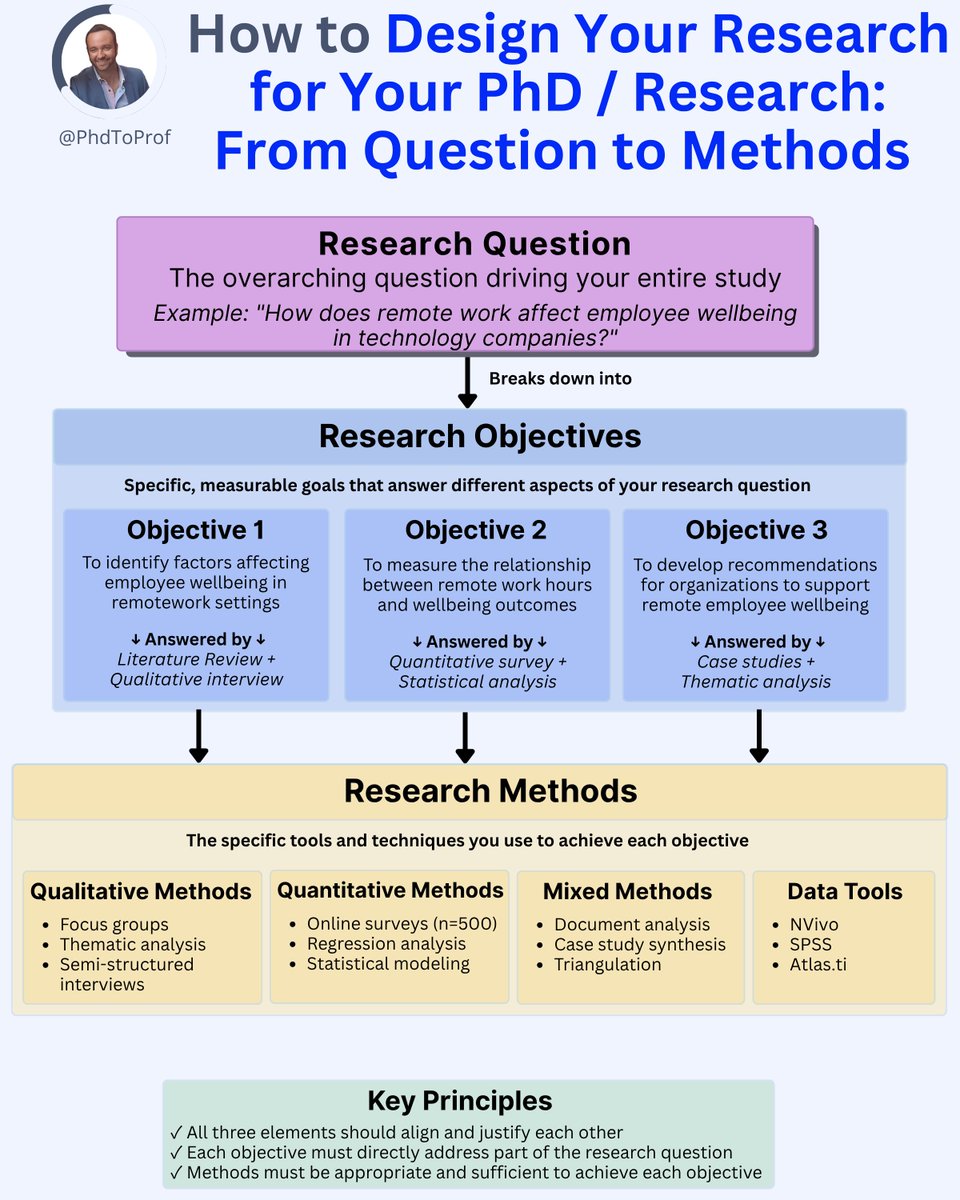
Here's the 3-level framework to design research methodology that aces your PhD: Image Level 1: Your Research Question
The overarching question driving your study.
Must be:

Clear and focused
Answerable through research
Significant to your field

Example: "How does remote work affect employee wellbeing in tech companies?"
Sep 29, 2025 6 tweets 1 min read
Most researchers waste 6-12 months on journal rejections because they pick the wrong venues.

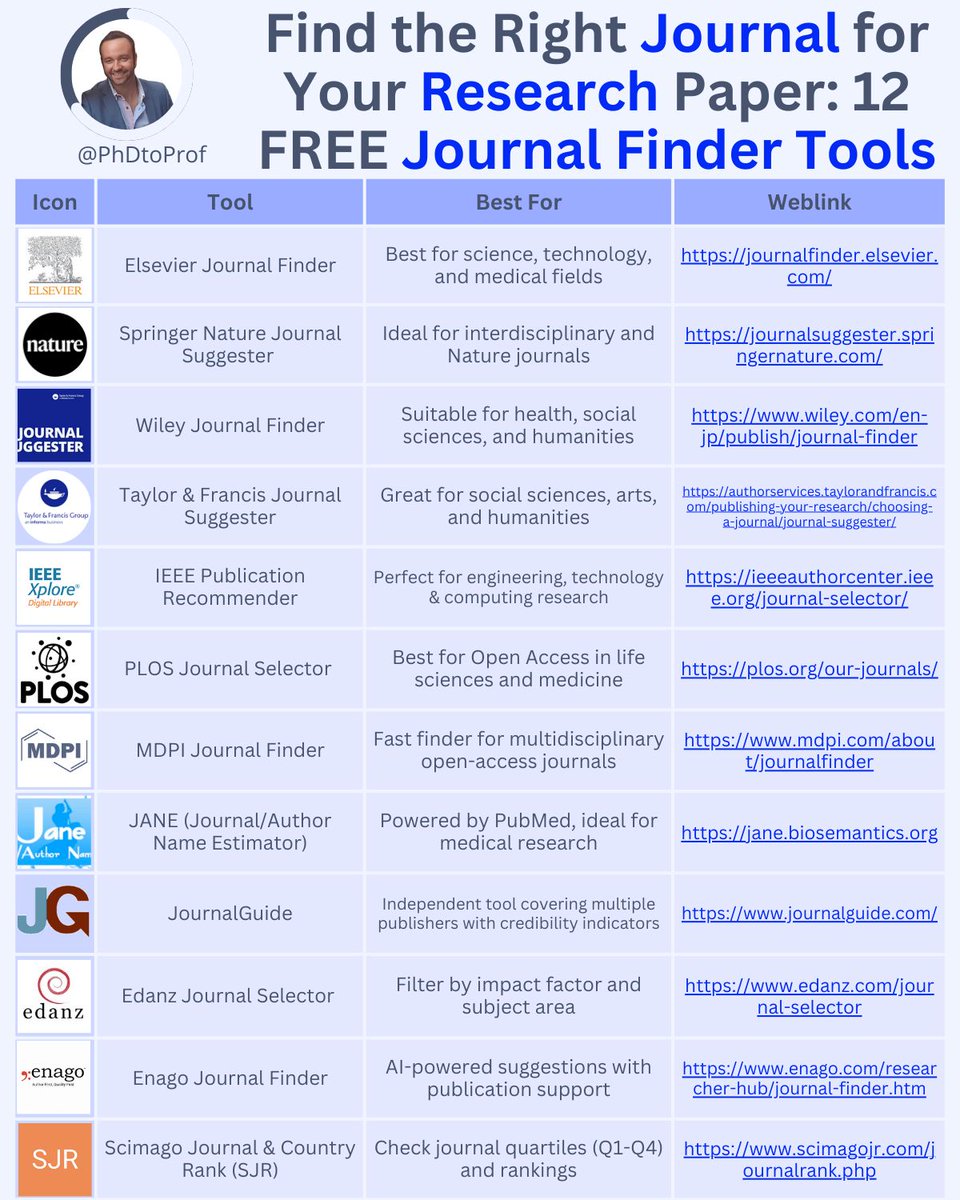
Here are 12 FREE tools that match your manuscript to the perfect journal 🧵 Image Major Publisher Tools:

Elsevier Journal Finder
Springer Nature Journal Suggester
Wiley Journal Finder
Taylor & Francis Journal Suggester
IEEE Publication Recommender
Aug 16, 2025 9 tweets 2 min read
How to cut your PhD research time by a third with 35 tools most PhDs don't know about

Most PhD students use ChatGPT and Google Scholar.

That's like using a bicycle on a highway.

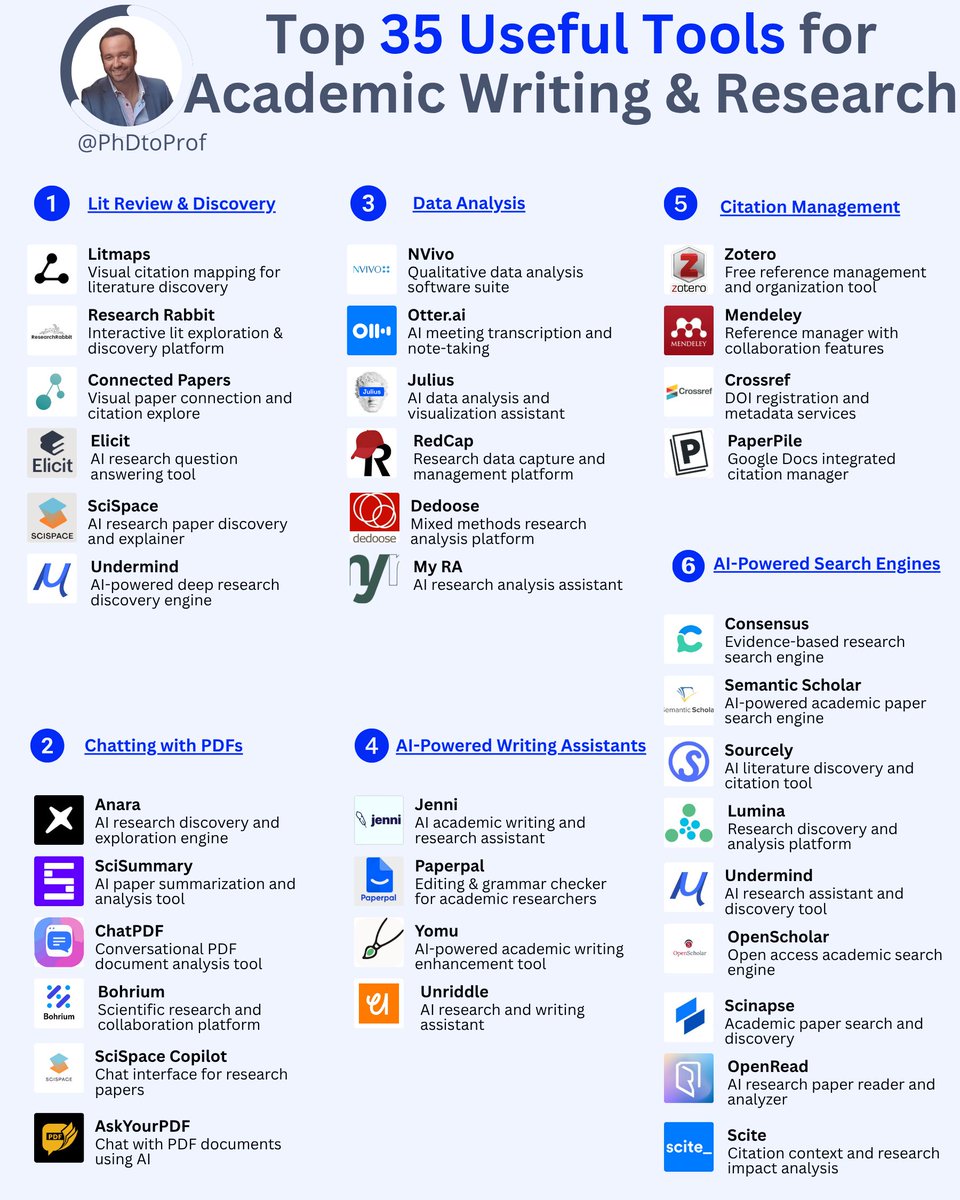
Smart researchers use specialized tools for each task 🧵 Image Here are the 35 tools that actually matter:
Literature Review and Discovery:
→ Litmaps - Visual citation mapping
→ Research Rabbit - Interactive literature exploration
→ Connected Papers - Visual paper connections
→ Elicit - AI research question answering
Aug 7, 2025 9 tweets 2 min read
How to turn 400 pages of chaos into a coherent PhD thesis

My PhD student came to me with a mess.

She had 6 chapters that didn't connect.

Her arguments jumped around like a broken GPS.

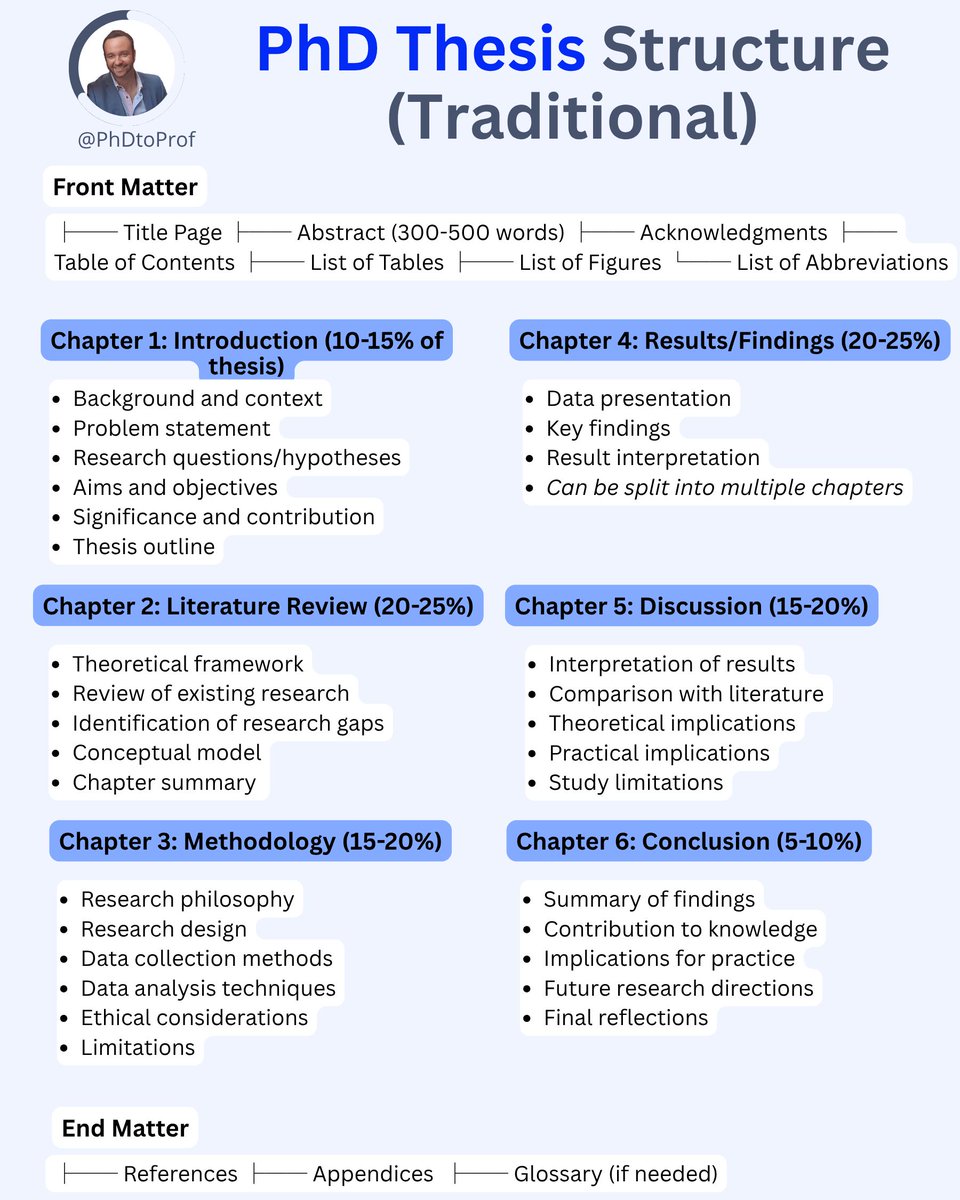
She thought more content meant better research. She was wrong 🧵 Image Most PhD students treat their thesis like a collection of essays.
They dump everything they know into random chapters.
But the best theses follow a proven structure.
Aug 6, 2025 7 tweets 2 min read
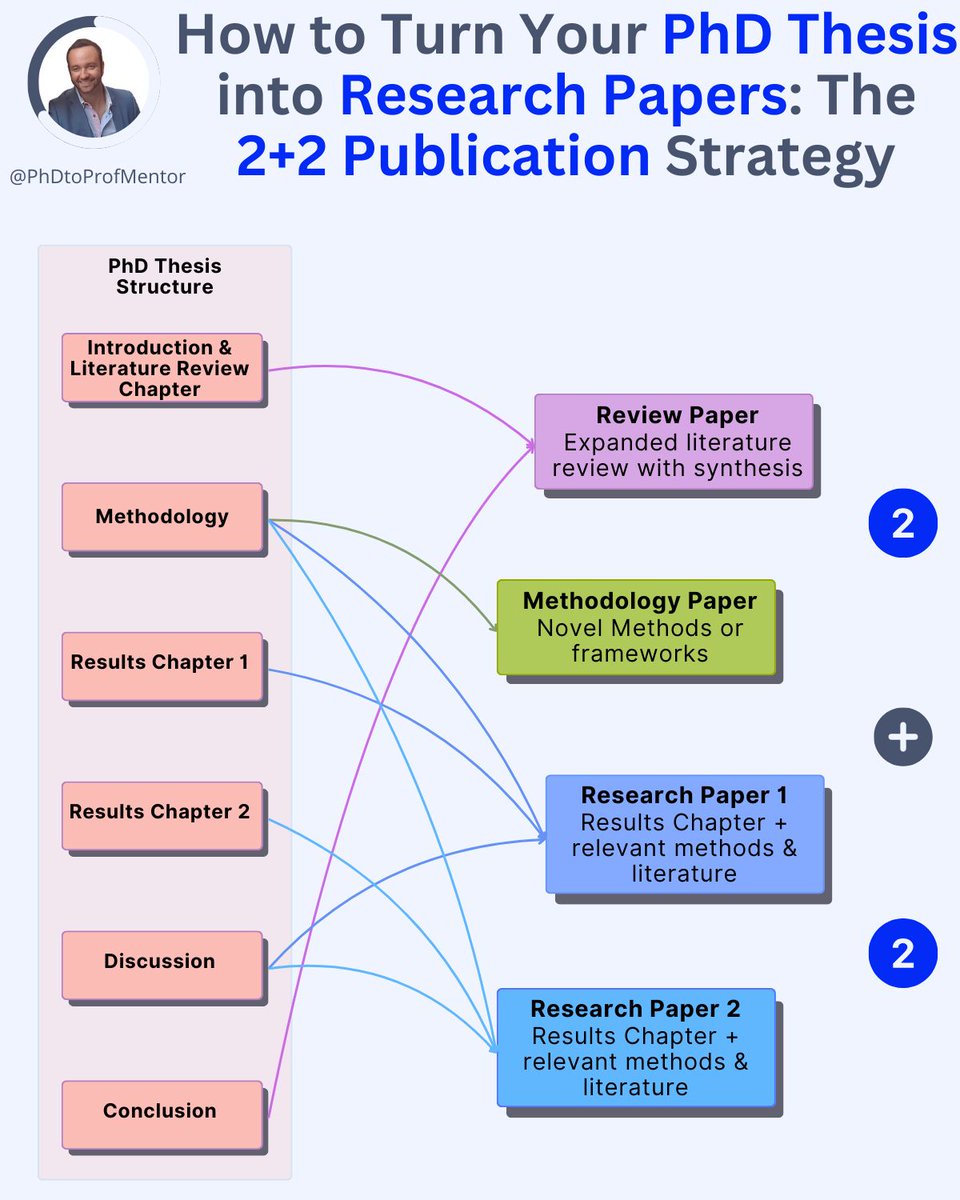
How to Turn Your PhD Thesis into Research Papers → The 2+2 Publication Strategy

I finished my PhD with a 250-page thesis. And zero publications.

My supervisor said I'd wasted three years of research 🧵 Image Most PhDs write their thesis first, then try to extract papers.
That's backwards.
Smart PhDs write papers while building their thesis.
I learned this when job committees asked for my publication list.
I had nothing to show.
Jul 19, 2025 5 tweets 2 min read
Step-by-step guide to write an introduction that convinces reviewers to accept and your audience to read more

Are you writing brilliant research but getting rejected because your introductions put reviewers to sleep?

This framework transforms rejection into acceptance 🧵 Image Most academic introductions are deadly boring:
"This study investigates..."
"Research has shown..."
"The purpose of this paper..."
Reviewers stop reading after sentence two.
Your brilliant research dies in obscurity.
Jun 21, 2025 9 tweets 2 min read
How I helped my PhD student transform from viva terror to examiner admiration

After 18 years examining PhD defenses

Tom came shaking: "I have no idea what they'll ask. What if I blank out completely?"

Here's my examiner's playbook 🧵 Image Classic pre-viva panic.

I'd seen it hundreds of times.

"Tom, I've sat on the other side of that table for 18 years. Let me show you exactly what examiners think."

I shared my examiner's playbook.
Jun 14, 2025 5 tweets 2 min read
Your qualitative paper isn't getting rejected for poor insights

It's getting rejected for structural failures

Most qualitative papers get rejected for ignoring the human-centered blueprint that works

Here's the framework that turns rejections into acceptances 🧵 Image The heartbreaking truth:

You spend months understanding human experiences → Discover profound insights → Submit to journal → Rejected for structural problems

The problem isn't your research quality. It's understanding qualitative structure.

After reviewing 300+ qualitative manuscripts, I discovered the pattern:
Successful papers follow a human-centered blueprint
Failed papers ignore the framework
The difference determines everything.
Jun 7, 2025 5 tweets 2 min read
Your quantitative paper isn't getting rejected for bad data

It's getting rejected for bad structure

You spend 2 years collecting data → get significant results → submit to dream journal → rejected in 48 hours

Here's the blueprint that turns rejections into acceptances 🧵 Image The disaster scenario:
Sophisticated models ✓
Significant results ✓
2 years of work ✓

But reviewer stops at poorly structured methods. Your research dies in obscurity.

After reviewing 200+ quantitative papers, I discovered the pattern:

Successful papers follow a specific blueprint
Failed papers ignore structure

The secret isn't complex statistics. It's systematic organization.
May 7, 2025 11 tweets 2 min read
Want to get published more easily?

Systematic reviews helped my career take off (and they can transform yours too)

Here's my simple 7-step guide to writing a great systematic review methodology: Image 1️⃣ Start with a clear framework → Tell readers upfront if you're using PRISMA, Cochrane, or another guideline to show you're following established rules
May 3, 2025 10 tweets 3 min read
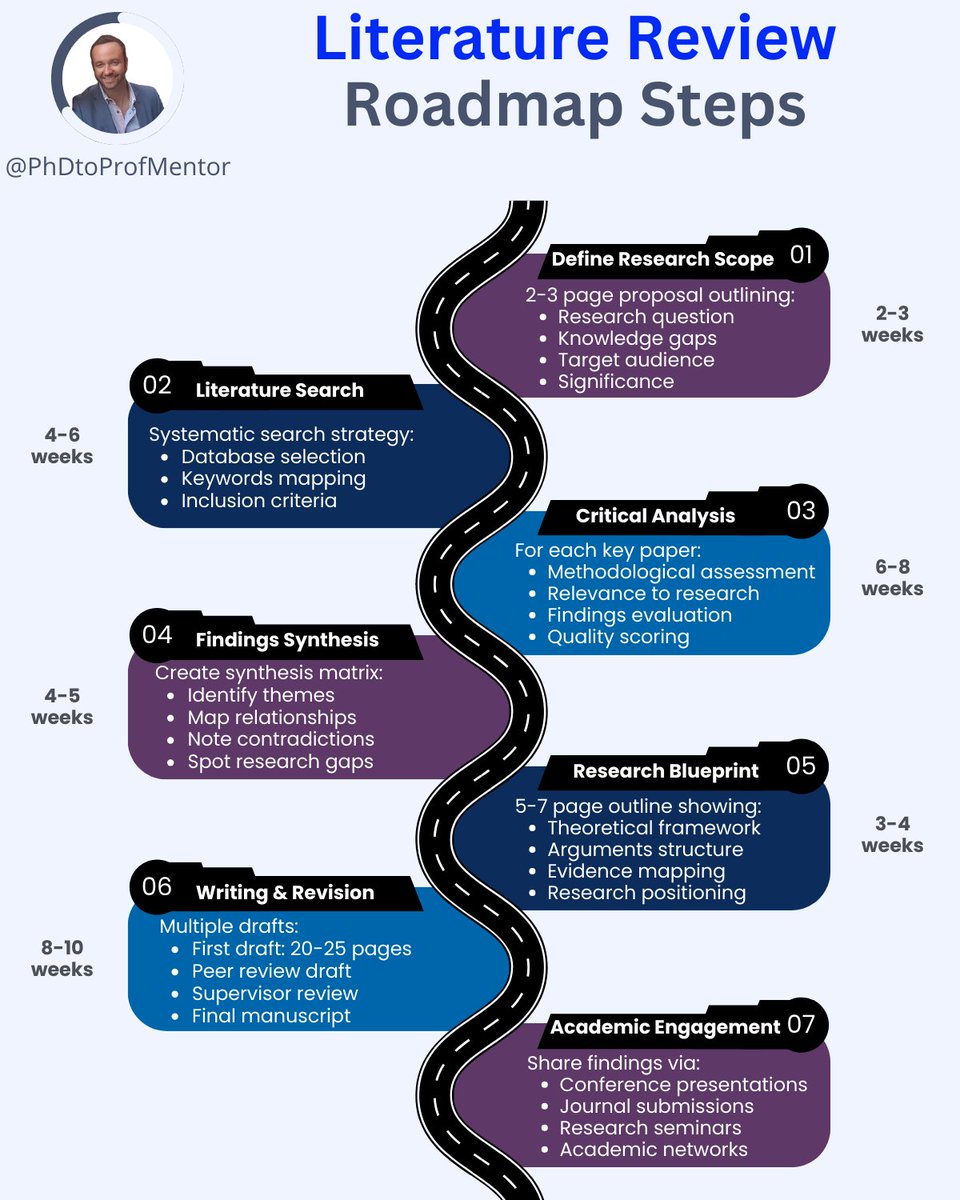
How I turned my messy literature review into my most successful publication

If you feel overwhelmed by all the reading or aren't sure how to turn it into writing, here's my 7-step plan that can help: Image 1️⃣ Figure out exactly what you're researching
- Write a clear research question that will guide your reading
- Identify what's missing in current research that you'll address
- Explain why your research matters
- Think about who will read your review
Timeline: 2-3 weeks | Result: A 2-3 page research plan
Apr 12, 2025 8 tweets 2 min read
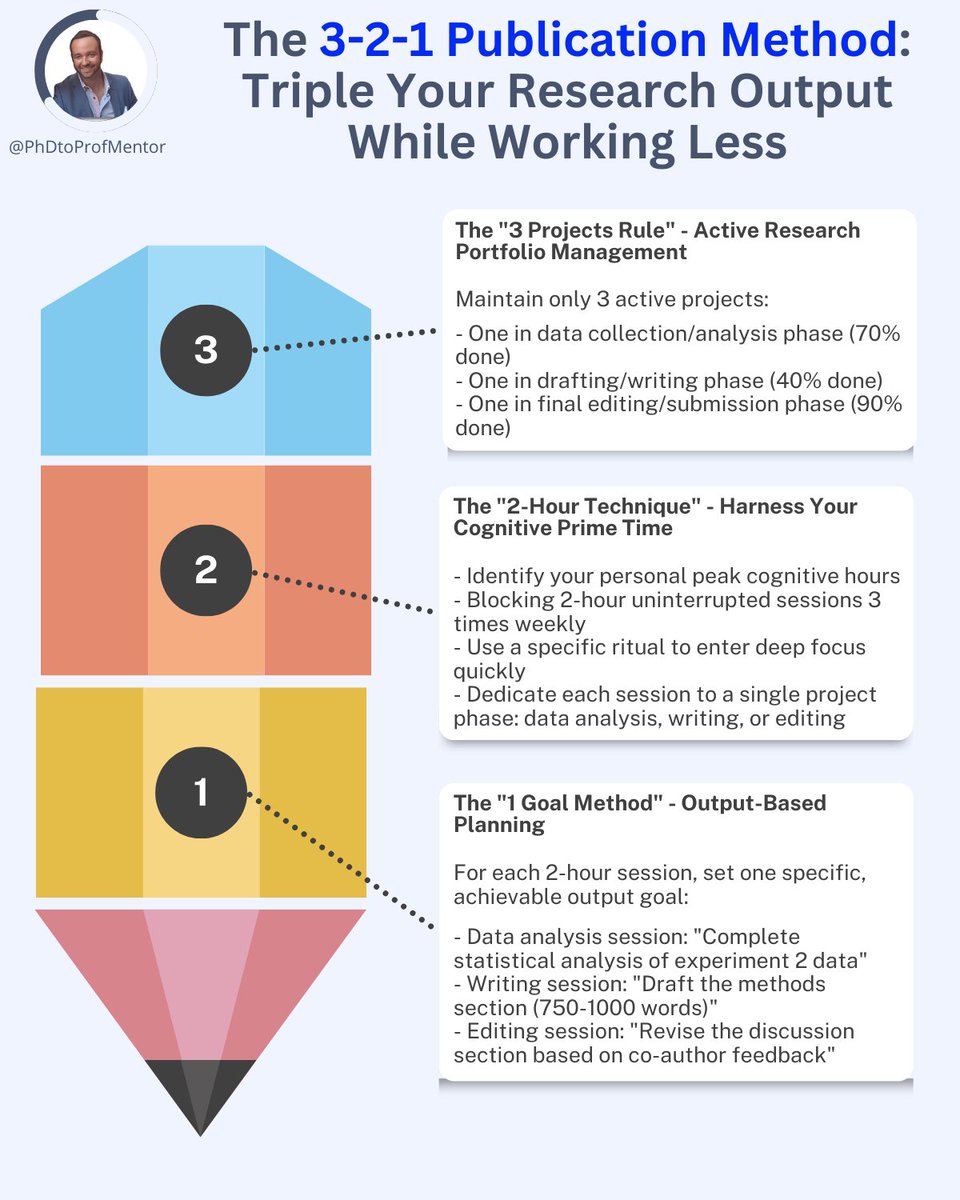
PhDs and Postdocs Triple Your Research Output While Working Less with The 3-2-1 Publication Method:

This approach isn't just about working harder; it's about working smarter.

Here's how you can triple your research output while working less: Image 3️⃣ The 3 Projects Rule: Active Research Portfolio Management
→ Maintain only three active projects at a time.

↳ One should be in the data collection/analysis phase, around 70% complete.
Apr 10, 2025 9 tweets 3 min read
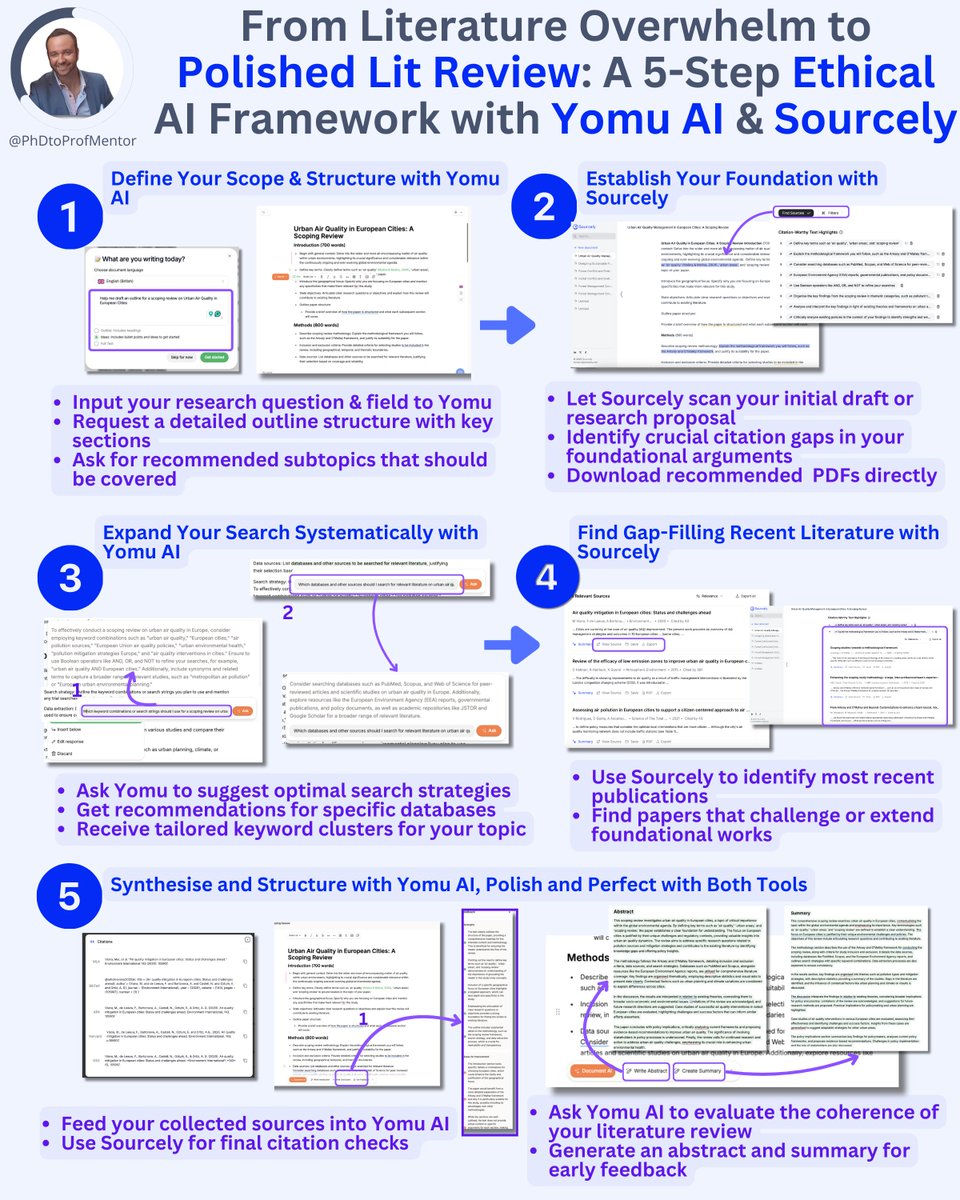
PhDs cut your literature review time in half while upping your game.

There's a way to streamline your literature review process without compromising on quality.

Here's a 5-step framework using Yomu AI and Sourcely to ethically and efficiently navigate your literature review: Image Step 1: Define Your Scope & Structure with Yomu AI

- Input your research question and field to Yomu AI
- Request a detailed outline structure with key sections
- Ask for recommended subtopics that should be covered
- Get suggestions for theoretical frameworks to consider
Mar 22, 2025 11 tweets 2 min read
Step-by-step guide to write an introduction that engages and convinces your audience of your research's value 👇 Image 1️⃣ Importance: Start by highlighting why your research is vital.
→ What makes this topic significant in your field?
→ How does it contribute to broader conversations?
Jan 3, 2025 8 tweets 2 min read
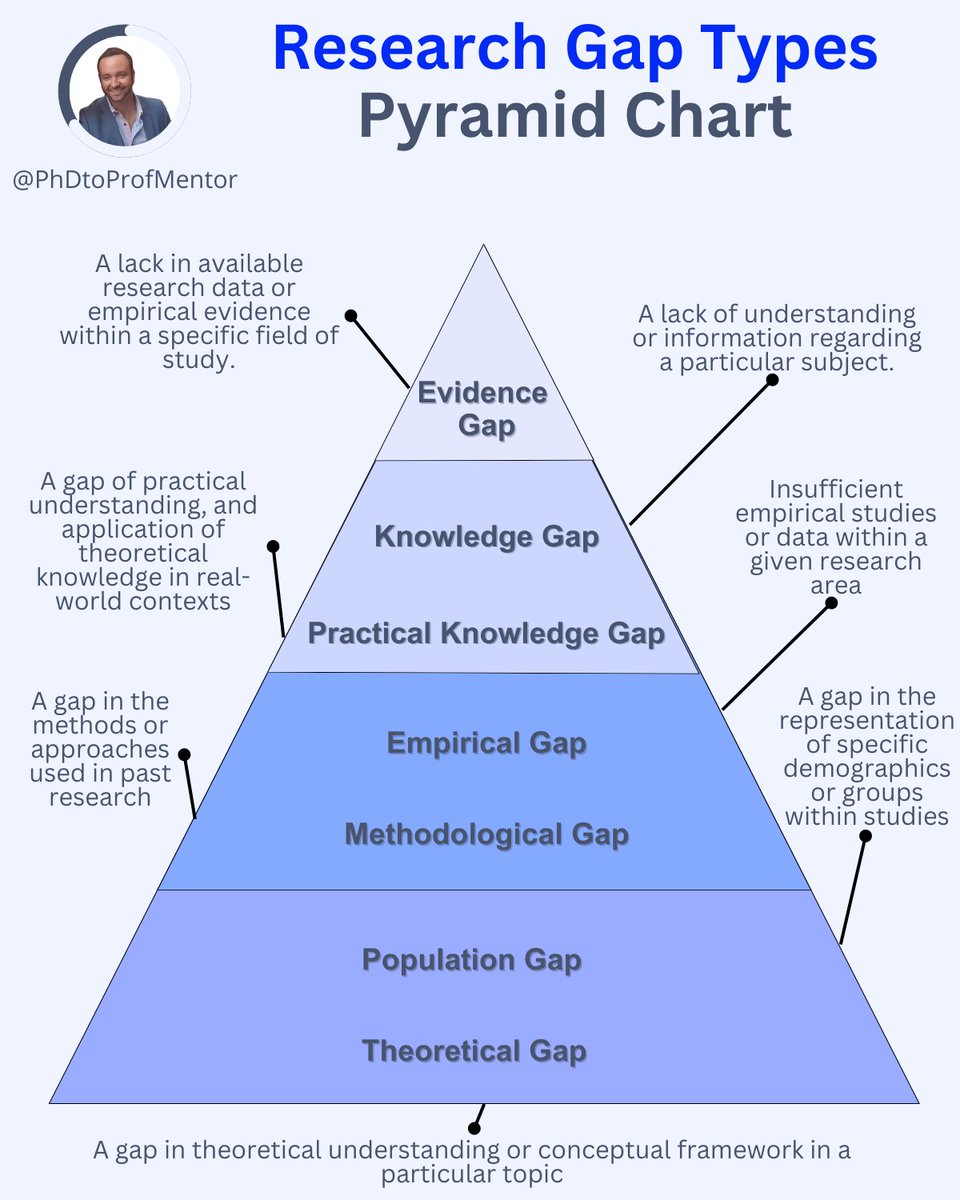
7 types of research gaps to help you identify your research topic.

Grab my 'Research Gap' Pyramid Chart Image Identifying research gaps is your first step toward discovering what's been explored and uncovering new territories begging for inquiry.

Let's dive into the 7 essential types of research gaps that could pave the way for your pioneering study:
Dec 4, 2024 9 tweets 2 min read
PhDs feeling absolutely stuck starting your Literature Review?

Let me show you 5 steps to go from blank page to full outline with @teampaperpal... Here's how you can overcome writer's block and generate a full outline using Paperpal:

1) Build Your Literature Foundation
→ Import PDFs of key papers into Paperpal.
→ Start with 2 recent review papers in your field.
→ Select 3 most cited references from each review paper and import them.