
 Some time ago, I made this study. Showing the ridiculous result of increasing thrust but not enlarging the bell due to spacing issues. You leave a lot of valuable vacuum Isp on the road. But, due to construction tooling and OLM, widening Ship & Booster would be expensive.
 At first: Why is high pressure useful?
 Last question first: Increasing chamber pressure (MCCp) is generally good and should be only limited to physical restrains. At some point, plumbing might get too heavy but we're faaar away from that point. Higher MCCp allows higher expansion ratio (ER) with same sized bell. 2/
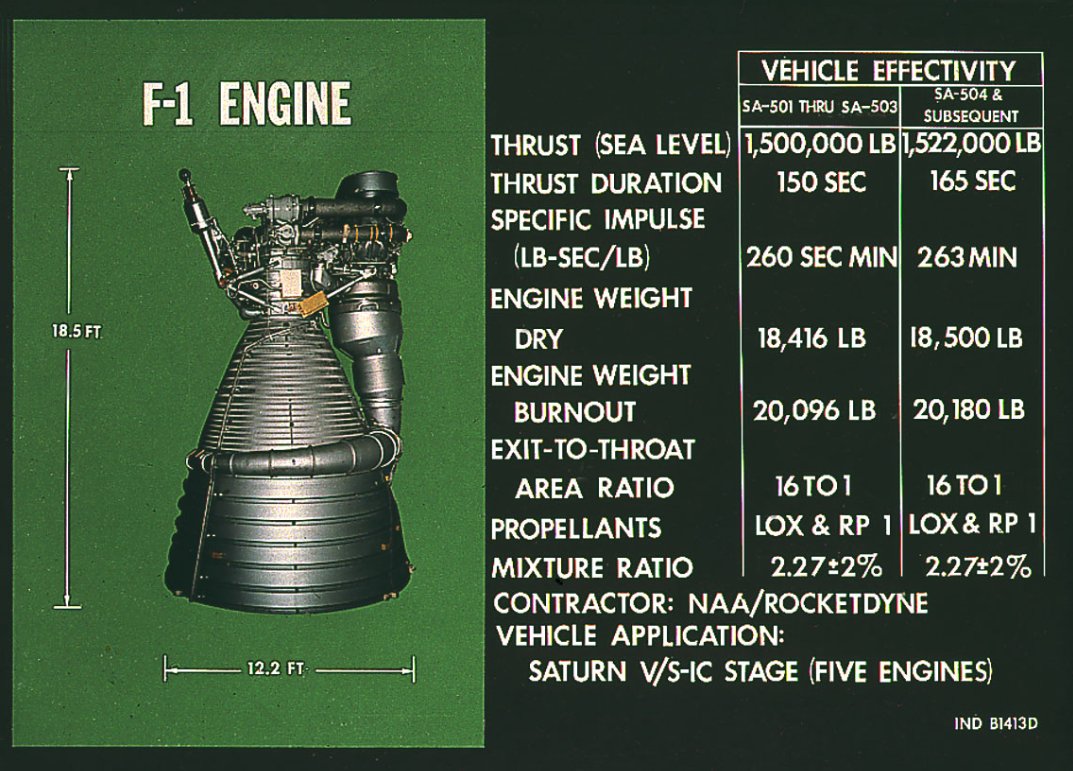 Luckily, on Wikipedia it is stated that the F-1 had a max temp of ~820 °C. That's quite on the edge of finding the O/F with RPA (which is possible to a degree). The value is 0.2. That's 0.2 parts oxygen for 1 part RP-1. Stochiometric would be 3 to 1! 2/x