 El-Badawi's key concept is something what he calls "dogmatic re-articulation", which is basically where the Qur'ān doesn't just borrow from the Aramaic Gospels, it consciously transforms them, but stripping Christology, recasting theology in monotheist terms for a new audience
 Q 22:40, traditionally Madīnan, comes in the context of the Qurʾānic permission to fight. It explains that without God's protection, places of worship would be torn down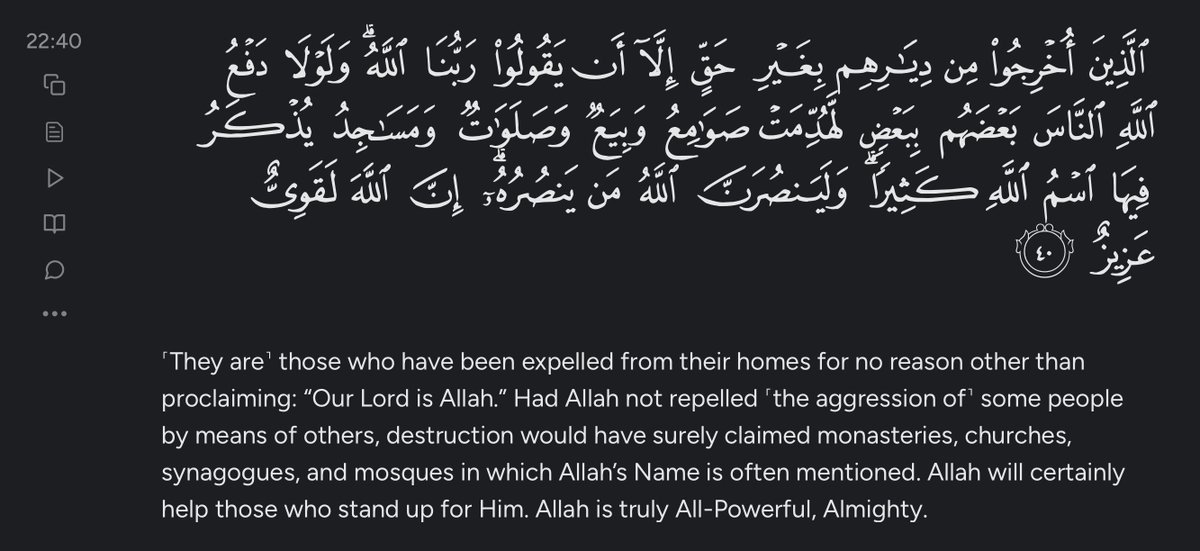
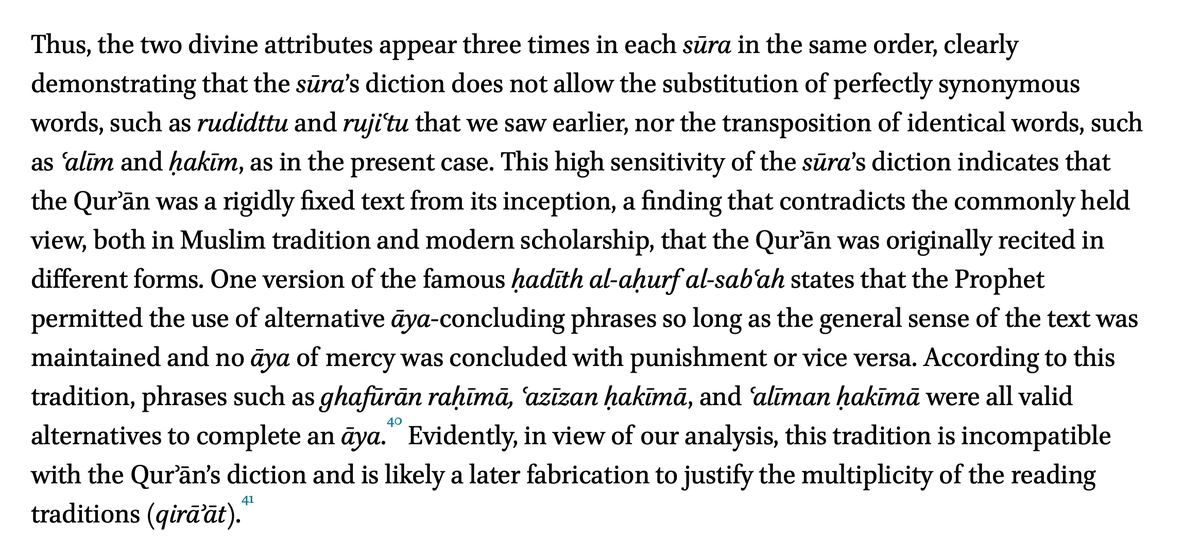 @JawharDawood Jawhar argues that the self-similarity and intricate lexical patterns in the Qurʾān indicate a text that was fixed from its inception, rather than one that evolved through multiple modes or versions
