Ms. Sam Profile picture
10th Year Secondary Science Teacher | Applying Cognitive Science to Science Learning | Scientists in the Making Blog | NBCT | All opinions are my own
Feb 28 8 tweets 2 min read
I am a high school chemistry teacher. For years, I encountered students who did not know their multiplication tables and it interfered with their ability to understand chemistry. This year, I decided to take matters into my own hands. ⬇️ 1. To be fluent in multiplication facts, students should be able to solve 40 problems per minute (ppm). My students on average were solving 15 ppm. Students on the lower end were solving 3 ppm. Only a handful of students (out of 184) were fluent.
Oct 11, 2025 9 tweets 2 min read
Today, we spent class time reviewing for the upcoming exam. Some students asked if we’d be playing Kahoot or Blooket. I told them we wouldn’t be doing that. This is what we did instead. ⬇️ 1. Gave them a low-stakes short practice test on paper. Each question was clearly labeled by the topic it assessed (more on this later).

They had to take it as if it were a real test. That means no notes or partner interactions during this time.
Aug 20, 2025 12 tweets 3 min read
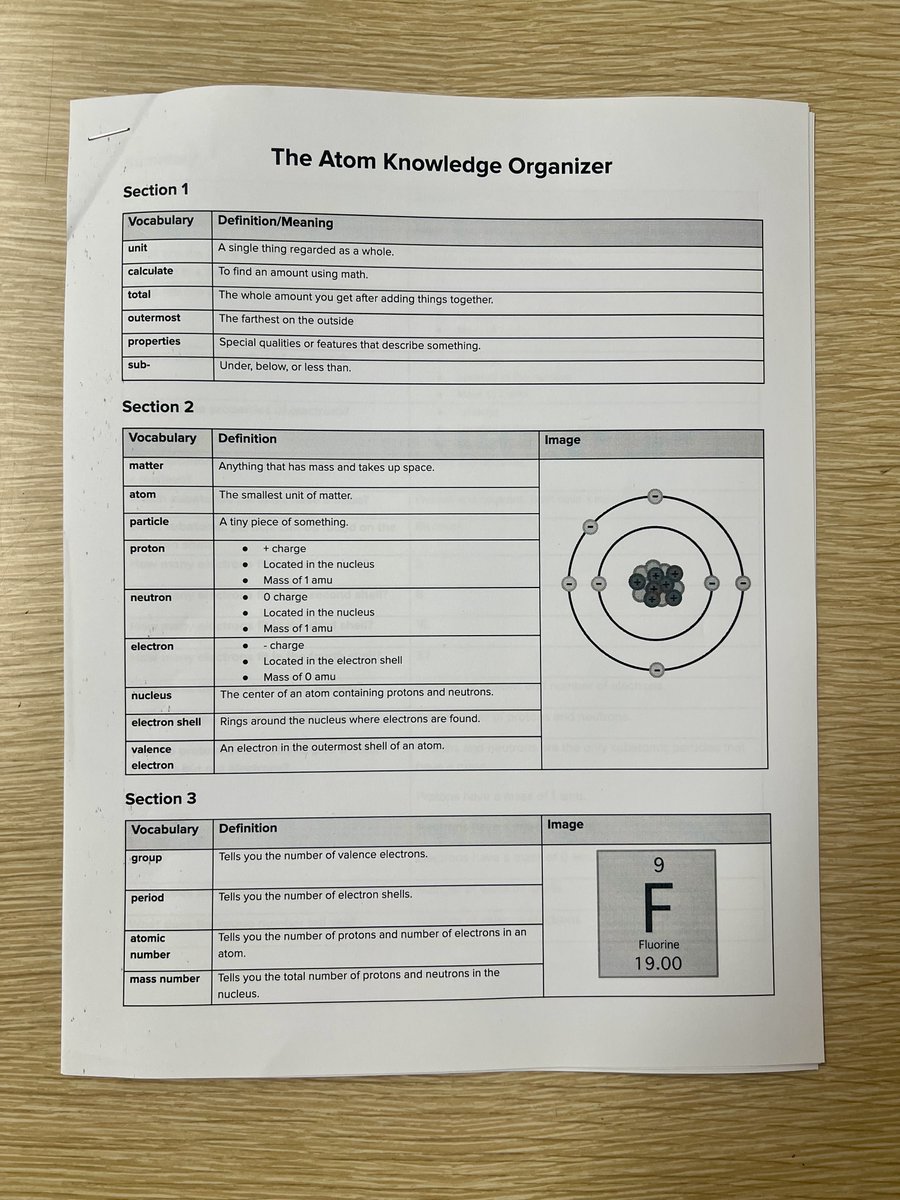
If you’re wondering how I taught the content without Chromebooks while still applying principles from the science of learning, here’s a lesson we did last week. The lesson focused on the structure of the atom. ⬇️ 1. Knowledge Organizer
I began by giving students a Knowledge Organizer (KO) along with outline notes of the atom. Image
Aug 7, 2025 8 tweets 3 min read
Just wrapped up the first day of school! This is how I set up my secondary classroom ⬇️ Image 1. Desk Layout
Desks are arranged in pairs and set in rows as seen in the above tweet. Each pair is labeled with a number and letter A or B to help students find their assigned seats on the first day. It also helps structure Turn and Talks: "Partner A, share with Partner B..." Image
Image
Jul 24, 2025 8 tweets 2 min read
High-order thinking depends on a strong foundation of knowledge. Without this foundation, there’s nothing to critically think about. That is why teaching “21st century skills” and “critical thinking” in isolation does not work.

Let me explain with an analogy ⬇️ 1. Would you say that lawyers and doctors have high-order thinking skills? Most would say yes.
May 28, 2025 10 tweets 3 min read
In science, students often feel overwhelmed when they have to understand science concepts and perform calculations at the same time. To prevent cognitive overload, I used the Teach FAST framework @GTavernetti to teach molarity (concentration of a solution). 🧵 1) Preview: To connect molarity to students’ everyday experiences, I showed a picture of different Kool-Aid mixtures and asked which one they thought would taste the sweetest. This led to a discussion about solutions and concentrations which set the stage for the lesson. Image
May 2, 2025 11 tweets 3 min read
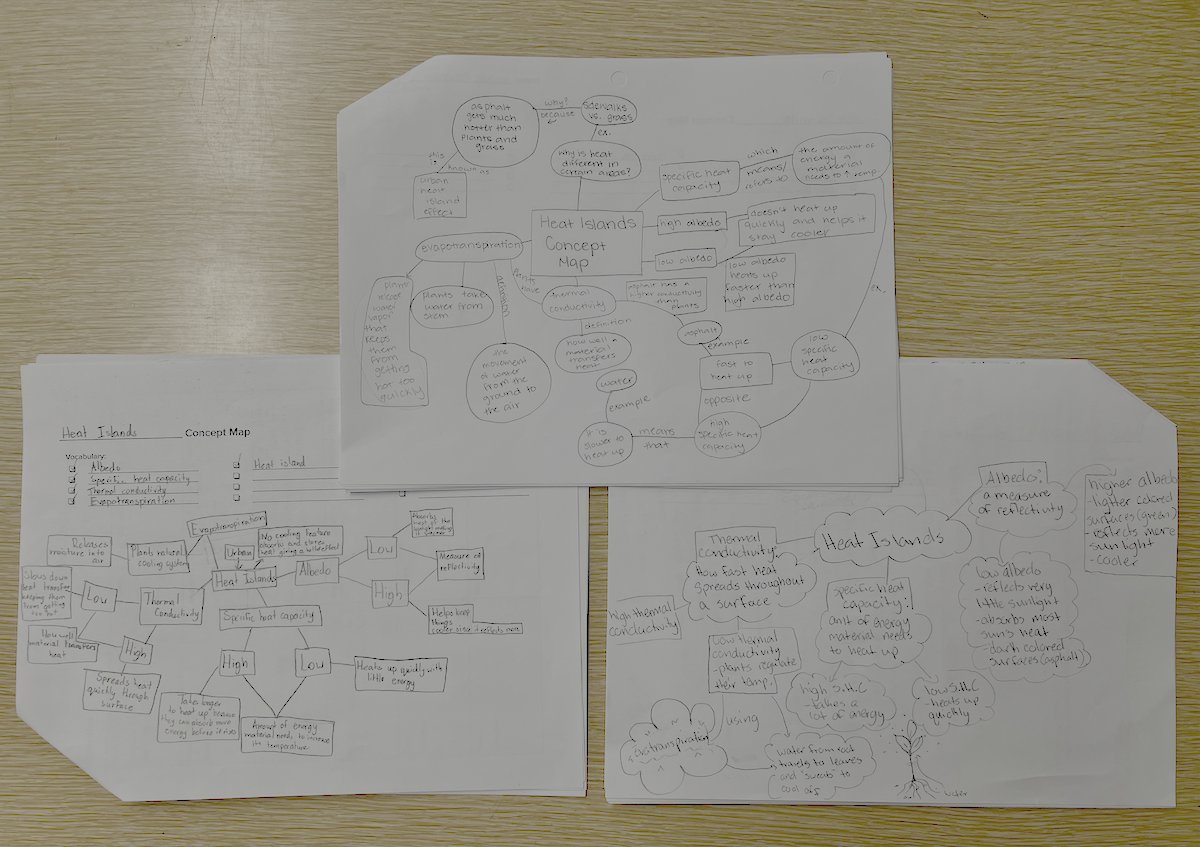
My school suggested that teachers implement Socratic seminars in the classroom. I decided to keep an open mind and try it. I knew that for this to be successful, students needed a strong foundation on knowledge. This is how I approached it. 🧵 1. The Socratic seminar topic was: How can we mitigate the urban heat island effect in our neighborhood?
Mar 15, 2025 8 tweets 2 min read
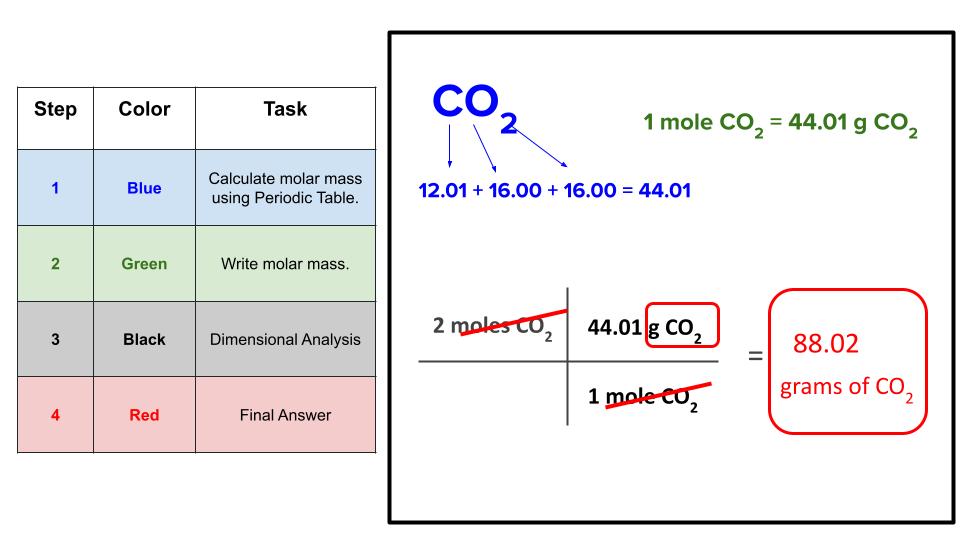
In Building Thinking Classrooms (BTC), vertical whiteboards are used for group problem-solving in math. During an observation, I used this strategy because they wanted to see student-centered learning. Here’s how it played out. 1. Each group had four different colored whiteboard markers. Every student had a specific color, and each color corresponded to a specific task. I instructed them to explain their thought process while solving and for other group members to take notes. Image
Feb 13, 2025 10 tweets 3 min read
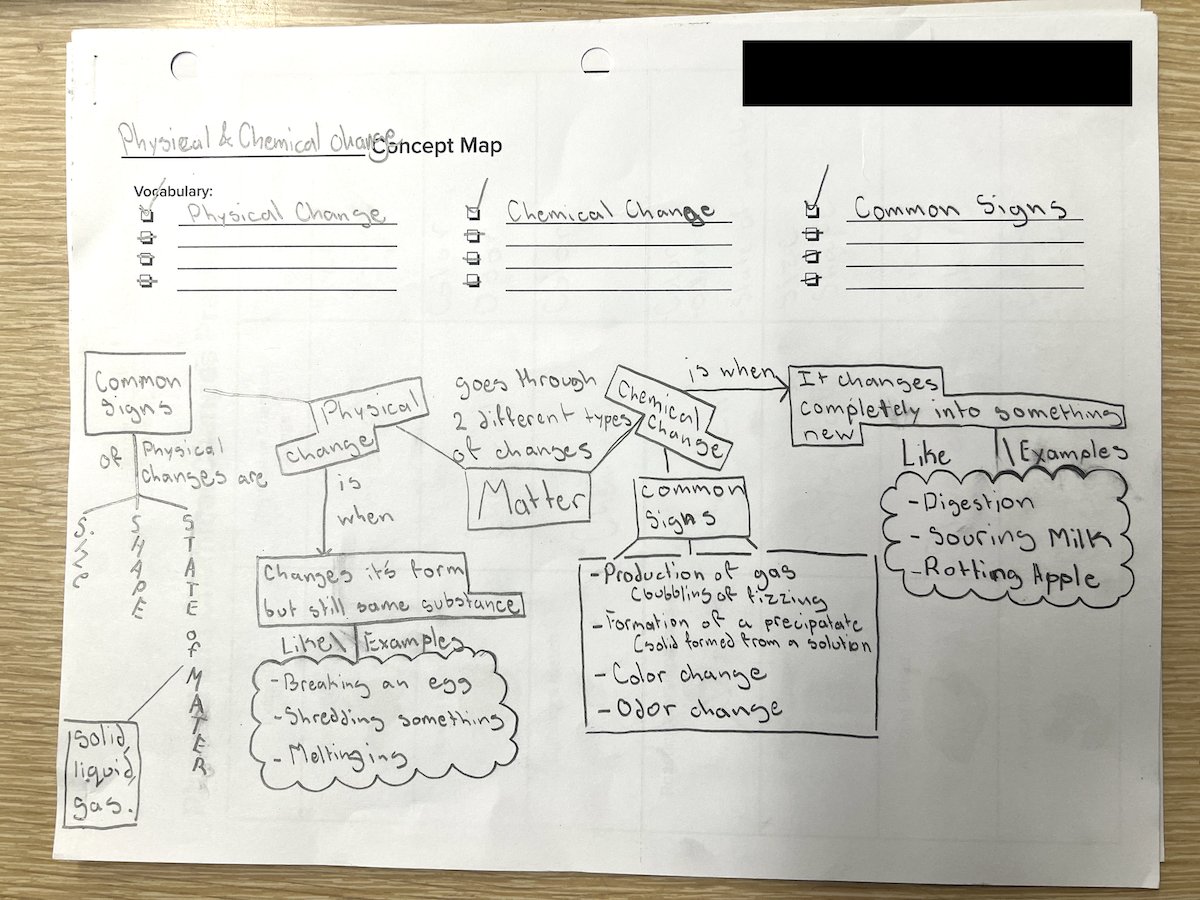
Students sometimes struggle to learn new material effectively because they lack the necessary background knowledge. Let me explain how I approach this problem with an example. 🧵 1. I teach chem. Even though my students are in high school, they are not familiar with physical and chemical changes (middle school concept). So I have them construct a concept map of physical and chemical changes using student-friendly notes to build background knowledge. Image
Jan 7, 2025 11 tweets 2 min read
First day of school done! I decided to kick off spring semester by introducing students to effective study strategies such as retrieval practice, spaced practice, and interleaving. Here’s how I approached it. 🧵 1. Students were first instructed to read an article about retrieval practice, spaced practice, and interleaving.

docs.google.com/document/d/1pq…
Dec 18, 2024 7 tweets 2 min read
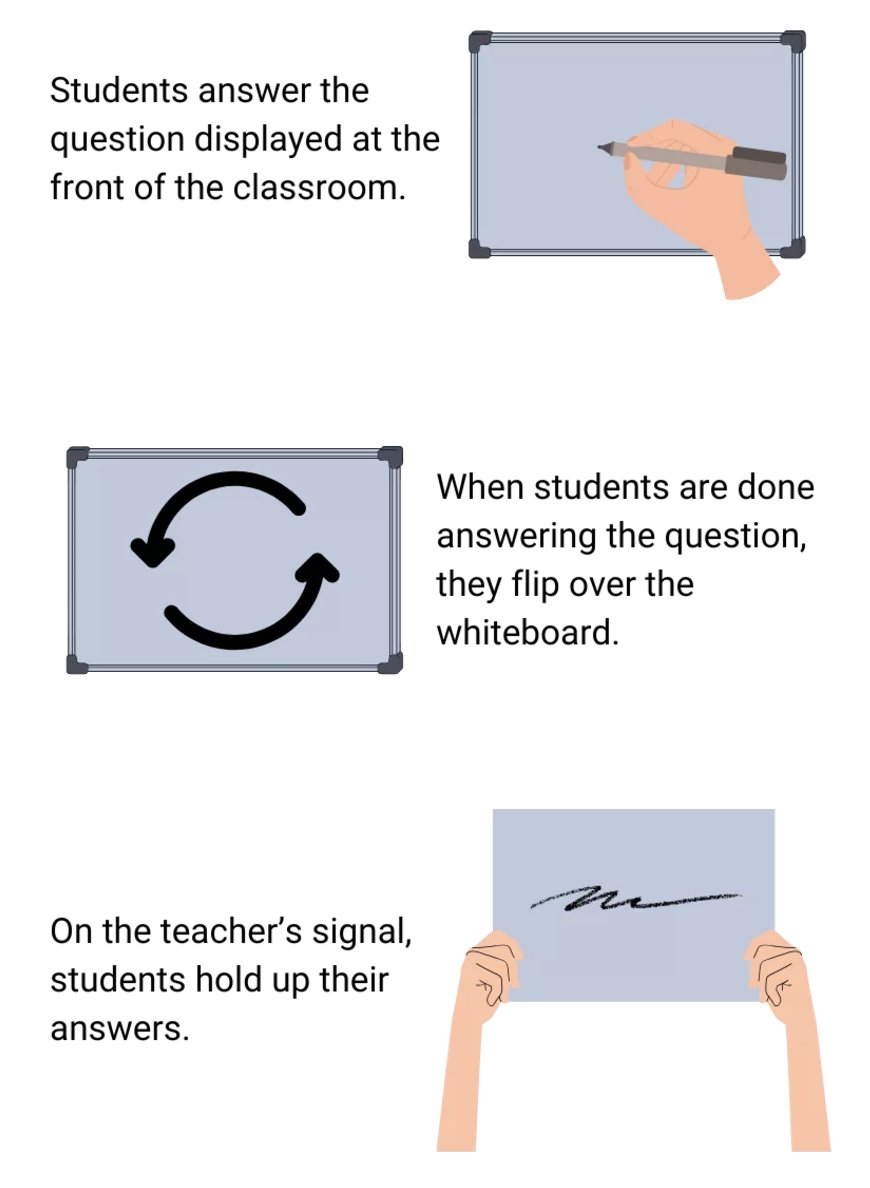
Mini whiteboards are one of the most effective tools for real-time formative assessment. They make learning visible, foster participation, and allow for immediate feedback. Here's how they can transform your teaching. 🧵⬇️ Image 1. Instead of asking for volunteers, pose a question and have every student write their answer on a mini whiteboard. When students hold up their boards, everyone’s voice is “heard” simultaneously, creating a more inclusive classroom environment. Image
Nov 30, 2024 7 tweets 1 min read
Inquiry-based learning often starts with a question or problem designed to spark curiosity, encouraging students to explore and discover answers. While engaging, this approach overlooks how scientists and engineers truly develop expertise. 🧵⬇️ 1. Scientists and engineers don’t start with a blank slate, following their curiosity wherever it leads. Instead, they build carefully on foundational knowledge.
Nov 16, 2024 6 tweets 2 min read
The most common misconception in science education is that it must be inquiry-based. Here are reasons why that is not the case 🧵⬇️ 1. Many people believe science education should be inquiry-based because that is how scientists gain knowledge. Scientists use the scientific method to investigate, experiment, and make discoveries. The assumption is that if students do the same, they will develop similar skills.
Nov 12, 2024 6 tweets 1 min read
Why do schools keep chasing every new educational trend when decades of proven research already show us what works? 🧵⬇️ 1. Take Cognitive Load Theory for example. Cognitive scientists have shown over and over again how critical it is to manage cognitive load to enhance learning.