WW2 The Eastern Front Profile picture
Communism with Yugoslav Characteristics ☭
May 8 4 tweets 8 min read
The Molotov-Ribbentrop pact is the topic that comes up every day in my replies so I thought I would write a long piece explaining the rationale behind it !

Part 1:

Western historians and their ideological allies have spent decades smearing this decision as cynical or opportunistic. This article rejects that framing entirely. The pact was not a compromise. It was a masterstroke of statecraft, executed with cold precision by a leader who understood better than anyone that the Soviet Union's survival was the precondition for the defeat of world fascism. History vindicated Stalin completely.

To understand the pact, one must first understand the criminal failure of the Western powers in the years that preceded it.

Throughout the 1930s, the Soviet Union was the only major power that consistently and sincerely opposed the rise of Nazi Germany. Under Foreign Minister Maxim Litvinov, the USSR championed collective security, called for a united anti-fascist front, and pleaded with Britain and France to build a defensive coalition capable of stopping Hitler before war became unavoidable. The Western powers refused at every turn. Their reasons were not principled. They were ideological.

For the ruling classes of Britain and France, Nazi Germany was not a threat to be stopped; it was a weapon to be directed eastward against the Soviet Union and the socialist project it represented.

This calculation was laid bare at Munich in September 1938. Britain and France, without consulting or even informing the Soviet Union, handed Hitler the Sudetenland on a silver platter. Czechoslovakia, a sovereign nation with a capable military and treaty obligations from both France and the USSR, was simply surrendered.

Stalin had personally signaled the Soviet Union's readiness to honor its commitments and defend Czechoslovakia. France refused to act, and the chance to stop Hitler without a general war was squandered. Stalin correctly concluded that the West had deliberately steered German aggression eastward and would do so again at the Soviet Union's direct expense.

The Anglo-French-Soviet negotiations that limped along through the summer of 1939 confirmed every suspicion. The Western delegations arrived without binding authority, stalled endlessly, and refused to address the core Soviet requirement: guaranteed military access through Poland and Romania to actually engage German forces. Britain and France were not negotiating in good faith. They were performing diplomacy while privately hoping that Hitler and Stalin would exhaust each other, leaving the capitalist West to dictate terms to a weakened Europe. Stalin saw through this performance with perfect clarity.

Faced with a West that had chosen appeasement over alliance, Stalin took the only path that protected the Soviet state. He turned the Western powers' own strategy against them. The Molotov-Ribbentrop Pact denied Hitler the quick eastern war he wanted and preserved the Soviet Union for the fight that was coming. It was a strategic masterstroke that bought the time the USSR needed to prepare the most powerful military force the world had ever seen.

The defining feature of Stalin's leadership in this period was his absolute clarity about the future. While Western leaders clung to delusions of lasting peace, Stalin never wavered in his understanding that war with Germany was inevitable. The only question was when it would come and whether the Soviet Union would be ready.Image Part 2:

As historians have documented, Molotov later recalled that Stalin believed the USSR would only reach full military parity with Nazi Germany around 1943. Stalin was a realist who made decisions on the basis of material conditions, not wishful thinking. In 1939, the Red Army was powerful but not yet at its peak. The immense industrialization program launched under the Five-Year Plans had transformed the Soviet Union from a backward agrarian country into an industrial giant, but the military still needed time to absorb new technology, train new commanders, and field the next generation of weapons that Soviet engineers were already developing.

The Great Patriotic War proved that Stalin's assessment was correct. The Red Army that turned the tide at Moscow in December 1941, that annihilated the German Sixth Army at Stalingrad in 1942-43, and that swept from the Volga to Berlin between 1943 and 1945 was not the army of 1939. It was the army that two years of accelerated preparation had forged into the most formidable land force in human history. Without the time the pact purchased, that army would never have existed in the form that made victory possible.

Stalin also understood something Western analysts consistently failed to grasp: the socialist system's capacity for rapid, total industrial mobilization was its supreme strategic asset. Given sufficient time, Soviet industry could and would outproduce Germany in every category of war materiel. Every month the pact held was another month of tanks off the assembly lines in the Urals, another month of aircraft rolling out of factories east of the Volga, another month of soldiers trained and officers promoted. Time was on the Soviet Union's side. Stalin knew it. The pact delivered it.

The proof of Stalin's intentions lies not in the diplomatic record but in what the Soviet Union actually accomplished between August 1939 and June 1941. The scale and urgency of Soviet war preparation during this period demolishes any suggestion that the pact represented genuine accommodation with fascism. Every resource of the Soviet state was mobilized for the coming fight.

The Soviet rearmament effort was already underway before the pact but accelerated dramatically in its wake. The First Five-Year Plan, launched in 1928, had already oriented the entire Soviet economy toward military-industrial strength. By 1934, while the Western democracies remained mired in disarmament and complacency, the Soviet Union was producing 3,509 tanks per year, more than the rest of Europe combined.

The USSR had not waited for Hitler to become a threat; it had been building against that threat for over a decade.
The Third Five-Year Plan, running from 1938 to 1941, redoubled this effort with a ferocity that reflected the urgency of the international situation. The share of military spending in the Soviet budget rose from 13% to 25% during this period. The plan ruthlessly prioritized armaments and defense infrastructure. An entire network of new military factories was constructed east of the Ural Mountains, a deliberate strategic decision to place Soviet industrial capacity beyond the reach of any German advance.

This proved to be an act of profound foresight. When the German invasion came, these eastern factories allowed the Soviet Union to sustain and then dramatically expand production even while fighting for survival. As Soviet planners documented, the timely construction of backup plants in the Volga region, the Urals, and Siberia made it possible "not only to preserve the military potential of the state, but also to evacuate machinery" from threatened western regions.

By 1941, approximately 9,000 new plants had been built since the industrialization drive began. The Soviet Union stood as the second largest industrial economy in the world, behind only the United States. This transformation, achieved in barely a decade under socialist planning and Stalin's leadership, had no parallel in history.
Aug 23, 2025 6 tweets 8 min read
In this third installment of my mega threads covering WWII topics, which I post on Saturdays, I'll dive into the Molotov-Ribbentrop Pact. Few issues have been more misused to attack the Soviet Union, so let's dig in!

Part One:

Background and Strategic Purpose

The Molotov-Ribbentrop Pact, signed on August 23, 1939, was a pivotal and calculated maneuver in Soviet foreign policy, designed to postpone an inevitable military confrontation with Nazi Germany. 

The agreement, formally known as the Treaty of Non-Aggression between Germany and the Union of Soviet Socialist Republics, emerged from a complex geopolitical landscape where the Soviet Union faced increasing isolation. Repeated efforts to forge collective security arrangements with Western powers, particularly Britain and France and the West’s pursuit of appeasement policies, exemplified by the Munich Agreement of 1938, which allowed Nazi annexation of Czechoslovakia’s Sudetenland without Soviet input. This left the USSR vulnerable, prompting Soviet leaders, under Joseph Stalin, to seek a temporary buffer against German aggression.

The pact committed both nations to refrain from attacking each other, providing the Soviet Union with a pragmatic response to the looming threat of a two-front war, particularly as Japan’s aggression in the Far East, marked by the 1938-1939 clashes at Khalkhin Gol, strained Soviet resources. The agreement allowed approximately 22 months to bolster military capabilities, modernize industrial output, and reorganize defenses, all critical after years of internal consolidation and rearmament challenges.

The USSR, still recovering from economic strains and military reorganization, viewed the agreement as a means to push its borders westward, creating a strategic buffer to protect key cities like Leningrad, Moscow, and Minsk from rapid German advances. This territorial adjustment aimed to buy time and space, allowing the Red Army to prepare for the anticipated conflict with Germany.

By delaying direct confrontation, the USSR could focus on strengthening its industrial base, increasing tank and aircraft production, and training its forces. it also ensured that the Soviet Union avoided immediate entanglement, preserving its strength for the critical battles that would later halt Nazi expansion.Image Part two:

The Road to the Pact

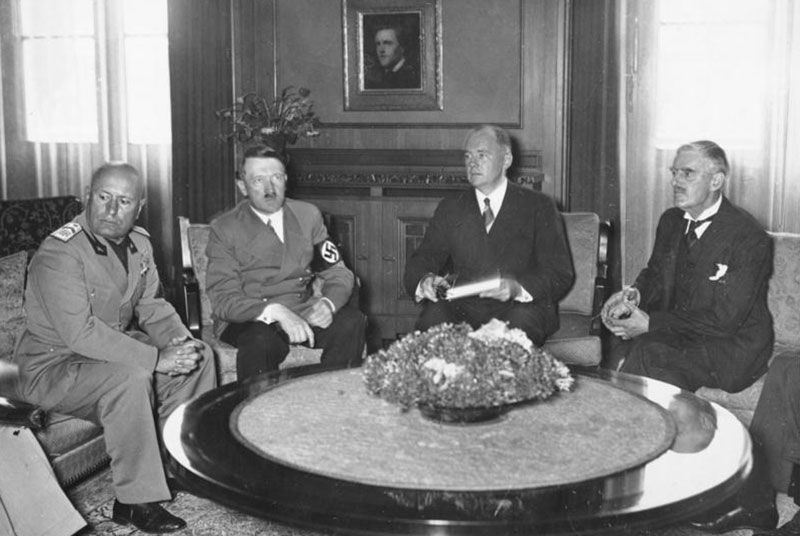
The Munich Agreement of September 29–30, 1938, signed by Germany, Italy, Britain, and France, permitted the annexation of Czechoslovakia's Sudetenland while deliberately excluding the USSR, despite its mutual assistance pacts with Czechoslovakia and France, thereby highlighting Anglo-French appeasement and eroding trust in Western commitments to counter Nazi expansion.

This exclusion signaled to Stalin that the West might redirect German aggression eastward, a fear compounded by Poland's opportunistic occupation of the Teschen (Cieszyn) region on October 2, 1938, where Polish forces seized approximately 800 square kilometers with a population of about 227,000, mostly ethnic Poles but including Czechs and Germans, aligning with Axis territorial grabs and worsening Soviet-Polish tensions.

By March 15, 1939, Germany's full occupation of Czechoslovakia violated Munich terms, prompting a British guarantee to Poland on March 31 that notably omitted the USSR, intensifying Stalin's fears of encirclement and prompting exploratory talks with Germany as early as May 1939.

Subsequent Anglo-Franco-Soviet negotiations from April to May 1939 stalled over guarantees for the Baltic states and Polish-Romanian borders, with the USSR proposing a robust military alliance against Germany that Western powers resisted due to anti-Bolshevik sentiments and hesitation to commit to Eastern European defense.

The military phase in July–August 1939 further deteriorated, as the Western delegations arrived by slow boat without full authority to negotiate binding terms, contrasting with the swift German overtures; key impasses included Poland's refusal to allow Red Army transit through its territory, and British-French reluctance to include the Baltics in mutual defense pacts, leading to the talks' collapse on August 21. This breakdown, driven by Western anti-communism, Polish intransigence, and deliberate delays, positioned the USSR as the last major power to engage Germany after exhausted alternatives, making the pact a forced tactical choice to avoid isolation.Image
Jun 1, 2025 4 tweets 1 min read
I think Russia is trying to determine whether the U.S. had any intelligence involvement in today’s operation. During the Cold War and afterward, there was always an understanding between the U.S. and the USSR/Russia: you do not interfere with each other’s nuclear deterrent. This was an absolute red line. I'm not sure how Russia would respond if the U.S. had any role in this. 🫠 And also it's an absolute embarrassment Russia did not detect this operation beforehand
May 14, 2025 13 tweets 7 min read
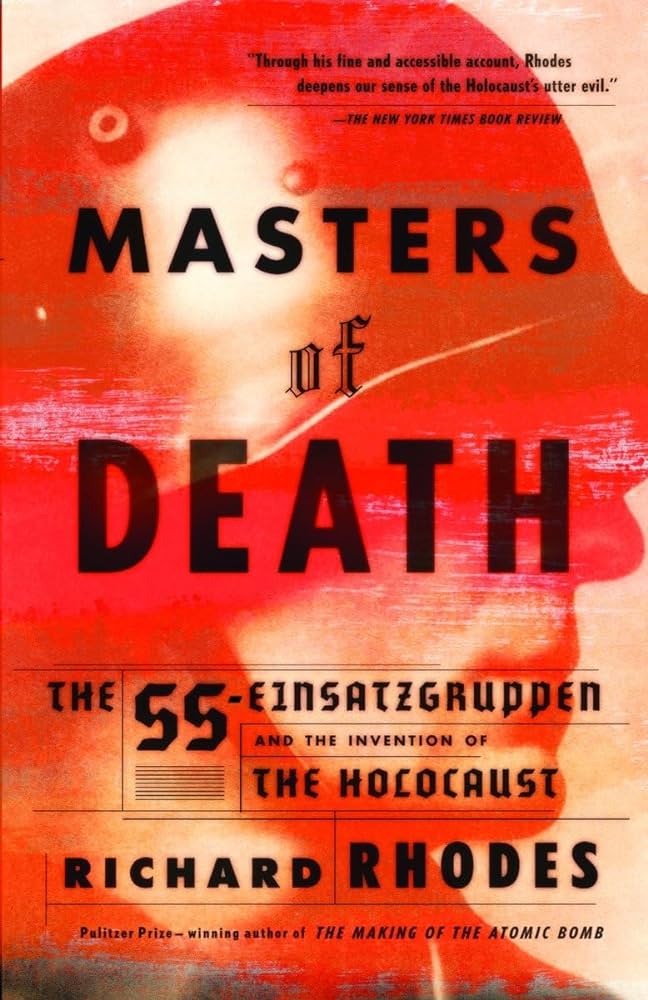
Between 2 million and 2.5 million Jews were shot dead, thrown into pits, and covered with soil in Ukraine, Belarus, and the Baltic states during World War II. The Germans had a special killing unit called the Einsatzgruppen, which followed behind the Wehrmacht into occupied cities and villages. With the help of local collaborators, they rounded up Jews and proceeded to murder them.

In this thread, I will post 20 of the largest Einsatzgruppen mass executions in Ukraine.

1. Babyn Yar (Babi Yar), Kiev : Over two days, September 29–30, 1941, Nazi forces executed approximately 33,000 Jews in a ravine near Kiev. The killings, led by Einsatzgruppe C’s Sonderkommando 4a under SS-Standartenführer Paul Blobel, with support from Police Battalions 45 and 303, continued through 1943, claiming up to 100,000 lives, including Jews, Romani people, Soviet POWs, and others.

Ukrainian Auxiliary Police played a significant role, rounding up Jews, guarding the site, and occasionally participating in shootings. Some local volunteers, including members of the Organization of Ukrainian Nationalists (OUN), assisted in auxiliary tasks.

Victims were forced to undress and shot in groups, with later efforts in 1943 to burn bodies under Aktion 1005 to conceal the crime. Babyn Yar remains a stark symbol of the Holocaust’s brutality in Ukraine.

The photo below shows Soviet POWs who were forced to cover the bodies of murdered Jews with dirt, only to be executed themselves shortly afterward at Babi Yar in Kiev.Image 2. Drobitsky Yar, Kharkiv: In December 1941, Nazi forces massacred around 16,000 Jews in a ravine near Kharkiv’s tractor factory, with additional killings in 1942.

Einsatzgruppe C, supported by Police Battalion 314, orchestrated the shootings, targeting Jews from the city’s ghetto. Ukrainian Auxiliary Police assisted by cordoning off the ghetto and escorting victims to the execution site, while some local collaborators engaged in looting Jewish property.Image
Dec 5, 2024 6 tweets 2 min read
I had no idea who Salome Zourabichvili, the President of Georgia, was until six months ago. However, she kept appearing on my feed every day, so I did a little digging to see what her family was up to during World War II.

Lo and behold, Michael Kedia, Salome Zourabichvili's maternal grandfather, was the head of the Georgian desk for the Reich Security Main Office (RSHA) and worked under Reinhard Heydrich ! 😀🫠Image
Image
He was involved in its Operation Zeppelin, where he recruited individuals for espionage and sabotage operations against the Soviet Union.
Dec 1, 2024 5 tweets 2 min read
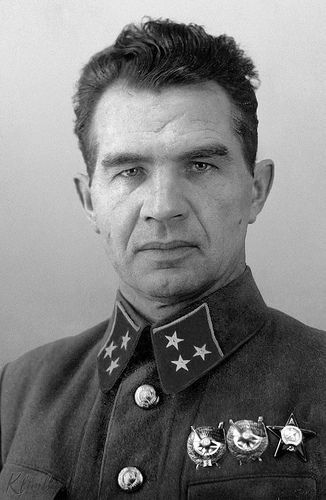
The lion of Stalingrad was Marshal of the Soviet Union Vasily Ivanovich Chuikov. He refused to stay in high command and work in conference rooms , he wanted to be in the trenches. Image My favorite quote of him is : " Every German soldier must be made to feel that he is living under the muzzle of a Russian gun. " 😃
Oct 15, 2024 4 tweets 2 min read
Happy Denazification Day, folks! 🪅🥳

65 years ago , on October 15, 1959, two Ukrainian communists, KGB agent Bogdan Stashinsky, acting on the direct orders of Nikita Khrushchev, the Secretary General of the Communist Party of the Soviet Union, assassinated Stepan Bandera, the leader of the Organization of Ukrainian Nationalists, in Munich, West Germany, by shooting a cyanide gas capsule into his face.Image This is his funeral. He looks like Dracula ! Image
Image
Oct 8, 2024 8 tweets 3 min read
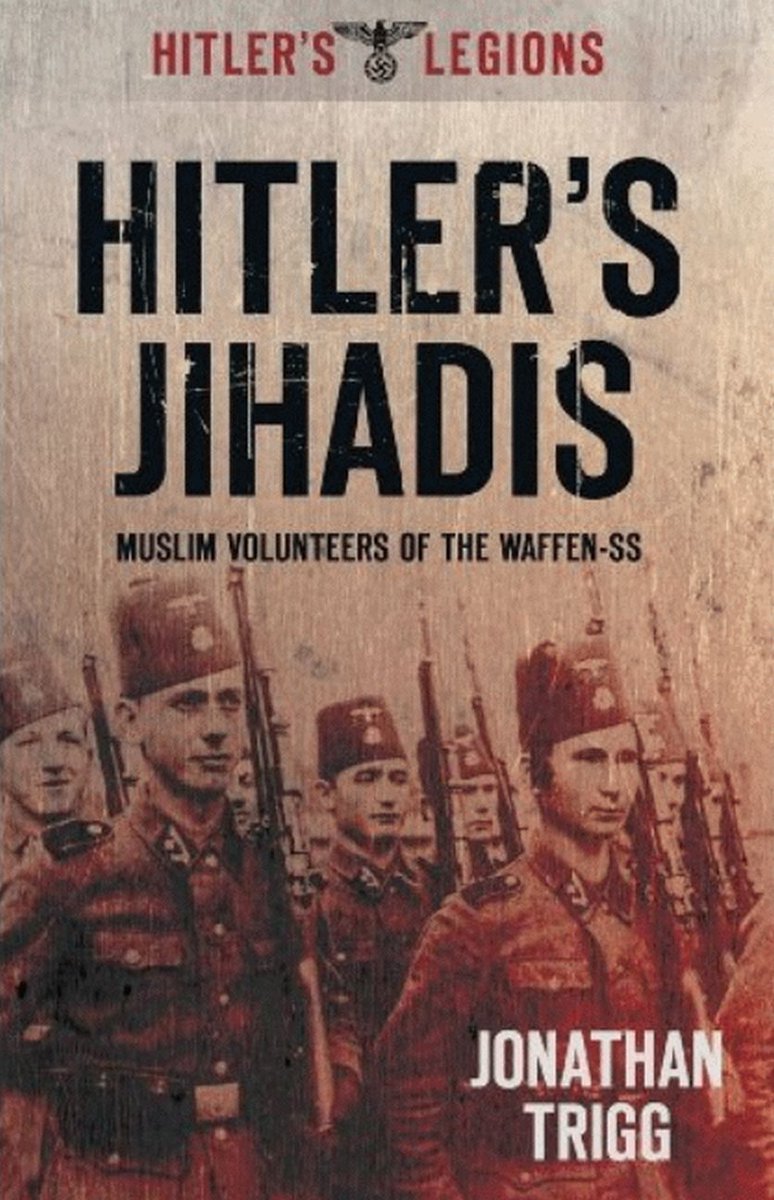
Who were Hitler's loyal Muslim soldiers ? Let's dive into it ! A thread...🧵 Image The Free Arabian Legion was a unit primarily composed of Middle Eastern and North African Arab volunteers, and it was part of the Wehrmacht. It was active during the Tunisian campaign and later in anti-partisan operations in Greece and Yugoslavia. Image
Sep 30, 2024 5 tweets 3 min read
Let’s take a deep dive into the so-called "Night of the Long Knives"—the Brownshirts vs. the Schutzstaffel!

A thread 🧵 Part 1

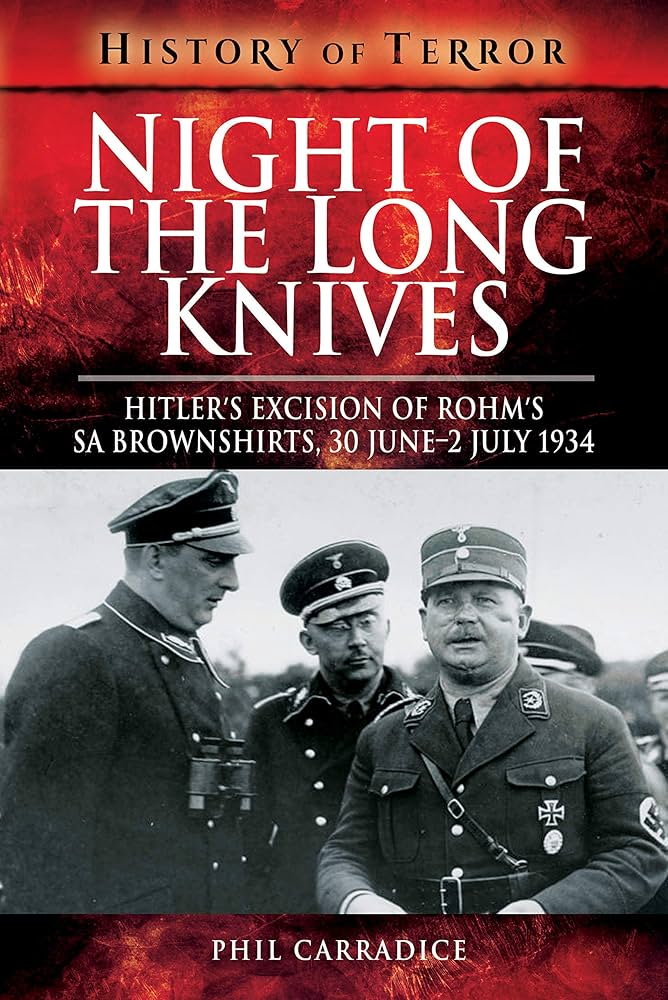
The Night of the Long Knives, also known as the Röhm Purge, took place in Nazi Germany from June 30 to July 2, 1934. It was a series of political executions ordered by Adolf Hitler to consolidate his power and eliminate potential threats within his own party, the Nazi Party. The purge mainly targeted the leadership of the Sturmabteilung (SA), the paramilitary wing of the Nazi Party, but it also extended to other political rivals, including former Chancellor Kurt von Schleicher. Estimates suggest that between 85 and 200 people were killed during the purge, although the exact number remains unclear.Image Part 2

At the core of the purge was the rivalry between the SA ( Brownshirts ), led by Ernst Röhm, and the German Army (Reichswehr). Röhm and the SA had been instrumental in helping Hitler rise to power, but by 1934, the SA had grown to over 3 million members and Röhm was calling for a "second revolution" that would redistribute power and wealth.

This alarmed Hitler and other members of the Nazi leadership, as well as conservative elements within the German military and industry. Röhm's ambitions threatened Hitler’s relationship with the military, which he needed for his long-term plans of expansion and rearmament. The German Army leadership viewed Röhm and the SA as a radical and destabilizing force. To secure the army’s loyalty, Hitler decided to remove Röhm and the SA leadership.
Sep 1, 2024 9 tweets 3 min read
85 years ago on September 1 , 1939 ; Germany invaded Poland which marked the beginning of WW2 in Europe. It was initiated by Nazi Germany under the leadership of Adolf Hitler, with the goal of conquering Poland and expanding German territory. Let's dive into it...a thread 🧵

1. Prelude to the Invasion

Munich Agreement (1938): The Munich Agreement allowed Nazi Germany to annex the Sudetenland, a region of Czechoslovakia, in an attempt to avoid war. However, this emboldened Hitler to pursue further territorial expansion.
Molotov-Ribbentrop Pact (August 23, 1939):A non-aggression pact between Nazi Germany and the Soviet Union, which included a secret protocol to divide Eastern Europe into spheres of influence.Image 2. The Invasion

September 1, 1939: Germany launched a blitzkrieg, or "lightning war," against Poland, beginning with an air raid on the city of Wieluń and a naval attack on the Westerplatte peninsula. The invasion involved a coordinated attack using fast-moving infantry, tanks, and air support to quickly overwhelm Polish defenses.
Aug 23, 2024 6 tweets 3 min read
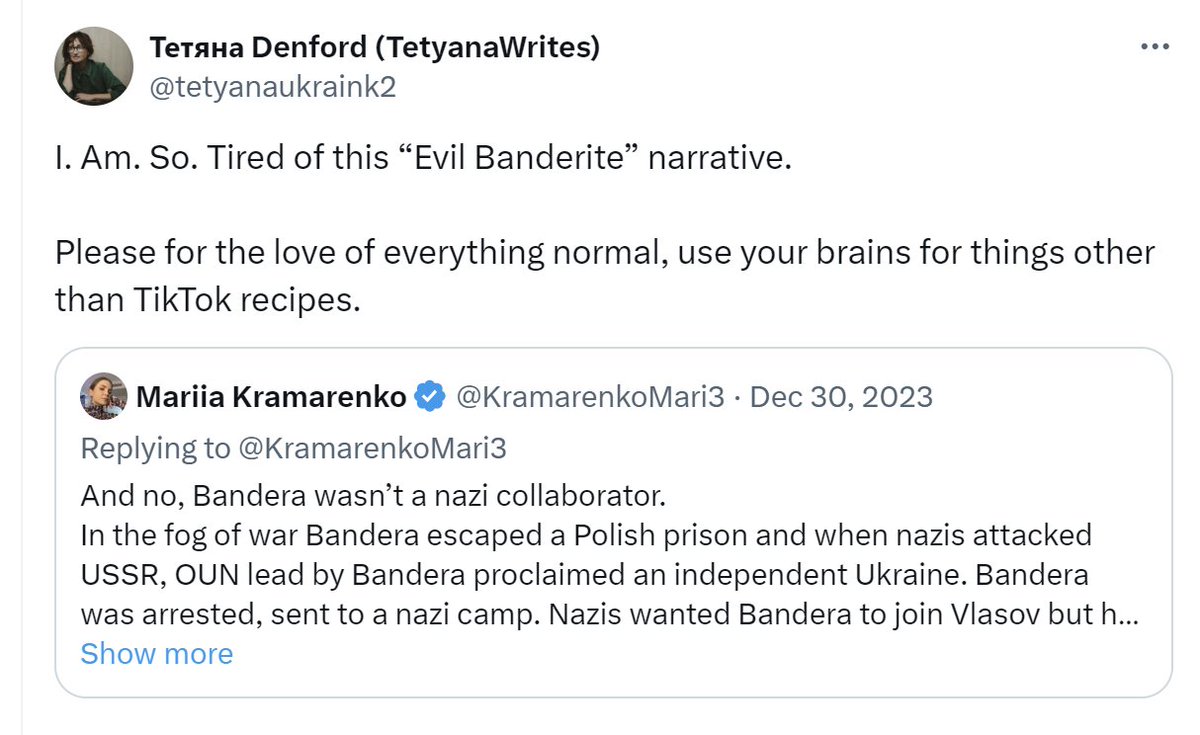
1. This is an important thread, and I am going to give you an example of how the Bandera Lobby works and shapes the narrative in the West! Take Tetyana, for example, who gained fame through the Mariupol documentary that was even nominated for an Oscar and got one . Let’s dive into this! A thread...🧵Image 2. She appears to be mainstream with "street cred," so what she says is often believed by regular, naive folks. For example, Tetyana often complains about the way Stepan Bandera is viewed according to historical records. Her perspective seems largely shaped by Ukrainian nationalism and her family's admitted historical ties to groups led by Bandera.Image
Image
Aug 16, 2024 10 tweets 3 min read
Let's take a look at Operation Citadel (the code name for the Nazi offensive in Kursk Oblast) from the German perspective! What were their objectives, and why did the operation ultimately fail? A thread...🧵

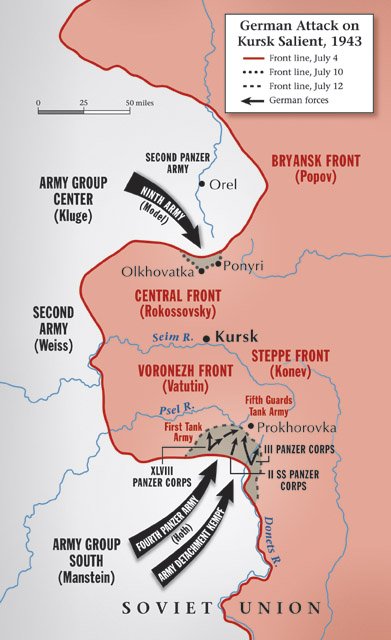
1. The Kursk Offensive, codenamed Operation Citadel, was launched by the German Army in July 1943. It was a bold attempt by Nazi Germany to regain the initiative on the Eastern Front after the disastrous defeat at Stalingrad. The primary goal was to encircle and destroy the Soviet forces in the Kursk salient, a large bulge in the frontline.Image 2. The German High Command believed that a decisive victory at Kursk would stabilize the Eastern Front and cripple the Soviet Union’s ability to launch further offensives. Over 900,000 German troops, including some of the best Panzer divisions, were amassed for this operation, making it one of the largest tank battles in history.
Aug 13, 2024 15 tweets 4 min read
The Einsatzgruppen, Nazi Germany's mobile killing units, were responsible for the mass murder of an estimated 1.5 to 2 million people during World War II. Let's dive into their history and how they operated ! A thread ...🧵

1/15

The Einsatzgruppen were SS paramilitary death squads established by Nazi Germany during World War II. They were instrumental in the Holocaust, particularly during Operation Barbarossa, the 1941 invasion of the Soviet Union. Their mission was to carry out mass executions, primarily targeting Jews, Roma, and Soviet political commissars, but also others deemed enemies of the Reich.Image 2/15

Initially formed in 1939 for operations in Poland, the Einsatzgruppen's role expanded drastically in 1941 with the invasion of the Soviet Union. They followed the Wehrmacht into newly occupied territories, systematically rounding up and executing civilians, often working closely with local collaborators to maximize the scale and speed of their operations.
Aug 12, 2024 15 tweets 4 min read
The defense of Stalingrad was the largest battle in the history of humanity. The Soviet Union lost more men at Stalingrad than the United States did in both World War I and World War II combined. Let's dive into the details and explore what the workers and peasants of the Soviet Union were able to achieve! A thread 🧵

1. The Siege Begins (July 17, 1942)

The Battle of Stalingrad began on July 17, 1942, as Nazi Germany launched its southern offensive. Adolf Hitler targeted Stalingrad, a vital industrial hub on the Volga River, aiming to cripple Soviet production. Stalin, recognizing the city’s strategic importance, ordered its defense at any cost, setting the stage for one of history's bloodiest battles.Image 2. Stalin’s Order No. 227 (July 28, 1942)
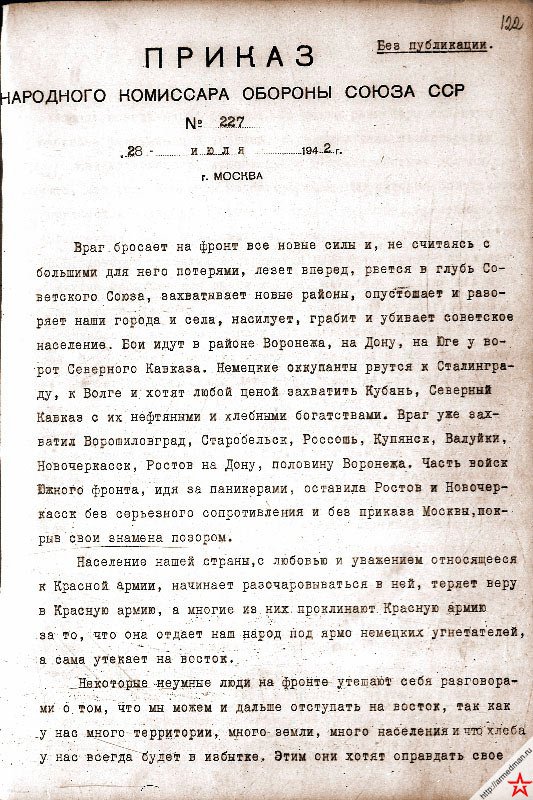
Stalin issued the infamous Order No. 227, famously known as "Not One Step Back," on July 28, 1942. This order strictly forbade retreat without direct orders, demanding that Soviet troops hold their ground. The order included severe penalties for retreating, reflecting Stalin's determination to defend Stalingrad and maintain Soviet morale during the darkest hours.Image
Aug 11, 2024 15 tweets 4 min read
Since there's been a lot of interest in the Battle of Kursk recently, I thought I'd dive into some details on how the Red Army defeated the German forces in Kursk Oblast. Here's a thread...🧵

1. Anticipating the Enemy:

The Soviets didn't just stumble upon German plans; they actively manipulated them. Soviet intelligence, particularly the "Lucy" spy ring, fed the Kremlin precise details about German intentions months in advance. Stalin and his generals, knowing the German penchant for encirclement, deliberately left the Kursk Salient exposed, baiting the Germans into a trap. This bold gamble turned German blitzkrieg tactics against them.Image 2. Operational Deception:

The Soviets employed Maskirovka (deception tactics) to an unprecedented degree. They moved entire armies under cover of darkness, constructed fake airfields and tank divisions, and used radio silence to confuse German intelligence. The Germans vastly underestimated the scale of Soviet preparations, unaware of the forces they would face.
Aug 6, 2024 10 tweets 4 min read
These are the top 10 massacres committed by Einsatzgruppen and their local collaborators: a thread.🧵

1. Babi Yar (Kyiv, Ukraine):

On September 29-30, 1941, the Einsatzgruppe C, along with local collaborators, murdered approximately 33,771 Jews in a ravine near Kyiv. Victims were ordered to undress and were then shot in groups, falling into the ravine. This massacre continued for months with the total death toll estimated to be around 100,000, including Roma, Soviet POWs.Image 2. Ponary (near Vilnius, Lithuania):

From 1941 to 1944, the Einsatzkommando 9 killed around 100,000 people at Ponary, including 70,000 Jews, 20,000 Poles, and 8,000 Soviet POWs. Victims were brought to the forest, shot, and buried in large pits. The murders continued throughout the German occupation.Image
Aug 2, 2024 11 tweets 3 min read
To cheer people up after my depressing posts ! Here is a thread of the pictures of dead Nazis !🧵

1. The body of war criminal Hermann Goering Image 2. The body of war criminal Wilhelm Keitel Image
Jan 25, 2024 7 tweets 2 min read
A thread 🧵....1/5

Do you want to know how the Bandera Lobby works in Canada? Well, here's one recent example!

@PierrePoilievre is the leader of the Conservative Party in Canada, and the League of Ukrainian Canadians is pressuring him to have more favorable positions for Ukraine.

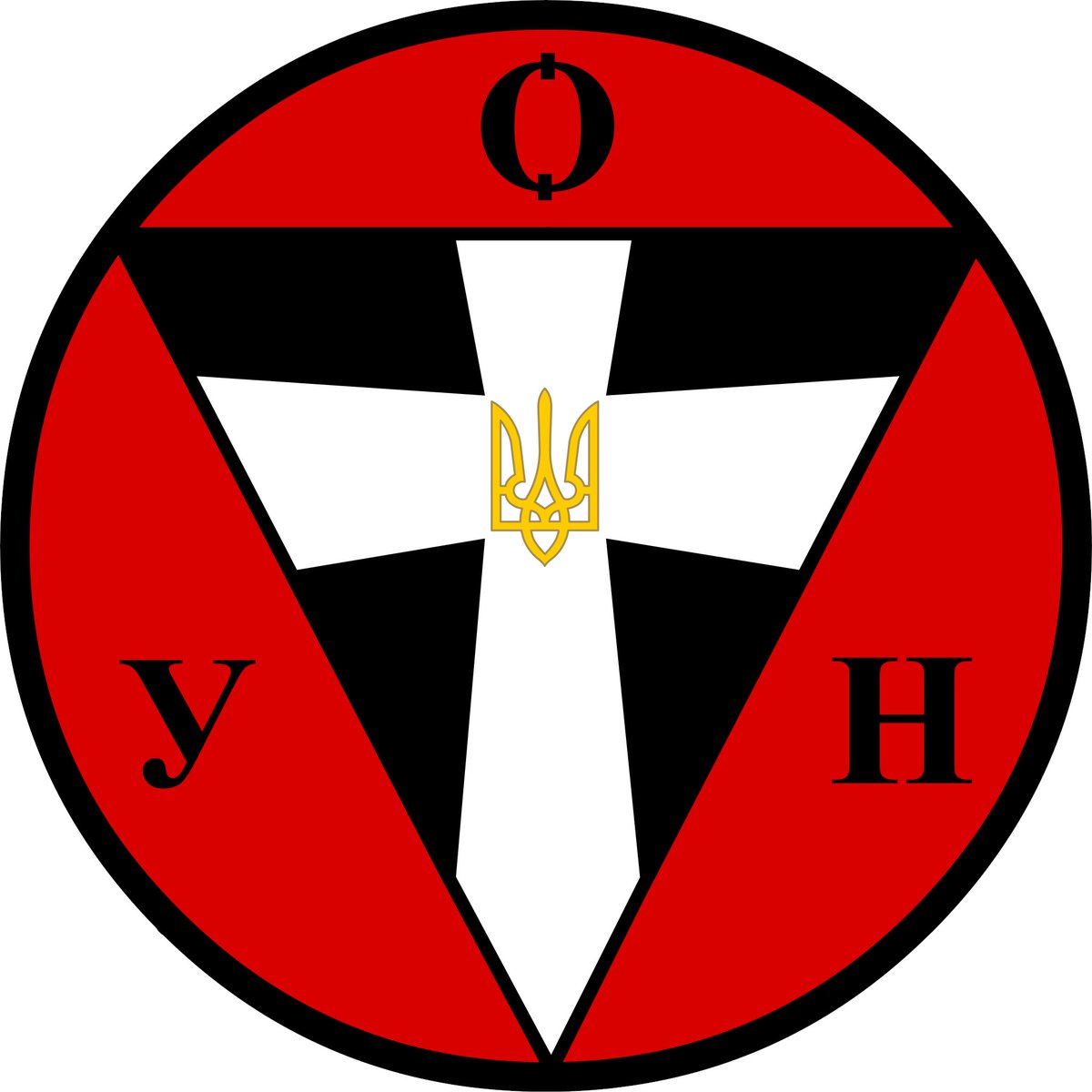
The League of Ukrainian Canadians is a front group for the Organization of Ukrainian Nationalists - Bandera Faction. They openly use the OUN-B logo.Image
Image
🧵....2/5

In a group photo, the League of Ukrainian Canadians is seen under a portrait of the Nazi collaborator Stephan Bandera. Image
Jan 2, 2024 9 tweets 4 min read
This is an important thread for followers of US politics, so please share it with your friends! 🧵...1/9

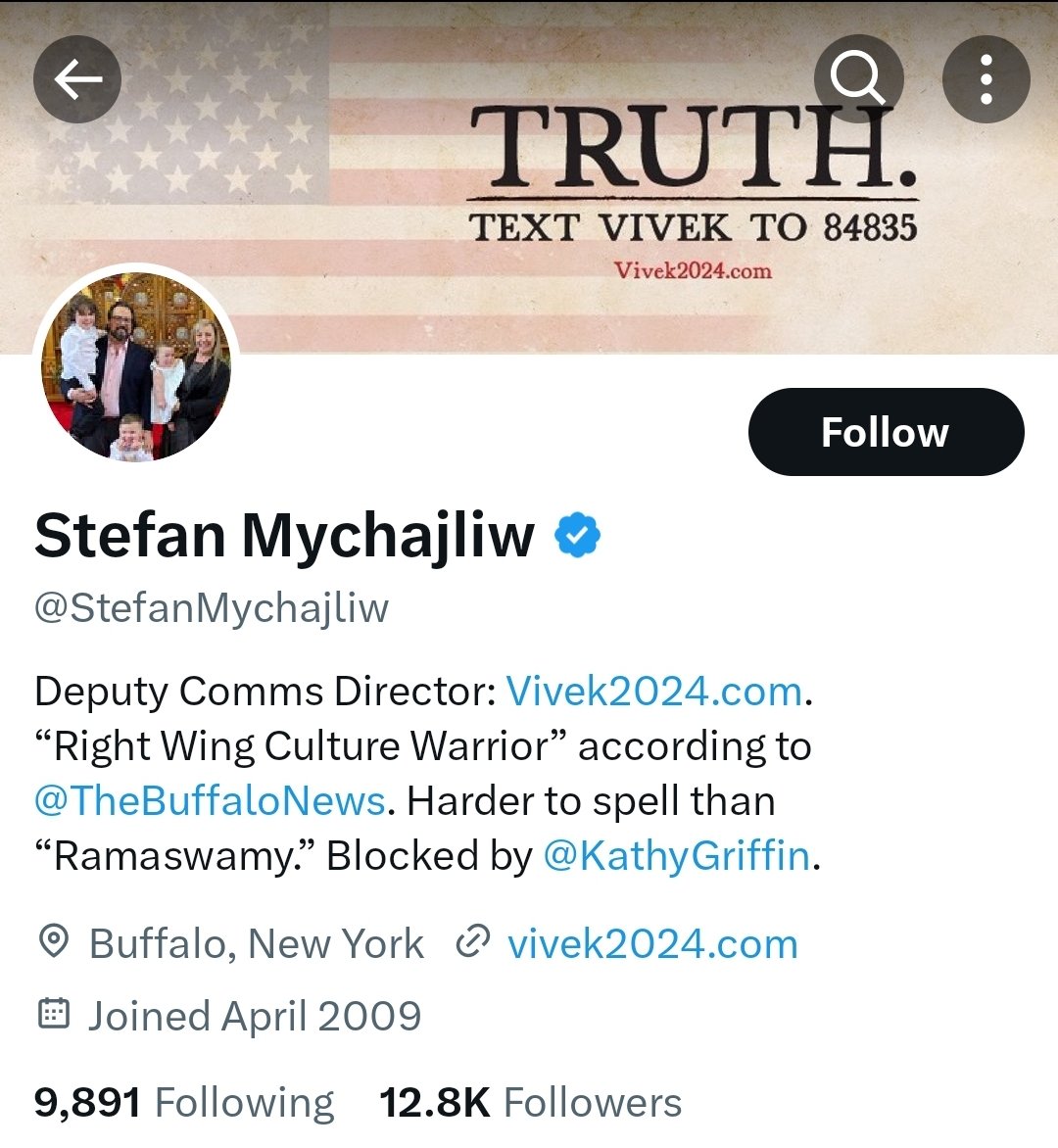
One of the key aspects of @VivekGRamaswamy's 2024 presidential campaign is his supposedly strong anti-Ukraine stance and his opposition to any more funding for war efforts. However, there is just one problem here: his deputy communications director, @StefanMychajliw, is deeply connected with the Organization of Ukrainian Nationalists-Bandera Faction (OUN-B).

So, why do you think a Ukrainian nationalist got hired to help Vivek's campaign messaging about Ukraine when he is a Banderite? The only logical conclusion I can come to is that it's all a show from Vivek, and just like any other politician, he will likely flip after the election. OUN-B may be covering their bases, helping everyone on both sides, similar to how Lockheed Martin would operate in wars. 😉

Please share this thread, as I've got the receipts!

#BanderaLobbyImage 2/9...🧵

Stephan Mychajliw is deeply connected to a place called Dnipro Center in Buffalo, NY. The Dnipro Center is one of the biggest OUB-B centers in the United States. If you go to his X feed, you will find a lot of posts about his association with The Dnipro Center, which I will show a few of them in this thread. For a comprehensive review of the Dnipro Center and their connections to Ukrainian Fascist ideology, you can read this great article published in 2021 by my friend Moss, who runs the Bandera Lobby substack blog.


#BanderaLobbybanderalobby.substack.com/p/buffalo-wher…Image