
Soviet + Ukrainian Aviation Album Diver / #1 801 TTS Airbats Fan / 24 yo Aeronautics Student / Слава Україні / Half 🇺🇦, Half 🇷🇺, Living in 🇺🇸 @slavianalt
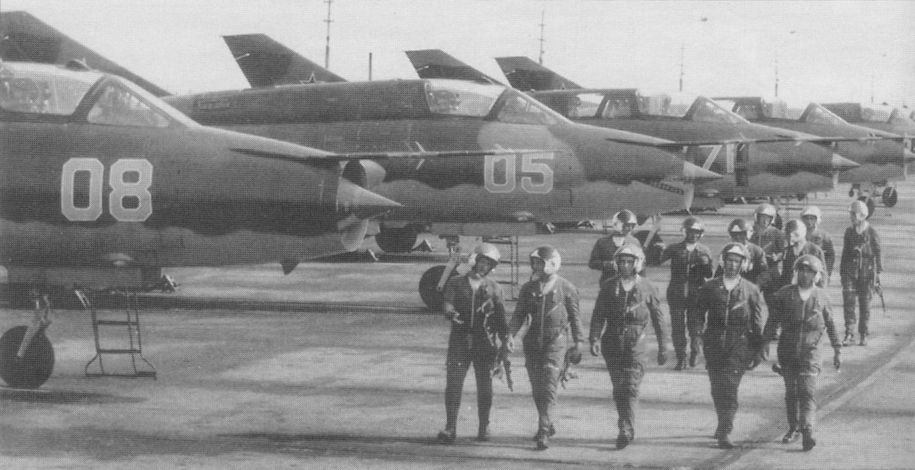 At first, the tactics were quite simple — any detected armed groups were attacked with bombs and S-5 type unguided missiles from low altitudes (for greater accuracy), and the main difficulty was to navigate the monotonous mountainous and desert terrains. It happened that the pilots, upon their return, could not accurately indicate on a map where they had dropped their bombs. Another problem was piloting itself in the mountains, whose heights in Afghanistan reach 3,500m. The abundance of natural shelters — rocks, caves, jagged boulders, and vegetation — forced them to descend to 600-800 meters when searching for targets.
 Assuming extreme scenarios, up to an open clash with the "vanguard of imperialism" and "reactionary Arab regimes," the command took appropriate steps to ensure the operation. Although the original directive of the General Staff of December 24, 1979, required only "to put on full combat readiness... TurkVO and SAVO aviation for a possible increase in the group of Soviet troops in Afghanistan," readiness affected almost all parts of the Air Force and Air Defense, including Long-range Aviation. Unlike the usual alarms conducted according to the scenario of a nuclear conflict, this time the "Dal'niks" were tasked with ensuring the advance of troops, if necessary using their striking capabilities and crushing resistance with conventional ammunition. So, in Engels, even Myasishchev's "Emki" (M's) of the 1096th and 1230th TBAP (Tactical Bomber Aviation Regiment) were prepared for bombing attacks, removing fuel "barrels" from tankers and refitting them for suspension on cassette pylons of 52 FAB-250's or 28 FAB-500's. Tu-16's were transferred from Orsha to Khanabad Airbase closer to the border, and from Priluk to Semipalatinsk. We took everything we needed with us, including large-caliber bombs. They received a combat mission on the spot - to strike at the northwestern outskirts of Herat, and due to the ambiguity of the situation (the first reports of "satisfaction of the Afghan side's request for military assistance" appeared only on December 29th), the flight had to be carried out under cover of darkness. The reason for this order was the fear of meeting serious resistance in this city, because in March, 1979, there was a major uprising supported by the local garrison and led to the deaths of thousands of people. The information received by the "Dal'niks" about the deployment and forces of the enemy was not very definite: "A dozen of them or a whole division, whether they were sitting in the house or rallying on the city square, no one knew anything about it," recalled the Commander-in-Chief of the DA, V. V. Reshetnikov. As a result, the raid did not take place. The deployment of troops took place almost without interference.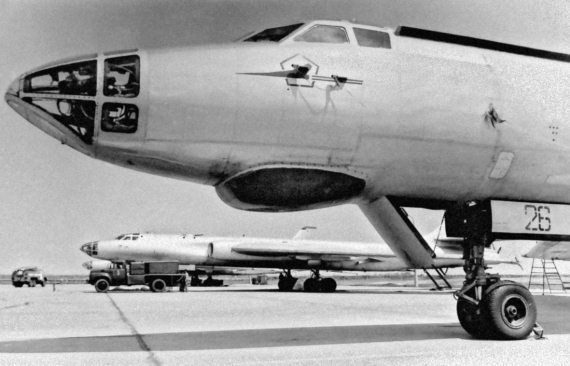
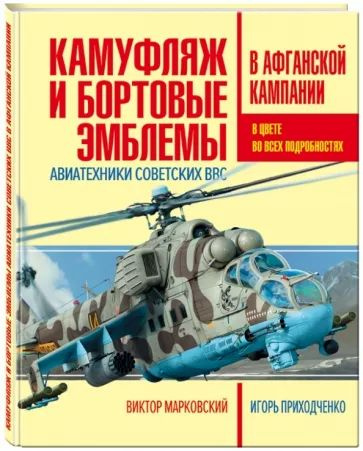 The emblems were not always of an emphatically belligerent nature. Most of the drawings, on the contrary, had a humorous connotation, or even an outright caricature of execution – either due to the inherent specifics of aviation, or out of necessity to compensate for the tension of military everyday life. The result was the most common cartoon characters and children's books as the heroes of the emblems. The drawings also contained an immediate meaning, personalizing military equipment. As you know, every aircraft and helicopter has its own character and habits, expressed in the features of piloting technique, ease of handling, efficiency and reliability. To match them, the nicknames of technology so popular in aviation also arose, without which, perhaps, none of the machines in service remained. To match them were the drawings that appeared on the sides, which provided the authors with greater freedom of expression in creating a visual image.
 The need to quantitatively compensate for the low effectiveness of bombing attacks prompted a proposal to use front-line bomber aviation (FBA/ФБА). A certain jealousy of the FBA command also played a role, remaining aloof from the "real case", in which it would be possible to demonstrate their strength in a real situation and test weapons.