Sammi🦋 Profile picture
Sourcing info on Climate, Immigration & Human Impact | No Noise | Just Data | 🌱 Support the Planet & her Oceans 🌎 | Professional em dash user —
Jun 16 8 tweets 6 min read
Fifty years of rules keeping off-road vehicles on designated trails — GONE.

Lifted trucks, ATVs, dirt bikes, snowmobiles.

Anywhere they want. On your public lands.

Nixon protected it. Carter protected it. Trump just erased both quietly on a Friday afternoon.

A grizzly bear will abandon its habitat when there's just one mile of road per square mile. One mile. Now there's no limit on where these vehicles can go.

In the Mojave, desert tortoises have already lost 96% of their population in some monitored areas - partly because off-road vehicles crush their burrows. A federal judge just ordered 2,200 miles of trails closed to protect what's left.

Then Trump signed this.

No designated trails. No boundaries. No framework at all. When vehicles go off trail they shatter habitat into pieces too small for wildlife to survive in. They destroy stream banks. They push predators toward humans. And when that happens, the animals always lose.

There was no vote. No public comment. Just a signature.

Now the agencies tasked with writing replacement rules are the BLM, the Forest Service, and the National Park Service - all under an administration that has spent months dismantling every protection they had.

The Interior Department, led by Doug Burgum, is in charge of most of it. The same Doug Burgum who has opened public lands to drilling, mining, and grazing at every turn.

Don't hold your breath.

When the last quiet place is gone, what do we tell the children who never got to hear it?

#DemsUnitedMountain landscape with forested ridges and valleys under a cloudy sky. Overlaid text reads: Public Lands News. Trump signs executive order opening protected public lands to unrestricted motorized vehicle use. Smaller text states that for over 50 years, federal agencies have been required to consider impacts to wildlife habitat, sensitive plant species, and user experience, but that is changing. → Backcountry hunters and anglers are sounding the alarm too - and when the hunting community and environmentalists are saying the same thing, you know something has gone very wrong. Outdoor Life breaks down exactly what was just erased and why it matters to everyone who loves wild places.
outdoorlife.com/conservation/o…A fly fisherman stands in shallow water on a mountain lake, casting a line beneath rugged peaks reflected in the lake’s surface.
Jun 15 7 tweets 5 min read
The U.S. government just made a land deal with the world's first trillionaire. Not a sale. A trade.

Because apparently that's how we do things now.

715 acres of the Lower Rio Grande Valley National Wildlife Refuge - built by Congress in 1979 to protect one of the most biodiverse wildlife corridors left in North America - handed to SpaceX.

Endangered ocelots. Aplomado falcons. Piping plovers. Land the Carrizo/Comecrudo Nation of Texas has called sacred since long before there was a United States.

SpaceX built a rocket launch site next door. Then came the explosions. Concrete and metal hurled six miles across refuge land. A 2024 study found that after one launch, every single monitored shorebird nest near the site suffered egg damage or loss. The Fish and Wildlife Service's response was not enforcement. It was a land swap.

FOIA documents show internal planning for this transfer started as early as April 2025 - while Musk was running DOGE and threatening to fire federal workers who didn't justify their jobs to him. The agency developed what they called "the most expedited schedule possible" to get it done.

Part of what's being handed over includes the Palmito Ranch Battlefield - the site of the last battle of the Civil War. A National Historic Landmark. Once transferred, SpaceX can restrict public access whenever they want.

25,000+ people submitted public comments. Most opposed the deal. The government moved forward anyway.

A coalition of tribal and conservation groups filed a federal lawsuit this week to stop it. Because someone has to.

Why are we cutting real estate deals with a trillionaire when we could have just made him pay for it?

#DemsUnitedInformational graphic about wildlife habitat in the Lower Rio Grande Valley National Wildlife Refuge. An ocelot stands on a rocky ledge at the top of the image, and a piping plover with a chick rests on a sandy beach at the bottom. Text states that the refuge provides crucial habitat for endangered ocelots and rare birds, including piping plovers and aplomado falcons. → The full breakdown of what's in this land swap - the acreage, the wildlife, the 25,000 public comments that got ignored, and who's suing to stop it. Outdoor Life did the math and it doesn't add up:
outdoorlife.com/conservation/e…Ocelot perched on a tree branch in a wooded habitat. The spotted wild cat faces the camera with an alert expression, surrounded by green foliage and tree trunks in the background.
Jun 12 9 tweets 6 min read
I told you they were coming for the Roadless Rule.

Yesterday, Republicans made their move — and they hid it inside a wildfire bill.

Here's what makes this so enraging:

59 million acres of America's wildest national forests are now on the table.

The 2001 Roadless Rule has protected nearly 60 million acres across 39 states for 25 years. No logging. No road construction. No drilling. No mining.

Built after 1.6 million Americans showed up — at 430 public hearings nationwide — to demand it.

What lives here: bald eagles, elk, black bears, Cerulean warblers, marbled murrelets. Species that need large, intact, unfragmented habitat to survive. For many of them, roadless forests aren't just home — they're the last places left.

What the amendment does: guts the rule. Opens the backcountry to logging and road construction under the cover of "fire prevention."

The administration is pursuing repeal through the executive branch at the same time. And unlike the original rule — they aren't holding a single public hearing.

1.6 million people showed up to protect these forests.
The administration isn't asking anyone this time.

What do you call a wildfire bill that opens forests instead of protecting them?

#DemsUnitedSunlight streams through a towering old-growth forest, illuminating a massive tree trunk surrounded by ferns and dense woodland. Tall trees stretch into the background as bright rays of light filter through the canopy, highlighting the scale and beauty of the forest. → Audubon lays out exactly why roadless forests aren't just scenery — they're climate refuges for hundreds of bird species on the edge of extinction, and why even limited road construction could be the thing that tips them over.
audubon.org/news/protectin…A colorful alpine meadow filled with wildflowers stretches across the foreground, with clusters of blue, yellow, white, and orange blooms scattered among grasses and rocky soil. Dark evergreen trees line the middle ground, and a sunlit mountain peak rises in the distance. The sky glows in soft shades of pink and purple, suggesting sunrise or sunset in a high-elevation wilderness landscape.
Jun 11 8 tweets 5 min read
Six weeks ago I told you they were coming for Big Bend. Yesterday a court cleared the way for border wall construction in the Big Bend National Park region.

Here's what makes this so enraging:

Big Bend National Park is one of the quietest stretches of the entire southern border. In FY2025, the Big Bend sector recorded just 3,096 apprehensions — 1.3% of all crossings nationwide. Border encounters there have dropped 74% since 2023. The land is remote, rugged, and brutal. It has always been its own deterrent.

And yet — a 30-foot steel wall is coming anyway.

What that wall will actually do: fragment critical habitat for black bears, mountain lions, and the endangered black-capped vireo. Sever one of the last wildlife corridors connecting the U.S. and Mexican Chihuahuan Desert — an ecosystem that doesn't recognize borders.

Block the natural movement of over 450 bird species that pass through Big Bend. Flood one of the darkest night skies in North America with construction lights. Slice through 100+ miles of the Wild and Scenic Rio Grande.

To stop 1.3% of border crossings. On land that was already stopping them on its own.

The administration has now waived the Endangered Species Act, the National Park Service Organic Act, and the Wild and Scenic Rivers Act — all at once — to make this happen. The first time in U.S. history any of that has been done inside a national park.

They awarded $4.3 billion in contracts. Steel bollards are already on the ground near Van Horn. Construction starts this summer.

Who do YOU think this wall is actually for?

#DemsUnitedSunlit canyon walls rise steeply above a calm river in Big Bend. Golden morning light illuminates the rock face on the left while the river winds through the narrow canyon beneath a clear blue sky. → The vote that just killed Big Bend's last legislative shield — and what it means for the park, the river, and everyone who fought to protect them. The Texas Tribune has the full breakdown of how each rep voted and what comes next:
texastribune.org/2026/06/10/tex…Image
Jun 9 7 tweets 5 min read
Imagine an underwater Grand Canyon where corals have been growing since before the United States was founded. 🐠

Plunged in total darkness. Untouched. Protected.

Until one signature changed everything.

On February 6, 2026, that's exactly what happened.

The Northeast Canyons and Seamounts Marine National Monument is bigger than Yellowstone.

Its submarine canyons drop into depths we're still mapping. There are sea creatures here science hasn't even named yet.

It’s underwater mountains — millions of years old, rise from the ocean floor, drawing sperm whales and endangered right whales from miles away.

The cold-water corals living here? Some have been growing for over a thousand years. A trawl net destroys them in seconds. They don't grow back in our lifetimes.

The monument was created in 2016 for one reason — to keep this ecosystem off limits from exactly this kind of destruction.

It worked. Until February.

One person. One signature. Zero public input. No congressional vote. No comment period. Just a proclamation — and a thousand-year-old ecosystem lost its protection overnight.

Proclamation 11009 — "Unleashing American Commercial Fishing in the Atlantic"— erased the ban overnight. Trawl gear, dredges, otter nets. Now permitted inside monument boundaries.

And here's the part that should make you angry — this administration tried this exact move in 2020. Conservation groups sued. They won. Biden restored protections.

Now we're back here.

How many more monuments have to lose their protections before Congress does something? 🐠

#DemsUnitedColorful underwater scene in the Northeast Canyons and Seamounts Marine National Monument showing layered coral formations and sponges on a rocky reef. Two large silver fish swim through the blue water above the corals, highlighting the rich marine life found in the protected habitat. → NOAA published the official bulletin confirming exactly what gear is now permitted and where inside the monument - and the details are more alarming than the headline.
fisheries.noaa.gov/bulletin/comme…A round, dome-shaped sea anemone rests on a sandy seafloor scattered with small pebbles. Its surface is densely covered with short, pointed tentacles in shades of brown and mauve, arranged in a flower-like pattern that radiates from the center. The anemone resembles a soft, spiky cushion against the pale sand.
Jun 5 8 tweets 5 min read
I'm a grizzly.

They just decided one acre is all I need.

The U.S. Fish and Wildlife Service just redefined "secure habitat" for grizzly bears in Montana.

The science said 2,500 acres minimum.

They changed it to one.

No public input. No new science. Just a rewrite.

And it wasn't random. The change conveniently cleared the way for a 17,700-acre logging project cutting straight through the corridor grizzlies use to travel between two of their last strongholds in North America.

A former Forest Service wildlife biologist said it plainly: "A one-acre island of forest surrounded by roads isn't secure habitat. It's a death trap."

Courts already rejected this same playbook when agencies tried 10-acre patches near Yellowstone. They lost. Then they came back with one acre.

Who's going to tell the grizzly it only gets one acre?

#DemsUnitedA grizzly bear and two cubs rest along a riverbank in Yellowstone National Park while bison graze in the distance beneath mountain peaks and a steaming geyser. → The lawsuit: Courthouse News breaks down exactly how federal agencies rewrote grizzly habitat standards behind closed doors — and why conservationists say it's a legal shell game designed to greenlight logging. This one's worth your time.

courthousenews.com/environmentali…A grizzly bear stands on a rocky hillside overlooking a vast mountain valley filled with evergreen forest and patches of golden autumn foliage. Jagged peaks rise in the distance beneath a partly cloudy sky, creating a dramatic wilderness landscape. The bear faces slightly to the side, appearing calm and alert in its natural habitat.
Jun 3 7 tweets 4 min read
The federal government just banned bison from public land in Montana.

Not cattle.

Bison.

Interior Secretary Burgum revoked grazing permits for 950 bison
on 63,000 acres of federal land in northeastern Montana.

The reason?

Bison raised for conservation don't count as livestock
under a 1934 law.

Bison raised for meat and milk? Fine.

Bison raised to restore a native species to its native land? Get out.

Meanwhile, cattle ranchers across the West keep grazing on your land.

For $1.69 a month.

One cow. One calf. Thirty days. $1.69.

On land that belongs to every American.

The Cheyenne River Sioux. The Coalition of Large Tribes —
50+ Native nations. Defenders of Wildlife.

They all filed formal protests.

They called it exactly what it is.

"DEI for cows."

The bison have until September 30 to be gone.

Who decided cattle belong on public land more than bison do?

#DemsUnitedAn elk crosses a winding gravel road through open Montana grasslands at dusk, with several bison grazing in the distance. Rolling hills lead to rugged blue-gray mountains beneath a cloudy evening sky, creating a peaceful scene of wildlife moving across a vast prairie landscape. → Inside Climate News broke down exactly how Burgum rewrote a
90-year-old law to make it happen — and what it could mean
for tribal herds next:

insideclimatenews.org/news/15052026/…Several American bison graze across a wide Montana grassland beneath towering snow-capped mountains. Golden prairie hills stretch across the foreground and middle distance, while the rugged mountain range rises dramatically against a clear blue sky, highlighting the vast open landscape of the American West.
Jun 2 6 tweets 4 min read
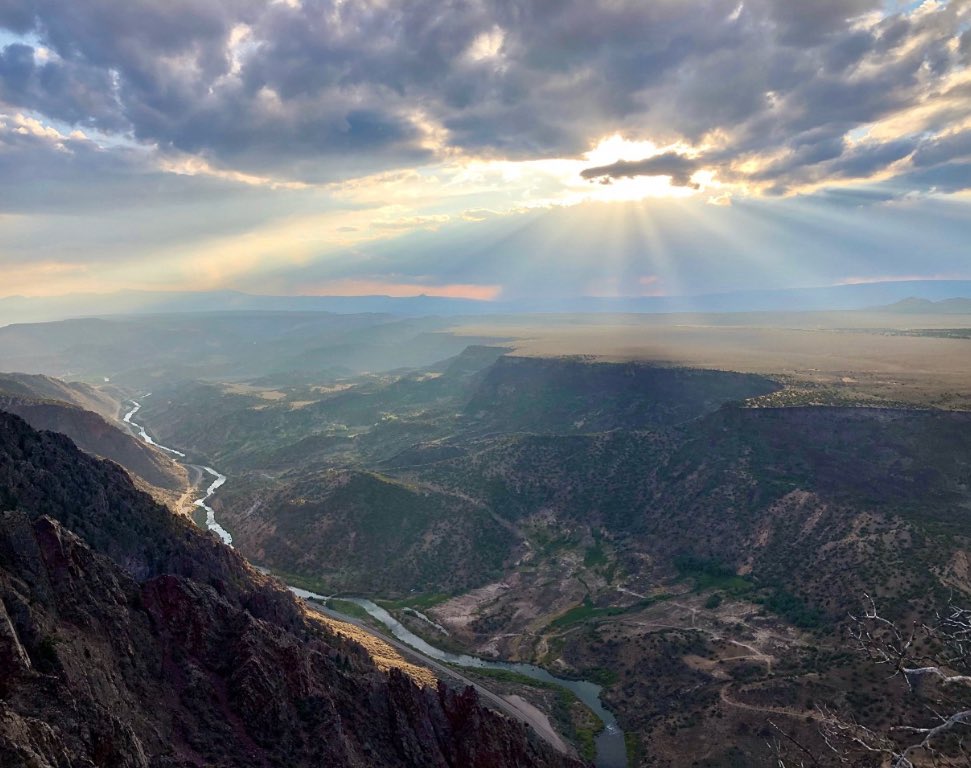
245,000 acres of ancient volcanic canyon.
Wild & Scenic river.
Petroglyphs older than memory.
Wildlife corridors that have never
known a fence.

A U.S. Senator stood at the edge
of that gorge last week and told the crowd:
"We could lose this one."

The administration's "Unleash American Energy" order has it in the crosshairs. The BLM rangers who managed it?
Fired.

The management plan conservationists fought for? Protested as inadequate
before the ink dried.

The Congressional timeline?
Before July.

The local fly shop owner who's lived there his whole life said it plainly:
"Our entire way of life would be in jeopardy."

This isn't hypothetical.
The reconciliation vote is weeks away.

When they call it "energy development" — what exactly do you imagine happening to a place like this?

#DemsUnitedThis is the Río Grande del Norte National Monument in northern New Mexico.Specifically, the image captures the Rio Grande Gorge, a deep canyon carved by the Rio Grande through volcanic basalt flows on the Taos Plateau. → Sen. Heinrich stood at the Rio Grande Gorge and said out loud what most officials won't — that we could actually lose this. His words, his crowd, his warning:

heinrich.senate.gov/newsroom/in-th…The bridge in your image is the Rio Grande Gorge Bridge, which is one of the central attractions of the Río Grande del Norte National Monument in northern New Mexico.
May 25 4 tweets 3 min read
1 in 10 people in the American West get their drinking water from federal public lands.

Trump just stripped the main protection those lands had.

On May 11th, the administration quietly erased the rule that required conservation to be weighed equally with drilling, mining, and grazing on 245 million acres of land that belongs to every American.

Here's what those 245 million acres actually hold:

Over 300 threatened and endangered species.
Another 2,460 at-risk species already trending toward extinction.

And before this rule existed?
81% of that land was already open to oil and gas drilling.
60% already grazed by livestock.
Only 14% set aside for lasting conservation.

The rule said: before you do more damage, you have to weigh the cost.

That rule is now gone.

The government asked for public input before killing it.
The overwhelming majority of responses said keep the rule.
Didn’t matter.

26 retired federal land managers called the repeal legally unsupportable.
State attorneys general called it illegal.
60+ members of Congress said don't do this.

The oil, mining, and cattle industries said do it.

Guess who won.

So who exactly are America's public lands being managed for?

#DemsUnitedGolden mountain landscape at sunset with layers of pink and blue ridges in the distance, dense autumn-colored forest in the foreground, and a winding stream and small reflective lake cutting through the valley below. 🔎 This goes deeper than the headline. ForestWatch maps out exactly which landscapes just lost protection — condor sanctuaries, endangered species corridors, desert grasslands most people have never heard of. If you want to know what's actually at stake on the ground, this is the read.

forestwatch.org/news/trump-adm…Sunlit mountain valley with layered green hills and pine-covered slopes under a pale blue sky, viewed from a quiet roadside lined with trees and wild vegetation.
May 24 4 tweets 3 min read
Over a million acres of pristine wilderness lakes in Minnesota.

The most visited canoe country in America.

Generations of families have paddled it, fished it, camped it.

The Senate just sold it out outright.

They called it "America First."

Then handed it to a Chilean billionaire — so his company can ship the copper to China.

The Senate voted 50-49 to gut 20 years of Boundary Waters mining protections.

Here's the deal they made.

A Chilean billionaire's company digs the mine.

America can't smelt the copper — we don't have the capacity.

So the ore ships to China.

China processes it.

Sells it on the world market.

Chile keeps the profits.

Minnesotans don't even get the jobs.

Minnesota keeps the pollution.

And Americans get to buy it back from China at full market price.

This same company has a documented history at their Chilean mines: pipeline spills, regulatory fines, and locals fighting back for years.

They paid a former Trump Interior Secretary $380K.

The protection died by one vote.

Here's exactly how it happened — and who made it happen.

Who do YOU think this mine actually serves?

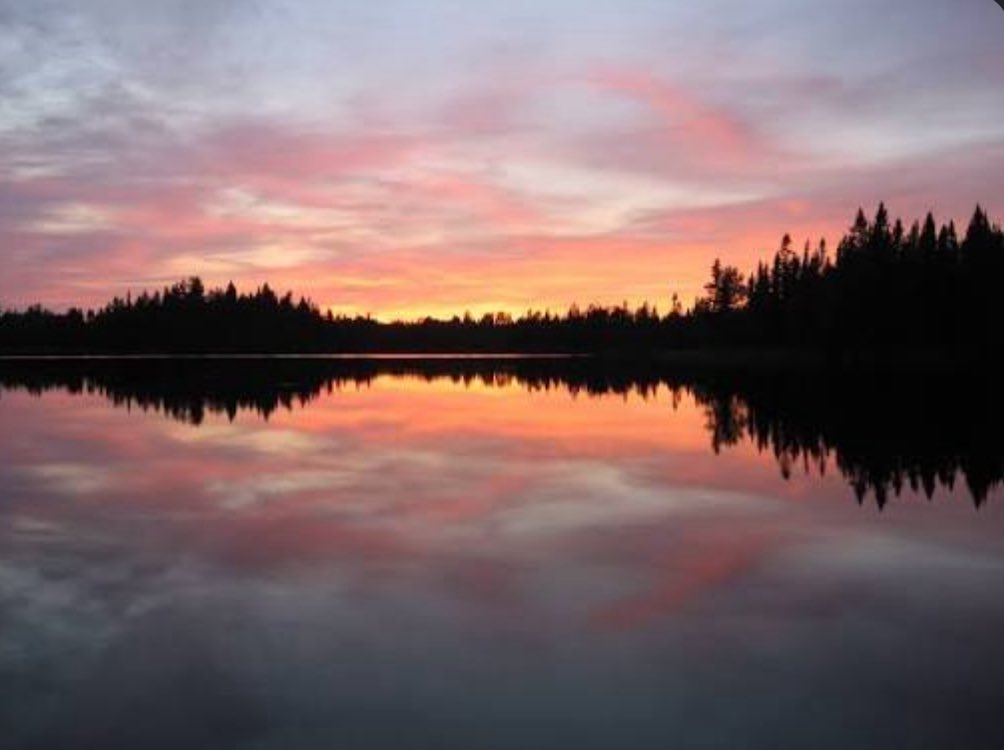
#DemsUnitedA canoe moves through the calm waters of Boundary Waters Lake in Minnesota, surrounded by dense evergreen forest beneath a bright blue sky reflected like a mirror across the pristine wilderness waterway. A former Trump Interior Secretary forms a lobbying firm.
A Chilean mining giant pays it $380K.

Republican senators who were leaning against the mine suddenly flip.

The White House applies pressure behind closed doors.

And a 20-year wilderness protection dies by one vote.

Outdoor Life pulled back the curtain on every backroom deal, every vote, and every senator who caved.

This is the full breakdown.

outdoorlife.com/conservation/b…Sunset over the Boundary Waters in Minnesota, with calm mirror-like water reflecting pink and orange evening clouds beneath a dark pine forest horizon.
May 5 4 tweets 3 min read
She spent her whole career as a nurse racing down hospital hallways doing CPR.

When she retired, she trusted a nursing home to take care of her. They weren’t supposed to give her solid food. They did. Doctors found scrambled eggs in her lungs.

Her name was Doris Coulson.

Her family sued for wrongful death. The owner never showed up to contest the case. A judge awarded them nearly $19 million.

He never paid.

While the family waited, that same owner was spending more than $1 million lobbying the president of the United States.

It worked.

Trump pardoned him. The White House called his prosecution “an example of over prosecution.” A top DOJ official declared him “free to rebuild.”

His name is Joseph Schwartz. Prosecutors say he still has $58 million in assets. None of it is in his own name.

Doris’s daughter Amanda fought for that judgment for years.

Amanda has since died. Her family still hasn’t seen a dollar.

When Schwartz briefly returned to prison on a separate state fraud charge, a lawyer for the family raced to serve him with a subpoena - one last shot to locate his assets and force payment.

He was released within three weeks. The subpoena never reached him.

There was a machinery working to shorten his punishment.

There was nothing to help his victims.

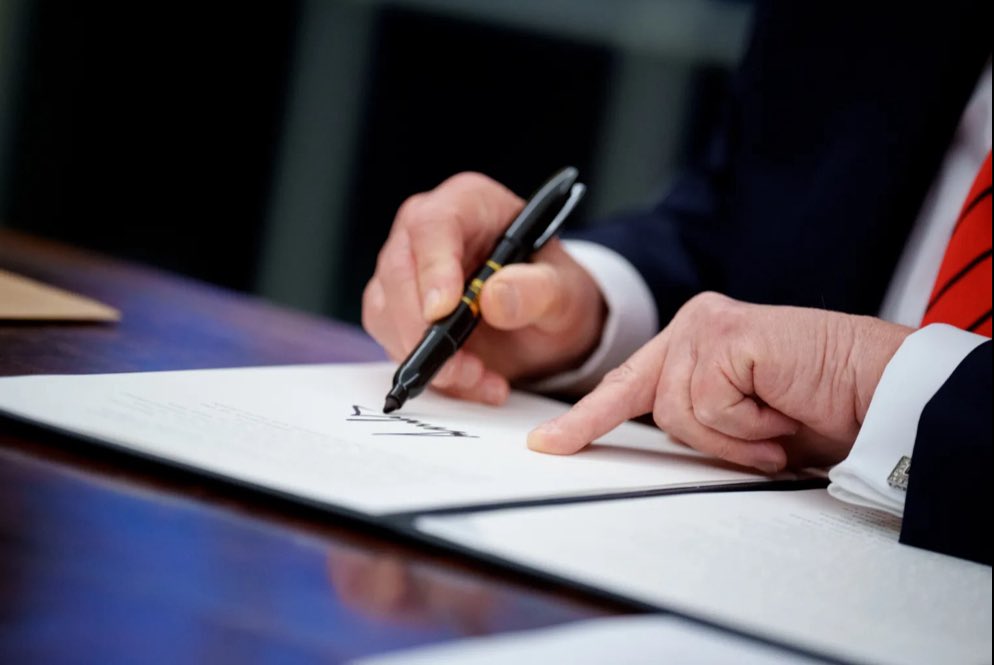
What do we call a system where a man can owe $19 million to a grieving family, spend $1 million lobbying a president, walk free — and still can’t be found to serve a subpoena?President Donald J. Trump signing a pardon. Full Story:

propublica.org/article/trump-…
Feb 14, 2020 7 tweets 5 min read
💦1/6 As our Glaciers cont to melt, it leaves less reflective white that normally would bounce the heat from our sun off our planet, leaving more Ocean mass absorbing that heat. Once our EarthnOceans warm up just 2c’s,
#OVEarth #OneVoice1

theguardian.com/world/2020/feb… 💦 2/6 we will be in serious trouble as our Ocean levels will rise nearly eight inches. There are many island inhabitants that are already being displaced. Imagine Manhattan...where are all the people going to go? Also

#OneVoice1 #OVEarth