Peter - Cracking Markets Profile picture
Systematic trader, fund manager. Web: https://t.co/Qga9clOPid
Dec 8 10 tweets 3 min read
In January 2025, I published a mean reversion strategy with a free backtester.

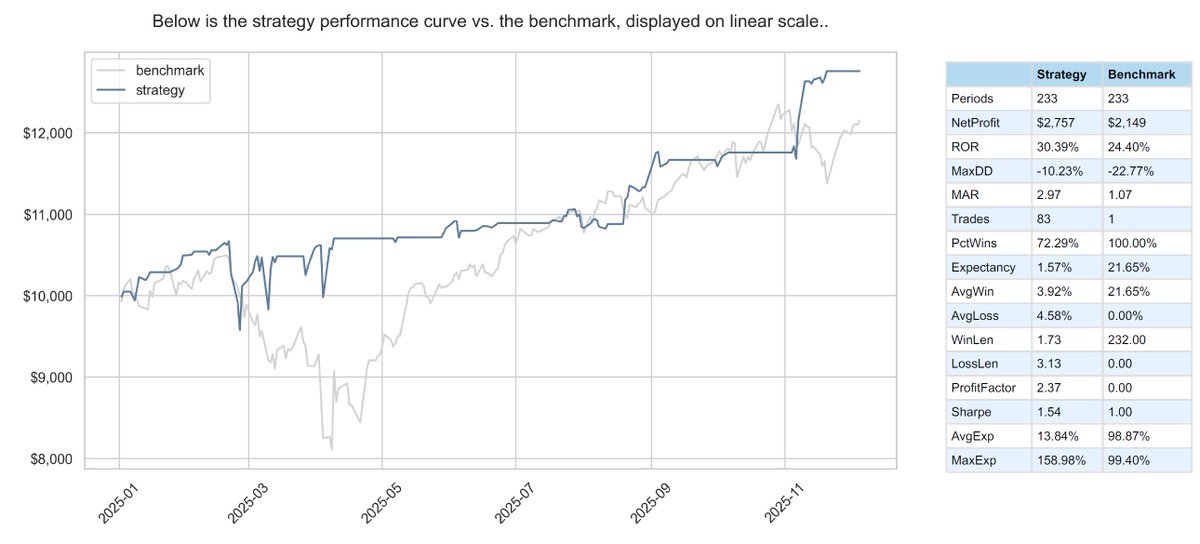
11 months later, here are the out of sample results:

- +30.4% return (vs +24.4% Nasdaq)
- -10.2% max drawdown (vs -22.8% Nasdaq)
- 72% win rate
- 83 trades

Here's the exact system: Image The idea is simple:

Buy stocks that drop sharply - but only if they're still in an uptrend.

Short-term panic creates opportunity.
Long-term trend provides the safety net.

This is mean reversion 101.
Oct 2 6 tweets 2 min read
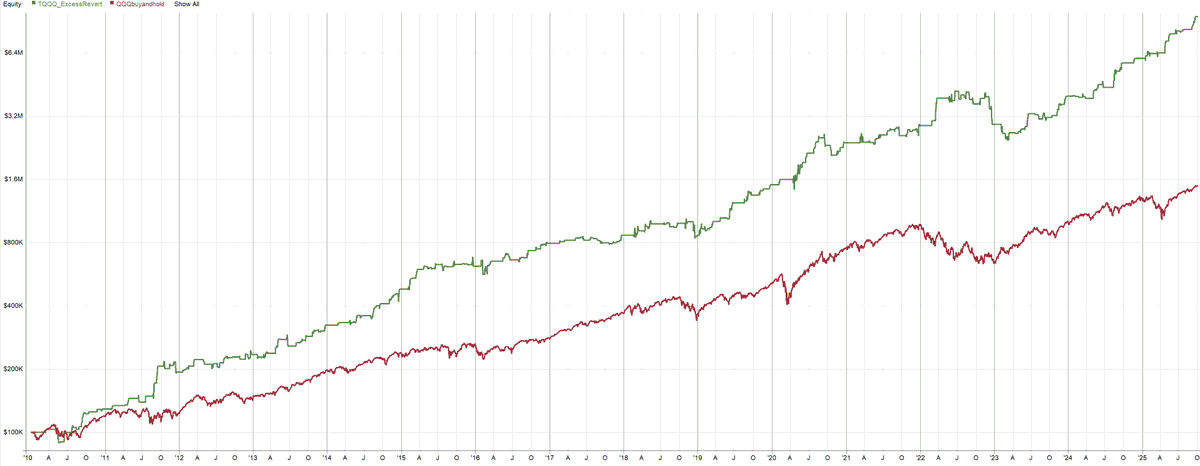
Leveraged ETFs can be a great source of alpha — if you treat them as mean-reverting wrappers 📉📈 rather than long-term investments.

Here’s a simple $TQQQ / $QQQ swing strategy that beat buy & hold with only 24% average capital use 👇 Image Leveraged ETFs (like $TQQQ, 3× $QQQ) don’t perfectly track their target.
⚡ Daily compounding
⚡ Volatility drag
⚡ Rebalancing frictions

Result: “Excess decay” appears when TQQQ underperforms its ideal 3× of QQQ over short horizons. That excess tends to mean revert.
Jul 24 6 tweets 2 min read
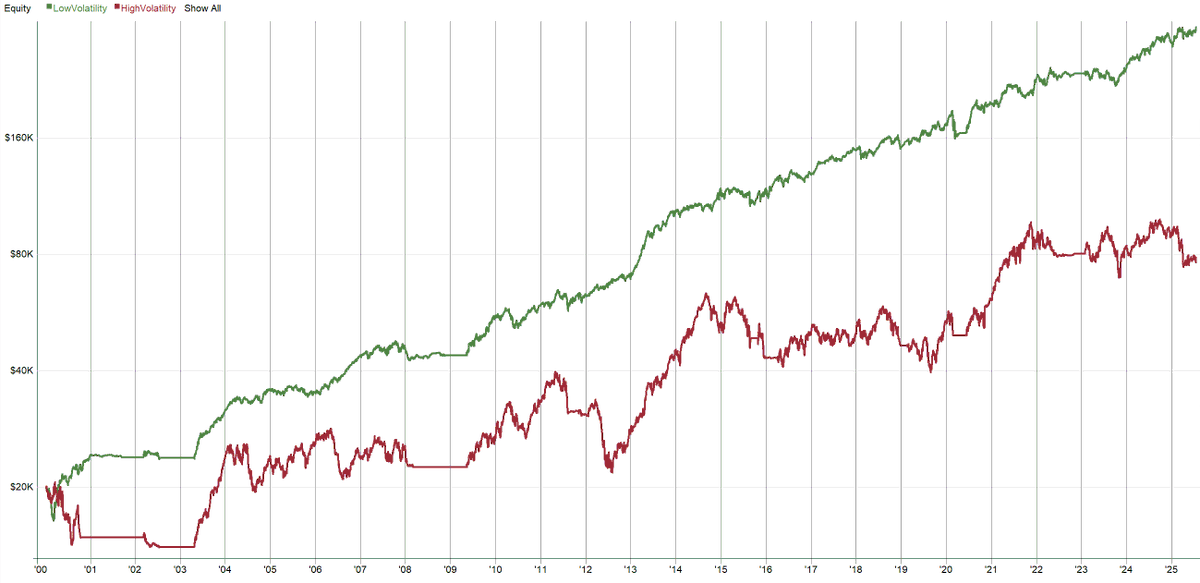
1/6 The Power of "Boring": How Low Volatility Supercharges Mean Reversion

Mean reversion is a popular concept, but it doesn't work the same on all stocks.

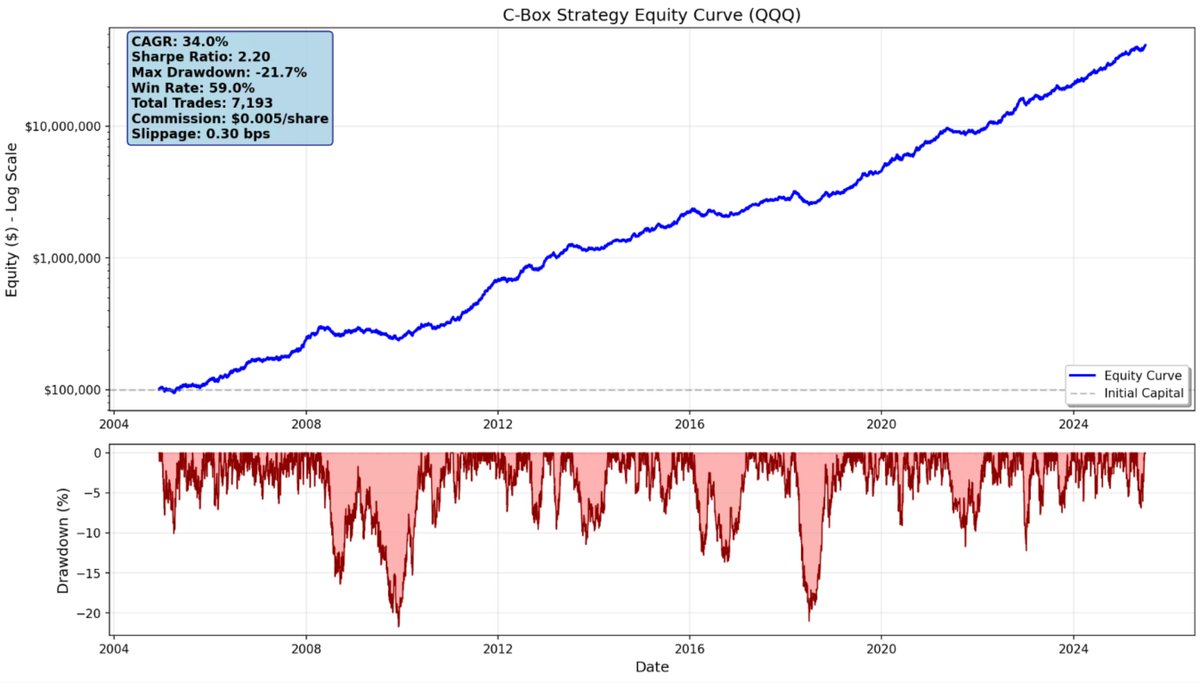
I backtested the exact same system on two different baskets of stocks. The difference in performance is stunning. Here's the one factor that changes everything. 🧵👇Image 2/6
The system is the same - a long-only, mean-reversion strategy on S&P 500 stocks:

🟩 Green Line = Prioritizes LOW-volatility stocks
🟥 Red Line = Prioritizes HIGH-volatility stocks

The chart speaks for itself. Low volatility is smoother, safer, and vastly more profitable.
Jul 2 11 tweets 2 min read
Getting more and more tradable systems designed by LLMs.
This is what I’ve learned actually works for me.
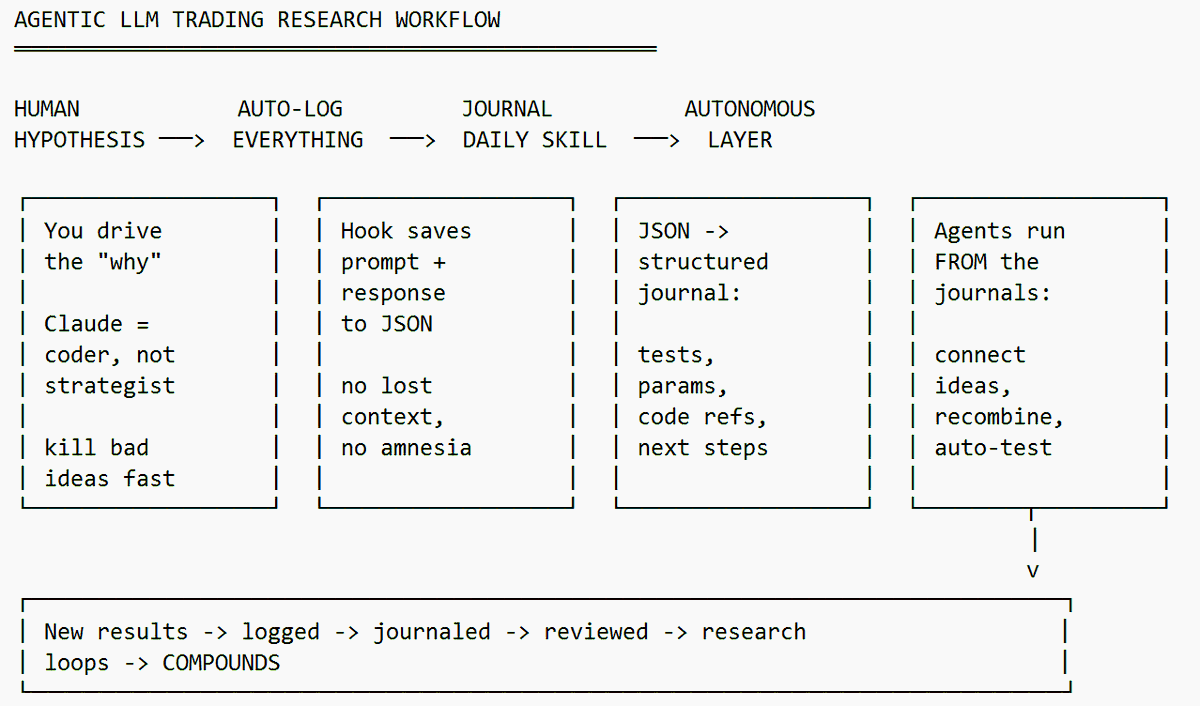
👇 Step-by-step breakdown of the process that turns AI ideas into real systems I can paper trade. Image 1/
I start in ChatGPT (o3 model).
I use a custom bio where I describe myself as an experienced trader—this primes it into “expert mode.”
Then I share a picture from a real trading session and describe the context.

In this case: intraday breakout from a volatility “squeeze.”
I explain the type of data I have + what kind of realistic performance I expect (after slippage & fees).
Then I ask GPT to brainstorm and rank strategies by:
- difficulty to implement
- likelihood of working live
May 5 5 tweets 2 min read
1/5 Let's talk about something crucial but often overlooked in deep research, especially in systematic trading: Note-Taking. 📝
When you're diving into years of complex research, building strategies, and testing hypotheses, how you organize your knowledge is paramount. Without structure, you'll inevitably find yourself going in circles, re-discovering old insights, or losing valuable connections.
It's a huge, hidden productivity drain. You need more than just scattered files; you need a second brain.Image 2/5 My personal game-changer?
The Zettelkasten Method, implemented using Obsidian (@obsdmd). 🧠 Obsidian is free and works directly with plain Markdown (.md) files stored locally on your computer. This means:
✅ You truly OWN your data.
✅ No internet required – full offline access.
✅ Notes are simple text files, readable by anything, forever.
This isn't just storage; it's about connecting notes into a powerful knowledge network – a 'second brain'. Optional sync keeps it available across devices if needed.
Apr 3 7 tweets 2 min read
(1/7) Fixed Size vs. Volatility Targeting in Momentum Rotation: A Deep Dive

A common question arose regarding my NDX rotational strategy: Why use 20% volatility targeting when fixed sizing shows higher net profit in backtests (like the one shown)? A valid point at first glance! The fixed-size backtest ($373k profit) clearly outperforms vol targeting ($218k profit) on an absolute basis without compounding.Image (2/7) The Allure & Danger of Raw Profit
It's tempting to chase the highest P&L figure. Decades ago, many focused solely on this. However, experience teaches a harsh lesson: absolute performance isn't the only metric that matters, and often, it's not the most important. Survival and consistency are key.