
Roman Catholic. Strict Observance Thomist. Kabab Enjoyer.
“Cognitio enim Trinitatis in unitate est fructus et finis totius vitae nostrae.”
D. Thomae Aquinatis
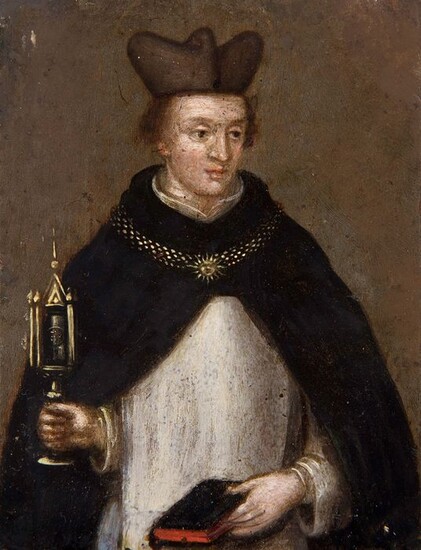 Among the powers flowing from the essence, that [power] is more excellent which flows first by nature from the same essence and is closer to it. But the intellect flows first from the essence of the soul than the will and is closer to it. Therefore, it is nobler than the will.
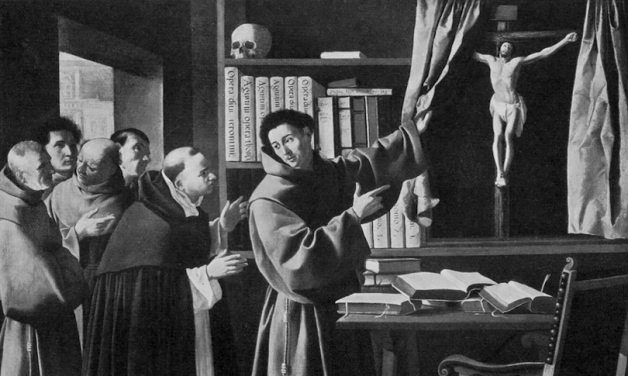
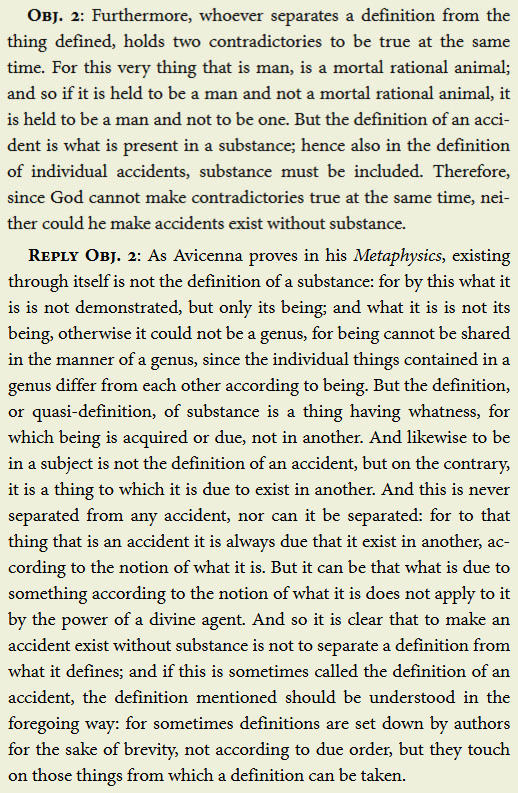 The foundation for this conclusion is that actual inherence is either the very existence of the accident, or at most a union or nexus by which accident is joined to its subject, but neither of these can be the essence of an accident, therefore, etc.
 First evidence is from João da Silveira, a 17th century Catholic biblical commentator. He wrote a great and detailed commentary on the Sacred Scriptures. In his exposition of John 4:22 where Christ says to the Samaritan woman: "You worship what you do not know.", He says: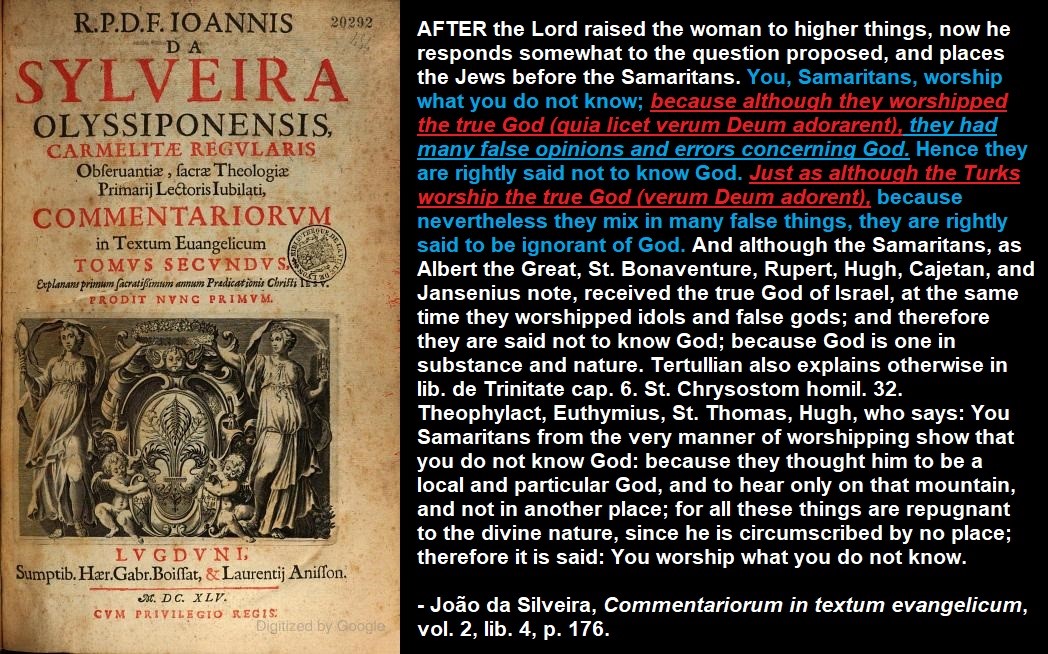
 But before presenting the evidence, I want to show how Abp. Marcel Lefebvre reacted to Paul VI's Profession of Faith, promulgated in 1968. Frustrated with Vatican II, he wrote a letter to Catholics criticizing the Council.

 Upon a careful examination of the encyclical, I noticed that it contains inherently incompatible views with those of Sedevacantists, regardless of the theory they hold to. I will post some of the texts where I see it as irreconcilable with the Sedevacantist claims.

 There is no way to escape this argument and taken to its logical conclusion, and assuming the Eastern "Orthodox" modal, it is reduced to two fundamental points.
 Notice how Nyssa equates "shining forth" with hypostatic production, when he says that when we consider the unbegotten Sun, we immediately perceive a second Sun shining out. So for him, shining forth is nothing but the very hypostatic production of the person.

 Now for a Thomist, the divisions of distinctions correspond to the divisions of beings. Since, then, there are two kinds of beings, namely, being of reason and real being, there must be two kinds of distinctions corresponding thereto: Real distinctions and logical distinctions.



 First, let us summarize the Pelagian heresy according to St. Augustine in his work "On the Predestination of the Saints". He says (Summary of chapters 36 to 38):
 First off, St. Augustine is explaining how the word "principium" is applied to the divine persons. He first explains how principium is said of the three persons in relation to creatures, and yet it is not multiplied.
 Neo-Palamite, Palamite, blah blah is all COPIUM. If the very communication of essence isn't the hypostatic production, then we require a subject which is acted upon by something else and receives it. Unfortunately, you don't know natural philosophy to understand any of this. 2/6
 "The difference between Suarez and St. Thomas in their explanation of the mystery of the Trinity arises from a difference in their view of primary philosophy.
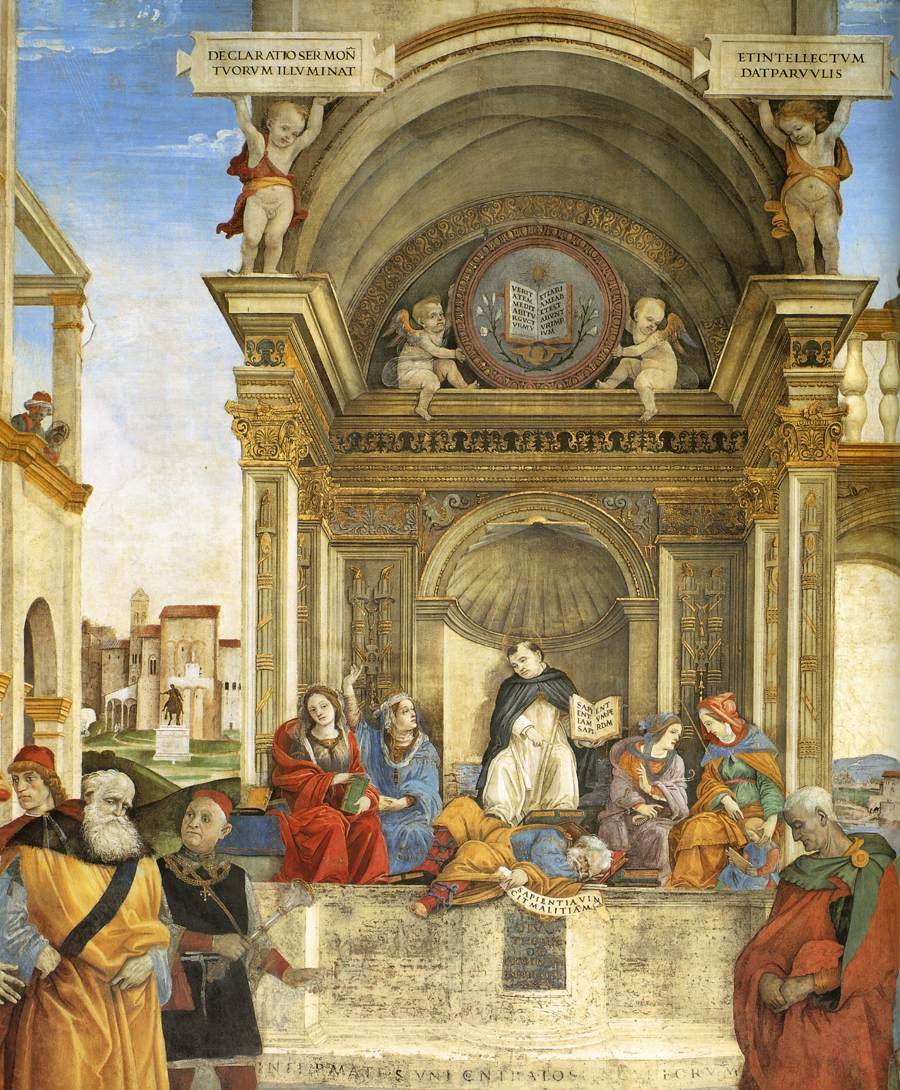 Distinction is either purely logical, which means it's only on the part of the one reasoning, or it has a foundation in the thing itself, which provides the basis for the mind, as imposing itself. The former is called a distinction of reason REASONING.
 Proof is derived from the words of Christ Himself who says in John 14:6 that: “I am the way, and the truth, and the life. No one comes to the Father except through me.”

 The reasoning is that since procession presupposes some action, the persons can either proceed by way of internal actions or external ones. But they cannot proceed by way of external actions, since external action's terminus is outside the agent.
 “The distinction of reason is threefold, namely, major, minor, and minimal. The major distinction of reason occurs when our reason virtually multiplies a singular entity into various perfectly distinct concepts, where one is in no way included in the other.
 1. Everything which is first is the most simple, since to the extent something is prior it is also simpler. Now God is first in the order of beings, because nothing can be nor be thought to be prior to him.
 The divine act of willing is specified by none other than the divine essence, as its primary object, just like the divine act of knowing, secondary objects are not necessarily required for God's act of willing himself...
 The Father is the divine essence. The Son is the divine essence. Therefore, the Father is the Son.
 1. According to the Council of Florence, the Father and the Son are one principle and one cause of the Holy Spirit's eternal procession. There are no two principles and two causes, that is, in fact, polytheism. Hence the Holy Fathers at Florence anathematized this view: