Lautaro Vergara 🇺🇦 Profile picture
Chilean physicist Too many interesting things to learn, too few time. Born at 316.91 ppm Also: @VergaraLautaro@maths🐘.xyz RT is no endorsement (necessarily)
Feb 25 10 tweets 2 min read
A bit of Physics

The first Landscape in physics appeared after the work of Vladimir Gribov. It represents Gribov copies in non-Abelian gauge theories.

Non-Abelian gauge theories are defined on configuration spaces with a redundancy, the gauge orbit, consisting of all

1/
configurations related by local gauge transformations. In the continuum, Gribov showed in 1977 that standard gauge-fixing conditions are satisfied by multiple inequivalent field configurations (the so-called Gribov copies). The Fundamental Modular Region (FMR), defined

2/
Aug 24, 2025 11 tweets 2 min read
HISTORY OF PHYSICS

Unifying Hadrons with SU(3) Symmetry: On the discovery of the SU(3) Gell-Mann–Okubo mass formula

Early in the 20th century, the recognized elementary particles were the electron, proton, and neutron, along with the neutrino. After the discovery of mesons

1/
in cosmic rays, the list of known particles expanded to include muons and pions. The similar masses of the proton and neutron, as well as those of the three pions (π⁺, π⁰,π⁻), led to the idea of isotopic-spin invariance of strong interactions,

2/
Aug 17, 2025 9 tweets 2 min read
HISTORY OF PHYSICS

In April 1961 there was a big Centennial Celebration at MIT. Naturally it was a proud, joyous, even intoxicating Celebration. At the week-long event there was a panel discussion on “The Future of Physics”, chaired by Francis Low, with four speakers

1/
in the following order: John Cockcroft, Rudolf Peierls, Yang Chen-Ning and Richard Feynman.

Yang stated that "since there seems to be too ready a tendency to have boundless faith in a 'future fundamental theory', I shall sound some pessimistic notes. And in this Centennial

2/
Feb 18, 2025 6 tweets 2 min read
HISTORY OF PHYSICS

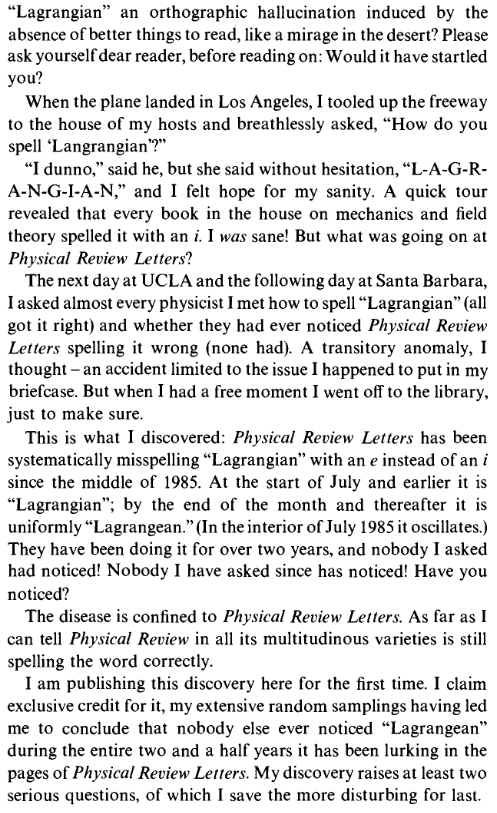
What's wrong with this Lagrangean?

by David Mermin.

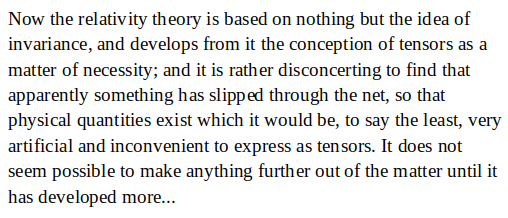
[This is so funny that I'll post it in full] Image 2/ Image
Jan 15, 2025 11 tweets 2 min read
HISTORY OF PHYSICS

An adventure: In a seminar with Murray Gell-Mann and Richard Feynman.
(As told by Lars Brink)

The seminar room has a huge table in the middle and the senior people were sitting along it and we juniors along the walls.

1/
Feynman had a given seat — the first in the row next to the speaker — and he was fully concentrated.

Those were the times of hand-written slides which were shown on a viewgraph projector. Feynman was intensively reading the slides and was always eager to know what

2/
Oct 27, 2024 14 tweets 3 min read
HISTORY OF PHYSICS

The story of the spin

Wolfgang Pauli wrote a letter to Alfred Landé where he expressed his views concerning the exclusion principle; it was a preview of an article he was preparing. Pauli's letter arrived at the same moment as

1/
Ralf Kronig was visiting Germany. This young American physicist, then only 20 years old, arrived in Tübingen on 7 January 1925 to represent the University of Columbia at a meeting with Landé and Gerlach.

Landé told him that Pauli was due to arrive the next day and

2/
Oct 9, 2024 15 tweets 3 min read
HISTORY OF PHYSICS

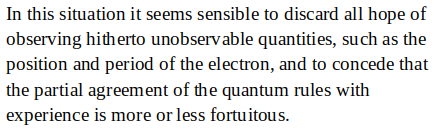
Niels Bohr’s explanation of the hydrogen atom, proposed originally in 1913, and its subsequent refinements explained a great deal of experimental data so well that by the early 1920s physicists felt there had to be some truth in it.

1/
Not all were happy with the Bohr's model. Some young physicists criticized it harshly. At that time, Werner Heisenberg still found some value in the model saying something like this: "the model is ugly, but Bohr has a method (of calculating)"

2/
Aug 29, 2024 10 tweets 3 min read
HISTORY OF PHYSICS

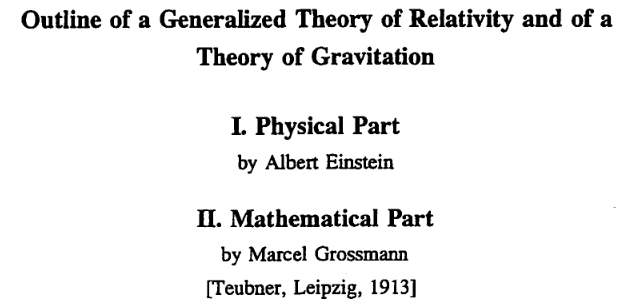
Marcel Grossmann & Albert Einstein

Marcel Grossmann studied mathematics at the Zurich Polytechnikum (today @ETH) was a good and close friend of Einstein.

Since Einstein did not attend class regularly and did not pay particularly close attention to some

1/
of his mathematics classes at that time, Grossmann helped Einstein to pass the examinations by lending him the lecture notes and helping him on problems.

Marcel's father recommended Einstein to a friend, the Director of the Swiss Patent office where he found a place to do

2/
Jun 12, 2024 16 tweets 3 min read
HISTORY OF PHYSICS

(unjustified short thread)

Kenneth G. Wilson. A revolutionary.
(June 8,1936 - June 15, 2013)

Wilson was a markedly independent and original thinker as well as being a rather private and reserved person. An important part of his youthful look was

1/ Image that when somebody said something that really pleased him, his face would lit up with such a sweet smile that it warmed your heart, like the first smiles of a baby.
His interactions were marked by very deliberate responses to conversational gambits.

2/
Jun 9, 2024 23 tweets 4 min read
HISTORY OF PHYSICS

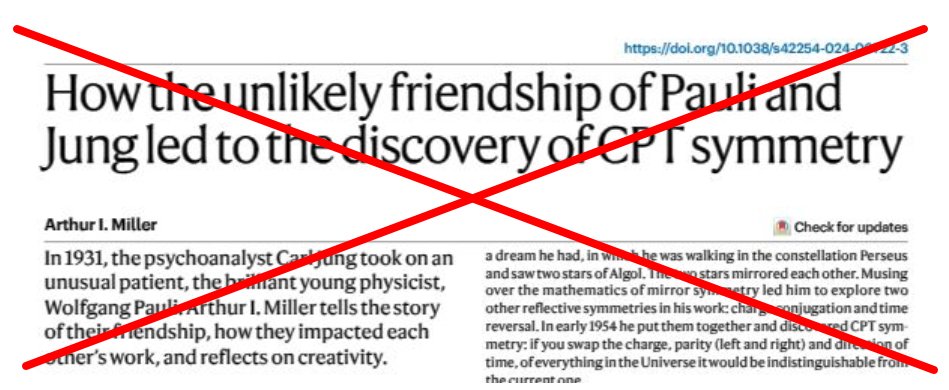
The CPT theorem states that any causal, Lorentz-invariant, thermodynamically well-behaved quantum field theory must be invariant under a time inversion (T), spatial inversion (P), and conjugates charge (C).

1/
The central role of the CPT theorem was only realized after the experimental discovery of parity violation in 1957, by Chien-Shiung Wu.

This is the story of how it was built.
[it'll take time]

2/
May 27, 2024 10 tweets 2 min read
HISTORY OF PHYSICS

Generalized Dirac equations.

Bartel van der Waerden, a mathematics professor at Groningen, as a response to the initial reactions upon the publication of the Dirac equation in 1928, was the first to consider its generalization.

1/
He wanted to analyze how unique this equation was.

The appearance of the four-component wave functions, which transformed non-trivially under the Lorentz group but were not four-vectors, caused some confusion.

2/
May 13, 2024 10 tweets 2 min read
HISTORY OF PHYSICS

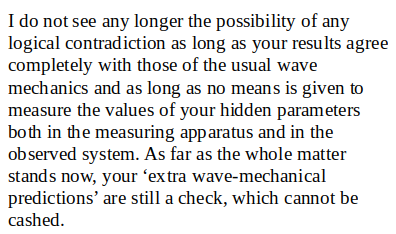
Why Quantum Mechanics is linear?

Steven Weinberg describes his theoretical search for nonlinearity:

After some work I came up with a slightly nonlinear alternative to quantum mechanics that seemed to make physical sense and could be easily tested

1/
to very high accuracy by checking a general consequence of linearity, that the frequencies of oscillation of any sort of linear system do not depend on how the oscillations are excited.

[A]fter a conversation with David Wineland of the National Bureau of Standards,

2/
Apr 27, 2024 4 tweets 1 min read
HISTORY OF PHYSICS

(as told by Werner Heisenberg)

During the Solvay Conference in 1927 we lived in the same hotel and the younger people of the group sat one evening together drinking of wine or so.

Somehow the problem had come up about religion and natural science.

1/
Dirac was a very eager defender of the view that religion was just nonsense, was opium for the people, it was just made to make people foolish, and so on. He argued rather strongly.

Well, Dirac was a very young man and in someway he was interested in Communistic ideas,

2/
Apr 26, 2024 9 tweets 2 min read
HISTORY OF PHYSICS

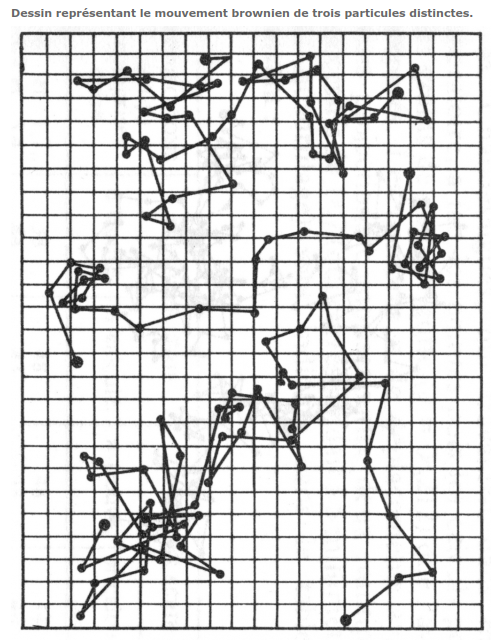
The term ‘random walk’ was first introduced by Karl Pearson [The problem of the random walk, Nature, 72, 342, 1905]. He was interested in studying mosquito infestations. He thought the problem as a simple random model and

1/
posed his problem as follows:

Can any of your readers refer me to a work wherein I should find a solution to the following problem, or failing the knowledge of any existing solution, provide me with an original one? I should be extremely grateful for aid in the matter.

2/
Mar 17, 2024 12 tweets 3 min read
HISTORY OF PHYSICS

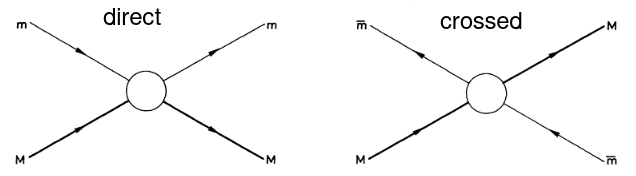
Believe or not, String Theory started from physicists trying to understand data. Yes!, real data from experiments😲, like the study of π⁻ p elastic scattering carried out by Kormanyos et al. at Argonne National Laboratory in 1965.

1/
At that time, people had already discovered a plethora of particle resonances, that is very short lived particles, with lifetimes of 10⁻²³ seconds or less.

These researches led to the realization that high-energy scattering amplitudes could be approximated

2/
Mar 11, 2024 13 tweets 3 min read
HISTORY OF PHYSICS

Bohmian mechanics.

David Bohm developed a formulation of Quantum Mechanics called a "quantum theory without observers" (contrary to the Copenhagen formulation where observers play a fundamental role).

1/
Bohmian mechanics asserts that quantum particles have a definite position at every instant and move according to an equation of motion that is one of the fundamental laws of the theory (“pilot wave” equation) and

2/
Sep 14, 2023 10 tweets 3 min read
HISTORY OF PHYSICS

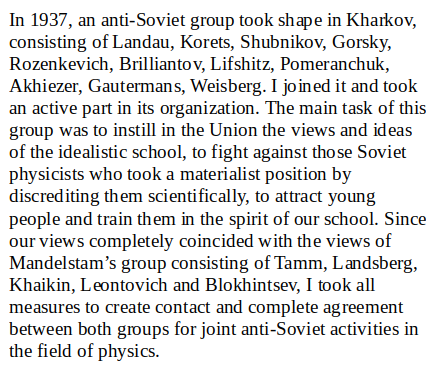
Lev Landau gets imprisoned.

In 1937, during Stalin's Great Terror, the Cheka or NKVD (secret police) arrested several German physicists working at Kharkov and an assortment of other scientists. Before being shot, Landau’s friends Lev Shubnikov and

1/
Lev Rozenkevich “confessed” that Landau headed a counter-revolutionary organization.

Within a year, on April 28, 1938, physicists Yuri B. Rumer and Moissey Koretz were arrested the same night as Landau.

2/
Aug 19, 2023 12 tweets 3 min read
HISTORY OF PHYSICS

(50 years of Quantum Chromodynamics)

Among the many inhabitants of the "particle zoo" known to physicists in the 1960s were two classes of particles subject to the strong force (the force responsible for holding together the atomic nucleus),

1/
the baryons and the mesons. In addition, there were three known leptons, the electron, muon, and neutrino. As we have learned previously , in 1964, Murray Gell-Mann and George Zweig independently introduced what Gell-Mann called quarks

2/
May 25, 2023 15 tweets 3 min read
HISTORY OF PHYSICS

In the early development of Quantum Mechanics people faced some problems and difficulties, e.g.: negative energy states in the Dirac equation, the infinite nature of electron energy, the fact that electrons could be inside the nucleus.

1/
The aforementioned and other problems related to distances of order 10⁻¹³ cm, that is, the size of nuclei. There were considerations that a matter of this dimension could not in principle be exactly measured.

It was quite reasonable to suggest, therefore, that to overcome

2/
Mar 7, 2023 16 tweets 4 min read
HISTORY OF PHYSICS

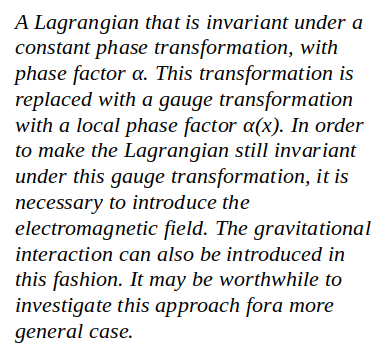
Yang Chen-Ning and Robert Mills discovered non-abelian gauge theories in 1954.

That the idea was "in the air" was clear from the story about the humble Ron Shaw.


Here is the story of Ryoyu Utiyama.

1/
Utiyama (Uchiyama) (1916-1990) graduated from Osaka University in 1940 and received his doctorate in physics from there in 1951. From 1954 to 1956 he was at the Institute for Advanced Study. At that time he dealt with theoretical elementary particle physics and quantum gravity
2/
Mar 3, 2023 14 tweets 3 min read
HISTORY OF PHYSICS

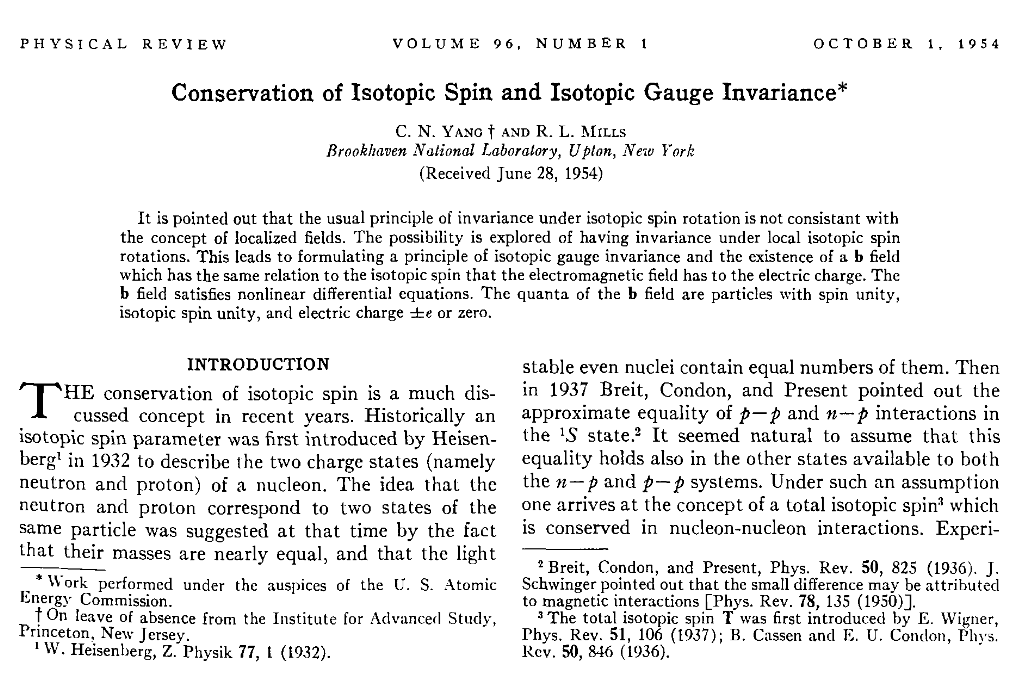
It is known that Yang Chen-Ning and Robert Mills discovered non-abelian gauge theories (they had completed the theory in the summer of 1953 and it was published in 1954).

The Yang-Mills theory matched Maxwell's gauge ideas with the internal symmetry SU(2)

1/
of which the proton-neutron system constituted a doublet. This was behind the idea of Heisenberg in 1932 that the neutron an proton correspond to two states of the same particle.

2/ Image