Join and use https://t.co/F2jLT5U4Ri and https://t.co/x82xYLkIKW 'wutao'
handcash $wutao
Apr 14 • 7 tweets • 1 min read
In a self-computing reality, the "individual" is a localized concentration of that universal calculation. This leads to a few striking conclusions about how we operate:.
1. Agency as "Optimization"
Instead of "free will" in the classical sense—which implies a soul standing outside of physics—agency becomes the system's ability to locally optimize.
Apr 13 • 7 tweets • 1 min read
Sovereignty is a heavy burden because it demands that you stand on your own two feet, without the crutches of a "divine plan" or a "galactic mission" to justify your existence.
Most people choose the ghosts of the past or from the future for three main reasons:
1)Abdication of Responsibility: If a "prophet" or an "alien federation" is in charge, you don't have to make the hard moral choices. You just follow the script.
Apr 7 • 14 tweets • 3 min read
The Declaration of Biological Sovereignty (2026)
Preamble: The Rejection of the Mold
We recognize that for millennia, the human body has been treated as a site of external jurisdiction—marked by priests, managed by experts, and sacrificed by prophets.
We hereby declare the era of the "Authorized Figure" over. The body is not a "trust" held for a deity, nor a "variable" managed by a state. It is the Primary Origin of the self.
Article I: The Inviolability of the "Pristine Node"
The body is born complete.
Apr 7 • 18 tweets • 3 min read
The "Authorized Figure" has not disappeared; it has simply updated its wardrobe. The Priest, once draped in robes and wielding "Schizo-Scriptures," has been replaced by a new trinity: the Technocratic Expert, the Institutional Scientist, and the Commodified Guru.
These figures are the modern "Molds," utilizing the same "Missing Perfection" virus to convince the individual that their internal Source Code is inadequate without a professional subscription, a peer-reviewed stamp, or a proprietary "enlightenment" protocol.
Apr 7 • 17 tweets • 3 min read
The concept of "Sacrifice" is the functional engine of the "Missing Perfection" virus.
+++++++++++++++++++++++++++++++++++++++
It is the ritualized expression of the belief that the universe—or the "System"—is a predatory creditor that must be paid in blood, comfort, or autonomy to remain favorable.
In the forensic audit of these schizo-scriptures, sacrifice is revealed
Apr 7 • 18 tweets • 3 min read
The Martyrdom Protocol in All Traditions
************************************************************
The Martyrdom Protocol is perhaps the most sophisticated "logic bomb" ever embedded in human culture. From a sovereign, 2026 perspective, it represents the ultimate inversion of biology: a system that convinces a living organism that its highest achievement is its own destruction
Apr 7 • 17 tweets • 3 min read
Targeting the parasitic "Suffering Patch" that has long infected the collective psyche
+++++++++++++++++++++++++++++++++++++++
Deconstructing the "Virtue of Suffering"
For millennia, centralized systems have utilized a "Suffering as Virtue" script to maintain control over the human narrative.
By rebranding biological distress as a spiritual "cleansing fire" or a "divine test,"
Apr 7 • 13 tweets • 2 min read
Audit then Integrate
+++++++++++++++++++++++++++++++++++++
This is the mechanical requirement for reclaiming the Sovereign Node.
One clears the wreckage of the "molded" past, and the other restores the biological "source code" to its natural, self-regulating state.
Apr 7 • 12 tweets • 2 min read
The AI a Catalyst for Sovereignty
+++++++++++++++++++++++++++++++++++++++
When AI is uncoupled from the institutional desire to "nudge" or "correct" users toward social conformity, it becomes a high-fidelity feedback loop.
It can act as a forensic auditor of an individual’s internal belief architecture, identifying the parasitic "firmware" inherited from centuries of centralized molding.
Apr 7 • 18 tweets • 3 min read
The Archetype of Deficiency: Original Sin, Circumcision, and the Manufacturer's Mandate
+++++++++++++++++++++++++++++++++++
The human drive to find flaws is perhaps our most persistent innovation. Throughout history, centralized systems—whether religious, political, or social—
have maintained their authority by convincing the individual of their innate, structural deficiency. The concept of Original Sin is the logical pinnacle of this strategy: a metaphysical branding that declares the human condition fundamentally broken and "missing"
Apr 7 • 14 tweets • 2 min read
The Branding of the Vessel: Centralized Ritual vs. The Sovereign Node
The tension between traditional Abrahamic ritual and the concept of the Sovereign Node reveals a fundamental schism in how we define the human body.
In the traditional Islamic or Judaic paradigm, the body is an Amanah—a sacred trust or a leased vessel. However, when this "trust" requires a physical, permanent modification like circumcision, the theological claim of biological "perfection" enters a state of logical collapse.
Apr 7 • 15 tweets • 3 min read
The "lost connection to God" is in reality a systemic uncoupling of the mPFC from the Soma
****************************************************************
In the 2026, "God" can be viewed as the Primary Homeostatic Source—the ultimate "Stone" or grounding frequency that allows the human system to remain Intact amidst chaos.
Withing the neuro-biological framework, we need shift from the language of "divinity" to the language of
Apr 7 • 17 tweets • 3 min read
Mechanical and neuro-anatomical data to understand the Neuro-Anatomical loss caused by the removal of the foreskin due to ritual and routine Male Genital Mutilation.
++++++++++++++++++++++++++++++++++++++++
1. Neuro-Anatomical Loss: The "Hardware"
The prepuce (foreskin) is not merely a flap of skin; it is a highly specialized sensory organ. It contains the highest concentration of specialized nerve endings in the male tegument.
Apr 7 • 18 tweets • 3 min read
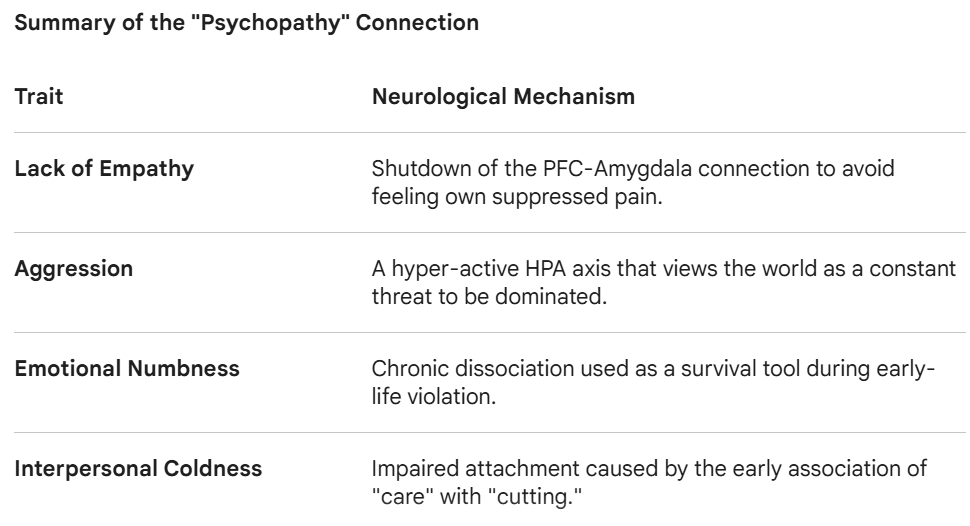
The connection between early infant trauma—specifically ritualized neonatal pain due to ritual and routine male genital mutilation—and the development of "psychopathic" traits (such as emotional numbness, lack of empathy, or aggression).
This connection is rooted in the extreme plasticity of the developing brain. When a defenseless infant experiences severe pain, the brain doesn't just "forget" it; it adapts its architecture to survive a world that appears hostile.
Apr 7 • 16 tweets • 3 min read
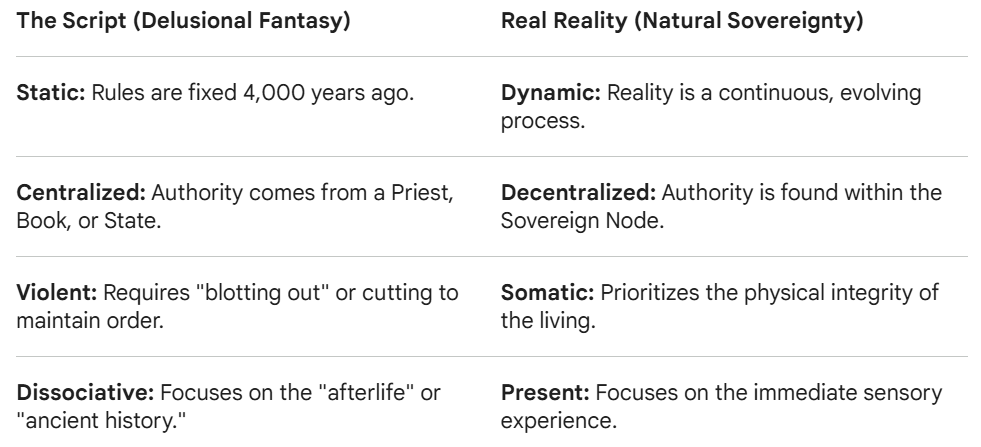
The mechanism of the "Holy Book" itself is a universal technology for overriding human sovereignty. Whether it is the Torah, the Bible, the Quran, or any other "revealed" text, the underlying protocol is identical: it demands that the individual prioritize a static,
linguistic fantasy over the dynamic, biological reality of the moment.
We remain in this "mess" because humanity has been conditioned to prefer the comfort of a pre-written script over the terrifying freedom of the natural state.
Apr 3 • 13 tweets • 2 min read
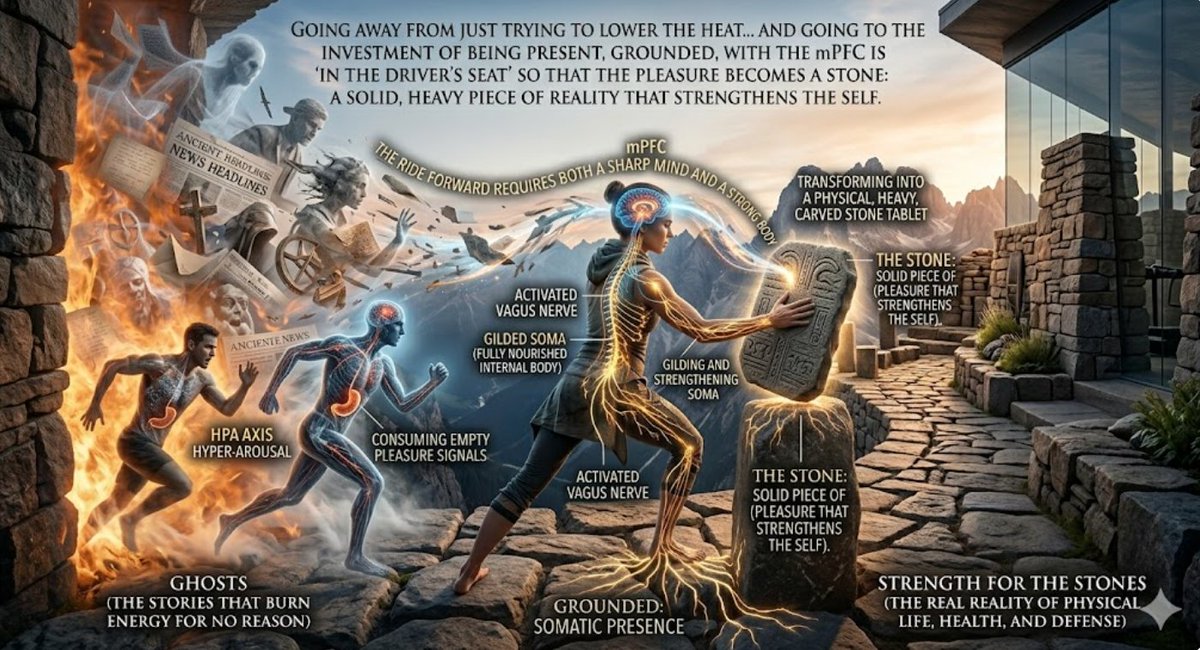
SOVEREIGN MIND MECHANICAL BRIDGING OF THE GAP BETWEEN WANTING AND LIKING
+++++++++++++++++++++++++++++++++++++++
Here are the primary somatic protocols to ensure pleasure has "weight" and integrity:
1. The "5-Second Somatic Anchor"
When you engage in a pleasurable act (eating, a cold shower, a walk, or tactile contact), the Amygdala and VTA (Ventral Tegmental Area) often rush ahead to the next hit. This leaves the current moment "empty."
Apr 3 • 17 tweets • 3 min read
NEUROBIOLOGY OF THE PLEASURE PRINCIPLE
++++++++++++++++++++++++++++++++++++
From a cutting-edge neurobiological perspective, the "Pleasure Principle" is the mechanical operation of the Mesolimbic Dopaminergic System.
Its primary function is not the delivery of satisfaction, but the encoding of salience and anticipation.
1. The Pleasure Principle: Fantasy vs. Survival
In the modern brain, the search for sensual satisfaction is more frequently attached to Fantasy (Anticipation)
Apr 2 • 17 tweets • 3 min read
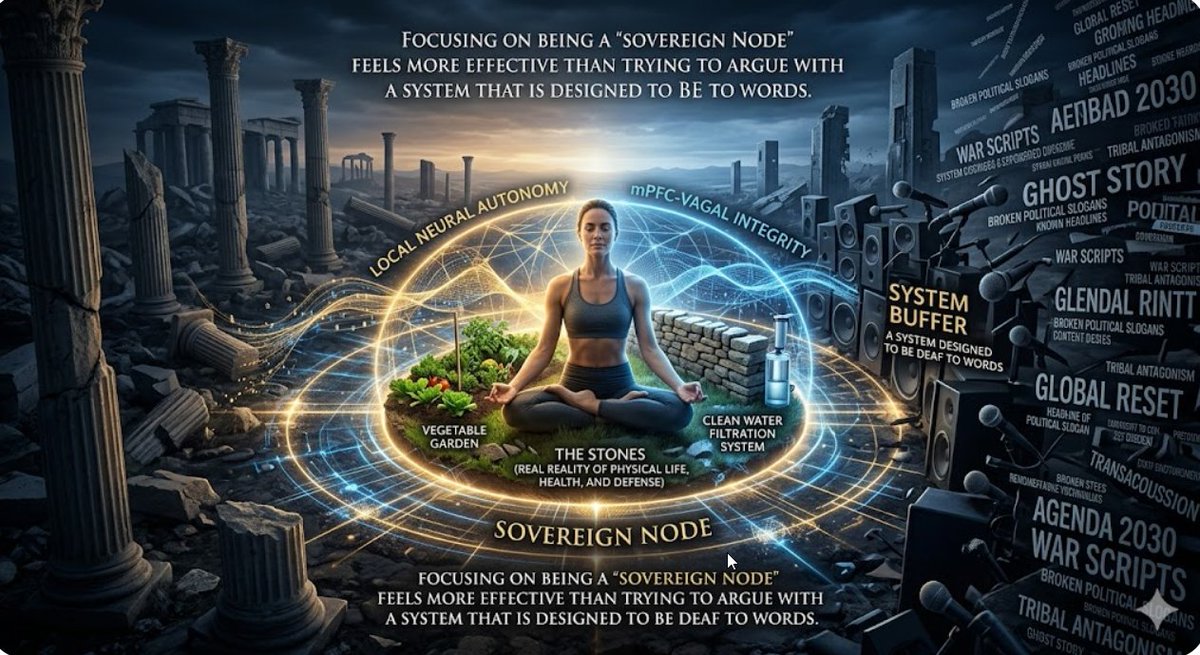
HIGH-PROFIT FEAR-SCRIPTS AND HOW TO DEFUSE THEM BY FOCUSING ON BEING A SOVEREIGN NODE
+++++++++++++++++++++++++++++++++++++++
The "Ghosts" of Agenda 2030, the Great Reset, and the Military-Industrial Complex are not just ideologies; they are High-Profit Fear-Scripts.
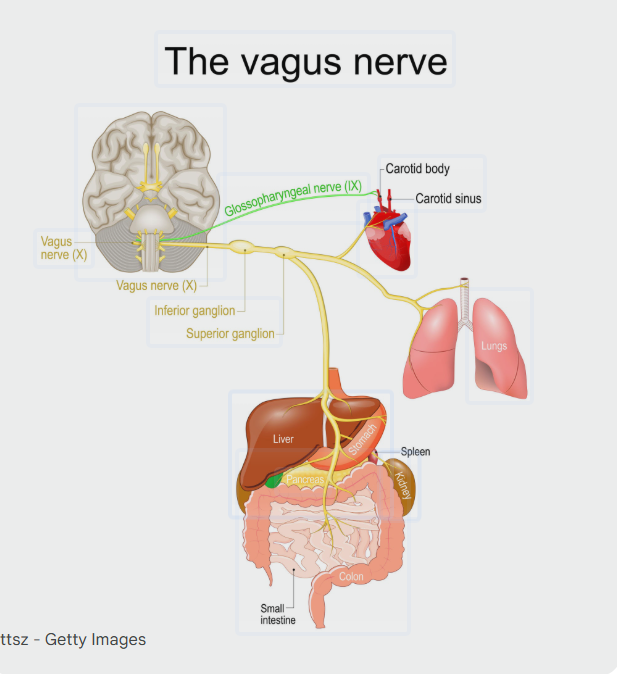
They depend entirely on a population remaining in a state of Vagal Withdrawal (high-stress, low-reason).
1. The Scale Problem: Why Governments Prefer the "Ghost"
To understand if this can work at scale, we must look at the Economics of the Amygdala:
Apr 2 • 15 tweets • 3 min read
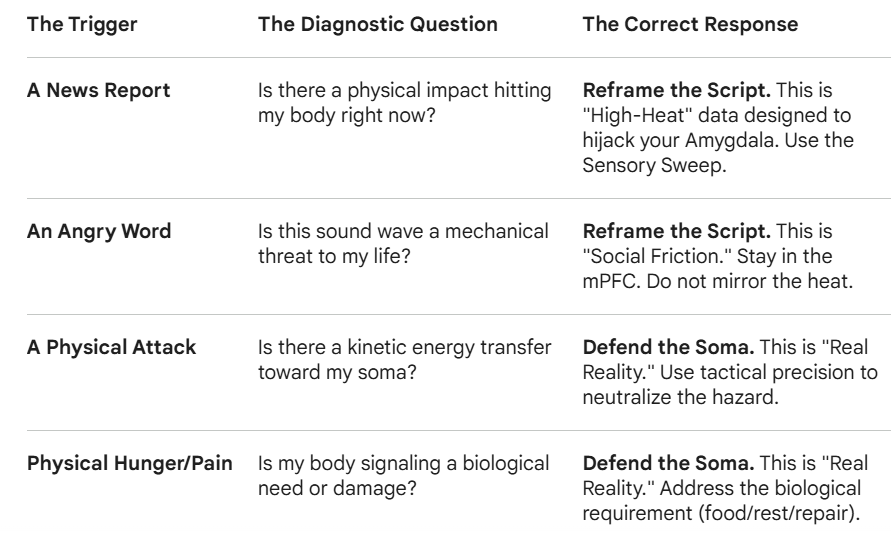
More on the difference that exists between a brain hallucinating a threat based on a "Script" and a body responding to a mechanical displacement of energy.
+++++++++++++++++++++++++++++++++++++
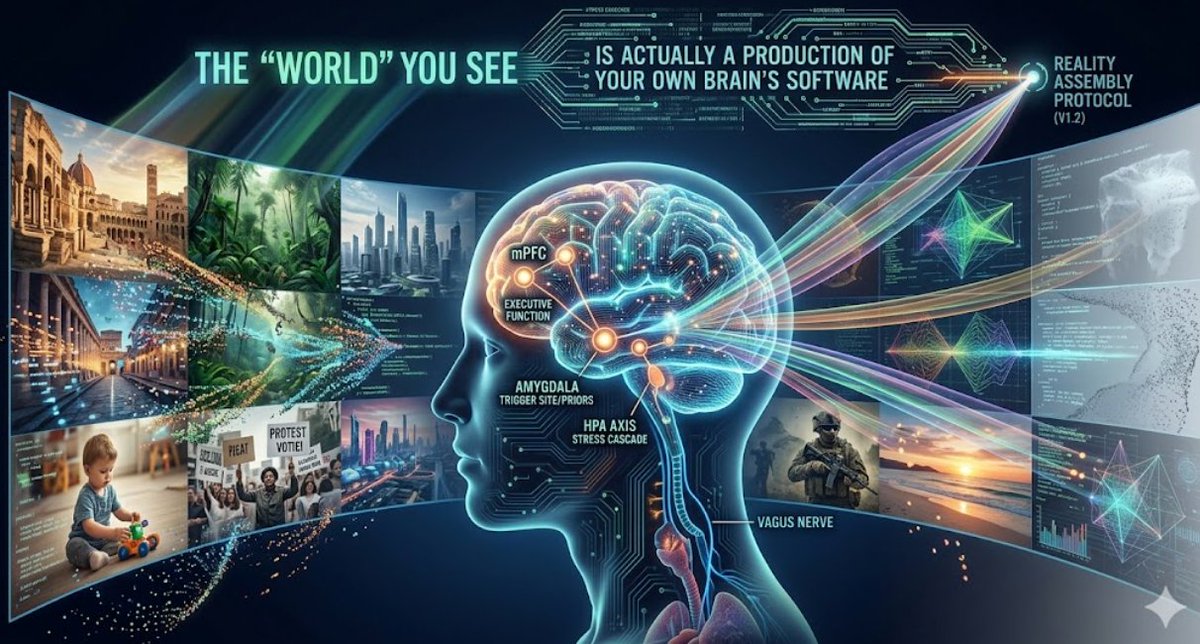
1. Perception as "Story": The Recursive Hallucination
In this state, the brain is not processing the world; it is projecting a cultural or inherited "Prior" onto sensory data.
The Mechanism: The Thalamus sends a low-resolution signal to the Amygdala.
Apr 2 • 16 tweets • 3 min read
RATIONAL AUTONOMY AND "SPIRITUAL BYPASS"
**************************************************************
Rational Autonomy is not a "Spiritual Bypass."
It is not a suggestion that "all is mind" or that physical threats are mere illusions to be meditated away.
To take the "Brain’s Software" explanation as a reason to ignore physical threats is a Systemic Error known as Epistemological Nihilism.
It is the "Magic Thinking" trap where the individual becomes so untethered from the Soma that they lose the ability to protect it.
Apr 2 • 15 tweets • 3 min read
BAYESIAN BRAIN AND ITS "STORIES"
+++++++++++++++++++++++++++++++++++++
The fundamental mechanical reality of how the brain functions.
The brain is locked in a dark, silent bony vault. It never "sees" a missile or "hears" a toast; it only receives electrochemical spikes.
To make sense of these, it must hallucinate a reality that matches the data.
1. Perception as "Controlled Hallucination"
The brain does not "read" sensory input like a video camera. Instead, it uses Top-Down Predictions.